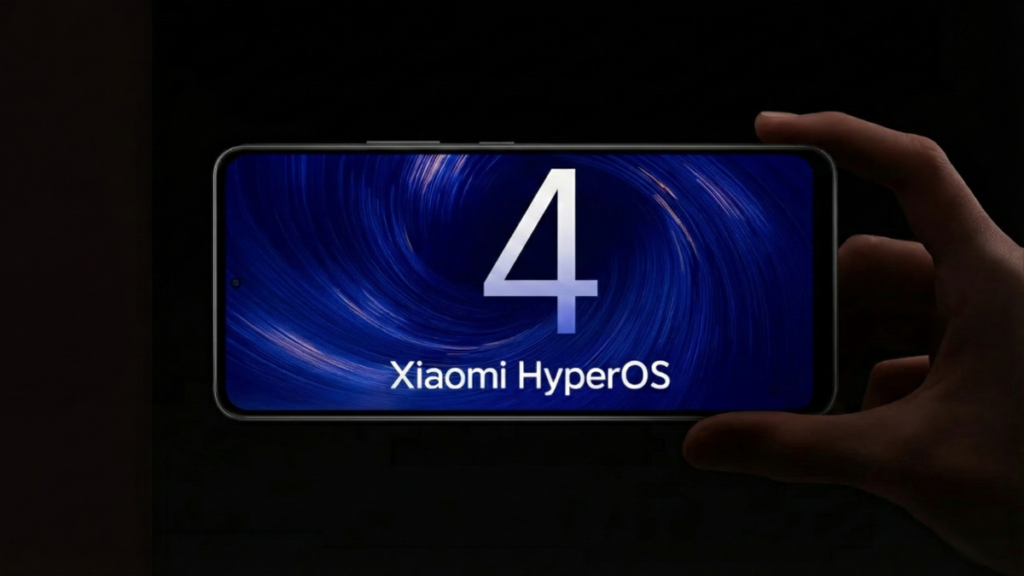
The HyperOS 3 rollout is still underway, but it appears the brand has already begun working on its next iteration, HyperOS 4. Xiaomi may have accidentally mentioned it in an official announcement on the global bug report channel.
The next major HyperOS upgrade was mentioned in issue #6 of the latest weekly bug report, which concerns the system launcher force-closing issue. The status of the issue reads, “the fix will be implemented in the upcoming OS4 Major Update.” Here, OS4 refers to the HyperOS 4 update.
HyperOS 4 update might arrive early
This is the first time Xiaomi has officially mentioned HyperOS 4. The bug report channel doesn’t reveal anything else. However, it suggests that Xiaomi may already be working on HyperOS 4, especially since multiple users are facing issues, and fixes for them will be included in the next upgrade. The update could also arrive earlier than we’re expecting.
This year, Google released Android 16 in June, earlier than its usual timeline. Samsung was quick to follow it up with a stable release in July, while other brands took a little longer. The tech giant is expected to follow a similar timeline for Android 17. So, a quicker HyperOS 4 release is definitely on the cards.
This also means Xiaomi may not have enough time to prepare for HyperOS 3.1. Therefore, the brand may skip this incremental upgrade and instead focus directly on HyperOS 4.
As of writing this post, Xiaomi hasn’t confirmed anything regarding HyperOS 4, including an early release. However, it’s unusual to mention “OS4” when there are dozens of devices waiting for HyperOS 3. Anyway, we’ll keep you posted with the latest developments around HyperOS in our Xiaomi section.
If you prefer your news instant and on-the-go, hop into our Telegram channel for the software updates and all the biggest tech headlines, and don’t forget to sign up for our daily newsletter of top stories.
The Snapdragon 8 Elite Gen 5 was announced in September, and Qualcomm quickly followed it up with another chip release — the Snapdragon 8 Gen 5. The newer chip also features Oryon cores, but doesn’t bear the “Elite” moniker for some reason.
Besides the weird naming scheme, Qualcomm weirdly compared the Snapdragon 8 Gen 5 to a two-year-old 8 Gen 3 chip rather than the Snapdragon 8 Elite at the chip announcement. So, where does the Snapdragon 8 Gen 5 settle into the Snapdragon 8-series? Can it beat the Snapdragon 8 Elite? Let’s dig deeper into the benchmark scores and key differences to figure it out.
Snapdragon 8 Gen 5
Snapdragon 8 Elite
Announced
November 2025
October 2024
Process node
TSMC’s 3nm (N3P)
TSMC’s 3nm (N3E)
CPU cores
8-core
8-core
CPU cores
2 x 3.8 GHz — Oryon (3rd gen) 6 x 3.32 GHz — Oryon (3rd gen)
2 x 4.32GHz — Oryon (2nd gen) 6 x 3.53GHz — Oryon (2nd gen)
GPU
Qualcomm Adreno GPU Ray tracing support Snapdragon Elite Gaming features
Qualcomm Adreno 830 GPU Ray tacing support Snapdragon Elite Gaming features
NPU
Qualcomm Hexagon NPU Agentic AI support
Qualcomm Hexagon NPU
Memory
LPDDR5X, up to 4.8 GHz
LPDDR5X, up to 5.3 GHz
Storage
UFS 4.1
UFS 4.0
Camera
Qualcomm Spectra Triple ISP (20-bit) Up to 320MP single camera up to 108MP single camera with zero shutter lag Up to 48MP triple cameras with zero shutter lag real-time semantic segmentation (limitless) 4K/120fps video recording 1080p/480fps slow-mo video recording
Qualcomm Spectra Triple ISP (18-bit) up to 320MP single camera up to 108MP single camera with zero shutter lag up to 48MP triple cameras with zero shutter lag limitless real-time semantic segmentation (up to 250 layers) 8K/30fps video recording 1080p/480fps slow-mo video recording
Snapdragon X80 5G modem download speed: up to 10 Gbps upload speed: up to 3.5 Gbps Wi-Fi 7 (peak speed: 5.8 Gbps) Bluetooth 6.0
Snapdragon 8 Gen 5 vs Snapdragon 8 Elite: Benchmark score
We are yet to see a smartphone with the latest Snapdragon 8 Gen 5 chip in the global market. However, the unreleased OnePlus 15R was recently spotted on Geekbench with a single-core score of 2,784 and a multi-core score of 9,329.
The Realme GT 7 Pro, powered by the Snapdragon 8 Elite, pulls higher scores: 3122 in the single-core test and 9507 in the multi-core test. That’s about a 12% increase in the single-core score, but a modest 2% gain in multi-core performance.
Single core
Multi core
Snapdragon 8 Gen 5
2,784
9,329
Snapdragon 8 Elite
3,122
9,507
So, the newer Snapdragon 8 Gen 5 can’t match the Snapdragon 8 Elite’s performance despite featuring the latest Oryon cores. The reason is lower CPU speed and the lack of high-bandwidth memory. We’ll learn about more key differences below.
Note: We’ll update the section with benchmark scores from additional platforms, including 3DMark and AnTuTu, once we have tested a Snapdragon 8 Gen 5 smartphone.
Snapdragon 8 Gen 5 vs Snapdragon 8 Elite: Key differences that matter
The Snapdragon 8 Gen 5 is fabbed using TSMC’s 3nm (N3P) process, which offers slightly better performance compared to TSMC’s 3nm (N3E) process used for the Snapdragon 8 Elite.
The CPUs also bring several important differentiations. The Snapdragon 8 Gen 5 has third-gen Oryon cores, while the 8 Elite features second-gen Oryon cores. The (2 prime + 6 performance) core setup is there on both chips, but the Elite chip benefits from much higher clock speeds.
The GPU differences aren’t very clear. Qualcomm hasn’t announced which Adreno GPU is inside the Snapdragon 8 Gen 5. However, according to recent leaks, it’s Adreno 840, the same GPU inside the Snapdragon 8 Elite Gen 5, but with a lower peak frequency and a trimmed-down version of the sliced GPU architecture.
In contrast, the Snapdragon 8 Elite features an Adreno 830 GPU. It’s difficult to say which chip has the more powerful GPU without testing the device or reviewing the benchmarks. We’ll run gaming-specific benchmarks once we get the device and update the article.
The connectivity aspect doesn’t bring any differences, as both feature the same X80 5G modem with up to 10Gbps download speeds, Wi-Fi 7, and Bluetooth 6.0. The cameras bring several differences, though. The 8 Gen 5 features a 20-bit AI ISP, which offers a more usable dynamic range and smoother gradients compared to the 18-bit ISP used in the 8 Elite chip.
The Snapdragon 8 Elite allows up to 8K/30fps video recording, the newer 8 Gen 5 chip peaks at 4K/120fps. While this may seem a downgrade, it isn’t. The 4K/120fps is more practical for users than 8K. The latter is more of a marketing spec. Even the Snapdragon 8 Elite Gen 5 supports up to 4K/120fps recording, not pushing to 8K.

 Login
Login