Reading view

Best Smartwatches with Longest Battery Life in July 2026
As we head into the second half of 2026, getting a smartwatch to last through a long weekend is no longer a challenge. The combination of high-density silicon-carbon batteries and more efficient processors means that multi-day battery life has simply become the baseline for most new devices.

For this list, we are focusing entirely on full-fledged smartwatches. While there are specialized, rugged watches built specifically for hikers and endurance runners that offer significantly longer battery life, they usually achieve that by stripping away everyday smart features and apps. If you are looking for a device that offers a complete wearable experience without needing a daily charge, here is a look at the most reliable options currently on the market.

Xiaomi Watch 5
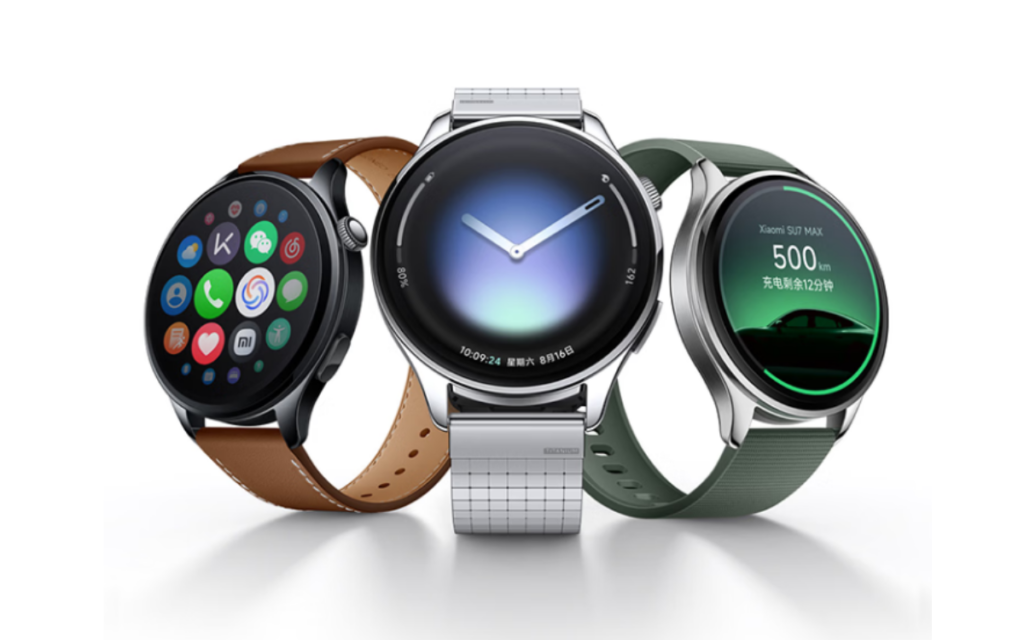
Xiaomi Watch 5

This watch runs Wear OS 6, an operating system that typically drains batteries quickly due to its heavy app integration and background syncing. However, the Xiaomi Watch 5 manages to provide up to six days of battery life in standard smart mode, and up to 18 days if you switch to power-saving mode.

It achieves this by utilizing a 930mAh silicon-carbon battery, a newer battery technology that allows for higher energy density without increasing the physical size or weight of the watch.

Additionally, it uses a dual-chip setup, pairing a main Snapdragon processor with a low-power co-processor. The co-processor handles basic background tasks like step counting and notifications, which prevents the main chip from waking up unnecessarily and draining power.

This makes it a highly practical choice if you want access to the full suite of Google apps, such as Maps and Wallet, without having to charge your watch every night.

OnePlus Watch 4
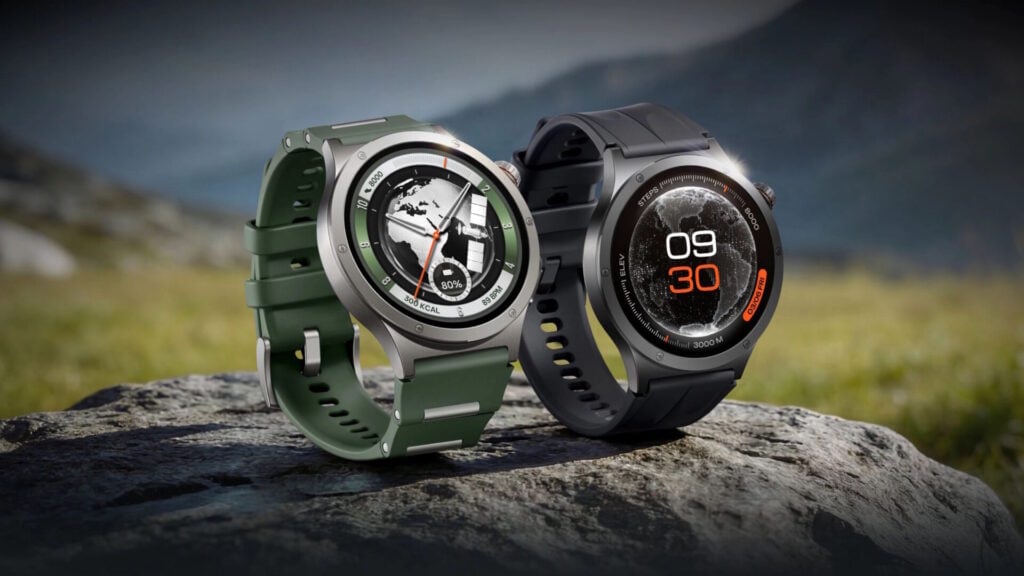
Oneplus Watch 4

Another strong Wear OS 6 option, the OnePlus Watch 4 offers about five days of battery life in its standard smart mode. If you use it heavily, meaning frequent GPS tracking for outdoor runs, continuous heart rate monitoring, and streaming music offline, that battery life drops to roughly three days.

However, if you need to stretch the battery further, the watch includes a dedicated power-save mode. By disabling the main processor and full Wear OS functions, it relies on a low-power co-processor to handle basic timekeeping, step tracking, and essential notifications, which can extend the battery life up to 16 days.

It is equipped with a 646mAh battery that supports fast charging, allowing you to fully recharge the device from zero to 100% in about 75 minutes.

The watch features a titanium alloy case and a bright LTPO OLED display. The LTPO technology is particularly helpful for battery conservation, as it allows the screen’s refresh rate to drop significantly when you are not actively interacting with it.

It functions well as an everyday watch that provides premium materials and can comfortably last through a long weekend trip without needing a charger.

Huawei Watch GT Runner 2
Huawei Watch GT Runner 2

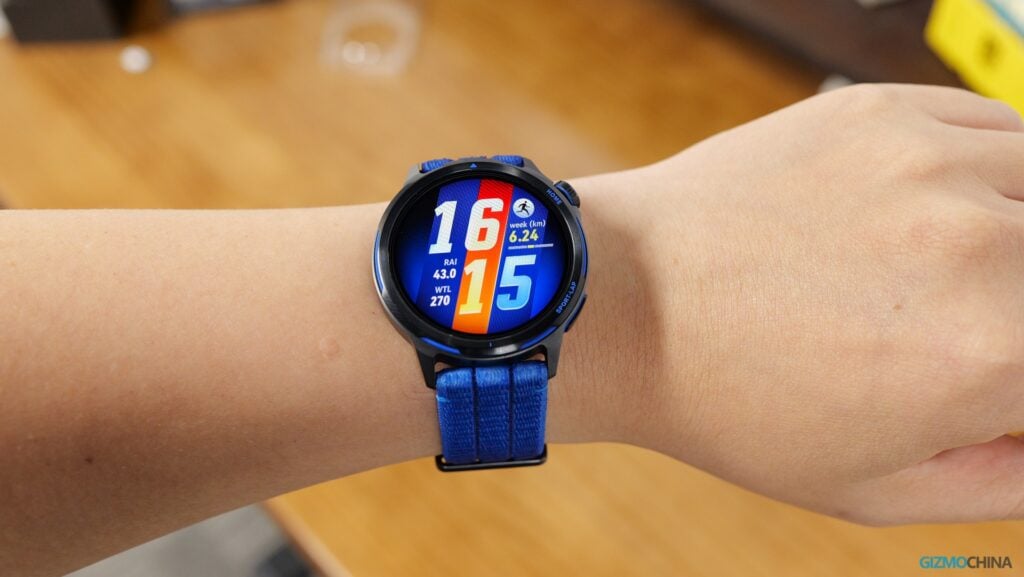
If you primarily want a smartwatch for tracking workouts and do not need access to third-party apps, the Huawei Watch GT Runner 2 (full review) is a very efficient option.

It runs proprietary HarmonyOS rather than a resource-heavy platform like Wear OS, it provides up to 14 days of battery life with light use, or about seven days under typical daily conditions.

For runners and hikers, the most relevant specification is its continuous GPS tracking capability. The watch can record up to 32 hours of continuous dual-band GPS tracking on a single charge, making it useful for marathons, ultramarathons, or multi-day hiking trips.

It also features a lightweight build at just 34.5 grams and a breathable strap, focusing entirely on comfort and detailed fitness metrics rather than smartwatch app ecosystems.

Apple Watch Ultra 3
Apple-Watch-Ultra-3

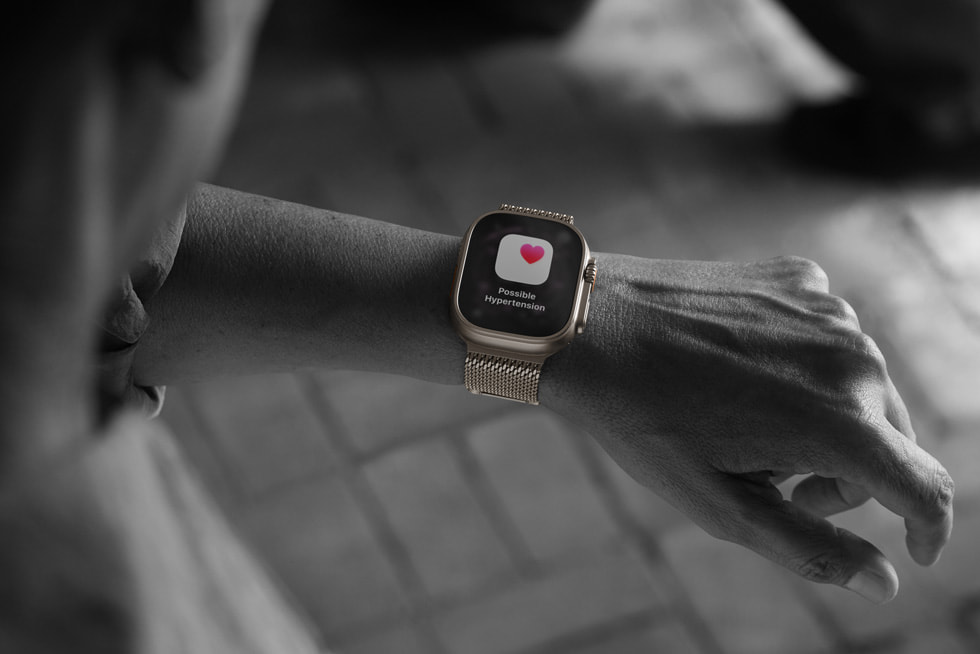
For iPhone users wanting to stay within the Apple ecosystem, the Apple Watch Ultra 3 offers up to 42 hours of normal use on a single charge. If you need to extend that, turning on Low Power Mode will give you up to 72 hours by limiting background heart rate measurements and delaying some notifications.

While it does not last as long as the dedicated fitness watches, the S10 chip and watchOS 26 optimizations make it efficient enough to prevent the need for daily charging, even with an always-on display and cellular connectivity active.

When the battery does run low, the fast-charging capability is quite useful, a 15-minute charge provides about 12 hours of standard use, which makes it relatively easy to keep the watch topped up while you take a shower or get ready for the day.

Samsung Galaxy Watch Ultra

Samsung Galaxy Watch Ultra

The current Samsung Galaxy Watch Ultra provides up to 100 hours of battery life in Power Saving mode, or 48 hours in Exercise Power Saving mode, drawing from its 590mAh battery. It runs Wear OS 6 layered with Samsung’s One UI 8 Watch interface, providing deep integration with Android smartphones.

For people already using Samsung devices, a practical detail is how the watch works alongside the Galaxy Ring. If you wear them both, they split the health-tracking workload. The ring can handle background tasks like monitoring your sleep and continuous heart rate, which lets the watch turn off those specific sensors to save battery.

This distribution of work can reduce the watch’s power consumption and extend its overall battery life by about 30%, depending on your daily usage patterns.

It is also worth noting that Samsung is expected to release the next-generation Galaxy Watch Ultra 2 later this month. According to recent hardware leaks, this upcoming model will be equipped with a larger battery capacity, which should further improve its overall longevity and reduce the frequency of required charging.

For more daily updates, please visit our News Section.

Stay ahead in tech! Join our Telegram community and sign up for our daily newsletter of top stories!

The post Best Smartwatches with Longest Battery Life in July 2026 appeared first on Gizmochina.

Huawei launches FreeClip 2 S globally with open-ear design, 10.8mm dual drivers & spatial audio

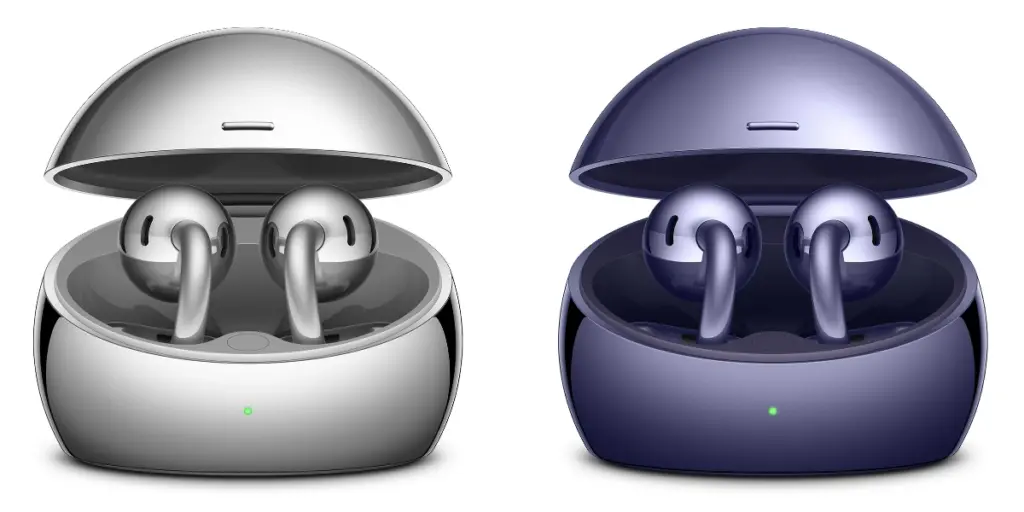
Huawei FreeClip 2 S

Huawei has introduced the FreeClip 2 S, its latest open-ear wireless earbuds, during its global launch event in Malaysia. The earbuds arrive alongside the Huawei Pura 90s Series and the MatePad Air 2026.

Huawei FreeClip 2 S

Huawei FreeClip 2 S Specifications

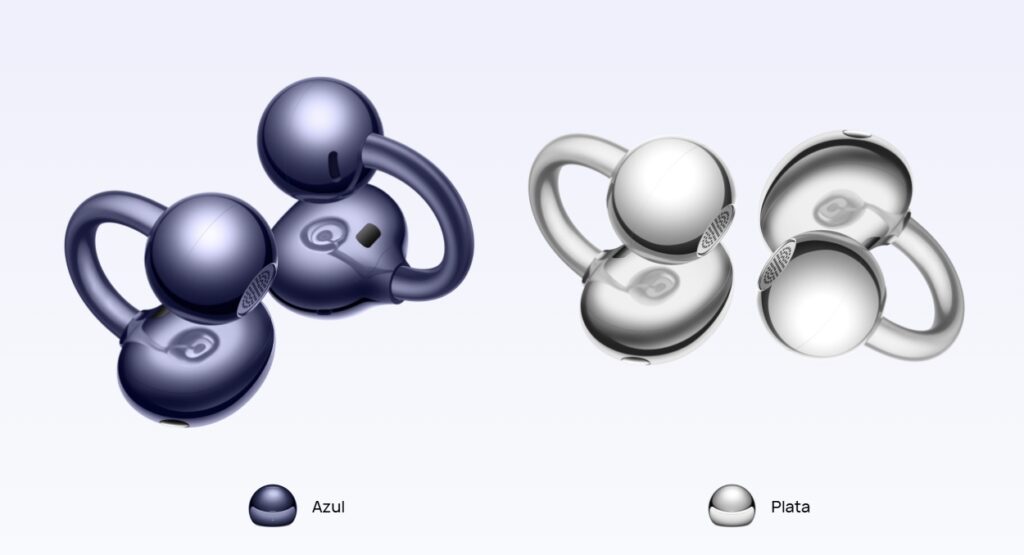
The Huawei FreeClip 2 S features an open-ear C-bridge design that sits outside the ear canal for greater comfort and awareness of surroundings. It uses a liquid silicone material that is 25% softer than the previous generation and has been refined for a more secure, comfortable fit. Huawei says the design is based on data from over 10,000 ear samples, while each earbud weighs just 5.1 grams for lightweight, all-day wear.

Because of the open design, the earbuds are built to sit securely without blocking outside sounds. They also feature automatic left and right recognition, so you can wear either earbud in either ear without manually adjusting channel orientation.

Huawei FreeClip 2 S

Inside, the FreeClip 2 S uses a 10.8mm dual-diaphragm driver system housed in a compact acoustic unit. Huawei says the updated driver structure improves bass response and overall sound balance. It also features an integrated AI-powered NPU that handles audio and voice processing, supporting features such as call noise reduction and sound optimization.

The earbuds feature adaptive volume adjustment that automatically optimizes audio levels based on surrounding noise and content. It also includes adaptive voice enhancement for clearer speech, while a triple-microphone system with AI noise reduction improves call quality. Huawei additionally equips the earbuds with an inverse sound wave system to minimize audio leakage and enhance listening privacy.

Huawei FreeClip 2 S

The FreeClip 2 S supports spatial audio with dynamic head tracking, gesture-based controls, and head gesture call management. It features Bluetooth 6.0 with dual-device connectivity and works with the Huawei Audio Connect app, which allows users to customize controls, adjust a 10-band EQ, switch between devices, and monitor battery status.

In terms of battery life, the FreeClip 2 S offers up to 9 hours of playback, extending to 38 hours with the charging case. It also supports fast charging, USB-C and wireless charging, and comes with IP57-rated earbuds and an IP54-rated charging case.

Pricing and Availability

The FreeClip 2 S comes in Deepsea Blue and Space Silver. In Malaysia, it is priced at RM 899. In the UK, it is available for £169 until August 17 before returning to £199, with a £199 bundle option that includes Les Néréides clip-ons. In Europe, it retails for €229, with a promotional price of €199 available until August 21, 2026.

For more daily updates, please visit our News Section.

Stay ahead in tech! Join our Telegram community and sign up for our daily newsletter of top stories!

The post Huawei launches FreeClip 2 S globally with open-ear design, 10.8mm dual drivers & spatial audio appeared first on Gizmochina.

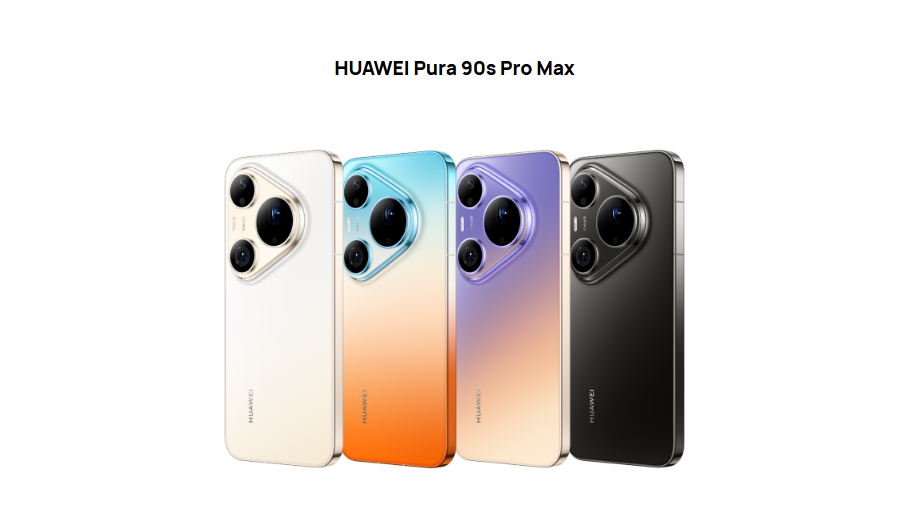
Huawei Pura 90s Pro and Pro Max launch globally with Kirin 9030S; Pro Max features industry-first 200MP RYYB telephoto, LOFIC tech

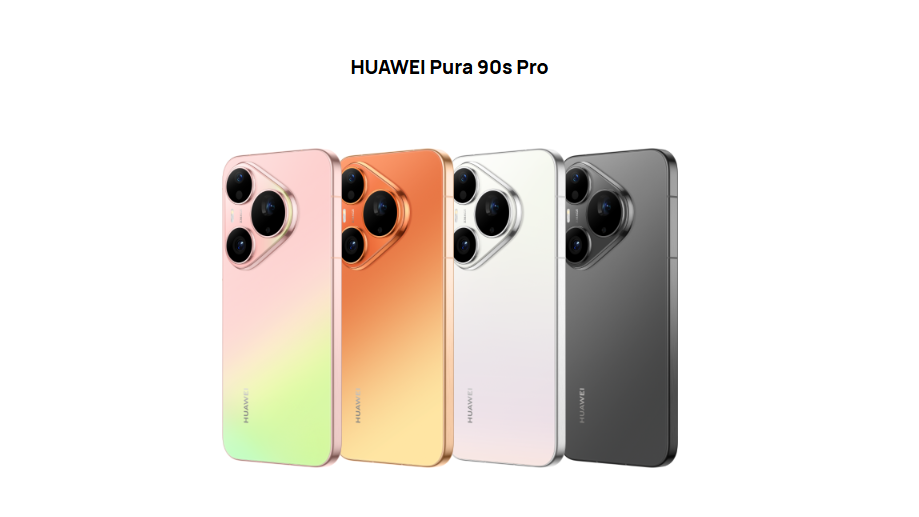
Huawei just officially rolled out the Pura 90s Pro and Pura 90s Pro Max to international markets, giving the Pura 90 lineup a proper global push beyond China.

The two models share a lot of the same DNA but carve out their own identities depending on what you’re after: size, charging speed, and a few camera tweaks. The Pura 90s Pro Max packs a generous 6.9-inch flat LTPO OLED display (1,308 x 2,880 pixels). The smaller Pura 90s Pro goes with a 6.6-inch LTPO panel (1,256 x 2,760) that’s easier to handle one-handed. Both screens use an anti-reflective coating that supposedly slashes reflections by up to 70%, and they’re protected by Kunlun Glass (second-gen on the Pro).

Photography is still the star of the show here. The Pro Max steals the spotlight with an industry-first 200MP RYYB telephoto sensor (1/1.28-inch, f/2.6, 4x optical zoom) that supports macro shots and even 20x telephoto video thanks to strong CIPA 7.0 stabilization. Its main camera is a 50MP 1/1.28-inch LOFIC RYYB sensor with a versatile 10-step adjustable aperture (f/1.4 to f/4.0) and OIS, backed by a 40MP ultra-wide. The Pura 90s Pro packs the same 50MP main (without LOFIC), a 12.5MP ultra-wide, and its own 50MP 4x telephoto.

Under the hood, both phones run on Huawei’s new Kirin 9030S chipset, available with 12GB of RAM and 256GB or 512GB of storage. They ship with EMUI 16 (based on AOSP 16). Connectivity looks solid: 5G, eSIM, Wi-Fi 7, Bluetooth 6.0, and Huawei’s NearLink.

Both phones get a 6,000mAh battery (though EU models drop to 5,500mAh because of regulations). Charging is faster on the Pro Max with 100W wired and 80W wireless, while the Pro settles for 66W wired and 50W wireless.

Pricing and availability:

On the availability front, they’re launching gradually. In Malaysia, the Pro starts at MYR 3,700 for the 12/256GB version and MYR 4,000 for the 12/512GB model, with pre-orders already underway. The Pro Max is listed at MYR 4,900 for the 12/512GB.

In Europe, pricing kicks off at roughly €900 for the Pro 12/256GB, rising to €1,050 for the 12/512GB. The Pro Max starts at €1,150 for 12/256GB and goes up to €1,300 for the 12/512GB. Expect rollouts soon in Singapore and the Middle East (with a July 16 launch event) as well.

Don’t miss a thing! Join our Telegram community for instant updates and grab our free daily newsletter for the best tech stories!

For more daily updates, please visit our News Section.

(Sources: Pura 90s Pro | Pura 90s Pro Max)

The post Huawei Pura 90s Pro and Pro Max launch globally with Kirin 9030S; Pro Max features industry-first 200MP RYYB telephoto, LOFIC tech appeared first on Gizmochina.
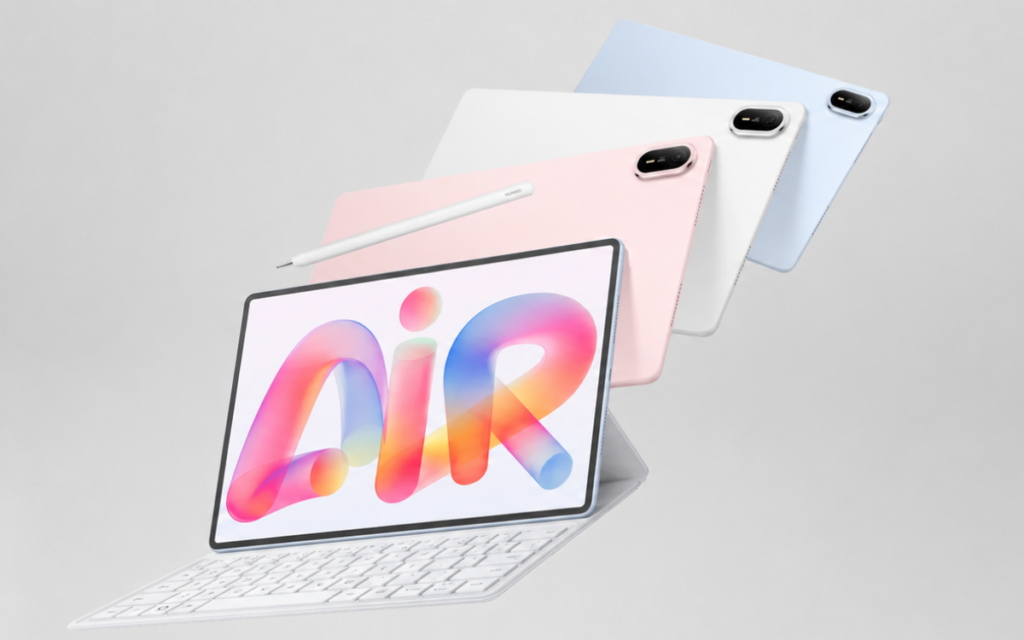
Huawei MatePad Air (2026) debuts with 12-inch 144Hz OLED PaperMatte display & 10,100mAh battery

Huawei MatePad Air 2026

Huawei has unveiled the 2026 MatePad Air for global markets, bringing a refreshed version of its lightweight productivity-focused tablet. The new model arrives as the successor to last year’s MatePad Air.

Huawei MatePad Air 2026

Huawei MatePad Air 2026 Specifications

The MatePad Air sports a new 12-inch OLED PaperMatte display with a 2800 x 1840 resolution, 144Hz refresh rate, and up to 1,200 nits of peak brightness. It also supports 1.07 billion colors, P3 wide color gamut coverage, a 2,000,000:1 contrast ratio, and Delta E < 1 color accuracy, while the PaperMatte coating helps reduce glare and reflections for a more comfortable viewing experience.

Under the hood, the tablet is powered by the Kirin T93C processor and runs HarmonyOS 4.3. It comes with 8GB or 12GB of RAM alongside 256GB of storage, and features a 3D cooling system with a custom vapor chamber and high-conductivity graphite to maintain stable performance under heavy workloads.

For imaging, the MatePad Air carries a 50MP rear camera with an f/1.8 aperture, autofocus, and an LED flash. It can capture photos at up to 8192 x 6144 pixels and record video at up to 1080p resolution.

On the front, there is a 12MP fixed-focus camera with an f/2.4 aperture. It is designed for video meetings, online classes, and selfies, with support for up to 1080p video recording.

The tablet packs a 10,100mAh typical-capacity battery and supports up to 66W fast charging. Huawei claims up to 10 hours of online HDR video playback or up to 16 hours of local video playback.

Huawei MatePad Air 2026

Talking about other specs, it includes six Huawei Sound speakers, dual microphones, Wi-Fi 7 capabilities, Bluetooth 5.2, NearLink, OTG support, and a USB Type-C port with USB 3.1 Gen 1 speeds.

It also supports SBC, AAC, LDAC, and L2HC Bluetooth audio codecs, alongside sensors such as a gyroscope, Hall sensor, gravity sensor, and ambient light sensor.

Pricing and Availability

The 2026 MatePad Air is available for pre-order in Europe today, with shipments starting on August 1. The non-PaperMatte model with 8GB of RAM, 256GB of storage, and an included keyboard costs €849.

The PaperMatte Edition with the same memory configuration is priced at €899 and comes with either a keyboard or the M-Pencil Pro stylus. The top-tier 12GB RAM version costs €999 and includes the keyboard.

The tablet comes in light blue, cherry blossom pink, and pure white finishes.

For more daily updates, please visit our News Section.

Stay ahead in tech! Join our Telegram community and sign up for our daily newsletter of top stories!

The post Huawei MatePad Air (2026) debuts with 12-inch 144Hz OLED PaperMatte display & 10,100mAh battery appeared first on Gizmochina.
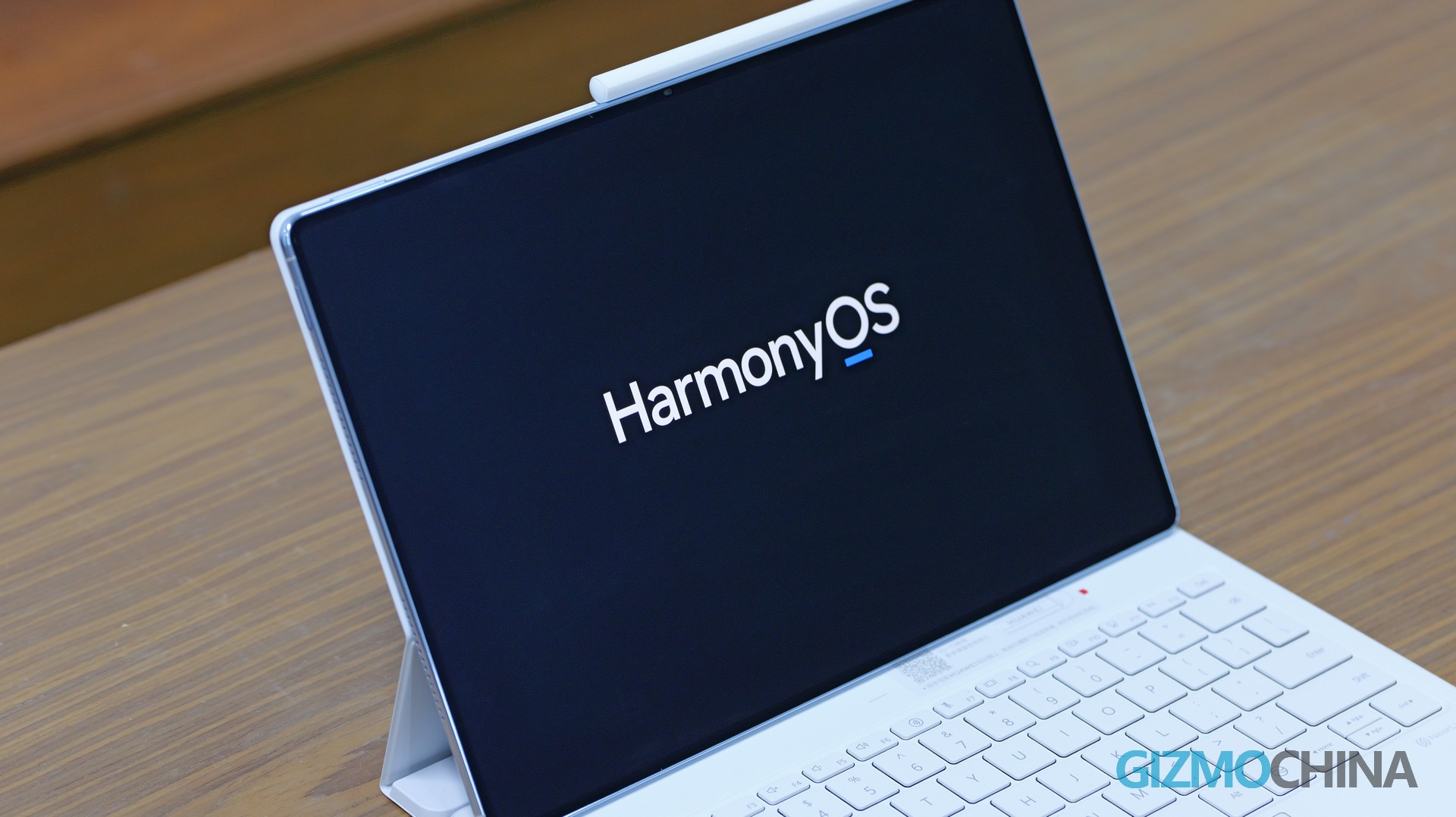
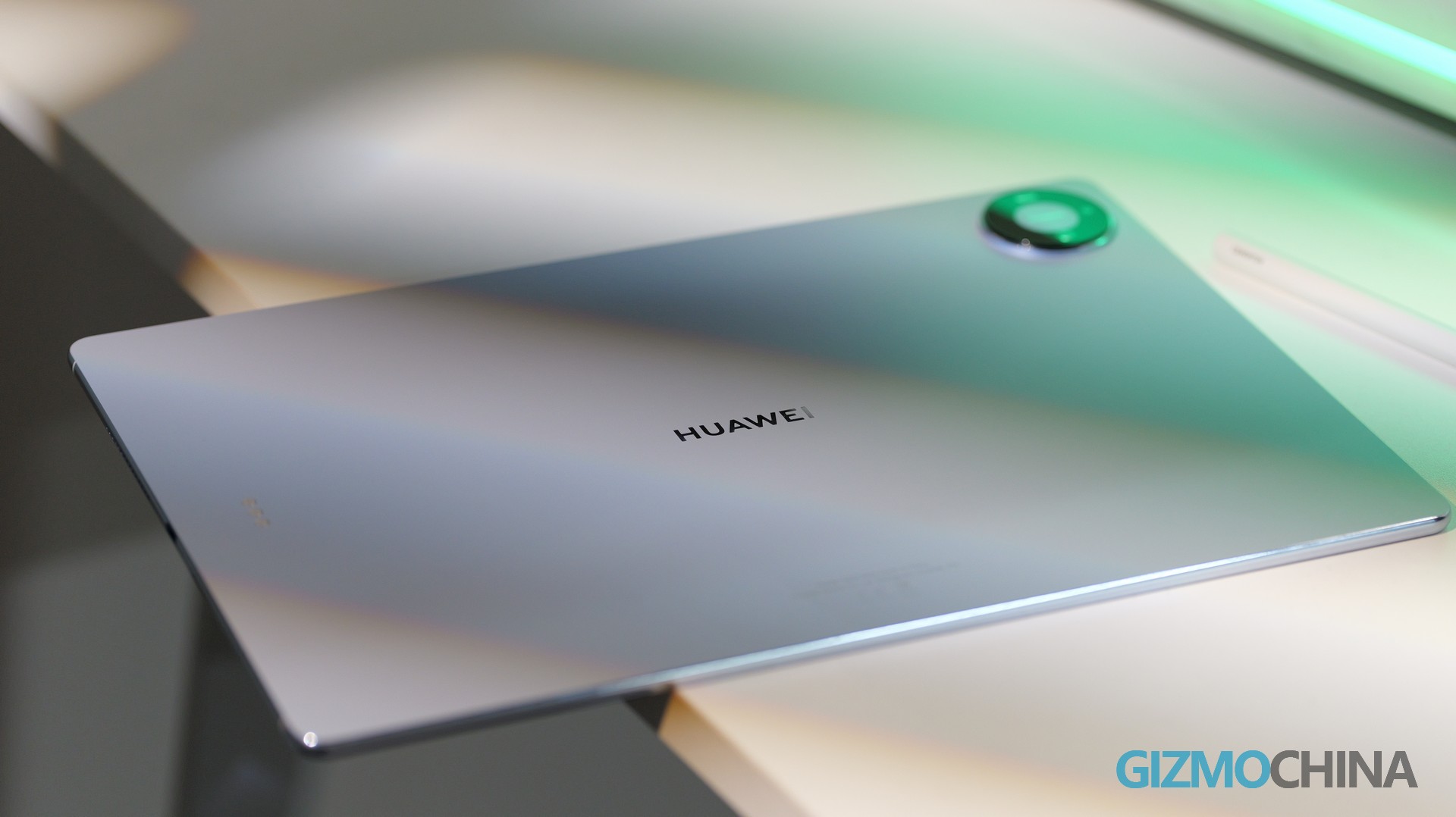
Huawei MatePad Pro Max (2026) Review: Ultra‑Light, Gorgeous Screen — How Close Does It Get to a Laptop?

Intro

We’ve seen plenty of tablets that promise to replace your laptop. They’re loaded with power, sure, but they also weigh a ton. So when Huawei showed up in 2026 with the MatePad Pro Max and took the exact opposite approach—going ridiculously thin and light—I was curious. At just 4.7mm thick and 499 grams, this thing is practically anorexic compared to other 13‑inch flagships that keep bulking up on specs. But does cutting so much weight mean cutting too much “Pro” performance? After using it daily for a month, here’s the unfiltered truth.

Design

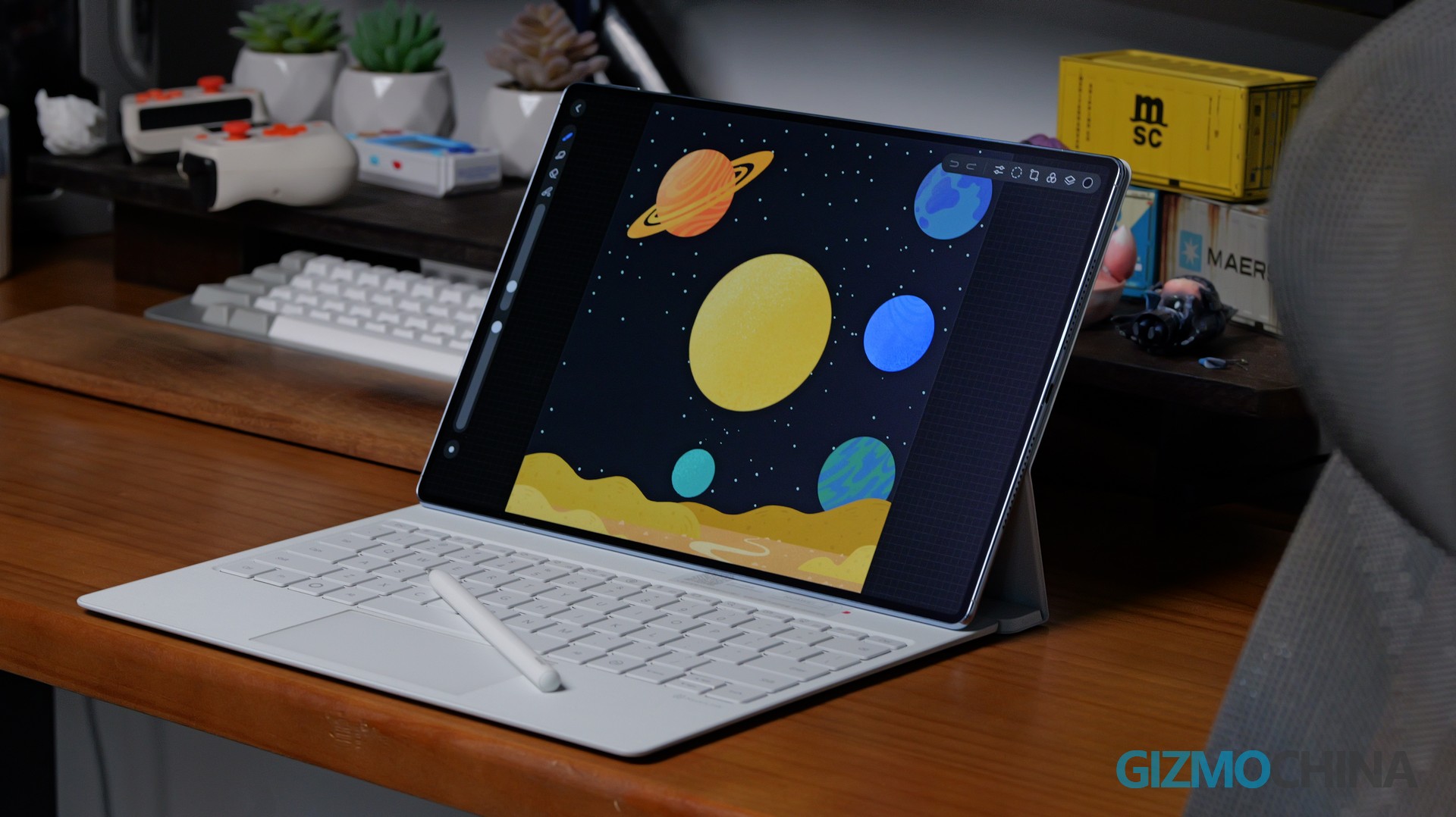
The moment you pick it up, your brain does a double take. 499 grams—that’s nearly 200 grams less than the same‑size iPad Pro, and even lighter than a hardcover art book. At 4.7mm, you can literally pinch it between two fingers and wander around the house like it’s a fancy notepad. Slip it into your bag, and you’ll genuinely forget it’s there. Huawei calls this the “Cloud Falcon Architecture,” and it’s earned TÜV Rheinland’s ultra‑thin bend‑resistance certification—I gave it a good twist, and it stayed impressively rigid. My review unit is the blue “Flow Back” version, and yes, the 3.5mm headphone jack is gone, but the trade‑off is a six‑speaker HUAWEI SOUND setup that actually delivers: decent bass, clear vocals, and a genuinely enjoyable experience for movies or podcasts, easily beating most tablets in this class.

Display

Then you turn on the display. That 13.2‑inch flexible OLED panel has no notch, no punch‑hole, no distractions—just pure screen. With a claimed 94% screen‑to‑body ratio, videos truly fill your view, and the 3K resolution (3000 x 2000) plus 144Hz refresh rate makes scrolling and gaming butter‑smooth. There are two variants: the standard glossy OLED with punchy colours and 2,000,000:1 contrast, great for HDR, and the PaperMatte Edition I tested, which uses nano‑etched glass to cut glare and add a paper‑like drag for the stylus. That version is slightly less punchy for pure media, but it’s a lifesaver if you work near windows or take lots of handwritten notes. One caveat: the 1600‑nit peak brightness only fires up for specific HDR scenes in small windows—day‑to‑day, it’s fine by a window or outdoors, but don’t expect smartphone‑like visibility under blazing sun; that’s just the physics of big screens.

Productivity

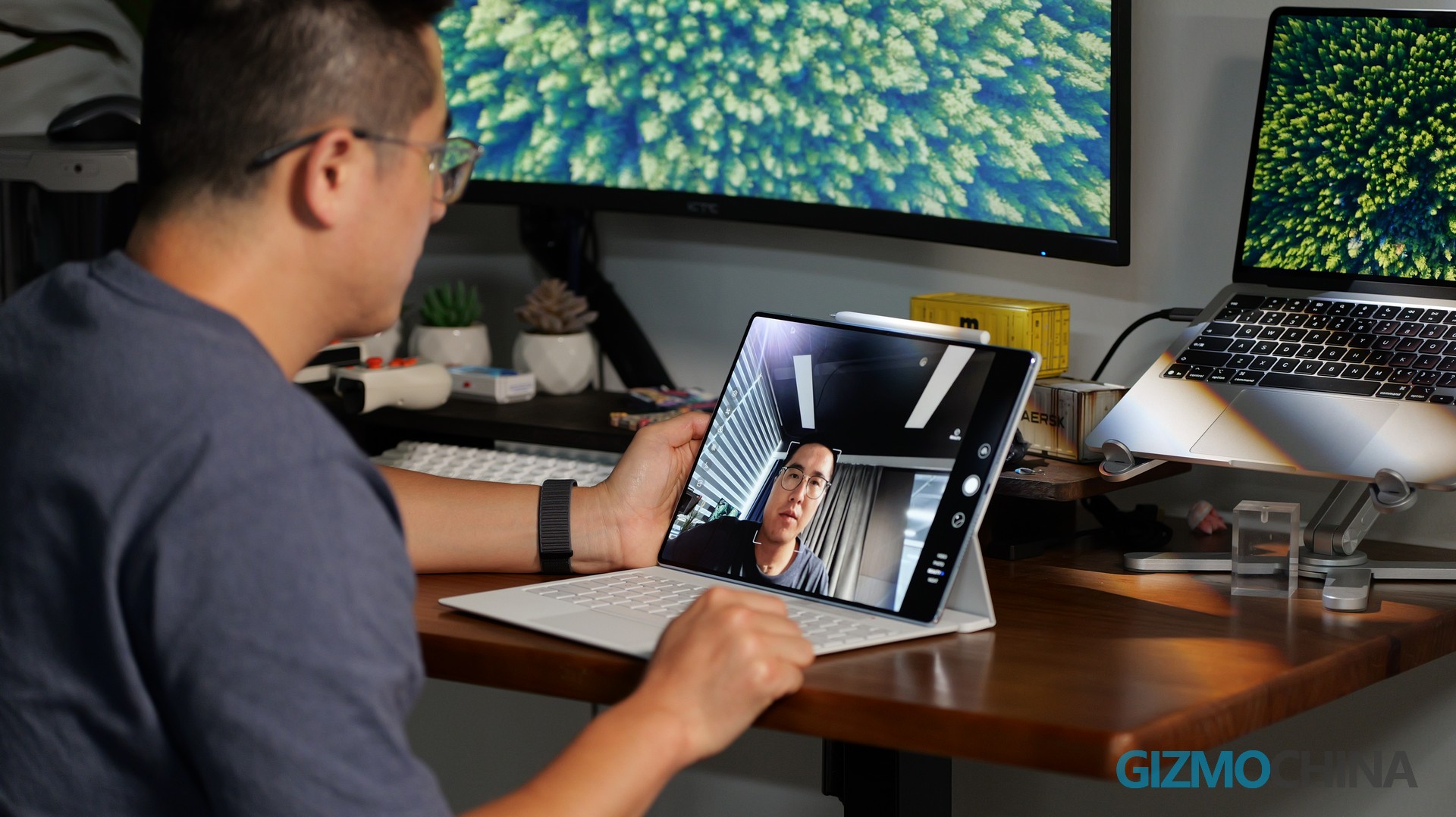
Productivity is where things get interesting. Huawei touts this as a productivity beast, but honestly, the real wins for me weren’t the PC‑level WPS suite—it was the multi‑window, stylus, and keyboard combo I actually used every day. You can run three apps side by side: I’d have a browser for research, HUAWEI Notes for jotting, and the gallery for reference images, all switching without lag. It’s not mind‑blowing, but it’s rock‑solid. However, plug in an external monitor and the magic fades; it’s simple mirroring, not true desktop expansion, so you can’t drag windows to a second screen like a laptop. That stings if you wanted a dual‑monitor workflow.

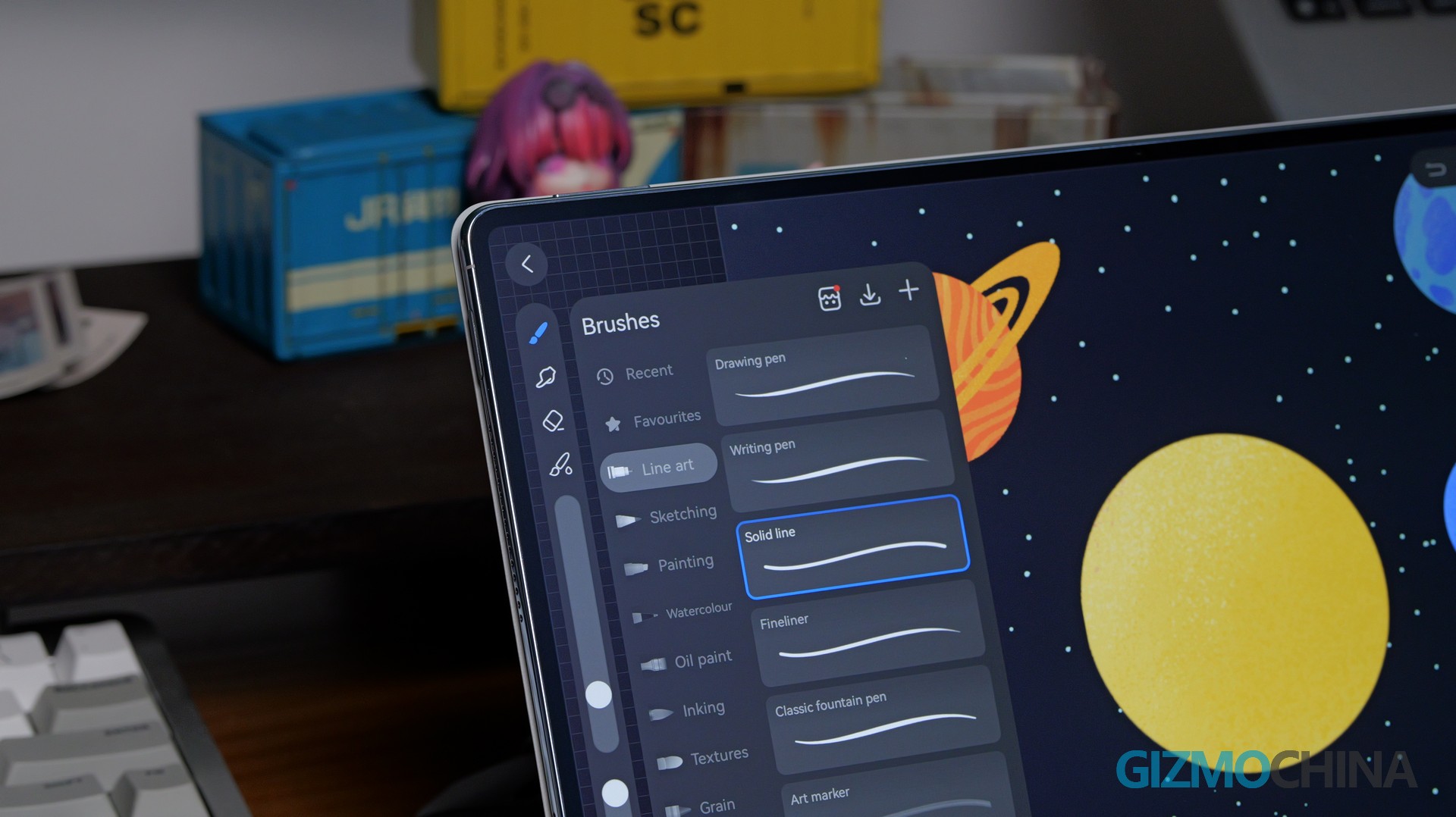
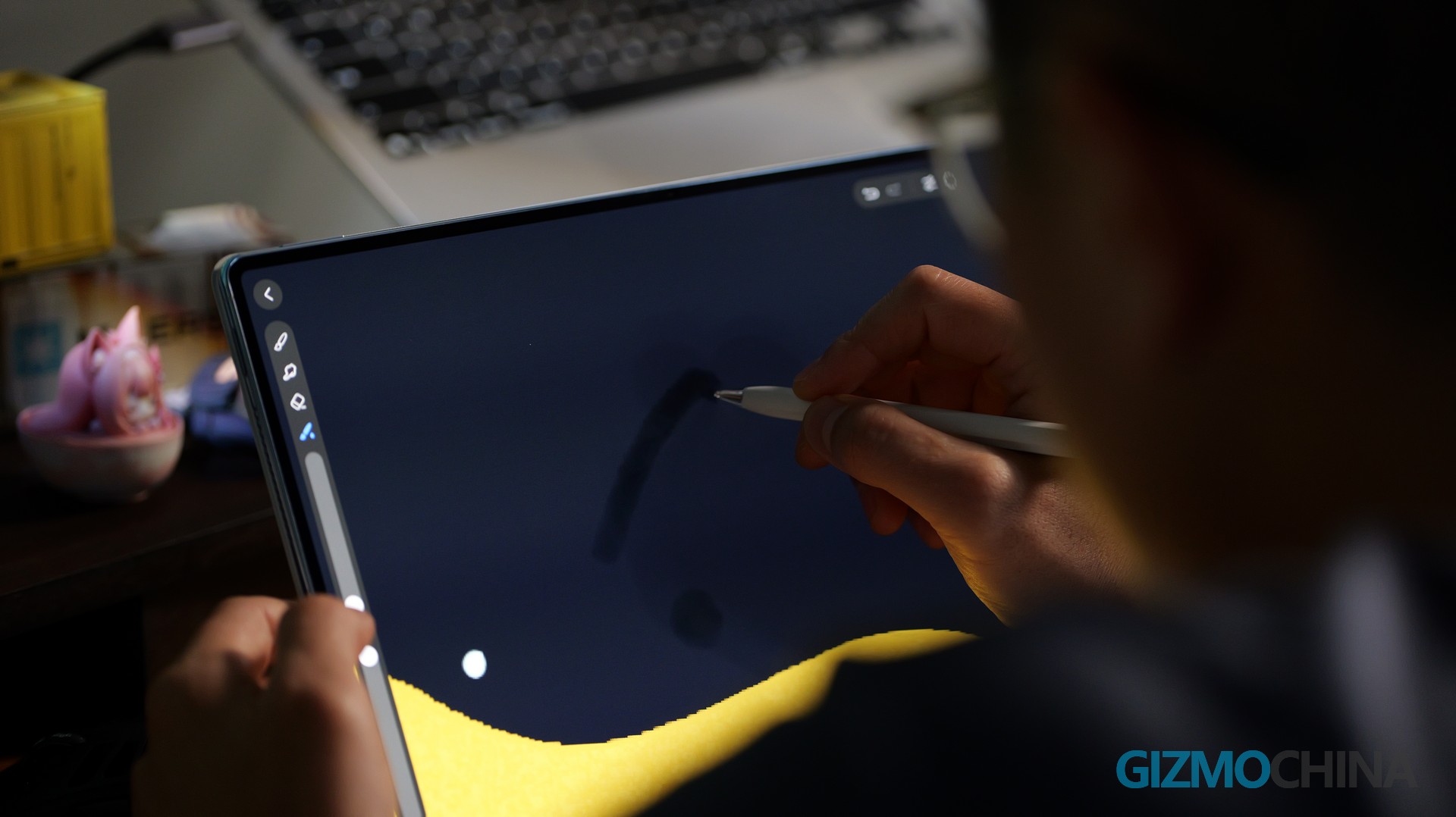
The M‑Pencil Pro (sold separately) pairs beautifully, especially with the PaperMatte screen where the etched glass gives real paper‑like friction. The GoPaint app isn’t a throwaway—brush strokes have natural ink bleed, and the smart colour palette pulls suggestions from your drawing, making it way more than “good enough” for sketching, storyboarding, or visual notes. But the surprise hit was the AI handwriting beautification in HUAWEI Notes—my handwriting is barely legible, and toggling it on transforms my scrawl into neat, natural‑looking script without turning it into robotic print. That alone made me take more notes.

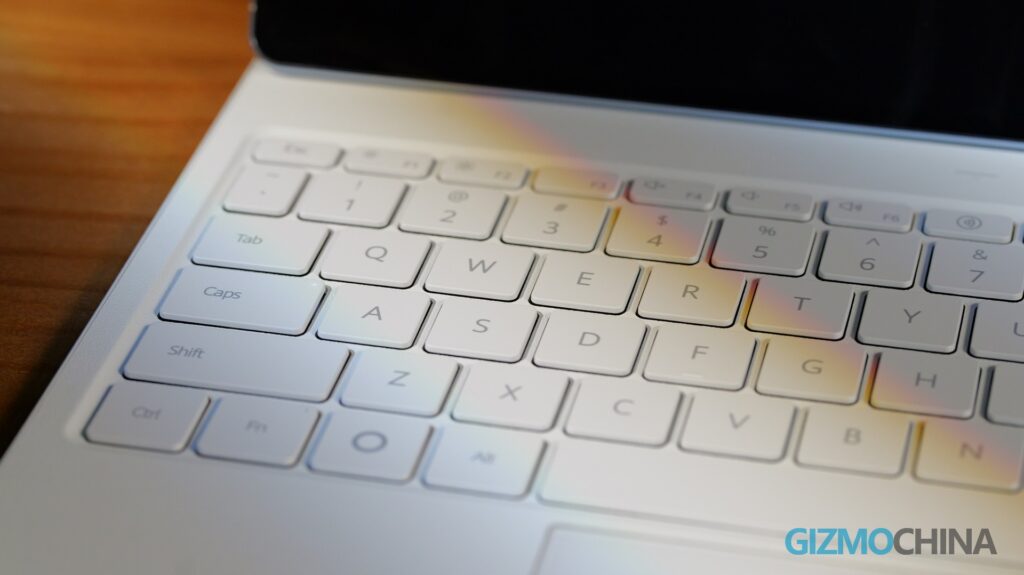
The Glide Keyboard has short key travel but snappy feedback, fine for banging out a 2,000‑word article in a pinch. The fatal flaw? No cantilever hinge. The tablet lies flat on the keyboard base—no floating angle like a Surface or iPad Pro. On a desk, it’s fine; on your lap, bed, or couch, the fixed low angle gets awkward fast. So productivity isn’t about replacing your workstation; it’s about making you actually want to pull this out of your bag to sketch, write, and stay in the flow.

Performance, Battery, and Heat

Under the hood, the international model runs Huawei’s Kirin T93 Pro chip with up to 16GB RAM, and daily tasks like notes, video, and office apps are flawless. Push it with heavy video renders or Honkai: Star Rail, though, and frame rates stutter a bit, with heat building around the upper‑middle section. Thermal management is surprisingly good—thanks to dual‑layer VC cooling, it gets warm but never hot, even during long video calls, with no throttling. Battery life is rated at 14.5 hours of local video playback; in my real‑world mix (Wi‑Fi, 50% brightness, two hours of video calls, three hours of docs, one hour of gaming), it lasted about ten hours—enough for a full workday and commute. And that 40W reverse wired charging is a lifesaver when your phone is gasping for juice.

Final Verdict

Of course, no product is perfect. The keyboard’s flat design is a genuine ergonomic pain for lap use, and the professional software ecosystem, while growing, still isn’t a full desktop replacement. And at £999.99 in the UK, it’s firmly in flagship territory.

So who is this for? The MatePad Pro Max is a laser‑focused, even specialised, flagship that puts extreme portability and an uninterrupted big screen above all else, making deliberate trade‑offs in pro performance and form factor. It’s perfect for heavy document readers and mobile workers who live out of a bag, for anyone ultra‑sensitive to weight who wants something they can forget they’re carrying, for media junkies who crave an immersive panel with great speakers, and for sketchers and note‑takers who need a digital notebook that feels natural. The moment you hold it, every spec‑sheet anxiety melts away under that barely‑there weight. It doesn’t try to replace your laptop—it wants to be the screen you actually want to take with you. Sometimes, subtraction takes more guts than addition, and Huawei just proved it.

The post Huawei MatePad Pro Max (2026) Review: Ultra‑Light, Gorgeous Screen — How Close Does It Get to a Laptop? appeared first on Gizmochina.
❌