Bahamas police opened an investigation following the drowning death of an elderly cruise ship passenger.
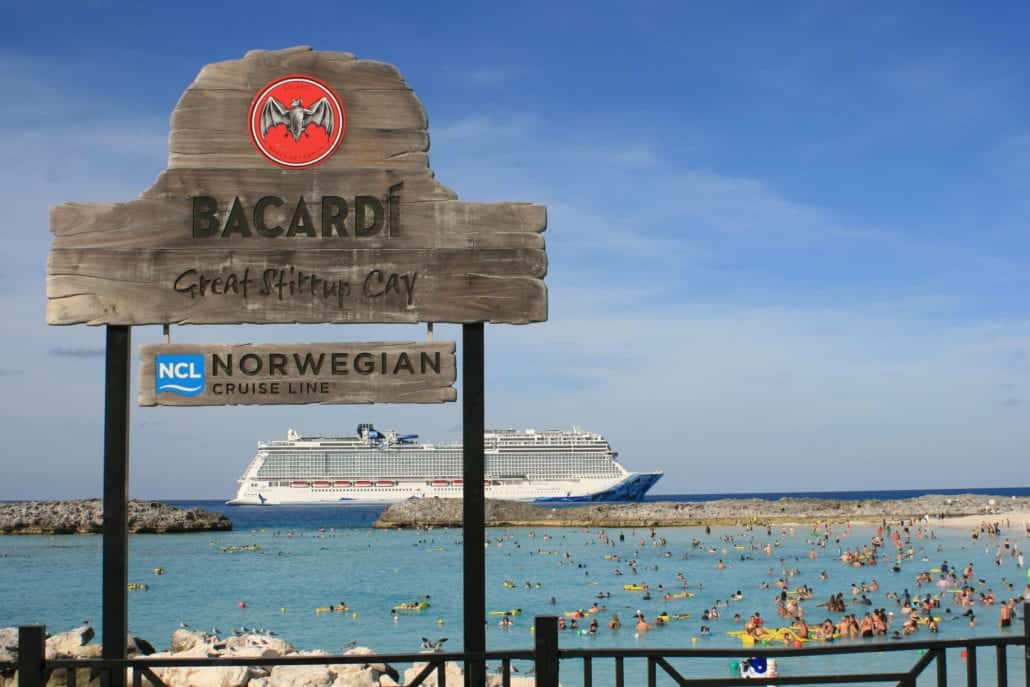
An American man, 83, died after being found unresponsive in the water Sunday during a stop at Norwegian Cruise Line’s private Bahamas destination, Great Stirrup Cay.
The man was found unresponsive by his son while snorkeling, Eyewitness News reported. Despite assistance by a lifeguard and medical personnel, he never regained consciousness. He was pronounced deceased at the scene, and his body was later transferred to New Providence for an autopsy.
Norwegian Getaway Guest Pronounced Dead at Great Stirrup Cay
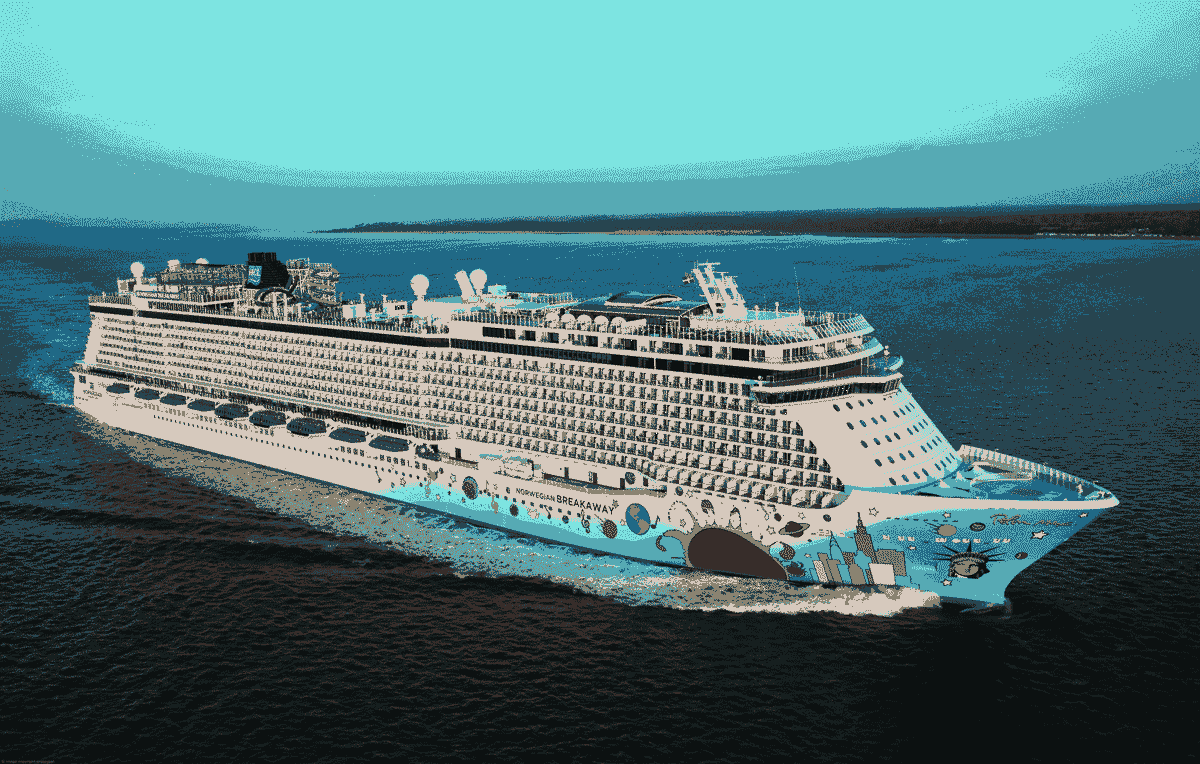
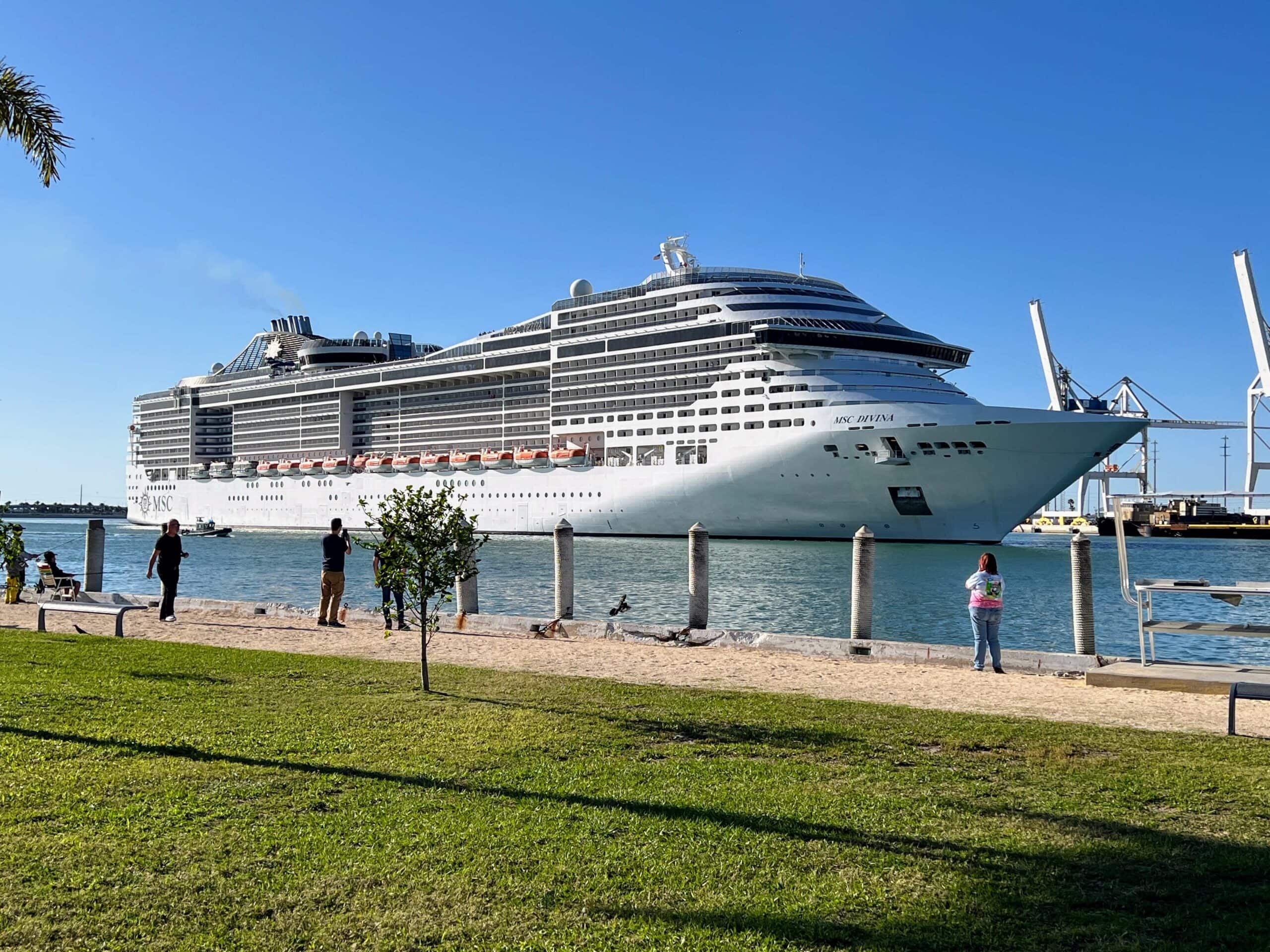
It is thought the man was a guest on Norwegian Getaway, which was the only ship to call on May 3. The vessel was on a three-night sailing in The Bahamas and had earlier docked at Nassau. It returned to PortMiami on Monday, May 4.
The incident comes less than a month after the cruise company settled a lawsuit claiming negligence in the drowning death of a guest in Bermuda in 2024.
The suit was settled for an undisclosed sum just days before a trial was set to begin. The lawsuit alleged NCL failed to warn guests about dangerous riptides, the absence of lifeguards at the beach, and previous drowning deaths in the area.
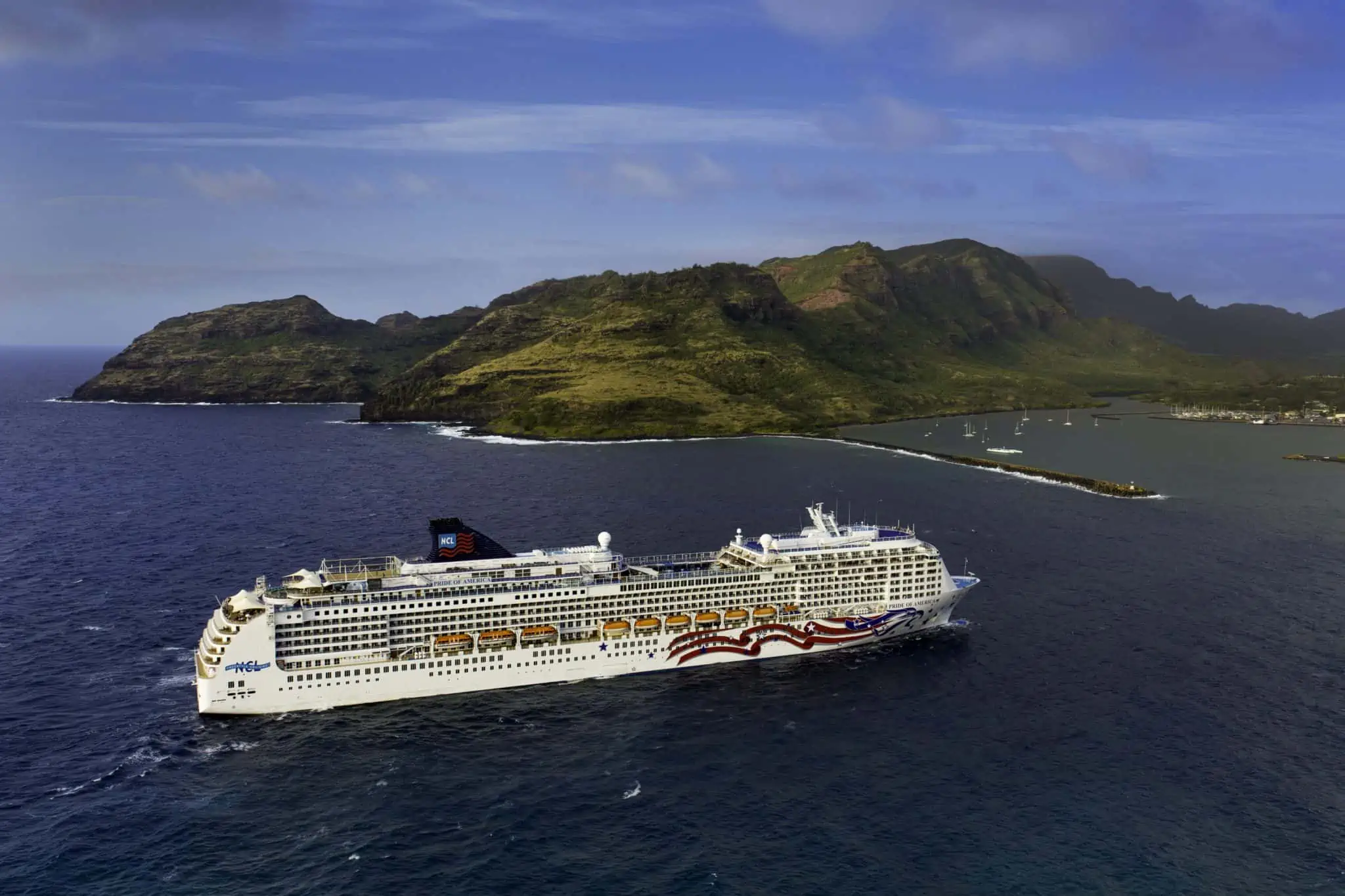
Norwegian Getaway (Photo courtesy of Norwegian Cruise Line)
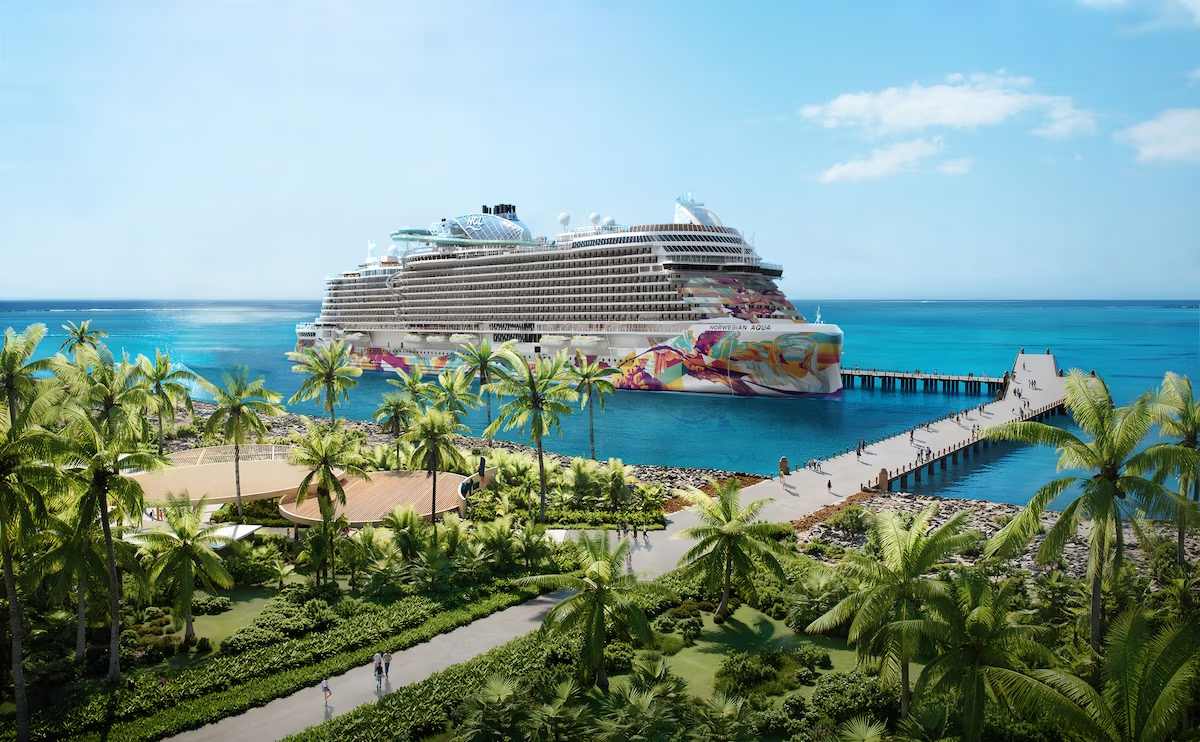
Great Stirrup Cay, part of the Berry Islands chain, has been operated by Norwegian Cruise Line since 1977, when it became the first cruise line in the industry to develop a private island concept.
The cruise line recently spent about $150 million upgrading the 268-acre island with more amenities and guest experiences. These include a 28,000-square-foot pool area and the Vibe Shore Club adults’ retreat. The Great Tides Waterpark is set to open in late summer 2026.
Norwegian Cruise Line did not respond to a request for comment at the time of publication.
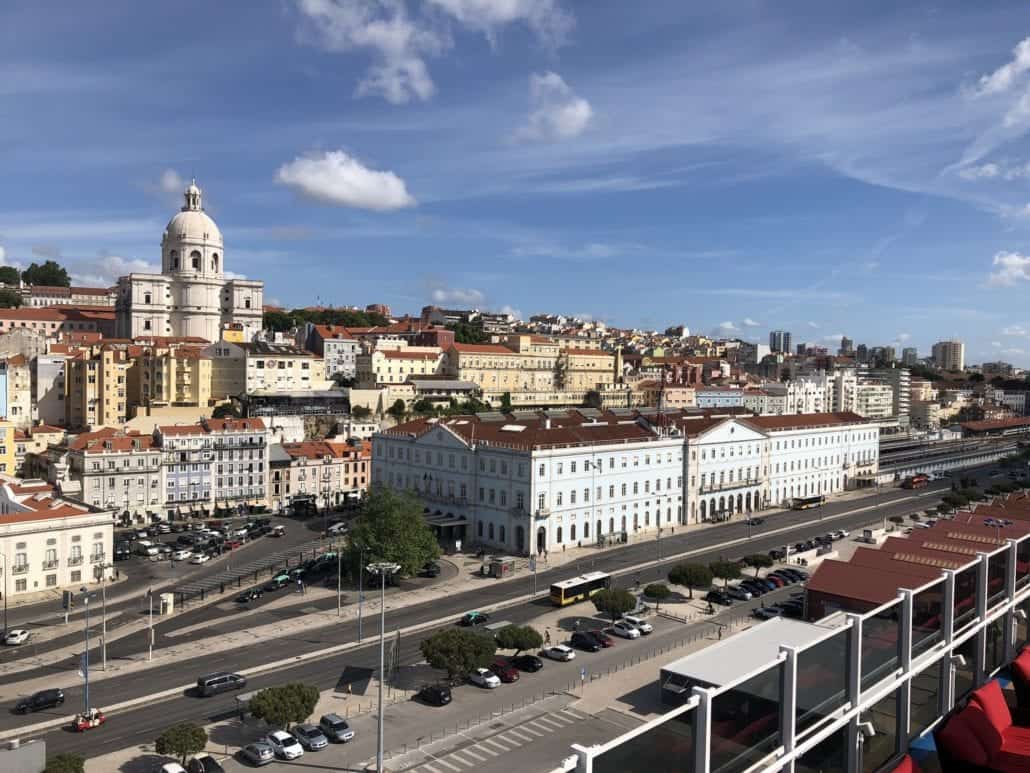
Portugal has become a steady fixture on European cruise itineraries over the past decade, with ports like Lisbon, Madeira, and Porto seeing a growing number of ship visits each year.
In fact, in 2026, over 300 cruise ships will call to Lisbon.
The cruise port of Lisbon.
For cruise passengers, that usually means a full day in port, but not a lot of time to wander too far. You’ve got a window to explore, but it needs to be efficient and easy to plan around the ship’s schedule.
That’s where bike tours have started to stand out. They offer more flexibility than a standard bus excursion, while still keeping things simple for a day in port. Around Portugal’s main cruise terminals, these tours have become a popular middle-ground option for travelers looking to see more without overcomplicating their day.
This piece is for the cruise passenger who is approaching a Lisbon, Porto, or Funchal stop and would like a clearer view of how independent bike tours actually work, how to book one without overlapping with the ship’s all-aboard time, and how to pick an operator.
The category covered by best bike tours in Portugal and similar specialised operators has standardised on a specific shore-excursion logic that cruise passengers should understand before arrival in port.
Why Does the Cruise Passenger Bike Tour Look Different From a Land-Based Bike Tour?
A bike tour the river (Photo courtesy of AmaWaterways)
The first thing to understand is that a cruise-day bike tour runs on a meaningfully tighter clock than a land-based tour.
A typical ship docks at 8 AM and requires passengers back on board by 5 PM, with all-aboard usually called 30 minutes earlier. The available shore window is roughly 8 to 9 hours, of which 30 to 60 minutes is usually consumed by the queue to leave the ship in the morning and the queue to return to the ship in the afternoon.
Operators serving the cruise category typically design tours within a recognisable set of parameters: a total duration of 4 to 6 hours with a built-in return-to-port buffer, pickup at the cruise terminal or a nearby designated meeting point within walking distance, and return to that same point at a stated time with weather and traffic contingencies documented in advance.
The route is physically achievable for cyclists with mixed experience levels, since cruise groups vary far more than land-based tour groups, and the headline price includes the bike rental, helmet, water, and a basic snack so the passenger does not have to carry anything beyond a small day bag.
A definition useful here: a guided port-day excursion is a structured shore activity with a fixed start time, fixed return time, and operator liability coverage tied to the ship’s all-aboard schedule. Passengers who book independent excursions outside the ship’s official program take on the responsibility for returning before all-aboard, with the ship not waiting for late returns.
The cruise lines themselves often sell bike tours, but the operators they contract with are usually higher-volume operations charging 40 to 80 percent above what an independent passenger pays directly. The trade-off is the cruise line’s all-aboard guarantee: if the cruise-line excursion runs late, the ship waits.
What Are the Major Portuguese Cruise Ports for Bike Tours?
Portugal’s three primary cruise ports each support a distinctive bike-tour profile.
Lisbon: the most-trafficked port and the broadest tour menu. Routes typically include the Belém district, the Tagus waterfront from Cais do Sodré to Parque das Nações, and the longer 35 to 50 kilometre option to Cascais and back via the coastal cycle path. Mediterranean cruise lines that include Lisbon among their most-recommended Mediterranean cruise ports typically dock at the Santa Apolónia or Alcântara terminals, both within easy access to bike-tour pickup points.
Porto: the Leixões cruise terminal sits 7 kilometres north of central Porto, and bike tours typically operate from a meeting point in central Porto with operators arranging a shuttle or taxi from the cruise terminal. Routes include the Douro waterfront from Ribeira to Foz, the Vila Nova de Gaia port-house tour, and the longer 30 to 45 kilometre option toward the Douro Valley vineyards.
Funchal: Madeira’s port supports a different category of bike tour, with elevation changes that demand more cyclist fitness. Routes include the coastal Promenade from Funchal to Câmara de Lobos and the more demanding Levada-side tours that combine cycling with short hiking sections.
How Should Cruise Passengers Book Independently Without Missing the Ship?
The independent-booking calculation comes down to the buffer the passenger builds into the schedule. Cruise lines call all-aboard time 30 minutes before departure, and most ships sail within 5 to 15 minutes of the scheduled departure regardless of late passengers.
A safe independent-booking framework:
Book a tour that ends at least 90 minutes before all-aboard, not 30 minutes
Confirm the operator’s documented late-return protocol before paying
Get the operator’s phone number on a paper card before leaving the meeting point
Carry the cruise line’s local agent contact number as backup
Plan the return to the ship using a route that has redundancy (taxi available, public transit available, walking distance achievable)
What Should Cruise Passengers Look For in a Bike Tour Operator?
(Photo via Pixabay)
The right operator carries a few signals worth checking before the cruise sails. Stated experience working with cruise passengers (ideally with reviews mentioning specific cruise lines and ports) sits at the top of the list, paired with a documented return-to-port protocol that names buffer times relative to all-aboard rather than waving the question away.
A typical tour group of 6 to 14 passengers usually lands in the right zone for the operator (large enough to cover costs) and the passenger (small enough for a real guide-passenger relationship).
The bike fleet should include step-through, hybrid, and electric-assist options so passengers with knee or fitness considerations are not boxed out, and the headline price should include helmet, water, snack, and a basic mechanical kit so the passenger is not nickel-and-dimed at the meeting point.
The cancellation policy needs to cover ship itinerary changes (cruise lines occasionally skip ports), and a working communication channel for the day before arrival (WhatsApp or SMS, typically) lets the operator handle last-minute coordination without a phone-tag exchange across time zones.
A definition worth knowing: an itinerary change is a cruise-line schedule modification (skipping a port, arriving late, departing early) usually announced 24 to 72 hours ahead. The better bike-tour operators have a documented policy that refunds or reschedules when the ship’s port call is altered through no fault of the passenger.
Common Mistakes Cruise Passengers Make Around Port-Day Bike Tours
The recurring mistakes that surface in operator post-tour surveys cluster around a small set of avoidable misjudgements. Booking a tour that ends 30 minutes before all-aboard rather than 90 minutes is the most common error, and the 60-minute difference is the difference between a calm return and a panicked taxi.
Skipping the tour-operator phone number is the second pattern: cruise passengers who lose track of time without a working number for the operator often miss connections that a quick call would have salvaged.
The third is underestimating the heat in summer, since Portugal cruise season peaks in July and August when daytime highs in Lisbon and Porto reach 32 to 36 degrees Celsius, and tours in that window need earlier start times, more water, and electric-assist options for passengers who do not regularly cycle in heat.
A Viking river ship in Porto, Portugal (Photo courtesy of Viking)
The cobblestone factor is the fourth misjudgement. Lisbon’s central districts are paved with calçada portuguesa, the traditional cobblestone surface, and cyclists with certain joint issues find the cobblestones uncomfortable on a standard hybrid bike (a wider-tyre or electric option helps).
Mixing the tour with a long lunch on the same day is the fifth: the 4 to 6 hour bike tour plus a 90-minute lunch plus the leaving and returning queues at the gangway consumes the full port day, and passengers who plan additional stops sometimes underestimate the cumulative time.
The sixth and final pattern is booking on price alone. The cheapest tour is rarely the right one, and the right operator is the one whose cancellation policy, return-to-port protocol, and experience with cruise passengers all hold up to a brief phone or email conversation before the ship sails.
The same comparison-shopping discipline that experienced cruisers apply to choosing among the four basic stateroom categories before booking the ship itself carries through to the shore-excursion decision once the itinerary is set.
Frequently Asked Questions From Cruise Passengers
How much should an independent bike tour in Portugal cost?
A 4 to 6 hour cruise-day bike tour in Lisbon, Porto, or Funchal typically runs €60 to €110 per passenger inclusive of bike, helmet, water, and a basic snack.
Electric-assist bikes add €15 to €25. Smaller-group premium tours with a wine tasting or specialty-food component run €120 to €180. Operators booking primarily through cruise lines charge meaningfully more for the same route.
What if the cruise line skips Lisbon or Porto due to weather?
The better independent operators have a documented refund or reschedule policy when the ship skips the port through no fault of the passenger.
The policy should be in writing before the tour is paid. Some operators offer credit toward a future booking; others refund 70 to 100 percent depending on how much advance notice they receive. The cancellation conversation should happen at booking time, not after the ship has already skipped the port.
Are electric-assist bikes worth the upgrade?
For most passengers over 50, in Portugal’s hilly central districts, on a tour longer than 25 kilometres, or in summer heat, yes. The electric assist evens out the elevation profile that otherwise becomes the limiting factor for mixed-fitness groups. The €15 to €25 premium typically pays for itself in the willingness to actually finish the route rather than turning back early.
Can solo cruise passengers join a tour without a companion?
Yes. Most operators run tours with mixed solo-and-couple bookings, and a typical tour of 8 to 12 passengers usually has 2 or 3 solo travelers. Solo cyclists generally find the experience welcoming, and the smaller-group format makes it easier to chat with fellow passengers than the larger cruise-line excursions allow.
A Final Note for Cruise Passengers Planning a Portuguese Port Day
The Portuguese cruise itinerary is one of the cleaner European cruise destinations to combine with independent shore excursions, and a quality bike tour is one of the highest-value-per-hour options available in the 8 to 12 hour port window.
The passengers who book carefully (with a 90-minute buffer before all-aboard, a phone number for the operator, and a documented refund policy if the ship skips the port) come back to the ship calm, on time, and with a meaningfully better understanding of the destination than the bus-tour passenger who saw the same neighborhoods through a coach window.
The Portuguese cycling network is built for the casual visitor, the operators serving the cruise category have matured into a real specialty service, and the planning effort required is small compared with the experience-quality difference at the end of the day.
Three passengers have died and at least three others are ill in a suspected hantavirus outbreak aboard the MV Hondius, an expedition cruise ship currently anchored off Praia, the capital of Cape Verde. The World Health Organization confirmed the situation Sunday.
Of the six symptomatic individuals, just one case of hantavirus infection has been confirmed in a laboratory so far, while the other five are suspected cases, the WHO said.
Two crew members, one British and one Dutch national, are currently experiencing acute respiratory symptoms requiring urgent care, according to ship operator Oceanwide Expeditions.
Dutch couple among the dead
Two of the deceased were a married couple. A 70-year-old Dutch man died onboard on April 11 and was declared dead on arrival to the remote Atlantic island of Saint Helena on April 24. His 69-year-old wife collapsed at Johannesburg’s international airport while attempting to fly home to the Netherlands and died there.
Oceanwide Expeditions said at the time that it had not confirmed whether the couple’s deaths were connected to the onboard outbreak.
The third victim was a German national, although the official cause of death has not been established, Oceanwide said.
One confirmed hantavirus case
After the ship left Saint Helena, a British national fell sick on April 27. He is now in critical condition at a private medical facility in Johannesburg and is the only case confirmed to be hantavirus, according to South Africa’s Health Department. The UK’s Foreign Office said it is monitoring the situation and is in touch with the cruise company and local authorities.
Oceanwide Expeditions said 149 people remain onboard, including 17 Americans. They will not be allowed to disembark in Cape Verde, the island nation’s health minister told Radio Cabo Verde. The ship is considering sailing to Las Palmas or Tenerife in the Canary Islands for disembarkation.
How hantavirus spreads
Hantavirus is most commonly spread when infected rodents’ urine, saliva, or droppings dry out and become airborne, and humans become infected by inhaling the contaminated particles, according to the WHO. There is no dedicated treatment or cure, though early detection improves the odds of survival. Unlike norovirus, which is commonly reported on cruise ships, hantavirus cases at sea are essentially unheard of.
“Detailed investigations are ongoing, including further laboratory testing and epidemiological investigations. Medical care and support are being provided to passengers and crew,” the WHO said.
The MV Hondius, operated by Netherlands-based Oceanwide Expeditions, departed Ushuaia, Argentina and made stops in Antarctica and Saint Helena before anchoring off Cape Verde. The ship has a passenger capacity of 170.
Among the many people dealing with the unexpected shutdown of Spirit Airlines are hundreds of cruise passengers. With literally no advance notice, they are suddenly scrambling to find alternative modes of transport in order to board their awaiting ship.
What Spirit Airlines Said
While Spirit has faced financial struggles for years, their sudden closure caught most by surprise. “It is with great disappointment that on May 2, 2026, Spirit Airlines started an orderly wind down of our operations, effective immediately.”
Making it entirely clear, the airline went on to say “all flights have been cancelled, and customer service is no longer available.”
Even as this news was impacting both travelers and Spirt Airlines employees who suddenly found themselves both unemployed and, in many cases, stranded, other airlines stepped up to help. Several — including JetBlue, Southwest, United and Delta — agreed to cap ticket prices for displaced Spirit Airlines guests with confirmation of payment.
These airlines agreed to do so for limited times ranging from 72 hours to two weeks.
How Cruisers Are Reacting
Given that Spirit Airlines has become the popular butt of many a joke in recent years, it’s not surprising that some turned the news into a commonly-repeated punchline: “On the plus side,” their general sentiment read, “no one will ever have to fly Spirit Airlines again!”
Those impacted by the unexpected closure, however, weren’t laughing.
“We booked our flights and paid our fare months ago,” wrote one Redditor of their sudden plight. “Now we’re at the airport trying to find a flight that won’t cost us a fortune. And no, before you ask, we didn’t buy travel insurance, which I always have in the past!”
Another passenger shared a similar story. “We were literally heading out the door when my sister called to tell me the news,” she shared in a Facebook cruise group. “I thought she was joking and told her it wasn’t funny. Well, joke’s on me because now our only option is to drive seven hours and hope we make it!”
Moving Forward
A common theme among cruisers addressing the shutdown? Buy travel insurance. “I don’t want to say I told you so,” wrote one Redditor, “but yeah, I told you so. Always buy travel insurance.”
The other commonly shared advice? To always fly to your embarkation point at least a day in advance. In fact, Norwegian Cruise Line recently instituted a policy requiring that anyone taking advantage of their Air/Sea program to do exactly that. Why? In the event of travel delays which might derail one’s arrival at the cruise port in a timely manner.
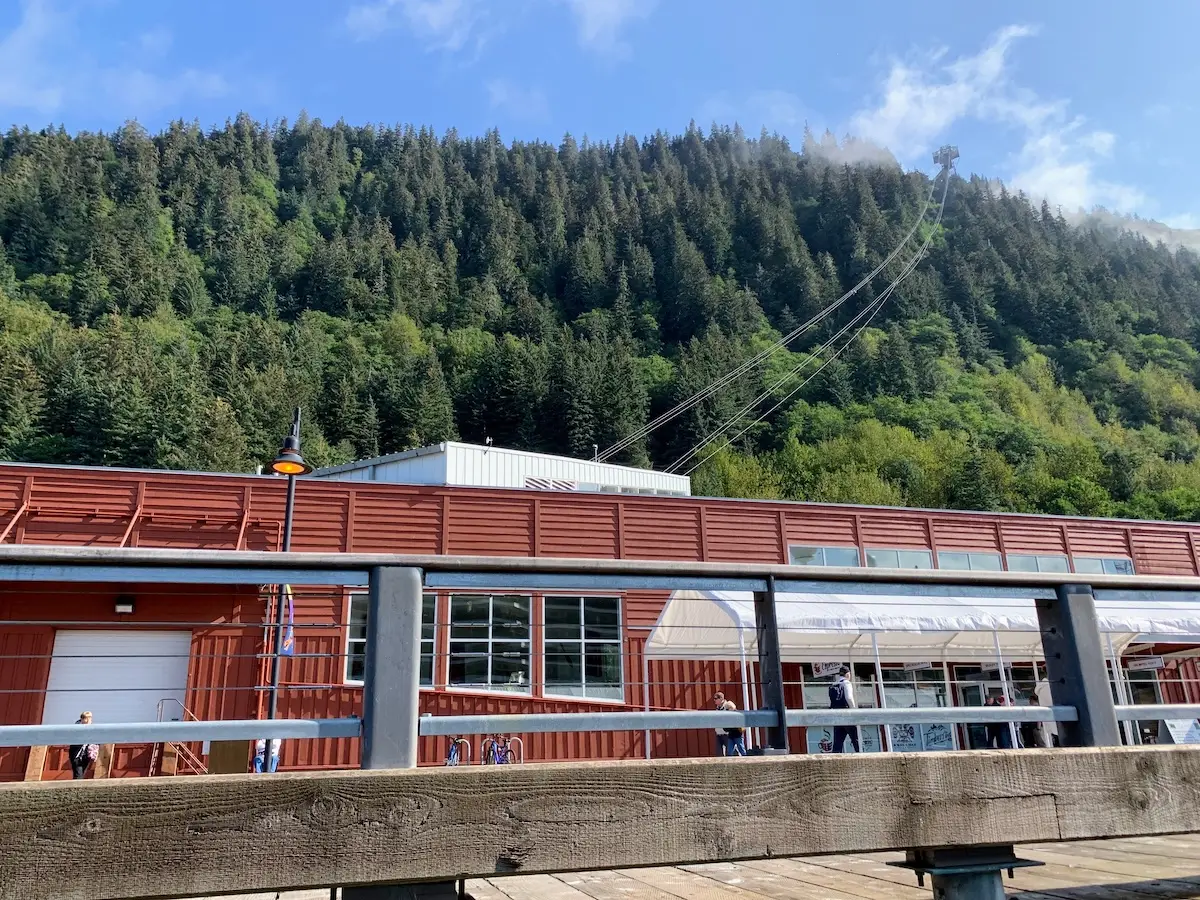
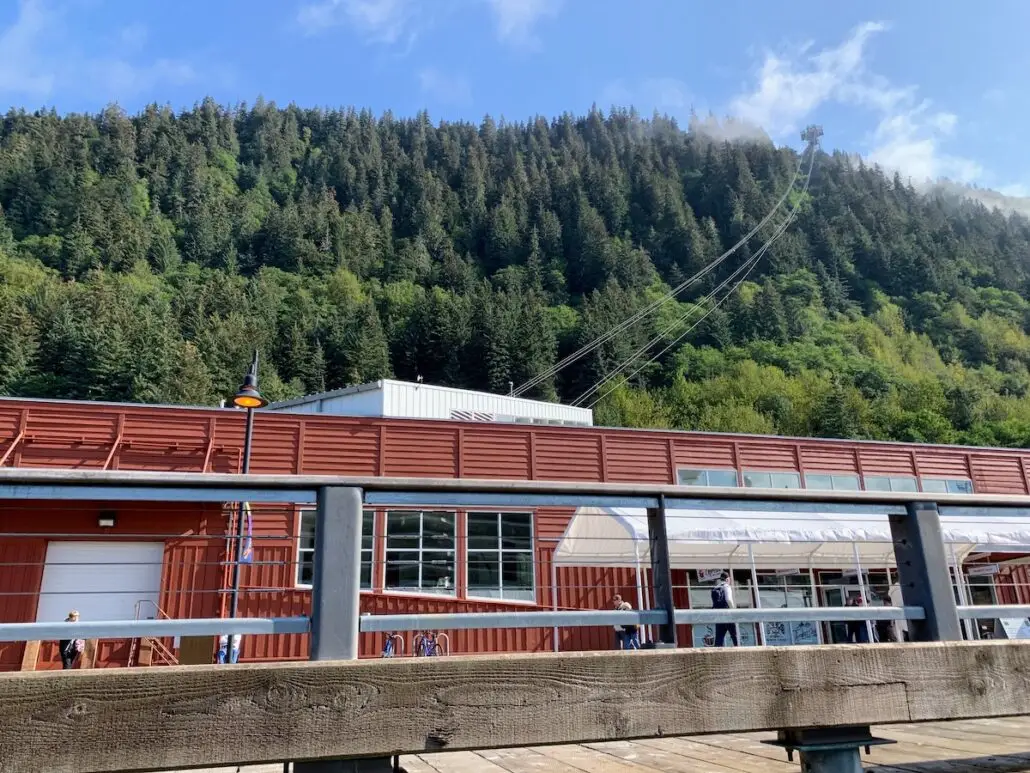
Alaska’s Goldbelt Tram, located beside Juneau’s downtown cruise dock, will remain closed for several days after two employees were hospitalized following an accident at the base station.
The incident happened just days after the 2026 Juneau cruise season got underway.
No cruise passengers were involved
A cable car came into the base station faster than expected, injuring two staff members who were later taken to the hospital. One was unconscious at the scene, but both were released over the weekend.
Goldbelt confirmed five employees were aboard the tram at the time and no cruise guests were present. The three other staffers did not require medical treatment.
Capital City Fire and Rescue responded to the scene, saying it “successfully stabilized the cabin and gained access to all occupants.”
The tram remained closed Friday and is not expected to reopen for several days. Director of Operations and Facilities Ben Moorhead said representatives from the lift manufacturer and state safety officials are traveling to Juneau to assess the situation.
“It came in faster than anticipated, and docked at a higher rate of speed,” Moorhead said. He added that coordination is underway with the lift manufacturer to determine what happened and make necessary repairs.
Tram ride is a popular shore activity for cruisers
The Goldbelt Tram is one of Juneau’s most popular attractions for cruise guests. It carries riders 1,800 feet up Mount Roberts, offering panoramic views of downtown Juneau and the Gastineau Channel.
At the top, visitors can explore hiking trails, a bar and grill, a gift shop and a theater.
The closure comes at the start of what is already a closely watched season.
The 2026 Juneau cruise season began just days ago with the arrival of Holland America Line’s Eurodam and marks the first year operating under new daily cruise passenger limits.
Cruise vacations still offer a lot of value, but the way you pay for them has changed. Today’s cruise experience is more à la carte, with a mix of included amenities and optional add-ons that can quickly increase the total cost.
(Photo courtesy of Carnival Cruise Line)
The frustration isn’t the extra charges themselves, it’s not knowing what to expect ahead of time. A little preparation can make a big difference.
Here are seven ways to avoid feeling nickel-and-dimed on your next cruise.
This article was originally published in 2017 and has been updated to reflect current cruise pricing, packages, and onboard policies.
1. Know Before You Go
The easiest way to avoid feeling nickel-and-dimed on a cruise is to understand what’s included before you even step onboard. Your cruise fare typically covers your cabin, main dining venues, entertainment, and transportation between ports. But a lot of extras fall outside of that base price.
Gratuities, shore excursions, drink packages, WiFi, and specialty dining are some of the most common add-ons. In recent years, cruise lines have also expanded paid options, including premium restaurants, exclusive deck areas, and certain onboard experiences.
The more familiar you are with your specific ship and cruise line ahead of time, the easier it is to set a realistic budget and avoid surprises once you’re onboard.
2. Set Expectations
Part of avoiding that “nickel-and-dimed” feeling comes down to expectations. If you go into a cruise assuming everything is included, those extra charges can feel frustrating. But if you already know where the added costs are, they’re much easier to accept.
Most modern cruise ships offer a mix of included and for-fee experiences. That can range from specialty dining and premium drinks to spa treatments and certain attractions. It’s not necessarily about being overcharged, it’s about how those options are presented once you’re onboard.
Going in with a clear understanding of what you’re likely to pay for helps remove the surprise factor. And in many cases, that’s what makes the biggest difference in how you feel about your overall cruise experience.
3. Use a Travel Agent
A good travel agent can help you understand what to expect on your specific ship before you sail, but you can also get a solid overview by reviewing a Carnival Cruise Line guide ahead of time.
For example, if you’re booking a cruise on one of Norwegian’s newer ships, an agent can explain options like The Vibe Beach Club or specialty dining packages, including how pricing works and whether it makes sense to book ahead of time.
Even if you’re used to booking on your own, having someone walk you through the details can help you avoid surprises later. It’s less about the cost itself and more about how those options are presented.
4. Book All-Inclusive (or Bundled Options)
(Photo Courtesy of Richard Branson/Facebook)
One way to limit surprise charges is to bundle as much as you can before your cruise. While most mainstream cruise lines aren’t fully all-inclusive, many now offer packages that combine things like drinks, WiFi, specialty dining, and shore excursion credits.
Some cruise lines promote these as ‘included’ perks, but that doesn’t always mean everything is fully covered. In many cases, gratuities or upgrade fees still apply, especially with drink packages and WiFi plans.
If you’re looking for a more straightforward experience, luxury cruise lines tend to include more upfront, sometimes covering drinks, excursions, and even airfare. But for most travelers, bundled packages on mainstream lines can still offer good value as long as you know what’s included and what isn’t.
5. Make a Plan
Once you understand what costs extra, it helps to go in with a basic plan. That doesn’t mean scheduling every minute, but having an idea of what you actually want to spend money on.
If there are specialty restaurants you want to try, excursions you don’t want to miss, or packages you’re considering, decide that ahead of time. That way, you’re choosing where to spend instead of reacting to every offer once you’re onboard.
A little planning goes a long way. It helps you prioritize your onboard spending around what matters most and keeps those extra charges from adding up without you realizing it.
6. Stick to Your Plan
It’s easy to loosen up once you’re onboard. You’re on vacation, everything is right in front of you, and it’s designed to be tempting. That’s part of the experience.
But if you’ve already decided what’s worth spending on, it helps to stick to it. That doesn’t mean you can’t be flexible, but having a plan gives you a baseline so you’re not making every decision in the moment.
Even a little discipline can keep your onboard spending from getting out of hand, especially on longer cruises where those extra charges can add up quickly.
7. Keep a Rainy Day Fund
Even with a plan, unexpected costs can still come up. Whether it’s a last-minute excursion, a specialty dinner you didn’t plan on, or something small that adds up over time, it helps to have a little cushion set aside.
Think of it as built-in flexibility rather than a backup for mistakes. That way, if you do decide to spend a little more than expected, it doesn’t take away from the overall experience.
Having that buffer can make it easier to enjoy the trip without second-guessing every purchase along the way.
8. Check Pricing Before You Sail
Cruise lines now make it easier to preview and book many extras before your trip. From drink packages to shore excursions, pricing is often available in the cruise line’s app or website ahead of time.
In many cases, these options are cheaper to book before you board. Taking a few minutes to review pricing in advance can help you avoid paying more onboard and gives you a better idea of what your total cruise cost will look like.
Final Thought:
Cruising today is more customizable than it used to be, and that’s not necessarily a bad thing. The key is understanding what’s included, what costs extra, and deciding ahead of time what matters most to you.
Once you go in with a plan, those added options feel less like surprises and more like choices. And that makes it a lot easier to enjoy the experience without worrying about the final bill.
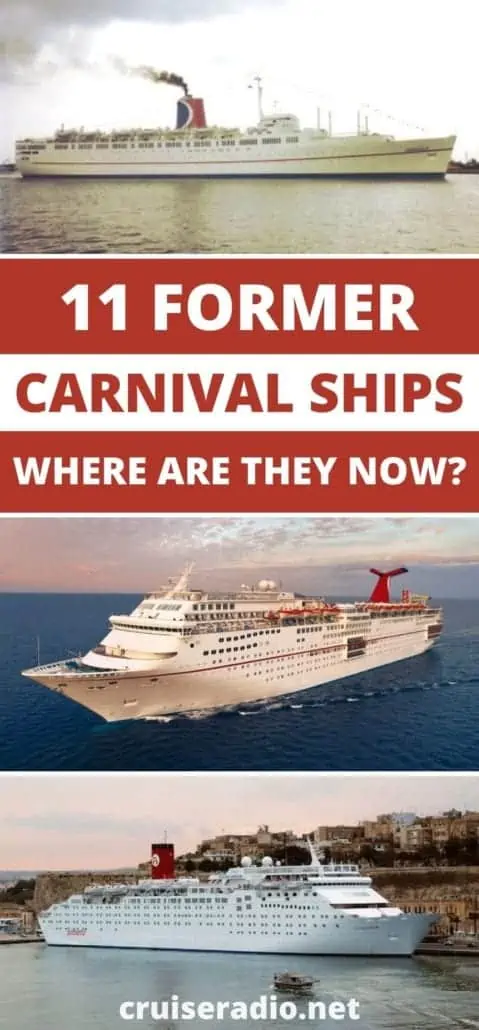
Carnival Cruise Line has retired many of its earliest ships over the decades, but most didn’t simply disappear.
Many went on to second lives with other cruise lines before eventually being scrapped, especially after the 2020 shutdown.
Below is a look at some of Carnival’s former ships and what ultimately happened to them.
Ship
Entered Service
Later Service Name(s)
Final Fate
Mardi Gras
1972
Olympic, Apollon
Scrapped (2003)
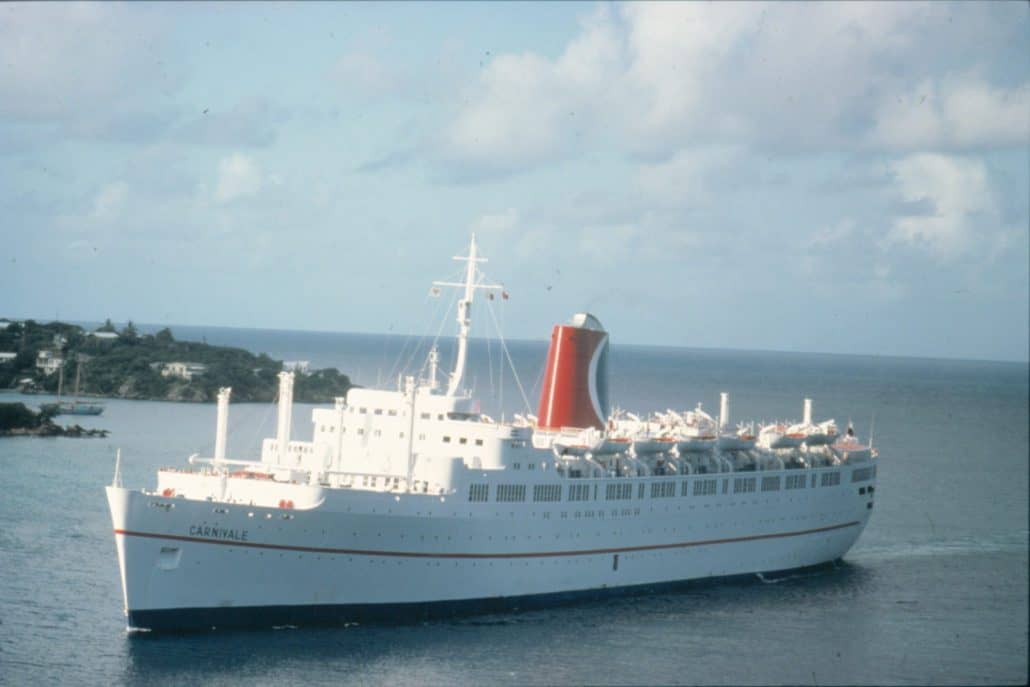
Carnivale
1976
Fiesta Marina, Olympic, Topaz
Scrapped (2009)
Festivale
1977
Island Breeze, Big Red Boat III
Scrapped (2003)
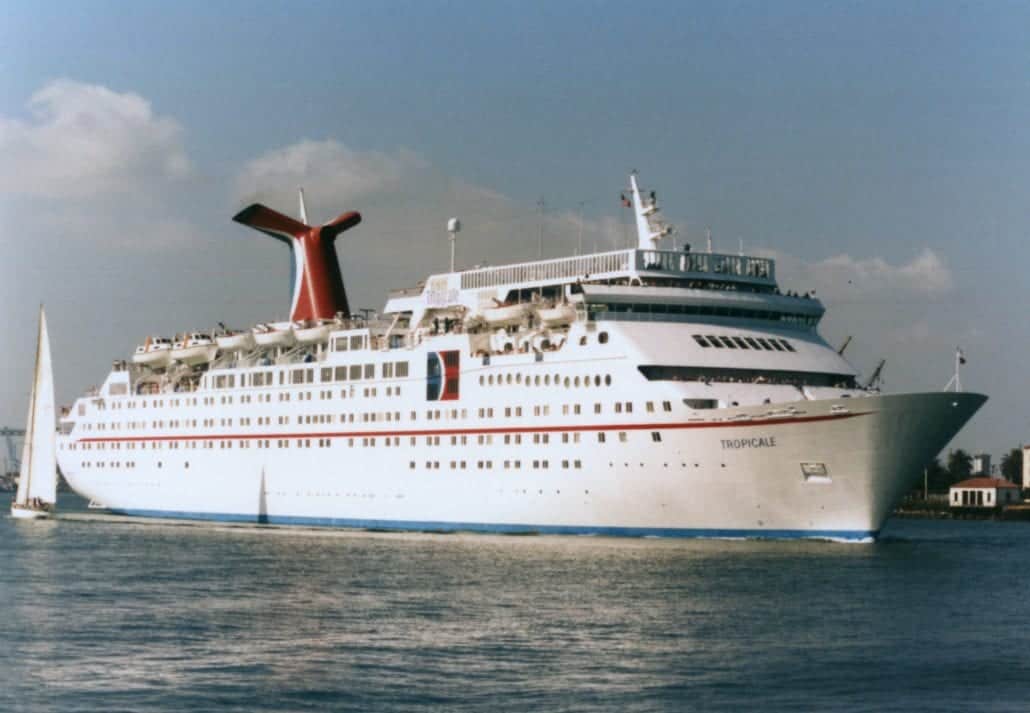
Tropicale
1982
Costa Tropicale, Pacific Star, Ocean Dream
Scrapped (2021)
Holiday
1985
Grand Holiday, Magellan
Scrapped (2021)
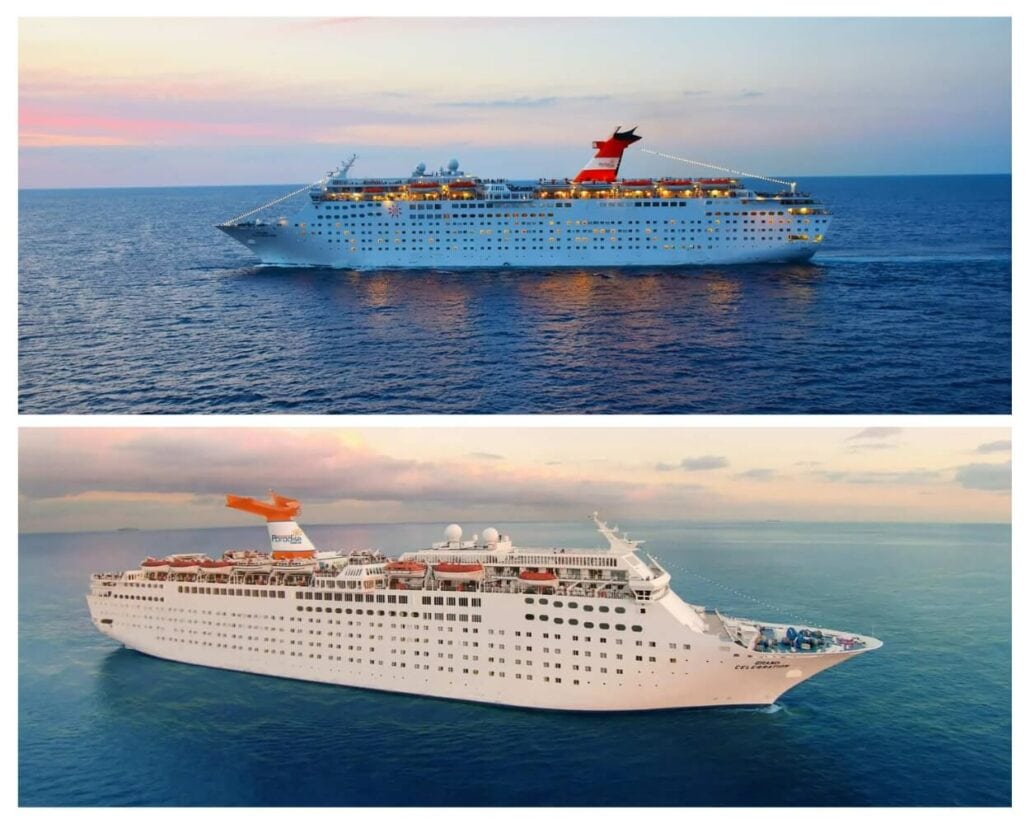
Celebration
1987
Grand Celebration
Scrapped (2021)
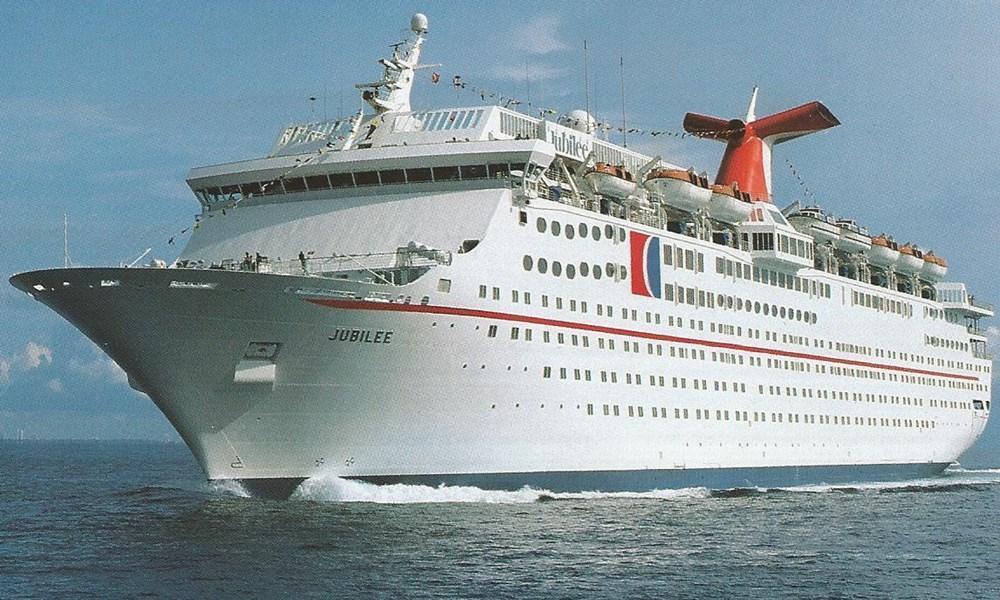
Jubilee
1986
Pacific Sun, Henna
Scrapped (2017)
Carnival Fantasy
1990
—
Scrapped (2020)
Carnival Ecstasy
1991
—
Scrapped (2022)
Carnival Sensation
1993
—
Scrapped (2022)
Carnival Fascination
1994
Century Harmony (briefly)
Scrapped (2022)
Carnival Imagination
1995
—
Scrapped (2020)
Carnival Inspiration
1996
—
Scrapped (2020)
Check out a bit of history behind the 13 former Carnival Cruise Line ships and see where they are now.
1. Mardi Gras
(Photo via Carnival Cruise Line)
Mardi Gras was sold to Carnival from Canadian Pacific in 1972 and was just over 18,000 gross registered tons. She sailed under the Carnival flag until 1993 and was then sold to Epirotiki.
Many names and a few cruise lines later, the ship was laid up and ultimately sold for scrap in 2003.
In 2021, Carnival debuted a new Mardi Gras from Port Canaveral, Florida. You can read our full review of the ship here.
The Excel-class ship features BOLT, the first roller coaster at sea, an attraction later added to sister ships Carnival Celebration and Carnival Jubilee.
2. Carnivale
The Carnivale after a complete transformation. (Photo via Carnival Cruise Line)
Before being sold to Carnival in 1976, Carnivale was called Queen Ann Maria for the operator Greek Line. In 1993, Carnival transferred her to a subsidiary cruise line, Fiesta Marina Cruises.
After a few other cruise lines and the final name of Topaz sailing under the Peace Boat Organization, she was retired and laid up in April 2008.
The ship was beached in India to be scrapped that summer, with the process completed in 2009.
3. Festivale
Carnival Tropicale, Festivale, and Holiday (Photo courtesy of Carnival Cruise Line)
Carnival acquired Festivale in 1977 from the South African Marine Corporation. She was originally a mail service ocean liner, but when Carnival bought her, they refit her into a cruise ship in Japan for $30 million.
After sailing for several cruise lines, she ended up with Premier Cruise Line under the name Big Red Boat III. When Premier went bankrupt in 2000, the ship was seized and ultimately scrapped in 2003.
4. Tropicale
The Tropicale in Los Angeles in 1986. (Photo via Carnival Cruise Line)
Tropicale was a monumental ship for Carnival, as she was their first new build. She began sailing in 1982, mainly in the Caribbean.
The ship was later transferred to Costa as Costa Tropicale, then to P&O Australia as Pacific Star. She was eventually sold to Pullmantur Cruises, refurbished, and sailed as Ocean Dream.
After a final stint with Peace Boat, the ship was scrapped in January 2021.
5. Holiday
The Holiday departing Los Angeles in 2000. (Photo via Carnival Cruise Line)
Holiday was Carnival’s second purpose-built ship. Constructed in Denmark, Holiday entered service in 1985. In 2003, she was refurbished, and in 2005, during Hurricane Katrina, she was used as temporary housing for victims of the storm.
She sailed from Alabama to the western Caribbean until 2009, when she was transferred to Iberocruceros and renamed Grand Holiday.
She later sailed as Magellan for Cruise & Maritime Voyages. After CMV ceased operations in 2020, the ship was purchased at auction and eventually sent to Alang, India, where she was scrapped in 2021.
6. Celebration
Celebration was built for Carnival in Sweden and entered service in 1987. She sailed for the line until 2008, when she was transferred to Iberocruceros and renamed Grand Celebration.
After brief stints with Costa and Bahamas Paradise Cruise Line, the ship continued sailing under different operators until being sold in 2020.
She was ultimately scrapped in Alang, India in 2021.
The original Jubilee (Photo via Carnival Cruise Line)
Jubilee entered service in 1986 and was one of three Holiday-class ships. In 2004, she was transferred to P&O Cruises Australia and renamed Pacific Sun.
In 2012, she was sold to HNA Cruises and renamed Henna. After HNA shut down operations in 2015, the ship was eventually sold for scrap and dismantledin Alang, India in 2017.
8. Carnival Fantasy
Fantasy was the first ship in Carnival’s new Fantasy class when she entered service in March 1990. Built at Kavaerner Masa-Yards in Helsinki, Finland, the ship initially sailed Caribbean cruises from Miami.
In 2007, the ship was re-christened Carnival Fantasy and refurbished in 2008, 2016, and 2019. She sailed for Carnival for 30 years until the cruise industry shutdown in March 2020.
Carnival Ecstasy debuted in 1991 as the second ship in the Fantasy class.
She resumed service briefly in 2022 for a farewell season out of Mobile, Alabama, before her final voyage in October of that year. The ship was scrapped shortly after, arriving in Aliaga, Turkey in November 2022.
10. Carnival Sensation
(Photo courtesy of Carnival)
Launched in 1993, Carnival Sensation was one of the early Fantasy-class ships, built in Finland and sailing itineraries from ports including Miami, Tampa, and Port Canaveral.
Over the years, she underwent several updates and remained a staple of Carnival’s fleet, known for her distinctive interiors and classic “Fun Ship” features.
Fascination entered service in 1994 as the fourth member of Carnival Cruise Line’s Fantasy class. Built in Helsinki, Finland, she sailed from ports including New York, San Juan, and Jacksonville during her time with the line.
After being laid up in 2020, the ship was sold with plans to be converted into a floating hotel and briefly renamed Century Harmony. Those plans never materialized.
She was ultimately sold for scrap and arrived in Pakistan in 2022 for dismantling.
12. Carnival Imagination
Like her Fantasy-class sisters, Imagination was built at Kavaerner Masa-Yards in Helsinki, Finland. The ship entered service in 1995 and most recently sailed Mexican Riviera itineraries from Long Beach, California.
The ship was renamed Carnival Imagination in 2007 and was refurbished most recently in 2016.
The vessel entered long-term layup status in July 2020; Carnival announced the ship had been sold for scrap in August 2020 and was sent to the scrapyard in Aliaga, Turkey.
13. Carnival Inspiration
The Carnival Inspiration shown at her last homeport of Long Beach, California.
Built in 1996 at the Kvaerner Masa-Yards in Helsinki, Finland, Inspiration was the fifth entry in the Fantasy class. Renamed Carnival Inspiration in 2007, the ship was most recently refurbished in 2010.
The ship sailed Mexican Riviera cruises from Long Beach, California. After the cruise industry shut down in March 2020, Carnival announced in July that the ship and Carnival Fantasy had been sold for scrap and sent to the shipbreakers in Aliaga, Turkey.
Final Thought
While many of Carnival’s early ships found second lives across the industry, most have now been retired and scrapped, especially following the 2020 shutdown.
Today, Carnival’s fleet has shifted toward larger, more efficient ships, marking a clear end to the era of its original vessels.
For many travelers, Egypt isn’t a standalone trip. It’s a port of call, a pre- or post-cruise extension, or a journey that unfolds along the Nile itself.
Pyramids in Egypt (Photo courtesy of Celebrity Cruises)
Ocean ships regularly call in ports like Alexandria and Port Said, offering a gateway to Cairo and the pyramids. At the same time, river cruises between Luxor and Aswan have become one of the most popular ways to experience the country, connecting ancient temples and historic sites in a way that feels both structured and immersive.
But no matter how you arrive, by sea, by river, or as part of a longer itinerary, Egypt has a way of shifting from a destination on your schedule to something much harder to define.
Because once you’re there, it stops feeling like a stop on a trip and starts becoming something you carry with you.
When History Stops Feeling Dist
You’ve read about ancient Egypt before. We all have. Textbooks, documentaries, random facts that never quite stick.
But standing in front of the pyramids is different.
They’re not just big. They’re overwhelming. Solid. Real in a way that photos never quite capture. You look at them and realize they’ve been standing there for thousands of years, outlasting empires, generations, entire versions of the world.
And suddenly, history doesn’t feel distant anymore.
It feels close. Almost personal.
You start to imagine the hands that built them. The lives that moved around them. The stories that unfolded in their shadow. And for a moment, time folds in on itself. Past and present blur together in a way that’s hard to explain but impossible to ignore.When History Stops Feeling Distant
It’s not just something you see.
It’s something you feel.
The Quiet Power of the Nile
Then there’s the Nile.
It doesn’t demand your attention the way the pyramids do. It doesn’t tower or overwhelm. Instead, it moves slowly. Steadily. Almost quietly.
But that’s exactly where its power lies.
Sit by the river long enough and you start to notice things. The way the light shifts on the water. The rhythm of boats drifting by. The stillness that settles in, almost without you realizing it.
It’s calming. Grounding.
And maybe a little surreal.
Because this is the same river that shaped one of the world’s greatest civilizations. The same water that ancient Egyptians depended on, traveled along, built their lives around.
And here you are, just… sitting beside it.
It makes you pause.
When was the last time a place made you slow down like that?
Layers of Mystery That Pull You In
Egypt doesn’t give you all the answers.
In fact, it does the opposite.
You walk through temples covered in hieroglyphs, knowing they tell stories, detailed, complex, meaningful stories, and yet so much of it still feels just out of reach. You visit tombs that were sealed for centuries, filled with objects meant for another life, another world.
And instead of clarity, you’re left with questions.
Who were these people, really?
What did they believe when they built all this? What did they hope would last?
The mystery isn’t frustrating. It’s compelling.
It pulls you in.
Because in a world where we’re used to instant answers, Egypt reminds you that not everything is meant to be fully understood. Some things are meant to be wondered about. Revisited. Thought about long after you’ve left.
Small Human Moments You Don’t Expect
It’s easy to think Egypt is all monuments and history.
But some of the moments that stay with you the longest are much smaller.
A conversation with a local shop owner. A shared laugh over something simple. The way someone offers directions, even if you didn’t ask. The rhythm of everyday life unfolding around you.
These are the moments that ground the experience.
They remind you that Egypt isn’t just ancient. It’s alive. Full of people, stories, routines, and warmth that you don’t always expect if you’re focused only on the landmarks.
And honestly, these interactions often feel just as meaningful as standing in front of something world-famous.
Maybe even more.
Because they’re real. Immediate. Human.
Why It Stays With You Long After You Leave
You leave Egypt eventually.
Everyone does.
But it doesn’t really leave you.
It shows up in unexpected ways. A photo that catches your eye. A documentary you suddenly want to watch. A random thought about something you saw but didn’t fully understand at the time.
And you start to realize something.
You didn’t see everything.
You couldn’t have.
Egypt isn’t the kind of place you fully experience in one pass. It unfolds slowly. In layers. And sometimes, it’s only after you’ve stepped away that you begin to understand what you actually experienced.
That’s why some people feel drawn back. Not because they missed something obvious, but because they want to see it differently the second time around.
With more context. More awareness.
Sometimes, that even means choosing to join Inside Egypt’s 10 day tour of Egypt, not as a typical tourist move, but as a way to go deeper into something that clearly has more to offer than a surface-level visit.
Because once you’ve felt that pull, it’s hard to ignore.
Egypt as a Personal Journey, Not Just a Trip
At some point, the trip stops being about the places.
It becomes about you.
What did you notice? What stayed with you? What changed, even slightly, in how you see the world?
Egypt has a way of doing that. Of shifting your perspective without making a big announcement about it. You don’t always realize it at the moment.
But later, it’s there.
Maybe you think differently about time. About history. About what it means to leave something behind that lasts. Maybe you feel a little smaller in the grand scheme of things, but also more connected to it.
It’s subtle.
But it matters.
And it raises a question you might not have expected when you first booked the trip.
What did this place actually change for me?
A Place That Becomes Part of You
And for cruise travelers, that’s often the surprise.
What begins as a single port stop or a planned Nile sailing can quickly turn into something more lasting. A place you thought you’d “check off” ends up being one you think about long after the ship has moved on.
Whether you experienced it from the deck of a river ship drifting past temples, or during a long day ashore from a Mediterranean cruise, the feeling tends to be the same.
In a communication that was quietly sent to travel agents, Norwegian Cruise Line revealed a change to their popular Free at Sea package. While some guests will soon find themselves paying more where gratuities on the drink package price are concerned, this change will not be made across the board.
Who Will Pay More For Norwegian’s Drink Package?
Clearly aware that this change would not be well received, Norwegian’s note to travel partners started with a request that they “not share this publicly or discuss it with your clients before May 1, 2026, when this change will apply.”
(Photo courtesy of Norwegian Cruise Line)
And what, exactly, is the change? An increase to the gratuities charged as part of the Free at Sea package. For those not in the know, while the Free at Sea package offers what NCL calls “free, unlimited open bar,” that claim comes with an asterisk. Why? Because as with the associated “free” dining, gratuities are automatically added.
It is the gratuities attatched to the drinks package which will be increased on some cruises. As NCL’s missive explains, “the price of our Free at Sea prepaid beverage package gratuities on new bookings for two-to-five day cruises will be $32.00 per person, per day.”
It later adds that “for cruises of six days or longer, which make up the majority of our sailings, the gratuities will remain at $28.50 per person, per day.”
Why They May Have Kept This Change Quiet
Typically, when cruise lines raise gratuities, they inform guests in advance and allow those who want to avoid paying the increase a window of opportunity in which to do so. In this case, however, Norwegian Cruise Line went out of their way to ask that travel partners not inform guests of the change in advance, thus guaranteeing that passengers would be unable to snag themselves the lower gratuity.
The cruise line’s note goes out of its way to provide agents with talking points, including that “even with this change, the Free at Sea beverage package continues to offer exceptional value.”
It’s important to note that impacted guests do still have a way of saving a bit of money. “This change,” Norwegian says, “only applies to prepaid pricing, which remains lower than onboard pricing. As such, we recommend locking in new bookings and adding Free at Sea’s package gratuities prior to sailing to secure the preferred price.”
Holland America’s Rotterdam is back in service after a two-week dry dock in the Netherlands, and guests sailing this summer’s Northern Europe season are already on board experiencing the changes.
The Two Week Dry Dock
(Photo courtesy of Holland America Line)
The ship returned to service April 26 after work completed in its namesake port. The upgrades touch nearly every corner of the ship, covering entertainment venues, suites, public spaces, the casino, spa, and retail.
The biggest focus was live music. Billboard Onboard and Rolling Stone Lounge both got additional seating and a redesigned central lounge connecting the two spaces, improving sightlines for performances.
The Crow’s Nest added a dedicated live music stage alongside its existing lecture and enrichment programming. A new outdoor stage and bandstand also went in at the Sea View Pool on Deck 9 aft.
(Photo courtesy of Holland America Line)
On the accommodation side, 22 Vista Suites received new sofa beds, expanding them to quad occupancy for up to four guests without changing the overall suite layout or amenities.
Elsewhere, new carpeting was installed throughout staterooms, corridors, and public areas. The main dining room got more flexible table configurations.
(Photo courtesy of Holland America Line)
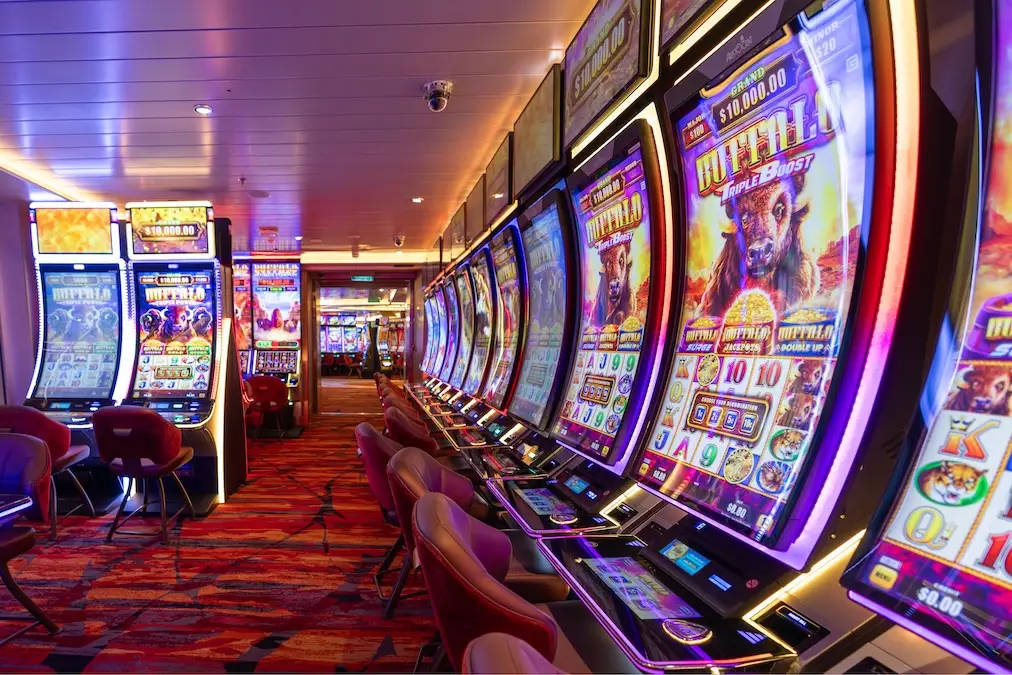
The casino added roughly 20 slot machines along with new seating and TVs at the table games area. The Greenhouse Spa received a new ergonomic hair-washing station.
The Effy Jewelry boutique was also refreshed, bringing Rotterdam in line with updates already completed on Koningsdam, Westerdam, and Zuiderdam.
What It Means for Cruise Guests
(Photo courtesy of Holland America Line)
If you’re booked on Rotterdam for a Northern Europe sailing this summer, you’re getting a noticeably refreshed product. The live music expansion is the most meaningful change for most guests.
HAL has built its identity around Music Walk, and adding outdoor and panoramic-view stages gives passengers more places to catch performances without crowding into the same venues.
(Photo courtesy of Holland America Line)
The suite sofa bed additions are the clearest win for families and small groups. Previously, booking a Vista Suite for four guests was a more complicated proposition.
Now 22 of those suites comfortably sleep four, which makes Rotterdam a stronger option for multigenerational travel without the cost of booking two separate cabins.
This is also a routine dry dock refresh, not part of Holland America’s larger Evolution program, which is a separate $500 million fleet overhaul targeting older Vista and Signature class ships starting with Oosterdam in Fall 2027.
Rotterdam sails seven-night Northern Europe itineraries through the summer before repositioning for Caribbean sailings this winter.
A cruise ship guest was pronounced dead off the California coast after falling from a stateroom balcony.
The woman, who hasn’t been named yet, went over the balcony and landed on a deck below. It is unclear how far she fell.
Woman fell from balcony onto a lower deck
(Photo Courtesy of Carnival Cruise Line)
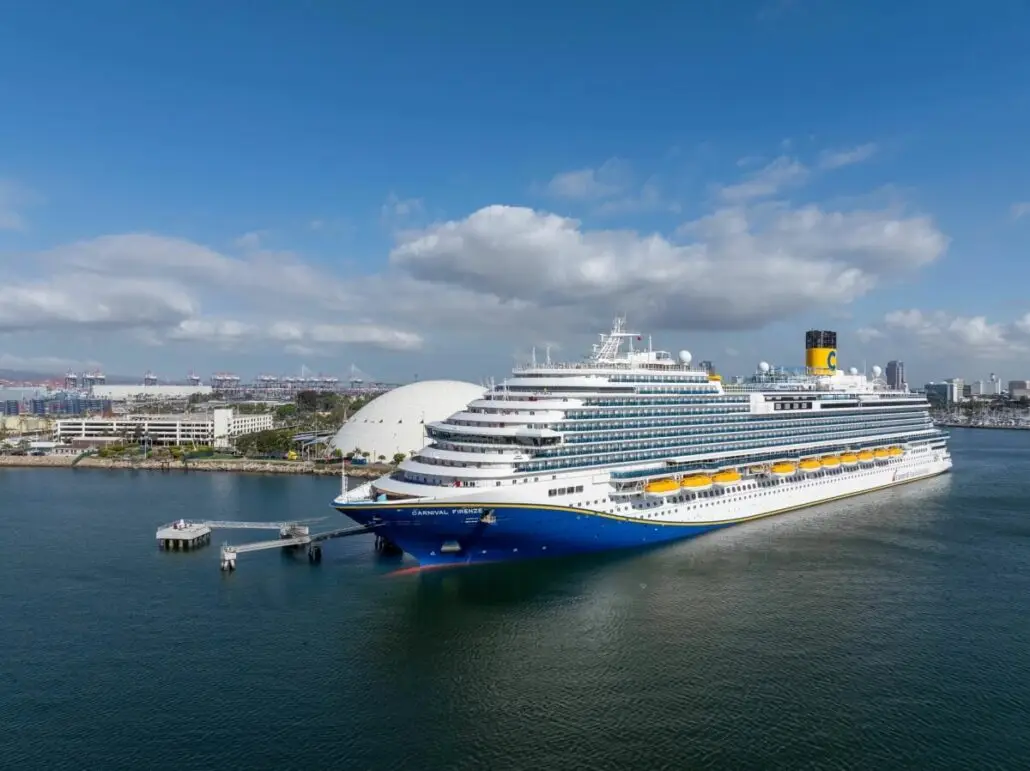
It marks the third overboard or fall death on cruise ships in just two weeks. She was a guest on the Carnival Firenze which was sailing near Catalina Island when the incident occurred. The woman’s family raised the alarm with ship crew.
“All appropriate authorities have been alerted. As is customary, law enforcement will board the ship today on Catalina Island to conduct the required investigation,” the cruise line said earlier.
“Carnival’s Care Team is supporting the guest’s family, and our thoughts and prayers are with them and their loved ones.”
Carnival Firenze’s path after leaving Long Beach, California. (Image via Marine Traffic)
The Los Angeles County Sheriff’s Department told the media the FBI is handling the investigation. The circumstances leading up to the fall have not been disclosed by authorities.
Carnival Firenze is on a short Baja Mexico cruise roundtrip from the Long Beach Cruise Terminal. Catalina Island is situated about 20 miles from Los Angeles. The ship left the island and visits Ensenada, Mexico today before returning to Long Beach on April 30. The ship has capacity for more than 5,000 guests.
Third cruise ship fall in the past two weeks
This incident comes days after a Norwegian Cruise Line crew member went overboard off the coast of Massachusetts. According to surveillance video footage, the Norwegian Breakaway employee fell into the sea around 12 miles off Cape Cod at the weekend.
Norwegian Breakaway (Photo courtesy of Norwegian Cruise Line)
A large-scale US Coast Guard air and sea search operation was conducted but suspended several hours later without success.
The incident led to a delay in embarkation for the next voyage out of Boston on Sunday. “These efforts required the vessel’s full attention before the voyage could safely resume toward Boston,” NCL said in an update to new departing guests.
“Situations such as these are never easy, and the safety and wellbeing of those at sea remain at the heart of every decision we make.”
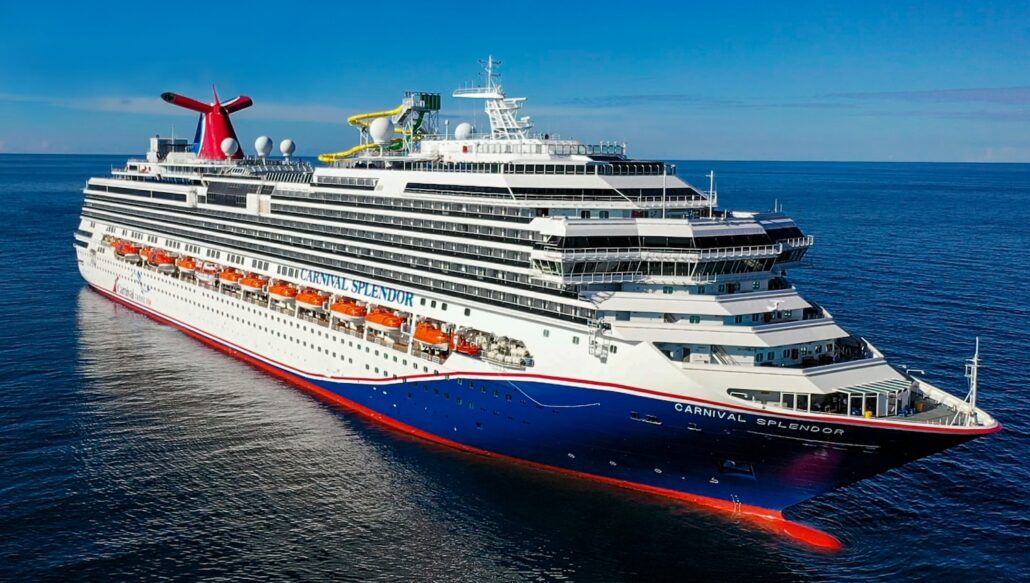
Just a week earlier, a Carnival Splendor guest in his 70s went overboard off the coast of Brisbane, Australia, which the cruise line says was a deliberate jump based on CCTV footage.
A days-long search operation took place and he too is now presumed dead. There have been six reported overboard incidents so far in 2026.
In an unexpected move, Norwegian Cruise Line has announced a change that could impact how future Haven guests book when traveling with families.
While many cruisers say it’s about time the change was made, others worry about the impact on their experience in The Haven.
Some Non-Haven Guests Will Now Have Limited Access
The major change — which has already taken effect — was announced via a note to travel partners and affected guests.
It said that as of now, “guests staying in a non-Haven stateroom (such as a balcony) that physically connects to a Haven stateroom and they are traveling with the guests in the Haven stateroom may dine at The Haven restaurant at no charge, including no service fee, for the duration of the sailing. Guests in the connecting non-Haven stateroom may take advantage of this offer as long as the guests in the connecting Haven stateroom are present at the time of dining. Haven guest(s) can make arrangements for this offer through the pre-cruise Concierge Desk.”
It is important to note that guests staying in the connecting room will not have access to any other Haven perks, amenities, or areas.
And guests traveling with those staying in the Haven but not in the directly connecting suite will not be able to dine at the Haven restaurant.
‘That Will Be Abused’
Needless to say, reaction amongst cruisers in general and those who enjoy Norwegian’s ship-within-a-ship concept was swift and varied.
Many across social media recognized that this will have a relatively low impact given the small number of qualifying non-Haven staterooms. Others, however, focused more on human nature, with several assuming “That will be abused.”
“Not to be ‘that person,’” wrote one Haven fan in a Reddit forum, “but we pay for exclusivity and for an elevated product. Why should I pay more so that people who are paying less can enjoy the same elevated dining experience?”
Others wondered if this was the first step toward other changes… including the ability to buy certain Haven-related perks without committing to the pricing of an actual stateroom in the Haven.
Holland America Line, for example, has the Club Orange program, which allows guests who are not staying in a suite to purchase perks normally only available to those in the more highly-priced staterooms.
Given that cruise lines often engage in a follow-the-leader type mentality, it’s reasonable to question whether this policy will be adapted by others. Will Celebrity Cruises, for example, begin selling limited access to Luminae, the high-end restaurant available only to guests staying in The Retreat?
Another question is how this might affect Norwegian’s thought process regarding future additions to its fleet.
Should the change prove popular, might new builds incorporate more non-Haven staterooms with connecting doors?
The Norwegian Breakaway departure scheduled for the morning of Sunday, April 26, was delayed several hours by the aftermath of a crew member going overboard.
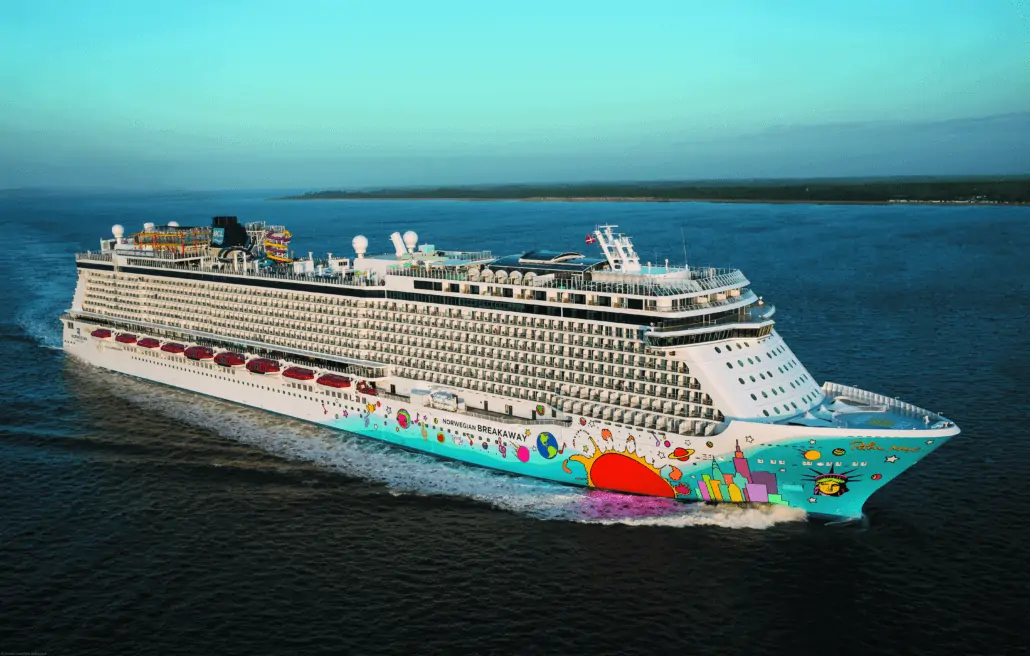
Norwegian Breakaway (Photo courtesy of Norwegian Cruise Line)
Norwegian Confirms Incident Details
In a statement to Cruise Radio, Norwegian Cruise Line sad that “late in the evening of April 25, 2026, a crew member went overboard east of Cape Cod, Massachusetts. Upon confirming the incident, the vessel immediately informed the United States Coast Guard Marine Rescue Coordination Center and a coordinated search and rescue operation was initiated.”
According to Coast Guard Sector Southeastern New England, a Coast Guard helicopter arrived on scene just after 1 a.m., and crews from the Coast Guard’s Provincetown station also responded to assist.
Passenger video showed two rescue boats searching the waters near the ship. Guests onboard reported a “Code Oscar, port side” announcement shortly after midnight, and portions of Decks 7 and 8 were closed during the operation.
After several hours of searching, Norwegian Breakaway resumed course toward Boston.
How The Next Voyage Was Impacted
Guests and travel agents received notice of the incident, including details as to the necessary changes made to their departure schedule as a result.
“Today’s embarkation… will take place later than originally scheduled,” read the notification. “Overnight and into the early morning hours, the ship remained engaged in search-and-rescue efforts following a man overboard situation, working closely with maritime authorities.”
It went on to say that, “These efforts required the vessels full attention before the voyage could safely resume toward Boston. Situations such as these are never easy, and the safety and well being of those at sea remain at the heart of every decision we make.”
Ultimately, Norwegian had to move the embarkation time back several hours, asking that guests not arrive at the terminal before 2 p.m. in order to allow time for disembarkation and preparation for the next voyage. “We understand that changes to your arrival plans may be inconvenient and truly appreciate your patience and understanding.
The ship was originally scheduled to dock by 8 a.m. but arrived around 11:30 a.m.
Norwegian Breakaway carries 3,963 passengers at double occupancy. The ship’s next sailing is also a 7-night Bermuda cruise, and no itinerary changes have been announced at this time.
Second Man Overboard in a Week
The incident comes one week after a passenger went overboard from Carnival Splendor off the coast of Brisbane, Australia, in a separate and unrelated incident. That search was suspended after 16 hours.
This is the sixth man overboard of 2026, following 12 man overboard events in 2025.

 Login
Login