AI tech giant Nvidia, which builds some of the most coveted AI chips in the world, has reportedly created a new “whitelist” of verified companies to help prevent its products from getting smuggled into China. According to the Financial Times, this roster cuts the number of authorized clients by more than half, with those remaining having passed tougher compliance inspections to ensure that they are genuine businesses, not shell companies designed to forward Nvidia GPUs and servers into China. Some of the steps that Nvidia took to help safeguard its chips reportedly included sending staff to customer data centers, contract verification, and interviewing end users.
Go deeper with TH Premium: Taiwan, trade, and tariffs
Although the U.S. has banned the latest AI GPUs for export into China since 2022, various investigations showed Chinese companies could still easily get their hands on these coveted chips until recently. Washington’s and its allies’ crackdown on AI GPU smuggling have cut supply in China, which is now making it harder for AI companies to procure the processors they need. President Donald Trump took a 180-degree turn in December 2025 and finally allowed Nvidia to export its H200 GPUs to select customers in the region, which would have alleviated the situation. However, Beijing refused to allow Chinese companies to buy these AI processors — instead, it’s banking on domestic semiconductor manufacturers to make up for the shortfall, but it’s apparently still not enough. One tech executive even told the Financial Times that all domestic suppliers are sold out and that they’re even considering less powerful chips, as long as they could be put to use.
As Nvidia reportedly cleaned up its verified list of clients and made it harder for non-vetted companies to acquire its chips, the company has also told its partners to fix their export control compliance. “We insist our partners are compliant,” Nvidia CEO Jensen Huang told the media last May after Taiwan started its operations against AI chip smuggling into China. “We hope that they will enhance and improve their regulation compliance and prevent that from happening in the future.”
Microsoft’s emissions for fiscal 2025 (FY25) rose by 25% from the previous year, even as the company’s 2030 deadline to become carbon-negative draws closer. According to the company’s 2026 Environmental SustainabilityReport, released on Thursday, July 9, the backward step was driven primarily by the rapid expansion of its data center infrastructure and its decision to stop using short-term renewable energy certificates, which reduced its reported footprint without necessarily adding new clean electricity to power grids.
Microsoft reported approximately 20.3 million metric tons of carbon dioxide-equivalent emissions across its operations and supply chain, up from 16.2 million tons in fiscal 2024 and nearly 58% above its 2020 baseline. Electricity consumption increased by 24% during the year as the company built the computing capacity required for its cloud and AI businesses. Regardless, Microsoft says it remains committed to becoming carbon-negative, water-positive, and zero-waste by 2030. It also reported meeting its 2025 renewable-electricity target, replenishing more water than it withdrew globally, and exceeding several waste-recovery targets
The report’s foreword, written by Microsoft Vice Chair and President Brad Smith and Chief Sustainability Officer Melanie Nakagawa, focused heavily on the collision between the company’s headline sustainability goals and the realities of AI. Microsoft established the goals in 2020, a few years before the current scale of AI’s capabilities and the corresponding high environmental demands began to manifest.
While AI is inarguably a world-changing technological revolution, it is raising seriousenvironmental concerns that begin right at the raw material sourcing and the complex semiconductor fabrication stages. The impact continues even after the processors have been compiled into supercomputers in massive data centers, with issues related to land use, energy consumption, noise pollution, and water consumption. Residents areincreasingly opposing the building of these data centers in their communities due to these issues.
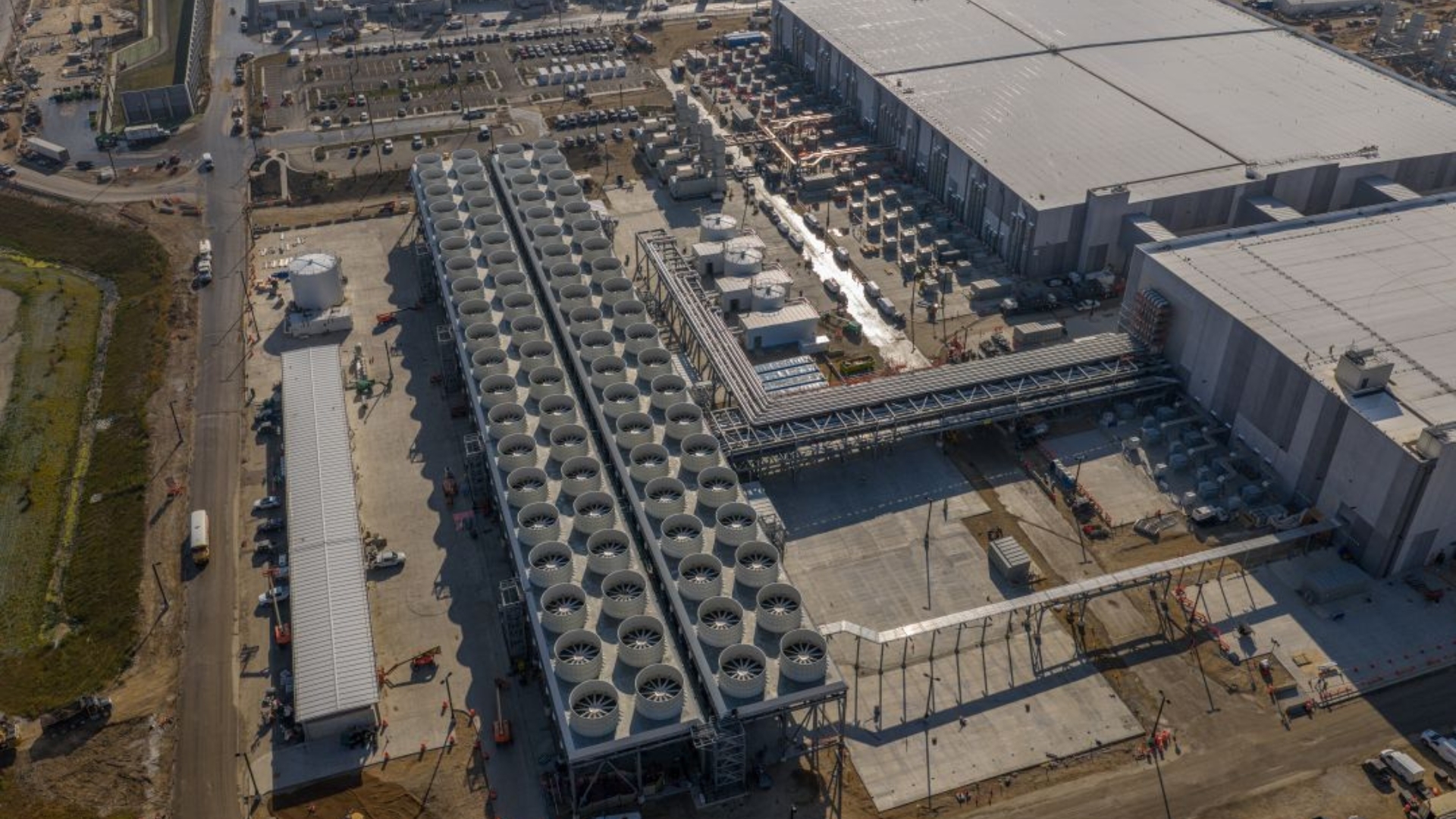
Microsoft is exposed at nearly every point of the AI chain. It procures servers and custom AI chips; owns and operates a massive, global network of over 300 data centers across 34 countries that powers the Azure cloud platform; and supplies the computing infrastructure behind products such as Copilot and its partnership with OpenAI. Scope 3 emissions from construction, purchased hardware, suppliers, and other value-chain activities remain the largest part of its footprint. Meanwhile, electricity-related Scope 2 emissions grew from nearly 2% of the total in 2024 to 13% in 2025.
Microsoft acknowledges that environmental solutions are not expanding as quickly as AI infrastructure. “This tension is real,” the foreword states. “It is forcing sharper questions: Where do we need to move faster, invest differently, or rethink our approach?” The company argues that the answer is not to retreat from AI, but to combine carbon-free electricity, carbon removal, sustainable fuels, lower-carbon construction materials, hardware reuse, and efficiency improvements into a single portfolio rather than treating each environmental target separately.
Its decision to stop buying non-additional, unbundled renewable energy certificates forms part of that change. These certificates can allow a company to claim renewable electricity already being generated elsewhere. Microsoft says it will instead prioritize longer-term agreements that help add additional carbon-free generating capacity to the grid, even though doing so will increase its reported emissions in the near term. Its renewable-energy agreements now cover up to 40 GW across 26 countries, with approximately 19 GW operational.
The company is also modifying the data centers themselves. It introduced a closed-loop liquid-cooling design that CEO Satya Nadella says enables AI data centers to use about as much water annually as a restaurant. Microsoft is experimenting with microfluidic channels etched into silicon, zonal cooling that reserves colder liquid for the hottest equipment, and lower-carbon concrete, steel, and mass timber for its construction. These efforts have not exactly quelled anti-data-center sentiment around its data centers. The company faced protests over a planned facility near Granger, Indiana, while residents living near its $7.3 billionFairwater AI complex in Wisconsin have filed a lawsuit alleging persistent noise, dust, traffic, and light pollution.
Away from carbon, the report records clearer progress. Microsoft replenished 14.2 million cubic meters of water, exceeding its global withdrawals for the first time, and reduced average data center water-use effectiveness by 25% from its 2022 baseline. It achieved a 92% reuse and recycling rate for retired cloud hardware, diverted 90.5% of construction and demolition waste from disposal, and reduced single-use plastics in primary product packaging to 0.07%. It also legally protected 16,266 acres of land, approximately 36% more than the land estimated to be occupied by its operations.
The report is equally candid about where Microsoft is falling behind. The company's most important commitment—becoming carbon-negative by 2030 — is moving further away rather than closer. Total greenhouse-gas emissions climbed 25% year over year and now sit roughly 58% above the company's 2020 baseline, largely because AI infrastructure is expanding faster than its decarbonization efforts can offset. Scope 2 emissions also jumped sharply, rising from nearly 2% of Microsoft's footprint in FY24 to 13% in FY25 as electricity demand from new data centers surged. While Scope 3 emissions remain the company's largest source of carbon pollution, the report says the growing contribution from purchased electricity underscores how increasingly difficult it is to power AI infrastructure with clean energy alone.
A data entry error in Flock’s system has resulted in a car reviewer getting boxed in by police cars in a parking lot on suspicion that he was driving a vehicle with stolen tags.The Drivereviewer and Director of Content and Product, Joel Feder, was driving a $155,000 loaner Range Rover when police surrounded his vehicle.
When he asked why he was stopped (and by four police cars, nonetheless), the officers said the car’s plate had been reported stolen and that they’d been tracking him for days using the Flock app. After about an hour of trying to figure out why he was stopped, it turned out that a different plate with similar characters had been misplaced and had to be reported stolen in California, which triggered a nationwide alert on Flock.
The core of the issue is that the New Jersey plates on the Range Rover read 34 10 DTM, with the number 10 written in smaller font. This is a non-standard design used by New Jersey for manufacturers, with VEHICLE MFR written on the bottom of the tags. The missing plate was 34 03 DTM, but unfortunately, the LAPD police report only listed 34 DTM.
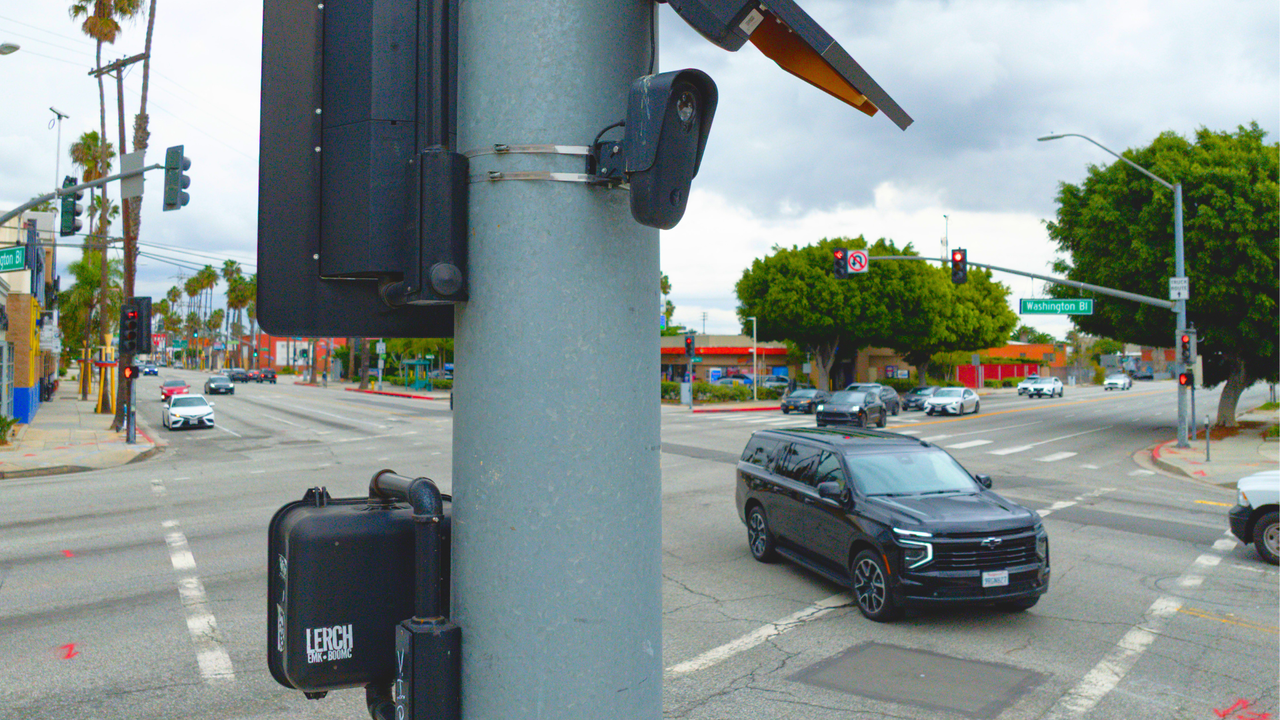
Another issue with the Flock system compounded this reporting error. Since the New Jersey manufacturer tags weren’t standard, it only read the larger numbers and letters and disregarded the smaller “10” on Feder’s plate. Because of this, it flagged all vehicles with the 34 ## DTM plate as stolen and alerted partner police forces whenever it detected a similar plate on the road. Feder even said that four other vehicles with a similar plate were being tracked throughout Minnesota, and it just so happens that he was the first to be intercepted.
The police said they had been tracking the vehicle for days using Flock’s AI cameras, but kept losing it because Feder parked it in his covered garage. So, when he stopped at a retail store, the authorities jumped on the chance and boxed him in to ensure that he did not escape. Thankfully, the issue was resolved on the spot with the officers, although it took an hour to verify with Jaguar Land Rover that the car or the plates Feder had were not stolen. Still, the journalist was advised to go straight home, as other police agencies using Flock might not be aware of the situation, which could lead to him getting stopped again on suspicion of driving a stolen luxury car.
These two errors compounded together to create a rather harrowing experience with the police. Thankfully, the incident did not turn into something serious, especially as the Plymouth Police told Feder that the cops would have stopped him with guns drawn if he were in Minneapolis.
This event adds to the numerous controversies that Flock AI has been facing, with one of the biggest issues the company faced recently being whenseveral police officers were arrested for misusing the service to stalk romantic partners. This has led citizens to push back against the service, especially as news like this makes them lose trust in the authorities. It has even gotten to the point where a Texas town council member broke into a tantrum, proposing atotal ban on cellular and GPS devices, after community pressure led to the cancellation of the service.
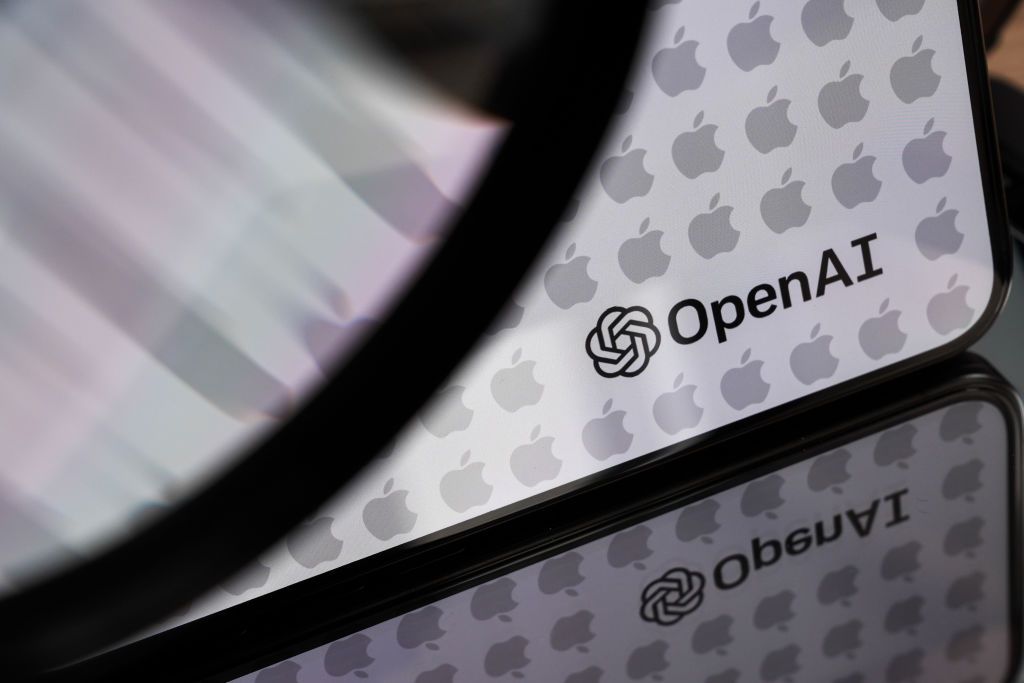
Apple filed a federal lawsuit against OpenAI on Friday, accusing the AI company and its chief hardware officer of stealing its trade secrets.
"OpenAI and its cohorts, led at least in part by former Apple employees, have recruited candidates from Apple, extracted their knowledge of Apple’s sensitive and confidential information, and then continued to exploit that knowledge once they arrived," the complaint reads. "As a result, OpenAI has misappropriated Apple’s trade secrets and confidential information in a variety of ways."
The suit, filed in the Northern District of California, names OpenAI technical staff member Chang Liu, chief hardware officer Tang Tan, OpenAI, and io Products as defendants. The last of that group is notable because it was founded by Tan in collaboration with former Apple design head Jony Ive, Evans Hankey (Ive's successor at Apple), and former Apple designer Scott Cannon. Notably, the complaint seems to attempt to avoid naming the founders, though Ive's name is cited in a URL.
Tan previously served as a vice president of product design at Apple, working on the iPhone, AirPods, and Apple Watch. Liu served at Apple as a senior electrical engineer.
In the complaint, Apple alleges that it reached out to OpenAI in February with concerns, but that OpenAI did not respond. Apple claims that Tan attempted to gain secrets from Apple employees, including asking prospective job candidates to bring components for "show and tell" sessions and used his knowledge of the company to squeeze more information out of candidates. The suit claims that Liu never returned a company laptop, and used an authentication bug to access Apple files.
Apple also claims that OpenAI told incoming employees how to leave their former job, suggesting they stay as long as possible and not disclose their former employer in order to continue to access confidential information.
"At every level, from members of its Technical Staff to its Chief Hardware Officer, and in coordination with business partners, OpenAI has been stealing Apple’s trade secrets and confidential information," the suit reads. "As a natural result, OpenAI’s nascent hardware business now rests on the shakiest of foundations, rotten to its core by its illegal reliance on misappropriated trade secrets."
OpenAI did not immediately respond to a request for comment from Tom's Hardware. Apple's lawsuit claims that over 400 former Apple employees currently work at OpenAI.
Apple is rumored to be working on a number of AI-powered hardware projects, including AirPods with cameras, a pendant, and home robots. It's less clear what hardware OpenAI may be working on, though The Informationsuggested the company has a HomePod-style smart speaker in the works.
Apple is requesting a jury trial, damages, attorney fees, and orders that the OpenAI may not use Apple's trade secrets, among other injunctions.
In May, Bloomberg reported that OpenAI was considering legal action against Apple because it expected deeper integration and more users from ChatGPT features built into iOS.
If the trial does go to court, it's sure to be a dramatic one, potentially dragging several former high-level Apple employees into testimony through discovery and testimony.The trial, Apple Inc. v. Liu et al, is case 5:26-cv-07078 in the United States District Court in Southern California.

 Login
Login