
Reading view

Modder Gets Intel Core 9 273PQE "Bartlett Lake" to Boot Windows 11 on Z790 Motherboard

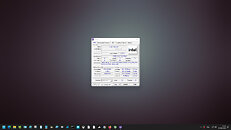
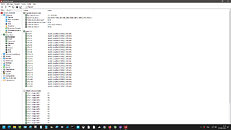
Intel's long-awaited gaming CPU king, the Core 200 "Bartlett Lake-S," is an intriguing CPU generation that isn't actually meant for gaming. The top version, the Core 9 273PQE, is a 12-core, 24-thread processor launched exclusively for commercial and industrial PC OEM markets as an edge/embedded design, and it's not available for the DIY PC crowd. Intel didn't plan for these CPUs to run on commercial motherboard chipsets, and major motherboard manufacturers have confirmed this. However, a modder has achieved something remarkable by booting Intel's "Bartlett Lake" Core 9 273PQE processor into the Windows operating system on a standard Z790 motherboard. Previously, these chips could only reach the POST stage on consumer LGA 1700 boards, but they couldn't run a fully functioning operating system.

Built on the Intel 7 node and designed for Socket LGA1700, "Bartlett Lake" is a non-hybrid chip featuring up to 12 "Raptor Cove" P-cores without any E-core clusters. It was not intended to be compatible with consumer Intel Z790 chipset motherboards. However, main issue was never the socket itself. "Bartlett Lake" shares the same physical LGA 1700 layout as Intel's "Raptor Lake" chips, but that doesn't automatically make it compatible with consumer boards. Typically, the absence of official BIOS and microcode support prevents proper CPU initialization. Earlier attempts usually resulted in startup failures, blank screens, or error codes before progressing further. This recent success changes that narrative. By modifying the motherboard firmware to accept the processor during early boot, the modder overcame the hurdles that had previously caused failures. Once the system accepted the chip at initialization, Windows loaded successfully.

(PR) Ex Sanguis from Othercide Creators Arrives on Steam Early Access May 21

Lightbulb Crew is thrilled to announce that Ex Sanguis, their blood- and strategy-rich game, will release on Steam in Early Access on May 21st! So what's Ex Sanguis all about? You're here to lead elite warriors, called Stillae, to save a dying world from the forces of stasis. And how do you do that? Through many blood-filled turn-based battles, of course!

While engaging in turn-based combat, you'll be able to strategically trigger a chain of events across the battlefield to turn the tide. Use Timeline Effects that can hasten, delay, or swap time positions to impact the turn order in a way that favors you and disadvantages foes.

Intel Reportedly Planning Another CPU Price Increase in May Amid Massive Demand

Intel is reportedly preparing yet another CPU price hike, adding to the previous increases implemented in February and March. According to the latest research and channel checks from Chinese market research firm Minutes Logic Society, Intel plans to add another price increase to its existing ones. In February, Intel implemented a first round of CPU price increases ranging from 10% to 15%, depending on the segment and SKU. Just a month later, the company introduced another increase in March, around 15%, with earlier reports suggesting a 10% hike for the consumer CPU sector, like the Core Ultra family of CPUs. This time, we are expecting another increase in May across the overall CPU portfolio, meaning that Intel will again raise prices by a few more percent, depending on the CPU sector, whether it is a Core Ultra CPU or a Xeon server processor.

The total cumulative goal for the price hike is about 30% higher compared to 2025 pricing. Interestingly, Intel is facing a significant problem with CPU supply that it can't address immediately. While a large portion of CPU production is internal, with Intel Foundry handling a bulk of orders, some CPUs require TSMC's silicon for Intel to ship these CPUs. Especially with multi-die packaging, where some parts are manufactured on Intel's node and others on TSMC's node, shipping is impossible until every part arrives and Intel assembles it with its advanced packaging.

GMKtec Launches NucBox K17 Mini PC with Intel Core Ultra 5 226V

GMKtec has launched the NucBox K17, a compact mini PC featuring an Intel Core Ultra 5 226V processor, a Lunar Lake chip built on TSMC 3 nm process with 8 cores, a 2.1 GHz base clock, and up to 4.5 GHz boost on the performance cores. Total AI compute comes in at 97 TOPS across the CPU, Arc 130V iGPU, and dedicated NPU, with the NPU alone rated at 40 TOPS. The Intel Arc 130V handles graphics, clocking up to 1.85 GHz and supporting ray tracing and XeSS upscaling. Triple display output is available via two HDMI ports and a USB4 port, with support for resolutions up to 8K. That same USB4 port runs at 40 Gbps and supports eGPU connectivity, Power Delivery, and display output simultaneously.

For memory, it features 16 GB of LPDDR5X at 8533 MT/s, soldered and non-upgradeable. Storage ships as a PCIe 4.0 M.2 2280 SSD in 512 GB, 1 TB, or 2 TB, and there's a second M.2 slot that accepts a PCIe Gen 5 x4 drive for a total expandable storage of 16 TB across both slots. Note that SATA SSDs are not supported. Networking covers Wi-Fi 6E at up to 2.4 Gbps, Bluetooth 5.2, and a 2.5G Ethernet port via an Intel i226-V controller. The Mini PC measures 127.5 x 127 x 44.5 mm, weighs around 460 g, and is powered by a 100 W adapter.

New Rowhammer Attack Puts GDDR6-Powered NVIDIA GPUs at Risk

Rowhammer attacks exploit vulnerabilities in DRAM hardware by causing targeted bit-flips, allowing attackers to bypass memory isolation and gain control over a device. These attacks were initially focused on CPUs and their associated DDR memory, such as DDR4. However, recent research indicates that NVIDIA GPUs are also vulnerable due to the fragile nature of the GDDR6 memory they use, which directly compromises the CPU host. Two independent research teams have discovered ways to exploit this decades-old memory vulnerability against modern graphics hardware, with trouble extending beyond the GPU itself. The "GDDRHammer" and "GeForge" groups have each developed functional exploits that use Rowhammer bit-flips in NVIDIA GPUs with GDDR6 memory to gain complete control over the host CPU's memory. This attack can perform bit-flips on some NVIDIA GPU models, ranging from the "Ampere" to "Ada Lovelace" families of cards.

An attacker who succeeds in this can read and write anything stored in the machine's main memory. Both teams have also introduced new Rowhammer techniques specifically designed for GPU architecture, achieving a significantly higher rate of bit-flips on GDDR6 memory than previous methods. The critical step in both exploit chains involves targeting the GPU's memory allocator, using controlled bit-flips to corrupt the GPU's page tables. Once these page tables are compromised, the attacker gains arbitrary read and write access to CPU memory, breaking down the security boundary between the graphics subsystem and the rest of the machine. The end result is a full system compromise, as the attacker can manipulate memory at will and gain root access, achieving total control without interacting with privileged software paths. The affected GPUs include the GeForce RTX 3060, which experienced 1,171 bit-flips, and the RTX 6000 "Ada" GPU, which saw 202 bit-flips from the attack.

MSI Intros Herald BE9400 PCIe Wi-Fi 7 Adapter

MSI today introduced the Herald BE9400, a PCIe network adapter that provides Wi-Fi 7 and Bluetooth 5.4 connectivity to any PC with a vacant PCIe slot and USB 2.0 header. The card supports 802.11be (Wi-Fi 7), 802.11axe (Wi-Fi 6E), 802.11ax (Wi-Fi 6), and older standards, across the 6 GHz, 5 GHz, and 2.4 GHz radio bands, with a peak Tri-Band bandwidth of 5764 Mbps. The adapter offers a channel width of 320 MHz. Other features include MLO (multi-link operation) and 4K QAM. Under the hood, the Herald BE9400 appears to be based on the MediaTek MT7927 controller, with a PCI-Express 4.0 x1 host interface. MSI includes an antenna module with a magnetized base that sits firmly on top of your PC case. The company didn't reveal pricing information.

(PR) Intel Appoints Aparna Bawa as Executive Vice President and Chief Legal & People Officer

Intel Corporation today announced the appointment of Aparna Bawa as EVP, chief legal & people officer. Bawa will report directly to CEO Lip-Bu Tan and will lead Intel's global legal, ethics, compliance, people, and culture organizations as the company accelerates its transformation and execution agenda.

"The role of legal and people leadership has never been more critical as Intel drives cultural transformation with discipline, speed, and integrity," said Intel CEO Lip-Bu Tan. "Aparna brings a rare combination of operational rigor, business judgment, and people-first leadership. Her experience helping scale global technology companies through periods of significant change will be invaluable as we build a stronger, more agile Intel."

Ubuntu 26.04 LTS Raises Recommended Memory Requirement to 6 GB

Canonical increased the recommended system memory for the upcoming Ubuntu 26.04 LTS "Resolute Raccoon" to 6 GB of RAM, a first major change since 2018. According to the release note, the 26.04 LTS now lists 6 GB of RAM as the baseline for a comfortable desktop experience, alongside a 2 GHz dual-core CPU and 25 GB of storage, unchanged from previous generations. This represents a 50% increase over Ubuntu 18.04 LTS, which in 2018 raised the bar to 4 GB, and a notable shift from earlier releases that ran on as little as 1 GB. The change is not caused by a heavier core OS. Instead, it reflects the reality of modern workloads. The GNOME desktop, now updated to newer revisions, along with current web browsers (i.e., Firefox) and everyday apps like LibreOffice, demand more memory in multitasking scenarios.

Importantly, 6 GB is not a hard requirement. Ubuntu 26.04 LTS will still install on systems with less than 6 GB of RAM. However, performance may suffer. Early testing shows that the OS remains functional even on 2 GB systems although with significant slowdowns. As before, the 25 GB storage requirement remains mandatory for the desktop edition. As Ubuntu 26.04 LTS is expected to be the next long-term support release from Canonical, the Ubuntu ecosystem provides many options for those using lower-end hardware. Lighter flavors such as the official Lubuntu or the Linux Lite distro, and manual installations with a minimal base remain available and viable options. Also, Ubuntu Server can be deployed on systems with around 1-1.5 GB of RAM, depending on the use case. Ubuntu 26.04 LTS is currently in development and scheduled to be released on April 23.

Steam Deck 2 Ditches Semi-Custom APU for Off-the-Shelf AMD Silicon, Eyes 2028 Launch

Valve's next-generation Steam Deck 2 handheld console is reportedly planned for release in 2028, with significant manufacturing changes expected for this sequel to the highly successful handheld gaming device. According to a well-known industry leaker, KeplerL2, posting in the NeoGAF community, Valve is targeting a 2028 refresh for the second-generation Steam Deck. However, the ongoing supply chain shortages of DRAM and NAND Flash could cause disruptions to these plans, potentially leading to delays. Interestingly, this period is when the shortages are expected to start easing, so the Steam Deck 2 could still be released on time, depending on Valve's sourcing capabilities.

One of the most significant procurement shifts for the Steam Deck 2 is Valve's choice of the computing base that will power the handheld. Instead of using a semi-custom AMD APU, Valve is expected to use an off-the-shelf AMD APU that won't require any custom tuning from AMD to meet Valve's needs. This is welcome news, as the latest Steam Machine showed that Valve's reliance on a semi-custom APU solution made the hardware "obsolete" quickly while the rest of the industry advanced. With any semi-custom solution, stockpiling silicon and waiting for DRAM/NAND modules to arrive puts pressure on Valve to ship a product that is significantly underpowered or too expensive. However, with an off-the-shelf solution, Valve could use the best available option at the time of shipping and optimize SteamOS around it.

AMD Details Upcoming Zen 6 PQOS Extensions: Advanced Bandwidth and Privilege Controls

Imagine you're a web hosting vendor leasing out specific number of CPU cores of a large core-count processor. You'd want to specify QoS limits on the shared L3 cache performance for those cores, so they don't hamper performance of other tenants. AMD this week released a technical document detailing the Platform Quality of Service (PQOS) ISA extensions for its next-generation Zen 6 microarchitecture. These ISA enhancements provide sysadmins and cloud providers with greater control over processor and memory subsystem performance. The latest document outlines three primary additions to the Zen 6 PQOS feature set, Global Bandwidth Enforcement (GLBE), Global Slow Bandwidth Enforcement (GLSBE), and Privilege-Level Zero Association (PLZA). These features are designed to scale performance management across complex multicore environments by allowing software to regulate bandwidth and execution privileges more effectively across expansive groups of logical processors. The development shows that AMD is steering toward a more closely collaborative hardware QoS solution for its multicore processors.

A highlight of the Zen 6 PQOS updates is the implementation of Global Bandwidth Enforcement (GLBE), which allows system software to specify L3 external bandwidth limits for groups of cores that span across multiple traditional QoS Domains. By grouping these into a unified "GLBE Control Domain," AMD enables a competitively shared bandwidth ceiling for specific Classes of Service (CoS). This upgrades older architectures that only provided L3 external bandwidth enforcement on a strictly per-domain granularity. Next up, AMD introduced Global Slow Bandwidth Enforcement (GLSBE), a parallel feature that applies the exact same multi-domain bandwidth limiting principles to system memory explicitly designated as "Slow Memory." Both GLBE and GLSBE provide granular controls via specific model-specific registers.

Windows Security App Gains Secure Boot Certificate Status Ahead of Major Certificate Refresh

On your Windows PC, the Unified Extensible Firmware Interface (UEFI) uses Secure Boot certificates to ensure that only trusted software initiates the startup sequence. The certificates currently in use were originally issued in 2011 and are set to expire in late June 2026. To address this, Microsoft has been quietly rolling out updated certificates through Windows Update. Starting in April 2026, users can check their device's status via a new indicator in the Windows Security app. By navigating to Device security and then Secure Boot, a color-coded badge will show whether your device is fully updated, awaiting an update, or requires immediate attention.

The badge system is simple yet significant. A green checkmark indicates that the new certificates are installed and no further action is needed. A yellow caution badge, which will start appearing in May 2026, means the update is either pending or has been blocked by a hardware or firmware limitation. A red stop icon is the most serious state and could appear as early as June 2026, once older certificates start expiring. When this occurs, the device will no longer be able to receive critical boot-level security updates. The same status is reflected in the Windows Security system tray icon, so warnings are visible even when the app is closed.

Steam on Linux Surpasses 5% Market Share in the Latest Survey Update

As we enter a new month, Steam's Hardware and Software Survey data has been processed, providing us with a clearer view of the overall gaming market that uses Steam platform. Today, the most notable change in the Steam Survey is the increase in Linux gamers, who have moved from their historically low single-digit market share to mid-single digits. As of March, Linux-based operating systems were running Steam on 5.33% of all polled systems. This represents an impressive 3.10% increase over February's data, which showed a dip in Linux market share from January's 3.5%. Fortunately, the numbers have now been revised upwards, marking a significant improvement for the community that has been steadily implementing improvements and making Linux-based gaming more accessible to everyone.

What might not be surprising is that a large portion of those 5.33% Linux installations run on Valve's customized SteamOS operating system. With a 24.48% share, the use of SteamOS grew by 0.65% last month alone, while other Linux distributions also contributed significantly. Other Windows alternatives like macOS are gaining momentum as well, with Apple seeing a 1.19% month-over-month increase to 2.35%. Although Linux now holds more than twice the market share of macOS, its growth within the Steam install base is a significant change, nearly doubling in just a month. Perhaps these alternative operating systems are now attracting enough attention from big game studios to encourage them to release native ports instead of relying on translation tools like Wine/Proton.

(PR) Urban Ascend Launches on Steam April 3

Urban Ascend is a city-building game centered on continuous expansion, system-driven design, and long-term optimization. Players grow a small town into a highly efficient metropolis by placing buildings, managing resources, and refining interconnected systems that evolve over time. The full version launches on Steam on April 3, 2026, following a public demo that introduced its core progression loop. The full release expands on those systems with additional buildings, upgrades, and mechanics designed to deepen strategic decision-making and long-term planning.

Urban Ascend features nearly 100 buildings and hundreds of upgrades that reshape how the city functions. Players manage citizen needs such as happiness, safety, and governance to unlock powerful bonuses, while responding to dynamic incidents that introduce new challenges as the city grows.

(PR) Solidigm Expands Sacramento Development, Fueling Global AI Leadership

Solidigm, a pioneer in enterprise data storage, today announced it has exceeded initial investment goals for its Greater Sacramento initiatives, including the company's Rancho Cordova headquarters and surrounding research and development (R&D) campus. Announced in September 2022, Solidigm committed to investing $100 million into regional R&D facilities. Approximately three-and-a-half years into the build out, the company has surpassed this figure and will continue to invest in local talent and technology to help fuel global AI advancements.

In addition to $75 million in local lab investments, Solidigm has introduced close to 100 new NAND tools through the development of more than a $5 million world-class NAND lab and R&D center. "We have the most robust data storage product line for AI data centers," said Greg Matson, SVP, Head of Products and Marketing at Solidigm. "Our industry leading SSDs help our customers achieve the highest levels of efficiency, density, and performance in storage for their AI demands. And all of the innovation for us starts right here in Rancho Cordova."

(PR) NVIDIA GeForce NOW Brings 10 Games to the Cloud

No joke—GFN Thursday is skipping the tricks and heading straight into the games. April kicks off with ten new titles, bringing fresh adventures to GeForce NOW, including the launch of Capcom's highly anticipated PRAGMATA.

A dozen new games are available to stream this week, including Arknights: Endfield, which expands the acclaimed series into a full 3D real‑time strategy adventure. On GeForce NOW, every battle flows with precision and every mission looks sharper than ever. So gear up, grab a controller or gaming device of choice, and get ready to stream—another month of great gaming is now underway.

8BitDo Launches Limited Edition Apple II Inspired Retro 68 AP50 Keyboard

8BitDo has released a limited edition version of its Retro 68 mechanical keyboard to mark Apple's 50th anniversary. Called the AP50, it takes direct visual inspiration from the Apple II color scheme with the familiar beige and brown colors of that era of computing. The keyboard uses a 68-key compact layout built around a gasket-mount system for better typing acoustics and a softer key-press feel. Construction is all-aluminium, chassis, plate, and keycaps, and the 323.3 x 138.5 x 46.5 mm body reflects that, with the keyboard weight reaching 2.2 kg. Switches are Kailh BOX Ice Cream Pro Max, and the PCB is hot-swappable if you want to try something else without soldering. RGB backlighting is included, and the keyboard is programmable through 8BitDo Ultimate Software V2 or via fast-mapping directly on the keyboard without any software.

Connectivity covers all three modes: wired USB, 2.4G wireless, and Bluetooth LE. It's compatible with macOS, Windows 10 and above, and Android 9.0 and above. The 6500 mAh battery is rated for up to 300 hours of use with a 9-hour charge time. The package also includes a set of Wireless Dual Super Buttons (160.2 x 75.3 x 32.6 mm, 270 g), a 2.4G adapter, and a USB cable. At $499.99, the 8BitDo AP50 keyboard is clearly aimed at collectors and enthusiasts rather than anyone shopping on a budget.

(PR) IBM Announces Strategic Collaboration with Arm

IBM (NYSE: IBM) today announced a strategic collaboration with Arm to develop new dual‑architecture hardware that helps enterprises run future AI and data intensive workloads with greater flexibility, reliability, and security.

IBM's leadership in system design, from silicon to software and security, has helped enterprises adopt emerging technologies with the scale and reliability required for mission‑critical workloads. As AI moves deeper into core business operations, IBM continues to invest in hardware platforms such as the Telum II processor and Spyre Accelerator, which are designed to bring AI from experimentation into everyday enterprise use.

AMD Radeon RX 9070 and RX 9070 XT Fall Below MSRP in Germany

AMD's RDNA 4-based Radeon RX 9070 and RX 9070 XT graphics cards have finally reached reasonable pricing, as German retailers report that these GPUs are now selling below MSRP. In Germany, the European MSRP for Radeon RX 9070 cards is €629, including 19% VAT. For its bigger sibling, the Radeon RX 9070 XT, the European MSRP is listed at €689, also including the sales tax. However, according to multiple listings from German online retailers, both cards are trading below their European MSRP pricing, marking the first occurrence since the memory shortage fiasco began, which took a toll on the gaming community. The cheapest Radeon RX 9070 non-XT model is listed at €539.00 in the form of the ASUS Prime Radeon RX 9070 OC SKU, while the cheapest Radeon RX 9070 XT model is listed at €640 for the ASRock Radeon RX 9070 XT Challenger GPU. Do note that this is not the first time that these GPUs are priced below MSRP in Germany, but just the first time since the memory shortages started.

Interestingly, this price drop in Germany is not consistent with the markets in the United States, where GPU pricing for the Radeon RX 9070 and RX 9070 XT still ranges around $810-$820 for the non-XT SKU and about $880-$890 for the Radeon RX 9070 XT model. This represents a large premium in the U.S. market, considering that the Radeon RX 9070 and Radeon RX 9070 XT graphics cards have MSRPs of $549 and $599, respectively. Perhaps a fresh supply of GPUs has hit the German market, causing supply to overwhelm demand and significantly pushing prices down. In the U.S., that is not the case, where prices remain high and on an upward trajectory, according to PCPartPicker. In contrast, the German market is experiencing some of the lowest pricing in recent months, finally giving gamers a break.

(PR) Gigabyte Goes Dark with the X870E AERO X3D DARK WOOD

Gigabyte Technology Co. Ltd, a leading manufacturer of motherboards, graphics cards, and hardware solutions, today marks a defining moment in computing aesthetics with the introduction of the X870E AERO X3D DARK WOOD—a groundbreaking motherboard that transcends technological achievement to become a true design statement. Building on the acclaimed success of the X870E AERO X3D WOOD, the X870E AERO X3D DARK WOOD carries that legacy boldly forward, deepening the experience into something more immersive and emotionally resonant.

Guided by the philosophy of Technology with Warmth, the X870E AERO X3D DARK WOOD envelops the user in a quiet, grounded mood that feels less like a hardware upgrade and more like coming home. The authentic dark wood texture finish brings natural warmth and character into high-performance computing; the supple leather pull tab adds tactile intimacy; and the understated dark metal tones offer calm and breathing room—a deliberate counterpoint to the noise of modern life.

(PR) Alphacool Announces New APEX Series CPU+VRM Monoblocks

Alphacool International GmbH from Braunschweig is a pioneer in PC water-cooling technology. With one of the most comprehensive product portfolios in the industry and over 20 years of experience, Alphacool is once again expanding its portfolio with the long-awaited Apex Monoblocks. The monoblocks combine high cooling performance with an elegant design that is perfectly matched to the respective motherboard. In addition to the CPU, they also cool the voltage regulators (VRMs) and the M.2 NVMe SSD located below the CPU socket. This allows the waterblock to cover all key motherboard components.

As with the Apex 1 CPU cooler, the Apex Monoblocks feature an offset cold plate. This directs the coolant flow straight to the thermal hotspot of the AM5 CPU. Combined with the proven Cross-Slot structure and 3D Jetplate 2.0, the design generates high water pressure for particularly efficient heat dissipation. The Apex Monoblocks were developed for demanding systems that require both high cooling performance and seamless integration into the motherboard design. Their combination of technical precision, targeted coolant flow and clear design language makes them ideally suited to modern custom water-cooling setups.

Intel Core Ultra 400HX "Nova Lake" Mobile Processor Core Configurations Surface

Intel's next-generation mobile processor for gaming notebooks and portable workstations, the Core Ultra Series 4 "Nova Lake-HX," will come in two distinct core configurations, according to a leak by Jaykihn, a reliable source for Intel leaks. "Nova Lake-HX" is segmented from the mainstream "Nova Lake-H" with a wider I/O that supports configurations with discrete GPUs. The top-of-the-line "Nova Lake-HX" processor will come with a CPU core configuration of 8P+16E+4LPE, that's eight "Coyote Cove" P-cores, and 16 "Arctic Wolf" E-cores, both of which are upgrades over the current "Cougar Cove" and "Darkmont" core architectures, respectively. The Compute tile features 8P+16E cores sharing an L3 cache, while the chip's 4 low-power island E-cores, also based on "Arctic Wolf," will be located in the SoC tile.

Intel is also planning a performance-segment "Nova Lake-HX" core configuration, with 6P+8E+4LPE under the hood. This will likely reuse the 6P+8E Compute tile from the mainstream "Nova Lake-H" processor, but with the SoC + I/O tiles Intel plans to use for the "Nova Lake-HX". This would give the chip a maximum core count of 6P+8E+4LPE. Perhaps the most interesting aspect of both these chip types is the iGPU, and its Graphics tile will be the tiniest variant in the series, with just 2 Xe cores. The iGPU of "Nova Lake" family is based on the Xe4 "Druid" graphics architecture. These chips feature a basic iGPU because they are expected to come with a full fat PCI-Express 5.0 PEG interface for discrete GPUs, and ideally you'd want the iGPU to be as small as possible.

(PR) AMD Instinct MI355X GPUs Surpass 1M Tokens/Sec in MLPerf 6.0

In its MLPerf Inference 6.0 submission, AMD did not simply revisit familiar benchmarks with a faster GPU. It expanded into first-time workloads, crossed the 1-million-tokens-per-second threshold at multinode scale and showed that partners can reproduce the results across a broader ecosystem. That combination matters because our customers no longer evaluate inference platforms on one metric alone. They want competitive single-node performance, efficient scale-out, faster bring-up on new models, reproducible results across partner systems and confidence that the software stack can keep pace. MLPerf Inference 6.0 let us show all of that in one submission.

Just as important, we showed that these results are not isolated. A broad partner ecosystem submitted across four AMD Instinct GPU types that closely reproduced numbers submitted by AMD and the first three-GPU heterogeneous MLPerf submission demonstrated that AMD hardware and AMD ROCm software can orchestrate meaningful inference throughput even across systems in different geographies.

(PR) EK Water Blocks Intros EK-Quantum Vector³ TUF RTX 5070 Ti 5080 Plexi Water Block

EK by LM TEK, is proud to introduce the EK-Quantum Vector³ TUF RTX 5070 Ti/5080 - Plexi, a high-performance full-cover water block compatible with both the ASUS TUF Gaming GeForce RTX 5080 and the ASUS TUF Gaming GeForce RTX 5070 Ti. Designed to deliver exceptional thermal performance across the GPU core, VRAM, and power stages, the EK-Quantum Vector³ TUF RTX 5070 Ti / 5080 features an optimized open split-flow cooling engine, next-gen pre-cut thermal pads,and a full-coverage black anodized aluminium backplate. Now available now at the EK Shop and local resellers.

Engineered for the ASUS TUF Gaming GeForce RTX 5080 and the ASUS TUF Gaming GeForce RTX 5070 Ti, the EK-Quantum Vector³ delivers high performance liquid-cooling for enthusiasts who demand more. Featuring EK's expanded next-gen cooling engine, pre-cut high-performance thermal pads, and an advanced gasket design, this block ensures your GPU stays cool and efficient - even under the heaviest gaming, rendering, or overclocking loads.

(PR) SEMI Projects Double-Digit Growth in Global 300 mm Fab Equipment Spending for 2026 and 2027

Worldwide 300 mm fab equipment spending is expected to increase 18% to $133 billion in 2026 and 14% to $151 billion in 2027, SEMI reported today in its latest 300 mm Fab Outlook. This strong growth reflects surging AI chip demand for data centers and edge devices, as well as the growing commitment to semiconductor self-sufficiency across key regions through localized industrial ecosystems and supply chain restructuring. Looking further out, the report projects investment will continue to increase 3% to $155 billion in 2028 and another 11% to $172 billion in 2029, respectively.

"AI is resetting the scale of semiconductor manufacturing investment," said Ajit Manocha, President and CEO of SEMI. "With global 300 mm fab equipment spending projected to exceed $150 billion in 2027 for the first time, the industry is making historic, sustained commitments to the advanced capacity and resilient supply chains needed to power the AI era."

(PR) Heroes of Might and Magic: Olden Era Launches Into Early Access on April 30

Hooded Horse, Unfrozen Studio, and Ubisoft are excited to announce the news that everyone has been waiting for - Heroes of Might and Magic: Olden Era will release on PC via Steam Early Access and the Microsoft Store (via Game Preview) on April 30, 2026. It will also be coming to PC Game Pass day one.

Made for series veterans and newcomers alike, Heroes of Might and Magic: Olden Era is built on the familiar foundations of one of the most critically acclaimed strategy series of all time, introducing new and classic game modes that will let people play solo or with friends however they please. Engage in strategic empire building, epic turn-based tactical battles, and in-depth RPG mechanics, all while exploring a vibrant, never-before-seen land full of secrets and dangers.

(PR) Intel to Repurchase 49% Equity Interest in Ireland Fab Joint Venture

Intel Corporation (Nasdaq: INTC) and Apollo (NYSE: APO) today announced a definitive agreement for Intel to repurchase the 49% equity interest in the joint venture related to Intel's Fab 34 in Ireland not held by Intel for $14.2 billion. The agreement reflects Intel's continued business momentum underpinned by the growing and essential role CPUs play in the era of AI, a significantly strengthened balance sheet and the strong partnership between Intel and Apollo.

In 2024, Apollo-managed funds and affiliates led an $11.2 billion investment to acquire a 49% equity interest in a joint venture entity related to Fab 34, providing Intel with equity-like capital while preserving balance sheet strength. This transaction provided Intel with significant financial flexibility and enabled the company to unlock and redeploy capital to advance its strategic priorities including accelerating the buildout of Intel 4 and Intel 3, the most advanced processes manufactured in Europe, and of Intel 18A, the most advanced process developed and manufactured in the U.S. today.

(PR) NVIDIA Invests $2 Billion in Marvell and Expanded NVLink Fusion Partnership

NVIDIA and Marvell Technology, Inc. (NASDAQ: MRVL) today announced a strategic partnership to connect Marvell to the NVIDIA AI factory and AI-RAN ecosystem through NVIDIA NVLink Fusion offering customers building on NVIDIA architectures greater choice and flexibility in developing next-generation infrastructure. The companies will also collaborate on silicon photonics technology.

In addition, NVIDIA has invested $2 billion in Marvell.

Raspberry Pi Announces More Price Hikes, 3 GB Raspberry Pi 4 SKU

One could be forgiven for thinking it's an April fools, but alas, Raspberry Pi has announced yet another price hike due to the increasing costs of DRAM. Its CEO, Eben Upton announced in a blog post that the company has seen a seven-fold increase in the cost of LPDDR4 DRAM, which is used in both the Raspberry Pi 4 and 5. All 4 GB and up SKUs of the aforementioned products will see a price hike that ranges from US$25 to US$100. Other products will also see an increase in price and you can find all the price bumps in the table below.

At the same time, the company is launching a new 3 GB SKU of the Raspberry Pi 4, which will launch at US$83.75. The new SKU is available today from all authorised resellers globally. The price increases mean that the 16 GB SKU of the Raspberry Pi 5 now comes in at US$305, which is more than what a lot of mini PCs set you back six months ago. The 16 GB Raspberry Pi 500+ keyboard computer comes in at a whopping US$410, suggesting that some products are unlikely to sell, as they've simply become uncompetitive. The only good news today is that the 1 and 2 GB SKUs for the Raspberry Pi 4 and 5 won't see any price hikes this time around, alongside the 4 GB SKU of the Raspberry Pi 400. Raspberry Pi is promising to lower its pricing as soon as the cost for DRAM goes down at some point in the future.

Microsoft Issues Emergency Fix for Windows 11 Update Installation Errors

Late last week, Microsoft released its KB5079391 non-security feature update for Windows 11, which was officially pulled due to widespread installation errors. Today, the company is issuing the out-of-band KB5086672 update to address this problem, as Microsoft has identified the source of the issue and the update can now be safely applied. This latest out-of-band KB5086672 update includes the KB5079473 package released on March 10, KB5085516 released on March 21, and the previously pulled KB5079391 released on March 26. Microsoft has combined all of these into the new KB5086672 package, which addresses the issues that appeared and introduces a variety of new features. Finally, the old installation error message, "Some update files are missing or have problems. We'll try to download the update again later. Error code: (0x80073712)," has been resolved for good.

Microsoft notes that this out-of-band update is available through Windows Update for devices running Windows 11 that have already installed KB5079473 or a later update. It is also available for manual download from the Microsoft Update Catalog. Currently, there are no known issues with this update, and if any arise, Microsoft will highlight them on their support documents website. Interestingly, KB5086672 is one of the first steps by Microsoft toward resolving the issues users have experienced with Windows 11 updates, and hopefully just the beginning of the overhaul that Microsoft has promised. Future non-security feature updates could also focus on other quality-of-life improvements, and installation errors should become less common.

(PR) ASUS Announces UGen300 USB AI Accelerator

ASUS today announced the UGen300 USB AI Accelerator—the first AI USB device from ASUS, bringing inference performance directly to any device. An M.2 version is also available. This slim AI accelerator measures 105 x 50 x 18 mm and features the Hailo-10H AI processor that delivers 40 AI TOPS of dedicated power to support large language models such as LLMs, VLMs, and more. UGen300 includes 8 GB LPDDR4 dedicated memory and connects to other devices via a USB-C interface, consuming just 2.5 watts of power under typical workloads. The convenient plug-and-play design ensures cross-platform compatibility with Windows, Linux, and Android. UGen300 also supports major AI frameworks like TensorFlow, PyTorch, and ONNX—right out of the box.

"By integrating the Hailo-10H into a ubiquitous USB device, ASUS brings the full power of AI and generative AI to everyone" said Max Glover, Chief Revenue Officer of Hailo. "We're excited to see how our developer community will use this plug-and-play accelerator to push the boundaries of on-device AI. This is exactly how Hailo envisions the future of AI: accessible, affordable, and designed for anyone to build with."

(PR) AI Compute Demand Drives 44% YoY Growth for Top 10 Global Fabless IC Firms in 2025

Continued investment in AI infrastructure by major CSPs, including purchases of GPUs and deployment of in-house ASICs, has driven strong growth among AI-related chip designers, according to TrendForce's latest findings. In 2025, the total revenue of the top 10 fabless IC design houses exceeded US$359.4 billion, up 44% YoY. NVIDIA maintained its leading position, while Broadcom moved up to second place due to increased involvement in AI, overtaking Qualcomm, which continues to depend more heavily on consumer electronics.

Industry leader NVIDIA delivered another year of record revenue, supported by its strong AI chip portfolio and computing ecosystem. The company's fourth quarter revenue from data centers accounted for as much as 90% of its total. Full-year revenue rose 65% YoY to $205.7 billion—the fastest growth among the top players—with its share of total top-ten revenue increasing further to 57%.

Ubisoft in Legal Hot Water over The Crew Shutdown

If you've been following the Stop Killing Games movement, you'll know that Ubisoft shutting down The Crew, a fairly modern video game by most standards, having launched in 2014, has ruffled some feathers. Now, as reported by Reuters, Ubisoft has been taken to court by French consumer action group, UFC-Que Choisir, who argues that the contractual practices that Ubisoft engages in when it sells games may be abusive and deny consumers their rights.

Ubisoft, as is the case with many gaming companies, argues that players buy limited licenses to play the games they pay for—not an actual product—and that the license can be revoked at any time. With lawsuits like the one brought against Ubisoft, UFC-Que Choisir intends to put an end to these "harmful practices," remove the relevant clauses from sales contracts, and make Ubisoft recognize the collective harm done to the collective interests of consumers.

Pragmata Goes Gold, Capcom Readies for April 17 Launch

After previously announcing an April 24 launch date, Capcom moved the launch of Pragmata forward to April 17 and subsequently celebrated hitting 2 million demo downloads and game wishlists. Now, in another stroke of positive news, Capcom has announced that Pragmata has gone gold, meaning that the game is in a stable, functional state and ready for launch on PlayStation 5, Nintendo Switch 2, Xbox Series X|S, and Windows.

Pragmata was originally announced in 2020, with the release date originally slated for 2022. However, the game went through multiple iterations during that time and ended up being pushed back to 2026. Pragmata was Capcom's first new franchise since the launch of Dragon's Dogma in 2012, and it seems to be attempting to implement an interesting combination of third-person shooter combat and hacking mechanics, alongside sci-fi, narrative- and exploration-driven core gameplay.

Disco Elysium Dev Announces Launch Date for Zero Parades: For Dead Spies Alongside New Trailer

ZA/UM, the indie game studio famous for the avant-garde Disco Elysium, has officially announced that its next game, Zero Parades: For Dead Spies, will launch on May 21, 2026 on Steam, the Epic Games Store, and GOG, with a PS5 release planned for later in 2026. The announcement was made alongside the release of an appropriately eerie release date trailer.

Zero Parades: For Dead Spies is a story-rich indie spy thriller RPG that follows a renowned spy, Hershel Wilk, on one last mission. According to the game's Steam Store page and the published imagery, it will have a customizable skill tree, a strong narrative in which choices matter, and a decent bit of tactical gameplay, all wrapped in a surrealist aesthetic.

New 'The Lord of the Rings' RPG in Development at Crystal Dynamics

There were rumors of a new The Lord of the Rings game in development late in 2025, but not much else was known about it other than that it had a sizeable budget of around $100 million and was to compete with Hogwarts Legacy when it came to game design and mechanics. Now, Insider Gaming has reported that the new The Lord of the Rings game is being developed by Crystal Dynamics, not Warhorse Studios, although the report claims that there may be another LOTR game in development at Warhorse.

The game said to be in development at Crystal Dynamics is a third-person action RPG that was claimed to be funded by the Abu Dhabi Investment Office, and it has already been in development for a while. Neither Crystal Dynamics nor Embracer Group have confirmed that the game is in development, but it may be welcome news to The Lord of the Rings fans that were looking forward to the Lord of the Rings MMO that Amazon recently cancelled.

Lenovo Yoga Mini i Surfaces with Intel Panther Lake and 32 GB RAM

Before its global rollout, Lenovo first launched the Yoga Mini i mini PC in China, a few months after its introduction at CES 2026. The Yoga Mini i is built around the Intel Panther Lake platform, with configurations listed up to a Core Ultra X7 385H processor at a 45 W TDP. Graphics are handled by integrated Intel Arc B-series GPUs, with the top configuration reaching Arc B390. The system also includes an NPU rated at up to 50 TOPS, aligning it with Microsoft Copilot+ PC requirements. Memory goes up to 32 GB of LPDDR5x, paired with up to 2 TB of PCIe Gen 4 storage. Despite its compact footprint, measuring 130 x 130 x 48.5 mm and weighing around 600 g, the mini PC offers a relatively complete I/O setup. This includes multiple USB-C ports with Thunderbolt 4 and DisplayPort support, HDMI 2.1, USB-A, and 2.5 GbE, Wi-Fi 7 and Bluetooth 6. The system integrates basic audio hardware with a 2 W built-in speaker and dual microphones. Security features include a fingerprint reader built into the power button, Human Presence Detection, and Walk Away Lock. Power comes from a 100 W adapter.

At this moment, Lenovo is only offering a lower-tier configuration in China equipped with an Intel Core Ultra 5 325 processor with 16 GB of RAM and a 512 GB SSD. This model is priced at CNY 5,499 (around $800), indicating that earlier references to a $699 starting price will likely apply to similar entry-level SKUs rather than higher-end Core Ultra X7 variants. Lenovo still lists the Yoga Mini i as "coming soon" in other regions, with a broader rollout expected later this year, presumably even before this year's Computex, which is held on June 2-5.

Intel "Wildcat Lake" Core 300 Series Specifications Surface

Intel's "Wildcat Lake" processors, part of the Core 300 series non-Ultra family, have been leaked by a reputable source Jaykihn0 on X, revealing the entire lineup across various configurations and SKUs. The lineup includes six SKUs across the Core 3, Core 5, and Core 7 tiers, all designed to operate within a 15 to 35 W TDP range. Each model features a hybrid core configuration, pairing two "Cougar Cove" P-cores with four low-power efficiency cores, completely omitting the traditional "Darkmont" E-cores. Boost clocks range from 4.3 GHz on the entry-level Core 3 304 up to 4.8 GHz on the Core 7 360. All six SKUs share 6 MB of L3 cache, a single NPU tile, and integrated Xe3 graphics. The leak suggests that Intel is bringing architecture closely related to the Core Ultra 300 "Panther Lake" mobile platform into the embedded and industrial space, or perhaps into low-cost laptop configurations that don't require the power of "Panther Lake," appealing to buyers seeking budget-friendly options.

The 2P+0E+4LPE core layout is a deliberate trade-off, prioritizing efficiency over raw multithreaded performance, which suits the thermal constraints common in edge and IoT deployments. NPU performance figures range between 15 and 17 TOPS across the lineup. While this won't power the largest LLMs, it may be more than sufficient for on-device inference in industrial or automation settings. The Core 3 304 deserves special mention: it reduces to a single P-core and one Xe graphics unit, creating a clear cost-optimized option at the bottom of the lineup. SIPP certification, important for buyers needing stable, long-lifecycle platform support, is available on the Core 7 360 and Core 5 330 but not consistently across the lineup. Notably, there is no vPro support on any SKU, clearly distinguishing "Wildcat Lake" from Intel's enterprise mobile portfolio.

NVIDIA Launches Auto Shader Compilation for Faster Game Loading and Less Stuttering

The NVIDIA App update today introduced some interesting features, such as DLSS 4.5 dynamic multi-frame generation and a 6x mode. Additionally, the app now includes a new beta version of NVIDIA Auto Shader Compilation (ASC). This feature takes DirectX 12 shaders from games and quietly compiles them while the system is idle or not running any graphically intensive tasks. Typically, when you start a game, you have to wait for all assets to load and shaders to compile before you can begin playing. However, with ASC, NVIDIA aims to shorten this process by pre-compiling shaders to reduce loading times and, interestingly, decrease in-game stuttering, which can occur when shaders don't load properly. NVIDIA states that this feature is opt-in within the NVIDIA App and can be enabled by navigating to the Graphics Tab > Global Settings > Shader Cache. Once in the menu, users can access a range of settings, including the option to turn on Auto Shader Compilation.

Since ASC uses a separate folder, users will need to allocate sufficient disk space to store the shaders that ASC will access. In the NVIDIA App, gamers can choose the "Compile Now" option to pre-compile all game shaders immediately by clicking on three dots, or they can wait for the system to do it automatically when it becomes idle. As compiling shaders requires some computing power, there are settings to control system utilization, with the default set to medium. The NVIDIA App will also display the date of the last compilation. Interestingly, ASC will perform its functions once a game is downloaded and after a new driver update is installed for optimal performance. NVIDIA requires GeForce Game Ready Driver 595.97 WHQL or newer for ASC to work, and more optimizations are expected as the beta testing concludes in the coming weeks.

(PR) Sony and TCL Sign Definitive Agreements for Partnership in the Home Entertainment Field

Sony Corporation ("Sony") and TCL Electronics Holdings Limited (together with its subsidiaries, "TCL") today announced that Sony and TCL have entered into legally binding definitive agreements for a strategic partnership in the home entertainment field. This follows the memorandum of understanding announced on January 20, 2026, pursuant to which both parties have been conducting discussions.

Under this partnership, Sony will establish a wholly owned subsidiary (the "Preparatory Company") to assume its home entertainment business, and TCL will subscribe to a portion of the Preparatory Company's shares, forming a joint venture (the "New Company") with TCL holding 51% and Sony holding 49% of the shares. The New Company will succeed to Sony's home entertainment business, which includes product development and design, manufacturing, sales and logistics, and customer service for products such as Consumer TVs (BRAVIA), B2B Flat Panel Displays (B2B BRAVIA), B2B LED Displays, projectors, and home audio equipment such as home theater systems and audio components. The New Company is expected to operate this integrated business globally.

(PR) Razer Introduces the Pro Type Ergo Wireless Keyboard Series

Razer, the leading global lifestyle brand for gamers, today unveiled the Razer Pro Type Ergo, an ergonomic wireless keyboard designed to make long hours at the desk feel more natural and less fatiguing, while helping users get more done with less effort.

Pro Type Ergo is Razer's answer to a productivity market that has barely moved: a split-ergonomic keyboard that feels familiar from the first keystroke, cuts strain over time, and builds powerful workflow tools directly into the layout. For professionals who live on their keyboard, it is built to support comfortable, focused work all day, every day.

Eidos Montreal Cancels Unannounced Open-World Adventure Game 7 Years in Development as Studio Rocked by Layoffs

Eidos Montreal announced earlier this week in a LinkedIn post that it was laying off 124 of its employees and that its studio director, David Anfossi was leaving. The studio explained that the layoffs are a result of necessary cost-cutting measures and evolving project needs. The layoffs would affect both production and support teams, and the studio says that they are necessary cuts to allow the studio to concentrate its efforts where it can be most effective. Now, new reporting seems to suggest that the layoffs may have been partially caused by a game whose budget had ballooned and caused financial strain in the studio.

Following the layoffs, Insider Gaming reports that Eidos, who had previously worked on Deus Ex: Mankind Divided and Marvel's Guardians of the Galaxy, has also cancelled Wildlands, an in-development open-source action-adventure game that the studio had been working on for seven years. The publication reports that WIldlands had had a somewhat troubled development cycle prior to its cancellation, with the team having gone through four different game engines and burned through hundreds of millions of dollars in budget. These reports are further backed up by Jason Schreier's comments on Reddit. Further, according to Insider Gaming's sources, the game was in the debugging phase and nearing completion before Embracer, Eidos's parent company, shut it down.

Intel Binary Optimization Tool Changes Code Execution with Heavy Vectorization

The Intel Binary Optimization Tool (BOT) has been launched alongside the "Arrow Lake Refresh" series of processors, which includes the Core Ultra 5 250K Plus and Core Ultra 7 270K Plus models. While the tool is beneficial for gamers looking to extract a few extra frames from their setups, it may be a nightmare for makers of benchmarking tools like Geekbench by Primate Labs. Recently, Primate Labs testing found that BOT changes the way .exe applications run and concluded that Geekbench runs will now flag these BOT-enhanced runs. However, in deeper testing, Primate Labs discovered that Intel's BOT may deliver significant boosts in some applications like Object Remover and HDR, increasing performance by up to 30%. This is thanks to the deep vectorization that the BOT performs behind the scenes to optimize performance.

For example, Primate Labs used Intel's own Software Development Emulator (SDE) to measure how many instructions were executed and which types of instructions the program executed. Without BOT, Geekbench 6 required a total of 1.26 trillion instructions to finish, while a BOT-enhanced run completed with 1.08 trillion instructions. This is an impressive 14% reduction. However, when examining the execution by type, we see that BOT makes heavy use of vector instructions like SSE2 and AVX2. The number of scalar instructions needed to execute a program fell from 220 billion to 84.6 billion, while the number of vector instructions increased from 1.25 billion to 18.3 billion, a 13.7x increase. This means that Intel BOT finds a way to turn inefficient scalar code into vectorized instructions that are processed much more efficiently inside Intel CPUs. These techniques indicate a very complex behind-the-scenes process than was originally believed. The Geekbench v6.7 update will include a flag for BOT, allowing future Geekbench results to be easily distinguished as BOT-enhanced or not.

(PR) Blaze Entertainment Announces Evercade Nexus Retro Gaming Handheld

Blaze Entertainment is proud to announce the Evercade Nexus, the newest retro gaming handheld console from Evercade. Evercade continues to champion physical cartridges as the medium to relive the classic gaming experience, bringing more top-quality names to the ever-growing ecosystem with Rare's Banjo-Kazooie and Banjo-Tooie included. The latest iteration of the Evercade gaming experience draws on the feedback of Evercade fans and the demands of gaming in the current age, while also keeping the simplicity and ease of use that Evercade provides, and the continuing commitment to the nostalgia and experience of using and collecting physical cartridge media.

The Evercade Nexus is built to play with an ultra-bright 5.89" screen, the biggest ever screen on an Evercade, with a peak brightness of over 500 nits. The new, larger design allows for dual analogue sticks, giving Evercade players the full experience of 64 and 32-bit games, and helping recreate the feel of arcade-style gaming in your hands. All of this in a new larger form factor that is still light and comfortable to use and travel with, and a sleek new look with a black color scheme and a customizable RGB light-up logo.

Xbox App and Game Bar Overlay Get Nifty Features for Gaming Handhelds

Since the launch of the Steam Deck and the subsequent competing Windows gaming handhelds, Microsoft has been working on improving its UI for gaming consoles, culminating with the recent adoption of the Windows Full Screen Experience, which was later renamed to Xbox Mode. The latest update to Microsoft's gaming experience, however, comes by way of the Xbox app and its overlay, as spotted by ROGAllyLife. These new features will be available to everyone using compatible hardware and the Xbox app, although they are still in the preview version of the app, so they may only reach mainline status in a few weeks. The biggest update is a new display widget that was added to the Xbox Game Bar overlay, which adds controls like display refresh rate, resolution, projection mode, and Auto Super Resolution, allowing users to test different display configurations without leaving their games.

Users can now also change notification placement in the Xbox app, allowing them to see notifications without completely disrupting the gaming experience. The Xbox app now allows for eight notification placement options—three positions along each screen edge—and this can also be customized from the Game Bar overlay instead of necessitating a potentially game-breaking app switch. These updates are just the most recent in Microsoft's efforts to make handheld gaming more feasible on Windows, but it remains to be seen how Microsoft will change the regular Windows 11 experience after its recent promise to address quality and usability complaints.

AMD Quietly Renames Anti-Lag 2 to "FSR Latency Reduction 2.0"

AMD has quietly renamed its Anti-Lag 2 technology as part of the FSR package, now calling it "FSR Latency Reduction 2.0." This move aligns with AMD's recent trend of rebranding FSR-related technologies. The AMD Radeon marketing team has successfully unified FidelityFX Super Resolution under the FSR branding, although Anti-Lag 2 was previously an exception, bundled with other AMD technologies. The advanced graphics technology, once known as FidelityFX Super Resolution, is now simply called "FSR." This change is reflected on AMD's official product page, which notes that FSR stands for "formerly AMD FidelityFX Super Resolution." However, AMD has not formally announced this rebranding. These changes occurred before the official launch of the FSR "Redstone" product in late December last year. Now, every new announcement features the standard FSR language, suggesting that this renaming might be part of a broader update to Anti-Lag 2.

Since FSR is aimed at gamers, it is now included in the FSR package as "FSR Latency Reduction 2.0." With FSR Redstone, AMD has already grouped four technologies under the FSR "Redstone" name: FSR Upscaling, FSR Frame Generation, FSR Ray Regeneration, and FSR Radiance Caching. If the renaming becomes more than just a label update, FSR Latency Reduction 2.0 could become the fifth component of the FSR "Redstone" suite. Technologies like AMD Anti-Lag 2 are specifically designed to reduce latency by improving CPU and GPU coordination. Even without frame generation, it can lower latency in a game, but it may be especially useful when synthetic frames are involved, helping to keep latency at a level where any added delay is far less noticeable.

(PR) Slimbook Updates Kymera Desktop Line with More Options

We continue to improve our Kymera desktop line, not only in hardware but also in the way you can explore and configure each system. We are presenting new product pages for our lines, along with the return of one of the most requested formats by the community.

Kymera Cristal: power you can see
The Slimbook Kymera Cristal features a design that doesn't hide its power, it showcases it. Thanks to its tempered glass front and side panels, every component of the system becomes part of the design, proudly displaying the hardware with precision. This is a solution aimed at those seeking a system that combines extreme performance with striking aesthetics. From RGB-lit configurations to more understated setups, Kymera Cristal allows you to create an environment that reflects your style.

Analysts Predict PS6 and Xbox Helix Prices As High As $999

We recently heard from industry insiders that a $699 PlayStation 6 may still be theoretically possible, even with the current hardware market conditions resulting in steep prices for components like memory and storage. Shortly following that report, though, industry analyst, Matt Piscatella (via GamesRadar+) predicted that both the PlayStation 6 and the Xbox Helix consoles may cost as much as $999. He largely blames the AI industry demand and inflated hardware prices for the price increase, but noted that there isn't much certainty in the current hardware market, whether you're considering launch dates or pricing. Dr. Serkan Toto, CEO of Kantan Games, a consultancy firm, noted that, with the recent price increases to the PS5 line-up, Sony may have "baked in potential future fluctuations...instead of raising prices more frequently and over a longer period of time."

Toto goes on to say that "I think $999 at least for one variant of the PS6 is not impossible," potentially alluding to a PS6 Pro, if current industry prices are anything to go by, but Joost van Dreunen, a video games professor at NYU, argues that "we're quickly moving towards a world in which a $1,000 console will be the norm, and console gaming will be a luxury expenditure." Van Dreunen goes on to predict that we may see the next-gen consoles start at a 50% higher price than the current generation, which would mean a $600 starting price for the base PS6 digital edition and somewhere in the region of $750 for the disc drive model. On the Microsoft side of things, this would put the base model Xbox Helix somewhere around $450, while the "Series X" version would be around $750. Sony is also slated to release a standalone handheld game console that has been commonly referred to as the PlayStation Portable, but there is no indication of pricing on that.

Sony Suspends SD and CFexpress Memory Cards Production

Sony suspended orders for almost its entire lineup of SD and CFexpress memory cards. The company is citing the global semiconductor shortage that has made it impossible to meet demand. The move, announced by Sony Japan and spotted by PetaPixel, effectively pauses shipments to both partners and direct customers starting March 27. The suspension covers nearly the company's entire lineup, including CFexpress Type A and Type B cards, as well as higher-end SD offerings such as TOUGH-branded models. Lower-tier SD cards are also affected, suggesting the shortage isn't limited to premium components. Sony says supply is unlikely to meet demand "for the foreseeable future," and has stopped accepting new orders from distributors and through its own store.

A few exceptions remain. The 960 GB CFexpress Type B card is still in production, alongside some entry-level SF-UZ series SD cards, though the latter are already largely phased out in certain regions. More specifically, on the CFexpress side, all Type A capacities are affected (240 GB, 480 GB, 960 GB, and 1920 GB), along with the 240 GB and 480 GB Type B cards. On the SD side, the entire TOUGH lineup (64 GB, 128 GB, 256 GB), standard V60 cards across all capacities, and even budget V30 64 GB and 128 GB options are suspended. Existing inventory is still moving through the supply chain, so cards will remain available at retail for now, but restocking will stop once that supply runs out. Sony hasn't provided a timeline for resuming production, stating it will monitor component availability before making a decision.

NVIDIA DLSS 4.5 Dynamic Multi-Frame Generation and 6x Mode Officially Arrive

NVIDIA has finally launched its long-teased Dynamic Multi Frame Generation (MFG) and Multi Frame Generation 6x mode today through a new NVIDIA app beta update. This marks the full public release of NVIDIA's DLSS 4.5 technology suite, which enables the GPU to generate up to five additional frames following each traditionally rendered frame using generative AI. Using the new MFG 6x mode results in a 6x performance uplift, meaning a game that traditionally runs at 60 FPS can now reach 360 FPS. Users will need to enable "beta and experimental features" in the NVIDIA app's Settings menu, and the GeForce Game Ready Driver 595.79 WHQL or newer is required to access all features. This will give a limited set of games (for now) a massive performance uplift, which includes ARC Raiders Flashpoint, Marvel Rivals Season 7, 007 First Light, CONTROL Resonant, and Tides of Annihilation. More games will get the official support as NVIDIA is working with game studios.

However, for setups where a monitor is maxed out at 240 Hz or 144 Hz, as many gaming panels are, using 6x MFG would be overkill. This is where Dynamic MFG comes into play. The technology determines which MFG multiplier is needed based on the display's refresh rate capability and the input framerate from the upscaler. NVIDIA calls this the "automatic transmission" for MFG, drawing a parallel to modern vehicle automatic transmission systems that switch gears based on demand. In graphically intensive scenarios, the multiplier can scale up to 4x, 5x, or 6x, while lighter scenes like settings menus or static sequences may only require a 2x multiplier to hit the target frame rate.

(PR) Toshiba Begins Sampling of 30-34 TB SMR Nearline Hard Disk Drives

Toshiba Electronic Devices & Storage Corporation ("Toshiba") has announced the M12 Series of 3.5-inch nearline hard disk drives (HDDs) for hyperscale and cloud service providers operating large‑scale data centers. The new series uses Shingled Magnetic Recording (SMR) technology to deliver storage capacities ranging from 30 to 34 TB. Sample shipments have begun and Toshiba also plans to begin sample shipments of M12 drives that use Conventional Magnetic Recording (CMR) to deliver capacities of up to 28 TB in the third quarter of 2026.

Today is World Backup Day, the annual international initiative to remind companies and individuals of the importance of backing up and protecting their data. That need is now greater than ever, as the constant expansion of digital services and video content distribution, the widespread adoption of cloud services, and, most recently, the increasing use of data-hungry AI and data science, are driving forward immense growth in the volumes of data generated and stored worldwide.

NVIDIA's "Rubin Ultra" Reportedly Faces Issues With CoWoS-L Packaging

NVIDIA is reportedly experiencing manufacturing issues with its next-generation "Rubin Ultra" GPU design, one of the company's most ambitious chip development projects, due to the limitations of modern packaging technology. The world's largest company is already shipping customer samples of the standard "Rubin" GPUs, with mass shipments set to begin this summer. However, the current roadmap for the upgraded "Rubin Ultra" design may be encountering technological limitations, as NVIDIA's design goals are too ambitious for TSMC's packaging capabilities. Reportedly, NVIDIA plans to double the regular "Rubin" two-die package with 8 HBM4 modules into a new "Rubin Ultra" package that will include four silicon dies and 16 HBM4E modules in a single package. This configuration is scheduled for 2027, but the sheer volume of silicon may be too much for TSMC's packaging, according to Global Semi Research.

In a typical CoWoS package, TSMC usually combines multiple smaller dies and multiple HBM memory modules into a unified package that supports the entire AI build-out. However, with the ambitious "Rubin Ultra" design, NVIDIA planned to use CoWoS-L, which was expected to handle the design and concept that "Rubin Ultra" was based on. It is rumored, however, that in a 2+2 die package—meaning four dies as in this architecture—TSMC is encountering warping issues. The package—which includes a substrate—is bending in multiple directions, causing the compute dies of "Rubin Ultra" to not make complete contact with the underlying substrate. This instability means that TSMC has to explore alternatives within its packaging portfolio. One of these alternatives is a panelized approach called CoPoS, which stands for Chip-on-Panel-on-Substrate.

(PR) QNAP Introduces QSW-M7230-2X4F24T L3 Lite 100 GbE Managed Switch

QNAP Systems, Inc., a leading computing, networking, and storage solution innovator, today announced the launch of the QSW-M7230-2X4F24T, a new L3 Lite managed 100 GbE switch designed for enterprise network upgrades, high-performance storage environments, large-scale media production, virtualization, and AI-driven workloads. The new switch enables organizations to build a scalable 100 GbE core network while maintaining cost efficiency and protecting existing infrastructure investments.

As data-intensive applications continue to accelerate—from AI computing and virtualization to collaborative media workflows—enterprises are increasingly challenged to evolve beyond 10GbE networks without incurring disruptive, large-scale replacements. The QSW-M7230-2X4F24T addresses this transition by providing a flexible, multi-speed architecture that allows enterprises to introduce higher-speed connectivity where it matters most, while expanding the core network over time.

(PR) Noctua and Asetek Announce Flagship AIO Liquid Coolers Complete PVT Phase, Targeted for Q2-2026 Launch

Since the announcement of their collaboration at Computex 2025, Noctua, a leading quiet PC cooling brand, and Asetek, a pioneer in all-in-one (AIO) liquid cooling, have continued to advance their flagship AIO liquid coolers. The products have now successfully completed the Production Validation Test (PVT) phase, confirming performance and manufacturing readiness ahead of the planned Q2 2026 launch.

The Asetek Emma (G8) V2 pump operates at a nominal speed of approximately 3,600 RPM (±300 RPM). Through collaboration with Noctua, several key performance aspects have been enhanced. Firstly, a triple-layer noise-reduction pump cover reduces both air-borne noise and structure-borne vibrations. Secondly, a dedicated mode switch allows users to choose between three different pump speed profiles to fine-tune performance-to-noise characteristics.

(PR) Advantech Unveils SQRAM DDR5 7200 MT/s 64 GB Industrial Memory Modules

Advantech (TWSE: 2395), a global leader in IoT intelligent systems and embedded platforms, today announced the expansion of its SQRAM DDR5 7200 MT/s industrial memory module series. Designed to meet the escalating data demands of Edge AI, the new modules offer a 12.5% performance increase over previous generations and a groundbreaking 64 GB per-module capacity, setting a new benchmark for stability and scalability in outdoor deployments.

12.5% Faster, Up to 64 GB per Module
The DDR5 7200 MT/s delivers a 12.5% performance increase compared to the previous DDR5 6400 generation. In addition to higher bandwidth, each module supports up to 64 GB capacity using 32 Gb IC technology. This enables AI PCs and high-end workstations to scale system memory up to 256 GB, fully addressing the growing demands of data-intensive Edge AI and computing applications.

Intel's Pure P-core "Bartlett Lake" Made to Run on Regular Z790 Motherboard via BIOS Mod

Intel Core 200 "Bartlett Lake" is probably the most interesting processor gamers can't buy—built on the Intel 7 node and designed for Socket LGA1700, "Bartlett Lake" is a non-Hybrid, pure P-core chip, a monolithic silicon, with 12 "Raptor Cove" P-cores, and no E-core clusters. The 12-core/24-thread chip was launched earlier this month as an exclusive for the commercial and industrial PC OEM markets, as an edge AI PC processor, it is not drop-in compatible with consumer Intel Z790 chipset motherboards, or at least that was the plan.

A motherboard UEFI firmware mod by "kryptonfly" got a consumer ASUS Z790-AYW OC motherboard to POST with an Intel Core 9 273QPE "Bartlett Lake" processor. The modder used Claude AI to mod the UEFI firmware of the board without tripping safeguards that prevent the motherboard from booting with modded firmware. The 273QPE is a 12-core/24-thread pure P-core processor with 2 MB of L2 cache per core, and 36 MB of shared L3 cache. Its uncore components and iGPU are carried over from "Raptor Lake-S." The 273QPE has a base frequency of 3.30 GHz, an all-core boost frequency of 5.30 GHz, and a single-core TVB frequency of 5.90 GHz. The chip has 125 W processor base power, and 250 W maximum turbo power. You can watch kryptonfly's firmware mod video from the source link below.

(PR) ASUS Announces the ExpertBook P5 G1 in 14 and 16-inch Sizes

ASUS today announced ASUS ExpertBook P5 G1, a powerful and versatile business laptop—with 14-inch and 16-inch display options—designed to support the productivity needs of modern professionals. Combining dependable performance from up to an Intel Core Ultra 7 processor and a sleek and lightweight design, ASUS ExpertBook P5 G1 is engineered to deliver a reliable computing experience in offices, hybrid work environments, and for professionals on the move.

ASUS ExpertBook P5 G1, with its choice of 14-inch or 16-inch form factors, provides a flexible workspace in a highly portable design. The lightweight chassis starts at just 1.29 kg, making it easy to carry between meetings, offices or travel destinations. A 70Wh battery supports extended productivity throughout the workday, while the durable design meets MIL-STD-810H US military-grade standards, ensuring reliability in everyday business environments.

Intel Readies Core Ultra 5 250KF Plus for April 3, Save $15 if You Don't Need iGPU

Intel earlier this month debuted the Core Ultra 7 270K Plus and Core Ultra 5 250K Plus desktop processors at launch prices of $299 and $199, respectively. At the time, the company hadn't launched "KF" variants of the two chips, which lack integrated graphics and are priced around $15 less than their regular "K" variants. It turns out, that Intel is planning to launch the Core Ultra 5 250KF Plus, while there's no sign of a "Core Ultra 7 270KF Plus." The 250KF Plus is almost identical to the 250K Plus, except it comes with the iGPU disabled—something you don't need if you plan on using a graphics card.

As with most "KF" SKUs from the past, the Core Ultra 5 250KF Plus will be priced around $15 less than the regular Core Ultra 5 250K Plus. Intel's own 1,000-unit tray quantity pricing for the chip ranges between $174 and $184. Given how tight memory pricing is, and given that you'll need an aftermarket cooler, the $15 saving might come in handy. Then of course the integrated graphics is nice to have if your graphics card is bricked due to a burnt power connector, and you need something to light your screen up for troubleshooting or during RMA. The Core Ultra 5 250KF Plus is based on the "Arrow Lake" microarchitecture, and packs a 6P+12E core configuration, with 3 MB of L2 cache per P-core, 4 MB of shared L2 cache for each of the three E-core clusters, and 30 MB of L3 cache shared among the six P-cores and three E-core clusters. The Core Ultra 5 250KF Plus should start selling from April 3, 2026.

(PR) CD Projekt Red Partners With Zero Latency VR to Bring the World of Cyberpunk 2077 Into Immersive VR

Zero Latency VR, the undisputed leader in immersive entertainment and the mastermind behind the world's largest true location-based free-roam VR network, has announced a new collaboration with CD PROJEKT RED to bring the award-winning universe of Cyberpunk 2077 into its warehouse-scale VR format.

Cyberpunk 2077 is an open-world, action-adventure role-playing game set in Night City, a dark future megalopolis obsessed with power, glamour, and body modification. Players take on the role of a cyber-enhanced mercenary named V, who faces the most powerful forces in the city in a fight for glory and survival. Created by the studio behind The Witcher series of games, Cyberpunk 2077 has reached a global audience since its launch in 2020, earning acclaim for its storytelling, gameplay, and the immersive nature of its open world.

(PR) Turris Launches the Omnia NG Wired 10 Gbps Router

The CZ.NIC Association, the Czech national domain administrator, presents Turris Omnia NG Wired - a rack-mountable model offering 10 Gbps connectivity and the Turris OS operating system based on OpenWrt/Linux. It builds on the security principles of the Turris project and features a quiet, passive-cooling design. The device is intended for businesses, institutions, and demanding users seeking a powerful and sustainable network foundation while supporting European technologies, open source, and digital sovereignty.

Designed for rack installation: 10G/2.5G connectivity in a compact package
Turris Omnia NG Wired is built for racks and spaces like server rooms and network cabinets. Wi-Fi can be provided by separate access points, while the router stays in the backroom.

(PR) Masters of Albion - A Conversation With the Creators Behind the Scenes Video Released

The Behind The Scenes Trailer offers an in-depth look into the creation of Masters of Albion. It features personal and detailed interviews with Peter Molyneux, Mark Healey and Russ Shaw, as they reflect on their history as collaborators and the creative processes behind MoA, all supported by brand new in-game capture.

Created entirely in-house, the documentary showcases previously unseen areas of Albion's world, behind-the-scenes footage of key development moments, and candid stories from the team's past. Alongside this, viewers can expect new gameplay insights, a closer look at the game's evolving systems, and a tone that reflects both the humour and ambition of the studio… including, at one point, a rogue chicken.

(PR) MSI EdgeXpert Achieves NVIDIA-Certified Systems Status, Fully Supporting NVIDIA AI Enterprise

MSI announced that its next-generation AI platform, MSI EdgeXpert, has officially become an NVIDIA-Certified System. This validation ensures the hardware has undergone rigorous testing by NVIDIA engineers for performance, functionality, scalability, and security. Most importantly, it brings MSI EdgeXpert into the supported ecosystem of NVIDIA AI Enterprise (NVAIE), strengthening its capability to support enterprise-grade generative AI, AI agents, and high-performance edge AI workloads.

Establishing Hardware Trust Standards through Rigorous Testing
NVIDIA-Certified Systems establish a broad hardware trust standard. MSI EdgeXpert has passed extensive evaluations, including deep learning training with TensorFlow and PyTorch, high-throughput inference with TensorRT and Triton, and system-level security testing. While the certification covers a wide range of hardware reliability, its support for NVIDIA AI Enterprise is one of the most significant values, helping organizations move efficiently from proof of concept to real-world deployment.

NVIDIA GeForce NOW Brings 4K 90 FPS Streaming to Apple Vision Pro

NVIDIA's latest GeForce NOW update has introduced 90 FPS streaming to various VR headsets, and Apple users are in for a treat. For the Apple Vision Pro headset, GeForce NOW will deliver 90 FPS at 4K resolution, offering a noticeable improvement for anyone using NVIDIA's game streaming service with their Vision Pro headset. The Apple Vision Pro features two displays, one for each eye, capable of running at a resolution of 3,660 × 3,200 and up to 120 Hz. It's great news that NVIDIA has updated its GeForce NOW service to officially support at least 4K resolution, running at 90 FPS. While it's unclear how many gamers use the Apple Vision Pro as their gaming display, the addition of support by NVIDIA suggests a significant number. Available as part of the Ultimate package, members can stream at 90 FPS on other VR headsets as well, but at lower resolutions.

Additionally, everyone can stream at 1080p and 90 FPS, while 1440p is reserved for Pico and Meta Quest. Currently, only the Apple Vision Pro can handle 4K and 90 FPS output from GeForce NOW. Although not many games can run at 4K resolution and 90 FPS on their own, NVIDIA's DLSS technology can boost the frame rate and deliver impressive visuals, ensuring a smooth 4K mode at 90 FPS. Finally, NVIDIA has also scheduled the rollout of H.265 video decoding support for browsers, which will greatly enhance streaming efficiency and visual quality from NVIDIA's virtual gaming server.

Acer Intros FA300 M.2 NVMe Gen 5 SSD

Acer today introduced the FA300, a mid-range M.2 NVMe Gen 5 SSD. The drive brings PCIe Gen 5 speeds to a wider audience, and is based on a DRAMless controller. The company doesn't specify the controller type. Popular DRAMless Gen 5 controllers include Phison E31T and Silicon Motion SM2504XT. The FA300 comes in 1 TB and 2 TB capacity variants, which differ in performance. Both variants offer up to 11 GB/s of sequential reads, but while the 1 TB variant offers up to 9.7 GB/s sequential writes, the 2 TB variant goes a bit further, posting up to 10 GB/s sequential writes.

In terms of random access performance, the 1 TB Acer FA300 offers up to 1.4 million IOPS 4K random reads, with up to 1.6 million IOPS 4K random writes, while the 2 TB variant offers up to 1.7 million IOPS for both 4K random reads and writes. The company does not specify the 3D NAND flash type used. The 1 TB model is rated for 750 TBW (TB written) write endurance, while the 2 TB model offers 1,500 TBW. Both models are backed by 5-year warranties. Acer did not specify pricing, because it tends to be dynamic in the current market environment, but expect the FA300 to be among the more affordable Gen 5 SSDs.

Rec Room Shuts Down Following Early 2026 Layoffs Despite "Reaching Over 150 Million Players"

Rec Room, a social VR game that largely revolved around user-generated content and social mini-games for fun, has been added to the long line of games that will meet their doom in 2026. According to the game's developer, Rec Room will shut down on June 1, 2026, due to issues with sustainability and profitability. This is after the studio behind the game announced earlier this year that it was laying off roughly 50% of its development team and scaling back the game's scope due to similar issues. As the game studio explains in the announcements, it "never quite figured out how to make Rec Room a sustainably profitable business," and its "costs always ended up overwhelming the revenue" it earned.

This failure to find profitability is in spite of some rather impressive claims regarding player counts for Rec Room. According to the game studio, Rec Room reached over 150 million players and creators, and players spent a cumulative 68 thousand years in Rec Room. The studio blames a "recent shift in the VR market, along with broader headwinds in gaming," which have made profitability as a game studio all the more difficult. The game will officially shut down on June 1, 2026, along with the official website, servers, and player accounts, although players will be able to play the game until then, and all first-party content will be 80% off, while there will no longer be a requirement for a RecRoomPlus account for certain cosmetic features.

$700 PS6 Still Possible but Chances Are Slim with $800+ Xbox Incoming

Microsoft recently revealed that Xbox Project Helix would be its next-gen gaming console and that it would play both PC and Xbox games, however, previous leaks tipped a rather high price tag for the upcoming console generation—some expect it to be upwards of $800. While this may have its effects on Microsoft's sales, it also has bigger implications for the wider console and gaming hardware market itself. According to notorious hardware leaker, KeplerL2, on the NeoGAF forums, the reduced pressure from Microsoft may be enough for Sony to raise prices on the PS6. There have also been rumors that Sony is planning a PlayStation 6 Portable, which would be a standalone device and could theoretically fill the gap left by Sony in the more affordable console space if this price prediction is true.

The leaker explains that their "current BOM estimate for PS6 is ~$760, so I would say $699 is still possible with a reasonable subsidy. The question is if Sony will even bother now that Xbox is not direct competition anymore." These comments come at a time when hardware prices have skyrocketed, and availability is low, thanks to the ongoing DRAM crisis largely caused by increased demand from the AI industry. This bill of materials cost estimate also assumes that there will be no decrease in memory or hardware costs, which is currently an unknown, with all the talk about AI being a bubble. Those same hardware shortages and price increases have been the justification for predictions of console delays and numerous cancellations by PC hardware manufacturers. It also recently came to light that Sony will be scaling back its PC port efforts, meaning fewer Sony exclusive games will end up on PC, giving players more of an incentive to buy the PS6, even if prices are somewhat inflated.

Crimson Desert Overtakes Pokémon Pokopia in Metacritic User Reviews

When Crimson Desert launched, its reviews—especially those from very early reviewers—were good, although less than stellar, however, the player retention figures painted a more positive picture. Now, it looks as though the reviews have caught up to those high early player counts, at least on Metacritic. As of the time of writing, the review aggregator site ranks Crimson Desert as the second highest-rated game of 2026 so far. With its 8.8 user score, Crimson Desert only trails Resident Evil Requiem, which has a strong lead, at 9.4 points. Following Crimson Desert are Pokémon Pokopia, with 8.5 points, Resident Evil Village Gold Edition, Resident Evil 7: Biohazard Gold Edition, and Cairn, with 8.5, 8.4, and 8.3 points respectively.

When it comes to the Metascore, however, Pokopia still holds onto its number-one spot, with 89 points, trailed by Resident Evil: Requiem, at 89 points, and Mewgenics, with a score of 88. Meanwhile, Crimson Desert has not yet been reviewed enough for an overall review score, but it currently has a PC Metascore of 77, which is based on very divided reviews, some giving it as low as 50 points, while others give it as much as 100 points. It's clear Crimson Desert will have a lot of competition in 2026, though, given what a packed year it is stacking up to be in the gaming industry. Aside from the already-launched hits like Resident Evil, Pokémon Pokopia, and Slay the Spire 2, massive launches like GTA VI, Pragmata, and Gears of War: E-Day are also slated to launch in 2026.

Estimates Say GTA VI May Have Cost Over $3 bn—$2.1 bn in Salaries Alone

It's no secret that the development of GTA VI has been a mammoth undertaking, but the exact figures have been a bit hazy, with previous estimates from early 2026 putting the game's total budget at around $2 billion. Now, thanks to an investigation by an internet sleuth, u/Due-Vanilla-8294 on Reddit, it seems as though Rockstar may have exceeded the $3 billion mark, with speculation putting the game's budget as high as $5 billion.

These estimations were based on recent financial filings by Rockstar and its parent company, Take-Two, wherein it was revealed that Rockstar had spent as much as $2.1 billion on salaries alone at its Rockstar North location since GTA VI went into full-scale production in 2019. Given that this is only one location's figures and that Rockstar had already started work on GTA VI long before it went into full-scale production, it has been speculated that, by the time it launches, Rockstar may have spent as much as $5 billion on GTA VI. So far, it seems as though GTA VI's high budget may have been worth it, with the game's launch trailer racking up 275 million views since it launched in 2024. GTA VI is also expected to launch at a substantial price premium, with previous rumors floating a $90+ MSRP.

(PR) JetStor Delivers 80 PB High-Density Archive for Government Agency Using WD's Ultrastar Drives

JetStor today announced the successful deployment of an 80 PB high-density archive for a government agency - one of its largest on-premises archive deployments of its kind in the public sector. Designed to meet rigorous security demands for long-term data retention, JetStor's POD-based architecture was paired with WD Ultrastar 26 TB enterprise-class hard drives to deliver a secure, high-density cost-efficient storage foundation built for long-term data retention at scale.

Public-sector IT teams face a distinct challenge at this scale: growing storage capacity economically without disrupting active production networks or retraining operations staff. JetStor addressed this by standardizing the entire deployment into repeatable POD building blocks—each anchored by WD Ultrastar DC HC590 26 TB SAS 7200RPM drives—across 132 JetStor XS3324D 4U 24-bay systems and 3,200 drives total. The result is a dual Fibre Channel fabric architecture that supports seamless expansion while keeping infrastructure management straightforward and predictable from day one.

June Xbox Game Showcase Revealed, Gears of War: E-Day Direct Event Follows

Microsoft has officially announced its next Xbox Summer Games showcase, which will take place on June 7, 2026, showing off the latest of what Microsoft has in-store for gamers in 2026. While it's not yet been revealed what will be shown off at the game showcase, Microsoft did confirm that there will be a Gears of War: E-Day showcase immediately after the Xbox Games Showcase, in which we're likely to see at least a new trailer and maybe a release date for the upcoming Xbox shooter, which was revealed at the 2024 Summer Xbox Game Showcase and hasn't made much noise since, despite its 2026 release date.

The Xbox Game Showcase is slated to start at 10 AM PT on June 7, which is 14:00 UTC. It's already been all but confirmed via the game's Steam store page that Gears of War: E-Day will launch for both PC and Xbox, although not much else is known about the game other than that it will be a prequel set 14 years before the original Gears of War, and that it will be built on Unreal Engine 5.

ARC Team and Krafton Kill PUBG: Blindspot Mere Months After Launch

PUBG: Blindspot launched at the beginning of February as a new 5v5 top-down shooter from the same studio and publisher as the original PUBG, but now, less than two months after the launch of the game, the developer, ARC Team, has announced that the new free-to-play tactical shooter will be shutting down on March 30, 2026. ARC Team says that, although the developers had tried to explore ways to improve the game based on player feedback, the studio is "no longer able to sustainably provide the level of experience we set out to deliver through Early Access."

PUBG: Blindspot has a fairly acceptable 72% positive rating on Steam, but player counts are rather low, with an all-time peak of just 3,251 concurrent players and a 24-hour peak of just 236 at the time of writing. PUBG: Blindspot is already delisted from Steam, and players will no longer be able to access the game. This is only one of a number of recent game closures, with other notable additions including Highguard and a number of other games that were in development, like those that recently got caught up in the Ubisoft reshuffle. Further, Riot recently laid off a number of staff from its 2XKO fighting game due to sustainability reasons, all of which seem to suggest that game studios are fighting for revenue more than ever and are unable to make it work long-term if their games aren't immediately successful.

(PR) JBL Launches Xtreme 5 and JBL Go 5 Portable Speakers

Two fan favorites just got a serious upgrade. JBL Xtreme 5 and JBL Go 5 combine Legendary JBL Sound with a refreshed look and new ambient edge lighting to bring the party wherever you take them. JBL Xtreme 5 now features AI Sound Boost and Smart EQ Mode for rich, powerful sound whether you're listening to music or podcasts while the compact JBL Go 5 makes stereo pairing even easier with AirTouch. No matter the size, JBL brings next-level sound and the vibes to match.

Turn up the volume
Now with 10% deeper bass and louder sound than the previous gen, your most-loved songs hit harder than ever with JBL Xtreme 5. Its new acoustic design made up of dual tweeters, a subwoofer, and enhanced power output delivers powerful sound, while AI Sound Boost minimizes distortion at high volumes. Switching from your party playlist to a podcast? New AI-powered SmartEQ Mode optimizes sound settings for music or speech, so you'll hear the optimal version of whatever you're listening to.

(PR) Salvation Denied Announcement - Build Big, Fall Hard

Publisher Digital Vortex Entertainment (part of Utmost Games) and indie developer Firevolt are proud to announce Salvation Denied, a chaotic co-op building sim for 1-4 players where a crew of small, yellow, mischievous construction robots attempts to build massive structures with heavy machinery and absurd tools.

A time-limited open playtest is now available on Steam for one week, with the full game release launching Fall 2026 on PC via Steam and in 2027 on PS5 and Xbox Series X. In Salvation Denied, players work under contract for a mysterious and fanatical client. On a hostile planet filled with extreme environments, a crew of construction robots is tasked with assembling massive experimental structures, though only their obsessive employer seems to know what's coming next.

(PR) Avatar Legends: The Fighting Game Launching July 2

Gameplay Group International and PM Studios, in collaboration with Paramount, Skydance and Avatar Studios, Today announced a global publishing partnership for AVATAR LEGENDS: The Fighting Game. Developed together with Nickelodeon Animation Studios, the fast-paced 1v1 fighter is set to launch July 2 for $29.99 USD SRP on PlayStation 5, Xbox Series X|S, Nintendo Switch 2, Nintendo Switch and PC via Steam, with full cross-play support available at launch. The game's release date was unveiled live at the EVO Awards, marking a major milestone for the fighting game community. Players can pre-order now on Steam and wishlist the game on PlayStation 5 and Xbox Series X|S Today.

Set within the iconic worlds of Avatar: The Last Airbender and The Legend of Korra, AVATAR LEGENDS: The Fighting Game delivers fluid combat, expressive bending abilities, and competitive gameplay designed to engage both seasoned fighting game players and newcomers alike. Players are challenged to master the elements across a roster of fan-favorite characters, combining strategic depth with fast-paced, accessible action.

(PR) Shawn Chang Appointed General Manager of ASUS North America

ASUS today announced the appointment of Shawn Chang as the General Manager of its North America System Business Group. Chang, a veteran ASUS executive with more than two decades of experience across global markets, will now lead the business development and strategic growth initiatives across the United States and Canada.

Under Chang's leadership, ASUS North America will continue to accelerate its momentum across consumer, gaming, and commercial segments. The company remains committed to delivering the award-winning hardware and innovation that has made it a leader in consumer and gaming electronics and delivering the level of advanced security, durability and processing power needed for its commercial line of electronics.

Slimbook Refreshes Its Creative Laptop Series with RTX 5070 and Ryzen AI 9

Spanish tech company Slimbook has refreshed its Creative laptop series, pairing an AMD Ryzen AI 9 365 with an NVIDIA RTX 5070 in a noticeably smaller chassis that weighs just 1.9 kg. The display is a 15.3-inch IPS panel at 2560 x 1600, 16:10 aspect ratio, 180 Hz refresh rate, 100% sRGB, and 400 nits brightness. The Ryzen AI 9 365 brings a dedicated NPU, while the RTX 5070 runs at up to 115 W TDP with an additional 45 W headroom via Dynamic Boost. A MUX switch lets you toggle between the discrete GPU, integrated Radeon 880M, or hybrid mode depending on what you need. Memory goes up to 128 GB of DDR5-5600 across two user-accessible SO-DIMM slots, and storage tops out at 8 TB via two PCIe 4.0 x4 M.2 slots.

Connectivity is generous, Thunderbolt 4, two USB-A 3.2 Gen 2 on the right, one more on the left alongside a USB-C 3.2 Gen 2, dual HDMI 2.1 outputs, a Mini DisplayPort 2.1a, gigabit Ethernet, and an SD card reader. Wi-Fi is 6E on Windows or 6 on Linux, with Bluetooth 5.2. The 99.9 Wh battery supports fast charging to 40% in 30 minutes. Slimbook offers the Creative with a choice of Linux, Windows, or both. The base configuration starts at €1,799 with 16 GB (2 x 8 GB) of DDR5 RAM and a 500 GB PCIe 4.0 NVMe SSD, with options to scale up memory, storage, and OS from there.

(PR) XGIMI Unveils TITAN Noir Series 4K Projectors

XGIMI has announced that its flagship TITAN Noir series 4K projectors—first unveiled at CES 2026—are now officially available for pre-order, with early supporters eligible to save up to $3,200 off the retail price. As XGIMI's most advanced and powerful flagship home theater lineup to date, the TITAN Noir series is engineered with cutting-edge RGB triple-laser technology and a precision Dual Iris system, redefining "absolute black" in home cinema and setting a new benchmark for professional-grade at-home projection.

Crafted for home cinema enthusiasts and power users who refuse to compromise on visual excellence, the TITAN Noir series is purpose-built for dedicated home theaters and high-end living spaces—where deep blacks, high brightness, and superior contrast are the cornerstones of an exceptional viewing experience.

(PR) Aurzen Unveils the Portable EAZZE D1 air Projector

Aurzen today introduced the EAZZE D1 air smart projector, a portable cinema designed for people who want the experience of a smart TV without being tied to a single room. Built for effortless viewing, D1 air runs popular streaming apps like Netflix and YouTube out of the box, fully licensed and ready to play—no extra sticks, no workarounds, and no complicated setup. Power it on, and your favorite content starts immediately, just like turning on a TV.

A recessed USB-C port with 65 W PD support allows D1 air to run from common laptop chargers or portable power banks, making it easy to move from room to room or take entertainment outdoors. The integrated 180-degree gimbal stand keeps cables neatly out of sight while allowing smooth transitions from wall to ceiling projection with a simple adjustment.

(PR) US PC Market Returned to 3% Growth in Q4 2025

The latest research from Omdia shows that US PC shipments (excluding tablets) grew 3% year-on-year in Q4 2025 to 18.2 million units, reversing two consecutive quarters of annual decline. The return to growth was driven by a combination of the peak of Windows 11 commercial refreshes, holiday-season demand, and vendor efforts to secure inventory ahead of anticipated memory and storage supply constraints in 2026. Full-year 2025 shipments reached 71.5 million units, up 3% from 2024, but 2026 shipments are now forecast to decline 13% year-on-year due to highly constrained supply of memory and storage products.

"Q4 marked a meaningful inflection point for the US PC market," said Kieren Jessop, Research Manager at Omdia. "After two quarters of year-on-year decline, the market returned to growth driven by solid performances across both the consumer and commercial segments. Consumer shipments rose 6% to 8.2 million units - the fourth consecutive quarter of annual growth - underpinned by holiday spending and a product mix shift to more affordable price ranges. The commercial segment grew 4% as enterprises continued their Windows 11 migration, particularly in the final stretch before the Windows 10 end-of-support deadline in October."

NVIDIA Readies Rubin-based GeForce RTX 60-series with Massive RT Performance Gains

The rumor mill has started grinding about NVIDIA's next-generation gaming GPU, and it looks like NVIDIA does not want to allow the current market environment to get in the way of implementing its product roadmap, with a roughly 2-year GeForce generation product launch cadence. The next-generation GeForce RTX 60-series will be powered by the "Rubin" graphics architecture. "Rubin" already debuted on NVIDIA's bread-winning AI GPU series, and is making its way to GeForce, reports RedGaming Tech.

The first slice of rumors about GeForce RTX 60-series predicts that NVIDIA will stick to a more conservative approach with foundry nodes, and not go with a sub-2 nm nanosheet-based node. GeForce "Rubin" will be built on some variant of the current TSMC 3 nm FinFET node. They need not be the same N3 node that's in use by Apple, Intel, and others; and NVIDIA might collaborate with TSMC on an exclusive variant just the way it created the NVIDIA 4N node, derived from TSMC N5. Chips in the series will follow the numbering scheme "GR20x," with examples being "GR202" for the biggest part powering the flagship product. The 3 nm node will allow NVIDIA to maintain GPU clock speeds ranging between high 2 GHz and low 3 GHz, which is a minor increase over the current "Blackwell."

(PR) QNAP and CyberLink Extend Partnership to Optimize Media Creation with Reliable Storage Solutions

QNAP Systems, Inc. (QNAP), a leading innovator in computing, networking, and storage solutions, today announced an expanded partnership with CyberLink Corp., a global leader in AI and multimedia software. Through this collaboration, QNAP has been officially selected as a recommended storage partner for CyberLink's PhotoDirector and PowerDirector workflows.

CyberLink's PhotoDirector, PowerDirector, and PowerDVD are trusted by creators worldwide for their AI-driven editing technologies. When paired with QNAP NAS, creators gain a private cloud storage solution that allows them to centrally store, manage, and protect their entire media library—without being locked into recurring cloud subscriptions. This seamless combination enables creators to edit freely while retaining full ownership and control of their content and files.

(PR) Next-Level Performance Starts with MSI's MEG X870E UNIFY-X MAX motherboard and AMD Ryzen 9 9950X3D2 Dual Edition Processor

MSI is excited to introduce full support for the upcoming AMD Ryzen 9 9950X3D2 Dual Edition processor, built on cutting-edge "Zen 5" architecture and powered by next-generation AMD 3D V-Cache technology. Designed for MSI's AM5 motherboard lineup, this 16-core, 32-thread powerhouse boasts a massive 192 MB L3 cache, up to 5.6 GHz boost clocks, and a 200 W TDP. Whether for intense gaming or heavy content creation, it delivers exceptional speed and efficiency, pushing performance to new heights.

MSI also introduces its new flagship MEG X870E UNIFY-X MAX, built for uncompromising performance. Designed with a specialized 2-DIMM layout and OC Engine, it caters to extreme overclocking enthusiasts seeking maximum potential. A powerful 18+2+1 power phase design (110 A SPS), combined with an advanced cooling solution featuring a Direct Touch Cross Heat-pipe and double-sided EZ M.2 Shield Frozr II, ensures stability under the most demanding conditions. The exclusive Tuning Controller simplifies advanced tuning and CMOS reset, making overclocking accessible even for those new to extreme performance tuning. Fully optimized for AMD Ryzen 9000 Series processors with AMD 3D V-Cache technology, and equipped with Full-Speed Wi-Fi 7 and 5G LAN, it delivers blazing-fast, low-latency connectivity.

Samsung Readies PCIe 5.0 QLC SSD with a Custom RISC-V Controller

Samsung has developed a new SSD controller based on the open-source RISC-V instruction set, moving away from the Arm ISA in some of its SSD controllers. With the introduction of the BM9K1 PCIe 5.0 QLC NAND SSD, Samsung has officially created a proprietary RISC-V IP that will serve as a foundation for many SSDs the company plans to release. Announced at the China Flash Market Summit 2026, the BM9K1 SSD has been showcased with just one metric: sequential read speed. Achieving a maximum sequential read speed of 11.4 GB/s, Samsung has reached impressive speeds for QLC NAND Flash. While the sequential write speed is unknown, it is expected to be around 10 GB/s, varying slightly depending on Samsung's design. Typically, high-performance SSDs use TLC NAND, as seen in Samsung's own 9100 Pro SSD, which we reviewed. It features 3D TLC V-NAND V8 with 236 layers. While this SSD uses TLC NAND and has a proprietary Samsung Presto 5 nm controller running on Arm-based cores, Samsung might transition a significant portion of its SSD lineup to a RISC-V based design with the BM9K1, offering satisfactory performance with QLC NAND.

Interestingly, Samsung has designed this SSD with considerations for size, power, and AI. For instance, the BM9K1 PCIe 5.0 SSD replaces the previous BM9C1 PCIe 4.0 SSD controller. Although both use QLC NAND, the newer BM9K1 features a new RISC-V controller and a fresh PCIe 5.0 interface, doubling the performance in sequential reads on average. The power efficiency of the new RISC-V design is also improved. Samsung claims a 23% increase in power efficiency, thanks to the flexibility of RISC-V, which allows for greater customization and optimization of the controller firmware to match I/O patterns with the QLC NAND, resulting in nearly a quarter less power consumption. This improvement is expected to have a significant impact on small form factor PCs and client laptops. The main drawback of the design is the use of QLC NAND, but Samsung may introduce TLC NAND SSDs with RISC-V controllers in the future. For now, these remain on the 5 nm Presto Arm-powered controllers.

Microsoft Pulls Windows 11 Feature Update After Widespread Installation Errors

Microsoft has withdrawn its latest KB5079391 non-security feature update after users reported significant problems and installation errors. According to Microsoft's official documents, the company has temporarily paused the rollout of this update while investigating the installation error 0x80073712. If you applied this late March update, your operating system might display errors like "Some update files are missing or have problems. We'll try to download the update again later. Error code: (0x80073712)." To prevent further issues, Microsoft decided to temporarily pull this Windows 11 update until the problem is resolved. Microsoft has reportedly identified the issue and will share more information soon as the bug is fixed. Once the fix is applied, Microsoft will reintroduce the update, possibly with a different KB package number, through the Windows Update process.

This is happening just days after Microsoft published its Windows 11 plans and roadmap for upcoming updates. This includes a promised focus on stability to restore Windows 11 to its full glory, but this has been insufficient so far, as this late March KB5079391 non-security feature update had been prepared a little longer before the promise. Hence, the time has been insufficient for the update plans and what Microsoft has in store for Windows 11. It seems we will have to endure a few more cycles of challenging updates and releases before the entire issue portfolio is resolved and an update becomes an actual improvement rather than a nightmare for users.

This Week in Gaming (Week 14)

Welcome to the final few days of March and the first few days of April. We kick off this week with a very shiny looking game that wants to freak you out. This is followed by cleaning up the neighbourhood, killing off some vampires, getting the Star God's blessing, being a very smart octopus and finally playing jenga with a city in the ocean. We also have a bunch of other games that might appeal to you this week as well.

Subliminal / This week's major release / Tuesday 31 March
Subliminal is a psychological horror game inspired by the urban legend of The Backrooms. Bleeding edge lighting and rendering, handcrafted open-ended levels, light and perspective-based puzzles, nostalgic spaces, unfamiliar faces, and a rotting feeling that something is not quite right. Steam link

New Xbox Game Pass Tier Appears in Leak With Only Xbox Studios Games

It was recently revealed that Xbox's new CEO, Asha Sharma, is planning to announce a new Game Pass subscription tier in order to draw in more gamers, and, although there has been no official announcement from Xbox itself, it seems as though those rumors have been confirmed by Better xCloud, an open-source service that adds features to Xbox Cloud Gaming, in a recent analysis of the Game Pass update code.

According to a post by the Better xCloud official X account, there is a new Game Pass tier that uses the codename "Triton" in the Game Pass update code, and all of the games in the new tier are from first-party Xbox Game Studios, as opposed to regular Game Pass, which features games from third-party developers as well. The exact pricing Xbox will use for the new Game Pass tier is still unknown, but there has been speculation that it will be an ad-supported free or low-cost subscription. This first-party approach could theoretically allow Microsoft to keep costs down, effectively eliminating licensing costs from the equation. It would also be a way for Microsoft to leverage the numerous studio acquisitions it has made during the last few years. There have also been talks of a partnership between Xbox and Netflix for bundled subscriptions, so this may be the groundwork for that.

Asha Sharma Killed "This Is An Xbox" Campaign Because "It Didn't Feel Like Xbox"

Microsoft unceremoniously killed off the "This is an Xbox" marketing campaign in mid-March, shortly after the new CEO, Asha Sharma, took office, with all but a few traces of the campaign disappearing from the world-wide web in the blink of an eye. Now, in response to Windows Central, Xbox CEO, Asha Sharma, has explained why she decided to retire the unfortunate branding so soon after it was launched. The response issued by Microsoft, which is rather short, explained that "Asha retired 'This is an Xbox' because it didn't feel like Xbox," with the representative going on to say that Asha is "personally leading a reset of how we show up as a brand."

This isn't the first time we've seen mention of a reset from Asha or Xbox representatives under Asha's leadership. Since it was announced that Asha would be taking over from Phil Spencer, she has been pushing her messaging of a "return to Xbox," although her efforts have sometimes been more successful than others. In addition to the new messaging, Sharma recently confirmed the future of Xbox hardware with the announcement of Project Helix, which Sharma confirmed will be able to play both Xbox and PC games when it launches. It would not be surprising to learn that Sharma was also behind the simplification of other branding, like the switch from "Full Screen Experience" to "Xbox Mode" that was also recently revealed.

Digital Extremes Updates Warframe's "Follie's Hunt" Game Mode After Backlash

Alongside the official Nintendo Switch 2 launch of Warframe, Digital Extremes recently shipped its "The Shadowgrapher" update with a new quest, Warframe, and game mode for all platforms. Almost immediately after the update went live, gamers were online griping about the difficulty of the new mission, Follie's Hunt, with most complaints centering around the unkillable foe, and some even going so far as to say that the mission was impossible for most to complete. Now, having seen the feedback, Digital Extremes has shipped a hotfix with changes to Follie's Hunt that aim to make it more approachable and less punishing. Digital Extremes explains that it interpreted much of the feedback as a design mismatch—Follie's Hunt is a "deviation from regular Warframe gameplay...so understandably there may be some players who don't align with its design," reads the post announcing the upcoming changes, which will be implemented and iterated on in the coming weeks.

With the first Follie's Hunt update, Digital Extremes has made the Follies hunting players less brutal by removing their invulnerability. Players seeking reprieve can now shoot Follie, and she will retreat momentarily if enough damage is dealt. Further, Follie's Aura doesn't do as much damage to players, and Inky Walls will no longer damage players or inflict knock-down, increasing survivability. Resources are also now easier to find and gather: Atramentum balloons are easier to see; there are fewer balloons to find, and the Atramentum reward per mission has been increased from 5 to 15. The patch notes also contain a slew of unrelated changes, and Digital Extremes has already said it will be monitoring player feedback to see what more needs to be done to make the gameplay fun.

Sony Makes PlayStation 5 Price Hike Official: PS5 Pro $899.99 From April 2

A recent leak claimed that Sony would be increasing the price of the PlayStation 5 across the board by as much as €100 in Europe, although it was unclear at the time whether the US and other international markets would see the same price increases. Now, thanks to an official PlayStation Blog post, Sony has confirmed the extent and details of the price increases, which apply the US, UK, Europe, and Japan. Starting on April 2, US buyers will pay $649.99 for the PS5, $599.99 for the PS5 Digital Edition, and $899.99 for the PS5 Pro, while UK buyers see the PS5 go up to £569.99, the Digital Edition increase to £519.99, and the PS5 Pro spike to £789.99. In Europe prices increase to €649.99, €599.99, and €899.99 for the PS5, PS5 Digital Edition, and PS5 Pro, respectively. In Japan, the PS5 increases to ¥97,980, while the PS5 Digital Edition and PS5 Pro increase to ¥89,980 and ¥137,980, respectively.

The price of the PlayStation Portal will also increase in all the aforementioned regions to $249.99 in the US, £219.99 in the UK, €249.99 in Europe, and ¥39,980 in Japan. Meanwhile, Sony has confirmed that price increases are inbound for South-East Asia—specifically Indonesia, Malaysia, the Phillipines, Singapore, Thailand, and Vietnam—but it has not yet revealed the exact price changes, stating that the blog would be updated at a later date. Sony blames the price increases on "pressures in the global economic landscape," which is not particularly specific, but it's likely that at least part of the price increase is down to the current RAM and general hardware shortages and price increases caused by outsized demand from the AI industry.

Valve Clamps Down on Counter-Strike 2 Farmer Bots With 960,000 VAC Bans in One Day

Aside from the recent accusations made in court by the New York State Attorney General, Valve's Counter-Strike 2 _has a bit of a sordid history when it comes to case farmers and bots, thanks to its strong in-game item economy, which raked in over $1 billion in 2025. In a recent post on Reddit, Valve's Ido Magal revealed that the gaming giant has just issued 960,000 bans using Valve Anti-Cheat.

These sorts of bans are often celebrated by the Counter-Strike community, because, aside from interfering with the CS2 skin and key market, farming accounts generally have a negative effect on gameplay, either throwing matches by being AFK in-game or by having the match played by bots. After revealing the ban wave, Magal encourages players to report farming bans by email (csgoteamfeedback@valvesoftware.com).

Windows 11 Will No Longer Trust Old Drivers by Default Under New Kernel Policy

Microsoft is finally updating its long-standing kernel policy, which previously allowed old drivers with expired certificates to run and be trusted by the Windows 11 NT Kernel. This change means that Microsoft's early 2000s program for cross-signing root programs as valid will no longer function. This program had enabled NT Kernel-trusted code signing programs to execute even after their certificates expired. As a result, third-party driver developers, such as printer makers with their old printer drivers, could run old drivers on Windows 11 without a valid security certificate. However, this is coming to an end, as Microsoft will use its April update to instruct the Windows NT Kernel to only accept new drivers signed through the Windows Hardware Compatibility Program (WHCP).

The WHCP will ensure that each driver receives a valid security certificate that meets Microsoft's security standards. This update will be implemented with OS versions Windows 11 24H2, 25H2, 26H1, Windows Server 2025, and future releases. Despite this change, Microsoft will still allow Windows to load older, trusted drivers to maintain backward compatibility and its long-standing plug-and-play feature. The April 2026 Windows update will begin enforcing the new policy in evaluation mode on supported systems. During this period, Windows will monitor driver activity and only fully activate the policy once it determines that doing so will not cause compatibility issues. Microsoft is also maintaining a curated allow list of reputable cross-signed drivers, ensuring that widely used software and hardware can continue to function where necessary, easing the transition.

Maingear Launches $2,549+ Intel Core Ultra 200S Plus Pre-Built Gaming Desktops

Following Intel's recent launch of the Core Ultra 200S Plus desktop CPUs, Maingear has announced three new MG-1 series pre-built desktop PCs based on the new Intel Arrow Lake Refresh CPUsf. All three PCs feature the same Maingear Epic 360 AIO cooler, MG-1 case, and case fan setup, consisting of 3× 120 mm RGB intake fans, 2× 120 mm exhaust fans, and 1× 120 mm RGB rear exhaust fan. Front I/O is also identical across all three models, featuring dual USB 3.2 Type-A ports, a single USB 3.2 Type-C port, and a 3.5 mm combo audio jack, and the MG-1 PCs all come with Wi-Fi 7 and Bluetooth 5.4. All three MG-1 systems also come with the same 32 GB of DDR5-6000 memory running in dual-channel configuration and a 2 TB T-Force A440 Gen 4 M.2 NVMe SSD, and are preloaded with "Bloatware Free" Windows 11 installations. Gamers also receive a free copy of Resident Evil: Requiem and the Intel Holiday Bundle, which offers the choice of Battlefield 6, Assassin's Creed: Shadows, Sid Meier's Civilization VII, or Dying Light: The Beast.

[Editor's note: Our in-depth review of the Intel Core Ultra 7 270K Plus CPU is now live]

The Maingear MG-1 Emerald is the least expensive version of the Intel Core Ultra 200S series PCs, coming in at $2,549, and is powered by an Intel Core Ultra 5 250K Plus with 18 cores (6 P-Cores, 12 E-Cores) and 18 threads in an MSI Z890 Gaming Plus WiFi motherboard, paired with an NVIDIA GeForce RTX 5070 12 GB GPU and an MSI 850 W I + Gold PSU. The $3,549 Maingear MG-1 Sapphire gets the Intel Core Ultra 7 270K Plus with 24 cores (8 P-Cores, 16 E-Cores), an NVIDIA GeForce RTX 5080 16 GB, and the same motherboard as the Emerald. The top-end Maingear MG-1 Amethyst keeps the same Intel Core Ultra 7 270K but bumps up the GPU to the NVIDIA GeForce RTX 5090 32 GB, with an MSI MEG Z890 Ace motherboard, a 1250 W 80+ MSI PSU, and a whopping $5,199 price tag. The MG-1 case used in the Amethyst, Emerald, and Sapphire pre-built PCs is compatible with Maingear's MG-1 Panels, which are themed front panels that can change up the look of a PC build.

(PR) ASUS Announces Updated ExpertCenter P600 AiO PC

ASUS today announced two new ExpertCenter P600 AiO models, the 27-inch PM640GA and the 24-inch class PM670GA. The ExpertCenter P600 AiO is an all-in-one Copilot+ PC, designed to deliver next-generation AI performance for business. Powered by up to an AMD Ryzen AI 7 processor with up to 50 NPU TOPS, it combines immersive visuals, AI-enhanced collaboration and enterprise-grade security in a sleek and versatile design.

With its edge-to-edge touchscreen, adjustable stand options and built-in security features, ExpertCenter P600 AiO is engineered for the evolving needs of modern offices, retail counters and educational environments—empowering employees to work faster, collaborate smarter and stay more secure.

(PR) ASUS Announces ExpertBook B3 G1 Laptops with Intel Core Ultra Series 2 Processors

ASUS ExpertBook B3 G1, announced today, is a configurable laptop designed for business, available in 14-inch and 16-inch models and featuring a durable, lightweight design starting from just 1.44 kg, a 180° lay-flat design, advanced AI integration, enterprise-grade security, and seamless hybrid collaboration.

Powered by up to the Intel Core Ultra 7 (Series 2) processors with integrated GPU and NPU acceleration, ASUS ExpertBook B3 G1's advanced AI features—including ASUS MyExpert, Microsoft Copilot, and noise-canceling technology—streamline productivity across meetings, content creation, and multitasking scenarios. The lightweight, easily-maintained design offers extensive I/O options and support for high-speed Wi-Fi 7 connectivity. Security is strengthened by ASUS ExpertGuardian, delivering NIST SP 800-193-compliant BIOS protection, dual ROM recovery, and TPM 2.0 encryption for robust data resilience.

Crimson Desert May Release on Nintendo Switch 2, Studio Confirms 2 Million Day-1 Sales

For many, one of the factors that helped build hype for Crimson Desert leading up to the game's recent launch was its lenient minimum and recommended system requirements, and Pearl Abyss delivered on much of that hype, even though there were issues with Intel Arc GPUs at launch. Overall, the game boasted high player counts and positive retention post-launch, and Korean publication, Inven, reports that the game sold over 2 million units on launch day and 3 million within four days. Pearl Abyss has also reportedly started the R&D process for a potential Nintendo Switch 2 port of Crimson Desert.

According to Pearl Abyss CEO, Heo Jin-Young, there will be a compromise in graphical quality with a potential Switch 2 port, but he also notes that the studio cannot make any promises about a future Switch 2 release. However, the studio is committed to expansion into multiple platforms, including mobile, as a medium-to-long-term strategy. The studio is also considering the possibility of mods for Crimson Desert, but it seems reluctant to support mods, because it would require the studio to open up parts of the proprietary game engine. Aside from the potential Switch 2 port, Pearl Abyss plans to support Crimson Desert in the long term with new content and by expanding on the game's existing content—all while the original core developers from Crimson Desert work on the studio's next title, DokeV, an open-world creature-collector action-adventure game that was announced in 2021 and is slated for launch sometime in 2028.

DRAM Manufacturer Stock Prices Dip Over Google TurboQuant Announcement

Stock prices of DRAM manufacturers dipped by as much as 19% over the past 5 days, over the March 24 announcement of Google TurboQuant, a new technology that Google claims will reduce the memory footprint of AI models by a factor of 6, and improve inference speeds by a factor of 8. As of this writing, Micron Technology (NASDAQ: MU) dipped 19.5% over the last 5 days. Over in Korea, SK Hynix saw its stock price drop by 6%, while Samsung Electronics saw a dip by 5%.

TurboQuant is an advanced quantization algorithm developed by Google that delivers massive data compression for LLMs and vector search engines. It effectively tackles memory bottlenecks in the key-value cache and accelerates similarity lookups without sacrificing model accuracy. TurboQuant achieves this efficiency by combining two novel techniques: PolarQuant, which simplifies data geometry using polar coordinates to eliminate traditional memory overhead, and Quantized Johnson-Lindenstrauss (QJL), a 1-bit mathematical error-checker. Capable of compressing the key-value cache to just 3 bits without requiring fine-tuning, TurboQuant enables up to 8x faster runtimes on GPUs, establishing a new standard for AI efficiency.

(PR) Aewin Launches NCT404 Quad-Port 10G Network Expansion Module with Intel E610 Controllers

AEWIN is glad to launch our new member of AEWIN Network Expansion Modules, the NCT404. Built upon two Intel latest E610-XAT2 ethernet controllers, it provides quad-port 10GbE RJ45 with two pairs of Gen 3 bypass. It is full-height half-length PCIe CEM with PCIe Gen 4 x8 signals. NCT404 is compatible with AEWIN platforms and off-the-shelf systems for flexible configurations and optimized network resilience.

Intel new released E610-XAT2 features over 50% lower power consumption compared to previous generation controller (X710-AT2) which helps to lower operational costs in the meantime. In addition, Intel committed over 10-year full support lifecycle which makes it perfect to build new projects that are expected to have long-term support. For enhanced ethernet security, Intel E610-XAT2 features a hardware Root of Trust (RoT) for firmware resiliency.

(PR) Devolver Digital Announces Serious Sam: Shatterverse

Dimension-hopping developer Behaviour Interactive (Dead By Daylight) and rocket-jumping publisher Devolver Digital (BALL x PIT, Baby Steps) have joined forces to unveil Serious Sam: Shatterverse via today's Xbox Partner Preview showcase. This multiversal multiplayer FPS is based on the adventures of boomer shooter legend Sam 'Serious' Stone - whose over-the-top run-and-gun classic, Serious Sam: The First Encounter, celebrates its 25th birthday this year - but with an oh-so-modern roguelite twist.

Serious Sam: Shatterverse is a co-op FPS where five players can team up, blast through shifting universes, stack wild boons, bend the rules with run modifiers and hunt the deadliest forces of Sam's relentless arch-nemesis, the villainous Mental.

(PR) DEEPX Secures 27 Commercial Orders Across 8 Countries Within 7 Months of Mass Production

DEEPX, a Seoul-based fabless semiconductor company developing ultra-low-power AI inference chips for physical AI applications, has secured 27 commercial purchase orders across eight countries within seven months of starting mass production of its first-generation AI chip—a pace that industry observers describe as highly unusual for an emerging fabless company at such an early stage of commercialization.

The orders span seven major Physical AI application domains, including robotics, smart factories, edge AI servers, industrial AI, surveillance, AI IT services, and smart cities, with deployments now active across Asia, North America, and Europe.

(PR) Elevate Your Performance with GIGABYTE's Latest BIOS for AMD Ryzen 9 9950X3D2 Processor

GIGABYTE Technology, one of the top global manufacturers of motherboards, graphics cards, and hardware solutions, today announced the release of its new AMD AGESA 1.3.0.0a BIOS, bringing full support and performance optimization for the AMD Ryzen 9 9950X3D2 Dual Edition processor across GIGABYTE's entire AM5 800 Series and 600 Series motherboard lineup.

The Ryzen 9 9950X3D2 Dual Edition processor doubles the L3 cache stacked below the processor cores, delivering a massive leap in data-intensive and latency-sensitive workloads. GIGABYTE's latest BIOS is specifically tuned to unlock the full potential of this expanded cache architecture.

(PR) ASRock AM5 Motherboards Fully support AMD Ryzen 9 9950X3D2 Dual Edition Desktop Processor

ASRock, a global leader in motherboards, graphics cards, gaming monitors, small form factor PCs, and power supply units, today announced that its AM5 motherboards fully support the newly launched AMD Ryzen 9 9950X3D2 Dual Edition Processor. The newly introduced AMD Ryzen 9 9950X3D2 Dual Edition processor offers more cache than ever, making it the ideal processor for creators and developers.

ASRock's AM5 motherboard is able to support the newly launched processors by simply downloading and installing the latest BIOS from the ASRock official website. In addition to downloading BIOS updates from the official site, users can also take advantage of BIOS Flashback and Instant Flash for quick and convenient upgrades. ASRock strongly recommends updating to the latest BIOS version to ensure optimal compatibility and performance.

Philips Launches Evnia 32M2N8900X 32-inch 4K QD-OLED Monitor

Philips today introduced the Envia 32M2N8900X, a high-end planar-format gaming monitor. The 31.5-inch monitor uses a high refresh-rate QD-OLED panel. You get 4K Ultra HD (3840 x 2160 pixels) resolution at 240 Hz refresh-rate, and 0.03 ms response time. The 32M2N8900X offers VESA DisplayHDR TrueBlack 500 certification thanks to its QD-OLED technology and 515 nits maximum brightness at 10% APL, and 1000 nits peak brightness in HDR at 3% APL. Color gamut includes full sRGB, and 99.5% DCI-P3, with delta E <2 in sRGB.

Other features include Philips Ambiglow, or ambient lighting, an integrated KVM switch, USB hub, and gamer-friendly overlay features such as monitor OSD-based crosshairs, shadow boost, and picture-in-picture. The monitor also embeds 5 W (RMS) stereo speakers. Thermal management for the QD-OLED panel is care of a heatspreader that uses a graphene layer. Display inputs include one DisplayPort 2.1, two HDMI 2.1, and one USB-C (DP passthrough). The integrated USB hub connects to a USB 3.2 upstream, putting out two type-A and one type-C with 15 W power delivery. The main USB-C port (which is used for input), can be used as a downstream high-speed charging port. When connected to a laptop or iPad, it provides 65 W of USB-PD 3.0 compliant power delivery while taking in DP input. The company didn't reveal pricing. For now the monitor is only available in China.

URCDKeys March Sale: Windows 11 Pro from $24, Office from $30

URCDKeys brings you its biggest seasonal sale on genuine, globally-valid software you need, to spring-clean your IT setup. Discounted genuine software allows you to spend more on hardware by saving big on software. Get genuine Windows 11 Pro at just $24. Windows 11 Home can be had at just $22. Free yourself from annual Microsoft 365 payments with lifetime-valid Office 2019 Professional at $62.50. Better yet, combine it with Windows 10 Pro at $63. Check out other great deals on Windows and Office versions you'd like.

Please use the coupon code TP25 to avail the prices you see below.

Buy Windows 11 Pro at $24 | Buy Windows 11 Home at $22 | Buy Windows 10 Pro at $18.5 | Buy Windows 10 Enterprise LTSC 2021 at $15

Buy Office 2019 Professional at $62.50 | Buy Office 2016 Professional Plus at $30 | Buy Windows 10 Pro + Office 2019 Professional at $63 | Buy Windows 10 Pro + Office 2016 Professional at $44

PlayStation 5 Price Increase Imminent Despite Incoming PS6

If you've been anywhere near the PC gaming industry recently, you'll have heard time and time again about companies increasing prices or delaying products due to memory shortages and price increases. While those price increases have affected the current-gen gaming consoles, with the PS5 Digital Disc Edition getting two €50 price increases in 2025, leaker @GyoJvfr on X has revealed that steeper price increases for the PlayStation 5 may be on the horizon, courtesy of a retail source.

According to the leaker's source, the entire line-up of current PlayStation hardware—even the PlayStation Portal—will see a price hike "soon," although the leaker does not have an exact price to share. Following the price hike, the PlayStation 5 Slim will cost €649.99, up from €549.99, while the PS5 Pro will increase from €799.99 to €899.99, and the PlayStation Portal will cost €249.99, up from €219.99. It's worth mentioning that it's unclear exactly how widespread the price increase will be, but recent hardware price increases have been global. No price increase was mentioned for the PS5 Digital Slim Edition, but presumably, it will also receive a €100 price increase.

V Rising Dev Announces "Most Ambitious Project Yet" Following Hit Indie Survival Game

V Rising is one of those indie games that found a niche and excelled at delivering what its player base asked of it, earning a Very Positive Steam user review score of 89%. That being the case, players have been clamoring for a sequel or its successor. In a recent blog post, however, Stunlock Studios revealed that it would not be making a sequel to V Rising, stating that "the journey to Dracula is a complete one as it stands." Instead, the game studio is working on a new game in the same universe as V Rising, although it's still early days, so it did not share much else about the game.

Being that the new Vampire game will still take place in the same universe as V Rising, it seems logical to conclude that it will be a spiritual successor, but Stunlock also calls the new game "our most ambitious project yet in our 15-year history of making games." Not much else has been revealed about the successor to V Rising, but the studio has also commented that the new game is being designed around the studio's ambitions, commenting that "while the core workings of V Rising are strong and have allowed us to construct a wonderful bastion of dark Vampire delights, that foundation can also be limiting." This suggests something more than a few extra mechanics, better graphics, a longer story, or a bigger world, and the game studio later said that "Our next game will invite you to explore your darkest whims in a world of greater depth, danger, and mystery than ever before," suggesting that there will be more to it than the current survival RPG genre V Rising slots into.

Khadas Mind Panther Lake Mini PC Gets $300 Price Increase, Two Models Delayed Due To RAMpocalypse

Khadas recently unveiled its Mind Pro mini PC, powered by Intel's Panther Lake CPUs, alongside its modular eGPU solution, which is powered by the NVIDIA GeForce RTX 5060 Ti, but the brand has recently announced that the ongoing hardware shortages caused by the AI boom have resulted in the brand needing to hike prices for the entire series and delay or potentially cancel some versions of the mini PC altogether. In a recent statement regarding the pricing of the Khadas Mind Pro Pricing, Khadas references the ongoing PC hardware availability issues and says that, while it will be increasing prices for the Mind Pro, it has "chosen to keep this price adjustment as minimal as possible" by absorbing part of the price increase.

It goes on to explain that the Khadas Mind Pro with the Intel Core Ultra X7 and 64 GB of memory will see a $300 price increase, from the pre-order price of $1,999 to a new MSRP of $2,299. Additionally, the brand has had to delay the launch of the Intel Core Ultra X9 version of the mini PC with 96 GB RAM and the Core Ultra X7 model with 32 GB of memory. It cites a disproportionate increase in memory costs for the 96 GB DDR5-9600 modules used in the high-end version as the reason for the delay in the high-end model. The brand didn't exactly explain why the Mind Pro X7 with 32 GB of memory was delayed, but it did explain that the Core Ultra X7 version that remains available is the best balance between price and performance. It might also be the version that is most likely to sell the most units and where Khadas can generate enough profit to cover some of the increased memory costs. Until the pre-order period is over, the Mind Pro mini PC with the Core Ultra X7 will carry the same $500 discount from the new MSRP, coming in at $1,799 ahead of the March 27 pre-order closure.

❌