
 Login
Login
Terafab's Cost Could Reach $119 Billion as First Phase Starts at $55 Billion
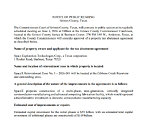
Elon Musk recently announced an ambitious project called Terafab, which he plans to build on Tesla's campus in eastern Travis County, Austin, Texas. Thanks to recent court hearings in Grimes County, Texas, we have learned that the first phase of the Terafab project is expected to cost $55 billion. However, if additional phases are constructed, this figure could rise to $119 billion. While this is an astonishingly high amount, it seems justified given Terafab's ambitious goals. Semiconductor manufacturing is one of the greatest marvels of the modern world, with only a few companies competing for the top spot. The engineering and scientific expertise required for building modern semiconductor manufacturing facilities is so rare that it is concentrated in just a few places around the globe.
The goal of Terafab is to consolidate the entire chip manufacturing process under one roof. The plant is expected to integrate several stages of semiconductor production at a single site, including logic fabrication, memory, packaging, testing, and mask production. This setup is unusual, as these steps are typically spread across multiple specialized facilities and companies. The idea behind Terafab is that consolidating these processes could accelerate development by allowing engineers to design, test, and revise chips with fewer delays, essentially enabling rapid prototyping. This contrasts with the traditional, lengthy process of manufacturing chips at one site, packaging them at another, and testing them in-house. A typical semiconductor fab for nodes below 3 nm costs over $20 billion, but that only covers silicon manufacturing. Terafab's goal to handle everything will push that cost astronomically high.
The goal of Terafab is to consolidate the entire chip manufacturing process under one roof. The plant is expected to integrate several stages of semiconductor production at a single site, including logic fabrication, memory, packaging, testing, and mask production. This setup is unusual, as these steps are typically spread across multiple specialized facilities and companies. The idea behind Terafab is that consolidating these processes could accelerate development by allowing engineers to design, test, and revise chips with fewer delays, essentially enabling rapid prototyping. This contrasts with the traditional, lengthy process of manufacturing chips at one site, packaging them at another, and testing them in-house. A typical semiconductor fab for nodes below 3 nm costs over $20 billion, but that only covers silicon manufacturing. Terafab's goal to handle everything will push that cost astronomically high.


