Login
Login
Flight Chaos Across Ireland, France, UK, UAE, and New Zealand: How Missed Connections Ruined Multi-Airline Journeys, Here’s What You Need to Know About Navigating Multi-City Delays
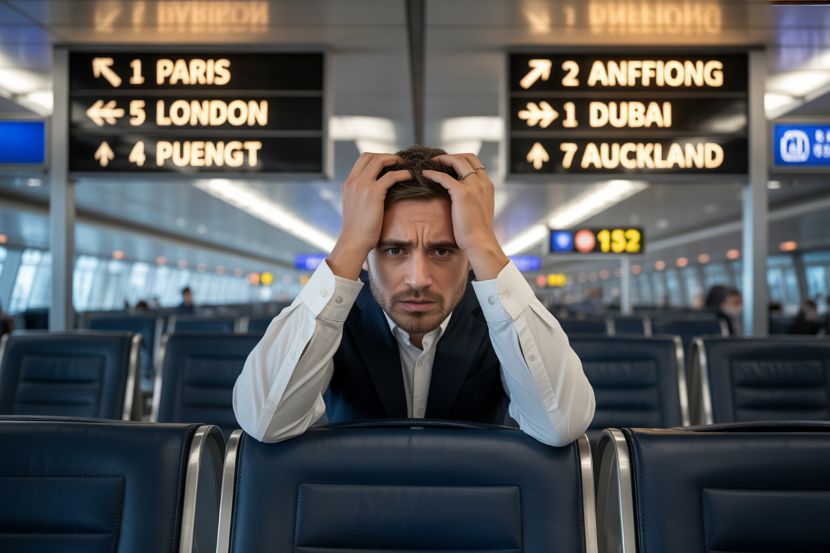
Booking a multi-airline journey often offers flexibility, but for some passengers, it can quickly turn into a nightmare. A recent incident involving a flight from Dublin to Auckland reveals the potential pitfalls of booking complex itineraries, especially when delays and miscommunications happen. In this case, a two-hour delay on an Aer Lingus flight to Paris caused a series of issues, with multiple reroutes through Qatar Airways, British Airways, and Emirates. The resulting chaos, involving missed connections, lack of cooperation between airlines, and inadequate customer service, stranded the passenger in Paris, London, and Dubai. Here’s a breakdown of the key issues that arose and why travelers need to be cautious when booking such multi-leg journeys.
A Cascade of Disruptions: Missed Connections and Inadequate Assistance
The itinerary, booked with Singapore Airlines, involved Aer Lingus from Dublin to Paris, followed by Singapore Airlines to Singapore, and then a codeshare flight with Air New Zealand to Auckland. The connection times in Paris and Singapore were tight, but manageable. However, a two-hour delay on the initial Aer Lingus flight from Dublin to Paris set off a chain of events that caused significant disruption.
Upon arrival in Paris, the passenger was informed that the delay would cause them to miss the connection with Singapore Airlines. Despite following the necessary procedures and requesting help from Aer Lingus staff, assistance was inadequate. The airline did not provide immediate support and instead rebooked the passenger via Qatar Airways, causing the traveler to stay overnight in Dublin.
Upon reaching Paris for the rebooked Qatar Airways flight, the passenger found they had been mistakenly removed from the booking. This was the first of many miscommunications that occurred, as Aer Lingus failed to effectively handle the rebooking process. The situation escalated further as the passenger was rerouted again, this time through London Heathrow (LHR) with British Airways, then onward to Dubai on a British Airways flight, and eventually to Auckland with Emirates.
Lack of Coordination: The Problems in London and Dubai
In London, further complications arose. After managing to board the British Airways flight to Dubai, the passenger encountered more issues at the airport. British Airways and Emirates, despite being major international carriers, could not coordinate the necessary details for the onward flight. The lack of cooperation between the airlines meant that the passenger was unable to collect the boarding pass for the next leg of the journey in London. This highlights the critical importance of interline agreements between airlines. When these agreements are lacking, passengers may face situations where airlines cannot even see each other’s bookings, leaving travelers in the dark.
Upon arrival in Dubai, the passenger faced yet another hurdle: a terminal transfer that took over an hour. The rushed transfer, which involved running through security and navigating complex airport terminals, added to the stress of an already chaotic journey. Despite having been rebooked, Aer Lingus had failed to properly check the passenger in for the final leg of the flight to Auckland. After a tense phone call with the airline, the passenger was finally checked in for the flight to Auckland—but only because they were carrying hand luggage.
Navigating the Risks of Multi-Airline Itineraries
This experience underscores the risks of booking complex multi-airline itineraries with tight layovers and airlines that are not part of joint ventures or interline agreements. While such tickets can offer competitive pricing, they also introduce the potential for major disruptions if things go wrong. Here are some important takeaways for travelers:
- Be cautious with multi-airline bookings: When possible, choose airlines that work closely together or are part of the same alliance. This will make it easier for airlines to coordinate rebookings and handle delays.
- Allow ample time between connections: Short layovers might look appealing, but they leave little room for delays, especially when the flight involved is already running late.
- Ensure proper booking confirmation: Always confirm your booking status and ensure the airlines have all the correct details, particularly when changes occur at the last minute.
- Consider travel insurance: Comprehensive travel insurance can help cover unexpected rebooking costs and provide support when things go wrong.
Steps Airlines Can Take to Improve Service
In this case, the failure of Aer Lingus and Singapore Airlines to adequately manage the disruption left the passenger to navigate a complicated web of rebookings, terminal transfers, and missed connections. For airlines, this serves as a cautionary tale on the importance of clear communication and proactive customer service. Airlines should strive to improve their coordination when disruptions occur, especially for passengers on complex itineraries involving multiple carriers.
Passengers who are booked on long-haul flights involving multiple airlines should take proactive steps to ensure a smoother journey. When delays or cancellations occur, it is essential that airlines work together to offer seamless rebooking and ensure that passengers are not left to fend for themselves in unfamiliar airports.
The post Flight Chaos Across Ireland, France, UK, UAE, and New Zealand: How Missed Connections Ruined Multi-Airline Journeys, Here’s What You Need to Know About Navigating Multi-City Delays appeared first on Travel And Tour World.