Login
Login
Ryanair Unites Air France, EasyJet, Brussels Airlines, and Lufthansa in Facing Emergency Landings Across France: What New Reports Unveil
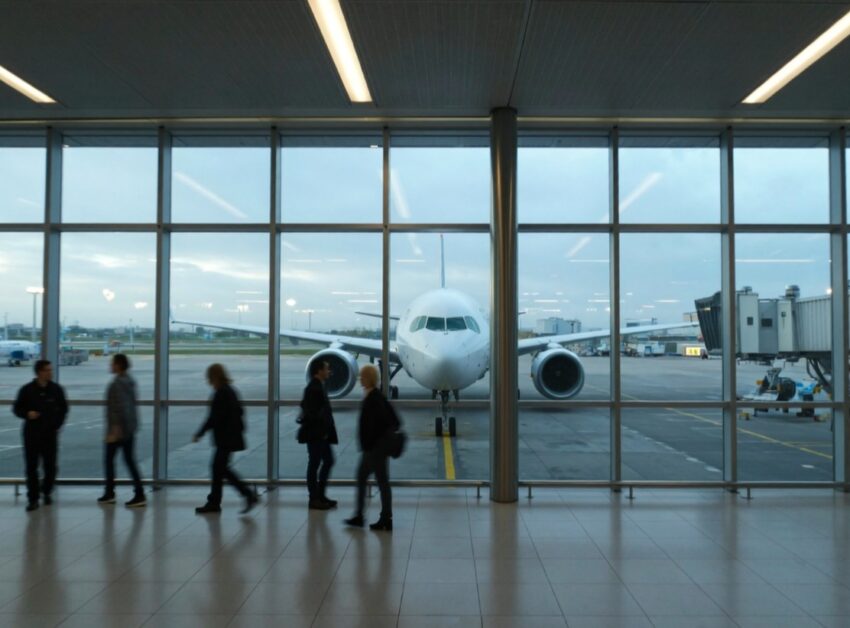
France’s aviation network is one of the busiest in Europe. Between January 2022 and November 2025, airports across French territory handled a series of emergency landings that tested air‑crew discipline, ground‑control readiness and the resilience of passengers. In each case, official statements from airlines or investigative agencies reveal a transparent and safety‑driven response. The following narrative reconstructs the key incidents and the government or operator reactions, offering a chronological view of how French airports managed emergencies during this period.
Early 2022: Engine surge and flight control issues
On 21 January 2022, an Air France Airbus A318 operating flight AF7470 from Paris Orly to Perpignan experienced what the airline later described as an engine surge shortly after departure. The crew elected to return to Orly rather than continue to southern France. In a statement issued after the incident, the airline explained that the decision to return was taken following a technical problem and in accordance with manufacturer procedures. The aircraft landed safely at 9:15 p.m. local time, and passengers were looked after by Air France staff. The airline stressed that such incidents are rare and emphasised that its crews are trained to manage known and controlled situations, reiterating that health and safety are paramount[1].
Just over two months later, on 5 April 2022, Air France flight AF11 – a transatlantic Boeing 777 from New York to Paris Charles de Gaulle (CDG) – encountered unresponsive flight controls during final approach. According to an Air France spokesperson, the pilots initiated a go‑around after experiencing a technical incident. After circling, the crew landed normally, and the airline expressed regret over the discomfort experienced by passengers. France’s Bureau d’Enquêtes et d’Analyses (BEA) opened a safety investigation, underscoring the seriousness with which authorities treat flight control anomalies[2].
2023: A small plane in the suburbs
Emergency landings are not limited to commercial jets. On 4 December 2023, residents of Villejuif, a suburb south of Paris, watched a small twin‑engine aircraft perform an emergency landing on a local road. A spokesperson for the BEA explained that the pilot reported a technical problem and that investigators would examine the circumstances[3]. While details about the aircraft type and operator were not immediately released, the agency’s involvement demonstrated France’s commitment to investigating even minor incidents. Reports indicated that there were no serious injuries.
2024: Technical malfunctions and fumes
The next year saw two notable events. On 3 January 2024, a British Airways Airbus A320 en route from London to Gibraltar performed an unscheduled landing at Nantes Atlantique Airport after the crew and passengers smelled fumes in the cockpit. The airline confirmed that the flight diverted due to a technical issue, adding that the aircraft landed normally and that hotel accommodation and transport were arranged for passengers. The statement apologised for the inconvenience and emphasised that safety is always British Airways’ highest priority[4].
A few months later, on 11 May 2024, a Hop! (Air France subsidiary) Embraer ERJ‑170 operating flight AF4190 from Paris to Toulouse declared an emergency as it approached Toulouse‑Blagnac Airport. The pilots received an unsafe left main gear indication, executed a go‑around, and then landed safely. France’s BEA dispatched investigators and classified the occurrence as a serious incident[5]. The official report noted that the crew followed procedures and that there were no injuries.
Early 2025: Pressurisation issues and safety protocols
On 3 January 2025, Air France flight AF1448 from Paris to Barcelona experienced a cabin pressurisation malfunction shortly after takeoff. Oxygen masks automatically deployed, and the flight crew decided to return to Charles de Gaulle Airport. In its statement, the airline explained that the crew took the decision in accordance with manufacturer procedures and that pressurisation problems require an immediate return as a precaution. Flights were cancelled while technicians inspected the aircraft. Air France apologised for the disruption and emphasised that the safety of customers and crews is its absolute imperative[6].
On 16 August 2025, another Air France service, flight AF718 bound for Dakar, returned to Paris after a passenger reportedly attacked a purser. The airline confirmed that the flight later departed again and that the individual responsible was taken into custody[7]. Although this incident was caused by a passenger disturbance rather than a technical failure, it underscored how unruly behaviour can necessitate emergency landings and how airlines coordinate with law enforcement in such situations.
September 2025: Multiple unscheduled landings
Two separate incidents in September highlighted medical and behavioural emergencies. On 18 September 2025, Ryanair flight FR3208 from Manchester to Málaga diverted to Bordeaux‑Mérignac Airport when a passenger became seriously ill. The airline issued a statement confirming the medical diversion and said the crew contacted Bordeaux ahead of landing so paramedics could meet the aircraft. Ryanair added that passenger safety and wellbeing are always its highest priority[8]. The flight later resumed its route after the passenger was transferred to hospital.
Less than ten days later, on 26 September 2025, another Ryanair flight, FR8425 from London Luton to Alicante, was diverted to Toulouse after a small group of passengers became disruptive. A Ryanair spokesperson said the airline had a zero‑tolerance policy toward misconduct and would take decisive action to ensure a respectful environment. Passengers who behaved improperly were removed from the flight, and the service continued to its destination[9]. This event reminded travellers that unscheduled landings can result from passenger behaviour as well as mechanical issues.
The same month saw tragedy when Brussels Airlines flight SN3735 from Brussels to Málaga diverted to Toulouse because a passenger suffered a medical emergency on board. A spokesperson for the airline explained that the plane had to make a medical emergency landing, noting that cabin crew attempted resuscitation but the passenger later passed away. The incident occurred on 20 September 2025 and underscores how crews are trained to provide first aid but may need to land quickly to obtain professional medical assistance[10].
November 2025: Delta returns to Paris
On 26 November 2025, Delta Air Lines flight 153 departed Paris CDG for Minneapolis but returned to the departure airport less than twenty minutes into the flight. According to a Delta spokesperson, the Airbus A330 carrying 177 passengers turned back due to a mechanical issue involving the aircraft’s flaps. Because the wide‑body jet was heavily loaded with fuel for a transatlantic crossing, the crew declared an emergency to obtain priority landing clearance and reduce the aircraft’s weight through additional flying time. Delta said the jet landed safely and passengers were rebooked on another service[11]. This incident illustrated how even well‑maintained aircraft can develop faults that require immediate attention and how fuel weight considerations influence emergency procedures.
Analysis: Patterns and preparedness
These incidents reveal several patterns. First, technical malfunctions accounted for many emergencies, whether engine surges, pressurisation failures, landing gear anomalies or flap warnings. Airline statements consistently highlighted adherence to manufacturer and company procedures and emphasised crew training. Second, medical issues prompted several diversions, underscoring the role of cabin crews in delivering first aid and the need for rapid coordination with ground services. Third, passenger behaviour can also cause emergency landings, as shown in the Ryanair and Air France disturbances. Finally, the BEA’s involvement in both minor and serious incidents demonstrates the French government’s commitment to transparency and improvement in aviation safety.
Through every incident, airlines and authorities communicated openly, issued condolences or apologies when necessary, and reiterated that safety is the top priority. Passengers were generally accommodated with hotel stays or alternative flights, and investigations were launched to determine root causes. These events, while alarming for those involved, illustrate that emergency protocols work: crews detect problems early, controllers prioritise landings, and ground teams mobilise quickly. By studying these occurrences and learning from them, France and its partners continue to enhance the resilience of the aviation system.
Reference list
- Air France spokesperson describing the engine surge and return to Orly during flight AF7470 (21 January 2022)[1].
- Air France statement regarding the go‑around and investigation of flight AF11 (5 April 2022)[2].
- BEA spokesperson on technical problem causing a small plane to land in Villejuif (4 December 2023)[3].
- British Airways statement after fumes led to an emergency landing in Nantes (3 January 2024)[4].
- BEA report on Hop! flight AF4190 gear issue and classification as serious incident (11 May 2024)[5].
- Air France statement on cabin pressurisation problem aboard flight AF1448 (3 January 2025)[6].
- Summary of Air France flight AF718 disruption and return to Paris due to passenger attack (16 August 2025)[7].
- Ryanair statement confirming medical diversion of flight FR3208 to Bordeaux (18 September 2025)[8].
- Ryanair spokesperson on zero‑tolerance policy following diversion to Toulouse (26 September 2025)[9].
- Brussels Airlines spokesperson about medical emergency landing in Toulouse during flight SN3735 (20 September 2025)[10].
- Delta Air Lines spokesperson explaining flap‑related mechanical issue and emergency return to Paris (26 November 2025)[11].