
 Login
Login
Lufthansa Unites EasyJet, Eurowings, Singapore Airlines, and Air France in Heart-Stopping Aerial Dangers in Emergency Landings: What They Are Hiding
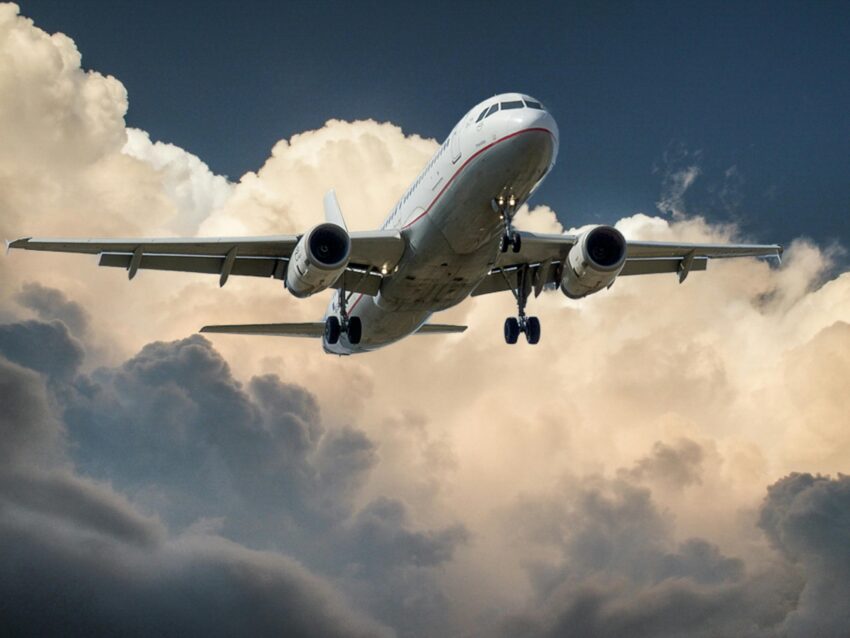
Emergency landings are rare events that occur when a flight crew decides that continuing under normal circumstances would compromise safety. The decision may be prompted by a technical fault, onboard medical issues, or external threats such as bomb threats. Germany’s aviation authorities publish bulletins and investigation reports summarising incidents and serious events. Airlines may also confirm emergency landings via spokespeople or press statements. This article looks at confirmed emergency landings at Frankfurt and Munich airports between January 2022 and November 2025. Only incidents backed by official bulletins or statements are included.
Emergency landings at Frankfurt
September 2022 – chartered flight returns after pilot incapacitation
On 22 September 2022 a Boeing 737‑800 operating a charter flight experienced an in‑flight medical emergency near the end of its journey. According to the investigation bulletin, the co‑pilot became unwell and could not continue his duties. The captain declared an emergency and requested an immediate landing. The flight landed at Frankfurt‑Main Airport with emergency services on standby. There were no injuries or damage to the aircraft[1]. After medical evaluation the co‑pilot was taken to hospital, and the airline arranged a replacement crew to continue the aircraft’s schedule.
July 2023 – captain incapacitated on approach
On 19 July 2023 Eurowings Discover flight 4Y1205, an Airbus A320 from Heraklion, Greece to Frankfurt, declared a general emergency while descending toward runway 25L. The captain became incapacitated during final approach, prompting the first officer to assume command and land the aircraft. The German accident investigation bulletin notes that the aircraft landed safely; emergency medical services took the captain to hospital, and none of the 178 passengers or crew were injured[2]. The occurrence was classified as a serious incident and triggered an official investigation.
September 2023 – A330‑900 returns due to unreliable airspeed readings
A more complex emergency occurred on 20 September 2023 during a passenger charter flight from Frankfurt. The Airbus A330‑900 took off with three pilots, nine cabin crew members and 275 passengers onboard. Shortly after take‑off, the flight crew noted inconsistent speed indications on their primary flight displays. They continued the take‑off and manually flew the aircraft, but the recorded cockpit voice data show that the crew performed a structured decision‑making (FORDEC) process before deciding to return to Frankfurt. Because the aircraft was still heavy with fuel, the captain requested assistance from airport fire services due to the overweight landing. The aircraft landed safely on runway 25C about 45 minutes after departure; there were no injuries and no damage[3][4]. The federal accident investigation bureau opened a detailed investigation (state file BFU23‑0887‑5X).
September 2023 – long‑haul flight returns after engine indication anomaly
Two days later, on 13 September 2023, Lufthansa flight LH 712 (a Boeing 747‑400) departed Frankfurt bound for Seoul. Midway over the Caspian Sea the flight crew observed irregular oil‑pressure readings on one engine. Following standard procedures the crew shut down the affected engine and declared a precautionary air emergency. The flight returned to Frankfurt and landed uneventfully with its 341 passengers and crew. Lufthansa’s official statement explained that the engine shutdown and emergency declaration were precautionary, the aircraft landed normally, and passengers were rebooked onto subsequent flights[5]. The airline emphasised that safety remained its top priority.
June 2025 – bomb threat forces return flight
On 15 June 2025, Lufthansa flight LH 752, a long‑haul service from Frankfurt to Hyderabad, received a bomb threat via email while the aircraft was in international airspace. Authorities at Hyderabad’s Rajiv Gandhi International Airport advised the airline to return to the origin or divert to the nearest suitable airport. Lufthansa’s statement said the flight “returned to its point of departure out of an abundance of caution,” and emphasised that passenger and crew safety is the airline’s highest priority[6]. The Airbus wide‑body aircraft landed back at Frankfurt under heightened security. Passengers were provided accommodation and rebooked for onward travel[6]. The bomb threat was investigated by authorities and no device was found.
Emergency landings at Munich
August 2024 – hydraulic irregularity on flight to Tokyo
The most significant emergency landing at Munich during the review period occurred on 17 August 2024. A Lufthansa Airbus A350, operating a long‑haul service from Munich to Tokyo (flight LH 714), was several hours into its flight when the crew observed an irregularity in a hydraulic display. According to a Lufthansa spokesperson, the captain decided to turn the aircraft around over the Caspian Sea and return to Munich as a precaution. The flight landed back at Munich after about eight hours with emergency vehicles escorting the aircraft; the airline emphasised that a hydraulic issue can trigger a priority landing but does not pose immediate danger[7]. All 292 passengers were rebooked for onward travel, and the aircraft returned to service after maintenance checks[7].
November 2025 – Air France A350 diverts due to cockpit odour
On 10 November 2025 an Air France Airbus A350‑900 (flight AF 264) flying from Paris to Seoul reported a burning smell in the cockpit while cruising over Austria. The pilots transmitted the emergency squawk code 7700, performed a controlled descent and diverted to Munich. Emergency services met the aircraft on arrival, and passengers remained on board while the aircraft was inspected. Air France confirmed the diversion and arranged a replacement Boeing 777‑300ER to transport passengers to Paris later that day[8]. The airline emphasised that declaring an emergency code is a standard safety protocol and that passenger safety is its top priority[8]. The A350 remained grounded in Munich for technical checks, and no injuries were reported.
Discussion
The events documented above highlight the rarity of emergency landings at Germany’s busiest international hubs. Between early 2022 and November 2025 there were six confirmed emergency landings at Frankfurt and Munich backed by official bulletins or airline statements. The primary causes fell into three categories:
- Crew incapacitation. Two events involved flight‑crew medical issues: the September 2022 charter flight where the co‑pilot became ill and the July 2023 Eurowings Discover incident where the captain was incapacitated. In both cases the remaining pilot assumed control and landed safely[1][2]. These events underscore the importance of crew redundancy and cross‑training, and they demonstrate how prompt medical support can mitigate risk.
- Technical anomalies. Technical issues accounted for the majority of events. The A330‑900 incident on 20 September 2023 involved unreliable airspeed sensors, leading to a return to Frankfurt and an overweight landing supported by the airport fire brigade[3]. Other technical events included the oil‑pressure irregularity on Lufthansa flight LH 712 and the hydraulic display anomaly on the August 2024 Munich‑Tokyo flight, both of which resulted in precautionary returns[5][7]. These cases show that modern aircraft systems often provide early warnings that allow crews to resolve issues before they pose a danger.
- External threats. The June 2025 bomb threat on Lufthansa flight LH 752 illustrates how non‑technical factors can lead to emergency landings. Airport authorities and airline security teams collaborated to advise a return and ensure passenger safety[6]. Although no explosive device was found, the incident emphasised the need for prompt threat assessment and coordination among international authorities.
In all cases, no fatalities or serious injuries occurred. The effectiveness of German aviation safety protocols is evident: flight crews responded promptly, air traffic control provided priority handling, and airport emergency services were ready to support. The federal accident investigation bureau (BFU) launched detailed investigations into events that met the threshold for a serious incident, while airlines conducted internal reviews and maintenance checks.
Reference list
- German Federal Bureau of Aircraft Accident Investigation (BFU), bulletin entry describing the September 2022 emergency landing at Frankfurt[1].
- BFU bulletin summarising the Eurowings Discover 4Y1205 incident on 19 July 2023[2].
- BFU interim report IR23‑0887‑5X describing the 20 September 2023 A330‑900 return to Frankfurt[3][4].
- Lufthansa statement on the 13 September 2023 return of flight LH 712 due to engine oil‑pressure irregularity[5].
- DPA report quoting a Lufthansa spokesperson about the August 2024 Munich‑Tokyo flight’s hydraulic display issue[7].
- Lufthansa and Hyderabad airport statements on the LH 752 bomb‑threat return (June 2025)[6].
- Aviation A2Z article citing Air France’s confirmation of the AF 264 diversion to Munich in November 2025[8].
