
 Login
Login
How the North Pole’s Movement Affects Travel: Santa’s Route and Your Vacation
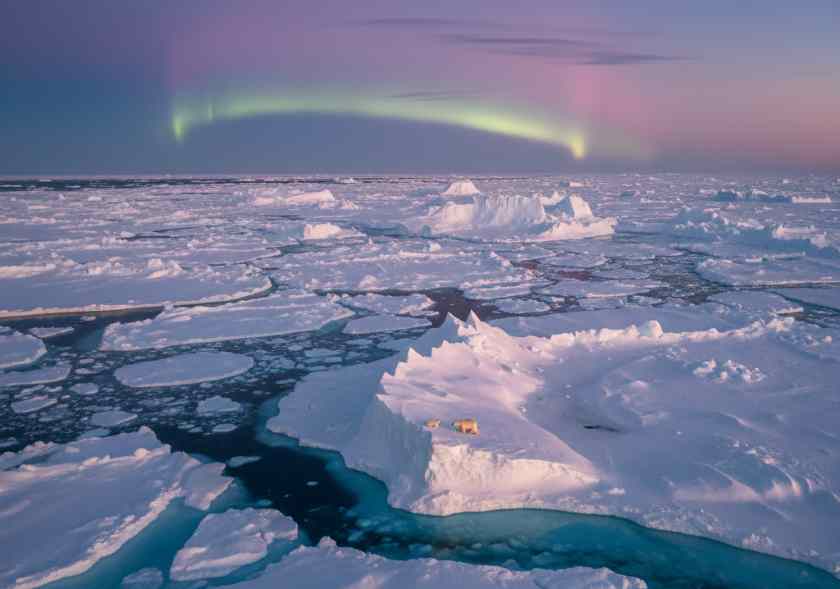
Santa Claus may have an extensive understanding of the world’s geography, but even he faces challenges when navigating the ever-changing North Pole during his Christmas Eve journey. While he’s delivering gifts to children around the globe, he must also make sure to find his way back to his workshop—no small feat considering the shifting nature of the North Pole.
But Santa isn’t the only one affected by this movement. The movement of the magnetic North Pole and its implications for navigation have far-reaching effects on travelers around the world. As technology and navigation systems advance, it’s important to understand how this shifting landmark can influence everything from air travel to maritime navigation, and yes, even Santa’s holiday journey.
The Two North Poles: Geographic vs. Magnetic
There are two types of North Poles: the geographic North Pole and the magnetic North Pole. The geographic North Pole, which you see on world maps, is fixed at 90° north latitude. This is the true top of the Earth, where all lines of longitude converge. Santa and many travelers use the geographic North Pole as a reference point for positioning and direction. However, there’s another important North Pole: the magnetic North Pole, which is the point where the Earth’s magnetic field lines converge, and compasses point toward.
The magnetic North Pole is the one that Santa’s compass would rely on to navigate his way back home. Unlike the geographic North Pole, the magnetic North Pole is not fixed in place—it moves over time due to the dynamics of Earth’s molten core. In fact, it has been shifting significantly in recent decades, from the Canadian Arctic toward Russia. This movement can affect travelers who rely on compass navigation, as well as modern systems that take the magnetic North Pole’s position into account.
Santa’s Navigation Challenge
When Santa heads out on Christmas Eve, he has to account for the changing magnetic North Pole to ensure that his reindeer follow the correct route. Unlike traditional navigation methods, modern technology such as GPS systems no longer relies on the magnetic poles but instead uses satellite signals. However, Santa’s sleigh, presumably running on a traditional compass, may face difficulties if the magnetic North Pole drifts too far from its expected location.
In addition to the shift in the magnetic North Pole, the unpredictable weather conditions around the Arctic region could also hinder Santa’s journey. Snowstorms, heavy winds, and even Arctic ice floes create natural obstacles for both Santa and travelers. However, Santa’s magical sleigh is likely well-equipped to navigate these challenges, even if his compass doesn’t align perfectly with the magnetic North Pole.
Effects of the Magnetic North Pole’s Movement on Travel
While Santa’s journey is an annual, fun-filled example of the importance of the North Pole’s shifting position, modern travelers also face consequences from the magnetic pole’s movement. The magnetic North Pole’s migration impacts everything from compasses and airlines to maritime routes. For travelers using traditional compasses, particularly those on hiking expeditions or remote journeys, it’s important to stay aware of the pole’s movement.
In the aviation industry, airlines and pilots rely on magnetic navigation for their flight routes, particularly when flying over vast oceans and uninhabited areas where GPS signals may be unavailable. The movement of the magnetic North Pole means that airlines must adjust their flight paths and ensure that navigational systems remain accurate. Airplanes flying over polar regions may adjust their headings to accommodate the shifting magnetic field.
For maritime travel, sailors and shipping companies that rely on compass navigation are also affected. Inaccuracies in magnetic compasses due to the changing magnetic North Pole could lead to miscalculations in routes, especially for long voyages. This is one reason why modern vessels and aircraft are equipped with advanced satellite-based navigation systems to complement or replace traditional compass-based systems.
Tourism and Travel: Embracing Technology in Navigation
While traditional navigation may still have its place in some travel activities, modern technology now dominates the travel landscape. GPS systems, which rely on satellite technology and are not affected by the movement of the magnetic North Pole, are standard on most modern transportation, from airplanes to cruise ships and even mobile phones.
However, in remote and adventurous travel settings, the magnetic North Pole still holds significant value for those traveling without satellite assistance. Hikers, backpackers, and adventurers exploring remote regions, including Arctic areas, should ensure that they are aware of the pole’s shifting position to maintain accurate directional guidance.
In the tourism sector, companies offering polar expeditions or adventure tourism in northern regions such as the Arctic or Antarctic are already factoring in the shift of the magnetic North Pole into their itineraries and safety plans. Educating tourists on how to navigate through such regions can improve safety and efficiency during their travels.
The North Pole: A Travel Destination
For travelers who wish to visit the North Pole, whether on a cruise or as part of an Arctic expedition, the region offers some of the most unique and remote tourism experiences on Earth. The Arctic region draws visitors with a range of activities, from icebreaker cruises to wildlife watching and scientific research stations. As tourism grows in these remote regions, the impact of shifting magnetic poles will continue to play a role in how explorers navigate these areas.
Looking Ahead: The Future of Travel and the North Pole’s Movement
With the ongoing movement of the magnetic North Pole, future travelers and explorers may need to stay informed about shifts in global navigation systems. The growing reliance on satellite navigation systems will continue to ease travel complications related to the magnetic North Pole’s movement. However, for those traveling off the beaten path or relying on traditional tools like compasses, understanding the dynamics of the North Pole’s shifting position remains essential.
In conclusion, while Santa’s travel across the world each Christmas may provide a whimsical example of the importance of the North Pole’s movement, it serves as a reminder for all travelers that changes in the magnetic field impact more than just holiday journeys. As the North Pole continues to shift, both modern and traditional travelers must adapt to new navigation methods to ensure safe and efficient travel worldwide.
The post How the North Pole’s Movement Affects Travel: Santa’s Route and Your Vacation appeared first on Travel And Tour World.