Login
Login
How Snapdragon 8 Elite is Raising the Bar for Tablets

Tablets are faster than ever before, and at the heart of this improvement is Qualcomm’s Snapdragon 8 Elite. Borrowing the powerful chipset from flagship smartphones, the 8 Elite powers premium tablets from various brands, promising not just faster performance but smarter efficiency and next-gen AI capabilities. But does this chip truly move the needle for tablets? From productivity to gaming, here’s a quick breakdown of what makes the Snapdragon 8 Elite special and why it could be a defining platform for high end tablets.
What’s Under the Hood: A Performance and Efficiency Beast
At its core, the Snapdragon 8 Elite brings a substantial evolution over its predecessors. Built on TSMC’s 3nm process with Qualcomm’s custom Oryon CPU architecture, it offers a significant uplift in raw processing power. Compared to its predecessor, it offers up to a 45 percent jump in CPU performance, while also cutting power consumption.
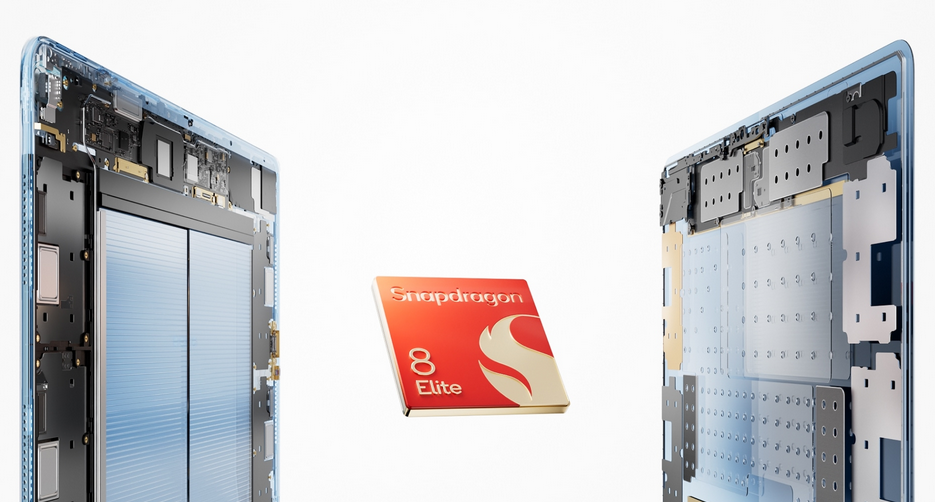
This all-new architecture isn’t just about peak performance. It’s designed so that tablets can sustain heavier workloads like editing and gaming. For tablet users, that means apps and services feel snappier and more responsive across the board.
Gaming and Graphics
One of the most striking advancements of the Elite platform is its Adreno GPU. With roughly 40 % faster graphical performance and enhanced efficiency, it brings console-like visuals to mobile devices. Games that once struggled on tablets can now run at higher fidelity, smoother frame rates, and with improved hardware accelerated ray-tracing support. This marks a real level-up for tablets that double as portable gaming rigs.
For Android tablets, this isn’t just about benchmarks. It’s about delivering deeper, richer experiences in high fidelity titles. Fans of esports titles like COD Mobile can now hit triple digit frame rate, which translates to a more smoother gameplay experience that gives a competitive edge.
Smarter Tablets Through On-Device AI
Apart from just raw speed, the Snapdragon 8 Elite flexes its AI prowess. The Hexagon Neural Processing Unit (NPU) is dramatically more capable, offering up to 45 percent faster AI performance per watt than previous generations. What does this mean in practice? Expect more responsive voice assistants, enhanced real-time language translation, smarter photography, and on-device generative AI that doesn’t require the cloud. Tablet makers can leverage this for everything from adaptive UI features to smarter multitasking.

Real-World Impact
Tablets like the OnePlus Pad 3 show how the Snapdragon 8 Elite translates in the real world. Beyond benchmarks, users benefit from fast app switching, lightning-quick rendering of complex spreadsheets, and creative workflows that don’t bog down under load.
The chipset also plays nicely with larger RAM configurations and UFS 4.0 storage, ensuring fast loading and efficient caching of big files. Combined with big batteries on modern tablets, this means sustained performance over hours of use.
For more daily updates, please visit our News Section.
Don’t miss a thing! Join our Telegram community for instant updates and grab our free daily newsletter for the best tech stories!
The post How Snapdragon 8 Elite is Raising the Bar for Tablets appeared first on Gizmochina.