Reading view

JPMorgan Turns to Coinbase’s Base as JPM Coin Goes Public
JPMorgan Turns to Coinbase’s Base as JPM Coin Goes Public

The post JPMorgan Turns to Coinbase’s Base as JPM Coin Goes Public appeared first on Coinpedia Fintech News

JPMorgan just took a step that would have sounded unlikely a few years ago.

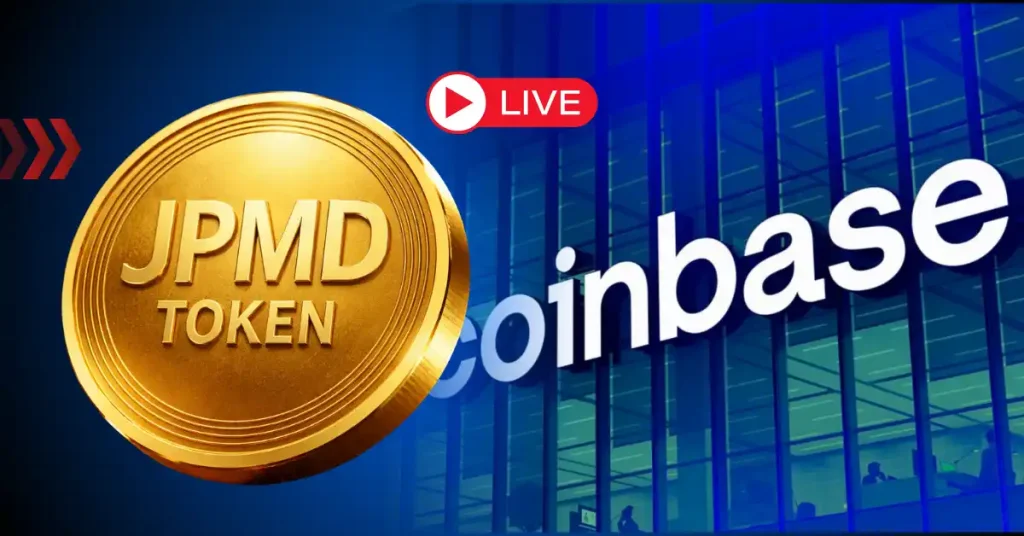
The banking giant has moved its tokenized deposit product, JPM Coin (JPMD), off its private blockchain and onto Base, Coinbase’s public Ethereum layer-2 network.

The reason is straightforward: institutional clients want to move money, post collateral, and settle trades directly on public blockchains.

Why JPMorgan Took JPM Coin Public

JPM Coin has been around since 2019, operating on JPMorgan’s permissioned blockchain, now called Kinexys. That setup worked when on-chain activity was limited. But as more trading and settlement moved onto public networks, clients started asking for access there too.

“Right now, the only cash or cash equivalent option available on public chains are stablecoins,” said Basak Toprak, Product Head of Deposit Tokens at JPMorgan’s Kinexys Digital Payments. “There is a demand for making payments on public chains using a bank deposit product.”

Base offered what JPMorgan was looking for: a fast, low-cost Ethereum network already used by many institutional crypto firms through Coinbase.

What JPM Coin Will Be Used for on Base

The use cases are practical. JPM Coin on Base can be used to hold collateral and make margin payments tied to crypto transactions.

“There are asset managers or broker-dealers who have a transaction relationship with Coinbase,” Toprak said. “They keep collateral at Coinbase, and they pay margins as well.”

Until now, firms handled this either through stablecoins or traditional bank transfers. Both come with trade-offs. Bank transfers have cutoff times. Stablecoins introduce a different risk profile that some institutions are still uneasy with.

JPM Coin offers a third option which is a bank-backed deposit, now usable on public blockchain rails.

A Clear Direction Ahead

JPM Coin remains permissioned and fully controlled by the bank.

“A payment is a payment,” Toprak said. “Cash is used as collateral today in traditional finance, so it can be used as a collateral in the onchain world as well.”

Still, the move carries weight. Coinbase executive Brian Foster described tokenized deposits as the “cousin of stablecoins,” highlighting how banks are adapting as on-chain finance grows.

Never Miss a Beat in the Crypto World!

Stay ahead with breaking news, expert analysis, and real-time updates on the latest trends in Bitcoin, altcoins, DeFi, NFTs, and more.

FAQs

What is JPM Coin and how is it different from a stablecoin?

JPM Coin is a bank-backed deposit token issued by JPMorgan, representing real cash held at the bank, unlike stablecoins issued by private entities.

Why did JPMorgan move JPM Coin to the Base blockchain?

JPMorgan moved JPM Coin to Base to meet client demand for faster, always-on payments and collateral settlement directly on public blockchains.

What are the main use cases of JPM Coin on Base?

It’s used for holding collateral, margin payments, and settling crypto-related transactions without bank cutoff times or stablecoin risks.
World Liberty Financial Proposes $120M Treasury Move to Scale USD1 Stablecoin

World Liberty Financial Mints 300 Million USD1 Stablecoins

The post World Liberty Financial Proposes $120M Treasury Move to Scale USD1 Stablecoin appeared first on Coinpedia Fintech News

World Liberty Financial is considering a major treasury move that could reshape the future of its USD1 stablecoin, and the community is split.

The Trump family-backed crypto project has proposed using $120 million from its WLFI token treasury to expand adoption of its U.S. dollar–pegged stablecoin, USD1, as competition in the stablecoin market heats up.

The proposal, posted Wednesday on World Liberty Financial’s governance forum, calls for allocating 5% of the WLFI treasury to grow USD1’s circulating supply and push integrations across both centralized and decentralized finance platforms.

Why World Liberty Financial Is Pushing USD1 Now

According to the team, the stablecoin market is becoming increasingly crowded.

The proposal argues that expanding USD1’s supply would help embed the stablecoin deeper into crypto infrastructure.

As the team explained, “As USD1 grows, more users, platforms, institutions, and chains integrate with World Liberty Financial infrastructure.”

They added that higher circulation strengthens the broader ecosystem governed by WLFI holders, creating demand for liquidity incentives, integrations, and ecosystem programs.

In short, USD1 growth is being positioned as a direct driver of WLFI’s long-term relevance.

Community Reaction Remains Divided

Not everyone is convinced.

The governance vote is currently live, offering options to vote for, against, or abstain. Early responses show opposition narrowly leading, reflecting unease among some WLFI holders.

Supporters argue the treasury deployment could reward partners building on USD1 and help the project compete with established players. Some have suggested directing funds toward decentralized exchanges on Ethereum and Solana, as well as major centralized exchanges.

Critics, however, have raised concerns about unlocking treasury tokens too early, with some calling for broader supply releases or clearer governance rules before moving forward.

Where USD1 Stands in the Stablecoin Market

USD1 launched in March and has grown quickly, now holding a $2.74 billion market cap, making it the seventh-largest USD-pegged stablecoin.

The proposal follows recent treasury activity, including a $10 million WLFI token buyback using USD1 and reported liquidity support from market maker DWF Labs.

If approved, the $120 million allocation would mark a key test for World Liberty Financial.

Coinbase System Update 2025: What’s Next for Trading, Payments, and Crypto

Coinbase System Update 2025

The post Coinbase System Update 2025: What’s Next for Trading, Payments, and Crypto appeared first on Coinpedia Fintech News

Coinbase is making it clear that it no longer wants to be seen as just a crypto exchange.

In its Coinbase System Update for 2025, the company laid out a broader plan to rebuild finance on crypto rails, arguing that the current system is slow, expensive, and limited by banking hours. Coinbase conveyed the clear message that crypto infrastructure is now mature enough to power investing, payments, and financial services at scale.

The “Everything Exchange”

The centerpiece of the update is what Coinbase calls the “Everything Exchange.” The goal is to give users a single account where they can trade more than just crypto as markets increasingly move on-chain.

Coinbase confirmed that stock trading is now live inside the Coinbase app, with a dedicated stocks section and a unified portfolio view. Users can buy stocks using USDC while earning rewards, positioning the platform for always-on trading.

The company also revealed plans to launch equity perpetuals outside the U.S., offering leveraged exposure to individual stocks and indices.

Prediction Markets and Broader Market Access

Coinbase is also entering prediction markets, introducing an in-app Predictions tab that lets users trade outcomes tied to elections, sports, policy decisions, and economic events. The feature is being rolled out through a partnership and is designed to sit alongside traditional trading inside the app.

On the crypto side, Coinbase is expanding access through DEX integration, including support for Solana. The update emphasized access to “millions of assets,” allowing users to trade newly launched on-chain tokens without managing separate wallets or seed phrases.

Financial Services Move Fully On-Chain

Trading is only part of the picture.

Coinbase is also expanding services aimed at managing a user’s “entire financial life.” These include direct deposit, USDC rewards, lending and borrowing, and instant unstaking for supported assets.

According to Coinbase, users have already accessed $1.5 billion in liquidity since January through borrowing products, while staking has generated over $1 billion in rewards since 2023.

What’s Next for Coinbase?

The System Update ties together retail users, businesses, developers, and institutions under one strategy.

From tokenized real-world assets and business payments to AI-powered portfolio tools, Coinbase is positioning itself as financial infrastructure rather than just a trading venue.

Never Miss a Beat in the Crypto World!

Stay ahead with breaking news, expert analysis, and real-time updates on the latest trends in Bitcoin, altcoins, DeFi, NFTs, and more.

FAQs

Can you buy stocks on Coinbase now?

Yes, stock trading is live in the Coinbase app. You can buy stocks using USDC, earn rewards, and view all holdings in a unified portfolio.

What are Coinbase prediction markets?

Prediction markets in the Coinbase app let you trade outcomes on elections, sports, and economic events, all within the same platform as traditional investing.

How does Coinbase access millions of crypto assets?

Through DEX integration, Coinbase users can trade newly launched tokens (like Solana assets) without managing separate wallets, all from one secure account.

What could this strategy mean for traditional banks and brokerages?

If successful, Coinbase’s model could pressure incumbents by offering similar services with fewer intermediaries and longer operating hours. This may accelerate competition around tokenization, stablecoin payments, and always-on trading infrastructure.

“Infinitely Better”: LINK Could Beat XRP Over the Next 10 Years, Says Lark Davis

“Infinitely Better” LINK Could Beat XRP Over the Next 10 Years, Says Lark Davis

The post “Infinitely Better”: LINK Could Beat XRP Over the Next 10 Years, Says Lark Davis appeared first on Coinpedia Fintech News

The debate around Chainlink vs XRP is heating up again and this time, it’s about which crypto project is actually built to last.

During a recent Rollup TV discussion, crypto newsletter founder Lark Davis shared a clear stance on where he thinks the next decade is headed.

“I think Chainlink is an infinitely better asset than XRP,” Davis said. “I don’t own any LINK at the moment, but I think it’s an infinitely better asset. Their CCIP technology is persuasive.”

Why Lark Davis Favors Chainlink Long Term

Davis explained that his view comes down to how each network is built.

In his words, Chainlink is infrastructure, while XRP operates more like a closed system. Chainlink’s technology allows different blockchains to communicate and move assets between them, instead of staying locked inside one ecosystem.

“And it has the infrastructure to make all the silos talk to each other and bring assets, you know, move corn from silo to silo,” Davis said. “It’s a pretty amazing piece of technology.”

He also pointed out that Chainlink has recently introduced token buybacks, something that gives LINK holders a clearer value proposition after years of focusing mainly on utility.

XRP Usage Remains a Question

While Davis was critical, he didn’t completely write XRP off.

He acknowledged that XRP has a strong community, loyal holders, and growing institutional interest. In fact, spot XRP ETFs have now crossed $1 billion in total inflows, showing continued demand from larger investors.

Still, Davis questioned XRP’s real-world usage, noting that daily activity hasn’t grown much despite the project being around for more than a decade.

“I understand why people are investing in XRP,” he said. And if Ripple’s leadership executes perfectly, he believes the upside could still be there. “If Chris and Brad do it right… it’s going to go to, I don’t know, ten bucks or something at some point.”

Infrastructure Is Becoming the Bigger Story

Crypto is shifting toward infrastructure, interoperability, and regulated access – areas where Chainlink continues to expand, including through the Grayscale Chainlink ETF (GLNK).

For Davis, that shift is why the next ten years may look very different from the last and why he believes Chainlink is better positioned for what’s coming next.

Hyperliquid Puts $1B HYPE Tokens Up for Burn Vote

Hyperliquid Puts $1B HYPE Tokens Up for Burn Vote

The post Hyperliquid Puts $1B HYPE Tokens Up for Burn Vote appeared first on Coinpedia Fintech News

Hyperliquid is putting nearly $1 billion worth of HYPE tokens under the spotlight.

The Hyper Foundation has proposed a validator vote to formally recognize HYPE tokens held in the protocol’s Assistance Fund as burned. If approved, the tokens would be excluded from HYPE’s circulating and total supply, even though they are already inaccessible at the protocol level.

A Burn Without a Transaction

This is not a traditional token burn.

The Assistance Fund is a built-in mechanism within Hyperliquid’s layer-1 execution that automatically converts trading fees into HYPE and sends them to a system address. That address was created without a private key, meaning the tokens cannot be accessed or spent unless a hard fork is introduced.

“The Hyper Foundation is proposing a validator vote to formally recognize the Assistance Fund HYPE as burned, removing the tokens permanently from the circulating and total supply,” the foundation said.

A “Yes” vote would bind validators to never approve any upgrade that could unlock the funds.

Why Hyperliquid Is Clarifying Supply Now

Hyperliquid’s fee-driven model has been drawing institutional attention, particularly as large treasuries begin to track HYPE more closely.

According to Cantor Fitzgerald, the protocol has generated around $874 million in fees year-to-date, with 99% of those fees routed through the Assistance Fund to repurchase HYPE.

Cantor described this structure as one that returns nearly all protocol revenue to tokenholders. The new proposal makes it clear that these repurchased tokens were never meant to re-enter circulation, reducing confusion around HYPE’s effective supply.

The foundation said the vote is meant to align supply reporting with how the protocol actually works, rather than create artificial scarcity.

How the Vote Works

Validators must signal their position in the governance forum by December 21, while users can stake with validators that match their view until December 24. The final result will be decided through stake-weighted consensus.

Hyper Foundation proposes a validator vote to formally treat Assistance Fund HYPE as burned, permanently removing it from circulating and total supply.

Tokens are sent to a system address with no private key: 0xfefefefefefefefefefefefefefefefefefefefe.

That address currently… https://t.co/zJ4fnP9Kus pic.twitter.com/TndTnazHNa

— BlockFlow (@BlockFlow_News) December 17, 2025

Native Markets, issuer of the USDH stablecoin, noted that 50% of USDH reserve yield is routed into the Assistance Fund.

“Should this validator vote pass, these contributions will then be formally recognized as burned,” the company said.

As Hyperliquid continues to post strong numbers, the vote highlights a shift toward cleaner accounting and long-term protocol clarity. Always a good sign!.

Never Miss a Beat in the Crypto World!

Stay ahead with breaking news, expert analysis, and real-time updates on the latest trends in Bitcoin, altcoins, DeFi, NFTs, and more.

FAQs

Does this proposal change how HYPE tokens function in trading or governance?

No. The proposal only affects how certain tokens are counted in supply metrics, not how HYPE is used for trading, staking, or governance. Token utility and on-chain behavior remain unchanged.

Could future governance decisions reverse this classification?

Only under highly unlikely circumstances. A “Yes” vote would create a binding commitment among validators to reject any future upgrades that attempt to unlock or reuse those tokens, making reversal politically and economically difficult.

How might this decision affect institutional or treasury investors tracking HYPE?

It improves transparency around supply data, which is critical for valuation models and risk assessment. Clearer accounting reduces ambiguity for funds that must disclose circulating supply assumptions to regulators or investors.

US Senators Introduce SAFE Crypto Act to Target Rising Crypto Scams

US Senators Introduce SAFE Crypto Act to Target Rising Crypto Scams

The post US Senators Introduce SAFE Crypto Act to Target Rising Crypto Scams appeared first on Coinpedia Fintech News

Crypto scams are getting faster, smarter and harder to track. Lawmakers are now treating them as a growing national problem, and they want a coordinated federal response.

This week, U.S. Senators Elissa Slotkin and Jerry Moran introduced a bipartisan bill aimed squarely at crypto-related fraud. The proposal, called the Strengthening Agency Frameworks for Enforcement of Cryptocurrency (SAFE Crypto) Act, would create a dedicated federal task force focused on detecting and preventing cryptocurrency scams.

What the SAFE Crypto Act Will Do

The bill proposes forming a multi-agency task force led by the U.S. Treasury, bringing together officials from the Attorney General’s office, FinCEN, the U.S. Secret Service, and other federal and state agencies.

Unlike past crypto legislation, this effort is not about market rules or asset classification. The focus is narrow and practical: scams, fraud, phishing attacks, and Ponzi-style schemes that continue to drain billions from investors.

The task force would also include private-sector participants, such as stablecoin issuers, digital asset custodians, and blockchain intelligence firms, along with representatives for scam victims and law enforcement.

“This task force, established by the SAFE Cryptocurrency Act, will allow us to draw upon every resource we have to combat fraud in digital assets,” Slotkin said.

Why Now? The Threat Is Escalating

The push comes as crypto-related crime continues to climb. According to Chainalysis, more than $2.17 billion was already stolen from crypto services by mid-2025, surpassing the total recorded for all of 2024.

At the same time, crypto ATM fraud is emerging as a growing concern. Between January and November 2025, losses tied to crypto ATM fraud have already reached approximately $333 million.

“As cryptocurrency becomes more widely used, this legislation would help counter threats and make certain all Americans are better protected from crypto scams,” Moran said.

A Gap in Enforcement

Crypto lawyer Gabriel Shapiro said the proposal could address blind spots in current enforcement. “Feels like this could be very useful! SEC/CFTC not really focused on things like hacks, phishing, petty ponzi schemes, etc,” he wrote.

Blockchain forensic firm TRM Labs has also signaled support, saying closer coordination between industry and law enforcement could help disrupt scam networks in real time.

What Happens Next

If passed, the task force would issue an initial report within one year, followed by annual updates to congressional committees.

For now, the bill signals a clear shift: Washington is focusing directly on crypto scams where losses are mounting fastest.

Never Miss a Beat in the Crypto World!

Stay ahead with breaking news, expert analysis, and real-time updates on the latest trends in Bitcoin, altcoins, DeFi, NFTs, and more.

FAQs

What is the SAFE Crypto Act?

The SAFE Crypto Act is a bipartisan bill proposing a federal task force to detect, prevent, and disrupt cryptocurrency scams and fraud.

Does the SAFE Crypto Act regulate crypto markets?

No. The bill focuses only on enforcement against scams and fraud, not on classifying crypto assets or setting trading rules.

How could the SAFE Crypto Act help crypto users?

It could improve coordination, speed up scam detection, protect consumers, and help recover funds by uniting agencies and industry experts.

How Did Solana Stay Online During the 4th Largest DDoS Attack Ever Recorded?

Solana’s Bold “Hello Wall St.” Viral Ad Ignite Hype — Can SOL Hit $200 Next?

The post How Did Solana Stay Online During the 4th Largest DDoS Attack Ever Recorded? appeared first on Coinpedia Fintech News

For most blockchains, a sustained DDoS attack at internet-scale would mean stalled transactions, missed blocks, and visible network stress. That didn’t happen this time.

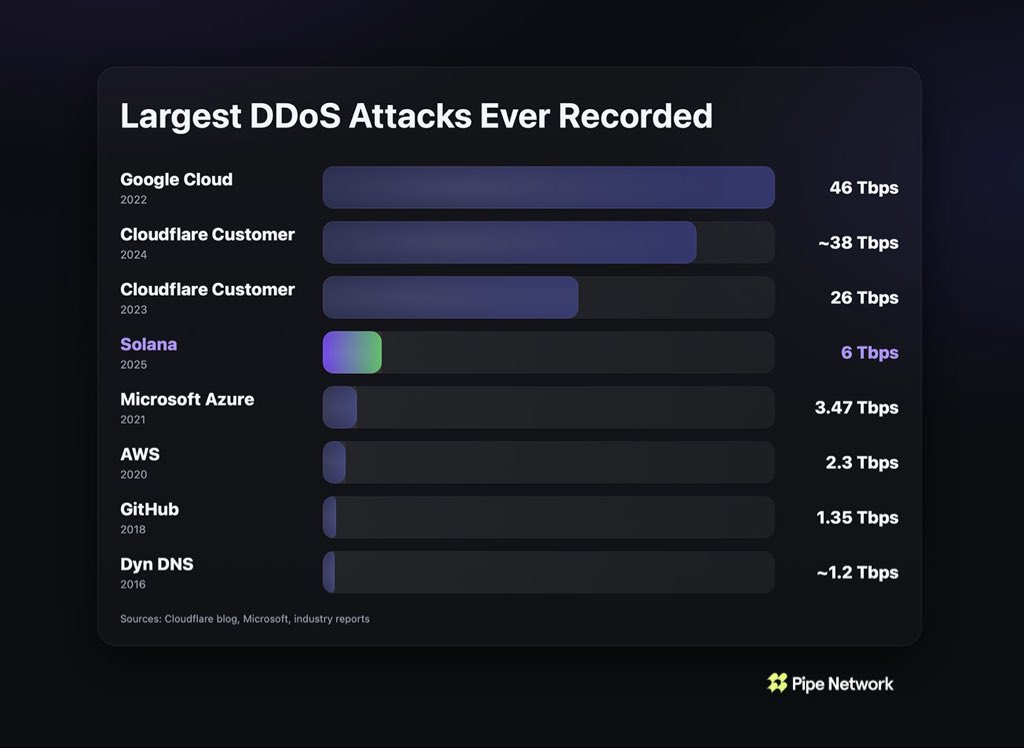
Over the past week, the Solana network has been operating under a massive distributed denial-of-service (DDoS) attack that peaked near 6 terabits per second, ranking it as the fourth-largest DDoS attack ever recorded on any distributed system.

Despite the scale, on-chain data shows the network continued to function normally.

A Week Under Attack With No Network Slowdown

A DDoS attack is designed to overwhelm a network by flooding it with traffic, usually causing slowdowns or outages.

SolanaFloor reported that the Solana network had been facing a “sustained DDoS attack for the past week, peaking near 6 Tbps,” while noting that data showed “no impact, with sub-second confirmations and stable slot latency.”

Pipe Network described the scale as unusual even by internet standards.

“6 Tbps volumetric attack translates to billions of packets per second,” the firm said. “Under that kind of load, you’d normally expect rising latency, missed slots, or confirmation delays.”

Transaction Speeds Remain Steady Under Pressure

Data shared showed that transactions continued to confirm in under a second, with block production staying on schedule throughout the attack. In simple terms, users were able to send and confirm transactions as usual, even while the network was being flooded with attack traffic.

Pipe Network - Solana DDoS attack

DDoS attacks of this scale have historically targeted cloud providers such as Google Cloud and Cloudflare, making Solana’s ability to stay online stand out.

A Clear Contrast With Other Blockchain Disruptions

According to reports, the episode also contrasts with a recent DDoS attack on the Sui network, which resulted in block production delays and degraded performance.

As details of the attack spread, the crypto community took to X to point out the scale of the event and the lack of visible impact on the network.

This is your daily reminder that Solana is the best.

— Tuky (@Tukytuky_) December 16, 2025

This has reinforced Solana’s strong reputation as a trustworthy network built to handle heavy demand.

TON Foundation Brings in OpenPayd to Handle Global Fiat Operations

Crypto News Today

The post TON Foundation Brings in OpenPayd to Handle Global Fiat Operations appeared first on Coinpedia Fintech News

As TON continues to scale inside Telegram, the foundation behind the blockchain is fixing a less visible, but critical, piece of the puzzle: how money moves.

TON Foundation has chosen OpenPayd to power its global fiat operations, giving the organization a unified way to manage payments, currencies, and treasury activity across regions. The move comes as TON’s role inside Telegram’s Mini App ecosystem grows, now touching more than 1 billion monthly users.

Why TON Needed Stronger Fiat Infrastructure

TON powers Telegram’s Mini Apps, a fast-growing ecosystem used by developers, creators, and businesses worldwide. But global reach brings global complexity especially when it comes to moving real-world money.

With OpenPayd, TON Foundation can now connect international fiat rails through a single API. That allows the foundation to fund ecosystem grants faster, manage multiple currencies more efficiently, and reduce friction when operating across borders.

In short, it makes everyday operations easier to run at scale.

What OpenPayd Brings to the Table

OpenPayd provides enterprise-grade financial infrastructure used by major crypto firms, including Kraken, OKX, and eToro. Its platform supports global payments, FX, treasury management, and interoperability between traditional finance and digital assets.

OpenPayd CEO Iana Dimitrova said TON’s positioning stood out, calling it “one of the most strategically positioned blockchain ecosystems in the world,” especially given its deep integration with Telegram.

How This Supports TON’s Growth

For TON Foundation, the focus is speed and flexibility. President and CEO Max Crown said the partnership gives the foundation “a far more agile and globally connected financial backbone,” helping it move funds faster and support builders more effectively.

While users won’t see this change directly, it strengthens the foundation beneath the ecosystem, making TON better prepared for continued growth inside Telegram’s massive global network.

❌