Login
Login
Santai Seaplane Hub 2025: Banyuwangi Airport Becomes Center for Bali Amphibious Flights
The map of Indonesian travel is being redrawn. For decades, reaching the hidden gems of the archipelago meant a tiring relay of narrow-body jets, winding road transfers, and bumpy ferry crossings. However, on December 26, 2025, the future of premium travel in Southeast Asia took a decisive leap forward. Santai Seaplane, a subsidiary of the Hong Kong-based Seaplane Asia Group, officially announced that Banyuwangi Airport (BWX) in East Java will serve as its primary strategic and operational hub.
This partnership, supported by InJourney Airports and the Akademi Penerbang Indonesia (API) Banyuwangi, transforms Banyuwangi into the nerve center for amphibious aviation. By early 2026, the roar of seaplane engines will bridge the gap between Java’s volcanic peaks and Bali’s turquoise shores, offering a “last-mile” solution that turns a six-hour journey into a breathtaking 30-minute flight.
The Strategic Choice: Why Banyuwangi?
Selecting Banyuwangi as a hub was a move of geographical brilliance. Situated at the easternmost tip of Java, Banyuwangi Airport sits as the “gateway” between Indonesia’s most populous island and its most famous tourism destination, Bali.
Banyuwangi Airport itself is already a pioneer—it is Indonesia’s first “Green Airport,” designed with a sustainable, open-air concept that minimizes the need for air conditioning. By choosing this location, Santai Seaplane isn’t just picking a runway; they are aligning with an eco-conscious brand that matches their own commitment to sustainable aviation.
The Operational Blueprint:
- The “Build-Operate-Transfer” Center: Santai Seaplane is developing a dedicated operations and sales center within the airport. This facility will handle everything from VIP guest lounges to high-tech flight planning.
- The Water Aerodrome: While the planes will take off from the BWX runway, they are designed to land on water. The project utilizes the Banyuwangi Water Aerodrome at Pang Pang Bay, providing a seamless transition from asphalt to ocean.
- Geographic Proximity: From this hub, seaplanes can reach North Bali (Menjangan), Lombok, and Moyo Island with unprecedented speed.
The Fleet: Luxury Meets Versatility
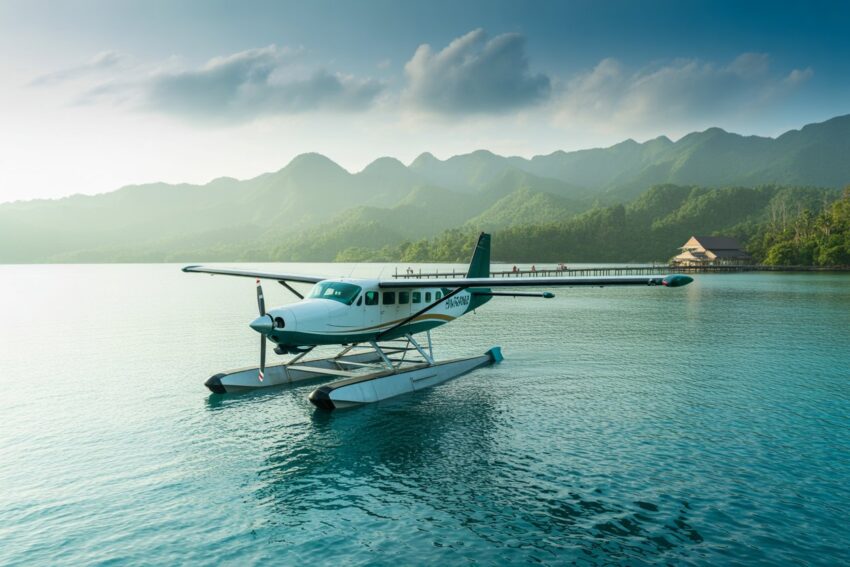
Santai Seaplane will utilise the Cessna Grand Caravan EX Amphibian, a workhorse of the sky that has been reimagined for luxury. Unlike standard aircraft, these amphibious planes are equipped with pontoons that allow them to land directly in front of waterfront resorts or on secluded lagoons.
- Passenger Capacity: Up to 8 guests per flight.
- The Experience: Passengers are treated to full VIP service, including air-conditioning (rare in small seaplanes), iPads with personalized content, and premium gifts.
- Sightseeing Potential: The hub’s location allows for curated aerial tours. Imagine flying over the “Blue Fire” of the Ijen Crater or the smoking peaks of Mount Bromo before landing in the calm waters of a Bali marina for lunch.
A Sustainable Horizon
One of the most humanized aspects of this announcement is the “Sustainable by Design” commitment. Santai Seaplane is not just adding more carbon to the atmosphere; they have outlined a four-phase roadmap to zero emissions:
Carbon Compensation: Every flight minute is currently offset through local Indonesian development programs.
Sustainable Aviation Fuel (SAF): Within two years, the fleet aims to switch to biofuels.
Electrification: Partnering with companies like MagniX, Santai Seaplane is preparing to retrofit its engines for full electric power.
PHA-ZE 100: The parent company, Seaplane Asia, has already committed to 14 PHA-ZE 100 amphibious seaplanes, which are designed from the ground up to be zero-emission.
The Human Impact: More Than Just Tourism
While the “Premium Mass Market” and luxury travelers are the primary audience, the presence of a seaplane hub in Banyuwangi offers vital benefits to the local community.
- Medical Evacuations: These aircraft can land in remote coastal villages where no runway exists, providing life-saving transport during emergencies.
- Search and Rescue (SAR): The amphibious fleet will be available to support national SAR missions across the Lesser Sunda Islands.
- Economic Ripple Effect: The hub is expected to create high-skilled jobs for local pilots and ground crews, particularly through the partnership with the local API pilot academy.