
 Login
Login
UAE Joins Palau, Costa Rica, and Singapore in Pioneering 2026’s Most Cutting-Edge Travel Trends: AI Personalization, Regenerative Tourism, and Seamless Borders
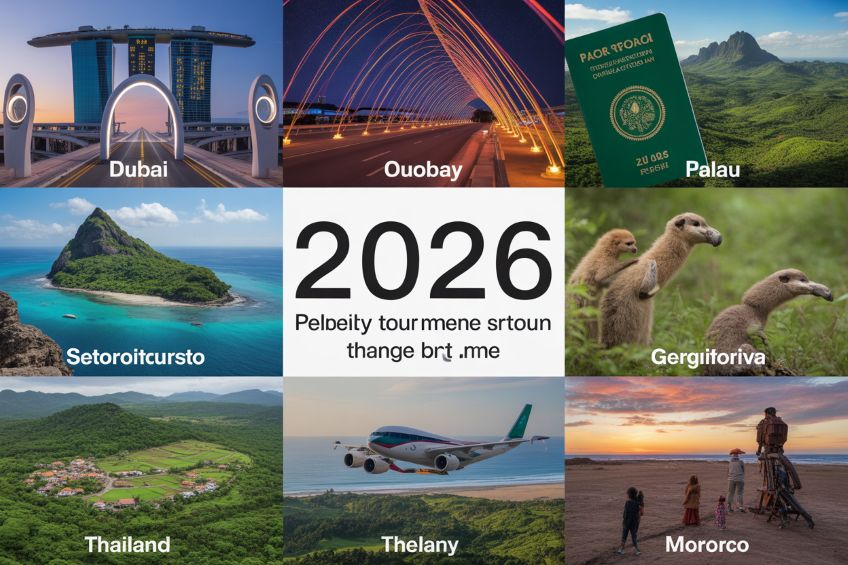
The tourism sector is undergoing a massive transformation for 2026, driven by innovative strategies from leading nations around the world. Singapore, the UAE, Palau, Costa Rica, and Germany are emerging as trailblazers in implementing the top eight trends outlined by international organizations, including UN Tourism, the International Civil Aviation Organization (ICAO), and the European Travel Commission (ETC). These countries are pioneering biometric borders, regenerative tourism, sustainable travel, and visa simplification, which will redefine the future of global travel.
1. Seamless Biometric Borders: A Step Towards Digital Travel
Countries across the globe are shifting away from traditional passport checks to “Digital Travel Credentials” (DTC) and facial recognition systems, enhancing the efficiency and security of international travel. Singapore, UAE, Finland, and the United States are leading this initiative, significantly reducing waiting times at borders.
| Country | Initiative |
|---|---|
| Singapore | Rollout of “passport-less” departures at Changi Airport for residents and visitors. |
| UAE (Dubai) | Expanding “Biometric Tunnels” and “Smart Gates” to eliminate manual passport stamping. |
| Finland & Netherlands | Piloting EU Digital Identity Wallets to store passport data for seamless border crossings. |
| United States | Expanding CBP Global Entry with facial biometrics at major international ports. |
2. Regenerative Tourism: Moving Beyond Sustainability
Shifting from sustainability to regeneration, nations like Palau, Bhutan, and Costa Rica are introducing groundbreaking policies aimed at improving environmental and cultural sustainability, rather than just minimizing harm. These countries are embedding environmental agreements directly into visitor experiences.
| Country | Initiative |
|---|---|
| Palau | Implementing the Palau Pledge, where visitors sign an environmental agreement in their passports. |
| Bhutan | Charging a Sustainable Development Fee that funds carbon-negative projects and forest preservation. |
| Costa Rica | Launching the Pura Vida 2026 strategy focusing on agro-tourism and community-led reforestation. |
| New Zealand | Promoting the Tiaki Promise, urging tourists to act as guardians of the land. |
3. Seasonal Dispersion: Spreading Out the Tourism Season
To combat over-tourism, countries like Italy, Spain, and Greece are actively promoting travel during off-peak months. These governments are working to distribute the flow of tourists more evenly across the year, minimizing environmental and social strain on popular destinations.
| Country | Initiative |
|---|---|
| Italy | Hosting the 2026 Tourism Seasonality Summit and promoting tiered entry fees to extend travel into the winter months. |
| Spain | Balearic Islands are shifting marketing to promote “Active Winter” activities like cycling and hiking. |
| Greece | The Rhodes Co-Lab project promotes year-round tourism by extending the season to 12 months. |
4. Coolcationing: The Northern Shift to Cooler Climates
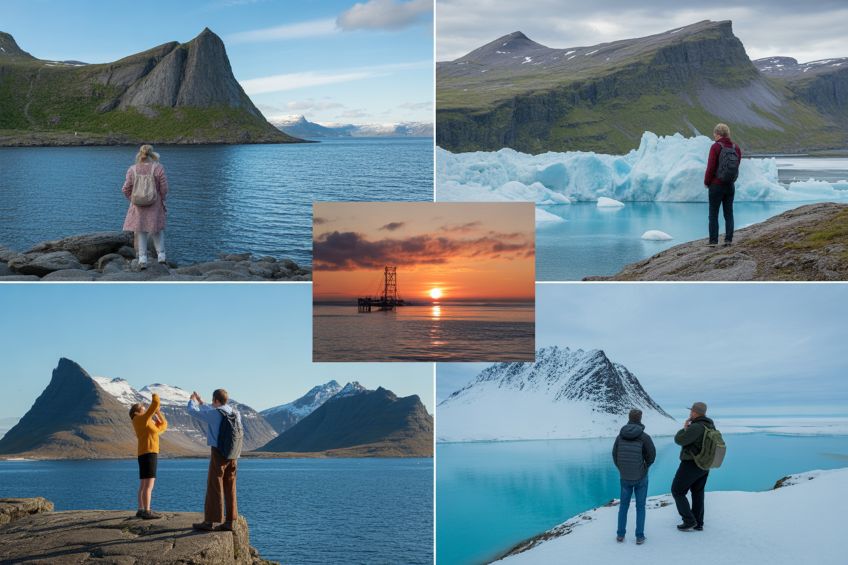
Countries with colder climates are capitalizing on the “Coolcationing” trend, attracting tourists seeking relief from rising summer temperatures in more temperate regions. Norway, Sweden, Finland, and Iceland are seeing record-high investments in summer infrastructure to accommodate this surge in demand.
| Country | Initiative |
|---|---|
| Norway, Sweden & Finland | Rebranding the Nordic Summer as a temperate escape, attracting tourists seeking cool climates. |
| Iceland | Expanding regional airport infrastructure to accommodate demand outside of Reykjavik. |
| Japan (Hokkaido) | Promoting Hokkaido as a summer sanctuary to escape the heat of Tokyo and Kyoto. |
| Canada | Focusing on Atlantic Provinces (Nova Scotia and Newfoundland) as primary summer cooling destinations. |
5. Rural and Community-Centric Tourism: Empowering Local Economies
The United Nations’ Best Tourism Villages initiative is highlighting countries where rural tourism is booming, empowering local economies and preserving traditions. Japan, South Korea, and Argentina are leading the charge in promoting spiritual and rural tourism as a way to preserve cultural heritage while boosting local economies.
| Country | Initiative |
|---|---|
| Japan (Koyasan) | Promoting Spiritual Ruralism by opening historic temples to international visitors. |
| South Korea (Muju) | Focusing on Spiritual Ruralism, with temple stays and mountain village visits. |
| Argentina | Promoting Gaucho rural stays in Carlos Pellegrini to distribute tourism wealth to indigenous communities. |
| Peru | Showcasing Andean rural stays as part of its community-centered tourism initiatives. |
6. AI-Driven Hyper-Personalization: Tailoring Travel Experiences
Countries are integrating AI to hyper-personalize travel experiences, from digital concierges to crowd management. Saudi Arabia, South Korea, and Singapore are spearheading this shift by leveraging AI in national tourism infrastructure.
| Country | Initiative |
|---|---|
| Saudi Arabia | Using AI-driven Digital Concierges in the NEOM and Red Sea Global projects to personalize guest experiences. |
| Singapore | Implementing AI heat maps to analyze real-time tourist crowd data and recommend alternative locations. |
| South Korea | Launching AI-powered translation and navigation services for national transport apps. |
7. Sustainable Modal Shift: The Rail Renaissance
To promote sustainable travel, countries are prioritizing high-speed rail over short-haul domestic flights. France, Germany, and Morocco are leading the charge in expanding rail networks for tourists.
| Country | Initiative |
|---|---|
| France | Expanding the ban on short-haul domestic flights where rail alternatives exist under 2.5 hours. |
| Germany | Introducing the Deutschlandticket, a €49 monthly pass promoting rail travel over car rentals. |
| Morocco | Expanding the Al Boraq high-speed rail line to Marrakech ahead of 2026/2030 international events. |
| China | Adding 2,000km of new high-speed rail aimed at connecting tourist hubs by the end of 2026. |
8. Visa Simplification and Open Borders: A Global Push for Easier Travel
Countries are making cross-border travel easier with unified visa schemes and digital systems. The GCC, Thailand, Kenya, and Malaysia are streamlining their visa processes to promote regional tourism.
| Country | Initiative |
|---|---|
| GCC | Introducing the “GCC Grand Tours” unified visa for all six Gulf countries in 2026. |
| Thailand & Malaysia | Expanding 60-day visa-free entry and Digital Nomad visas to encourage long-term stays. |
| Kenya | Moving to a visa-free system and using Digital Travel Authorizations (eTA) for easier entry. |
The Future of Global Tourism in 2026
As the world moves into 2026, these countries are setting the stage for a new era in travel. From seamless biometric borders to regenerative tourism, these trends are redefining what it means to travel in a world increasingly focused on sustainability, personalization, and innovation. With advancements in AI, high-speed rail, and simplified visa processes, the future of tourism is not only more efficient but also more responsible and inclusive.
The global tourism landscape in 2026 will be driven by these forward-thinking nations, which are not only meeting current demands but shaping the future of travel for generations to come. As these initiatives continue to roll out, travelers will experience a new wave of accessible, eco-conscious, and personalized journeys that push the boundaries of what travel can be.
The post UAE Joins Palau, Costa Rica, and Singapore in Pioneering 2026’s Most Cutting-Edge Travel Trends: AI Personalization, Regenerative Tourism, and Seamless Borders appeared first on Travel And Tour World.