Login
Login
New York Joins Massachusetts, Pennsylvania, Ohio, Illinois, Michigan, and More in the US Winter Storm Crisis as Snow, Ice, and Freezing Rain Lead to Widespread Travel Disruptions
As winter weather intensifies, New York, Massachusetts, Pennsylvania, Ohio, Illinois, and Michigan are facing severe snow, ice, and freezing rain, prompting winter weather advisories and storm warnings across these regions. The National Weather Service (NWS) and state emergency management agencies have issued alerts for hazardous travel conditions, likely disruptions to transportation, and power outages. With snow accumulation, icy roads, and freezing temperatures, residents and travelers are urged to prepare for challenging conditions. Here’s a detailed breakdown of the storm impacts across these states.
New York Winter Storm Alert: Snow and Ice Likely to Disrupt Travel
Winter has arrived in full force, and New York is no exception. The National Weather Service (NWS) has issued Winter Weather Advisories for much of the state, including New York City, the Capital Region, and Western New York. Snow accumulation of 3 to 7 inches is expected, combined with freezing rain and icy conditions. These hazardous conditions are predicted to affect travel across the state, including on major highways and local roads. Wind gusts of up to 40 mph will reduce visibility, making driving conditions even more dangerous.
Flight Cancellations and Delays:
- New York City sees significant disruptions with 559 flight cancellations and 145 delays due to the ongoing storm, particularly affecting LaGuardia and JFK Airports.
Impacts on New York City:
- The city is expected to experience moderate snow and freezing rain that will cause slippery sidewalks and icy roads. Travelers should anticipate delays at LaGuardia and JFK Airports due to poor visibility and icy runways. Local transportation services, including subways and buses, may experience delays or temporary suspensions, especially during peak storm hours.
Upstate New York:
- Albany, Syracuse, and other central and northern areas will see heavier snowfall and more widespread icing. Roads in these regions are likely to become impassable during the peak of the storm. Motorists are advised to delay travel and stay updated on road conditions.
Preparation: Residents and travelers should stock up on emergency supplies, including blankets, flashlights, and non-perishable food. Vehicles should be equipped with snow chains and emergency kits, and it is strongly recommended to avoid unnecessary travel during the height of the storm.
Massachusetts Faces Snow and Ice: What to Expect
Massachusetts is also in the line of fire, with the NWS issuing winter storm warnings across the state. The forecast calls for heavy snow, freezing rain, and strong winds that could affect travel and daily life. Areas like Western Massachusetts, Boston, and Central Massachusetts are expected to experience the heaviest snowfalls.
Flight Cancellations and Delays:
- Massachusetts airports have seen 35 flight cancellations and 80 delays due to the ongoing winter storm, with Boston Logan International Airport being significantly impacted.
Key Areas Affected:
- Boston, Worcester, and Springfield are set to experience icy roads and poor visibility, particularly during evening and morning commutes. Freezing rain is expected to cause power outages as ice accumulation builds on power lines and trees.
Impact on Travel:
- Snow and ice will make roadways extremely dangerous. While state officials have been mobilizing snowplows and salting equipment, motorists are advised to stay off the roads unless absolutely necessary. Logan International Airport in Boston will likely face flight delays and cancellations as the snow and ice build up.
Preparation: Local authorities are encouraging families to prepare for power outages by keeping flashlights, blankets, and extra warm clothing in case of an emergency. Travelers are advised to use public transportation whenever possible, as conditions on the roads will deteriorate quickly.
Pennsylvania Winter Impact and Road Network Preparedness
Pennsylvania is bracing for another round of winter weather, with Winter Storm Watches in effect across central and eastern parts of the state. The NWS warns that snow, ice, and sleet will combine to create hazardous driving conditions, particularly in areas around Pittsburgh and Philadelphia.
Flight Cancellations and Delays:
- Pennsylvania has experienced 7 flight cancellations and 45 delays, primarily at Philadelphia International Airport and Pittsburgh International Airport.
Key Areas Affected:
- Philadelphia is expected to see moderate snow and significant freezing rain, which will make sidewalks and roads very slippery. Interstate 95 and the Schuylkill Expressway are likely to be particularly hazardous, leading to travel disruptions and delays in public transit.
Impact on Travel:
- Road conditions will be dangerous, especially for long-distance drivers heading east from Pittsburgh to Philadelphia. Flight delays are likely at Philadelphia International Airport, and air traffic control may experience delays due to poor visibility and icy runways.
Preparation: The Pennsylvania Department of Transportation (PennDOT) recommends checking road conditions regularly before heading out. Motorists should equip vehicles with winter tyres, de-icer, and emergency supplies in case of a breakdown.
Ohio’s Snow and Ice Storms: Be Prepared for Disruptions
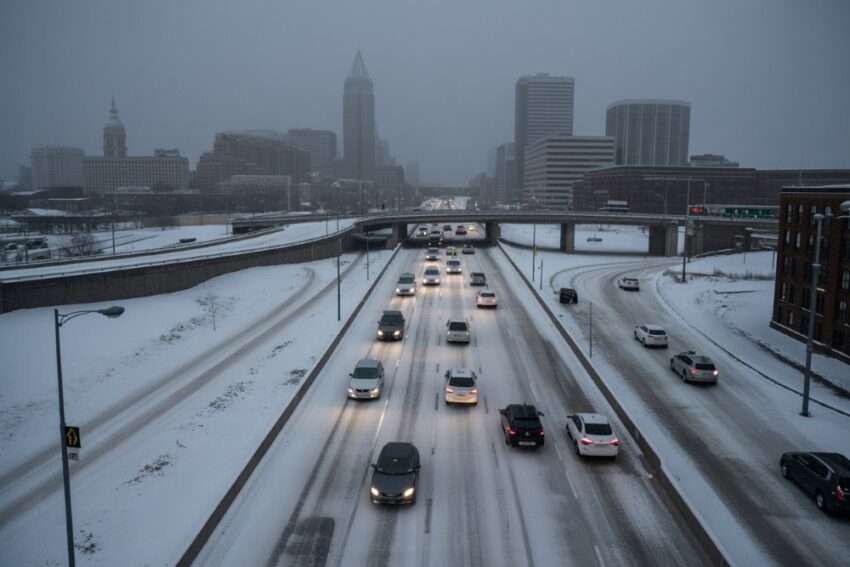
Ohio‘s winter weather is expected to follow a similar pattern to that of its neighboring states, with heavy snow, sleet, and freezing rain forecasted for much of the state. Cities like Cleveland, Columbus, and Cincinnati are expected to experience significant snow accumulation and dangerous ice conditions over the next few days.
Flight Cancellations and Delays:
- Ohio has reported 24 flight cancellations and 52 delays, particularly affecting Cleveland Hopkins International Airport and Columbus Airport.
Key Areas Affected:
- The Cleveland metropolitan area is expected to see significant snow and sleet accumulation, which will make both highway and city street travel difficult. Interstate 71 and Interstate 80 will likely be impacted by heavy snow and slush.
Impact on Travel:
- Ohio Turnpike and Interstate highways are expected to be closed intermittently or reduced to one-lane traffic due to heavy snow accumulation. Airport delays at Cleveland Hopkins International Airport are also anticipated.
Preparation: ODOT is currently salting and plowing major highways, but travelers are urged to use public transport or delay travel if possible. Residents are encouraged to stock up on food and water in case of power disruptions.
Illinois Winter Storm Warnings: Hazardous Travel Conditions
As winter storms continue to roll across the Midwest, Illinois is not spared. The state is under Winter Storm Warnings issued by the NWS, with expected snow, sleet, and freezing rain making roads hazardous, especially around Chicago, Springfield, and Peoria.
Flight Cancellations and Delays:
- Illinois has faced 24 flight cancellations and 84 delays, with Chicago O’Hare International Airport experiencing the brunt of the impact.
Key Areas Affected:
- Chicago is bracing for a mix of freezing rain and snow, which will create slippery sidewalks and hazardous roads. The O’Hare International Airport could experience significant flight delays as the storm intensifies.
Impact on Travel:
- Interstate 55 and Interstate 90 could become impassable, especially if the ice continues to accumulate. Residents are encouraged to stay indoors to avoid unnecessary exposure to the cold and dangerous driving conditions.
Preparation: Illinois authorities are advising residents to stay indoors during the peak storm period and to keep flashlights, batteries, and blankets on hand. All vehicles should be equipped with winter kits, and drivers should keep an eye on local traffic advisories.
Michigan Winter Storm Watch: Snow and Ice Affecting Travel
Michigan is experiencing its own winter weather woes, with the NWS issuing Winter Storm Watches across most of the state. Cities like Detroit, Grand Rapids, and Lansing are expected to receive heavy snow, mixed with ice and sleet. The Upper Peninsula is likely to see even more snow, making winter travel especially dangerous.
Flight Cancellations and Delays:
- Michigan has reported 82 cancellations and 48 delays, especially affecting Detroit Metropolitan Airport due to the heavy snow and icy conditions.
Key Areas Affected:
- Detroit and Grand Rapids will face slick roads, especially around the I-75 corridor and I-94, where freezing rain will make travel extremely dangerous. The Upper Peninsula will experience the worst conditions, with snow accumulation expected to cause significant delays on highways.
Impact on Travel:
- Blizzard-like conditions in the Upper Peninsula will make driving extremely hazardous. There may also be flight cancellations at Detroit Metropolitan Airport.
Preparation: Michigan residents should check local road conditions frequently and ensure their homes are winterized against the cold. Travelers are urged to postpone trips if possible until conditions improve.
Key Winter Weather Factors for Affected States
| State | Expected Snowfall | Ice & Freezing Rain | Wind Gusts | Affected Areas | Impact on Travel |
|---|---|---|---|---|---|
| New York | 3–7 inches | Freezing rain expected | Up to 40 mph | NYC, Capital Region, Western NY | Slippery roads, low visibility |
| Massachusetts | 4–8 inches | Freezing rain likely | 35–45 mph | Western MA, Boston, Central MA | Travel disruptions, power outages |
| Pennsylvania | 2–6 inches | Ice, sleet | Up to 40 mph | Central & Eastern PA | Dangerous road conditions |
| Ohio | 3–8 inches | Freezing rain, sleet | 25–35 mph | Northern Ohio, Columbus | Disruptions in travel, icy roads |
| Illinois | 2–6 inches | Freezing rain, sleet | 30–40 mph | Chicago, Peoria, Springfield | Hazardous travel, low visibility |
| Michigan | 6–12 inches | Freezing rain expected | 30–45 mph | Detroit, Grand Rapids, Upper Peninsula | Travel delays, power outages |
Conclusion: Stay Prepared for Winter Weather Across the Northeast and Midwest
As winter storms continue to impact New York, Massachusetts, Pennsylvania, Ohio, Illinois, and Michigan, it’s crucial for both residents and travelers to remain cautious and prepared. State and federal authorities are working hard to clear roads and maintain essential services, but winter weather conditions can change rapidly. Keeping up with the latest weather alerts, avoiding unnecessary travel, and ensuring your vehicle and home are ready for the cold are all vital steps in ensuring safety during this hazardous season.
Stay safe, and monitor official weather updates to navigate these challenging winter conditions.
The post New York Joins Massachusetts, Pennsylvania, Ohio, Illinois, Michigan, and More in the US Winter Storm Crisis as Snow, Ice, and Freezing Rain Lead to Widespread Travel Disruptions appeared first on Travel And Tour World.