
Reading view

NYC Holiday Travel Rush: Snow Forecast Triggers Massive Early Exit from the City
NYC Holiday Travel Rush: Snow Forecast Triggers Massive Early Exit from the City

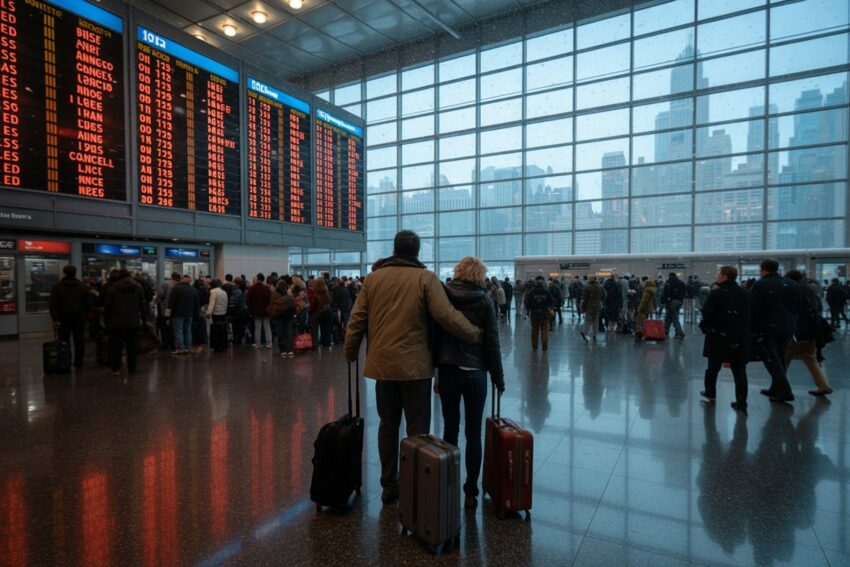
For thousands of New Yorkers and holiday visitors, the “day after Christmas” wasn’t spent nursing a food coma or returning unwanted gifts. Instead, it became a high-stakes race against the elements.

As meteorologists confirmed a significant snow system heading toward the five boroughs on December 26, 2025, the city’s transit hubs transformed into scenes of controlled chaos. From the soaring ceilings of Moynihan Train Hall to the crowded terminals of LaGuardia, the message was the same: Get out before the snow gets in.

The “Early Exit” Phenomenon

According to NY1 reports, the typical post-holiday trickle turned into a flood. Travel experts are calling it the “Early Exit” of 2025. Many travelers who had originally planned to stay through the weekend bumped up their departures by 24 to 48 hours to avoid being “snowed in” at an airport hotel or stuck in a gridlocked bus terminal.

At a Glance: The Transit Hubs

  • The Airports: At LaGuardia and JFK, de-icing crews were already on standby by midday Friday. While flights were still moving, the “cancellation creep” began to set in as connecting hubs in the North were hit first.
  • Port Authority: The world’s busiest bus terminal saw a surge in standby passengers. Travelers reported waiting in lines that snaked through the corridors, hoping to snag a seat on any bus heading South or West before the heavy accumulations began.
  • The Roads: Outbound traffic on the George Washington Bridge and through the Lincoln Tunnel saw “Friday rush hour” levels of congestion as early as 11:00 AM.

Humanizing the Rush: Stories from the Concourse

Behind every suitcase is a story of a disrupted holiday. We caught up with the Rodriguez family at Penn Station, who were cutting their New York vacation short by two days.

“We love the city in the winter, but we saw the radar and knew we couldn’t risk it,” said Elena Rodriguez, clutching a bag of bagels for the train ride back to Philly. “The kids are disappointed they’re missing the Central Park ice skating, but we’d rather be home on our own couch than sleeping on a terminal floor.”

This sentiment was echoed by solo travelers and college students alike. There is a palpable New York resilience in the air—a collective understanding that when the city’s “Snow Emergency” lights go on, the clock starts ticking.

Survival Tips for the “Post-Holiday Storm”

If you find yourself caught in this travel vortex, officials and seasoned commuters suggest the following:

The “Live Map” Ritual: Don’t trust the printed schedule. Use apps like MYmta or airline-specific trackers which are updated in real-time as crews struggle with visibility.

Patience as a Virtue: TSA agents and gate staff are under immense pressure. A simple “thank you” or a calm demeanour can often be the difference between getting a standby seat and being left behind.

Charge Everything: In a winter storm, your phone is your lifeline. Portable power banks are no longer optional—they are essential travel gear.

    What to Expect for Saturday

    As the sun sets on Friday, the window for easy travel is closing. The forecast predicts the heaviest snowfall to hit the city overnight, meaning Saturday morning departures face the highest risk of cancellation. Sanitation crews are already pre-salting the FDR Drive and the West Side Highway, but travelers are advised to stay off the roads entirely once the “plowable” snow begins.

    The Silver Lining

    While the rush is stressful, there is a certain magic to NYC under a blanket of white. For those who can stay, the city is about to turn into a winter wonderland. But for those with a flight to catch or a long drive ahead, the goal remains simple: beat the storm, get home safe, and keep the holiday spirit alive—even if it means leaving the party a little early.

    The post NYC Holiday Travel Rush: Snow Forecast Triggers Massive Early Exit from the City appeared first on Travel And Tour World.
    Japan’s New Bear Safety Signs: What Tourists Need to Know to Stay Safe in 2025

    Japan’s New Bear Safety Signs: What Tourists Need to Know to Stay Safe in 2025

    In 2025, a walk through the serene forests of Hokkaido or the historic trails of Gifu feels a little different. Alongside the traditional “Beware of Bears” wooden plaques, a new generation of high-visibility signs has appeared—part of a national effort to keep travelers safe during Japan’s most intense period of bear activity on record.

    The government has launched a standardized set of pictograms designed to bridge the language gap and prevent dangerous wildlife encounters.

    The release of these signs is not a mere formality; it is a response to a record-breaking year. In 2025, Japan witnessed over 36,000 bear sightings between April and October alone. The crisis has been so pervasive that “Kuma” (Bear) was voted as the 2025 Kanji of the Year.

    With 13 fatalities and over 200 injuries reported across the country, including an attack on a Spanish tourist in Gifu Prefecture, the Japan Tourism Agency and the Environment Ministry realized that traditional Japanese text was no longer sufficient for an increasingly international visitor base.

    The Three New Pictograms

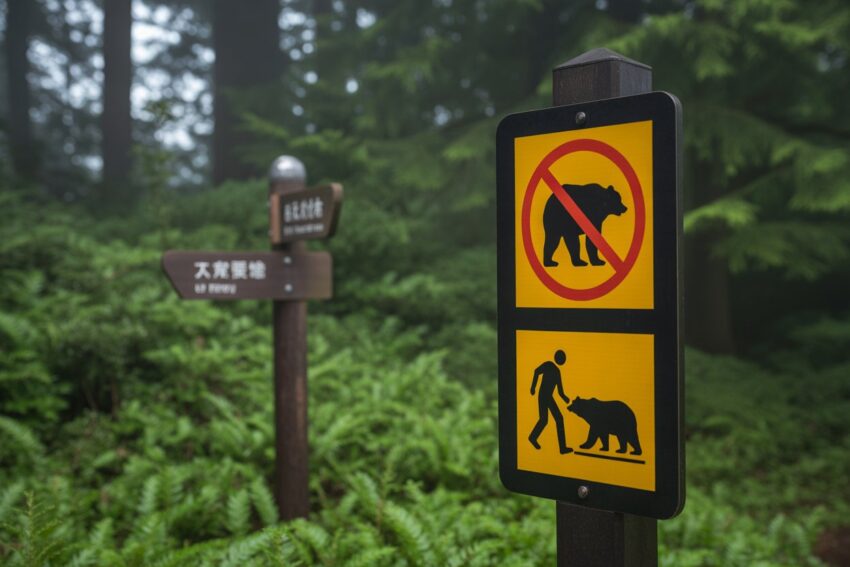
    The new signs rely on clear, universal imagery that even a child or a non-Japanese speaker can instantly understand. They focus on the three most common behaviors that lead to conflict:

    Do Not Feed Bears: Human food “teaches” bears to associate people with easy meals. This makes them bolder and far more likely to approach residential or tourist areas.

    Do Not Leave Trash Behind: Bears have an incredible sense of smell. A single candy wrapper or a discarded bento box can attract a bear to a campsite or trail from miles away.

    Do Not Approach Bears: Driven by the desire for the perfect social media photo, some tourists have been caught trying to get close to cubs or foraging adults. The new signs explicitly warn that a “cute” encounter can turn fatal in seconds.

      Why Are the Bears Coming Down?

      The “bear boom” of 2025 is the result of a “perfect storm” of environmental and social factors:

      • Food Scarcity: A massive failure of acorn and beech nut harvests in the mountains has forced bears to seek calories in towns and villages before hibernation.
      • The “Border” is Vanishing: As Japan’s rural population ages and shrinks, abandoned farmland is returning to forest. This “rewilding” blurs the line between the wilderness and human settlements.
      • A Lack of Fear: Younger bears, born in an era with fewer hunters, are losing their natural wariness of humans.

      Humanizing the Safety Advice: How to Hike in 2026

      While the signs are a great visual reminder, safety in Japan’s wilderness is about a shift in mindset.

      “We want people to enjoy our mountains, but we want them to do it with respect for the ‘Kuma’,” says a local ranger in Nagano. “The signs are there to tell you that you are a guest in their home.”

      Expert Safety Tips for Travelers:

      • Wear a Bear Bell: In Japan, “Kuma-suzu” (bear bells) are essential. The sound alerts the bear to your presence, allowing them to move away before an encounter happens.
      • Stay in Groups: Noise is your best defense. Talking loudly or singing helps ensure you don’t surprise a bear around a blind bend.
      • The QR Code Trick: Many of the new signs feature a QR code. Scan it to see a real-time map of recent sightings in that specific ward or prefecture.

      What to Do if You See One

      If you encounter a bear despite your best efforts, the advice on the new signs is clear: Do not run. Running triggers a bear’s predatory chase instinct. Instead, face the bear, stay calm, and back away slowly. If a bear attacks, curl into a ball to protect your head and neck—the most vulnerable areas.

      The post Japan’s New Bear Safety Signs: What Tourists Need to Know to Stay Safe in 2025 appeared first on Travel And Tour World.

      Tobago Tourism Hits Slump: Impact of SOE & US-Venezuela Tensions

      Tobago Tourism Hits Slump: Impact of SOE & US-Venezuela Tensions

      Tobago, usually a sanctuary of turquoise waters and rhythmic steelpan, is facing a somber Christmas season. On December 26, 2025, reports from the Newsday and tourism stakeholders paint a picture of an island caught in the crosshairs of a regional geopolitical storm and local security measures.

      The combination of a domestic State of Emergency (SoE) and escalating military tensions between the United States and Venezuela has led to a dramatic downturn in visitor arrivals, leaving many of the island’s iconic beaches and resorts uncharacteristically quiet during what should be their busiest week.

      For hoteliers like Reginald MacLean, President of the Tobago Hotel and Tourism Association (THTA), the 2025 festive season has been a “blue” one—and not because of the ocean. Speaking from the Blue Waters Inn in Speyside, MacLean noted that while his establishment usually boasts 100% occupancy during the Christmas window, this year it sits at roughly 70%.

      Across the island, the story is the same. From the quiet waterfront of Charlotteville to the guesthouses in Crown Point, the usual influx of international and regional travelers has thinned. The culprit is a “double-edged sword” of domestic policy and international friction.

      The Domestic Factor: The State of Emergency (SoE)

      In response to a surge in violent crime across the twin-island republic earlier in 2024 and 2025, the government implemented a State of Emergency. While officials have emphasized that there is no curfew in effect and that “Tobago remains open,” the mere label of an SoE has a “chilling effect” on international travel markets.

      • Perception of Safety: For families and luxury travelers, an SoE is a major red flag that often triggers changes in travel insurance coverage and official travel advisories.
      • The “Peter Paying for Paul” Effect: Local leaders, including THA Minority Leader Kelvon Morris, have argued that Tobago is unfairly suffering for crime issues primarily centered in Trinidad, effectively punishing the island’s tourism-dependent economy for mainland struggles.

      The Geopolitical Factor: The Shadow of War

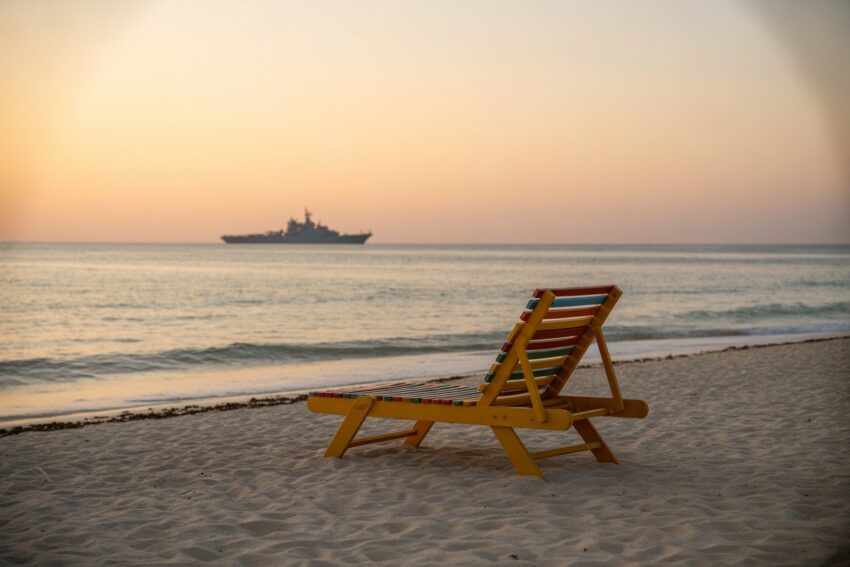
      Perhaps more damaging than the SoE is the escalating military posturing just off Tobago’s coast. In December 2025, tensions between the United States and Venezuela reached a fever pitch following the US seizure of an oil tanker and the declaration of a “no-fly zone” over Venezuelan airspace.

      The US military’s installation of a radar system in Tobago and the granting of airport access to US forces have led the Maduro regime to label the island an “aircraft carrier for the American empire.” This “wartime anxiety” has led to:

      • Mass Cancellations: Risk-averse travelers, particularly from North America and Europe, have opted for “safer” Caribbean alternatives like Barbados or Grenada.
      • GPS Interference: Reports of signal jamming in the region have made navigation difficult for private yachts and small aircraft, further isolating the island.
      • Energy Uncertainty: The breakdown of gas agreements between Port of Spain and Caracas has added a layer of economic instability that dampens investor confidence in the region’s tourism infrastructure.

      The Human Toll on the Ground

      Beyond the hotel balance sheets, the downturn hits the “small man” the hardest. Taxi drivers, reef boat operators at Buccoo, and street food vendors in Store Bay are seeing a fraction of their usual holiday revenue.

      “We wait all year for these two weeks,” says one local vendor. “Between the news of the warships and the police sirens, people are just scared to come. They think there is a war coming, but here on the ground, we are just trying to survive.”

      Looking Toward 2026: A Call for Action

      Stakeholders are now calling on the government to move beyond “promises of diversification” and take tangible steps to decouple Tobago’s image from the regional conflict. Suggestions include:

      Targeted Marketing: A campaign specifically highlighting Tobago’s distance from the mainland crime hotspots.

      Compensation: Some THTA members have even suggested that the US or local government should provide “anxiety compensation” to businesses affected by the military build-up.

      Diplomatic De-escalation: Urging Caricom to mediate and ensure the Caribbean remains a “Zone of Peace.”

        The post Tobago Tourism Hits Slump: Impact of SOE & US-Venezuela Tensions appeared first on Travel And Tour World.
        ❌