Reading view

Alcohol shifts the brain into a fragmented and local state

A standard glass of wine or beer does more than just relax the body; it fundamentally alters the landscape of communication within the brain. New research suggests that acute alcohol consumption shifts neural activity from a flexible, globally integrated network to a more segmented, local structure. These changes in brain architecture appear to track with how intoxicated a person feels. The findings were published in the journal Drug and Alcohol Dependence.

For decades, neuroscientists have worked to map how alcohol affects human behavior. Traditional studies often look at specific brain regions in isolation. Researchers might observe that activity in the prefrontal cortex dampens, which explains why inhibition lowers. Alternatively, they might see changes in the cerebellum, which accounts for the loss of physical coordination.

However, the brain does not operate as a collection of independent islands. It functions as a massive, interconnected web. Information must travel constantly between different areas to process sights, sounds, and thoughts. Understanding how alcohol impacts the traffic patterns of this web requires a different mathematical approach known as graph theory.

Graph theory allows scientists to treat the brain like a vast map of cities and highways. The “cities” are distinct brain regions, referred to as nodes. The “highways” are the functional connections between them, known as edges. By analyzing the flow of traffic across these highways, researchers can determine how efficiently the brain is sharing information.

Leah A. Biessenberger and her colleagues at the University of Minnesota and the University of Florida sought to apply this network-level analysis to social drinkers. Biessenberger, the study’s lead author, worked alongside senior author Jeff Boissoneault and a wider team. They aimed to fill a gap in the scientific literature regarding acute alcohol use.

While previous research has examined how chronic, heavy drinking reshapes the brain over years, less is known about the immediate network effects of a single drinking session. The researchers wanted to observe the brain in a “resting state.” This is the baseline activity that occurs when a person is awake but not performing a specific task.

To investigate this, the team recruited 107 healthy adults between the ages of 21 and 45. The participants were social drinkers without a history of alcohol use disorder. The study utilized a double-blind, placebo-controlled design. This method is the gold standard for removing bias from clinical experiments.

Each participant visited the laboratory for two separate sessions. During one visit, they consumed a beverage containing alcohol mixed with a sugar-free mixer. The dose was calculated to bring their breath alcohol concentration to 0.08 grams per deciliter, which is the legal driving limit in the United States.

During the other visit, they received a placebo drink. This beverage contained only the mixer but was misted with a small amount of alcohol on the surface and rim to mimic the smell and taste of a real cocktail. Neither the participants nor the research staff knew which drink was administered on a given day.

Approximately 30 minutes after drinking, the participants entered an MRI scanner. They were instructed to keep their eyes open and let their minds wander. The scanner recorded the blood oxygen levels in their brains, which serves as a proxy for neural activity.

The researchers then used computational tools to analyze the functional connectivity between 106 different brain regions. They looked for specific patterns in the data described by graph theory metrics. These metrics included “global efficiency” and “local efficiency.”

Global efficiency measures how easily information travels across the entire network. A network with high global efficiency has many long-distance shortcuts, allowing distant regions to communicate quickly. Local efficiency measures how well neighbors talk to neighbors. It reflects the tendency of brain regions to form tight-knit clusters that process information among themselves.

The analysis revealed distinct shifts in the brain’s topology following alcohol consumption. When participants drank alcohol, their brains moved toward a more “grid-like” state. The network became less random and more clustered.

Specifically, the study found that global efficiency decreased in several areas. This was particularly evident in the occipital lobe, the part of the brain responsible for processing vision. The reduction suggests that alcohol makes it harder for visual information to integrate with the rest of the brain’s operations.

Simultaneously, local efficiency increased. Regions in the frontal and temporal cortices began to communicate more intensely with their immediate neighbors. The brain appeared to fracture into smaller, self-contained communities. This structure requires less energy to maintain but hinders the rapid integration of complex information.

The researchers also examined a metric called “clustering coefficient.” This value reflects the likelihood that a node’s neighbors are also connected to each other. Alcohol increased the clustering coefficient across the network. This further supports the idea that the intoxicated brain relies more on local processing than global integration.

The team also looked at the “insula,” a region deeply involved in sensing the body’s internal state. Under the influence of alcohol, the insula showed increased connections with its local neighbors. It also displayed greater activity in communicating with the broader network compared to the placebo condition.

These architectural changes were not merely abstract mathematical observations. The researchers found a statistical link between the network shifts and the participants’ subjective experiences. Before the scan, participants rated how intoxicated they felt on a scale of 0 to 100.

The results showed that the degree of network reorganization predicted the intensity of the subjective “buzz.” Participants whose brains showed the largest drop in global efficiency and the largest rise in local clustering tended to report feeling the most intoxicated. The structural breakdown of long-range communication tracked with the feeling of impairment.

This correlation offers new insight into why individuals react differently to the same amount of alcohol. Even at the same blood alcohol concentration, people experience varying levels of intoxication. The study suggests that individual differences in how the brain network fragments may underlie these varying subjective responses.

The findings also highlighted disruptions in the visual system. The decrease in efficiency within the occipital regions was marked. This aligns with well-known effects of drunkenness, such as blurred vision or difficulty tracking moving objects. The network analysis provides a neural basis for these sensory deficits.

While the study offers robust evidence, the authors note certain limitations. The MRI scans did not capture the cerebellum consistently for all participants. The cerebellum is vital for balance and motor control. Because it was not included in the analysis, the picture of alcohol’s effect on the whole brain remains incomplete.

Additionally, the study focused on young, healthy adults. The brain changes observed here might differ in older adults or individuals with a history of substance abuse. Aging brains already show some reductions in global efficiency. Alcohol could compound these effects in older populations.

The researchers also point out that the participants were in a resting state. The brain rearranges its network when actively solving problems or processing emotions. Future research will need to determine if these topological shifts persist or worsen when an intoxicated person tries to perform a complex task, like driving.

This investigation provides a nuanced view of acute intoxication. It moves beyond the idea that alcohol simply “dampens” brain activity. Instead, it reveals that alcohol forces the brain into a segregated state. Information gets trapped in local cul-de-sacs rather than traveling the superhighways of the mind.

By connecting these mathematical patterns to the subjective feeling of being drunk, the study helps bridge the gap between biology and behavior. It illustrates that the sensation of intoxication is, in part, the feeling of a brain losing its global coherence.

The study, “Acute alcohol intake disrupts resting state network topology in healthy social drinkers,” was authored by Leah A. Biessenberger, Adriana K. Cushnie, Bethany Stennett-Blackmon, Landrew S. Sevel, Michael E. Robinson, Sara Jo Nixon, and Jeff Boissoneault.
Alcohol triggers unique activity in amygdala neurons

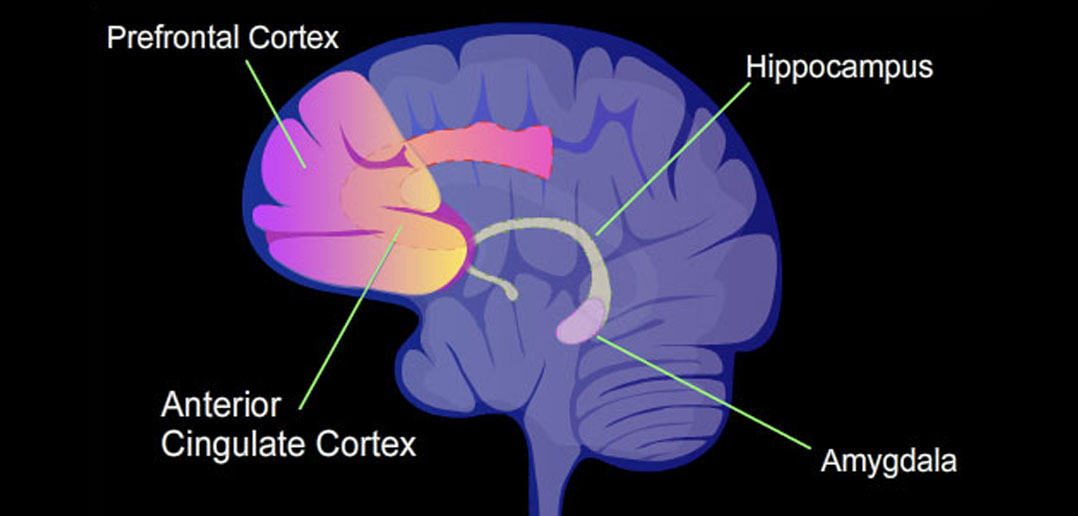
A study on mice identified a group of neurons in the central amygdala region of the brain that display a unique pattern of increased activity during voluntary alcohol consumption. While these neurons also responded to other fluids, their activity was significantly higher when mice drank alcohol compared to when they drank sucrose or water. This unique response did not diminish over time. The paper was published in Progress in Neuro-Psychopharmacology and Biological Psychiatry.

Alcohol use disorder is a chronic condition characterized by a problematic pattern of alcohol consumption that leads to significant distress or impairment in daily functioning. Despite treatment, relapses are frequent. Estimates suggest that around 30 million people in the U.S. alone are affected by it, which is around 9% of the population.

People with alcohol use disorder tend to have difficulty controlling how much they drink or how often they drink. They tend to continue drinking despite negative consequences. Common symptoms of this disorder include tolerance, withdrawal symptoms, and spending a great deal of time obtaining, using, or recovering from alcohol.

Excessive alcohol drinking, characteristic of alcohol use disorder, increases the risk of liver disease, cardiovascular problems, and certain cancers. It also has substantial psychological and social consequences, including depression, anxiety, family conflict, and work-related difficulties.

Study author Christina L. Lebonville and her colleagues note that studies of rodents have revealed that the central amygdala is a key region of the brain for alcohol drinking behaviors, particularly in alcohol dependence. This region contains three groups of neurons (sub-nuclei) that differ in the type of neuropeptide they express.

Neuropeptides are small protein-like molecules that neurons use to communicate with each other and to regulate various functions of the body. Unlike neurotransmitters, neuropeptides are released more slowly and they act over a longer time span.

One of these groups of neurons produces dynorphin, a neuropeptide involved in stress, pain, and negative emotional states. They are called dynorphin-expressing neurons or CeADyn neurons.

Previous studies implicated their activity in excessive alcohol drinking both during acute and chronic alcohol exposure. They also showed that CeADyn neurons regulate both binge alcohol drinking and drinking enhanced by stress in individuals with alcohol dependence. The disruption of their activity reduced alcohol drinking.

This study was conducted on 35 prodynorphin-Cre mice. These are genetically engineered mice with genetic properties that allow researchers to selectively label, monitor, and manipulate their CeADyn neurons. Mice were 8–17 weeks of age at the start of the experiment. They had free access to food throughout the experiment and free access to water outside experimental drinking sessions.

The study authors performed a surgery on these mice during which they injected a virus into their central amygdala. This virus changed their DNA so that a fluorescent calcium sensor was expressed in their CeADyn neurons, allowing the authors to measure their activity. At the same time, they implanted a small optical fiber above this region allowing them to record neural activity through light signals (fiber photometry).

After recovery from surgery, mice were given access to different solutions for 2 hours per day, 5–6 days per week. In the first experiment, mice had access to 20% alcohol for 3 weeks, water for two weeks, and 0.5% sucrose for three weeks.

In the second experiment, mice first had access to solutions with different quinine concentrations, followed by water, water after 24 hours of water deprivation, a combination of 0.5% sucrose and low quinine concentrations, and 0.5% sucrose with high quinine concentrations. The study authors recorded the brain activity of the mice during these periods.

Results showed strong increases in CeADyn neuron activity after bouts of alcohol drinking compared to sucrose or water drinking. Behaviors specific for drinking alcohol, such as longer bout durations, did not fully explain the differences in the pattern of activity of these neurons when mice were drinking alcohol compared to when they were drinking something else.

“No other conditions or solutions tested reproduced the pronounced change in CeADyn activity associated with alcohol drinking. These findings support the presence of a unique functional signature for alcohol in a cell population known to control excessive alcohol drinking and further advance fiber photometric normalization and analytical methods,” the study authors concluded.

The study contributes to the scientific understanding of the neural underpinnings of alcohol drinking behaviors. However, it should be noted that this study was done on mice, not on humans. While humans and mice share many physiological characteristics, they are still very different species. Findings on humans may differ.

The paper, “Alcohol drinking is associated with greater calcium activity in mouse central amygdala dynorphin-expressing neurons,” was authored by Christina L. Lebonville, Jennifer A. Rinker, Krysten O’Hara, Christopher S. McMahan, Michaela Hoffman, Howard C. Becker, and Patrick J. Mulholland.

Cannabis beverages may help people drink less alcohol

Recent survey data suggests that cannabis-infused beverages may serve as an effective tool for individuals looking to curb their alcohol consumption. People who incorporated these drinks into their routines reported reducing their weekly alcohol intake and engaging in fewer episodes of binge drinking. The findings were published in the Journal of Psychoactive Drugs.

Alcohol consumption is a well-documented public health concern. It is linked to nearly 200 different health conditions. These include liver disease, cardiovascular issues, and various forms of cancer.

While total abstinence is the most effective way to eliminate these risks, many adults choose not to stop drinking entirely. This reality has led public health experts to explore harm reduction strategies. The goal of harm reduction is to minimize the negative consequences of substance use without necessarily demanding complete sobriety.

Cannabis is increasingly viewed through this harm reduction lens. It generally presents fewer physiological risks to the user compared to alcohol. The legalization of cannabis in many U.S. states has diversified the market beyond traditional smokable products. Consumers can now purchase cannabis-infused seltzers, sodas, and tonics. These products are often packaged in cans that resemble beer or hard seltzer containers.

This similarity in packaging and consumption method is notable. It allows users to participate in the social ritual of holding and sipping a drink without consuming ethanol. Jessica S. Kruger, a clinical associate professor of community health and health behavior at the University at Buffalo, led an investigation into this phenomenon. She collaborated with researchers Nicholas Felicione and Daniel J. Kruger. The team sought to understand if these new products are merely a novelty or if they serve a functional role in alcohol substitution.

The researchers designed a study to capture the behaviors of current cannabis users. They distributed an anonymous survey between August and December of 2022. Recruitment took place through various channels to reach a broad audience.

The team placed recruitment cards with QR codes in licensed dispensaries. They also utilized email lists from these businesses. Additionally, they posted links to the survey on nearly 40 cannabis-related communities on the social media platform Reddit.

The final analytic sample consisted of 438 adults. All participants had used cannabis within the past year. The survey incorporated questions from the Behavioral Risk Factor Surveillance System. This is a standard tool used by the Centers for Disease Control and Prevention to track health-related behaviors. The researchers used these questions to assess alcohol consumption frequency and intensity.

The study aimed to compare the behaviors of those who drank cannabis beverages against those who used other forms of cannabis. It also sought to compare alcohol habits before and after individuals began consuming cannabis drinks. Roughly one-third of the respondents reported using cannabis beverages. These users typically consumed one infused drink per session.

The researchers found differences in substitution behaviors between groups. Participants who consumed cannabis beverages were more likely to report substituting cannabis for alcohol than those who did not drink them. The data showed that 58.6 percent of beverage users reported this substitution. In contrast, 47.2 percent of non-beverage users reported doing so.

The study provided specific data regarding changes in alcohol intake levels. The researchers asked beverage users to recall their alcohol consumption habits prior to adopting cannabis drinks. Before trying these products, the group reported consuming an average of roughly seven alcoholic drinks per week. After they started using cannabis beverages, that average dropped to approximately 3.35 drinks per week.

Binge drinking rates also saw a decline. The researchers defined a binge drinking episode based on standard gender-specific thresholds. Before initiating cannabis beverage use, about 47 percent of the group reported binge drinking less than once a month or never. After incorporating cannabis drinks, the proportion of people reporting this low frequency of binge drinking rose to nearly 81 percent.

Most participants did not replace alcohol entirely. The survey results indicated that 61.5 percent of beverage users reduced their alcohol intake. Only about 1 percent reported stopping alcohol consumption completely.

A small minority, roughly 3 percent, reported increasing their alcohol use. This suggests that for most users, cannabis beverages act as a moderator for alcohol rather than a complete replacement.

The study also examined the potency of the beverages being consumed. Most respondents chose products with lower doses of Tetrahydrocannabinol (THC). Two-thirds of the users drank beverages containing 10 milligrams of THC or less. This dosage allows for a milder experience compared to high-potency edibles. It may facilitate a more controlled social experience similar to drinking a glass of wine or a beer.

Daniel J. Kruger, a co-author of the study, noted the potential reasons for these findings. He suggests that the similarity in the method of administration plays a role. People at parties or bars are accustomed to having a drink in their hand. A cannabis beverage allows them to maintain that behavior. It fits into the social context more seamlessly than smoking a joint or taking a gummy.

There are limitations to this research that require consideration. The study relied on retrospective self-reports. Participants had to recall their past alcohol consumption. This relies on memory and can be subject to bias. The sample was also a convenience sample rather than a nationally representative one. Many respondents were recruited from New York State dispensaries or specific online communities.

The researchers also point out potential risks associated with these products. Cannabis beverages and edibles have a slower onset of effects compared to inhalation. It takes time for the digestive system to process the cannabinoids. This delay can lead inexperienced users to consume more than intended. Accidental overconsumption can result in negative physical and mental health outcomes.

Furthermore, there is the issue of dual use. Most participants continued to drink alcohol, albeit in smaller quantities. Combining alcohol and cannabis can intensify impairment. The authors note that this interaction needs further study to ensure public safety.

Future research is necessary to validate these preliminary findings. The authors suggest that longitudinal studies would be beneficial. Such studies would track individuals over time rather than relying on past recall. This would provide a clearer picture of whether the reduction in alcohol use is sustained in the long term.

Public education will be key as this market expands. Consumers need to understand the differences between alcohol and cannabis impairment. They also need accurate information regarding dosing and onset times. Policies that ensure clear labeling and child-proof packaging remain essential for harm reduction.

Despite the caveats, the study offers a new perspective on alcohol harm reduction. It highlights a potential avenue for individuals seeking to lower their alcohol intake. As the market for these beverages grows, understanding their role in consumer behavior becomes increasingly important for public health officials.

The study, “The Exploration of Cannabis Beverage Substitution for Alcohol: A Novel Harm Reduction Strategy,” was authored by Jessica S. Kruger, Nicholas Felicione, and Daniel J. Kruger.

❌