
 Login
Login
Canada Joins US, Australia, Brazil, and Russia in Fiery Showdown: Unstoppable Wildfires Devastate Nations, Climate Change Ignited Travel Chaos: What Does These New Reports Tell You
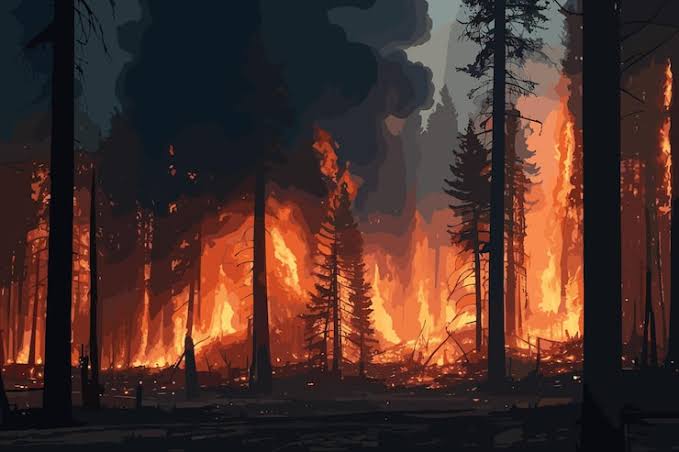
Canada’s mountainous national parks, boreal forests and lakes have long been a magnet for visitors. However, the wildfire seasons of 2024 and 2025 were some of the most destructive on record, forcing mass evacuations, shrouding skylines in smoke and temporarily turning tourist destinations into disaster zones. Scientists say climate change is increasing the length and severity of Canada’s fire seasons; hotter temperatures and prolonged drought produce forests full of dry fuel, and lightning storms combined with strong winds ignite and spread flames rapidly. This article combines real‑world data and accounts from 2024–2025 to explain how recurring wildfires are threatening popular Canadian destinations and may make them dangerous for tourists in the future.
2024 wildfire season – destructive fires in the west
The most shocking tourism casualty in 2024 occurred in Jasper National Park, a UNESCO World Heritage site visited by roughly 2.5 million people annually. In late July, an explosive wildfire engulfed the park and the adjacent town of Jasper. Reports indicate that over 25 000 people were evacuated, and the fire destroyed roughly 358 of the town’s 1 113 structures, meaning nearly 30 % of the town was damaged. Businesses suffered estimated losses of CA$4.5 million per day due to tourism closures. The destruction underscores how quickly a single blaze can wipe out a tourist hub.
Jasper’s experience also exposed broader vulnerabilities in western Canada. By late July 2024, nearly 600 wildfires were burning across British Columbia and Alberta, forcing evacuations in communities from the Kootenay region to the Cariboo. Parks Canada cancelled all camping reservations in Jasper until early August, leaving visitors stranded or rerouting to other destinations. Residents and tourism operators noted that bookings in the Okanagan/Cariboo regions dropped by 5–15 %as travellers sought to avoid “peak smoke season”.
In May 2024, a human‑caused blaze near Fort Nelson, British Columbia exploded in size. The “Parker Lake” wildfire reached 5 280 hectares and advanced to within 2.5 km of the town. Around 3 000–3 500 residents evacuated, and officials warned that sustained winds could push the fire toward populated areas. By mid‑May there were 135 active fires nationwide, 40 out of control, prompting air‑quality advisories across four provinces. The fire underscored how extreme wind conditions and drought can rapidly overwhelm firefighting resources, forcing the evacuation of entire communities.
Cariboo (Williams Lake) emergency
In July 2024, a wildfire near Williams Lake in the Cariboo region led to a local state of emergency. A tree downing a power line sparked the blaze, which grew to about 20 hectares, threatening homes and infrastructure. Water bombers and structural crews were dispatched, and residents were warned to conserve water and avoid the area. Though smaller than the Jasper fire, the incident illustrated how easily human infrastructure failures can ignite dangerous fires, even near smaller communities.
The 2024 season burned about 5.378 million hectaresnationwide and forced over 50 000 people to evacuate according to government summaries. Tourism operators called climate change an “existential threat” and warned that Canada is facing a wildfire reality that will keep tourists away unless major mitigation and communication efforts occur. The combination of large and small blazes, as well as thick smoke that reduced air quality across provinces, showed that even areas untouched by flames could become hazardous.
2025: an even worse wildfire year and broader geographic spread
Early start in Saskatchewan’s boreal forests
The 2025 wildfire season began early. In May, NASA satellites captured pyro‑cumulonimbus clouds rising over the Shoe and Camp fires in Saskatchewan’s Narrow Hills region. The province recorded 146 fires to date, nearly twice the five‑year average. By May 12, the provincial safety agency reported 12 active fires, half contained, but Narrow Hills Provincial Park and surrounding highways were closed, and air‑quality alerts were issued across the province. Researchers noted that moderate drought and strong winds fuelled the rapid spread. The early outbreak signalled that 2025 would be severe.
Evacuations across Manitoba, Saskatchewan and Alberta (May 2025)
In late May 2025, a complex of fires around the Manitoba‑Saskatchewan border forced over 25 000 people to evacuate. In Manitoba, approximately 17 000 residents left their homes, including over 5 000 from Flin Flon and 600 from Cranberry Portage. Saskatchewan evacuated about 8 000 people, while Alberta evacuated around 1 300. Premier Scott Moe warned that hot, dry weather was allowing fires to grow quickly and that resources were stretched thin. The fires and evacuations again clouded skies across Canada and parts of the United States.
A wildfire near Flin Flon threatened the city at the end of May. Firefighters and volunteers battled the blaze for weeks; according to a CBC report, 28 Flin Flon firefighters, assisted by 194 firefighters from 53 departments, worked without days off. The entire city of roughly 5 000 residents was evacuated on May 28, and the team held the line at a bottleneck between lakes to prevent the fire from sweeping south. While they saved the city, the neighbouring community of Denare Beach in Saskatchewan was devastated. The incident illustrates how small communities adjacent to tourist areas may be unable to withstand major blazes.
Fires near Elk Island National Park and Ukrainian Cultural Heritage Village
On April 18, 2025, a fast‑moving fire east of Elk Island National Park forced evacuations and temporarily closed the important Yellowhead Highway (Highway 16). The fire started behind the Ukrainian Cultural Heritage Village, a popular living‑history museum, and dry fuels combined with strong winds allowed it to spread toward the site. RCMP confirmed the fire reached structures in the heritage village, though the extent of damage was initially unknown. The event demonstrated that cultural sites can be threatened and emphasised the vulnerability of heritage tourism to increasing wildfire seasons.
Alberta park and trail closures
During 2025, Banff National Park experienced smaller but disruptive fires. The Panther River wildfire reached 4.5–11 hectares and led park officials to close Wigmore Valley and other backcountry areas. Although there was no threat to public safety, officials allowed the fire to burn for ecological reasons, illustrating the careful balance between letting fires rejuvenate ecosystems and protecting visitors. Another small blaze, the Moose Meadows fire, was extinguished quickly thanks to fuel‑reduction work. Even minor fires can trigger closures and underscore the need for real‑time advisories.
Closure of Whiteshell Provincial Park and other Manitoba parks
Extreme fire danger forced a full closure of Whiteshell Provincial Park in eastern Manitoba in mid‑May 2025. Manitoba’s Parks Department ordered all public and private areas, including cottage subdivisions, commercial sites, campgrounds, trails, beaches and backcountry routes to be vacated by 1 p.m. on May 15. Parks such as Nopiming, Pinawa Dam, Poplar Bay, Wallace Lake, South Atikaki and the Manigotagan River remained closed, and campgrounds were not expected to reopen until at least May 21. Recreational drone flights near fires were prohibited. Such sweeping closures highlight how quickly tourism opportunities vanish when fire danger reaches extreme levels.
Alice Lake Provincial Park – evacuation and restricted reopening
The wildfire season also impacted smaller parks in British Columbia. On June 11 2025, BC Parks ordered visitors to evacuate Alice Lake Provincial Park, a popular camping and hiking area near Squamish, due to the Dryden Creek wildfire, which grew to 20.2 hectares. Roughly 70 firefighters from several agencies battled the blaze, and recreational trails were closed. A week later, as the fire reached 59.5 hectares, the park partially reopened with restrictions; evacuation alerts were lifted for nearby homes except those along Dryden Road, but an evacuation order remained for two properties due to slope instability. 57 firefighters and tree fallers continued to manage the area, and the fire was still classified as out of control. The case shows that even after immediate danger subsides, landslide risks and ongoing firefighting operations can keep tourist facilities closed for weeks.
State of emergency in Labrador City
In July 2024, a rapidly expanding wildfire near Labrador City(on the western border of Newfoundland and Labrador) forced the evacuation of about 9 600 people—more than the town’s normal population. The fire, burning 14 000 hectares and located 4–6 km from the city, caused a large influx of evacuees into Happy Valley‑Goose Bay, which saw its population swell by over 40 %. About 6 300 evacuees registered with the Red Cross. Such sudden population shifts strain lodging, food and medical resources—important concerns for tourist towns hosting evacuees.
Canada’s second‑worst fire year on record
According to a federal update issued in October 2025, the 2025 season became Canada’s second worst, with over 6 000 wildfires burning more than 8.3 million hectares. The fires affected every province and territory, and over 85 000 peoplewere evacuated—including 45 000 people from 73 First Nations communities. With 2025 surpassing previous years, the trend suggests that major evacuations and park closures will become more common.
Why these fires matter for tourism
Wildfires pose obvious dangers to travellers: flames, falling trees, landslides and poor air quality. Even when fires do not directly destroy infrastructure, they produce heavy smoke that reduces visibility and exacerbates respiratory illnesses. The 2024 Fort Nelson and Cariboo incidents led to air‑quality advisories across western provinces, while the 2025 Saskatchewan fires created pyro‑cumulonimbus clouds that sent smoke thousands of kilometres. Tourists with asthma, children and seniors are particularly vulnerable, making travel risky during fire season.
Economic disruption and lost revenue
Tourism is a major economic driver for many Canadian regions. The 2024 Jasper fire cost local businesses millions of dollars daily. Event planners now reschedule festivals and weddings to avoid “peak smoke season”. When parks like Whiteshell or Alice Lake close, outfitters, hotels and restaurants lose revenue. Rebuilding destroyed infrastructure (such as 358 burned structures in Jasper) requires years and may deter visitors until communities fully recover.
Cultural and environmental losses
Wildfires also threaten cultural heritage sites and natural ecosystems. The 2025 fire near the Ukrainian Cultural Heritage Village reached historic structures, and firefighters worked to save Flin Flon while the nearby town of Denare Beach was devastated. These events highlight that intangible heritage and community identity are at risk. For ecologically sensitive parks, fires can both rejuvenate and destroy ecosystems; Banff’s park managers allowed the Panther River fire to burn for ecological reasons, yet closures were needed to keep people safe.
Looking ahead, climate change is expected to lengthen Canada’s fire season and create more extreme events. The number of “zombie fires”—overwintering underground fires that reignite the following season—has been increasing according to researchers. With consecutive seasons like 2024 and 2025 demonstrating unprecedented evacuations and closures, there is a real possibility that some destinations will see recurring disruptions, making travel unpredictable. Tourism operators and park managers are implementing measures such as fuel‑reduction burns, improved early‑warning systems, and diversified marketing to attract visitors outside of high‑risk months.
Overview of major wildfire events affecting tourist areas (2024–25)
| Year | Destination / region | Size / scope | Evacuations | Impacts |
| 2024 | Jasper National Park (Alberta) | Wildfire destroyed 358 of 1 113 structures and ravaged park; business losses ~CA$4.5 M/day | 25 000 peopleevacuated | 30 % of town damaged; camping cancelled until Aug 6 |
| 2024 | Parker Lake / Fort Nelson (BC) | Fire reached 5 280 ha | 3 000–3 500 residentsevacuated | Fire 2.5 km from town; air‑quality alerts across provinces |
| 2024 | Williams Lake (Cariboo, BC) | River Valley fire ~20 ha | Evacuation alerts; some structures affected | Local state of emergency declared |
| 2024 | Labrador City (NL) | Wildfire burned 14 000 ha | 9 600 peopleevacuated | Town nearly emptied; 6 300 evacuees registered with Red Cross |
| 2025 | Narrow Hills Provincial Park (SK) | Early season fires; pyro‑cumulonimbus; 146 fires recorded in May | Park and highways closed | Air‑quality alerts across Saskatchewan |
| 2025 | Flin Flon / Manitoba–Saskatchewan border | Wildfire burned near town; multiple fires across provinces | Over 25 000 peopleevacuated (17 000 in MB, 8 000 in SK, 1 300 in AB) | Entire city of Flin Flon evacuated; community of Denare Beach devastated |
| 2025 | Elk Island National Park / Ukrainian Cultural Heritage Village (AB) | Fast‑moving fire reached heritage site | Evacuations ordered; Highway 16 closed | Threatened cultural heritage; shows vulnerability of historic tourism |
| 2025 | Whiteshell Provincial Park & other Manitoba parks | Extreme fire danger; full closure | Residents & visitors ordered to leave by May 15 | All campgrounds, trails and parks closed; tourism halted |
| 2025 | Alice Lake Provincial Park (BC) | Dryden Creek wildfiregrew from 20.2 ha to 59.5 ha | Visitors evacuated; later partial reopening with restrictions | Trail closures; slopes unstable; 57 firefighters still on site |
| 2025 | Banff National Park (AB) | Small fires (Panther River, 4.5–11 ha and Moose Meadows) | Backcountry areas closed | Illustrates that even minor fires cause restrictions and hazard warnings |
The 2024 and 2025 wildfire seasons illustrate how climate‑driven fires can transform Canada’s most scenic destinations into danger zones. Massive blazes destroyed a third of Jasper and forced thousands to flee Fort Nelson, Flin Flonand Labrador City, while smaller fires still closed parks like Whiteshell, Alice Lake and Banff. The threats do not end when flames subside; lingering smoke, landslide risks and infrastructure damage keep areas closed and discourage visitors. With researchers expecting hotter, drier summers in the decades ahead, travellers to Canada will need to monitor fire conditions carefully, and tourism planners must adapt by investing in fire‑smart infrastructure, improving evacuation plans and diversifying tourism seasons. Without these measures, popular destinations may become increasingly dangerous or inaccessible during what once were prime vacation months.
The post Canada Joins US, Australia, Brazil, and Russia in Fiery Showdown: Unstoppable Wildfires Devastate Nations, Climate Change Ignited Travel Chaos: What Does These New Reports Tell You appeared first on Travel And Tour World.