
 Login
Login
Dallas Fort Worth (DFW) Ascends to 18th in Global Airport Rankings: A Masterclass in AI Innovation, Net-Zero Aviation, and the Future of the Texas Superhub
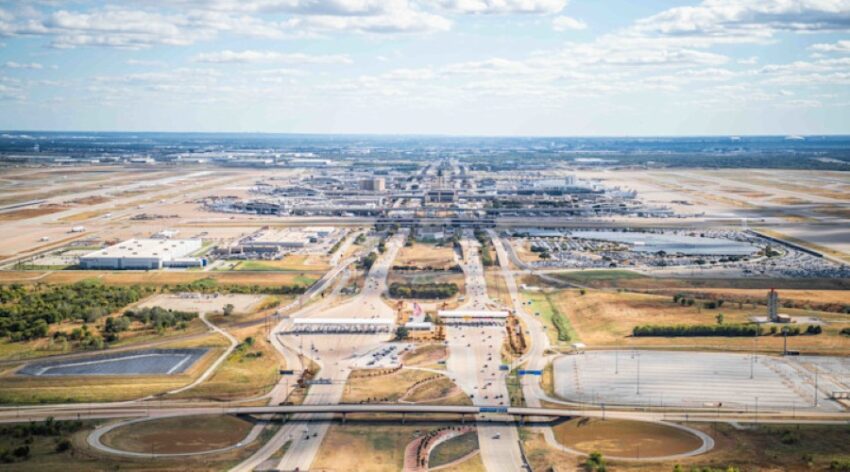
As the world of aviation reaches new heights in 2026, Dallas Fort Worth International Airport (DFW) has firmly established itself as a global leader in innovation and efficiency. Recently recognized by Travel and Tour World as the 18th best airport in the world, and the 7th best in the Americas, this Texas-sized superhub is undergoing a massive transformation under its “DFW Forward” initiative. Spanning over 26.9 square miles, the airport serves as a critical gateway, connecting North Texas to nearly 200 domestic and 80 international destinations.
A New Era of Global Ranking: The Smart Airport Leader
The 2026 ranking by Travel and Tour World reflects a fundamental change in how the aviation industry measures success. Rather than focusing solely on terminal aesthetics, the criteria prioritized the “depth of intelligence” integrated into daily operations. Dallas Fort Worth (DFW) was specifically lauded as a Smart Airport Leader, securing the 18th spot globally and the 7th spot in the Americas.
This distinction stems from the airport’s transition from experimental technology to the scaled, real-world execution of artificial intelligence and automated ecosystems. By moving AI and biometrics into the realm of mission-critical infrastructure, the airport has set a benchmark for how modern hubs manage the complex interplay of passenger flow, aircraft movement, and environmental responsibility.
Flight Operations: The 13-Bank Revolution
As of April 2026, the operational heart of DFW—its massive American Airlines hub—has undergone its most significant scheduling overhaul in a decade. To better serve its average of 100,000 peak daily customers, the airline expanded its daily schedule from nine clustered flight “banks” to thirteen separate banks.
This strategic shift serves several vital purposes:
- Reduced Congestion: By spreading flights more evenly throughout the daylight hours, the airport has reduced the extreme pressure on security checkpoints and terminal walkways.
- Connection Reliability: The new structure offers travelers a wider array of departure options and more resilient connection windows, significantly lowering the risk of missed flights due to minor delays.
- Airspace Efficiency: Smoothing out the peaks and valleys of aircraft movements has improved the efficiency of the North Texas airspace, contributing to better on-time performance for the more than 930 daily departing flights.
Infrastructure and the “Modular” Future of Terminal F
The physical transformation of Dallas Fort Worth (DFW) is most evident in the construction of its sixth terminal, Terminal F. This $1.6 billion project is a marvel of modern engineering, utilizing modular construction on an unprecedented scale.
Instead of traditional on-site building, massive megastructure modules—some the size of football fields and weighing as much as twelve widebody aircraft—were prefabricated off-site. These modules were then transported across the airfield and set onto pre-built foundations. This method has allowed the airport to accelerate its growth with minimal disruption to active flight operations.
When the first phase opens, Terminal F will provide a 400,000-square-foot concourse and 15 new gates. To maintain seamless transit, the SkyLink automated people mover is being extended with a dedicated station for the new terminal, ensuring that the average connection time between any two points in the airport remains under two minutes.
Artificial Intelligence and Digital Twins
Technologically, DFW has moved into the “digital twin” era. The airport utilizes a highly sophisticated digital replica of its entire 26.9-square-mile campus to simulate and optimize everything from traffic flow to utility usage.
- Predictive Maintenance: AI-driven sensors monitor baggage systems and escalators, predicting failures before they occur to ensure a frictionless journey.
- Computer Vision: LiDAR and advanced camera analytics are used for “Intelligent Airfield Management,” optimizing the path of aircraft from the runway to the gate to save fuel and time.
- Smart Baggage: The airport is pioneering the use of Automated Guided Vehicles (AGVs) and robotics within its baggage handling facilities, using AI to identify and sort luggage with near-perfect accuracy.
Security Measures: Frictionless and Fortified
Security at DFW in 2026 is designed to be felt but not seen. The airport has integrated Biometric Identity Solutions across its international terminals, allowing for “curb-to-gate” processing where a passenger’s face acts as their boarding pass and passport.
In the security lanes, 3D scanners and thermal imaging have become the standard, permitting travelers to pass through checkpoints without removing electronics or liquids. To protect the vast amount of data being processed, DFW operates on a private 5G network, ensuring that critical security communications remain secure and uninterrupted by the thousands of personal devices connecting to public Wi-Fi.
Sustainability: The Path to Net-Zero 2030
While much of the aviation industry looks toward 2050 for carbon neutrality, Dallas Fort Worth (DFW) is on an accelerated path to reach Net-Zero Carbon Emissions by 2030. Having already been recognized as the first carbon-neutral airport in North America, its 2026 initiatives include:
- Electric Central Utility Plant (eCUP): This $300 million facility provides sustainably powered heating and cooling to the terminals, reducing natural gas consumption by nearly 80%.
- Renewable Energy: The airport’s entire electrical grid is powered by 100% renewable sources.
- Circular Economy: DFW has implemented a massive organic waste composting program and transitioned its entire landside bus fleet to 100% renewable natural gas sourced from local landfills.
- Hybrid Emergency Response: The airport is among the first in the nation to deploy hybrid Aircraft Rescue and Firefighting (ARFF) vehicles, further greening its critical safety operations.
Passenger Experience and Cultural Immersiveness
The passenger experience in 2026 is defined by a blend of Texas hospitality and high-tech convenience. Under the “DFW Forward” plan, the airport has launched a global call for artists to create immersive digital video installations within Terminal F and the renovated Terminal C. These digital corridors are designed to provide a calming, culturally rich environment for travelers.
Furthermore, the “Smart Retail” ecosystem allows passengers to use the DFW Mobile App to order food or shop from any terminal, with autonomous delivery robots capable of bringing items directly to a traveler’s gate. This commitment to service was reinforced when the Airports Council International (ACI) named DFW the best large airport in North America for customer experience for the third consecutive year.
Looking Forward: Advanced Air Mobility
As DFW solidifies its 18th-place global ranking, it is already looking toward the horizon. The airport is actively preparing for Advanced Air Mobility (AAM), with plans to integrate electric air taxis into its transportation network by 2028. This forward-thinking approach ensures that Dallas Fort Worth remains not just a transit point, but a cornerstone of the future of global travel.
(Image Source: dfw airport)
The post Dallas Fort Worth (DFW) Ascends to 18th in Global Airport Rankings: A Masterclass in AI Innovation, Net-Zero Aviation, and the Future of the Texas Superhub appeared first on Travel And Tour World.
