
 Login
Login
Marriott International Sets the Luxury Agenda for Twenty Twenty-Six Across Asia-Pacific with Landmark Openings from Seoul and Singapore to Australia, India, and Japan
Marriott International is setting the luxury agenda for twenty twenty-six because it is rolling out a carefully timed wave of high-end hotel openings across Asia-Pacific, targeting cities and resort destinations where demand for premium travel is rising fastest. From design-led urban flagships in Seoul and Singapore to immersive nature retreats in Australia, and new luxury addresses in India and Japan, the group is using scale, brand depth, and location strategy to lock in its leadership as the region’s most influential luxury hospitality player.
Marriott International’s Luxury Group is opening twenty twenty-six with a strong statement across Asia-Pacific outside China, marked by two standout hotel launches that set the tone for the year ahead. In South Korea, L’Escape, a Luxury Collection Hotel Seoul, Myeongdong has made its debut, bringing Belle Époque–inspired elegance to one of Seoul’s most energetic districts. Meanwhile, in Singapore, Frasers House, a Luxury Collection Hotel has begun welcoming travelers in the historic Bugis area, blending heritage character with refined modern luxury.
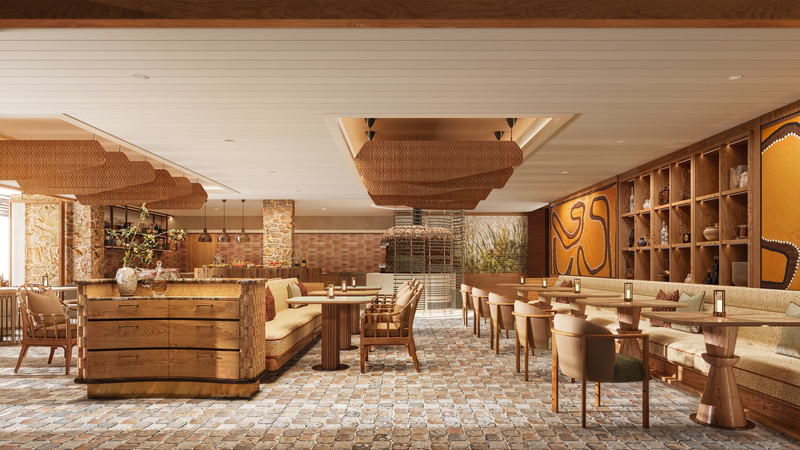
The expansion story continues as the year unfolds, with three high-profile openings lined up across the region. Australia will see the brand’s first global lodge concept with Emirates Wolgan Valley, a Ritz-Carlton Lodge, set within the Greater Blue Mountains World Heritage landscape, promising a deeply immersive nature-led escape. In India, JW Marriott Ranthambore Resort & Spa is poised to reshape luxury in the wilderness, drawing on the spirit of the jungle and the romance of the wild. Completing the trio, Japan will welcome HOTEL THE MITSUI HAKONE, a Luxury Collection Hotel & Spa, an understated mountain retreat designed for travelers seeking calm, craftsmanship, and scenic beauty.
Together, these openings highlight Marriott International’s push to redefine luxury travel in Asia-Pacific through distinctive destinations, strong design narratives, and experiences that go beyond the traditional city hotel.
“We are tremendously excited about this year’s lineup of new luxury openings across Asia Pacific. Among these milestones is the global debut of the Ritz‑Carlton Lodge, which underscores the continued growth and diversification of our Luxury Group portfolio,” says Oriol Montal, Regional Vice President, Luxury, Asia Pacific excluding China, Marriott International. “Insights from our latest luxury travel trends report, The Intentional Traveler, reveal that today’s affluent explorers are seeking deeper, more meaningful connections with the natural world. Notably, 92% cite proximity to nature as a top priority and nearly one-third are planning wildlife or safari-inspired journeys in the year ahead. Our three luxury openings in 2026 directly reflect this growing desire for immersive, nature‑anchored experiences, each offering unparalleled access to some of the region’s most extraordinary destinations.”
L’Escape, a Luxury Collection Hotel Seoul, Myeongdong, opened on 29 December 2025 with a clear intention: to introduce a different rhythm of luxury into one of Asia’s busiest capitals. Set in the heart of Myeongdong, a district defined by retail crowds, historic churches, and fast-moving city life, the hotel positions itself as a deliberate contrast. Step inside, and the tempo slows, the mood shifts, and Seoul briefly feels like nineteenth-century Paris.
The hotel’s identity is shaped by Belle Époque France, brought to life through the vision of French designer Jacques Garcia. The interiors lean heavily into symmetry, ornate floral motifs, antique-inspired furniture, and layered textures that feel theatrical without tipping into excess. It is a carefully staged world, one that feels intimate rather than imposing, offering a sense of escapism that feels rare in a city known for speed and efficiency.
L’Escape houses 204 rooms and suites, each designed to blend classical elegance with modern expectations. While the aesthetic looks backward, the experience does not. Smart technology, contemporary bathrooms, and functional layouts ensure the hotel works smoothly for today’s traveller. The result is a property that feels atmospheric but practical, appealing equally to international visitors and Seoul-based guests seeking a refined urban retreat.
Location plays a critical role in the hotel’s appeal. From the front door, guests can walk to Myeongdong Cathedral, take in city views from N Seoul Tower, or explore the preserved streets of Bukchon Hanok Village. The surrounding transport network makes it easy to move across Seoul, placing cultural landmarks, business districts, and nightlife all within easy reach. L’Escape does not isolate guests from the city; it frames it.
Food and drink form a central pillar of the experience. The hotel features French fine dining, refined Chinese cuisine, and a rooftop bar overlooking the Seoul skyline. Each venue reflects the hotel’s European inspiration while remaining connected to contemporary dining culture. These spaces are designed not just for guests but for the city itself, reinforcing the hotel’s role as part of Seoul’s social landscape rather than a sealed-off luxury enclave.
To ground its European influence locally, L’Escape introduces Destination Discovery programs that highlight Korean heritage and cultural narratives. These curated experiences move beyond surface-level sightseeing, offering guests a deeper understanding of Seoul’s history, traditions, and creative energy. It is an effort to ensure the hotel does not feel imported, but integrated.
L’Escape’s opening is part of a wider shift unfolding across the luxury hospitality sector in Asia and beyond. The next generation of high-end hotels is no longer focused solely on scale or spectacle. Instead, the emphasis is on place, storytelling, and emotional connection. Luxury travellers increasingly seek experiences that feel rooted, thoughtful, and reflective of their surroundings.
This trend is evident across upcoming openings in 2026, from heritage-driven city hotels to nature-immersed lodges and culturally grounded retreats. Whether in dense urban centres or remote landscapes, luxury is being redefined as something more personal and meaningful. Hotels are positioning themselves as gateways to culture rather than symbols of distance from it.
In this context, L’Escape stands as an early signal of where the industry is heading. By blending French artistic influence with Korean hospitality and urban energy, the hotel reflects Seoul’s growing confidence as a global city with its own voice. It shows that luxury today is less about excess and more about intention.
Marriott International is setting the luxury agenda for twenty twenty-six by accelerating a bold expansion of high-end hotels across Asia-Pacific at a time when premium travel demand is surging. New landmark openings in Seoul and Singapore anchor its city strategy, while resort-style and experiential properties in Australia, India, and Japan broaden its reach. Together, these projects show how Marriott is using location, design, and brand power to shape where and how luxury travellers will stay next year.
As travellers become more selective about where and how they stay, properties like L’Escape suggest that the future of luxury lies in atmosphere, narrative, and connection. In a city that never seems to pause, L’Escape offers a carefully crafted moment of stillness, without ever losing sight of where it stands.
The post Marriott International Sets the Luxury Agenda for Twenty Twenty-Six Across Asia-Pacific with Landmark Openings from Seoul and Singapore to Australia, India, and Japan appeared first on Travel And Tour World.