
 Login
Login
2025 Aviation Boom: Thailand Joins Malaysia, South Korea, Vietnam, and India to Boost Connectivity and Infrastructure to Shape the Future, What More You Need To Know
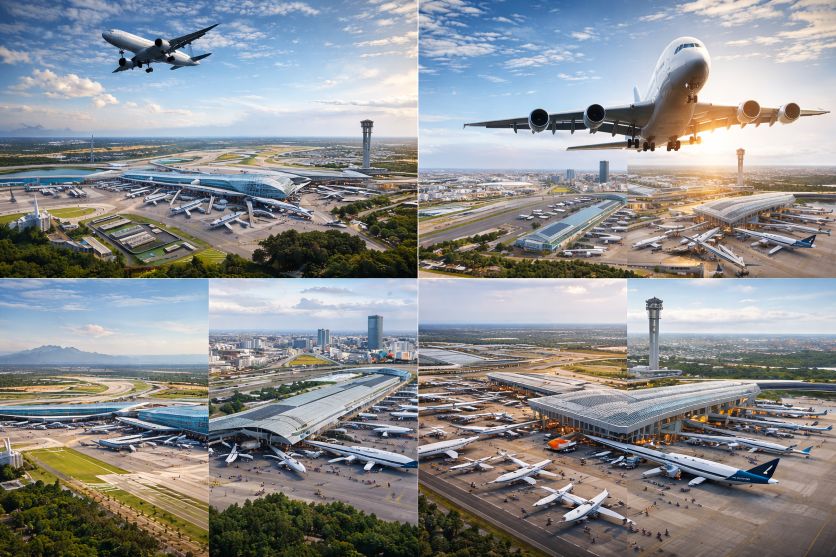
As we approach 2025, the aviation landscape across Asia is rapidly transforming, with key players like Thailand, Malaysia, South Korea, Vietnam, India, and Cambodia making significant strides toward better connectivity and infrastructure expansion. This year marks a critical phase for Asian aviation, as governments and civil aviation authorities invest heavily in new safety standards, airport upgrades, and increased trans-continental connectivity to meet the growing demand for air travel.
These nations are positioning themselves to become global hubs by improving their aviation infrastructure, expanding their fleets, and aligning their regulations with international safety standards. From new airport terminals to greater flight access to North America, Asia is set to lead the way in the future of air travel.
What’s Driving Asia’s Aviation Transformation?
Several key factors are contributing to the transformation of Asia’s aviation sector by 2025. First, a regulatory push for trans-continental connectivity is giving rise to more direct flights between Asian nations and global destinations. Second, significant infrastructure projects are underway to ease congestion at major hubs and expand capacity. These developments are crucial for handling the increasing number of passengers and the growth of air traffic expected in the coming years.
In particular, countries such as Thailand, Malaysia, and the Philippines are seeing advancements in their aviation safety ratings and infrastructure, making them more competitive in the international air travel market. Meanwhile, other nations like India and Cambodia are also making strides to expand their aviation capacities and develop new hubs that can accommodate larger aircraft.
Who Are the Key Players in Asia’s Aviation Boom?
Thailand & Malaysia
In 2025, both Thailand and Malaysia are maintaining their status as Category 1 countries in the Federal Aviation Administration’s (FAA) International Aviation Safety Assessment (IASA) program. Achieving Category 1 status means that the civil aviation authorities in these nations meet the safety standards set by the International Civil Aviation Organization (ICAO), which allows Thai and Malaysian airlines to establish new routes to the U.S. and form code-share agreements with American carriers.
Thailand’s Civil Aviation Authority (CAAT) is working closely with the FAA to sustain this critical status. This will enable Thai carriers to expand their global networks, particularly toward North America. Malaysia is also poised to capitalize on this safety recognition, with airlines looking to increase their U.S. presence.
The Philippines
In the Philippines, the Department of Transportation (DOTr) has overseen the privatization of Ninoy Aquino International Airport (NAIA), which was officially handed over to the private consortium New NAIA Infra Corp (NNIC) on September 14, 2024. This public-private partnership aims to increase the airport’s capacity from 35 million to 62 million passengers per year.
The Philippines is also preparing for the construction of the New Manila International Airport in Bulacan, with a confirmed opening target in 2028. This new airport is expected to significantly ease the burden on NAIA and increase the country’s connectivity.
Additionally, the Philippines has held FAA Category 1 status since 2014, helping to facilitate direct flights between Philippine Airlines and the U.S.
South Korea and Vietnam
In East Asia, South Korea and Vietnam are fast-tracking major infrastructure projects to alleviate airport congestion. South Korea’s Incheon International Airport is undergoing a Phase 4 expansion, with a goal to increase its capacity to 106 million passengers per year. This expansion will help reduce bottlenecks, enhancing passenger flow and making the airport more competitive on a global scale.
In Vietnam, the Long Thanh International Airport project aims to relieve pressure from Tan Son Nhat International Airport in Ho Chi Minh City. The Vietnamese Ministry of Transport (MOT) estimates that Long Thanh will alleviate 90% of the international traffic strain at Tan Son Nhat, providing a much-needed alternative for growing international demand.
Singapore and Thailand: Strategic Expansions
Singapore’s Changi Airport is also set for an upgrade with Terminal 5, which will increase its capacity by an additional 50 million passengers annually. The Civil Aviation Authority of Singapore (CAAS) is overseeing this project, designed to handle the future surge in air traffic from both business and leisure travelers.
Meanwhile, Thailand’s Suvarnabhumi Airport is adding a third runway, which will increase the number of flights from 68 to 94 per hour. Airports of Thailand (AOT) is spearheading this expansion to enhance the airport’s ability to handle growing passenger numbers efficiently.
India: The Catalyst for Regional Connectivity
India’s aviation market is experiencing rapid growth under the Ministry of Civil Aviation’s UDAN (Ude Desh ka Aam Naagrik) scheme, which aims to increase regional connectivity and make air travel more accessible to the general public. The Indian government has plans to increase the number of operational airports from 148 to 220 by 2030, supporting both domestic and international air traffic.
Additionally, Indian carriers are experiencing a massive fleet expansion. With over 1,500 aircraft currently on order, India has the largest backlog of aircraft globally, positioning the country as a key player in the global aviation market.
What Are the Challenges and Geopolitical Hurdles?
While growth is high, challenges such as the closure of the Siberian Corridor are affecting flight routes between Europe and Asia. According to the European Union Aviation Safety Agency (EASA), the rerouting of Euro-Asian flights is leading to longer travel times—sometimes up to 2–3 hours longer—which in turn increases fuel consumption and carbon emissions.
Another challenge is the growing influence of Chinese state-owned carriers, which is pushing the ASEAN Secretariat to advocate for the liberalization of air freight services. The ASEAN Single Aviation Market (ASAM) aims to allow more seamless movement of passengers and cargo across the 10 member states, competing with the increasing dominance of Chinese carriers.
Cambodia’s Emergence as an Aviation Hub
A newer player in the aviation landscape is Cambodia, where the Techo International Airport (TIA) has recently been classified as a 4F airport, meaning it can accommodate the largest aircraft in the world, including the Airbus A380. This classification marks a significant leap forward for Cambodia’s aviation industry, opening the door for increased international flights and more global connections.
How Are These Changes Shaping the Future?
The rapid expansion of infrastructure, along with the regulatory changes taking place in several key Asian nations, is setting the stage for an exciting future for global aviation. By 2025, Asia will be better equipped to handle the increasing demand for air travel, with major airports, fleets, and airlines expanding to meet the needs of both business and leisure travelers. With the global aviation landscape shifting, Asia is ready to become an even more integral part of the global air travel network.
Conclusion
As 2025 unfolds, Asia‘s aviation sector is primed for remarkable growth. Major infrastructure expansions, safety improvements, and regulatory adjustments will boost connectivity across the region and beyond. With increased investment in airports, new aircraft orders, and improved safety ratings, Asia is solidifying its place as a central hub in global aviation. The region’s continued evolution promises a dynamic future for both airlines and passengers, ushering in a new era of air travel connectivity.
The post 2025 Aviation Boom: Thailand Joins Malaysia, South Korea, Vietnam, and India to Boost Connectivity and Infrastructure to Shape the Future, What More You Need To Know appeared first on Travel And Tour World.

