Reading view

Study reports associations between infants’ head growth patterns and risk of autism

A study of infants during their first year of life conducted in Israel found that children with consistently small or large head circumferences had around three times higher odds of being diagnosed with autism compared to infants whose head circumference was consistently medium. These odds were 6–10 times higher in the 5% of infants with the smallest head circumferences and the 5% of infants with the largest head circumferences. The research was published in Autism Research.

Autism, or autism spectrum disorder, is a neurodevelopmental condition characterized by differences in social communication, social interaction, and patterns of behavior, interests, or sensory processing. It is described as a spectrum because the type and intensity of characteristics vary widely between individuals.

Autism typically emerges in early childhood, although it may be formally diagnosed later in life. Researchers have investigated ways to detect autism in early childhood, and some studies suggested that abnormal head growth patterns in infancy may be associated with a subsequent diagnosis of autism.

Other studies have reported that children later diagnosed with autism spectrum disorder sometimes have very small heads at birth, followed by a period of accelerated growth of the head during infancy. There is some evidence that such an accelerated pace of head growth might begin before birth.

Study author Rewaa Balaum and her colleagues wanted to explore the relationship between head growth patterns during the first year of life and a later diagnosis of autism. They conducted a longitudinal study in which they looked into head circumference and height development trajectories.

Study participants included 262 children with autism and 560 non-autistic children born in the Negev, southern Israel, between 2014 and 2017. Their head circumference and height data during the first year of life were available in the databases of mother-child health clinics operated by the Israeli Ministry of Health.

Seventy-eight percent of participating children were boys, and 77% were Jewish. The ethnic groups living in the Negev are mainly Jews and Bedouin Arabs. Children with autism were less likely to come from families of high socioeconomic status compared to the control group. They also tended to have somewhat lower weight at birth (3.24 kg vs 3.32 kg) and somewhat lower head circumference (34.18 cm vs 34.88 cm).

Head circumference and height measurements of these infants were taken on multiple occasions during their first year of life. Using these data, study authors grouped participating infants into seven categories based on their head growth trajectories.

These trajectories were: infants with consistently small heads, infants with medium head circumference throughout infancy, infants with consistently large heads, infants whose head circumference increased from small to medium, those whose heads increased from medium to large, infants whose heads were large in the early days but decreased to medium by the end of the first year, and those whose heads were medium at birth but decreased to small near the end of the first year.

Results showed that infants with consistently large and consistently small heads were the most likely to be diagnosed with autism later. Their odds of being diagnosed with autism were around three times higher compared to infants with consistently medium-sized heads. These odds were 6–10 times higher in the 5% of infants with the smallest heads and the 5% of infants with the largest head circumferences.

Crucially, the researchers found that these head growth patterns were strongly linked to height. Children with atypical head sizes also tended to have atypical heights. The highest risk for autism was observed in children who had both atypical head size and atypical height, rather than those with isolated head growth issues.

“Our findings suggest that the reported associations between atypical head growth during infancy and ASD [autism spectrum disorder] may be attributed to broader physical growth anomalies. This conclusion highlights the importance of a multifaceted, longitudinal examination of such anthropometric measures in studies of child development,” the study authors concluded.

The study contributes to the scientific understanding of autism. However, it should be noted that the study only looked at children in the first year of life. It remains unknown whether these growth patterns continue beyond this period. It also remains unknown how much these findings can be generalized to human populations outside southern Israel.

The paper, “Head Growth Trajectories During the First Year of Life and Risk of Autism Spectrum Disorder,” was authored by Rewaa Balaum, Leena Elbedour, Einav Alhozyel, Gal Meiri, Dikla Zigdon, Analya Michaelovski, Orly Kerub, and Idan Menashe.


Reduction in PTSD symptoms linked to better cognitive performance in new study of veterans

A study of U.S. veterans found that their episodic visual memory, motor learning, and sustained visual attention improved after treatment for PTSD. The magnitude of these improvements was associated with PTSD symptom reduction. However, there were no differences in the effects of the two treatments applied – cognitive processing therapy and Sudarshan Kriya yoga. The paper was published in the Journal of Traumatic Stress.

Post-traumatic stress disorder (PTSD) is a mental health condition that can develop after a person experiences or witnesses a psychologically traumatizing event usually involving actual or threatened death, serious injury, or sexual violence. Such events include war and combat, physical or sexual assault, severe accidents, natural disasters, or sudden loss of a loved one.

Symptoms of PTSD include persistent intrusive memories or flashbacks, nightmares, avoidance of reminders of the trauma, negative changes in mood or beliefs, and heightened arousal, such as irritability or hypervigilance. These symptoms last longer than one month and cause significant distress or impairment in daily functioning.

PTSD is common among military veterans, first responders, refugees, and survivors of violence, but it can occur in anyone exposed to trauma. However, not everyone who experiences trauma develops PTSD, as individual vulnerability, prior experiences, and social support play important roles. PTSD often co-occurs with depression, anxiety disorders, or substance use problems.

Study author Zulkayda Mamat and her colleagues wanted to explore the changes in cognitive functioning of U.S. veterans after treatment for PTSD. They hypothesized that cognitive function would improve after treatment across domains known to be impaired in PTSD. These include attention, working memory, episodic memory, information processing speed, and executive functioning. They further hypothesized that these improvements would be proportional to the degree of improvement in PTSD symptoms.

The researchers recruited 85 U.S. veterans with clinically significant PTSD symptoms, 62 of whom completed both the baseline and post-treatment cognitive assessments. Ten of the initial participants were women. They were randomly divided into two groups. The average age of participants in the final analysis was roughly 58 for the cognitive processing therapy group and 61 for the yoga group.

Participants in the first group were assigned to undergo a type of trauma-focused therapy called cognitive processing therapy (CPT). The other group was to undergo Sudarshan Kriya yoga (SKY). The group undergoing CPT had two 1-hour sessions per week for 6 weeks, for a total of 12 hours. The yoga group started with a 5-day intensive workshop that lasted 3 hours per day. This was followed by twice-weekly group sessions for 6 weeks, for an additional total of 25 hours of contact time (approximately 40 hours total).

Cognitive processing therapy is a structured, evidence-based psychotherapy for post-traumatic stress disorder that helps individuals identify and modify unhelpful beliefs related to trauma in order to reduce distress and improve functioning. Sudarshan Kriya yoga is a structured breathing-based practice originating from yogic traditions that uses specific rhythmic breathing patterns to reduce stress, regulate emotions, and support mental well-being.

Before and after the treatments, participants completed assessments of PTSD symptom severity (using CAPS-5), depression (Beck Depression Inventory-II), and cognitive functioning (tests from the CANTAB battery). The cognitive functioning assessment looked into participants’ episodic visual memory and learning; visual, movement, and comprehension difficulties; visual sustained attention; and working memory and strategy use.

The results showed that the cognitive functioning of participants from both groups improved after both treatments. More specifically, participants showed moderate improvements in visual memory, motor learning, and visual sustained attention. However, performance in spatial working memory declined in both groups.

The magnitude of improvements was similar in the two groups – there were no significant differences between participants who underwent cognitive processing therapy and those who participated in yoga workshops regarding the magnitude of cognitive improvements. Changes in overall cognitive functioning were associated with PTSD symptom reduction across the full sample. However, exploratory analyses indicated that this correlation was statistically significant only within the cognitive processing therapy group, not the yoga group.

“Regardless of treatment, cognitive function improved alongside PTSD symptom reduction. These findings provide evidence that treating PTSD not only alleviates PTSD symptoms but may also improve associated cognitive function,” the study authors concluded.

The study contributes to the scientific knowledge about PTSD treatment. However, it should be noted that cognitive improvements were observed equally in both groups without a passive control group (such as a waitlist). Therefore, while the two treatments appeared equally effective, it remains unclear whether the cognitive improvements resulted strictly from the treatments or from other processes not considered in the study, such as practice effects or the natural passage of time.

The paper, “Cognition improvement in U.S. veterans undergoing treatment for posttraumatic stress disorder: Secondary analyses from a randomized controlled trial,” was authored by Zulkayda Mamat, Danielle C. Mathersul, and Peter J. Bayley.

Support for banning hate speech tends to decrease as people get older

An analysis of the 2019-2024 New Zealand Attitudes and Values Study data revealed that support for free speech has been decreasing during this period across all age groups. In contrast, there was little change in the level of support for restricting hate speech. The research was published in Political Psychology.

Free speech is the right of individuals to express ideas, opinions, and information without undue interference or punishment from authorities. It includes spoken words, writing, art, protest, and other forms of expression. Free speech allows people to criticize those in power and hold governments accountable. It supports the search for truth by allowing competing ideas to be debated openly.

Free speech protects individual autonomy by respecting people as thinking agents capable of forming their own views. In democratic societies, free speech enables informed voting and meaningful public participation. It helps minorities and marginalized groups voice their experiences and challenge dominant narratives. Without free speech, fear and conformity tend to replace creativity and innovation. For these reasons, free speech is widely seen as a foundation of free, pluralistic, and resilient societies.

In spite of this, some argue that the right to free speech should be restricted at least in some cases. Traditionally, arguments for this have been focused on maintaining social order and reducing security risk. However, in recent decades, arguments in favor of restricting free speech as a way to protect marginalized groups have become more common. Offensive or disparaging speech targeting groups based on race, religion, gender, or sexuality has generated tensions between the support for free speech and the need to promote social inclusion of these groups.

Study author Maykel Verkuyten and his colleagues wanted to examine the contributions of age, time period, and generation of birth to changes in attitudes toward free speech and hate speech restrictions in New Zealand. They note that support for free speech in New Zealand is likely to be high, but that minority group members might be more supportive of hate speech restriction than majority members because they are typically the target of speech that denigrates their ethnic or racial identity.

These authors analyzed data from the New Zealand Attitudes and Values Study collected between 2019 and 2024. The analysis included data belonging to 50,662 participants who responded to questions of interest for this analysis at least once over the five annual assessments conducted in this period.

The respondents provided the data used in this analysis by rating on a scale from 1 to 7 how strongly they support free speech (“Although I may disagree with the opinions that other people hold, they should be allowed to express those views publicly.”) and how strongly they support restriction of hate speech (“People who hold opinions that are harmful or offensive to minority groups should be banned from expressing those views publicly.”).

Results showed that, in the examined period, general support for free speech has decreased across all age groups (all birth cohorts). This was the case both in ethnic majority and minority groups. In contrast, support for restricting hate speech was relatively stable in this period. This was particularly the case among ethnic minority groups.

“Free speech is critical for liberal democracies to function well, but it has limits. Traditionally, concerns about social order and security are considered to justify free speech restrictions, but increasingly there is a focus on possible offense and harm to minority groups. The increased prominence of egalitarian norms and values may ultimately lead to lower tolerance of speech that is considered to harm the status, dignity, and well-being of minority groups,” the study authors concluded.

The study contributes to the scientific knowledge about changes in support for free speech and speech restrictions in New Zealand. However, it should be noted that both support for free speech and for restricting hate speech were self-reported using only single items. Studies using more objective or more comprehensive measures of these attitudes might produce different results.

The paper, “Changes in support for free speech and hate speech restrictions: Cohort, aging, and period effects among ethnic minority and majority group members,” was authored by Maykel Verkuyten, Kumar Yogeeswaran, Elena Zubielevitch, Kieren J. Lilly, and Chris G. Sibley.

Infants fed to sleep at 2 months wake up more often at 6 months

A 12-month longitudinal study found that infants who are put to bed with a bottle at 2 months of age tended to display more sleep problems at 6 months of age. They needed a longer time to fall asleep, spent more time awake, and woke up during the night more often. Mothers of infants who displayed more sleep problems at 6 months of age were more likely to keep putting them to bed with a bottle at 14 months of age. The paper was published in the Journal of Sleep Research.

Many infants have sleep problems, particularly in the first year of life. These include difficulty falling asleep, frequent or prolonged night wakings, short nighttime sleep duration, and an inability to soothe themselves back to sleep. These problems are important because they are linked to later risks for both child and family well-being.

Poor infant sleep has been associated with outcomes such as overweight, obesity, and difficulties in emotional and behavioral regulation. Sleep problems also affect parents, contributing to higher depressive symptoms, lower energy, and less adaptive parenting practices. Research suggests that infant sleep and parenting behaviors influence each other in a bidirectional, transactional way over time.

One parenting practice of interest is putting an infant to bed with a bottle, which is believed to interfere with the infant’s ability to self-soothe to sleep. Feeding infants to sleep is associated with shorter nighttime sleep duration, more frequent night wakings, and greater sleep fragmentation. Expert guidance therefore emphasizes putting infants to bed while drowsy but still awake, rather than using feeding as a sleep aid.

Providing a bottle at bedtime has also been identified as a feeding practice that promotes obesity, linking sleep routines to physical health outcomes. Poor infant sleep may, in turn, increase parents’ reliance on bottle-to-bed practices as a way to manage nighttime distress.

Study author Esther M. Leerkes and her colleagues wanted to examine associations between putting the infant to bed with a bottle and maternal-reported infant sleep problems. They conducted a 12-month longitudinal study in which they followed a group of infants and their mothers from the infants’ 2nd month of life until the infants were 14 months old.

Pregnant women in their third trimester were recruited in and around Guilford County, North Carolina, to participate in the Infant Growth and Development Study. The primary goal of that larger study was to identify early life predictors of childhood obesity. Originally, 299 women were recruited. The average age of these mothers was approximately 30 years (mean age 29.71).

Data from participating women were collected when their infants were 2 months, 6 months, and 14 months old. 90% of these women provided data at the 2-month wave, 81% at 6 months, and 76% at 14 months.

Mothers reported how often they put their infant to bed with a bottle of formula, breast milk, juice, juice drink, or any other kind of milk by providing ratings on a 5-point scale. They reported infants’ sleep problems using the Brief Infant Sleep Questionnaire.

The study authors included data on maternal education, race, and their participation in the Women, Infant and Children Special Food Supplemental Program (WIC) in their analyses. They also controlled for maternal depressive symptoms, maternal sleep quality, breastfeeding status, and weekly work hours. WIC is a U.S. federal nutrition assistance program that provides supplemental foods, nutrition education, and health referrals to low-income pregnant women, new mothers, infants, and young children.

Results showed that infants who were put to bed with a bottle more frequently at 2 months of age tended to display more sleep problems at 6 months of age. They needed a longer time to fall asleep, spent more time awake at night, and had more frequent night wakings.

Mothers whose infants woke up more frequently and less time sleeping during the night at 6 months were more likely to be putting them to bed with a bottle at 14 months of age.

“In conclusion, putting infants to bed with a bottle and infant sleep problems influence one another across infants’ first year and into their second year. Given infant sleep problems are a predictor of maladaptive infant, parent and family outcomes, efforts to prevent parental use of this strategy are important to promote infant and parent well-being,” the study authors concluded.

The study contributes to the scientific knowledge about infant sleep patterns. However, it should be noted that both infants’ sleep quality and bottle-to-bed practices were reported by mothers, leaving room for reporting and common method bias to have affected the results.

The paper, “Transactional Associations Between Bottle to Bed and Infant Sleep Problems Over the First Year,” was authored by Esther M. Leerkes, Agona Lutolli, Cheryl Buehler, Lenka Shriver, and Laurie Wideman.

Violence linked to depression in adolescent girls but not boys

A longitudinal study of adolescents from the Chicago metropolitan area found that in female, but not in male adolescents, higher exposure to violence was associated with more severe depression symptoms. In males, depression was associated with the expansion of the salience network of the brain and with increased connectivity of this network. The paper was published in Translational Psychiatry.

Violence exposure in this study was defined as experiencing, witnessing, or being repeatedly confronted with acts of interpersonal physical violence, such as being shoved, kicked, punched, or attacked with a weapon. It is a major risk factor for mental health problems, increasing the likelihood of all types of psychopathology.

Childhood adversities such as physical abuse and family violence account for a substantial proportion of psychiatric disorders that emerge during adolescence. This period is especially sensitive because key social and emotional brain systems are still developing. Exposure to violence during adolescence is associated with maladaptive emotion regulation strategies, such as rumination and emotional suppression, which contribute to rising rates of depression.

Although males are more likely to be exposed to or witness violence, females tend to show higher levels of depression during adolescence. Some evidence suggests that violence exposure places females at greater risk for internalizing problems (psychological difficulties directed inward), particularly depression and anxiety.

One explanation is that females may be more reactive to interpersonal stressors and show stronger physiological and neural responses to threat following violence exposure. Another proposed mechanism is perceived lack of control, as stressors experienced as uncontrollable are strongly linked to depressive outcomes.

Violence exposure may also alter brain systems involved in detecting and responding to threat, such as the salience network, making individuals more vigilant to potential danger. The salience network is a large functional neural network composed of multiple interconnected regions in the brain that detects and prioritizes behaviorally and emotionally important stimuli, helping the brain switch attention between internal thoughts and external demands.

Study author Ellyn R. Butler and her colleagues wanted to explore whether features of the salience network of the brain such as connectivity and expansion (the proportion of the cortex utilized by the network) may explain the association between exposure to violence and depression in adolescents. Study authors hypothesized that males experience more instances of violence than females and that depression symptoms will increase in individuals exposed to violence. They expected that this increase in depression symptoms after exposure to violence will be greater among females and that it will be accompanied by the expansion of the salience network.

Study participants were 220 adolescents between 14 and 18 years of age from the Chicago metropolitan area. Study authors intentionally prioritized adolescents from low-income neighborhoods for inclusion in the study. 141 of them were females. 38% were Black, and 30% were Hispanic. On average, they were exposed to 1.8 violent events in the past year.

Study participants provided study data twice – at the start of the study, and 2 years later. They completed an assessment of exposure to violence (a set of 7 questions about participants or their friends or family members being physically hurt, attacked, or killed) and assessments of depression and anxiety symptoms (the Revised Child Anxiety and Depression Scale).

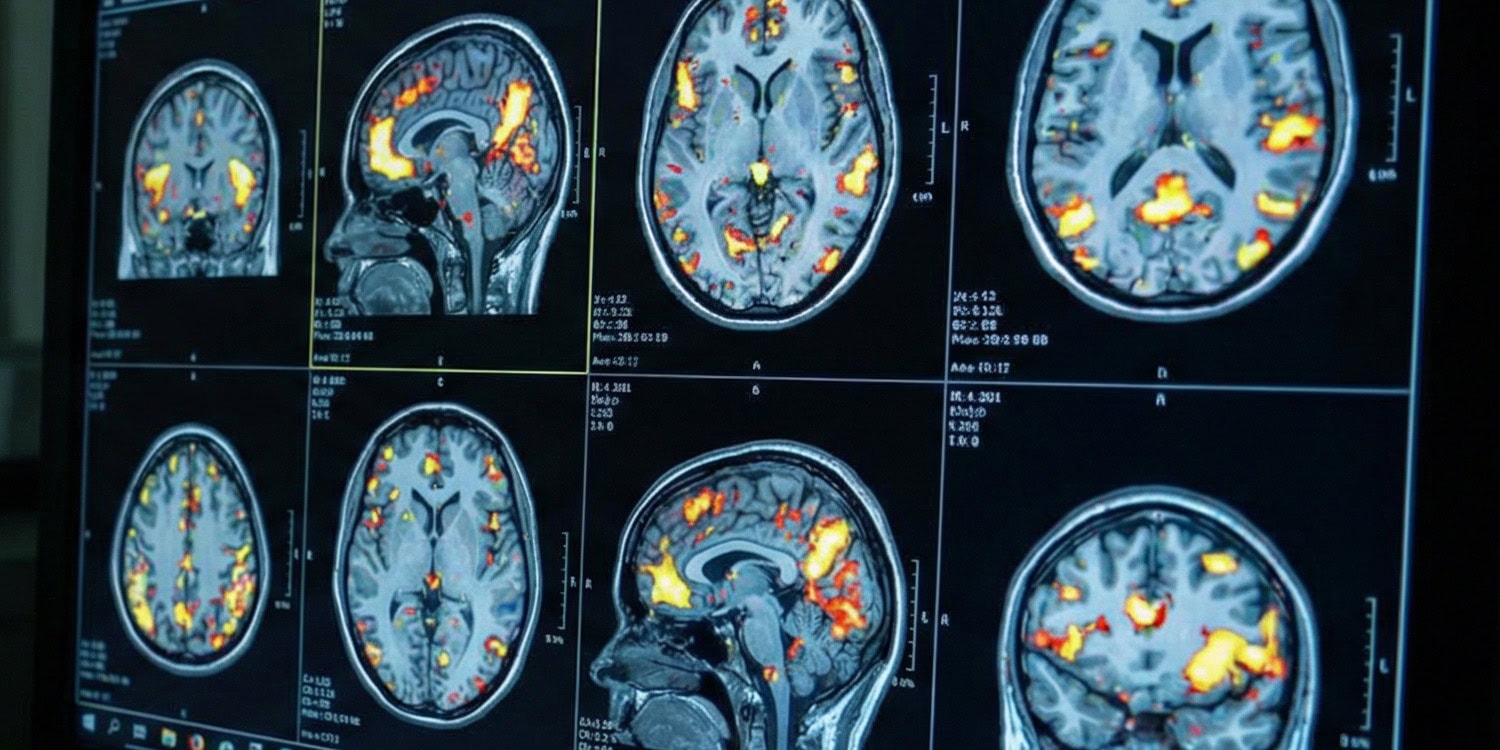
Participants also underwent functional magnetic resonance imaging (fMRI) of their brains. The study authors used these fMRI data to derive information about connectivity and size of participants’ salience networks at both time points to control for baseline levels.

Results showed that female participants reporting greater exposure to violence tended to report more severe depressive symptoms. This association was not present in male participants. Salience network expansion or connectivity were not associated with exposure to violence in the past year.

However, greater expansion of the salience network and its greater connectivity were associated with more severe depressive symptoms in male participants. Study authors note that both of these associations remained after controlling for depression at the start of the study, indicating that exposures that impact males’ depression through the salience network may occur during middle adolescence.

“We demonstrated that salience network expansion and connectivity are positively associated with depression among males even after controlling for depression two years prior, highlighting that it is likely that males are experiencing some type of adversity that increases connectivity within the salience network, expansion of the salience network, and depression during this time period in early- to mid-adolescence. Therefore, future efforts to determine which exposures lead to depression during adolescence in males should focus on this developmental time frame,” the study authors concluded.

The study contributes to the scientific understanding of the neural underpinnings of depression. However, both depressive symptoms and exposure to violence in this study were self-reported, leaving room for reporting bias to have affected the results.

The paper, “Sex differences in response to violence: role of salience network expansion and connectivity on depression,” was authored by Ellyn R. Butler, Noelle I. Samia, Amanda F. Mejia, Damon D. Pham, Adam Pines, and Robin Nusslock.

❌