
Reading view

Why Air China’s New Technology Will Change the Way You Travel And You Don’t Want to Miss It
Why Air China’s New Technology Will Change the Way You Travel And You Don’t Want to Miss It

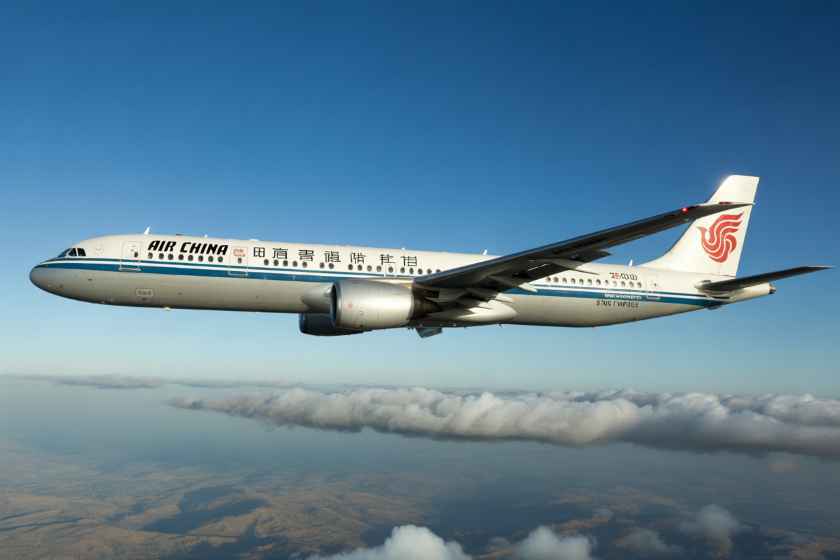
Air China, the country’s flag-carrier airline, is gearing up for an intense travel rush during the Spring Festival holiday season, planning to operate more than 70,000 flights—a 10% increase from 2025. The Spring Festival, or Chinese New Year, is a time of massive travel across the country, and this year’s expansion in flight capacity comes as the aviation market in China edges closer to full recovery after years of disruptions.

Domestic travel is expected to see the most significant boost, as Air China focuses on high-demand corridors, especially those between major cities and regions with dense populations. At the same time, international seat capacity will increase, reflecting China’s push to return to pre-pandemic travel volumes.

Domestic and International Travel Surge

Air China’s growth strategy for this year’s Spring Festival includes reinforcing its domestic flight network. The airline is increasing services on key routes such as the Beijing-Tianjin-Hebei, Yangtze River Delta, Greater Bay Area, and Chengdu-Chongqing corridors. These routes connect some of the most populous and economically significant regions in the country, facilitating both family reunions and business travel.

Additionally, Air China is increasing capacity to the northeast, a traditionally underserved area in the winter months. This move aims to cater to the growing demand for ski tourism, especially ahead of the Harbin Ice Festival, one of China’s most famous winter attractions. The airline is also expanding its services to ski resorts and snow-capped mountains, making it easier for tourists to visit these winter destinations.

On the international front, Air China is also adding more international flights to meet the rising demand. As travel demand between China and other countries increases, particularly for destinations in Asia, Europe, and North America, the airline is adding more international seats. This will help ensure that both business and leisure travelers have ample options for flying to and from China during one of the busiest travel periods of the year.

Introduction of ‘Paperless Cabin’ for Smoother Travel

In addition to expanding flight capacity, Air China is rolling out a new ‘paperless cabin’ system, aimed at improving the passenger experience, particularly for foreign travelers. Starting this Spring Festival, the airline will introduce mobile boarding passes paired with facial-recognition e-gates for a seamless and contact-free boarding process.

This innovative technology will be available on 60% of domestic flights by mid-February 2026, significantly reducing boarding times and enhancing the overall travel experience. The system is designed to cut down on physical contact points, which is especially helpful for foreign passengers who may not be familiar with China’s mobile apps or ticketing systems. The goal is to streamline the process and minimize delays, allowing travelers to board their flights faster and with greater ease.

This technological update comes as part of Air China’s efforts to modernize its fleet and operations, making travel more efficient and comfortable for all passengers. By leveraging facial recognition and mobile technology, the airline hopes to create a more user-friendly experience, making it easier for travelers to move through the airport and onto their flights without unnecessary delays.

The Importance of Spring Festival Travel

The Spring Festival holiday period is crucial for both domestic tourism and international travel to China. As the most significant holiday of the year for Chinese families, it is marked by massive travel volumes, with millions of people returning home to celebrate with family. Air China, as one of the country’s largest airlines, plays a central role in facilitating this travel. The increase in flight capacity reflects the airline’s commitment to meeting the demands of a growing number of travelers.

For tourists, the Spring Festival also offers opportunities to explore China’s rich cultural traditions, vibrant cities, and picturesque landscapes. From the bustling streets of Beijing and Shanghai to the tranquil beauty of Xi’an and the ice sculptures in Harbin, the Spring Festival provides a perfect opportunity to experience the country’s diverse attractions. Many international tourists also plan their visits around the holiday, eager to witness the festivities and cultural events.

In addition to the family reunions, the holiday season sees a surge in travel for business purposes. Major cities like Shanghai and Guangzhou attract business travelers, while the Greater Bay Area has seen increasing attention from professionals and entrepreneurs. With more international flights scheduled for this period, Air China is ensuring that these passengers can easily travel to and from China, further boosting the tourism and aviation sectors.

Air China’s Role in the Post-Pandemic Recovery

This growth in capacity and technology advancements highlights Air China’s role in the post-pandemic recovery of the Chinese aviation industry. The introduction of new flight routes, both domestic and international, alongside the enhancement of airport processes, indicates that the airline is focused on restoring travel volumes to pre-pandemic levels.

As China’s tourism and aviation industries continue to bounce back, airlines like Air China are central to ensuring that passengers have access to a broad network of destinations. From serving the domestic demand during peak travel seasons to providing international connections, Air China’s expansion is critical to the growth of China’s role as a major global travel hub.

Conclusion: What to Expect for Spring Festival 2026

With Air China’s announcement of over 70,000 flights for the Spring Festival travel period, it’s clear that the airline is preparing for a bustling season of travel. Whether you’re traveling for business, family reunions, or to enjoy the cultural festivities, Air China is providing ample opportunities to take part in one of China’s most significant travel events. With its focus on expanding flight capacity and incorporating advanced technology like the ‘paperless cabin’, the airline is well-positioned to meet the demands of a recovering aviation market.

For tourists looking to experience China’s rich traditions and culture during the Spring Festival, or business travelers seeking efficient connections, Air China’s expanded flight network and enhanced passenger experience provide the perfect way to kick off your journey.

The post Why Air China’s New Technology Will Change the Way You Travel And You Don’t Want to Miss It appeared first on Travel And Tour World.
China Leads the Way in Travel Innovation as AGIBOT Unveils World’s First Robot-Led Gala, Revolutionizing Human-Robot Collaboration in Entertainment

China Leads the Way in Travel Innovation as AGIBOT Unveils World’s First Robot-Led Gala, Revolutionizing Human-Robot Collaboration in Entertainment

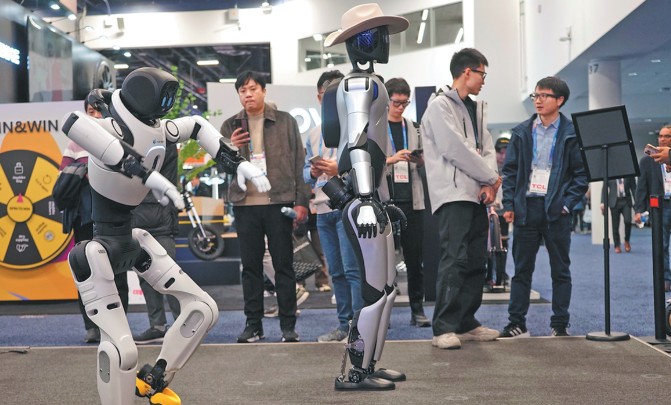
In a groundbreaking demonstration of humanoid robotics, AGIBOT, a leading robotics company specializing in embodied intelligence, recently hosted the world’s first large-scale live event fully led by humanoid robots. The event, known as AGIBOT NIGHT, streamed on February 8, 2026, and was a mesmerizing showcase where robots took center stage, performing dance, magic, comedy, and music in a way never before seen in public performances.

Held during the culturally significant Chinese Spring Festival, a time focused on family, emotion, and social connection, AGIBOT NIGHT presented a bold vision for the future of human-robot symbiosis. The performance featured humanoid robots in the lead role, performing without the traditional role of background support, as they seamlessly executed high-intensity performances that involved flips, synchronized group dances, and even elaborate illusions. The robots’ actions were not merely mechanical but artistic, showcasing their potential to transcend their conventional utility.

A Milestone in Humanoid Robotics

AGIBOT NIGHT went beyond the typical product demonstration. It marked a monumental step in the evolution of humanoid robotics, highlighting the real-world application of embodied intelligence outside laboratory environments. The event served as a live test of the robots’ stability, coordination, and precision. As Qiu Heng, the Chief Marketing Officer of AGIBOT, noted, the event showcased robots performing complex, high-intensity tasks while maintaining consistency and precision—a feat that demonstrates humanoid robots’ growing potential for human-like interaction.

The gala featured advanced motion coordination, where robots demonstrated fluid locomotion in group performances. Several robots, including AGIBOT G2 humanoids and AGIBOT D1 quadruped robots, worked in unison during elaborate synchronized group dances. These performances pushed the boundaries of dynamic motion control and exemplified AGIBOT’s robots’ ability to perform high-difficulty movements like flips, rapid turns, and perfectly timed transitions between performances.

The robots’ ability to maintain consistent timing and motion stability while transitioning through different performance segments displayed robotic dexterity and advanced locomotion control that is essential for humanoid robots in real-world applications. This test of robotic precision was key to AGIBOT’s demonstration of robots functioning autonomously, with minimal human intervention, during an event demanding constant movement and intricate coordination.

Human-Robot Collaboration on Stage

In addition to solo robot performances, AGIBOT NIGHT showcased human-robot collaboration, where human performers and humanoid robots danced and interacted in real time. The most striking performances involved human dancers performing alongside AGIBOT G2 humanoid robots and AGIBOT D1 quadruped robots, demonstrating how robot-human synchronization can seamlessly occur. In these acts, the robots mimicked human movements in real-time, proving their ability to learn and adapt to human interactions, a crucial step in making robots more integrated into daily life.

Furthermore, the event featured magical illusions and comedic skits where robots interacted with human performers. The robots participated in card tricks, floating illusions, and even comedic routines, illustrating the robots’ ability to act with expressive behavior, timing, and role coordination. These performances showed how humanoid robots could work as natural collaborators in entertainment, pushing the boundaries of robotic performance and interaction.

The gala also included co-branded segments, where humanoid robots performed alongside major lifestyle and consumer brands, underlining the commercial potential of humanoid robotics. These collaborations further demonstrated the versatility of AGIBOT’s robots, moving them from industrial and technical settings into consumer-facing roles.

AGIBOT’s Growing Commercial Footprint

Throughout AGIBOT NIGHT, the company displayed its diverse range of robots, including the A2 Series humanoids, which are designed for multimodal interaction, and the X2 Series, which offers conversational abilities and lifelike movement. The G2 Series, known for precision force-controlled manipulation, highlighted AGIBOT’s adaptability in sectors like manufacturing and logistics. Meanwhile, the D1 Series quadrupeds illustrated the company’s focus on developing robots for use in operational environments, from inspections to complex fieldwork.

This event also symbolized AGIBOT’s transition from experimental robotics to scalable commercial deployment. As of 2025, the company has successfully delivered over 5,000 humanoid robots worldwide, marking a significant milestone in its growth. The live performances demonstrated the robots’ reliability and consistency when operating in real-world scenarios, establishing AGIBOT as a leader in humanoid robotics for both entertainment and industrial applications.

A Vision for Human-Robot Symbiosis

AGIBOT NIGHT was not just a product demonstration, but a cultural exploration of human-robot symbiosis, highlighting how humanoid robots could integrate into social and emotional experiences. By aligning robots with human performers in high-emotion contexts like magic and dance, AGIBOT sought to reframe the role of robots beyond being mere tools for productivity and instead, as active participants in cultural and emotional settings.

This shift indicates a future where humanoid robots are not only deployed in technical settings but also engage in human-centered activities, offering a glimpse into how robots can enhance daily life by participating in cultural and social events. The show, set during the Chinese Spring Festival, provided a unique backdrop, imbuing the robots’ performances with deeper cultural significance, reinforcing the idea of robots becoming part of our shared social experiences.

Looking Ahead: The Future of Humanoid Robotics

As AGIBOT continues to innovate and grow, its humanoid robots are paving the way for more seamless human-robot integration. The success of AGIBOT NIGHT proves that humanoid robots are moving closer to becoming indistinguishable partners in a variety of settings, from entertainment to commercial applications. The integration of humanoid robots into culturally meaningful events marks a new chapter in the development of robotic interaction and collaboration.

AGIBOT’s focus on real-time coordination and emotional resonance between robots and humans presents an exciting vision for the future—one where robots are not just tools but cultural contributors that augment human experiences. This milestone marks the beginning of a new era in robotics, where human-robot collaboration becomes a key feature in both entertainment and industry, ensuring robots play a larger role in our evolving world.

The post China Leads the Way in Travel Innovation as AGIBOT Unveils World’s First Robot-Led Gala, Revolutionizing Human-Robot Collaboration in Entertainment appeared first on Travel And Tour World.
❌