Reading view

iQOO Z11 series gets green signal for launch with 9,000mAh battery

iQOO Z11 Turbo

iQOO announced the Z11 Turbo in China last month. It’s the company’s top-of-the-line smartphone powered by the Snapdragon 8 Gen 5. As usual, iQOO will also launch a few other models in the lineup, among which the iQOO Z11 and iQOO Z11x have now surfaced in the first set of leaks.

According to the fresh information shared by well-known tipster Digital Chat Station, the upcoming iQOO Z11 series has now been approved for network access, which usually means the launch isn’t too far away.
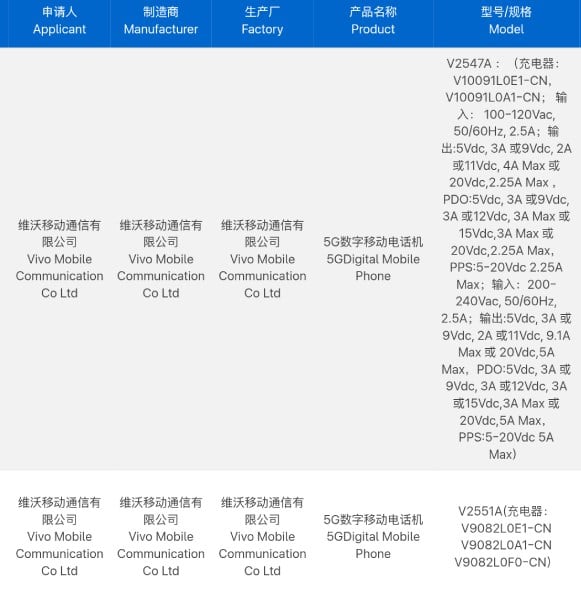
iQOO Z11 and Z11x Specificatoins

One of the devices carries the model number V2551A in the 3C listing, which is likely to be the standard iQOO Z11. The phone is said to ship with a 90W fast-charging adapter, paired with a battery estimated to be around 9,000mAh. If true, it would make the Z11 one of the largest-battery phones in its segment.

The phone is also expected to feature a large 1.5K LTPS display and a mid-range processor, suggesting iQOO is aiming for a balance between performance, battery life, and display quality rather than chasing flagship specs.
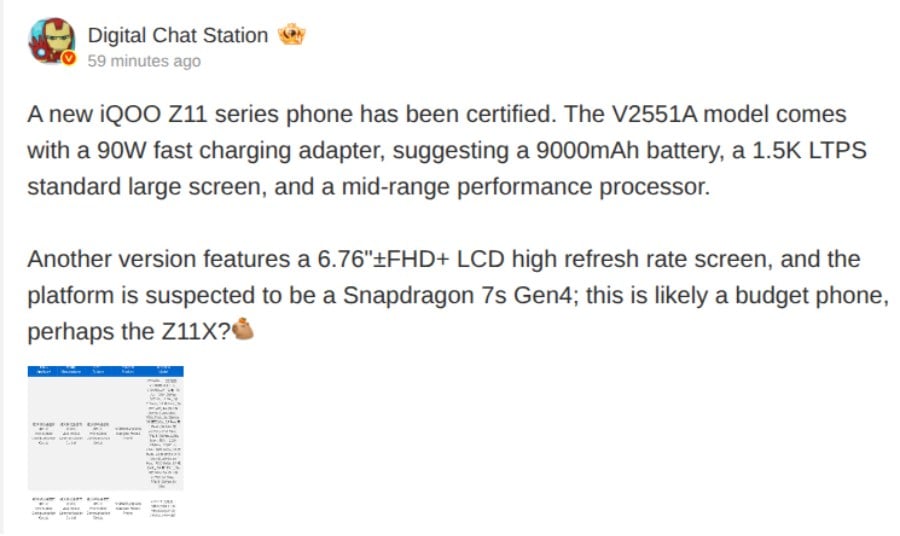
Alongside this model, the tipster also mentioned a second version that could be called the iQOO Z11x. This is said to feature a 6.76-inch FHD+ LCD display with a high refresh rate. The chipset is rumored to be the Snapdragon 7s Gen 4.

Interestingly, the use of an LCD panel seems to have sparked some reactions, with one user joking that releasing an LCD phone with a 7s Gen 4 chipset in 2026 feels like a “miracle.” Digital Chat Station responded humorously, calling it a “rare LCD.”

The conversation also briefly touched on other Vivo devices. When asked whether the upcoming vivo X300 Ultra might feature a 6,800mAh battery, the tipster responded with a clear “no.”

As always, none of this is official yet. We’ll keep you posted if anything becomes official.

For more daily updates, please visit our News Section.

Stay ahead in tech! Join our Telegram community and sign up for our daily newsletter of top stories! 💡

(Source)

The post iQOO Z11 series gets green signal for launch with 9,000mAh battery appeared first on Gizmochina.


Lenovo explains why the Legion Y700 (2026) features a 165Hz display instead of 120Hz

Lenovo Legion Y700 (2026) display-

Lenovo is starting to drip-feed details about the upcoming Legion Y700 (2026), and the biggest reveal so far is that it features a 165Hz display. But if you’re wondering why a tablet needs a 165Hz refresh rate, Lenovo has explained exactly this in a detailed post on Weibo. 

According to Lenovo, the Legion Y700 (2026) features a 3K display with a resolution of 3040 x 1904 pixels, paired with a 409ppi pixel density. On paper, that is already premium territory.

But Lenovo knows that many people will look at the 165Hz number and ask an obvious question: Isn’t 120Hz already smooth enough?

Lenovo Legion Y700 (2026) 165Hz refresh rate is a choice for users

According to Lenovo, the answer lies in how refresh rates actually affect real-world use, especially gaming.

The company explains that a 60Hz display refreshes every 16.67ms, while a 144Hz display drops that interval to 6.94ms. At 165Hz, the refresh interval goes down further to 6.06ms. While those numbers may not sound dramatic, Lenovo argues that the difference becomes noticeable in fast, competitive games.

The company uses a familiar gaming scenario to make its point. In fast-paced shooters or MOBAs, quick camera movements, aiming, and map dragging can expose the limits of lower refresh rates. At lower refresh rates, these actions can introduce slight visual jitter or instability, which can throw off aiming or timing.

Lenovo says the biggest advantage of 165Hz is how it reduces that jitter to make moves feel smoother and more stable when it matters most.

Beyond smoothness, Lenovo claims 165Hz helps address ghosting and system latency, two common issues in competitive games. Faster refresh cycles mean moving objects appear clearer, with smoother edges, making it easier to track targets.

At the same time, a higher refresh rate also reduces the delay between a screen tap and the resulting visual change.

For non-gaming use, Lenovo says power consumption shouldn’t be a major concern. The Legion Y700 (2026) includes an intelligent refresh rate system that adjusts automatically. It ramps up during scrolling and motion, then drops down when reading or viewing static content to save battery life.

As for whether 165Hz is necessary for everyday tasks like browsing or reading comics, Lenovo’s answer is refreshingly honest: it’s subjective. The company suggests users simply try it and decide for themselves.

For more daily updates, please visit our News Section.

Stay ahead in tech! Join our Telegram community and sign up for our daily newsletter of top stories.

(Source)

The post Lenovo explains why the Legion Y700 (2026) features a 165Hz display instead of 120Hz appeared first on Gizmochina.

Big Snapdragon 8 Elite Gen 6 leak reveals block diagram months ahead of launch

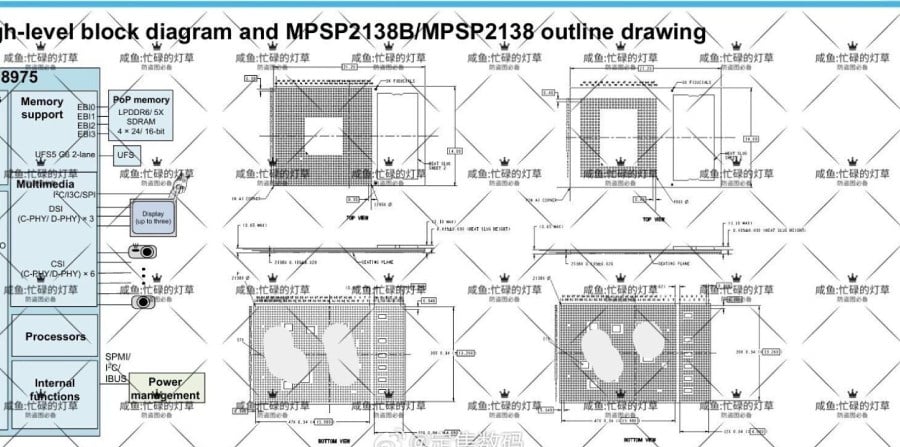
Qualcomm Snapdragon 8 Elite Gen 6 Pro Block Diagram

Among the two rumored flavors, Qualcomm is expected to bring LPDDR6 RAM and a full-fledged GPU for only the Snapdragon 8 Elite Gen 6 Pro. A newly leaked block diagram now suggests the Pro chip may also have another exclusive feature: an HPB design. 

According to a leak from China, Qualcomm is expected to adopt Heat Pass Block (HPB) technology, the same cooling method used in Samsung’s Exynos 2600. Instead of relying on more traditional layouts, HPB places a dedicated heat-spreading layer directly on top of the chipset package. The goal is to move heat away from the silicon faster, before it becomes a performance bottleneck.

Qualcomm’s recent chips have aimed for extremely high peak frequencies, with rumors suggesting the Snapdragon 8 Elite Gen 6 Pro could reach even 6GHz. Sustaining those speeds has been a challenge in the past, often forcing the chip to throttle down once temperatures rise. HPB is designed to reduce that problem by giving the processor more thermal headroom.

Snapdragon 8 Elite Gen 6 Pro to use Package-on-Package memory

The schematic leak also reveals other technical details. The Snapdragon 8 Elite Gen 6 Pro appears to use a Package-on-Package (PoP) design, where memory is stacked closely with the processor to save space.

The chip supports both LPDDR6 and LPDDR5X RAM along with UFS 5.0 storage using two high-bandwidth lanes.

Beyond raw performance, the chip may also focus on productivity features. The leak hints at multi-display support, which could enable desktop-style experiences when phones are connected to external monitors.

Qualcomm Snapdragon 8 Elite Gen 6 Pro Block Diagram
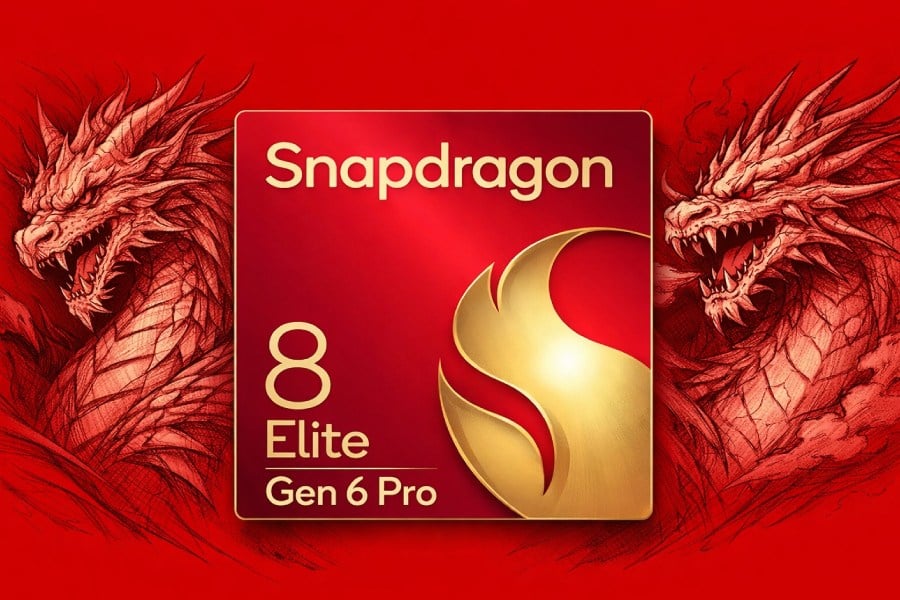
Snapdragon 8 Elite Gen 6 Pro AI-generated image

If true, the leak suggests Qualcomm is seriously rethinking how it handles heat in its most powerful chips. Adopting HPB could help the Snapdragon 8 Elite Gen 6 Pro maintain high performance for longer periods, instead of briefly hitting impressive numbers before slowing down.

That said, it’s still unclear whether this cooling solution will be exclusive to the “Pro” variant. There’s no confirmation yet that the standard Snapdragon 8 Elite Gen 6 will receive the same treatment.

For more daily updates, please visit our News Section.

Stay ahead in tech! Join our Telegram community and sign up for our daily newsletter of top stories! 💡

(Source)

The post Big Snapdragon 8 Elite Gen 6 leak reveals block diagram months ahead of launch appeared first on Gizmochina.
Japanese car maker Toyota announces its game engine “Flourite”

Toyota-Fluorite-game-engine

In interesting news, Toyota is building its own game engine for the screens inside your car.

Toyota Connected North America, the subsidiary responsible for in-vehicle connectivity, has announced a new gaming engine called Fluorite. It’s designed specifically for automotive systems, where hardware is often less powerful than a typical smartphone or laptop.

What is Toyota’s Flourite engine?

Fluorite is written in C++ and is built to work closely with Google’s cross-platform UI framework, Flutter. That means developers can use Flutter’s Dart language and high-level APIs to build interactive experiences, including games and 3D interfaces, without needing heavy, traditional game engines.

According to Toyota, the engine is optimized to deliver strong performance even on low-end or embedded hardware. It also supports modern graphics APIs like Vulkan, which allows the system to get close to the device’s full hardware-accelerated performance. 

Fluorite also brings some developer-friendly features. It supports a hot reload system similar to Flutter, letting developers see changes within a few frames instead of waiting through long build times. The engine also supports model-based trigger areas, so artists can define touch or click interactions directly inside tools like Blender.

Why does Toyota need a game engine?

So why does a car company need its own game engine?

Toyota says the project started as an attempt to build 3D user interfaces for future vehicles. The team looked at established engines like Unity, but found them too heavy for embedded automotive systems. Licensing costs were also a concern. In the end, building a lightweight, in-house solution made more sense.

More importantly, Toyota is marketing Fluorite as a fully featured open-source engine. As a result, even if the automaker won’t work on games, it gives an opportunity to independent and enthusiast developers.

For more daily updates, please visit our News Section.

Stay ahead in tech! Join our Telegram community and sign up for our daily newsletter of top stories! 💡

(Source)

The post Japanese car maker Toyota announces its game engine “Flourite” appeared first on Gizmochina.
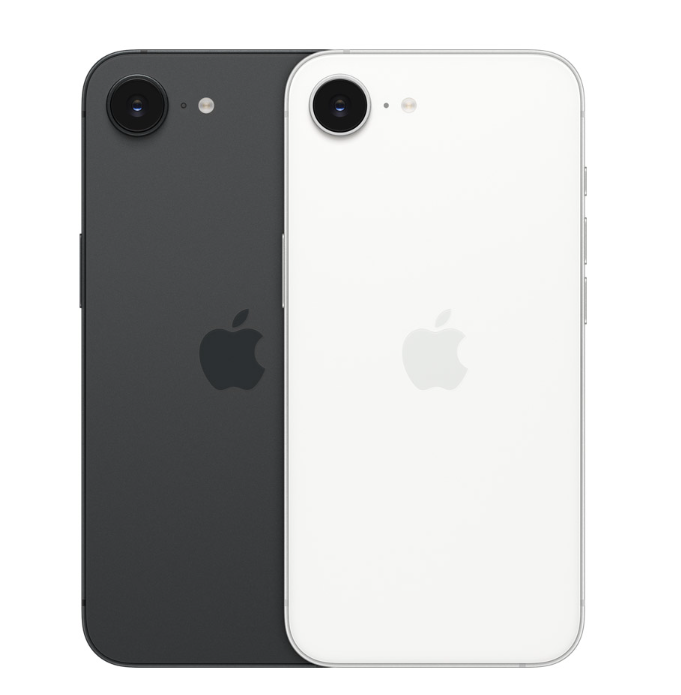
Apple is allegedly reusing iPhone 16e’s mold for the upcoming 17e

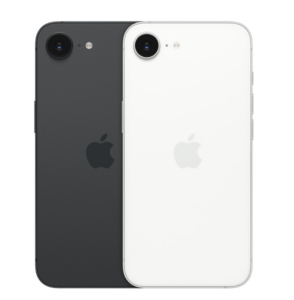
iPhone 16e

Apple may not be planning much of an upgrade for the iPhone 17e, at least if the latest leaks are to be believed. According to a Weibo leaker and Bloomberg’s Mark Gurman, the next “e” model could end up being more of a quiet refresh than a meaningful redesign.

Fixed Focus Digital on Weibo claims the iPhone 17e is essentially the iPhone 16e with one major internal change: the new A19 chip. The leaker says there are no notable updates to the display, Face ID system, or overall hardware features.

In fact, they go as far as saying Apple hasn’t even changed the phone’s mold, which means the physical design and dimensions will remain the same.

That assessment lines up closely with what Mark Gurman is reporting. In his latest comments, Gurman largely confirms that the iPhone 17e will focus on internal upgrades rather than visible changes.

The changes are all internal

The phone is expected to run on the A19 chipset and will reportedly gain MagSafe support. The latter was missing from the iPhone 16e and was a common point of criticism from users.

iPhone 16e
iPhone 16e

Beyond the processor, Gurman says the iPhone 17e will also feature Apple’s latest in-house wireless technology, including the C1X cellular modem and the N1 wireless chip. These upgrades fit Apple’s ongoing strategy of reducing its reliance on third-party suppliers.

Design-wise, the iPhone 17e will still skip the Dynamic Island and stick to a notch-style layout like the 16e. Expect no dramatic visual changes, and likely the same screen size and overall look.

As for pricing, both Fixed Focus Digital and Gurman suggest there will be no increase. If true, the iPhone 17e will launch at the same $599 price point as its predecessor. Gurman also notes that the launch could happen soon, with one leak pointing to a February 19 debut.

For more daily updates, please visit our News Section.

Stay ahead in tech! Join our Telegram community and sign up for our daily newsletter of top stories! 💡

(Source)

The post Apple is allegedly reusing iPhone 16e’s mold for the upcoming 17e appeared first on Gizmochina.
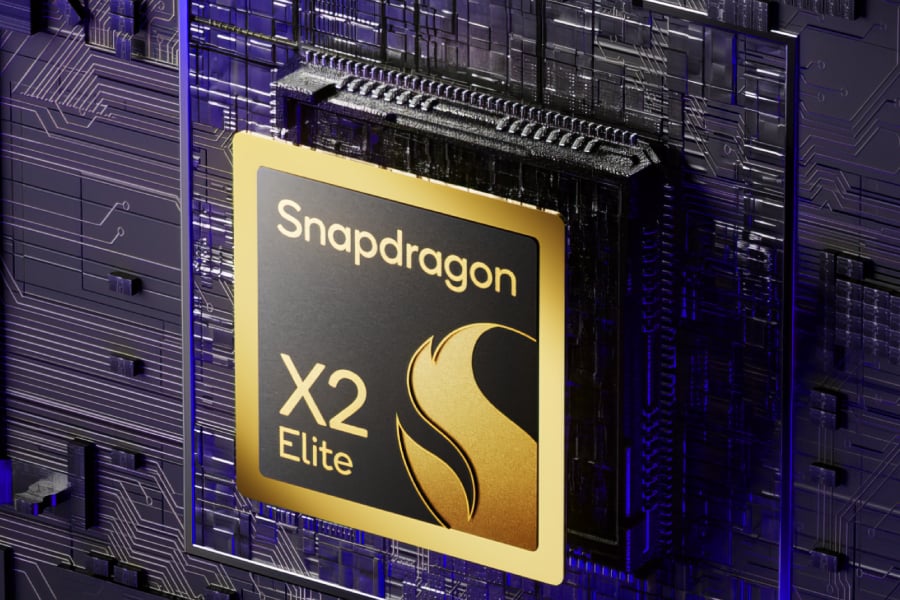
Snapdragon X2 Elite tops Apple M5 in three out of five benchmark tests

Snapdragon X2 Elite Extreme Geekbench

Snapdragon X2 Elite PCs are still a few months away from reaching users’ hands. We know that Qualcomm is betting big on it, and new benchmark results for the X2 Elite suggest the company is close to closing performance gaps with Apple.

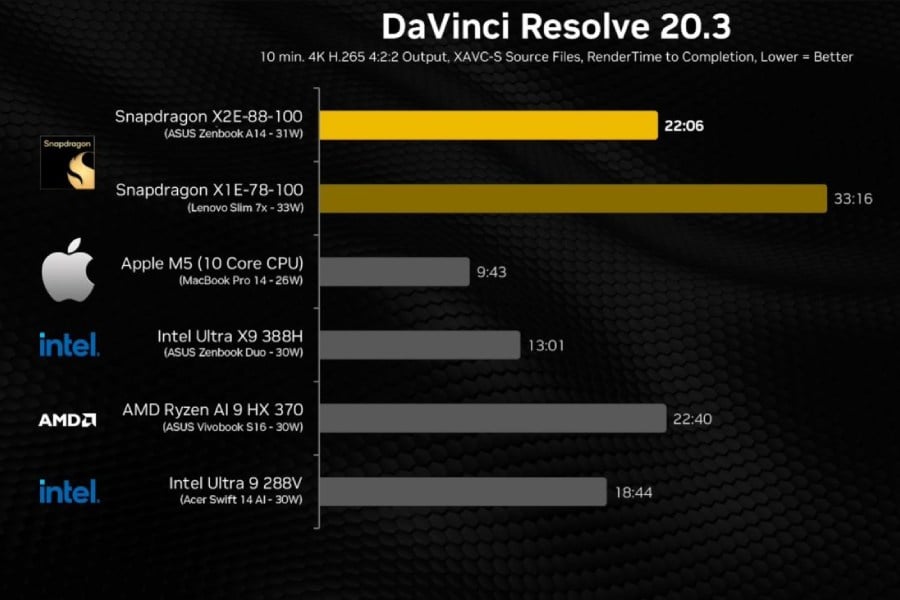
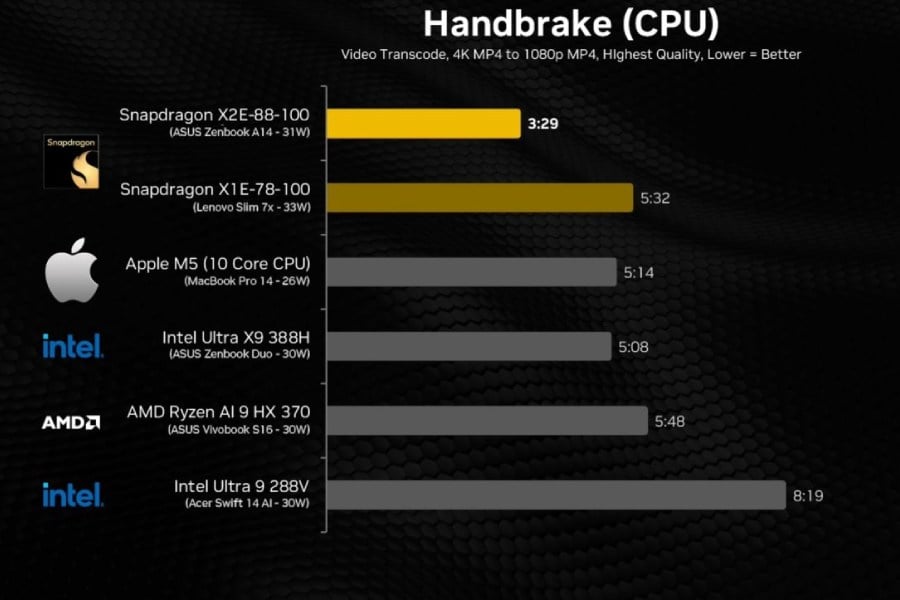
The numbers come from early testing of a pre-production Asus Zenbook shared by the YouTube channel Hardware Canucks. Asus allowed the outlet to run a set of CPU- and productivity-focused benchmarks on a machine powered by the Snapdragon X2 Elite.

Snapdragon X2 Elite Extreme Geekbench

To note, the laptop is running early firmware and drivers, and the silicon itself isn’t final. So, consider these results are just a snapshot of what the chip is capable of.

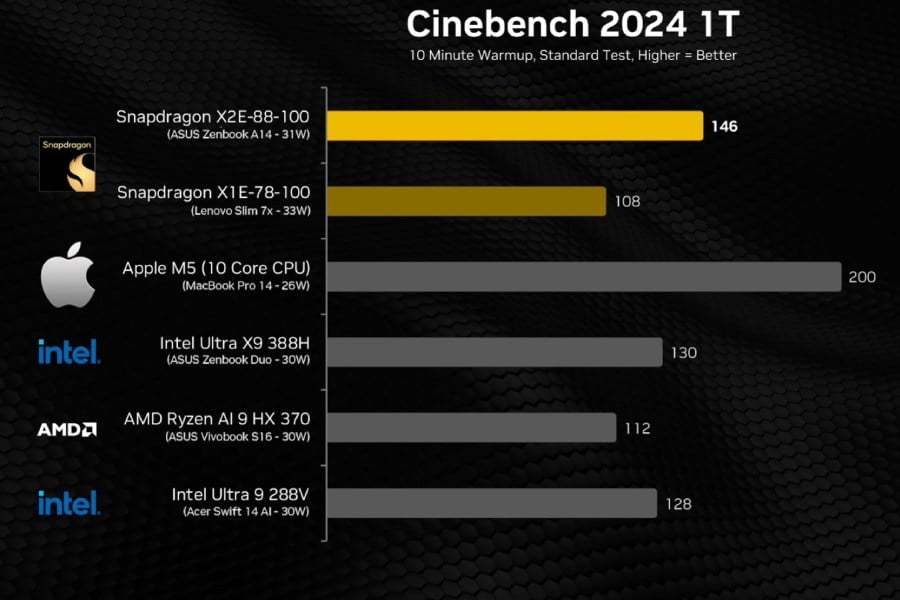
Even so, the results are interesting. Qualcomm’s newest chip was tested at 31W, which puts it just 5W higher than Apple’s M5, capped at 26W in these comparisons.

Apple is still leading in single-core performance 

Despite that relatively small power gap, the Snapdragon X2 Elite managed to outperform the M5 in three out of five benchmarks, while also pulling well ahead of the first-generation Snapdragon X Elite.

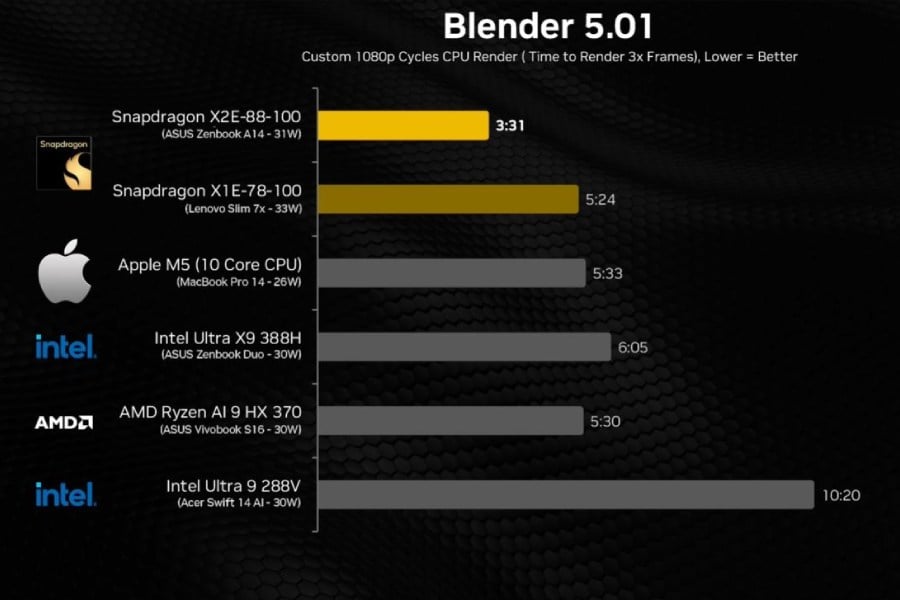
For instance, the X2 Elite performed extremely well in Blender and HandBrake, completing the tasks noticeably faster than Apple’s M5. However, Apple still leads in single-core performance.

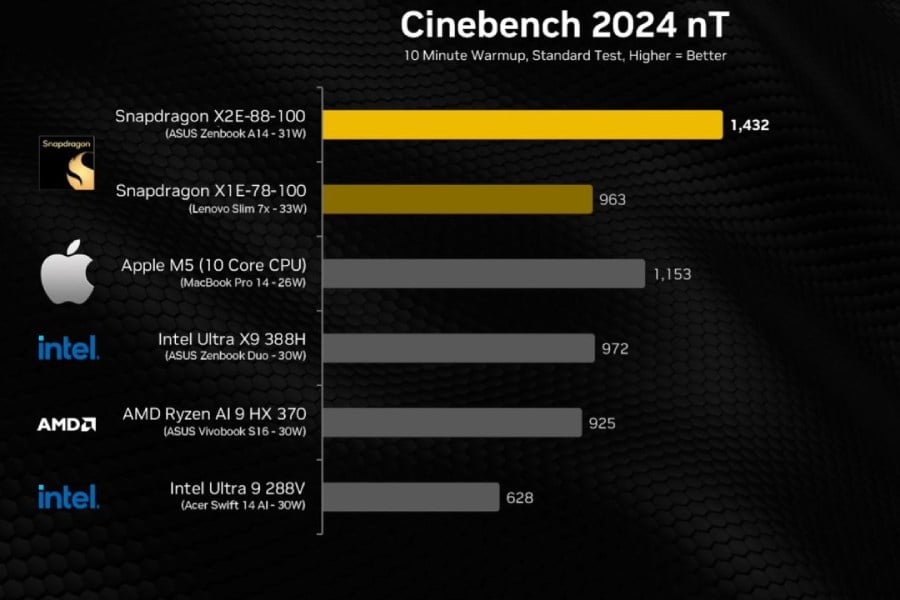
In Cinebench 2024’s single-core test, the M5 scored 200 points, while the X2 Elite topped out at 146. Apple’s chip is roughly 37 percent faster in this specific scenario, even though Qualcomm’s new silicon shows a sizable jump over the original X Elite.

In the multi-core test, however, the Snapdragon X2 Elite posted a score of 1,432, beating the M5’s 1,153 and leaving the older Snapdragon X Elite far behind.

Beyond benchmarks, there’s a big unanswered question around battery life. The YouTuber didn’t share any runtime test results, so we’re left with the official claim of 43 percent better efficiency than its predecessor. Until commercial laptops arrive with finalized software, it’s hard to say how these performance gains will translate to everyday use.

For more daily updates, please visit our News Section.

Stay ahead in tech! Join our Telegram community and sign up for our daily newsletter of top stories.

(Source)

The post Snapdragon X2 Elite tops Apple M5 in three out of five benchmark tests appeared first on Gizmochina.
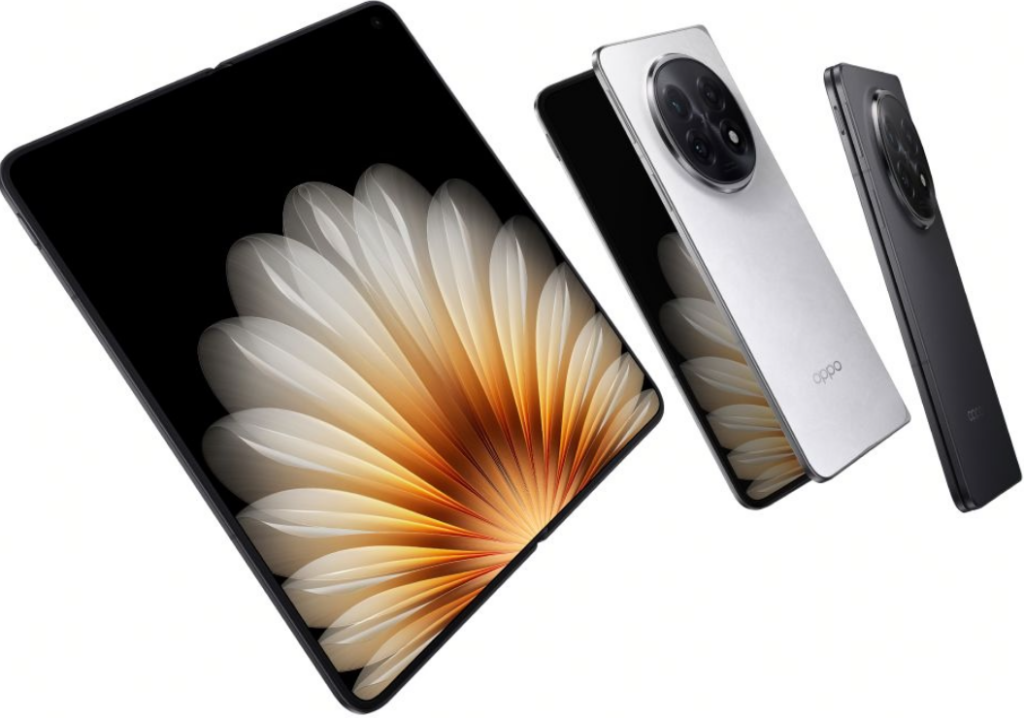
Oppo breifs Find N6 has made real progress on foldable creases

OPPO Find N5

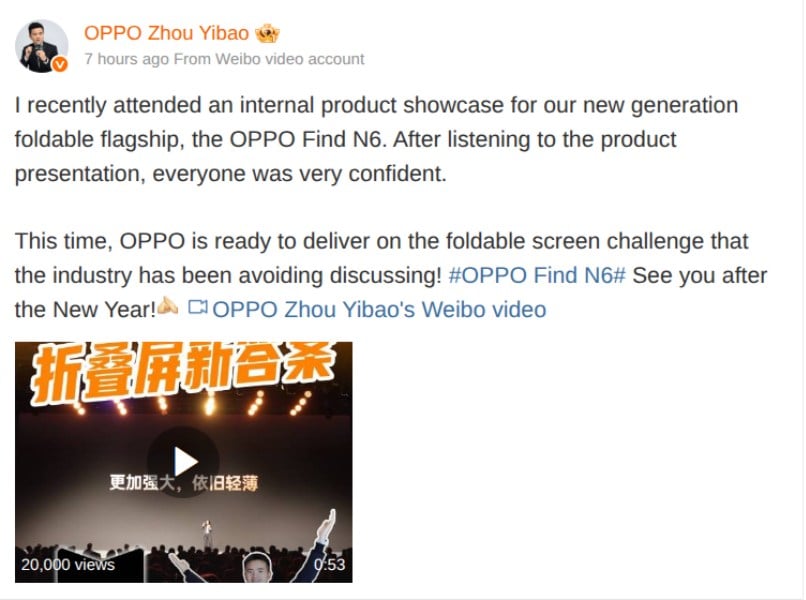
Oppo has officially started talking about the Find N6 foldable. In a recent Weibo post, Zhou Yibao, head of Oppo’s Find series, revealed that he attended an internal product event for the upcoming Oppo Find N6. 

According to Zhou, the atmosphere inside the company is very confident. After sitting through the full product introduction, he said employees felt reassured about where Oppo’s foldable strategy is heading next.

The Find N6 is expected to debut after the Lunar New Year, and Zhou made it clear that Oppo isn’t just chasing incremental upgrades this time. Instead, the company wants the Find N6 to be “more powerful, yet still lightweight and thin.” 

Oppo Find N6 could come with the shallowest crease in a foldable

During the internal showcase, Oppo also reportedly demonstrated its progress on reducing the foldable screen crease. Zhou used a blunt analogy to describe the issue, comparing the crease to the gap between two makeshift beds. 

It’s not just a visual flaw, he argued, but something that disrupts the entire sensory experience of using a foldable phone. This focus on the crease is notable because it’s one of the biggest compromises users still make when buying a foldable. 

OPPO Find N5
OPPO Find N5

According to Zhou, Oppo has poured significant resources into research and development to tackle this problem head-on. Feedback from employees who saw the device firsthand suggests the results are hard to miss.

According to leaks, the Find N6 could feature the shallowest crease in the foldable phone industry. If that turns out to be true, it would give Oppo a clear visual advantage over rivals. For a foldable, reflections and touch feel can make or break the experience.

For more daily updates, please visit our News Section.

Stay ahead in tech! Join our Telegram community and sign up for our daily newsletter of top stories.

(Source 1, 2, 3)

The post Oppo breifs Find N6 has made real progress on foldable creases appeared first on Gizmochina.
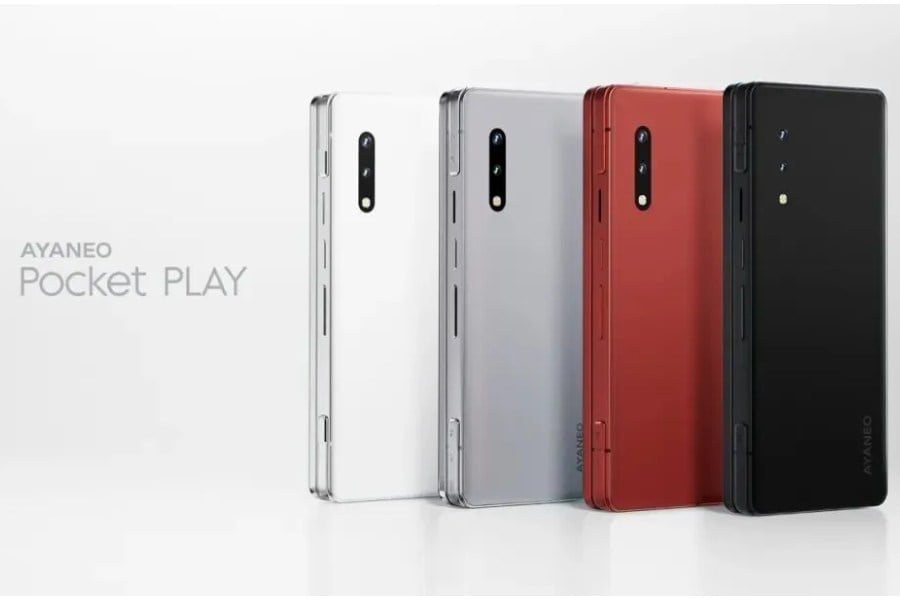
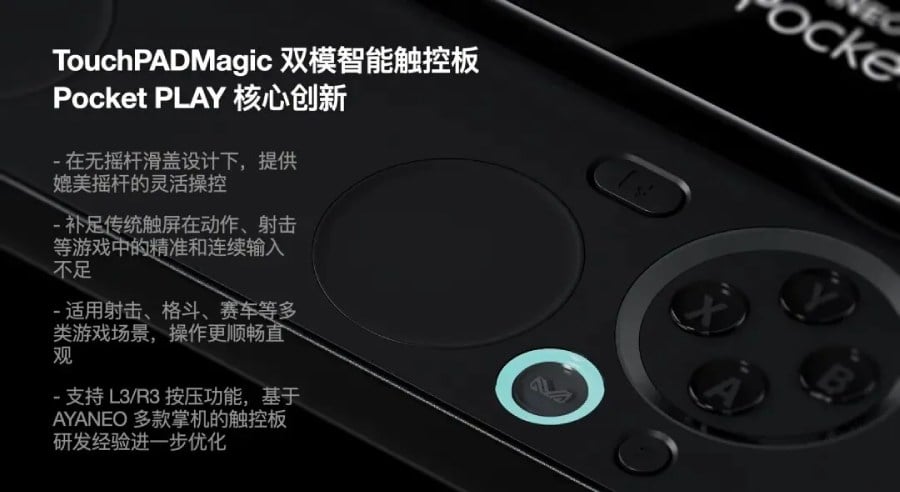
Ayaneo confirms Pocket Play features 165Hz refresh rate screen, X-axis motor, USB-C 3.2 Gen 2 port

Ayaneo-Pocket-Play-Launch-Specs

Ayaneo has been revealing bits and pieces about its handheld smartphone over the past few months. The company has now finally announced some concrete details of the Pocket Play, including its design, display, and other specifications.

As you might know, the Pocket Play doesn’t look like a typical slab phone. It uses a classic side-sliding design, and hidden inside is a full-function built-in game controller. Slide it open, and the device instantly shifts into game mode. 

Ayaneo Pocket Play Specifications

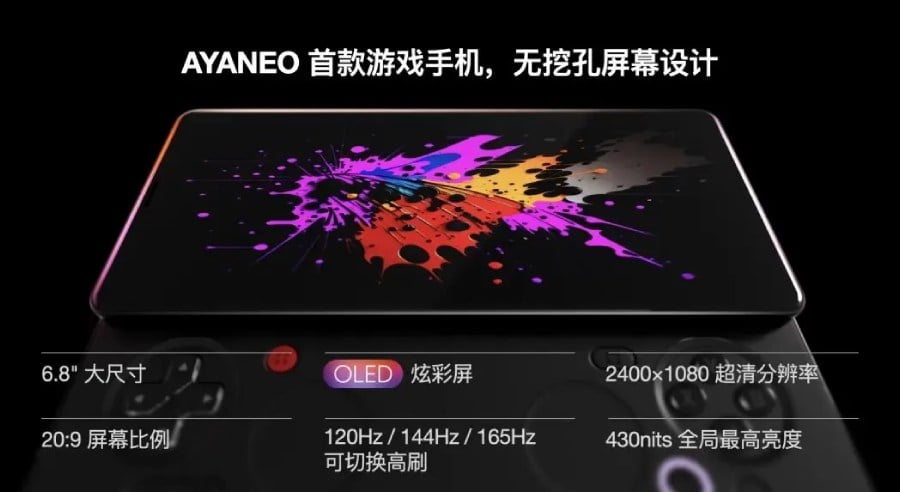
The front of the device is dominated by a 6.8-inch OLED display. It has no punch hole or notch to break immersion. It runs at a 2400 × 1080 resolution with 20:9 aspect ratio and supports 120Hz, 144Hz, and even 165Hz refresh rates. 

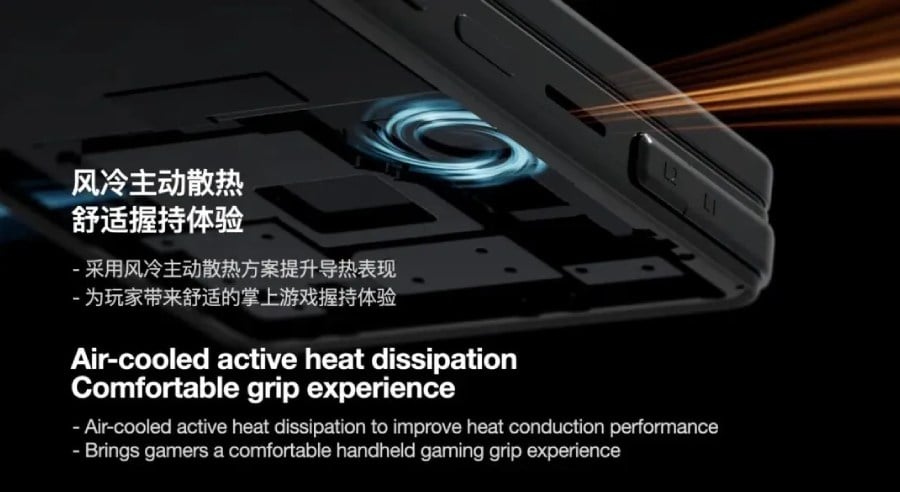
Inside, the Pocket Play is powered by MediaTek’s Dimensity 9300, built on TSMC’s third-generation 4nm process. The chip uses an octa-core CPU design paired with Arm’s Immortalis-G720 GPU. Ayaneo has also added an active air-cooling system to help keep performance stable during long gaming sessions.

Haptics and audio haven’t been ignored either. The phone includes an 0815 X-axis linear motor with four vibration modes for more nuanced feedback, along with stereo dual speakers aimed at making games and media feel more immersive.

Despite its gaming focus, the Pocket Play doesn’t give up everyday phone features. It supports full communication functions, includes a USB-C 3.2 Gen 2 port with DisplayPort 1.4 video output, a fingerprint reader built into the power button, and a combined SIM and microSD card slot.

Ayaneo hasn’t shared pricing or availability yet again. Know that the Pocket Play is a console-first handheld smartphone you will be able to buy soon. 

Don’t miss a thing! Join our Telegram community for instant updates and grab our free daily newsletter for the best tech stories!

For more daily updates, please visit our News Section.

The post Ayaneo confirms Pocket Play features 165Hz refresh rate screen, X-axis motor, USB-C 3.2 Gen 2 port appeared first on Gizmochina.
Xiaomi’s detachable magnetic lens for flagship phones could arrive as early as this year

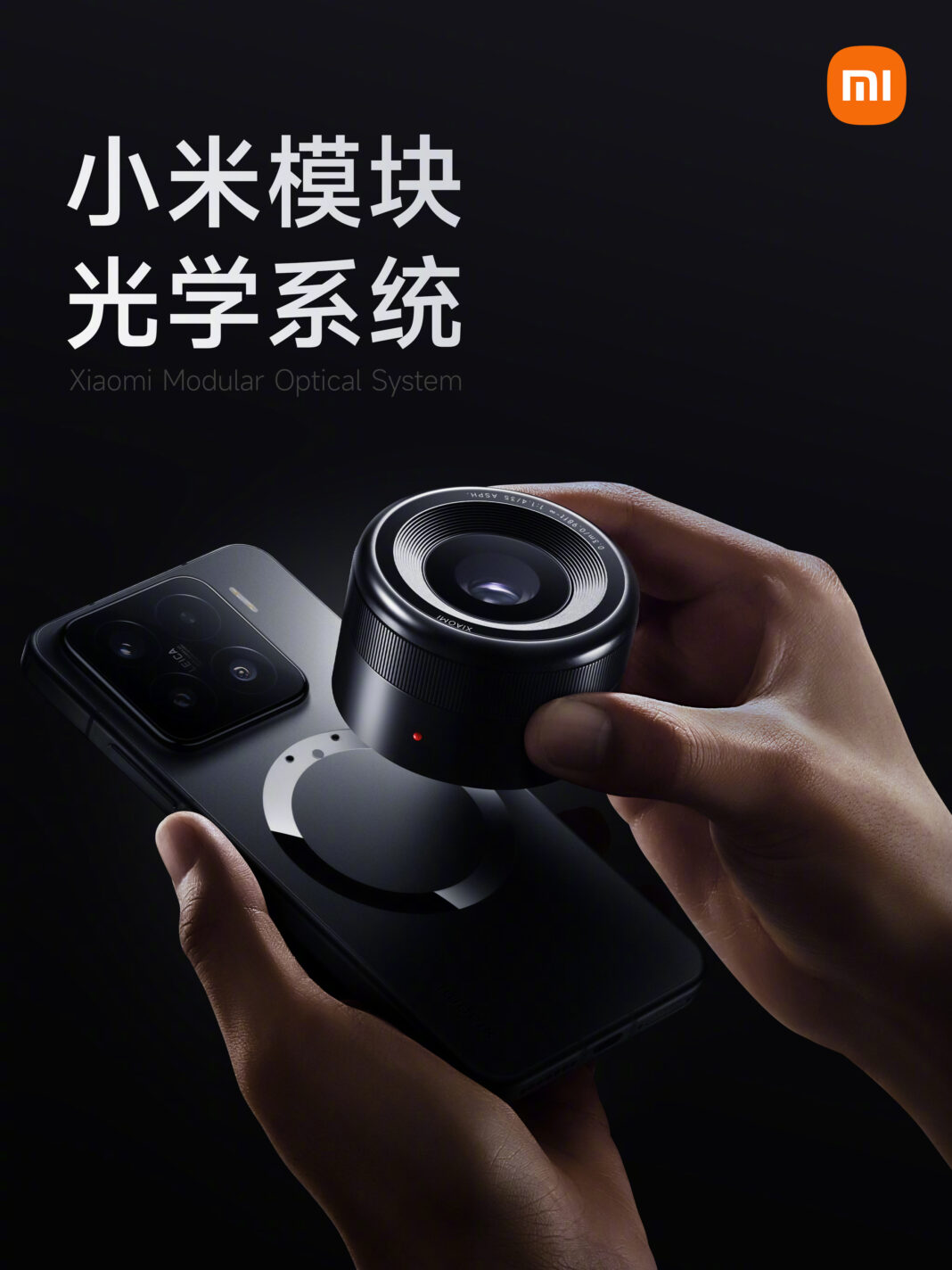
Xiaomi modular optical lens

Xiaomi’s experimental magnetic camera lens module might be inching closer to reality. According to recent rumors, the company has begun early manufacturing work on the detachable lens system that first appeared as a concept at MWC 2025.

The blogger Digital Chat Station recently claims that “the magnetic lens has started mass production and could be seen as early as this year (TBD).” While the post didn’t name a specific manufacturer, the most likely candidate is the modular optical system Xiaomi teased alongside the Xiaomi 15 series.

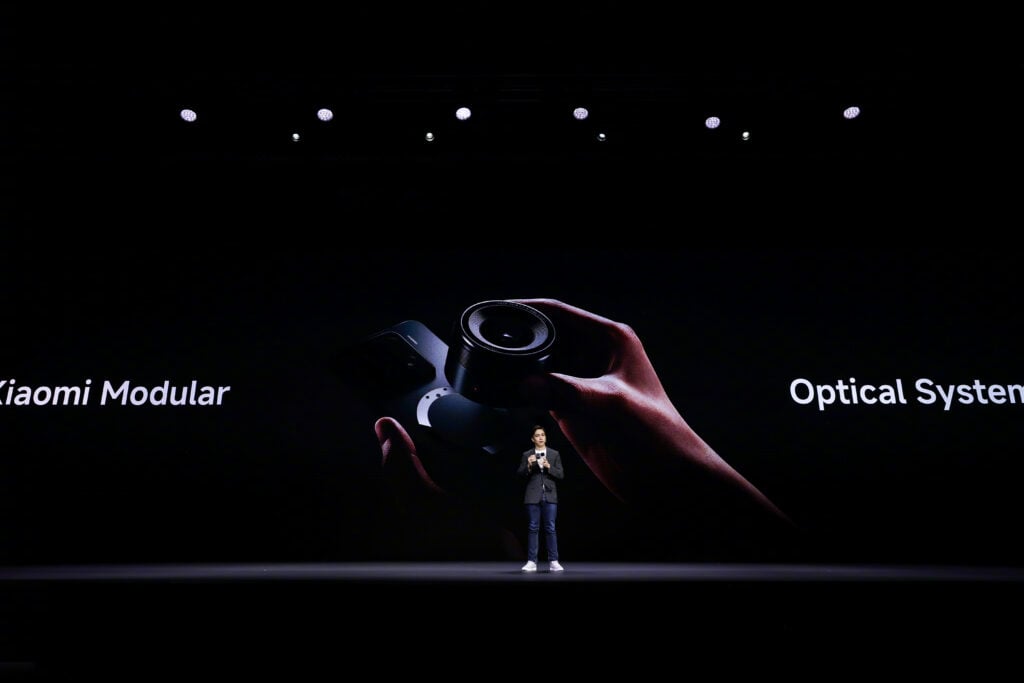
Lei Jun demonstrated the setup during Xiaomi 15 series launch event. At the time, it was described as an internal pre-research project, but it drew significant attention from both the smartphone and camera industries.

Xiaomi’s magnetic camera specifications

At its core, the system is a magnetically detachable lens built around a custom Micro Four Thirds (M4/3) sensor and an aspherical lens group. Xiaomi says it can deliver a full 100-megapixel resolution, an equivalent 35mm focal length, and a bright f/1.4 aperture.

That f/1.4 aperture should make it a low-light standout, while the classic 35mm field of view offers a perspective closer to the human eye, ideal for portraits and street photography, with more natural-looking background blur.

More importantly, Xiaomi says the modular optical system uses near-instant laser data transmission at speeds of up to 10Gbps, enabling lossless RAW transfer between the lens and the phone.

The system can also tap into Xiaomi’s AISP computational photography stack, powered by a large on-device model. The company claims this unlocks features like UltraRAW capture and up to 16 stops of dynamic range.

There’s no complicated wiring or pairing involved, and the lens doesn’t need a separate battery. It simply snaps onto the phone and is compact enough to carry around without much hassle.

If Xiaomi can deliver on its promises, the real-world experience could even outpace some traditional Micro Four Thirds setups, especially with AI-driven image processing in the mix.

For more daily updates, please visit our News Section.

Stay ahead in tech! Join our Telegram community and sign up for our daily newsletter of top stories! 💡

(Source)

The post Xiaomi’s detachable magnetic lens for flagship phones could arrive as early as this year appeared first on Gizmochina.
❌