Reading view

Asus launches ROG Kithara open-back gaming headset with 100mm planar drivers and HIFIMAN tuning

Asus is stepping a little outside its usual gaming headset formula with the new ROG Kithara. Instead of focusing on RGB lighting or wireless features, this one leans heavily into sound quality, and it does so with help from HIFIMAN, a brand better known in audiophile circles than esports arenas.

The Kithara is an open-back headset built around large 100mm planar magnetic drivers. That alone makes it unusual in the gaming space, where dynamic drivers are far more common. At $299, the Kithara is clearly aimed at enthusiasts rather than casual players.

The headset uses a fully open-back design, which helps create a wider, more natural soundstage. That can be useful for competitive games where spatial awareness matters, but it also means there’s no isolation.

Asus claims a frequency response of 8Hz to 55kHz, which is wider than human hearing, but the real takeaway is likely the tuning. It’s expected to offer a fairly balanced sound signature with good separation between bass, mids, and treble. In theory, that should make footsteps and directional cues easier to pick out without muddying everything with exaggerated low-end.

Unlike many gaming headsets, the Kithara includes a 4.4mm balanced connector, alongside standard 3.5mm and 6.3mm options, plus a USB-C adapter. The detachable boom mic uses MEMS technology and covers a typical 20Hz to 20kHz range.

The frame uses metal in key areas, including hinges and headband supports, and extra earpads are included in the box. At around 420 grams, it’s not lightweight. That’s often the trade-off with planar designs. Whether it feels comfortable over longer sessions will depend on head shape and tolerance for weight.

Reportedly, there’s no wireless mode, no active noise cancellation, and no flashy lighting. That may disappoint some ROG fans, but it seems intentional. Asus seems to be prioritizing sound over features this time.

A Different Direction for ROG

The ROG Kithara feels less like a traditional gaming headset and more like a crossover product. It’s positioned somewhere between an audiophile headphone and a competitive gaming too

Don’t miss a thing! Join our Telegram community for instant updates and grab our free daily newsletter for the best tech stories!

For more daily updates, please visit our News Section.

(Source)

The post Asus launches ROG Kithara open-back gaming headset with 100mm planar drivers and HIFIMAN tuning appeared first on Gizmochina.

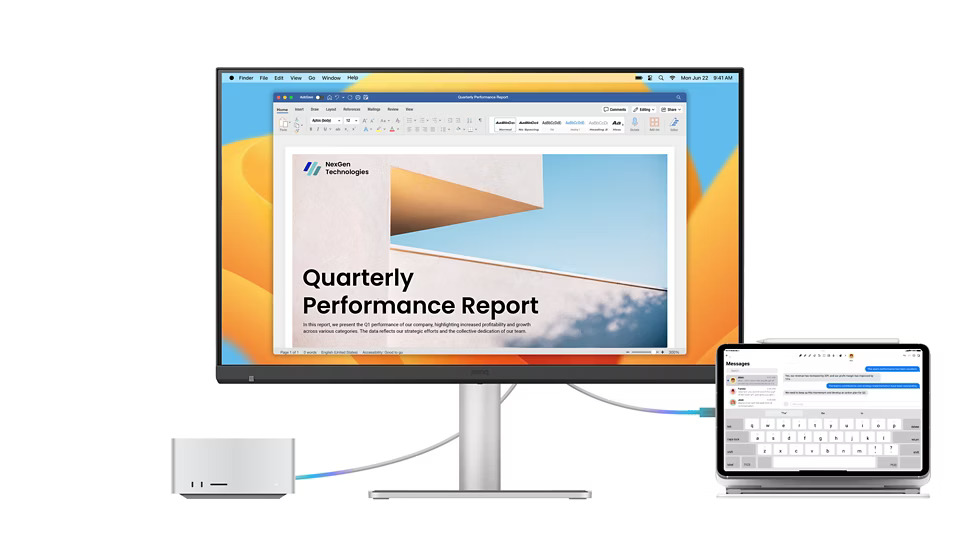
BenQ MA270S and MA320UG launch with “Nano Gloss” finish, up to 5K resolution, 120Hz, and Thunderbolt 4

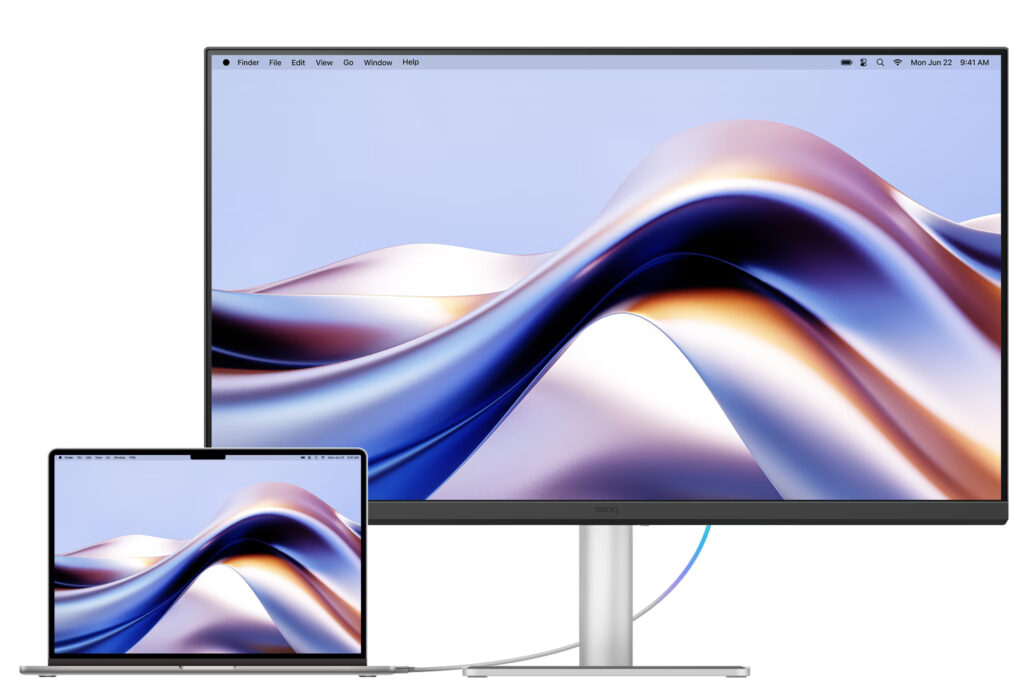
BenQ has added two new models to its Mac-focused monitor lineup, and this time the company is clearly aiming higher. The new MA270S and MA320UG lean into glossy panels while keeping the Thunderbolt-heavy connectivity and color tuning that BenQ has been building into its MA series. If you’ve been looking at the Apple Studio Display but hesitating on the price, these might be worth a closer look.

BenQ MA270S

The headline feature here is what BenQ calls Nano Gloss coating. Instead of going fully matte, which can mute contrast, or fully reflective, which can be distracting, the company is trying to strike a middle ground. The idea is to preserve the punch and clarity of a glossy screen while softening glare just enough for everyday use.

Both monitors use IPS panels and cover nearly the full P3 color space: 99% on the 27-inch model and 98% on the 32-inch.

The MA270S is probably the more direct competitor to Apple’s own display. It’s a 27-inch 5K panel (5120 x 2880), which works out to around 218 pixels per inch, essentially the same pixel density as Apple’s 27-inch Retina displays. That means proper macOS scaling, crisp text, and no awkward resolution compromises. For designers, photographers, or anyone who spends all day staring at small UI elements, that matters.

BenQ MA320UG

The MA320UG, on the other hand, takes a slightly different route. It’s larger at 32 inches and sticks to 4K resolution, but adds a 120Hz refresh rate. That won’t turn it into a gaming monitor, but animations and scrolling do feel noticeably smoother at higher refresh rates.

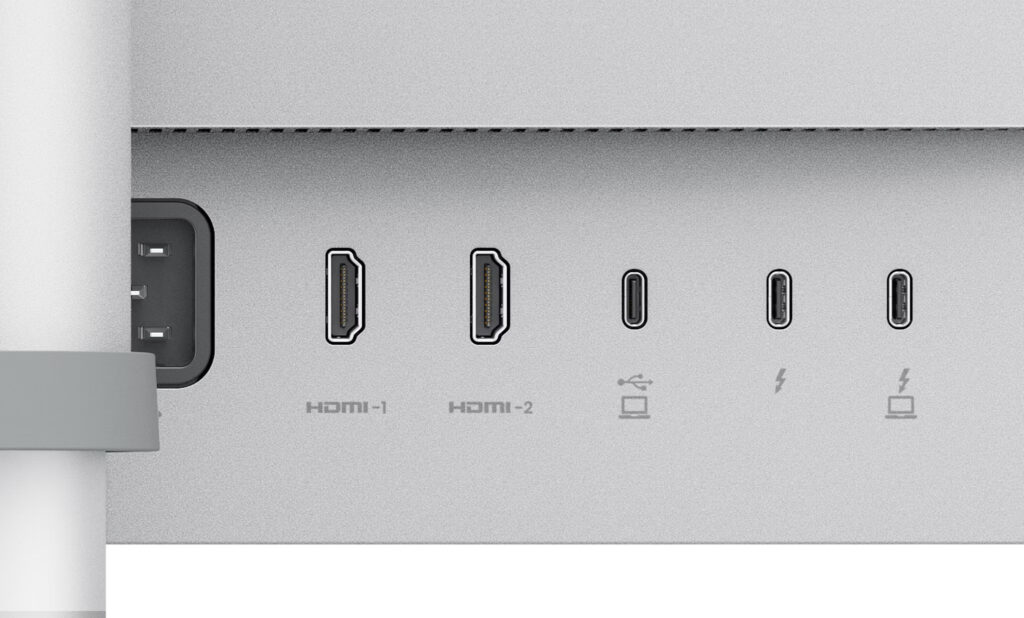
Both models include two Thunderbolt 4 ports, with up to 96W power delivery, plus additional USB-C, USB-A, and HDMI ports. There’s also KVM support for switching between systems. Small touches like brightness and volume control directly through macOS keyboards help the experience feel more native.

Ports on the MA320UG and MA270S

The stands are fully adjustable, with height, tilt, pivot, and swivel support. Nothing flashy there, just practical ergonomics.

Pricing hasn’t been confirmed yet, though the monitors are already listed on BenQ’s European website. If the company keeps them below Apple’s pricing, they could appeal to users who want sharpness or a glossy panel without committing to Apple’s ecosystem pricing.

Don’t miss a thing! Join our Telegram community for instant updates and grab our free daily newsletter for the best tech stories!

For more daily updates, please visit our News Section.

(Sources: 1, 2)

The post BenQ MA270S and MA320UG launch with “Nano Gloss” finish, up to 5K resolution, 120Hz, and Thunderbolt 4 appeared first on Gizmochina.

Baseus EnerGeek GT 21 combines charger & power bank; powers 3 devices at once

Baseus has introduced a new portable charger in China that tries to solve a common annoyance: carrying both a wall charger and a power bank.

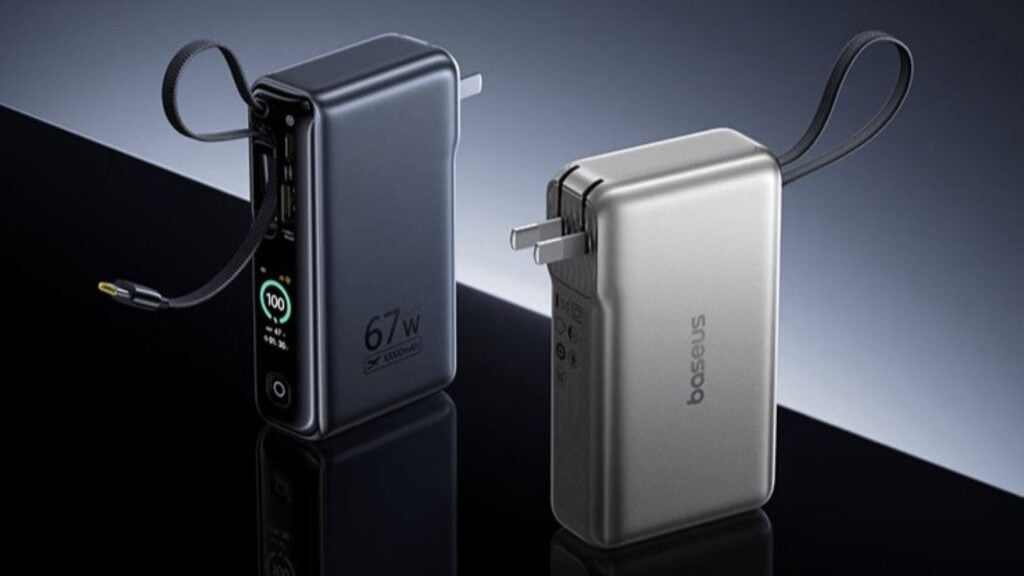
The new EnerGeek GT 21 combines the two into a single device. It’s a 67W charger with built-in AC prongs, but it also packs a 10,000mAh battery inside. So you can plug it directly into a wall like a normal adapter, or toss it in a bag and use it as a power bank later. It includes a retractable USB-C cable built into the body, which extends up to about 80cm.

In addition to the built-in cable, there’s a USB-C port and a USB-A port. You can charge up to three devices at once, though power is shared when everything is plugged in.

When used as a power bank with all three outputs active, the built-in cable can deliver up to 45W, while the remaining two ports share a combined 15W.

There’s also a small digital display on the front. It shows remaining battery percentage and output details.

On the battery side, the capacity is rated at 10,000mAh, which should provide at least one full charge for most modern smartphones in real-world conditions. It supports common fast-charging standards like PD, PPS, AFC, UFCS, and SCP, so compatibility shouldn’t be an issue either.

The foldable prongs make it easier to carry, and the size appears compact enough to replace both a wall brick and a power bank in a travel bag. For frequent travelers, that kind of consolidation can actually make a difference.

The EnerGeek GT 21 is currently priced at CNY 399 (around $58) in China. There’s no word yet on international availability, but Baseus typically brings its products to other markets, so a wider launch wouldn’t be surprising.

It’s not a revolutionary device, but it does feel practical. If the build quality holds up, it could be a solid option for people who want fewer cables and fewer chargers to think about

Don’t miss a thing! Join our Telegram community for instant updates and grab our free daily newsletter for the best tech stories!

For more daily updates, please visit our News Section.

(Source)

The post Baseus EnerGeek GT 21 combines charger & power bank; powers 3 devices at once appeared first on Gizmochina.

iPhone 18 Pro, Pro Max pricing tipped amid rising memory costs

Memory prices have been climbing for a while, largely because of strong demand from AI infrastructure and data centers. That usually spells trouble for smartphone pricing. But if recent analyst notes are accurate, Apple isn’t planning to pass those increases directly to buyers of its next Pro iPhones.

According to GF Securities analyst Jeff Pu, Apple intends to keep the starting prices of the iPhone 18 Pro and iPhone 18 Pro Max in line with their predecessors. That would mean $1,099 and $1,199 respectively for base 256GB configurations, assuming no last-minute changes.

The information comes from supply chain checks shared in a note reviewed by MacRumors. Pu suggests Apple has been negotiating aggressively with memory suppliers, including Samsung and SK Hynix, to soften the impact of rising DRAM and NAND prices. Similar negotiations are reportedly taking place around display panels and camera modules.

In short, Apple appears willing to absorb some of the pressure.

Apple has also shifted to quarterly memory contract negotiations instead of semi-annual agreements, giving it more flexibility, though that could also mean exposure to further price bumps later in 2026.

Even so, Kuo believes Apple’s strategy is clear: keep entry pricing stable for the Pro models, even if that trims margins slightly in the short term.

That wouldn’t be surprising. Apple’s Services business continues to grow steadily, bringing in over $30 billion in a single quarter recently. A stable hardware price helps protect market share, and any margin pressure on devices can be offset over time through ecosystem revenue.

The broader industry isn’t quite as insulated. IDC has warned that smartphone prices could rise by 6–8% this year due to component shortages. Meanwhile, Samsung executives have already hinted at cost pressures ahead of upcoming launches.

For now, the iPhone 18 Pro lineup is expected to arrive in September 2026. Nothing is official yet, and pricing decisions often come down to late-stage market conditions. But if these reports hold true, Apple seems prepared to lean on its scale.

Don’t miss a thing! Join our Telegram community for instant updates and grab our free daily newsletter for the best tech stories!

For more daily updates, please visit our News Section.

The post iPhone 18 Pro, Pro Max pricing tipped amid rising memory costs appeared first on Gizmochina.

Xiaomi 2K Monitor A27Qi 2026 launches with improved color accuracy, 1,300:1 contrast ratio, and 120Hz refresh rate,

Xiaomi has quietly introduced a refreshed version of its affordable 27-inch QHD monitor. The original A27Qi arrived in Europe last year and positioned itself as a solid budget option for work and general use. The 2026 version doesn’t reinvent the formula, but it refines it in areas that actually matter.

At its core, this is still a 27-inch IPS monitor with a 2560 × 1440 resolution. Brightness is rated at 300 nits, response time sits at 6ms (GtG), and viewing angles remain the typical 178 degrees you’d expect from an IPS panel.

Color coverage is also familiar: 100% sRGB and 95% DCI-P3, with 8-bit color depth. TÜV Rheinland-certified low blue light support and DC dimming are included for more comfortable long sessions. So far, very similar to the previous model.

What’s actually improved

The 2026 model now offers ΔE <1 factory calibration, which is a notable upgrade. For photo editing, design work, or content creation, tighter color accuracy out of the box is a welcome improvement.

Contrast has also been bumped to 1,300:1, which should translate to slightly deeper blacks and better separation in darker scenes. It’s not a dramatic shift, but it’s measurable.

The panel now runs at 120Hz, up from 100Hz on the previous version. It will make scrolling, UI animations, and light gaming feel smoother.

Pricing and availability

The monitor has launched in Thailand at THB 4,990, which converts to roughly $159 at current exchange rates. That’s about THB 100 more than the previous generation, an increase for the added features.

Xiaomi hasn’t confirmed broader availability yet, but given how the original model rolled out, it’s reasonable to expect a wider release later.

This isn’t a flashy upgrade. There’s no OLED panel or ultra-high brightness claims here. But for under $200, getting QHD resolution, 120Hz refresh rate, strong color coverage, and sub-ΔE 1 calibration is genuinely competitive.

Don’t miss a thing! Join our Telegram community for instant updates and grab our free daily newsletter for the best tech stories!

For more daily updates, please visit our News Section.

(Source: Xiaomi)

The post Xiaomi 2K Monitor A27Qi 2026 launches with improved color accuracy, 1,300:1 contrast ratio, and 120Hz refresh rate, appeared first on Gizmochina.

Oppo Find X10 series could pair 8,500mAh battery with 100W charging

Oppo Find X9 Pro

Battery capacity in smartphones keeps creeping upward, but this latest rumor suggests Oppo might be preparing something on an entirely different level.

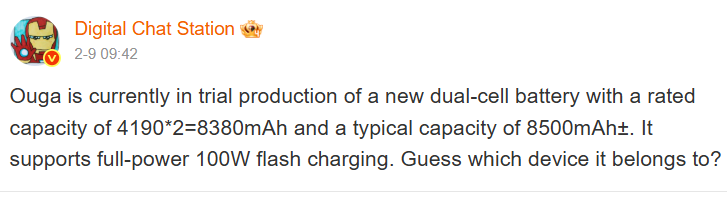
According to Chinese tipster Digital Chat Station, Oppo has entered trial production for a new dual-cell battery pack rated at around 8,500mAh typical capacity. If accurate, that would put it well above most current flagships.

Oppo Find X9 Pro
Oppo Find X9 Pro

The leak claims the setup consists of two 4,190mAh cells, giving a combined rated capacity of 8,380mAh and a typical advertised figure close to 8,500mAh. More interestingly, it’s said to support 100W fast charging without aggressive throttling. The tipster didn’t confirm the exact device, but the clues point toward the upcoming Find X10 series, likely a higher-end variant.

The current Oppo Find X9 lineup already pushed battery capacity past the 7,000mAh mark. Moving to 8,500mAh wouldn’t feel out of place.

Other rumors around the Find X10 series include dual 200MP cameras and a next-gen chipset, potentially something in the Dimensity 9600 class. So pairing that hardware with a massive battery would make sense.

There’s also a possibility this battery could land in a future OnePlus flagship instead. However, separate leaks suggest OnePlus may be experimenting with even larger capacities, possibly approaching 9,000mAh and 120W charging.

Chinese brands have been aggressively pushing battery innovation lately. Companies like Honor, Xiaomi, and Vivo are all experimenting with higher-capacity silicon-carbon cells.

The logic is straightforward: efficiency gains alone aren’t enough anymore. To meaningfully extend battery life, brands are increasing physical capacity while trying to maintain fast charging speeds and manageable thermals.

Nothing has been officially announced yet, and trial production doesn’t guarantee final implementation. The Find X10 series is expected sometime in late 2026, so there’s still room for adjustments.

But if this leak holds up, Oppo could be positioning its next flagship as another genuine battery champion. For anyone tired of charging every night, that alone makes this rumor worth watching.

Don’t miss a thing! Join our Telegram community for instant updates and grab our free daily newsletter for the best tech stories!

For more daily updates, please visit our News Section.

(Source: DCS on Weibo)

The post Oppo Find X10 series could pair 8,500mAh battery with 100W charging appeared first on Gizmochina.

❌