Login
Login
Winter Olympics 2026: Judges are stealing figure skating's show (and not in a good way)
MILAN — Every four years, we casual Americans become instant experts in a whole array of winter Olympic sports. We decide we know curling strategy, we debate skiers’ lines down precipitous slopes, we instantly judge snowboarders on moves that would leave us in traction. And man, do we have thoughts on figure skating judges.
Here’s the thing, though: While the Olympians and aficionados can safely ignore pretty much all of our two weeks’ worth of blather, the opinions on figure skating judging stick.
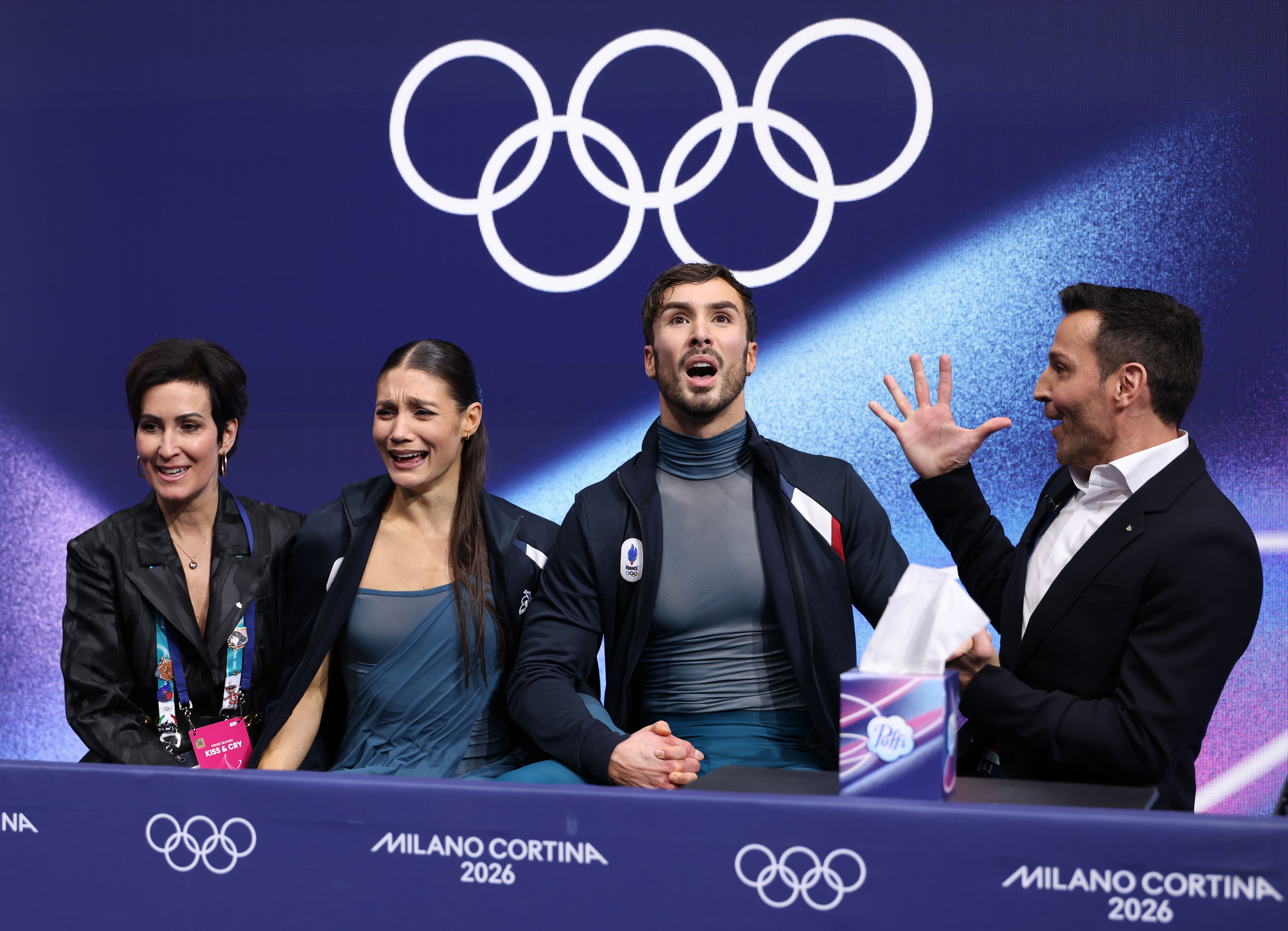
Americans Madison Chock and Evan Bates skated the routine of their lives on Wednesday night in figure skating’s ice dance event … only to watch in horror and heartbreak as judges controversially deemed the routine of France’s Laurence Fournier Beaudry and Guillaume Cizeron a more worthy one. Chock and Bates ended up with a silver medal — a titanic achievement, of course, but a “bittersweet” one, in Chock’s words, when you think you ought to have won gold.
On CBS News, Chock called for “transparent judging” to help viewers understand what’s happening. “I think it's also important for the skaters, that the judges be vetted and reviewed to make sure that they are also putting out their best performance,” she added, “because there's a lot on the line for the skaters when they're out there giving it their all, and we deserve to have the judges also giving us their all and for it to be a fair and even playing field.”
The figure skating establishment appears to be shrugging this off as just one of them skating deals, yet another in a long line of what-are-you-gonna-do judging frustrations. It’s not as egregious as the Salt Lake City skating scandal of 2002, when a French judge conceded that she’d been pressured to favor a Russian pairs duo that eventually won gold … right?
“It is normal for there to be a range of scores given by different judges in any panel and a number of mechanisms are used to mitigate these variations,” the International Skating Union said in a statement. “The ISU has full confidence in the scores given and remains completely committed to fairness.”
But the fire continues to smolder outside of figure skating’s traditional territory, and the casual fans who are getting a close look at this are asking, rightfully: Just what the heck is going on with the judging in figure skating?
Granted, Americans come into this with no small anti-judge bias. Judging as a means of determining a victor just doesn’t sit well with most American viewers, whether it’s gymnastics, figure skating or the Westminster Dog Show.
At the risk of going full Daytona 500, in America, we don’t care much for ties, and we don’t dig on judged sports. If a tie is like kissing your sister, a judgment loss is like kissing a dog, and not even your dog. We like to settle our sporting events on the court, on the field, on the ice … and we don’t like our sports left in the hands of a faceless cabal passing irrevocable judgment.
(Yes, we have instant replay. But we don’t decide the entire Super Bowl on it.)
The issue with judging, of course, is that it’s done by judges — flawed, biased, persuadable, even manipulable human judges. The ISU has attempted a range of fixes in the wake of the 2002 scandal, from eliminating the highly imperfect and inconsistent “6.0” system to making judges’ names public to increase transparency. The ISU Judging System drills down to an element-by-element level, eliminating outliers and averaging scores,
For the most part, the changes work, but if critics want ammunition, well … it’s there if you look at the numbers. Fournier Beaudry and Cizeron finished with 225.82 to Chock and Bates’ 224.39, a difference of 1.43 points. However, in the free dance program, the French duo totaled 135.64, while the Americans finished with 134.67. Again, extremely close, extremely debatable. But keep digging.
In scores documented by SkatingScores on Twitter, five of nine judges scored the USA duo higher than the French one in free dance. Eight of nine judges gave Chock and Bates at least 130.97 points. The lowest score for the Americans? A 129.74 … from the French judge. Hmmm.
Now, consider the French scores. All extremely strong, yes, but the strongest score? A stunning 137.45, again from the French judge. HMMMM.
Put another way: France’s Jézabel Dabois ranked the United States 7.71 points worse than the French duo. This isn’t quite an Indiana-over-Oregon-level differential, but it’s still pretty substantial. Add to that the fact that Spain actually ranked the United States’ routine third, behind France and bronze medal winner Canada, and you can see why many U.S. fans are saying certain judges are full of merde.
For another perspective, though, check out this data visualization by Sportico’s Lev Akabas:
The 2026 Winter Olympics figure skating ⛸️ free dance was scored by 9 judges
— Lev Akabas (@LevAkabas) February 12, 2026
The French judge gave Beaudry & Cizeron 🇫🇷 a 137.45 but only gave Chock & Bates 🇺🇸 a 129.74
All other judges were relatively close in their two scores 🤔
Judge No. 4 was just in a bad mood overall pic.twitter.com/1HkDHY5vuo
The immediate point is that the French judge absolutely jobbed the Americans, yes. This sure looks like sandbagging to bring down the Americans’ overall score and help the French team to the gold. Statistically speaking, even if many of the French judge’s individual element scores were thrown out — and they were — there’s still the potential for an artificial manipulation of the final score. And when you’re talking tenths and hundredths of a point, every score matters.
But the larger point of this graph is equally relevant — bias is rampant across national borders. So much so that SkatingScores’ “Bias-O-Meter” shows that virtually every judge showed bias toward the skaters from their home countries. (Aside: The fact that a “Bias-O-Meter” even exists, and is statistically valid, shows exactly how gnarled the judging situation in figure skating is.)
What’s the answer? Perhaps AI can handle this, assuming it doesn’t hallucinate a third skater on the ice. Perhaps a more rigid form of judge recusal — kicking out judges when a skater from their home nation is on the ice, for instance, would be a solid start. Or, hell, just go to a worldwide voting system on the phone. No way that could be manipulated, right?
The maddening aspect of all of this is that it’s welling up just as skating is enjoying a resurgence in the United States. Between the two-time gold medal-winning team, the Quad God and the Big Three, America’s Olympic figure skating looks as good as it has in decades. This isn’t the time for the sport to get mired in familiar, avoidable controversies.
Viewers deserve better. Chock and Bates deserved better. And figure skating as a sport deserves better. That’s not a judgment, that’s straight fact.