
 Login
Login
Travellers Stranded at Adolfo Suárez Madrid-Barajas and Barcelona International Airports in Spain as 397 Flights Are Delayed and 12 Cancelled, Disrupting Iberia, Vueling, Ryanair, and More Across Madrid, Barcelona, and Seville
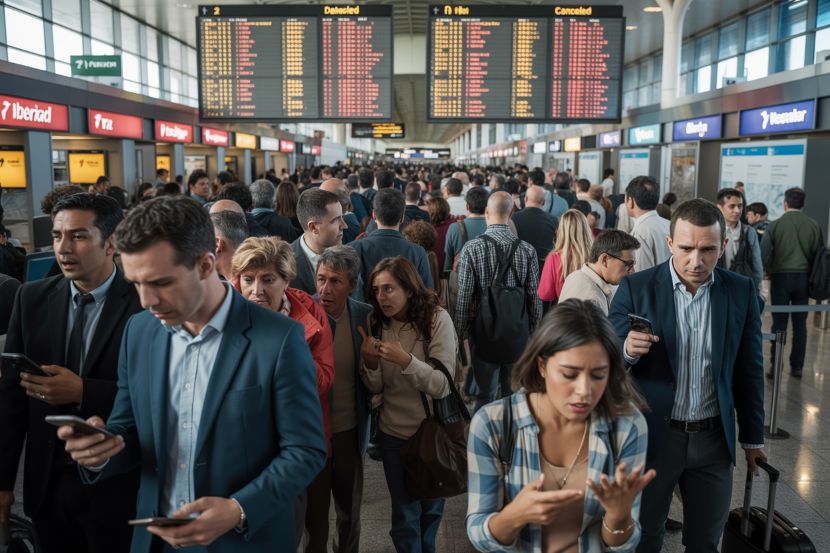
Adolfo Suárez Madrid-Barajas and Barcelona International airports are in the midst of significant disruptions, as 397 flight delays and 12 cancellations have thrown a wrench into travel plans for thousands of passengers. The delays, which have affected both domestic and international flights, have resulted in long lines at check‑in counters, crowded terminals, and frustrated travellers. With Spain being a key transit hub in Europe, these disruptions have had far-reaching effects on travellers heading to destinations such as London, Paris, New York, and Rome. As airport authorities and airlines scramble to resolve the situation, passengers are left to navigate the chaos that has come to define air travel in Spain over the past few days.
Unpacking the Delays and Cancellations at Madrid and Barcelona Airports
The following breakdown illustrates the extent of the delays and cancellations at Spain’s busiest airports:
- Adolfo Suárez Madrid-Barajas: 221 delays and 7 cancellations
- Barcelona International: 176 delays and 5 cancellations
These statistics underscore the strain on Spain’s aviation infrastructure, which has struggled to cope with both adverse weather conditions and increased travel demand during the peak travel season. The delays have caused ripple effects across multiple flight routes, with hundreds of passengers stuck at these major hubs, uncertain about their next steps.
Key Factors Contributing to the Chaos: Weather, Operational Bottlenecks, and Air Traffic Control
While the exact causes behind the disruption are still being analyzed, several contributing factors have come to light.
1. Weather Conditions: Unpredictable weather, including heavy rain and fog, has played a role in grounding flights and causing delays. Weather-related delays have become a recurring issue for airports around the world, and Spain is no exception. As a result, flights from Madrid and Barcelona to Europe and the Middle East were particularly impacted by low visibility, which slowed down both air traffic and ground operations.
2. Air Traffic Control Challenges: With Spain being a major international hub, air traffic control has faced heightened pressure, particularly during peak hours. Limited staffing and high air traffic congestion have led to slower runway clearances, which then cause delays for departing flights. These operational bottlenecks are compounded by the additional challenges of managing increased demand in post‑pandemic travel.
3. Increased Traffic Volume: Spain’s tourism industry has seen a significant recovery post‑pandemic, with more international tourists flocking to cities like Madrid and Barcelona. This surge in passengers has placed added pressure on airport facilities, resulting in bottlenecks that have delayed check‑ins, security checks, and baggage handling.
Passenger Experiences: Frustration, Uncertainty, and Waiting in Long Lines
Inside the terminals of Madrid and Barcelona, passengers have voiced their frustration over long waits and lack of clear communication. For many, the ordeal began with a delay that stretched from hours into an entire day. Many travellers reported being in a state of limbo, unsure whether their flights would be rescheduled or completely cancelled.
“I’ve been waiting here at Barcelona International for over five hours now,” said Laura, a passenger heading to Paris. “I’ve already missed my connecting flight, and there’s no one here who can give me a clear update. It’s stressful.”
Business travellers trying to catch flights for critical meetings have been particularly impacted. Several reported being forced to rearrange meetings, some even missing opportunities altogether due to the ongoing delays.
“The delay in Madrid has disrupted my entire trip,” said Pedro, a business executive. “I had a meeting in London, but it’s unlikely I’ll make it now. The lack of communication is what frustrates me the most.”
Families with young children have also faced challenges. Many passengers shared stories of children growing restless in crowded airport terminals, which have become increasingly overwhelmed as the delays stretched on. Several parents found themselves struggling to entertain their kids while waiting for any news of their flights.
Airlines and Airport Authorities Respond
In response to the disruptions, airlines such as Iberia, Vueling, and Ryanair have issued updates, offering passengers rebooking options and compensation where applicable. Both Madrid and Barcelona airports have increased staffing at customer service desks to handle the sheer volume of inquiries. While these efforts have helped to provide some relief, many passengers have still expressed dissatisfaction with the slow response times.
“While I appreciate that the staff is trying their best, it feels like I’m left with no options,” said one traveller at Madrid Airport. “I’ve been given a new flight, but it’s not until tomorrow. And no one has explained why the delays are happening.”
Airport authorities in Madrid and Barcelona have advised travellers to monitor the status of their flights closely via airline apps and the official airport websites. Additionally, they are recommending early arrivals to help mitigate further delays, especially given the ongoing high volume of passengers at security and check‑in.
The Impact on Spain’s Tourism and Economy
The delays at Adolfo Suárez Madrid-Barajas and Barcelona International have had a significant economic impact, particularly in Spain’s tourism sector. Both cities are among the most popular tourist destinations in Europe, and disruptions like these can damage the reputations of the country’s airports, especially as international tourists are left stranded or struggling with missed connections.
Tourism stakeholders have expressed concern that ongoing travel delays could deter visitors, particularly those booking long‑haul international flights to Spain. The travel disruptions have added another layer of uncertainty to an already fragile global travel landscape, where many tourists are looking for hassle‑free travel experiences.
Business leaders and tourism officials are hoping for swift action from the Spanish government and airlines to resolve the backlog and improve communication to ensure that Spain’s air travel network remains competitive and reliable.
What Should Passengers Do? Tips for Dealing with Delays
If you’re travelling through Madrid or Barcelona, there are a few things you can do to make the process easier:
- Check Flight Status: Regularly check for updates through your airline’s mobile app or the airport’s website.
- Know Your Rights: Be aware of your rights under EU regulations regarding compensation and assistance during delays or cancellations.
- Arrive Early: Even during delays, it’s important to give yourself plenty of time to adjust your travel plans and seek rebooking options.
- Stay Calm: It can be stressful, but staying calm and flexible will help you navigate the situation more effectively.
Conclusion: A Clouded Sky for Spain’s Air Travel
As Spain’s major airports continue to deal with 397 flight delays and 12 cancellations, travellers are facing frustration, uncertainty, and the emotional toll of disrupted travel plans. While efforts are underway to resolve the situation, the challenges posed by weather, air traffic congestion, and staffing shortages highlight the fragility of air travel during peak seasons.
Despite these setbacks, passengers are urged to remain patient and take advantage of the tools available to them, from real‑time flight tracking to customer service resources at the airports. As the aviation industry continues to recover, the experiences of passengers during these disruptions will play a significant role in shaping the future of Spain’s air travel network.
Referred Data : Flightaware
The post Travellers Stranded at Adolfo Suárez Madrid-Barajas and Barcelona International Airports in Spain as 397 Flights Are Delayed and 12 Cancelled, Disrupting Iberia, Vueling, Ryanair, and More Across Madrid, Barcelona, and Seville appeared first on Travel And Tour World.