Login
Login
Winter Olympics 2026: The skaters whose own country didn’t want to send them to Milan
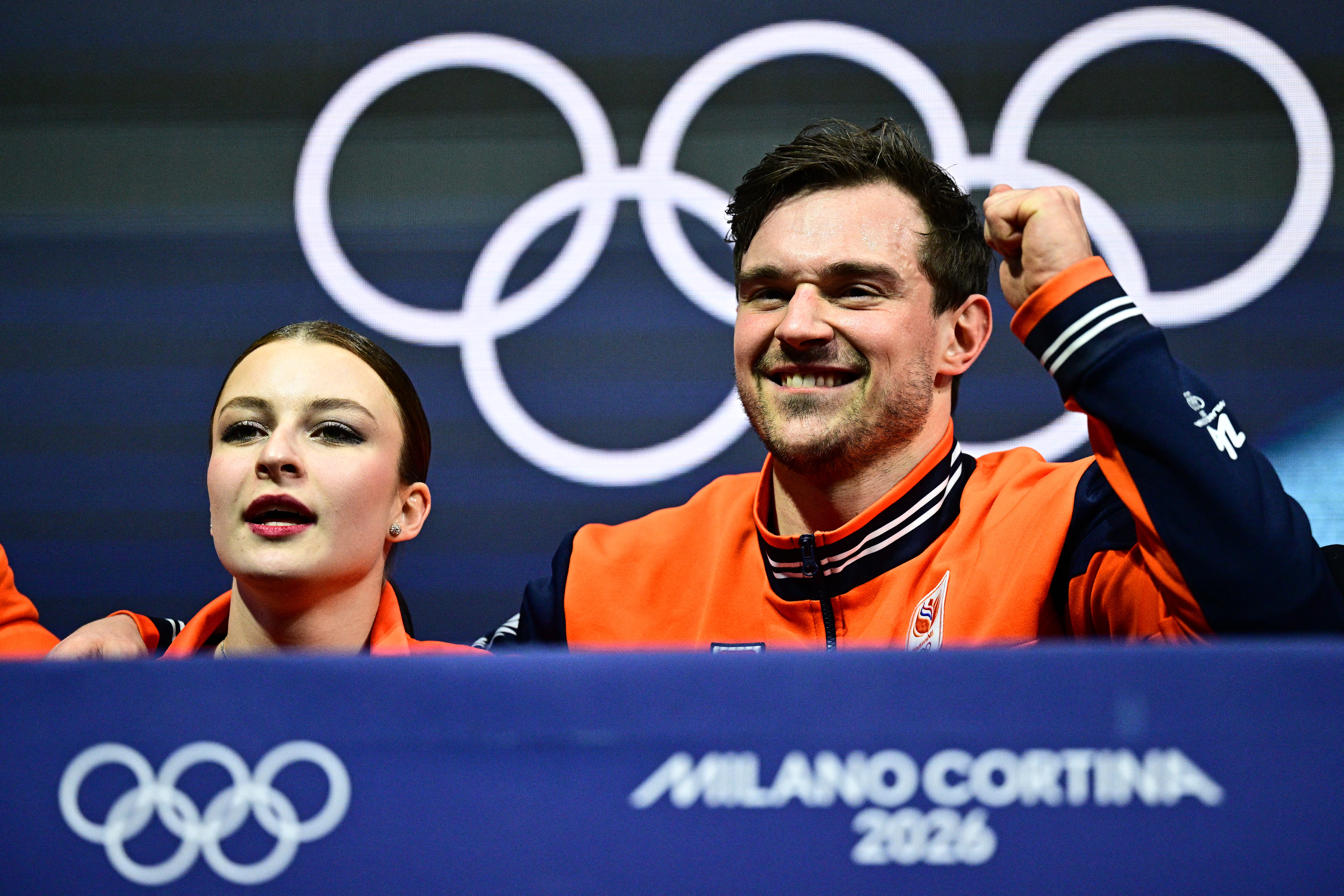
MILAN — There will be other pairs in Milan who score higher than the Netherlands’ Daria Danilova and Michel Tsiba, other pairs who pull off more complex routines, other pairs who will take home medals. But it’s pretty safe to say there is no other pair having quite as much fun in Milan as the Dutch-by-way-of-Russia duo.
That’s what happens when you make it to the Olympics even after your own country says you can’t go.
Danilova and Tsiba were among the first pairs to skate in the short-form program on Sunday night. By the end of the evening, the German duo of Minerva FabienneHase and Nikita Volodin posted the short program’s highest score. Two American duos finished the night in the top 10: Ellie Kam and Danny O’Shea in 7th, and Emily Chan and Spencer Howe in 9th. But no one had a better time on the ice than the Dutch duo, the only figure skaters from the Netherlands at the Olympics, and the first pair from their home country ever to reach the Games.
Danilova, who is Russian, began skating with Tsiba, who is Dutch, in 2018. They found immediate success, medaling in four straight Dutch championships from 2020 to 2023 — two gold, two silver. They enjoyed a series of strong worldwide finishes leading up to the 2025 World Championships in Boston, where they finished 15th, good enough to qualify, in the eyes of the International Skating Union, for the Milan Olympics.
And then everything went sideways for the pair.
In the eyes of the Dutch Olympic committee, just “good enough” to make the Olympics isn’t good enough. If you’re going to go to the Olympics wearing Dutch orange, you’d better be good enough to win, not just show up. That’s the directive of the Nederlands Olympisch Comité*Nederlandse Sport Federatie, abbreviated NOC*NSF, and it’s codified in their performance requirements for athletes seeking to attend the Olympics as members of the Netherlands.
“The ambition of NOC*NSF and the sports federations is to be among the top ten elite sports nations in the world,” the federation says. This is achieved by winning as many medals as possible in as many different sports as possible at the Olympic Games.”
In order to hit those lofty marks, NOC*NSF says, “an elite athlete must have demonstrated the potential to finish in the top eight at the Olympic Games.” In practice, that means even if an athlete qualifies for the Olympics based on an international governing body’s standards, NOC*NSF can block the athlete from attending if the athlete hasn’t met Dutch standards.
They’re serious. In 2024, NOC*NSF forbade three Dutch golfers — Joost Luiten, Darius Van Driel and Dewi Weber — from participating in the Paris Olympics, the second straight Olympics that the Netherlands had blocked certain golfers from playing. The International Golf Federation attempted to intervene on the players’ behalf, to no avail.
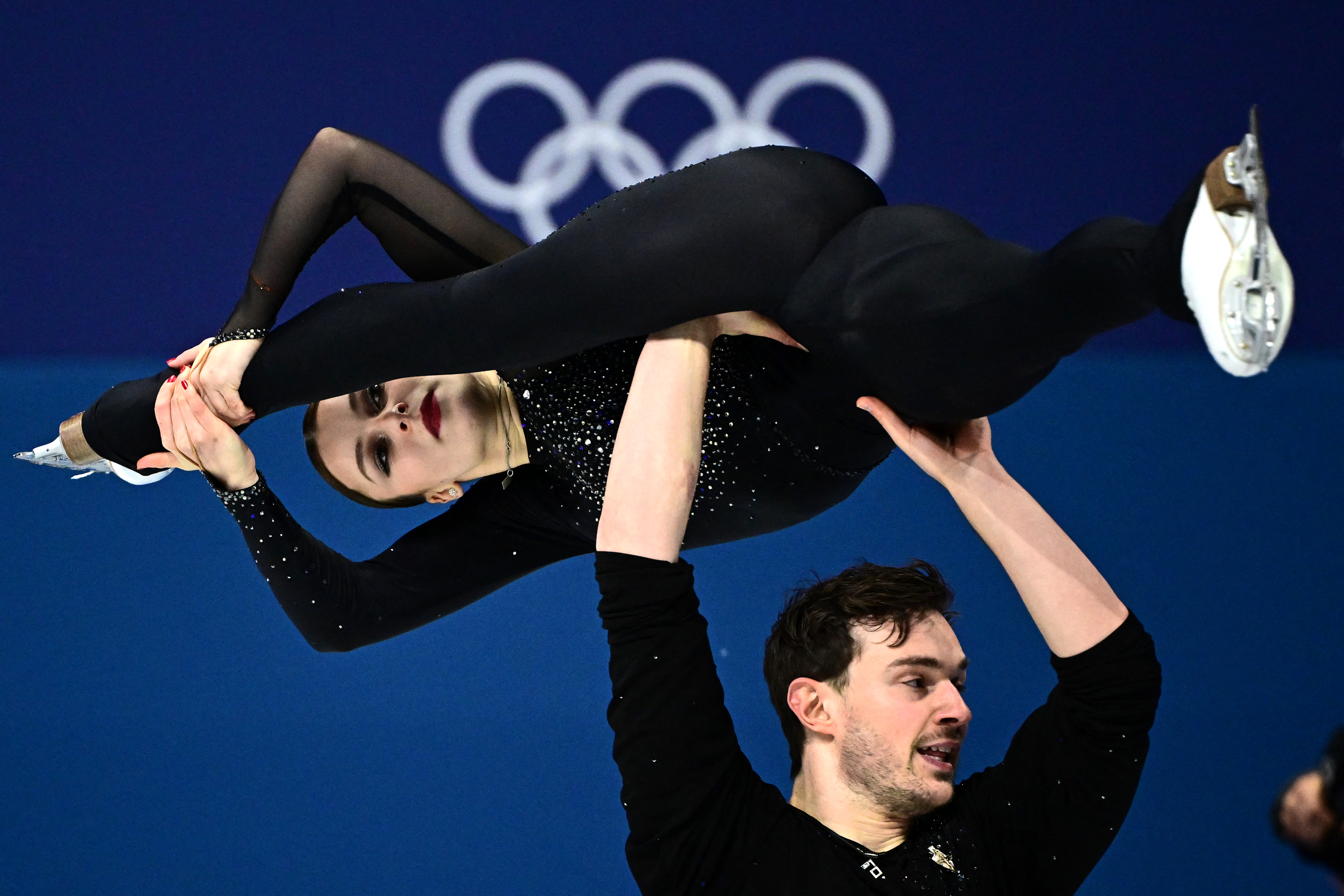
In Danilova and Tsiba’s case, NOC*NSF determined that a 14th-place finish in the worlds would satisfy their expectations — one place higher than they’d finished. The federation gave the pair two more opportunities over the course of 2025 to reach the designated Dutch points benchmark, but they couldn’t do so.
The Royal Dutch Skating Federation (KNSB) appealed to NOC*NSF, arguing that the pair’s 14th-place world ranking, combined with their long string of demonstrated excellence, was enough to warrant an Olympic berth. A Change.org petition organized by fans sought the same reconsideration.
Tsiba and Danilova, meanwhile, rode the “emotional rollercoaster,” in Tsiba’s words, between exultation and heartbreak.
“I remember when I was just driving, and I'm happy trying to train, and I think all of a sudden, ‘Olympic Games,’ and I just start crying out of the blue,” Tsiba said. “I'm cooking, I'm with my music on, listening to, I don't know, Eminem or something. And then I think about the Olympic Games, and I'm starting to cry because it's like a knife in your heart, you know?”
Finally, three days before Christmas, they received the greatest present of all: approval to attend the Games after all.
“It's rare that a request to use discretionary powers is approved,” André Cats, director of elite sports at NOC*NSF, said in December. “There have to be truly exceptional reasons. After thoroughly examining the situation, we're convinced this is the case, and that's why we've made this exceptional decision.”
With their Olympic future assured, and their pairs skate short program date set for more than a week after the Opening Ceremony, Danilova and Tsiba enjoyed every bit of their Olympic experience. They attended the Opening Ceremony and stayed so long that they were the last Dutch athletes still in the stadium. They visited the pin-trading hub in Milan. They reveled in the glory of the Olympic village.
“One of the best skaters in the Netherlands, she guided us a little bit and she was like, ‘OK, we're making a plan for you guys,’” Tsiba said. “Because you skate quite late at an event, you come here, first two days you're a tourist … She said that when she went to the Games [for the first time], she was so much in her bubble that afterwards she was like, ‘I didn't enjoy anything.’”
And once they finally reached the ice, how did Danilova and Tsiba perform, given the chance? Well … they had fun, at least. They cycled through a graceful routine set to Raury’s “Take Back the Power,” and when it was done, they embraced and kissed at center ice. They finished 17th out of 19 pairs, missing out on qualifying for the free skate by 0.58 points. But they smiled throughout, and they spent a good long time after their skate laughing with several assembled media members.
“All the things that happened within the season are behind us,” Tsiba said, “and we got to have a fresh new start. So that's amazing, yeah.”
They may have lost at the Olympics, but they made sure they didn’t lose the party.