At first glance, the list looked familiar, with the Galaxy Z Fold 8 and Galaxy Z Flip 8 showing up as expected. But tucked between those familiar names was Samsung’s long-rumored wide-screen foldable.
Now, thanks to the same One UI 9 test build, we have our first real hint at what this mysterious device might look like.
This is Samsung’s wide-screen foldable!
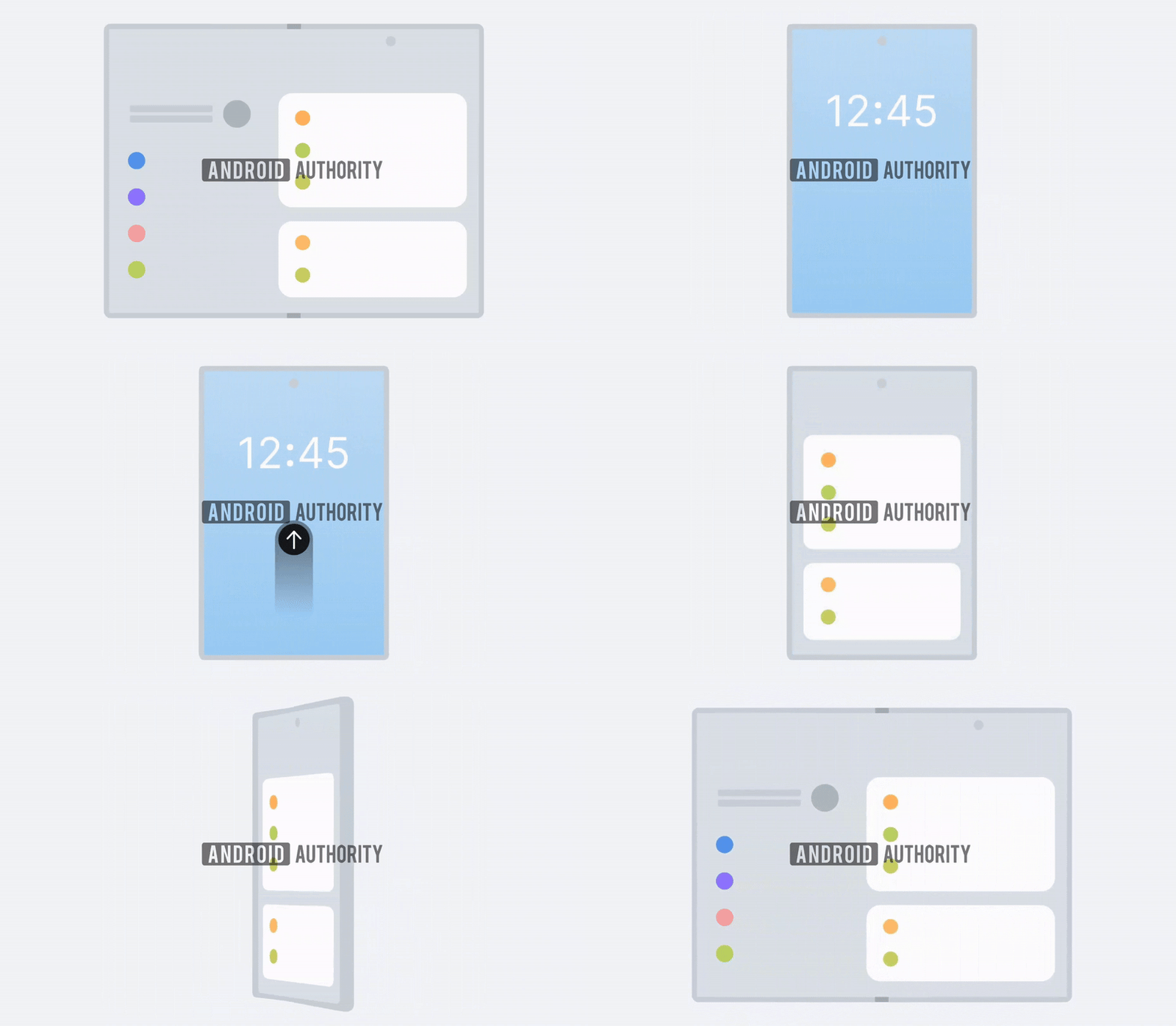
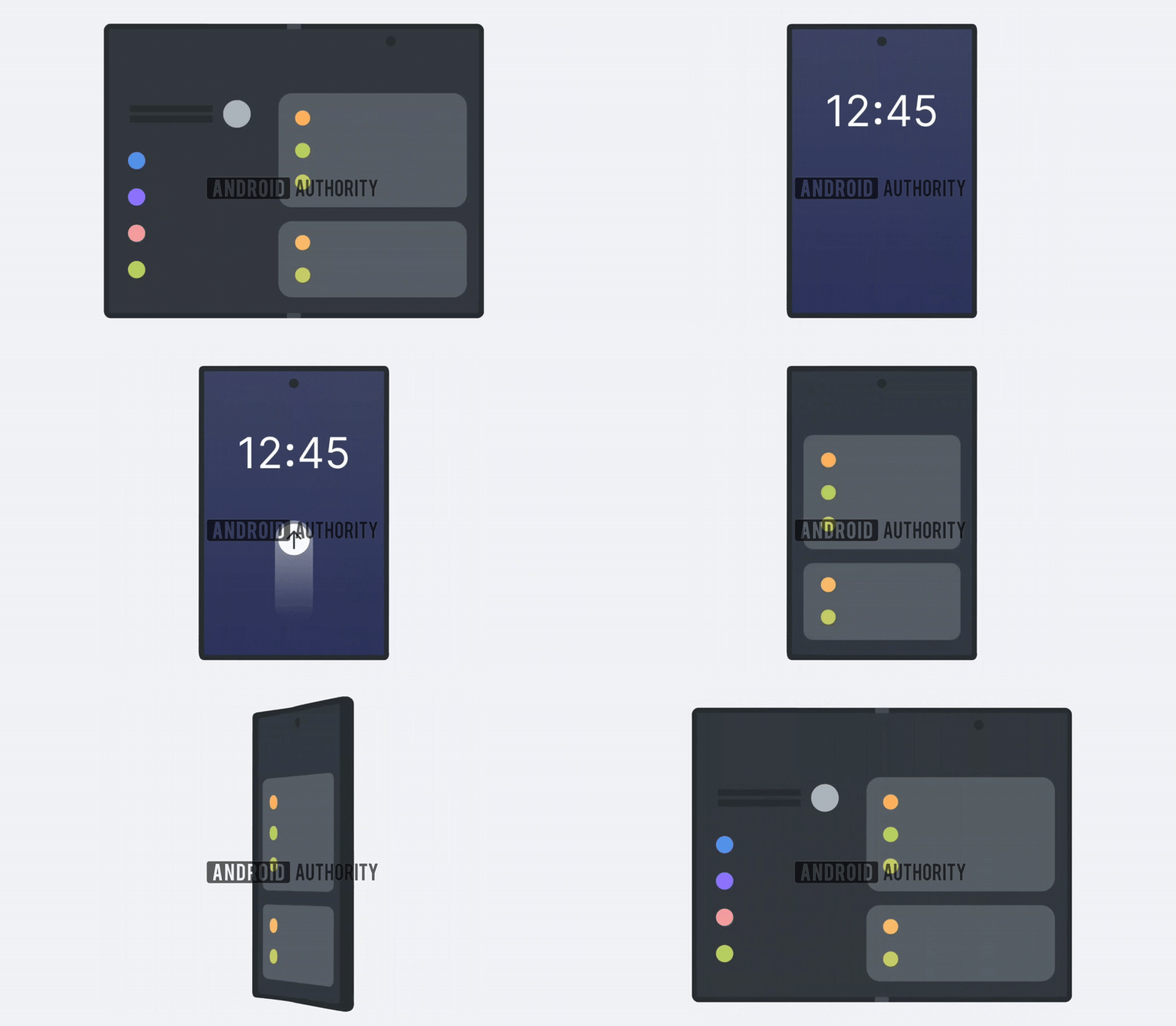
Animations found in the software (spotted by Android Authority) show a new foldable device opening and closing. The animations themselves are basic and don’t reveal many hardware details, but their existence is notable. It’s the clearest sign yet that Samsung is actively developing a wider Galaxy Z Fold-style device.
From what we can see, this foldable appears noticeably wider than Samsung’s current book-style foldables. It’s not a detailed look; there’s no visible camera module, no ports, and no obvious design flourishes. Still, even these simple outlines are enough to set expectations.
This looks like a foldable designed around a broader inner display to improve multitasking and media consumption without relying on extreme aspect ratios.
Right now, Huawei is the only major smartphone brand openly experimenting with this wider foldable form factor. The company launched the Pura X last year, clearly showing its interest in wider, tablet-like foldables.
As of now, there’s already chatter about the Pura X2, which is rumored to feature a larger inner display, possibly stretching close to seven inches.
If Samsung follows through, this could set up another familiar rivalry, this time around the wide-screen foldables. That said, it’s worth keeping expectations in check.
A device appearing in a software build doesn’t guarantee it will ever see a commercial release. Samsung has tested plenty of ideas over the years that never made it to store shelves.
For more daily updates, please visit our News Section.
We already know that Honor is getting ready to unveil the Magic V6 foldable. Now, just ahead of the official reveal, the device has made a brief appearance in a bunch of official-looking photos.
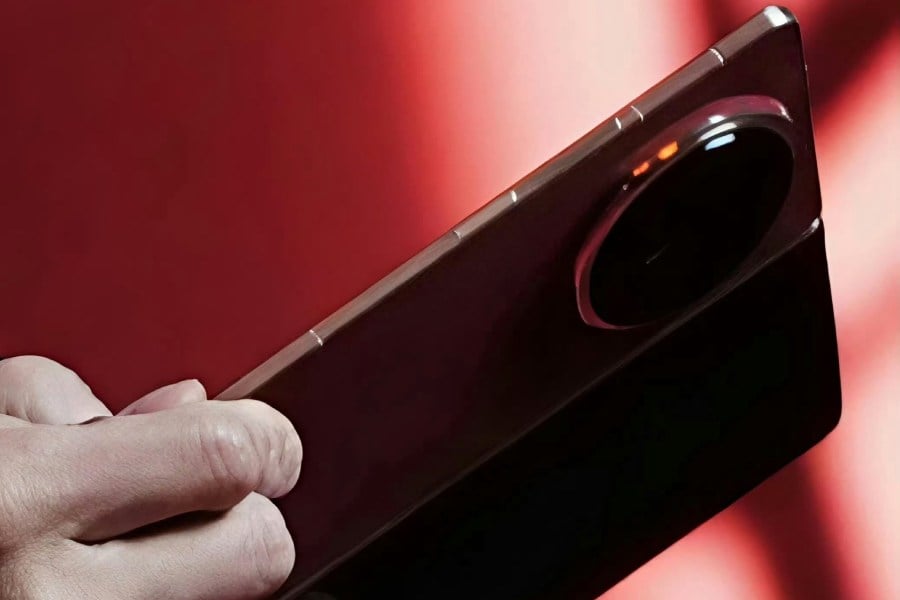
Several users on the Chinese social media platform Weibo shared photos of Hong Kong actor and singer Nicholas Tse on what looked like a commercial shoot, holding an ultra-slim foldable phone. It doesn’t take much guesswork to assume it’s the upcoming Honor Magic V6.
The photos confirm that Magic V6 retains the company’s familiar octagonal rear camera module. The frame shows visible antenna lines, which point to a metal build. But the more interesting detail this time might be the finish.
A previous leak from Weibo tipster WhyLab claimed the device would arrive in a red vegan leather finish. The phone in these new images seems to match that description, and this will likely be the prime color of the foldable.
Honor Magic V6 Specifications
The Magic V6 has passed China’s 3C certification with a typical battery capacity of around 7,150mAh. As far as we know, it could be the largest battery ever fitted into a foldable flagship. Honor is also said to be pairing that with 120W fast charging.
The rest of the rumored specs include a Snapdragon 8 Elite Gen 5 chip, a 200-megapixel main camera with a large sensor, and a periscope telephoto lens. Other expected features include wireless charging, full waterproofing, and support for Beidou satellite communication.
And because this is an Honor foldable, it’s reasonable to assume the company will continue to push on thinness and weight. That’s been the pitch for the past few generations.
For context, last year’s Honor Magic V5 already pushed the limits of thinness and weight, measuring just 8.8mm when folded and weighing 219 grams, while packing a 6,100mAh battery.
We won’t have to wait much longer to see how much of this holds up. The Honor Magic V6 is expected to be unveiled at Mobile World Congress, which kicks off on March 5th.
For more daily updates, please visit our News Section.
Back in October, a report claimed that Xiaomi had no plans to launch the Xiaomi Civi 6, casting doubt over the future of the series. Since then, information has been scarce. But now, new leaks coming out of China suggest the device is very much alive.
Two well-known Chinese tipsters — Smart Pikachu and Digital Chat Station — shared fresh posts on Weibo that points to the Xiaomi Civi 6. Digital Chat Station hinted at an upcoming phone equipped with a dedicated AI key.
While the post didn’t explicitly mention the Civi branding, online discussions quickly connected the dots. Around the same time, Smart Pikachu resurfaced an older message he had written months ago and clarified that it was about the Civi 6.
Xiaomi Civi 6 Expected Specifications
Meanwhile, another leak making rounds on Weibo shares the possible specs of Xiaomi Civi 6.
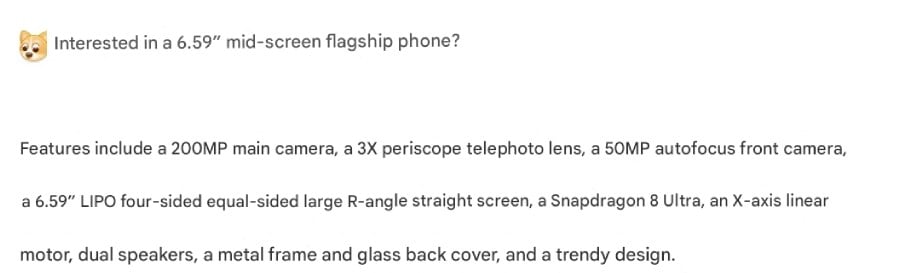
The phone is said to feature a 200-megapixel main camera, paired with a 3x telephoto lens. On the front, there’s reportedly a 50-megapixel autofocus selfie camera.
The display is rumored to be a 6.59-inch LIPO four-sided curved panel, which suggests slim bezels and a more premium feel. Powering the device could be Qualcomm’s Snapdragon 8 Elite chipset. Other leaked details include an X-axis linear motor, dual speakers, a metal frame, and a glass back.
Perhaps the most interesting addition is the AI button with remapping functionality. This should allow users to point the button to AI features of their liking.
Still, there’s a degree of uncertainty. Weibo tipsters often avoid naming specific devices in their posts, which leaves room for interpretation. While the margin of error appears small, nothing is official yet.
Another open question is availability. Previous Civi models, including the Xiaomi Civi 3, were limited to the Chinese market. There’s a possibility that the Civi 6 could also remain China-exclusive. Alternatively, Xiaomi may choose to rebrand it for global markets, potentially as the Xiaomi 17 Civi.
For more daily updates, please visit our News Section.
Oppo has quietly started talking about its upcoming Find N6 foldable, even though official teasers haven’t surfaced yet. Just as that happens, the foldable has now appeared in a Geekbench listing with a top-tier Snapdragon chip.
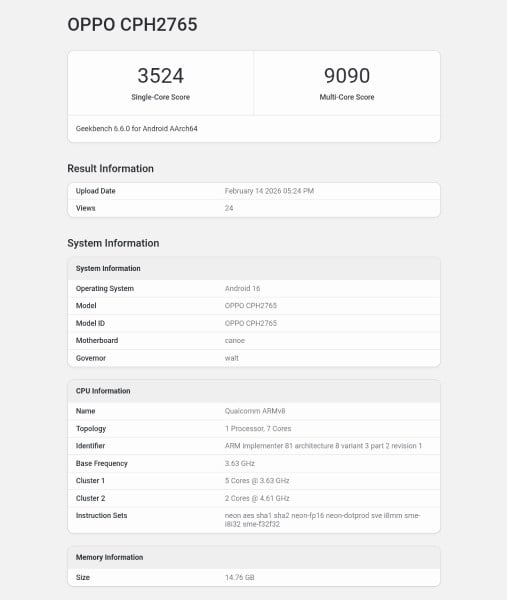
According to the benchmark entry, the Find N6 runs on the new Snapdragon 8 Elite Gen 5. Interestingly, this is the 7-core version of the chip rather than the typical 8-core setup we’ve seen in the 8 Elite Gen 5. The configuration includes two prime cores clocked at up to 4.61 GHz and five performance cores running at 3.63 GHz. That means, it’s missing one performance core from its usual counterpart.
Oppo Find N6 Geekbench scores: CPU and GPU
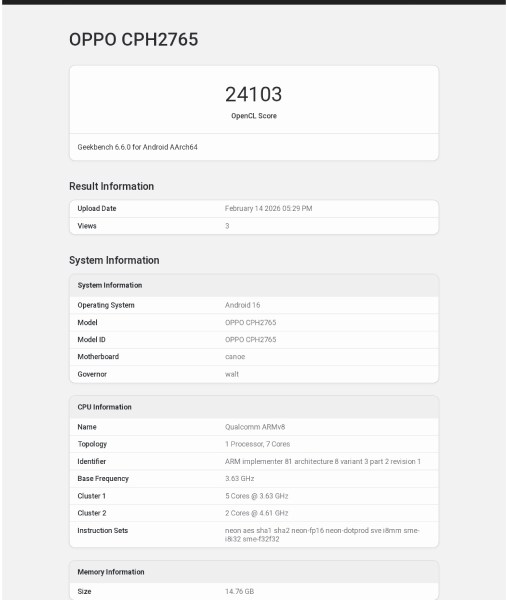
The Adreno 840 GPU handles graphics duties, and the listing shows an OpenCL score of 24,103. On the CPU side, the Find N6 recorded a single-core score of 3,524 and a multi-core score of 9,090.
The benchmark also confirms that the device is running Android 16 and comes with 16GB of RAM.
Oppo Find N6 spotted with 7-core Snapdragon 8 Elite Gen 5
What stands out in this benchmark run is the reveal of the 7-core Snapdragon 8 Elite Gen 5. While it’s not entirely surprising, given that the Find N5 also uses a 7-core Snapdragon 8 Elite chip, the key point is that Qualcomm hasn’t officially announced this version yet.
OPPO Find N5
In any case, foldables present unique engineering challenges, such as limited internal space, heat management concerns, and battery constraints. A slightly trimmed core layout could be Qualcomm’s way of optimizing sustained performance without pushing thermals too far.
Of course, benchmark scores only tell part of the story. Real-world performance depends on software optimization, cooling systems, and how aggressively Oppo tunes the chipset. Still, early numbers like these usually indicate that a launch isn’t too far away.
For more daily updates, please visit our News Section.
It’s only the second month of this year, and we’ve already seen a handful of smartphone launches. And there’s always more coming. Google is preparing the next Pixel launch. Samsung is lining up its new Galaxy models. Apple will almost certainly follow with its annual iPhone refresh. It’s looking exciting, isn’t it?
But if you’re not obsessed with spec sheets and just want a reliable phone that won’t drain your savings, there are a few things you should think about before making a purchase. We brought what we think are the most important ones under this article, so let’s go through it.
Prices are going up
The biggest story in tech this year isn’t foldables or AI features. It’s component pricing.
Memory prices have gone up in 2026 because the huge demand from AI has made DRAM and NAND more expensive. Data centers are absorbing enormous volumes of high-performance memory. And that cost pressure doesn’t just affect servers; it trickles down to consumer devices.
And when manufacturing costs rise, companies don’t absorb them. They pass them on. In fact, Lu Weibing, president of Xiaomi, warned last year that retail prices would face “much greater pressure.”
That’s why it’s worth figuring out your actual needs before buying a phone. Last year’s models can often meet those needs just as well, and you can usually find them at lower prices. They’re also less likely to be affected by the latest price hikes caused by rising memory costs.
Software support and AI features
Software is arguably equally (if not more) important than hardware in this day and age. Most midrange and flagship phones are already fast enough for everyday tasks, but what sets them apart is how long they stay updated and what kind of AI features they offer.
Brands like Samsung, Google, and Apple now promise up to seven years of software and security updates on their premium devices. It means your phone will stay secure, compatible with new apps, and relevant much longer than before.
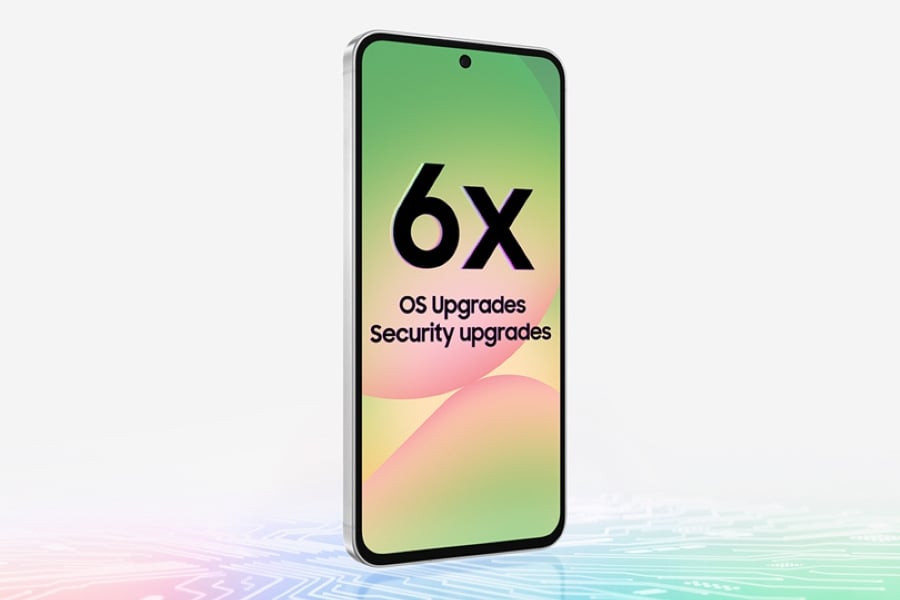
Samsung offers 6 years of OS updates on its mid-range phones
AI has also become a central part of the smartphone experience. Features like real-time call translation, automatic photo editing, smart summaries, and on-device assistants are now common across many flagship and upper-midrange phones. But not all AI features are equal. Some rely heavily on cloud processing, while others work entirely on-device for better privacy and speed.
Before buying, check:
How many years of updates does the phone gets
Whether the AI features actually work offline
If the brand has a good track record of delivering updates on time
Performance that matches your usage
You don’t always need the most powerful chip on the market. In fact, for many people, a midrange processor is more than enough for everyday tasks like messaging, social media, video streaming, and light gaming.
Flagship chips in 2026 are extremely powerful, but they also tend to generate more heat and consume more battery during heavy tasks. If you’re not playing high-end games or editing videos on your phone, that extra performance may not make a noticeable difference in daily use.
Instead, consider:
At least 8GB of RAM for smooth multitasking
12GB or more if you plan to keep the phone for several years
A processor from a recent generation rather than an older flagship chip
Also, pay attention to thermal performance. Some phones with powerful chips still struggle with sustained performance because of poor cooling. Reviews that include gaming or long-term performance tests can reveal more than spec sheets.
Battery life and charging balance
A battery is another thing that a user must look out for before buying a smartphone. A phone with a 5,000mAh battery may last longer than one with a larger battery if the software and processor are more efficient.
In 2026, most phones easily support fast charging, but the speeds vary widely. Some brands push 100W or even higher charging speeds, while others stick to slower but more battery-friendly solutions.
The key is balance:
Look for phones that comfortably last a full day with your usage
Check real-world battery tests, not just capacity numbers
Consider whether extremely fast charging matters to you
If you usually charge overnight, you may not need 100W charging at all. But if you travel often or rely heavily on your phone during the day, faster top-ups could be useful.
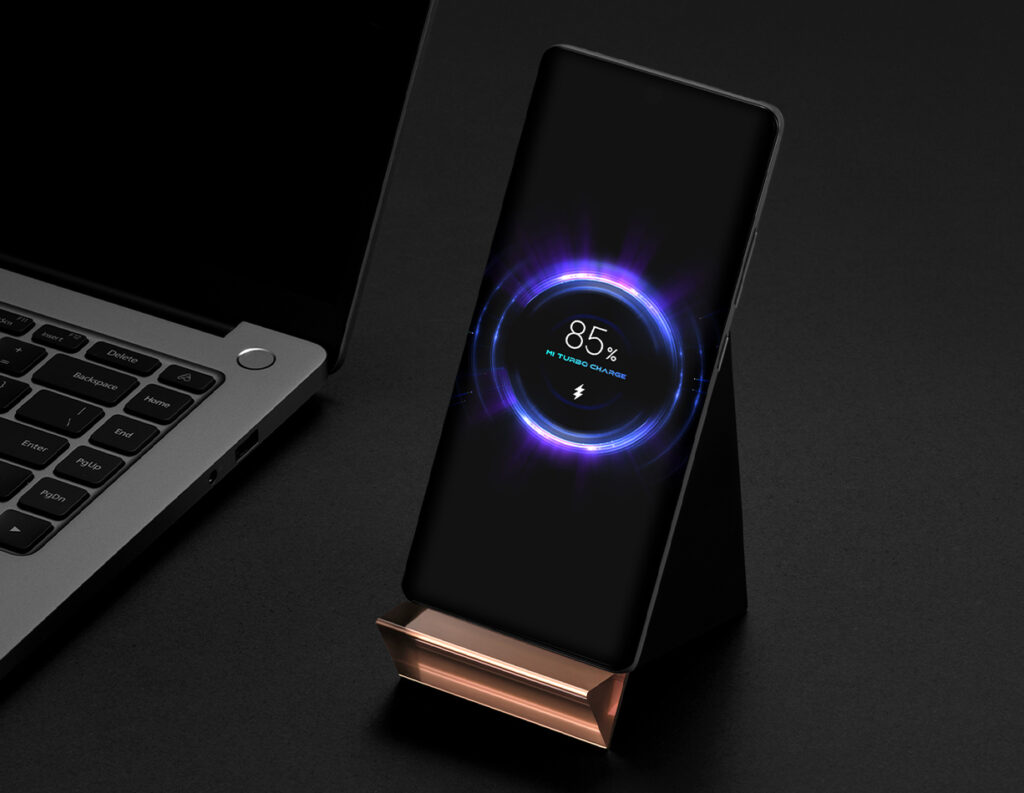
Wireless charging and reverse wireless charging are also becoming more common, especially in upper-midrange and flagship devices. These features aren’t essential, but they add convenience.
Camera consistency, not just megapixels
Smartphone cameras in 2026 are very good across most price segments. Even midrange phones can take sharp, detailed photos in good lighting. The real difference is consistency.
Instead of focusing only on the main camera’s megapixel count, pay attention to:
How well the phone handles low light
Whether the ultrawide and telephoto cameras are usable
Video recording quality and stabilization
Skin tones and color accuracy
Some phones have an excellent main camera but a weak secondary camera. Others offer a more balanced setup across all lenses. If photography is important to you, look at sample images and video tests rather than relying on specifications alone. Real-world results usually matter more than sensor size or megapixel numbers.
Build quality, display, and everyday comfort
Specs like processor speed and camera resolution are easy to compare, but the physical experience of using a phone matters just as much.
Even midrange phones now promise high-refresh-rate displays, but not all screens are equal. Some are brighter, more color-accurate, or easier to read outdoors.
When possible, check:
Display brightness and outdoor visibility
Screen protection (like Gorilla Glass or similar)
Water and dust resistance ratings
Weight and thickness of the device
A phone that feels comfortable in your hand and pocket is more important than one that simply looks impressive on paper.
Also, think about storage. Many phones no longer offer microSD card slots, so internal storage matters more than before. For most users, 256GB is becoming the new safe starting point, especially with larger photos, videos, and AI-generated content taking up more space.
The bigger picture
The smartphone market is on point where even affordable devices are good enough for most people. The thing that matters more than anything is long-term support, software features, and how well a phone fits your personal needs.
Instead of asking, “Which phone has the best specs?” it’s more useful to ask:
How long will this phone stay updated?
Will it last a full day on a charge?
Does it feel comfortable to use?
Do its cameras match my expectations?
A phone is something you interact with dozens—sometimes hundreds—of times a day. Choosing one that fits your habits and priorities will almost always lead to a better experience than simply picking the one with the most impressive numbers on the box.
For more daily updates, please visit our News Section.
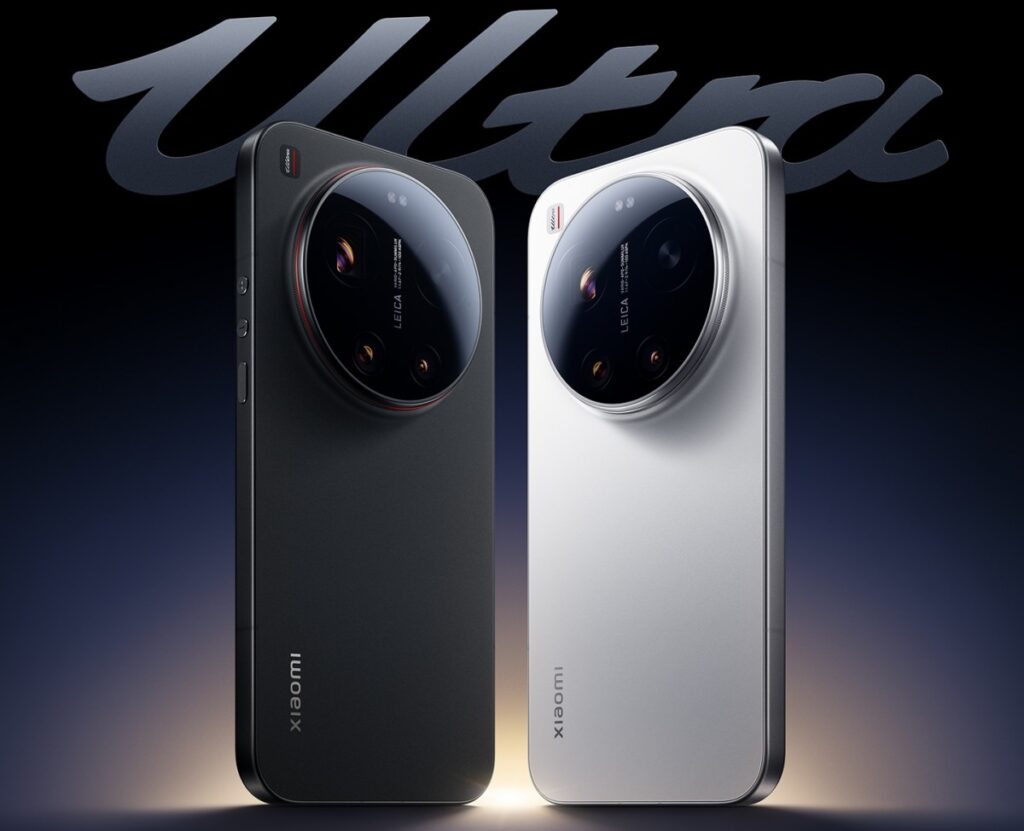
The Xiaomi 17 Ultra has finally entered the DxOMark rankings, and unsurprisingly, it’s among the top camera phones on the market right now. However, Xiaomi still has some work to do to reach the top of the leaderboard.
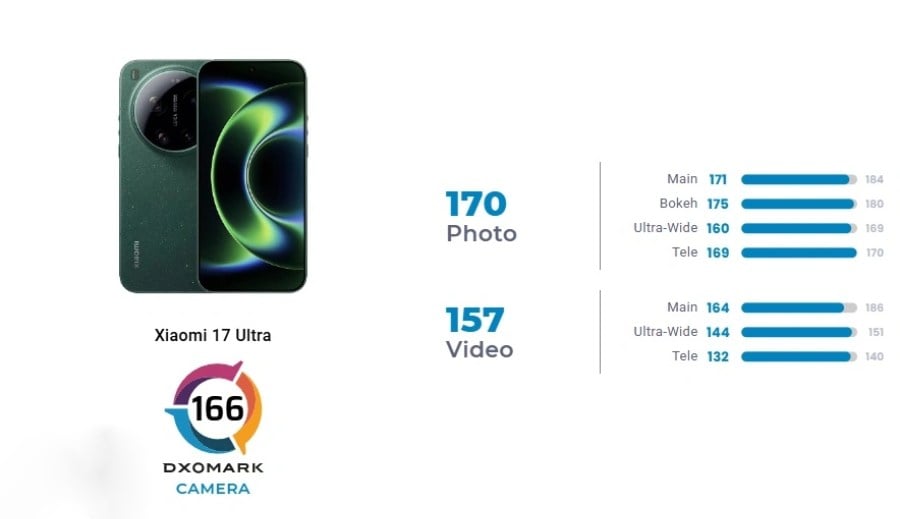
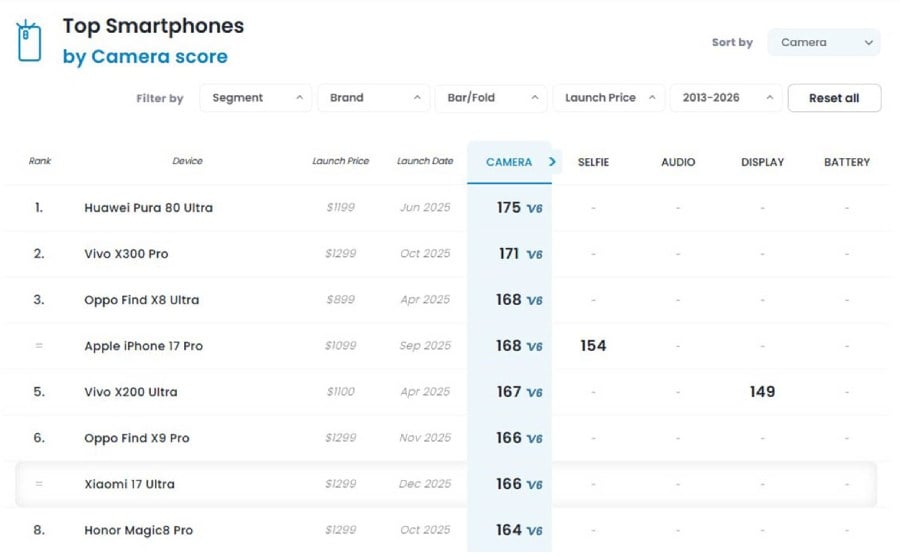
According to DxOMark, the Xiaomi 17 Ultra scored 166 points for its camera, placing it in 6th position overall.
DxOMark says the device delivers well-balanced photography across all focal lengths. From ultra-wide shots to telephoto zoom, performance is consistent.
The lab also highlights natural subject exposure, rich detail, and stable white balance in most scenes. Color reproduction is described as accurate, too, along with controlled noise, even in low light.
Xiaomi 17 Ultra ranks among the best camera phones per DxOMark
The hardware, of course, plays a big role here. The phone features a 50MP main camera with an f/1.7 aperture, 23mm focal length, dual-pixel phase detection autofocus, and optical image stabilization.
There’s also a 50MP ultra-wide camera at f/2.2 and 14mm. The standout on paper is the 200MP telephoto lens, offering a variable f/2.4–3.0 aperture, 75–100mm focal length, PDAF, OIS, and 3.2x to 4.3x optical zoom.
DxOMark gave the device 170 points for overall photo performance. Breaking that down further, the main camera earned 171 points, bokeh scored 175 points, the ultra-wide scored 160 points, and zoom scored 169 points.
The telephoto performance, in particular, is said to be high-level, which delivers strong detail at longer focal lengths and natural-looking background separation in portrait shots.
Video, however, is where the Xiaomi 17 Ultra shows some limitations. The overall video score stands at 157 points. The main camera’s video performance scored 164 points, while the ultra-wide and telephoto video results were lower at 144 and 132 points, respectively.
DxOMark notes that while brightness and exposure are generally good indoors and outdoors, low-light video still struggles more than the best devices in its class. Zoom transitions during video recording can also appear noticeable.
There are a few other trade-offs, like group photos can sometimes result in foreground subjects appearing slightly out of focus. And although texture and noise are well balanced in photos, low-light video doesn’t maintain the same consistency.
In terms of competition, the Xiaomi 17 Ultra didn’t overtake the Huawei Pura 80 Ultra at the top of the rankings. Still, it managed to outperform several high-profile devices, including the Magic 8 Pro, Pixel 10 Pro XL, and iPhone 16 Pro Max.
For more daily updates, please visit our News Section.
After showing off a wave of concept and commercial PCs at CES 2026, Lenovo is now preparing its next business machine to show off at MWC.
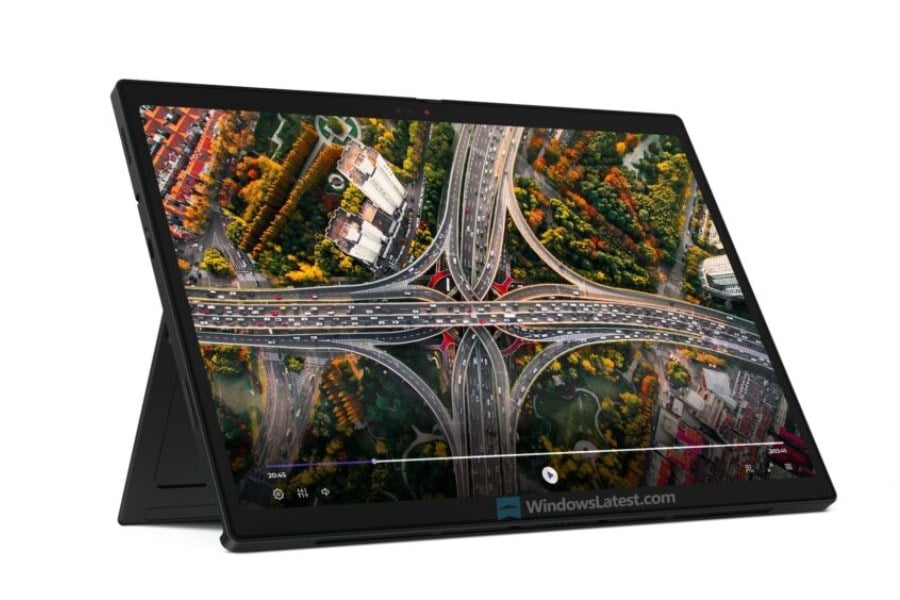
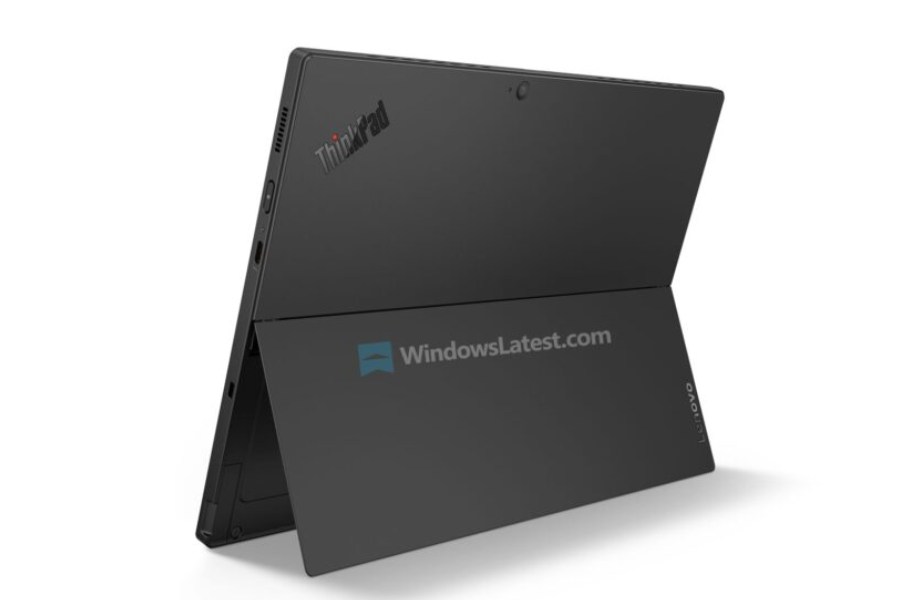
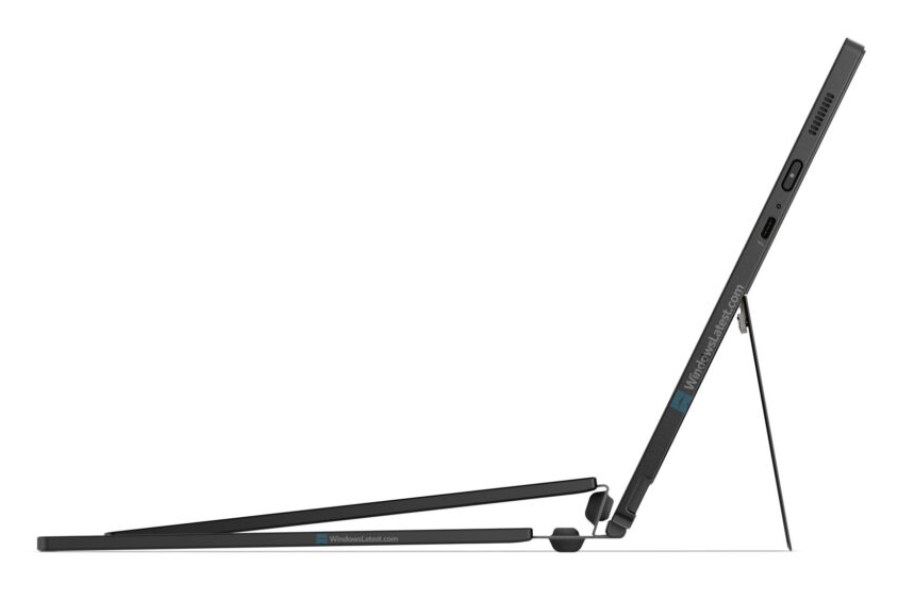
A new report from Windows Latest reveals a series of renders of what’s said to be the upcoming Lenovo ThinkPad X13 Detachable. According to the report, the device will debut at Mobile World Congress 2026, which runs from March 2nd to 5th in Barcelona.
Here’s your first look at Lenovo ThinkPad X13 Detachable
Visually, the most noticeable change is in the display. Lenovo has trimmed down the bezels compared to the ThinkPad X12 Detachable while making the screen a tad bigger from 12.3 inches to 13 inches.
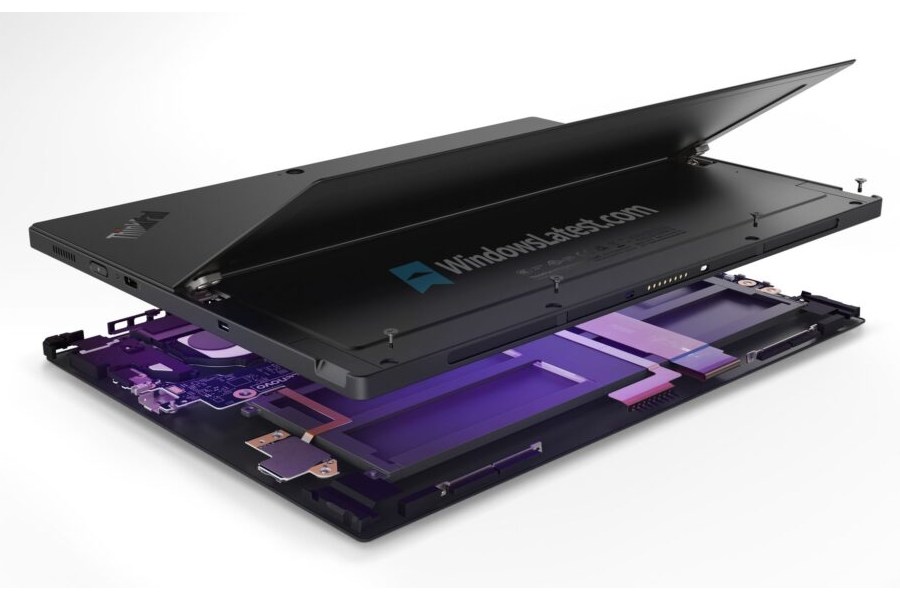
As a ThinkPad, there’s no denying the laptop is made with business users in mind. The renders show the ThinkPad X13 Detachable with USB-C charging ports on both sides. The laptop also keeps the good ol’ 3.5mm headphone jack and a Kensington lock slot.
Interestingly, we can see four visible screws on the bottom panel, which suggests that repairability hasn’t been ignored. That’s notable in a detachable category where many devices are sealed tightly.
Performance details remain unclear, though. The previous generation shipped with Intel’s Core Ultra 7 processor, so it’s safe to expect Intel Panther Lake chips to power this version.
Now, the thing that gives it the “detachable” name is its detachable keyboard. However, unlike the Microsoft Surface Pro keyboard that lies flat, the X13 Detachable’s magnetic keyboard attaches at a slight angle.
Lenovo is also keeping the signature TrackPoint and physical buttons. The stylus slot has reportedly been redesigned to take up less space.
On the security front, the device includes a front-facing camera with a mechanical privacy shutter, along with a circular fingerprint reader next to the touchpad. Combined with an infrared camera, the system supports dual Windows Hello authentication.
For more daily updates, please visit our News Section.
As China prepares to celebrate its most important annual holiday, Xiaomi is pressing pause on HyperOS software updates.
According to XiaomiTime, the company is entering a roughly two-week slowdown for the Chinese New Year that runs from February 17 through March 3. During this stretch, Xiaomi will not roll out any new HyperOS update, and work on internal test builds will also stop temporarily.
Xiaomi 17 Pro New Year Collection Wallpaper
As a result, don’t expect any new features or bug fixes in the coming days. The report also suggests the usual stream of bug reports and progress summaries will also go dark for the duration of the break.
XiaomiTime suggests the slowdown has already started behind the scenes. Xiaomi reportedly began winding down development several days ago, with internal test builds largely halted around four to five days back. Any updates that are currently reaching users were actually compiled weeks earlier, before the holiday freeze took effect.
Xiaomi isn’t alone in this
This kind of extended break may seem unusual compared to New Year holidays in Europe or the United States, where companies typically shut down for only a few days. But in China, the Lunar New Year is a major cultural event.
It’s common for businesses across industries to close for an extended period, giving employees time to travel home and spend time with family. For many workers, it’s the only long holiday of the year.
As such, you can guess Xiaomi isn’t alone in this. Other major China-based smartphone makers like Oppo, Vivo, and OnePlus follow similar schedules during this time, slowing development and pausing non-essential operations.
Regular update cycles are expected to resume once the holiday period ends in early March. Until then, HyperOS users shouldn’t expect much movement.
For more daily updates, please visit our News Section.
Huawei may be getting ready to refresh its fitness band lineup again. Almost a year after introducing the Huawei Band 10 in March, signs of a new model have quietly appeared inside the company’s own software.
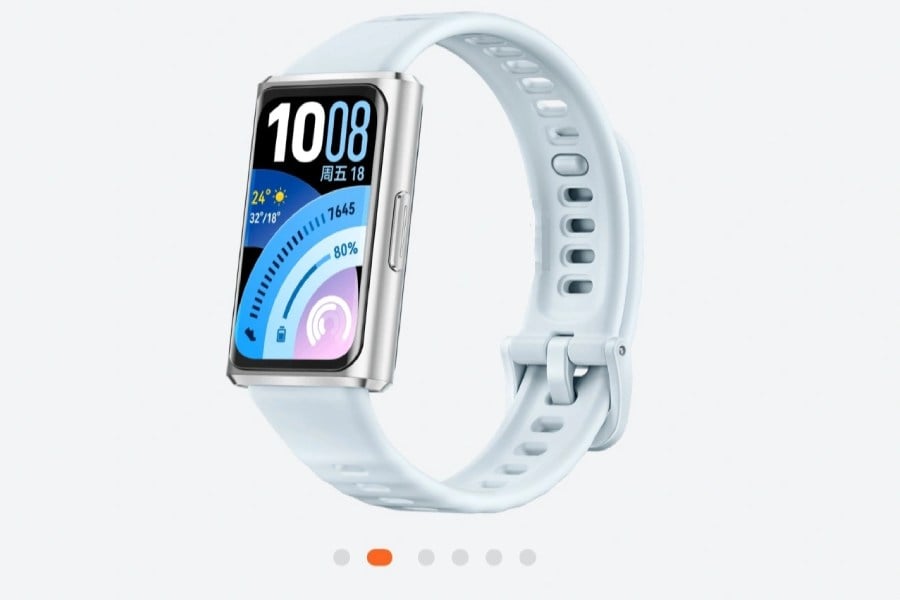
The listing for something called the Huawei Band 11 Pro has appeared in the Huawei Smart Life app. Tapping on it redirects users to the Huawei Health app, where the interface — particularly in the HarmonyOS version — reveals the band’s final design. Huawei hasn’t said anything publicly yet, but the software trail makes the product hard to ignore.
Huawei Band 11 Pro shows up on the Huawei Health app
From the images visible in the app, the Band 11 Pro adopts a noticeably refined look. The frame appears to feature curved edges around the perimeter, paired with what looks like a metallic finish.
The display is surrounded by evenly sized bezels on all four sides. Also, the screen edges on the left and right are slightly curved, though the curvature looks subtle enough that this is probably still a flat panel.
Huawei will offer at least two strap options for the Band 11 Pro: braided and silicone. There’s also a physical button on the side, which is expected to handle common tasks like switching between function pages or waking the display.
So far, Huawei hasn’t shared any official details about the Band 11 series. Still, as an iterative update, the new model will likely build on the foundation laid by Band 10.
The previous generation supported customizable watch faces, including different styles and color options. It also offered Always-On Display (AOD), average HRV-based sleep tracking, and hundreds of sports modes. Those features are now fairly standard in this category, so it would be surprising if they didn’t return.
What makes this launch more notable is the “Pro” branding. It’s been four years since Huawei released a Pro model in this lineup. The last one was the Huawei Band 6 Pro, which added a temperature sensor and body temperature tracking features. It will be interesting to see what new feature Huawei will bring with this one.
For more daily updates, please visit our News Section.
Xiaomi’s 2026 flagship lineup already has four members. Now the company is reportedly adding a sixth in the form of the Xiaomi 17 Max. That’s a lot of phones in one series. But based on what has surfaced so far, the 17 Max will have its own distinguishing feature in the lineup.
Most of what we know so far comes from a steady stream of rumors, along with a few related reports. Nothing is official yet, but the details have been consistent enough to sketch a fairly clear picture of what Xiaomi might be planning.
An 8,000mAh battery is the headline feature
If there’s one spec that defines the Xiaomi 17 Max right now, it’s the battery.
According to multiple leaks, the phone will pack an 8,000mAh battery. That’s bigger than the already substantial 7,500mAh unit inside the Xiaomi 17 Pro Max.
More importantly, none of the flagships from brands like Samsung or Apple come close to this capacity. So it’s not difficult to imagine Xiaomi marketing this around multi-day usage, heavy gaming, or extended video streaming without worrying about a charger.
Xiaomi could pair this with 100W wired charging and 50W wireless charging. These numbers are in line with the Pro Max model, which also supports 100W wired and 50W wireless charging, along with 22.5W reverse wireless charging.
Big display, flat panel
The “Max” name also points to a large screen, and leaks back that up. According to reports, it will feature a flat OLED display measuring either 6.8 inches or 6.9 inches. For context, the Pro Max also features a 6.9-inch 2K 120Hz OLED panel.
One of the clearer differentiators within the Xiaomi 17 lineup is the presence of a secondary rear display on the Pro and Pro Max models. The 17 Max, despite its name, will not include this feature.
This decision likely serves two purposes. First, it helps Xiaomi maintain a clear hierarchy in the lineup. The Pro Max can keep its more experimental design elements, while the Max focuses on battery and scale. Second, it probably keeps costs and complexity down.
Snapdragon 8 Elite Gen 5 inside
Under the hood, the Xiaomi 17 Max is likely to use the same chipset as the rest of the Xiaomi 17 series, i.e., the Snapdragon 8 Elite Gen 5. That would place it on equal footing with the Xiaomi 17, 17 Pro, and 17 Pro Max in terms of raw performance.
For users, that means the 17 Max should handle demanding games, heavy multitasking, and AI features just as well as its siblings. The real differences will likely come down to battery capacity, camera configuration, and design.
Cameras
As for the optics, early leaks suggest that the Xiaomi 17 Max might borrow the OmniVision Light Fusion 950 primary camera from the standard Xiaomi 17, while improving overall photography performance. It was also tipped to include a periscope telephoto lens that could outperform most models in the series, excluding the 17 Ultra.
More recent information, however, suggests that the 17 Max could feature a 200-megapixel Samsung ISOCELL HPE main sensor (1/1.4-inch), paired with a 50-megapixel Sony IMX8-series periscope telephoto sensor (1/1.953-inch) and a 50-megapixel ultrawide lens.
If accurate, this would be a noticeable step up from the vanilla Xiaomi 17, which reportedly uses three 50-megapixel sensors for main, telephoto, and ultrawide shots. There’s also mention that Xiaomi’s partnership with Leica will continue on the 17 Max.
It’s worth noting that these two sets of camera leaks don’t perfectly match. Either Xiaomi adjusted the prototype configuration over time, or one of the reports reflects an earlier engineering sample.
Until official confirmation arrives, it’s safest to assume the 17 Max will sit above the standard 17 in camera capability, but below the 17 Ultra.
Where it fits in the lineup
Even with five models in the lineup, Xiaomi has a way to create specific identities for each device.
The Xiaomi 17 is the standard flagship.
The 17 Pro and 17 Pro Max add design elements like the secondary rear display.
The 17 Ultra likely remains the photography-focused halo product.
The 17 Max might prioritize battery capacity and scale, while still offering high-end performance and strong cameras.
In some ways, the 17 Max feels like a hybrid between the standard model and the Pro Max. It may inherit much of the Pro Max’s hardware — including the Snapdragon chip and fast charging — but with a more restrained design and an even larger battery.
Launch timeline and availability
As for timing, the Xiaomi 17 Max is rumored to launch in China in Q2 2026, likely in April. The timeframe places it alongside other expected flagship launches in China, including devices like the Vivo X300s and Oppo Find X9s.
Global availability is less certain. Current speculation suggests Xiaomi may only bring the Xiaomi 17 and Xiaomi 17 Ultra to international markets. If that holds, the 17 Max could remain a China-exclusive model.
For more daily updates, please visit our News Section.
Xiaomi’s next flagship phones may already have a price tag in India, months before their expected debut. According to tipster Abhishek Yadav, the series could start at Rs 80,000 for the standard Xiaomi 17, while the Xiaomi 17 Ultra may land at Rs 1,25,000 in the country.
No surprises, Xiaomi hasn’t confirmed these numbers, and as with most early leaks, they should be taken cautiously. Still, the pricing suggests Xiaomi is preparing to move further into ultra-premium territory in India.
For context, the Xiaomi 15 Ultra launched at Rs 1,09,999 for the single 16GB + 512GB variant. The regular Xiaomi 15, meanwhile, had a starting price of Rs 64,999 for the 12GB + 512GB model.
If the leak is true, the standard Xiaomi 17 would see a 23% increase over its predecessor, while the Ultra model would see a 14% hike.
What could Xiaomi be thinking?
Xiaomi has spent the last few years refining its premium image in India, particularly with its Ultra lineup. At ₹1,25,000, the Xiaomi 17 Ultra wouldn’t just be competing on specs; it would be competing on brand perception, software polish, long-term updates, and ecosystem value. Those are areas where Samsung and Apple have historically had an edge.
Another factor affecting the price is the ongoing memory shortage that has driven up consumer device prices. Phones, of course, are one of those commodities.
Meanwhile, the Xiaomi 17 itself appears to be confirmed for India. The device recently surfaced on the Bureau of Indian Standards (BIS) certification database, a common sign that a launch is in the pipeline.
As for timing, the Xiaomi 17 and Xiaomi 17 Ultra are expected to follow a similar launch window to last year’s Xiaomi 15 series. According to earlier information from the same tipster, Xiaomi could unveil the new models around March 2026.
For more daily updates, please visit our News Section.
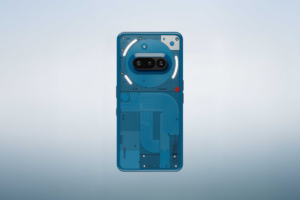
Nothing has begun setting the stage for its next midrange phones. The company recently confirmed the Phone (4a) series through CEO Carl Pei, and shortly after that, it teased new color options. Now, the standard Nothing Phone (4a) has appeared on Geekbench ahead of the launch.
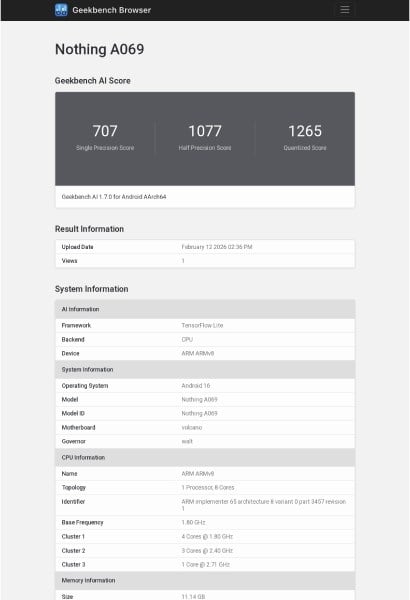
Nothing Phone (4a) Geekbench
The benchmark reveals that the Phone (4a) will run on Qualcomm’s Snapdragon 7s Gen 4, just a step up from the Snapdragon 7s Gen 3 on its predecessor.
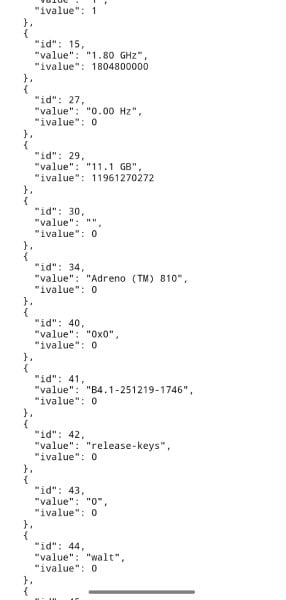
The chip features an octa-core CPU setup with one core clocked at 2.71GHz, three cores at 2.40GHz, and four efficiency cores running at 1.80GHz. Meanwhile, graphics duties are handled by the Adreno 810 GPU.
Moreover, the tested unit on Geekbench comes with 12GB of RAM. But of course, Nothing may offer lower RAM variants at launch. Software-side is handled by Android 16 out of the box.
As for the benchmark score, the Phone (4a) ran the AI benchmark with a single-precision score of 707, a high-precision score of 1077, and a 1265 quantized score.
At this point, Geekbench results don’t tell the whole story. They don’t reveal anything about the display, camera system, battery size, or charging speeds. But they do confirm that Nothing is sticking with a capable midrange chip and pairing it with a relatively high amount of RAM.
The Phone (4a) will launch with the (4a) Pro and even an affordable pair of headphones, called the Headphone (a).
Unfortunately, though, there’s talk of a price increase this time around. Previous reports suggest upcoming Nothing phones could be 30% more expensive due to the ongoing DRAM shortage.
We will know more when the device launches. Speaking of which, the new products are expected to launch in March, though Nothing hasn’t officially confirmed the date yet.

 Login
Login