Reading view

Cognitive flexibility mediates the link between romance and marriage views

Young adults who are happier in their romantic relationships are more likely to have positive views about marriage—and a flexible mindset that considers different perspectives may help explain why. This new research was published in BMC Psychology.

Romantic relationships formed during young adulthood often shape expectations about the future, including whether someone wants to marry. Previous research has shown that relationship quality affects mental well-being and life satisfaction, but less is known about how it influences beliefs about marriage itself.

Psychologists have also increasingly focused on “cognitive flexibility”—which is the ability to adjust one’s thinking, manage challenges, and see situations from multiple angles—as a key factor in maintaining healthy relationships.

Turkish authors Büşra Ekinci (Ministry of National Education, Türkiye) and Murat Canpolat (Inonu University) wanted to explore whether this mental flexibility might help explain how relationship satisfaction translates into positive attitudes toward marriage. They suspected that people who can adapt and communicate effectively may be better able to navigate relationship challenges, leading them to view marriage as more appealing and achievable.

To test this idea, the team surveyed a group of 436 young adults living in Türkiye aged 18 to 29 years old.

Participants completed questionnaires measuring how satisfied they were in their romantic relationships (Relationship Satisfaction Scale), how positively they viewed marriage (Inonu Marriage Attitude Scale), and how flexible they were in their thinking and problem-solving (Cognitive Flexibility Scale).

The researchers then analyzed the data using statistical models to examine how these factors were related.

The results showed a clear pattern. Participants who reported higher relationship satisfaction were significantly more likely to have positive attitudes toward marriage. Those with greater cognitive flexibility also tended to report both higher relationship satisfaction and more favorable views of marriage.

Importantly, cognitive flexibility partly explained the link between the two. In other words, being able to adapt one’s thinking and approach challenges constructively appeared to help transform positive relationship experiences into a more optimistic outlook on marriage.

Individuals with flexible thinking styles may be better equipped to handle disagreements, adjust expectations, solve problems, and maintain emotional balance, making the idea of marriage seem more stable and appealing.

Ekinci and Canpolat shared the potential applications of their findings: “To support young adults’ cognitive flexibility and positively develop their attitudes toward marriage, individual or group psychological counseling programs can be implemented where individuals can share the satisfaction they derive from their romantic relationship experiences, the positive and negative emotional processes they experience, and receive professional support.”

However, the researchers caution that the study cannot prove cause and effect. As the data were collected at one point in time, it is unclear whether relationship satisfaction leads to positive marriage attitudes, or whether people who already value marriage are more likely to report higher satisfaction.

The study, “Romantic relationship satisfaction and marriage attitudes in young adults: The mediating role of cognitive flexibility,” was authored by Büşra Ekinci and Murat Canpolat.

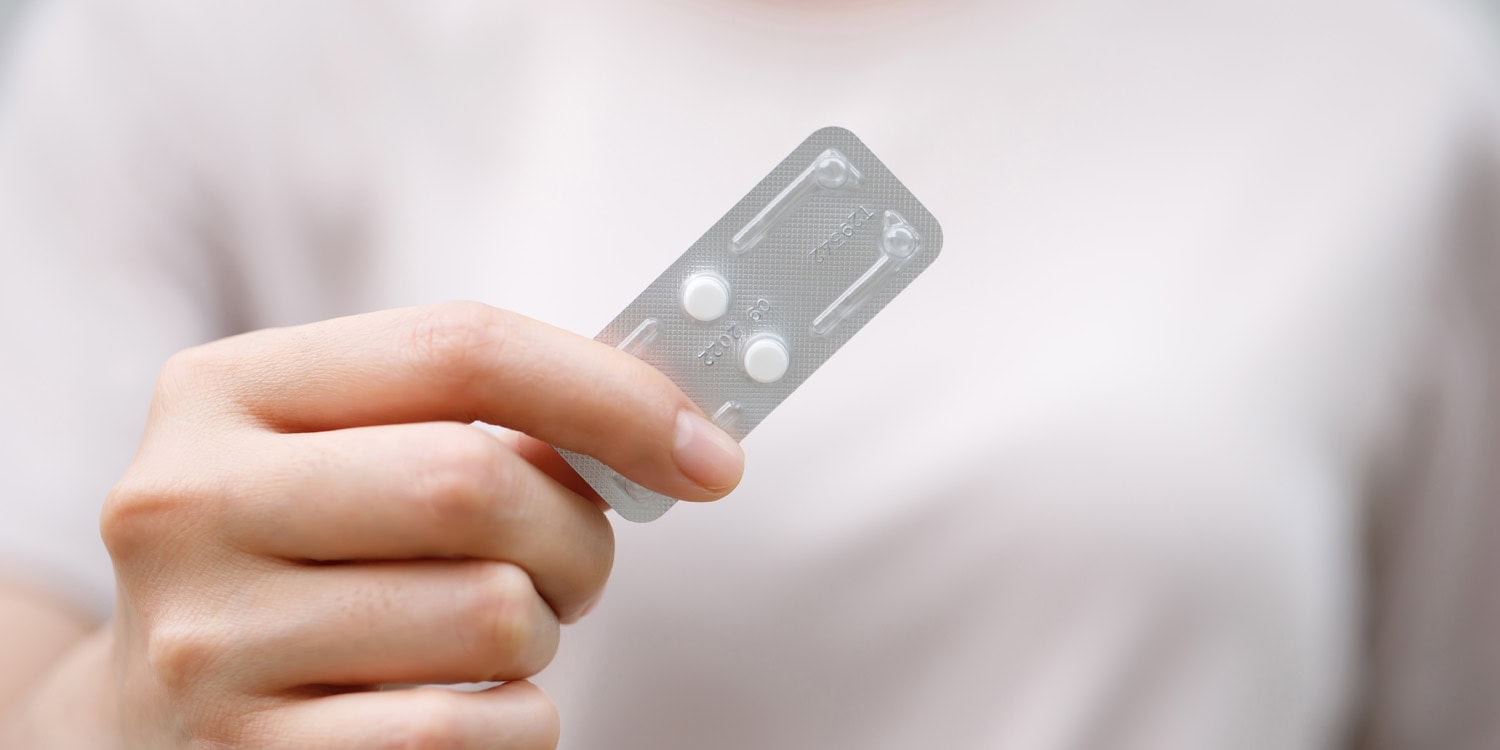
One holiday sees a massive spike in emergency contraception sales, and it isn’t Valentine’s Day

Research published in the BMJ has revealed that retail sales of emergency contraception rise sharply after the New Year holiday in the United States. The holiday was found to be linked to a surge in demand for emergency contraception, suggesting higher rates of unprotected sex compared with other times of the year—even more than Valentine’s Day.

Unprotected sex has long been recognised as a public health concern due to unintended pregnancies and sexually transmitted infections. Previous research shows that alcohol use, increased social activity, and limited access to contraception can all influence whether people practice safe sex. These factors tend to fluctuate throughout the year, and certain holidays may bring them together. Emergency contraception, which can prevent pregnancy after unprotected sex, offers researchers a way to indirectly measure when these risks may be higher.

Brandon Wagner (Texas Tech University) and Kelly Cleland (American Society for Emergency Contraception) sought to investigate if New Year’s Eve—a holiday commonly associated with parties, alcohol consumption, and romantic expectations—was followed by an increase in emergency contraception sales. They also wanted to compare this with other holidays that might share similar features, such as Valentine’s Day or St. Patrick’s Day.

To investigate, the team analysed weekly sales data for over-the-counter emergency contraception pills (levonorgestrel) across the United States from 2016 to 2022. The dataset covered 362 weeks of sales from traditional “brick and mortar” retailers, including grocery stores, drug stores, and mass merchandisers. Using statistical models, they compared sales in weeks following holidays with sales during non-holiday weeks.

The results showed a clear pattern. In the week after the New Year holiday, sales of emergency contraception rose by about 0.63 additional units per 1,000 women of reproductive age (15–44). Based on US population estimates, this equated to roughly 41,000 extra units sold in the first week of 2022 alone compared with what would hypothetically occur without the holiday.

While other holidays also showed increases, none matched the New Year. Sales rose after Valentine’s Day, but only about half as much as after the New Year holiday. Smaller increases followed St. Patrick’s Day and Independence Day. By contrast, holidays not typically associated with heightened sexual activity or alcohol consumption—such as Easter, Mother’s Day, and Father’s Day—showed no significant change in emergency contraception sales.

The researchers say the spike after the New Year likely reflects a combination of factors: more sexual activity, lower contraception vigilance due to alcohol consumption, increased risk of sexual assault, and limited access to contraceptives due to holiday retail closures. Together, these conditions may make New Year’s Eve uniquely associated with unprotected sex.

“More than ever, emergency contraception is a critically important option for people in the US, particularly those living in regions with bans or severe restrictions on abortion. Although this annual spike in sales might seem humorous, it is indicative of unmet contraceptive need that calls for further attention,” Wagner and Cleland noted.

However, the study has important limitations. Sales data do not necessarily reflect actual use of emergency contraception, and the figures exclude purchases made online, in independent pharmacies, or through clinics. The findings also apply only to the United States, meaning patterns could differ in countries with different healthcare systems or cultural practices.

The study, “Retail demand for emergency contraception in United States following New Year holiday: time series study,” was authored by Brandon Wagner and Kelly Cleland.

Waist-to-hip ratio predicts faster telomere shortening than depression

A new study published in the Journal of Affective Disorders has found that depression itself may not directly speed up biological aging. Instead, body fat distribution, particularly around the waist, appears more strongly linked to faster cellular aging.

Depression is common and known to raise the risk of heart disease, diabetes**,** and other age-related illnesses. One possible explanation has been its connection to telomeres, tiny protective caps on DNA that naturally shorten as we age. Shorter telomeres are often viewed as a sign that the body is aging faster at a cellular level.

Previous research has suggested that people with depression tend to have shorter telomeres, but most studies only looked at individuals at a single point in time. This makes it difficult to know whether depression causes faster aging, or whether other factors linked to depression—such as lifestyle or physical health—play a bigger role.

Researchers behind the study sought to clarify this relationship. The team, led by Tsz Yan Wong from King’s College London, analyzed data from 958 women enrolled in the UK-based “TwinsUK” study. Included were 89 identical twin pairs, 215 fraternal twin pairs, and 350 unrelated individuals, ranging from 29 to 83 years old.

The participants had their telomere length measured from blood samples up to four times over roughly six years. The study also included information on depression diagnoses, antidepressant use, lifestyle habits, body measurements, and genetic risk scores for depression and several age-related diseases.

Over the follow-up period, telomeres shortened gradually in most participants, declining by about 1.3 percent per year on average. Women who reported having depression tended to have slightly shorter telomeres, but this link was weak and not statistically strong. Importantly, depression was not associated with faster telomere shortening over time.

Antidepressant use showed a small association with shorter telomere length. The researchers noted this could be “potentially via biological pathways such as increased cellular turnover or metabolic side effects.” However, there was no clear evidence that it sped up the rate of telomere loss.

Genetic risk for depression also showed no meaningful connection with telomere length or how quickly telomeres shortened. “Our study is the first to assess whether genetic risk influences telomere [shortening], providing a novel longitudinal perspective on potential dynamic effects,” Wong and colleagues noted.

Instead, the most notable finding involved body fat distribution. Women with a higher waist-to-hip ratio, which is a measure of central body fat, experienced faster telomere shortening over time. This suggests that carrying more fat around the abdomen may play a larger role in cellular aging than depression itself.

“[Internal body fat] is linked to chronic inflammation and oxidative stress, both of which are suggested mechanisms driving… telomere shortening,” Wong’s team explained.

Other factors often linked to depression, including smoking, alcohol use, physical activity, education level**,** and early-life experiences, showed no clear relationship with telomere length in this study.

The researchers emphasize that the findings suggest depression alone may not directly accelerate biological aging in women, despite its known links to physical illness. Instead, modifiable health factors such as central body fat may be more important targets for improving both physical and mental health outcomes.

However, the study has limitations. It included mostly older White women, so the results may not apply to men or more diverse populations. Depression was self-reported rather than clinically diagnosed, and the observational design cannot prove cause and effect.

The study, “Genetic and environmental risk factors for major depression in UK women and their association with telomere length longitudinally,” was authored by Tsz Yan Wong, Alexandra C. Gillett, Leena Habiballa, Rodrigo R.R. Duarte, Ajda Pristavec, Pirro Hysi, Claire J. Steves, Veryan Codd, and Timothy R. Powell.

Can brain stimulation treat psychopathy?

Scientists exploring new ways to address psychopathic traits have found that gentle electrical or magnetic stimulation of the brain may slightly improve empathy and prosocial behavior. A new study published in Progress in Neuro-Psychopharmacology and Biological Psychiatry suggests the technology shows promise—but there is currently no direct evidence it works in people with psychopathy.

Psychopathy is often associated with persistent antisocial behavior and emotional differences, such as reduced empathy, guilt, and concern for others. Traditional treatments, including therapy programs and anger-management courses, have had limited success in changing these core emotional traits.

This has led researchers to explore whether differences in brain activity might help explain psychopathy, and whether targeting the brain directly could offer new treatment possibilities.

Brain imaging studies have shown that people with psychopathic traits often have unusual activity in regions linked to emotion and decision-making. These include areas involved in recognizing fear, responding to others’ pain, and regulating behavior.

Scientists have therefore begun testing non-invasive brain stimulation, which utilizes magnets or weak electrical currents applied to the scalp, to see whether altering brain activity can influence emotional responses.

Led by Célia F. Camara from the University of Essex in the U.K., the research team behind the new study wanted to know whether these brain-stimulation techniques could change traits related to psychopathy.

Camara and colleagues conducted a large review and statistical analysis of 64 experiments involving 122 measured effects. The studies examined several forms of stimulation, including transcranial magnetic stimulation and transcranial direct current stimulation, and compared them with sham (placebo-like) conditions.

Most experiments were conducted with healthy adult volunteers rather than people diagnosed with psychopathy. Participants completed tasks or questionnaires measuring empathy, emotional reactions, or prosocial behavior before and after brain stimulation. The researchers then combined results across studies to see whether any consistent patterns emerged.

The findings demonstrated that certain types of “excitatory” brain stimulation—designed to increase activity in targeted brain regions—produced small to moderate improvements in social and emotional responses. In some cases, participants reported greater empathy, increased willingness to help others, or increased feelings of guilt. Other types of stimulation that dampen brain activity sometimes reduced these responses.

Overall, the analysis suggests that non-invasive brain stimulation can influence emotional and social processing in ways that are relevant to psychopathic traits. However, the results were mixed and varied widely depending on the type of stimulation, the brain area targeted, and how many sessions participants received.

The researchers noted that while the findings provide early proof that emotional traits can be influenced by brain stimulation, the technology is far from being a practical treatment. Notably, the review found that the only available study conducted specifically on psychopathic individuals reported null effects.

“The generalizability of our findings is limited by insufficient research on psychopathy-relevant samples. Responses to non-invasive brain stimulation in individuals with psychopathy may differ from those of non-psychopathic populations, as evidence indicates that individuals with psychopathy exhibit distinct neurobiological profiles compared with non-psychopathic cohorts,” Camara and colleagues cautioned.

Nevertheless, the results open the door to new ways of understanding and potentially addressing the emotional aspects of psychopathy.

The study, “On the possibility to modulate psychopathic traits via non-invasive brain stimulation: A systematic review and meta-analysis,” was authored by Célia F. Camara, Carmen S. Sergiou, Andrés Molero Chamizo, Alejandra Sel, Nathzidy G. Rivera Urbina, Michael A. Nitsche, and Paul H.P. Hanel.

❌