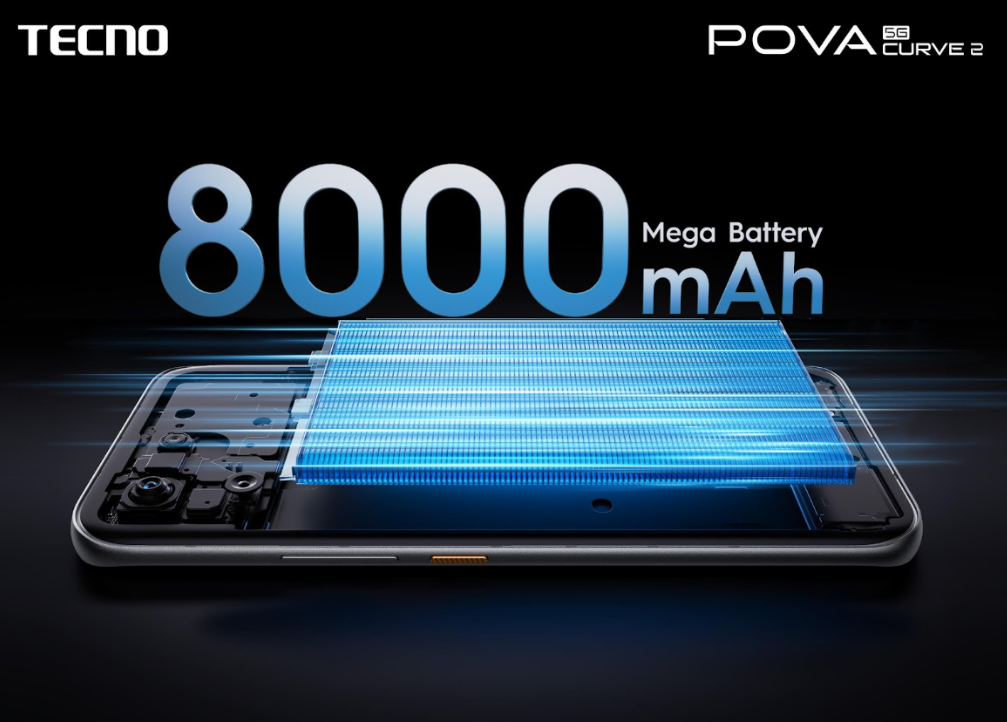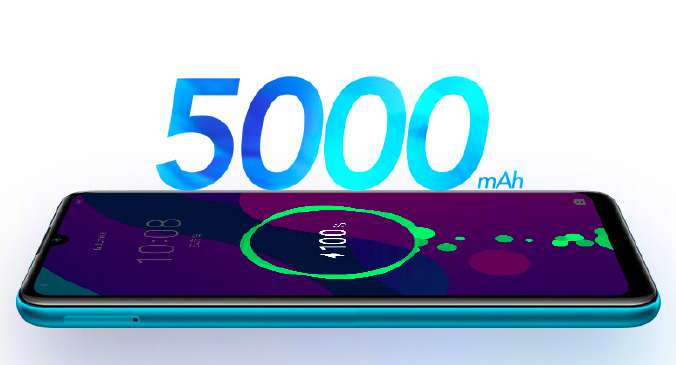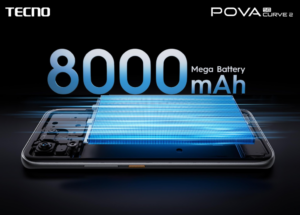
Not long ago, a smartphone with a 5000mAh battery meant a thick body that wasn’t very ergonomic in the hand. Fast forward to 2026, and we now have phones like the Tecno Pova Curve 2, which packs an 8000mAh battery into a slim 7mm body.
On paper, these numbers don’t seem like they belong together. But this is increasingly the direction parts of the smartphone industry are heading, especially among Chinese manufacturers willing to experiment with new battery chemistries.
Here’s how phones like the Pova Curve 2 fit a big battery into a compact body, and where Apple and Samsung stand among them.
From Graphite to Silicon-Carbon
Most smartphones today still use lithium-ion batteries with graphite anodes. (FYI, the anode is where lithium ions sit when the battery is charged.) Its long-standing use already shows how well graphite has worked for us. It’s stable, relatively inexpensive, and doesn’t expand much during charging. Meaning it’s safe for rigorous daily use.
However, graphite has its own limits. You can only store so much energy in it before you run out of room.
Enter silicon.
In theory, silicon can store nearly 10 times as much lithium per gram as graphite. That doesn’t mean your battery suddenly becomes ten times bigger, but it does allow manufacturers to increase energy density, i.e., more power in the same physical space.
The problem is that silicon expands dramatically when it absorbs lithium. In lab conditions, it can swell up to 300% (via Neware). So, no prize for guessing, silicon alone is not a good anode for a battery.
That’s when companies began blending silicon with carbon, creating what we now know as a silicon-carbon (Si-C) anode.
Carbon acts as a stabilizing framework. It holds the silicon particles in place and absorbs some of the stress caused by expansion. The result is a battery that offers higher capacity than traditional graphite-based cells while remaining structurally stable enough for daily use.
It’s not perfect. Silicon-carbon batteries can degrade faster than pure graphite if not carefully managed. But the trade-offs are increasingly worth it for brands chasing bigger numbers without thicker designs.
Managing battery expansion
The expansion issue is the core engineering challenge here.
When lithium ions move into the anode during charging, the material swells. With graphite, this swelling is modest. With silicon, it’s much more dramatic. Over repeated charge cycles, the expansion and contraction can crack materials and reduce battery lifespan.
To deal with that, manufacturers use a few strategies:
- They break silicon into nano-sized particles, which handle expansion better than larger chunks.
- They embed those particles in a carbon matrix to distribute stress.
- They blend silicon with graphite rather than eliminating graphite.
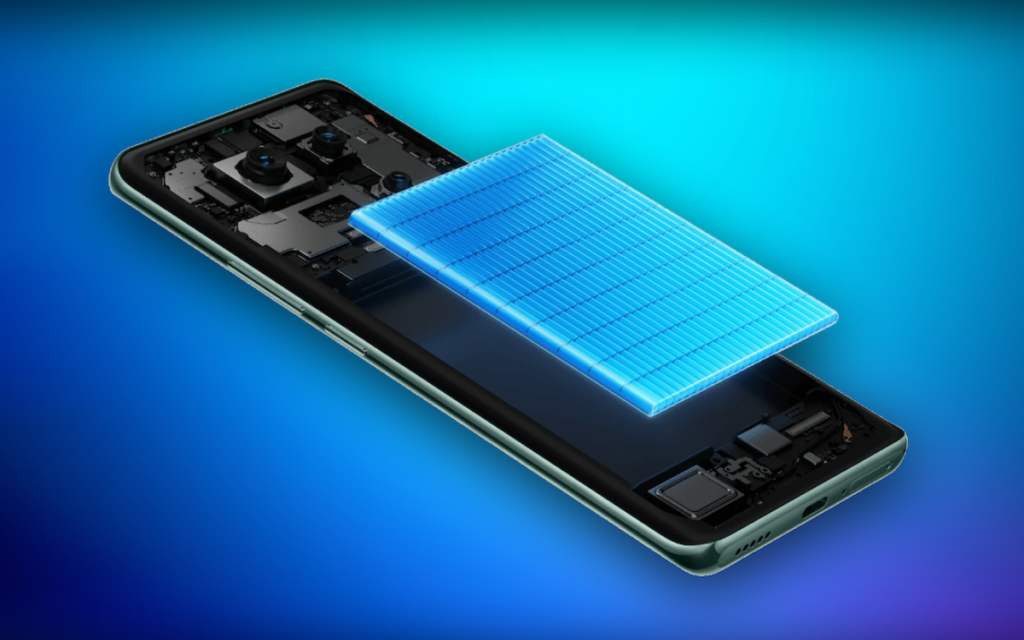
The result is incremental improvement rather than a radical redesign. But incremental is enough when the goal is to squeeze extra capacity into the same space. That’s how phones are now crossing 7,000mAh and 8,000mAh thresholds without pushing past 8mm thickness.
The Timeline of Si/C batteries
Silicon-carbon batteries didn’t suddenly appear in 2026. The transition has been gradual.
Around 2023, some manufacturers began experimenting with small percentages of silicon in their battery anodes, often in the 5 to 10 percent range. The gains were modest but noticeable. Phones could squeeze in slightly larger batteries without adding thickness.
By 2024 and 2025, the technology became more common, particularly among Chinese brands. Silicon content increased incrementally. Energy density improved. And instead of seeing 5,000mAh as the upper boundary for slim phones, we started seeing 6,000mAh and beyond.
Now, 8,000mAh devices are entering the conversation without looking like rugged bricks.
And, it’s not just one company
Tecno isn’t alone in this race. The Honor Power, launched last year, features an 8000mAh cell in a body under 8mm thick. Likewise, the iQOO Z11 Turbo has a 7600mAh battery while measuring 8.1mm.
The foldables like Honor Magic V5 also use a silicon-carbon battery, fitting over 6,000mAh into a thin foldable chassis. That’s significant because foldables have even less internal space to work with.
The common thread isn’t just capacity. It’s energy density. Companies are packing more watt-hours per cubic millimeter than before. That’s what makes these numbers possible without turning phones into thick slabs.
Why Apple and Samsung are late in this
If you’re wondering why the iPhone or Galaxy line hasn’t jumped to 8,000mAh yet, there are a few likely reasons.
A part of that is philosophical. Both Apple and Samsung prioritize battery longevity and long-term stability above everything else. Meanwhile, silicon-carbon batteries, while promising, are still relatively new at scale.
Managing swelling, maintaining cycle life, and ensuring safety across millions of units isn’t trivial for these brands. This could be the reason why the two giants are moving conservatively with battery chemistry changes.
Regulation and logistics may play a role here. Shipping high-capacity lithium batteries across global markets involves strict certification standards. Some manufacturers are more aggressive in pushing the envelope within certain regions first.
That doesn’t mean Apple or Samsung can’t adopt silicon-carbon batteries. It just means they’re unlikely to lead the first wave.
What comes next
If silicon-carbon tech keeps improving, it’s not long before phones with 10,000mAh or larger batteries become common in the industry. In fact, Honor and Realme have already launched their 10,000mAh phones.
Higher silicon percentages, improved anode structures, and better thermal management could push energy density even further without the bulk that older battery tech required. However, as inspiring as it looks, there are a few looming questions around silicon-carbon batteries, like:
- Battery life over years of use
- Heat management during fast charging
- Costs of advanced battery materials
These will shape how quickly the industry moves and which brands adopt the new tech first.
Don’t miss a thing! Join our Telegram community for instant updates and grab our free daily newsletter for the best tech stories!
For more daily updates, please visit our News Section.
The post How phone makers are fitting 8,000mAh batteries in a 7mm body appeared first on Gizmochina.

 Login
Login