Login
Login
Rising number of Americans report owning firearms for protection at public political events
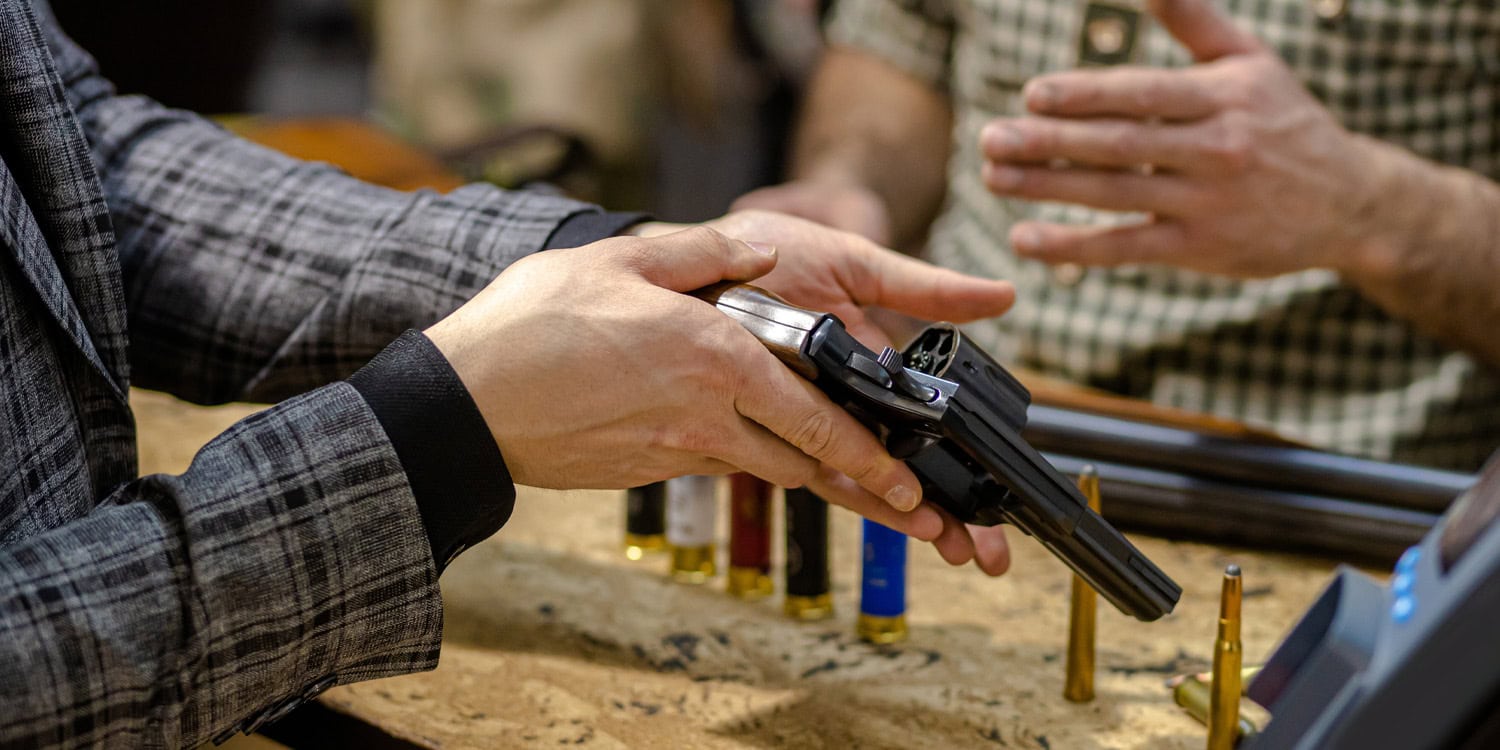
New research published in the journal Injury Epidemiology highlights a shift in the motivations behind gun ownership in the United States. Following the 2024 presidential election, fewer gun owners reported possessing firearms to advance political objectives. However, a growing number of owners, particularly Republicans, cited the need for protection at political rallies and protests as a primary reason for owning a gun.
The landscape of gun ownership in America has evolved substantially over the past few decades. “Over time, we’ve been noticing shifts in Americans’ reasons for owning guns,” said study author Julie A. Ward, an assistant professor at Vanderbilt University.
“It used to be that if you asked gun owners why they own a gun or guns, the main reason you would hear was ‘for hunting’. Over time, hunting has stayed an important reason for many gun owners, but we’ve also seen growth in other reasons. Now, for example, “protection from other people” or for potential use in political or ideological conflict is increasingly common.”
“In a nationally representative survey we fielded in 2023, we saw that 85% of newer gun owners (meaning, people who purchased their first gun since 2020) said that at least one political violence related reason for gun ownership was personally important to them.”
“Roughly 60% of these newer gun owners cited defensive reasons (meaning, to protect themselves from political violence) and a similar portion cited assertive reasons (meaning, to advance an important political objective of their own). These proportions were nearly double what we saw among longer-term gun owners that year.”
“Knowing this – we wondered what changes we might see in Americans’ reasons for gun ownership two years later – following these hints of potential growth in owning guns for use in political conflict and on the heels of a 2024 US Presidential election that involved very high levels of political aggression and violence,” Ward explained.
“These are very real-world questions that we were trying to answer: What reasons do US gun owners give for their personal gun ownership? And, have those reasons changed since 2023 – either overall or by political affiliation? Understanding gun owners’ interests and concerns in this time of escalating tensions is critical for figuring out what we need to do to keep people safe.”
To investigate this, the researchers analyzed data from the National Survey of Gun Policy. This is a recurring survey that tracks public opinion on firearms and related policies. The study utilized two specific waves of the survey. The first wave was collected in January and February of 2023. The second wave was collected in January 2025, shortly before the presidential inauguration.
The total sample consisted of 2,003 adults who personally owned firearms. The participants were split evenly between the 2023 and 2025 groups. To ensure the findings applied to the general public, the researchers used statistical weighting. This is a method that adjusts the survey data so that the demographics of the respondents match the age, race, and gender makeup of the entire country.
Participants in the study were presented with a list of ten potential reasons for owning a gun. They were asked to rate how important each reason was to them personally. The options covered a wide range of motivations. These included traditional reasons like hunting or recreational target shooting.
The list also included specific questions regarding political violence. For example, participants were asked if they owned a gun “for protection at demonstrations, rallies, or protests.” Another option asked if they owned a gun “to advance an important political objective.” This phrasing implies using the firearm as a tool to force a political outcome rather than just for safety.
The researchers found a notable decline in the number of people owning guns for offensive political purposes. In 2023, roughly 35 percent of gun owners said that advancing a political objective was an important reason for ownership. By 2025, that number had dropped significantly to 22 percent.
“We found that as political violence escalated nationally, large majorities of Democrat, Independent, and Republican gun owners were rejecting such violence,” Ward told PsyPost. “Compared with responses in 2023, in 2025, we saw significantly fewer gun owners endorsing gun ownership to ‘advance an important political objective’ across each of these political groups.”
In contrast, the researchers observed a rise in gun ownership motivated by a desire for protection in political spaces. In 2025, 42 percent of all gun owners said protection at demonstrations or rallies was an important reason for ownership. This was an increase from 35 percent in 2023.
This shift was largely driven by Republican gun owners. The data showed that 51 percent of Republican respondents in 2025 cited protection at rallies as a key reason for owning a gun. This was a significant jump from 40 percent in 2023.
“This tells us there is growing concern among gun owners for personal safety in spaces that are used for political speech,” Ward said. “The problem is, even when motivated by defensive interests, increased gun carrying doesn’t reduce a population’s risk for gun-related harms – it increases it.”
“It is especially urgent that policymakers act on these safety concerns. For example, policies that regulate gun carrying in sensitive spaces are a strategy that can protect First and Second Amendment rights at the same time. For public safety and for democracy, it is critical that that people not only feel safe – but actually also are safe – when they are exercising their right to free speech.”
Republicans also reported increases in other protective motivations. In 2025, 97 percent of Republican gun owners cited home protection as an important reason, up from 93 percent. Additionally, concern regarding police violence increased within this group. About 34 percent of Republicans cited protection against police as a reason for ownership in 2025, compared to 25 percent in 2023.
The researchers also found a resurgence in hunting as a motivation. Among all gun owners, 81 percent listed hunting as important in 2025. This was an increase from 74 percent in the previous survey.
“We think there may be some interesting explanations for why we see these differences happening together,” Ward told PsyPost. “One may relate to marketing – linking consumerism (related to buying more or different guns) to threat messaging and to personal identities can be a powerful way to increase gun sales. And, those types of messages don’t come at us randomly. Social media and newsfeed algorithms can use political identity to shape the messages we see. How those exposures shape how we feel about our own gun ownership could be an important direction for future research.”
There are some limitations to this study that should be considered. The research compared two different groups of people at two different times. It did not track the same individuals over the two-year period. This means the study describes changes in the overall population, but it cannot pinpoint if specific individuals changed their minds.
“The results we report are both statistically significant and practically significant,” Ward noted. “Many of these differences were double-digit percentage point shifts. It’s also important to note that the way this large survey was designed means these results are representative of the population of gun owners nationwide.”
There is also the potential for social desirability bias. This is a phenomenon where survey takers give answers they believe are socially acceptable, rather than what they truly feel. However, the anonymous nature of the survey helps to reduce this likelihood.
Future research could examine the underlying causes of these shifts. Scientists suggest investigating how media consumption and political marketing influence fears of victimization. Understanding why specific groups feel unsafe at political events could help policymakers design better security measures.
The study, “Gun ownership for political protection or armed political expression: a nationally representative analysis of differences in 2025 vs. 2023,” was authored by Julie A. Ward, Rebecca A. Valek, Vanya C. Jones, Lilliana Mason, and Cassandra K. Crifasi.