Reading view

World Cup 2026 TV Schedule USA and Streaming Links

World Cup 2026 TV schedule This World Cup TV schedule has everything you need to know about the biggest sporting event on Earth. Where to watch the World Cup on TV? World Cup 2026, like those of 2018 and 2022, is live across FOX and FS1 (English-language) plus Telemundo and Universo (Spanish-language). All World Cup […]

World Cup 2026 TV schedule

This World Cup TV schedule has everything you need to know about the biggest sporting event on Earth.

Where to watch the World Cup on TV?

World Cup 2026, like those of 2018 and 2022, is live across FOX and FS1 (English-language) plus Telemundo and Universo (Spanish-language). All World Cup games are shown live across streaming services Fubo, Peacock TV, Sling TV, and YouTube TV.

Watch the World Cup on Fubo:

Our Pick:

Includes: Ligue 1, Copa Libertadores, World Cup Qualifiers, 80+ Sports Channels Available
Fubo
7-Day Free Trial


As the 2026 World Cup nears, there will be new developments in regard to the full schedule. Teams and actual time slots are not confirmed until just months before the World Cup. However, the format should smooth out in the years leading up to the competition.

When is the next World Cup?

After Argentina defeated France in the 2022 World Cup Final, heads already started turning to 2026. That tournament, hosted jointly by the USA, Mexico and Canada, kicks off in the summer of 2026. It is a return to the more traditional timing of June to July. The previous World Cup was the first to take place outside that time frame, as it went from November through December.

The 2026 World Cup also has a number of changes. There will be 48 teams competing, up from 32 in 2022.

It is the second time the United States is the host, and the third for Mexico. Canada, on the other hand, only has experience with a Women’s World Cup. Yet, that is valuable experience for a country hosting its first men’s World Cup.

2026 HOST CITIES

Sixteen host cities across the three nations have been selected and broken into three regions – East, Central, and West. Half of the venues usually use artificial turf, but will have natural grass playing surfaces installed for the tournament. 

Guadalajara (Estadio Akron), Los Angeles (SoFi Stadium), San Francisco Bay (Levi’s Stadium), Seattle (Lumen Field), and Vancouver (BC Place) make up the West region. 

Atlanta (Mercedes-Benz Stadium), Dallas (AT&T Stadium), Houston (NRG Stadium), Kansas City (Arrowhead Stadium), Mexico City (Estadio Azteca), and Monterrey (Estadio BBVA) are the Central hosts.

And in the East, matches will be staged in New England (Gillette Stadium), Miami (Hard Rock Stadium), New Jersey/New York (MetLife Stadium), Philadelphia (Lincoln Financial Field), and Toronto (BMO Field). 

Several of the host cities have hosted World Cup games in past tournaments. However only one stadium has been used before – Estadio Azteca. None of the stadiums from the 1994 World Cup are being used. Three no longer exist, and the rest were either not submitted as potential hosts and/or passed over in favor of more modern facilities. Toronto’s BMO Field will be the only World Cup venue that was specifically built for an MLS team. But four others are the regular home venues for MLS sides. And every stadium in the tournament has hosted high-level soccer matches in some capacity in the past.

Vancouver hosted matches at the 2015 FIFA Women’s World Cup, but 2026 will be Toronto’s first World Cup games of any sort. BMO Field will be expanded for the tournament to meet seating capacity requirements.

World Cup History

For almost a century, the history of the FIFA World Cup captivated supporters across the world. It is, after all, the ultimate event in the world’s most popular sport. The competition began modestly with the goal of bringing people together through sport and has since grown into a massive spectacle that attracts billions of viewers.

Nothing in soccer can rival the prestige of the World Cup. While the UEFA Champions League may deliver games of similar quality, it falls short of the status earned by the World Cup due to its long-standing tradition and the unique aspect of one team representing an entire country.

Supporters journey from various corners of the globe to witness their preferred teams play against some of the world’s most skilled soccer players. Teams representing Africa, Asia, Europe, North and Central America, and the Caribbean, Oceania, and South America compete in the World Cup. In addition, in terms of significance, no other sports event can compete.

The World Cup stands as the most prestigious soccer tournament globally, recognized as the most extensively watched and followed single sporting event across the world. The 2018 World Cup pulled in about 3.57 billion viewers, which is nearly half of the global population. In comparison, engagement with the 2022 World Cup hit 5 billion. Approximately 1.5 billion individuals tuned in for the final match.

Qatar hosted the 2022 World Cup, making it the most recent of 17 countries to host the competition. Mexico will hold the unique distinction of being the first nation to host games in three World Cups when it co-hosts the 2026 event with the United States and Canada.
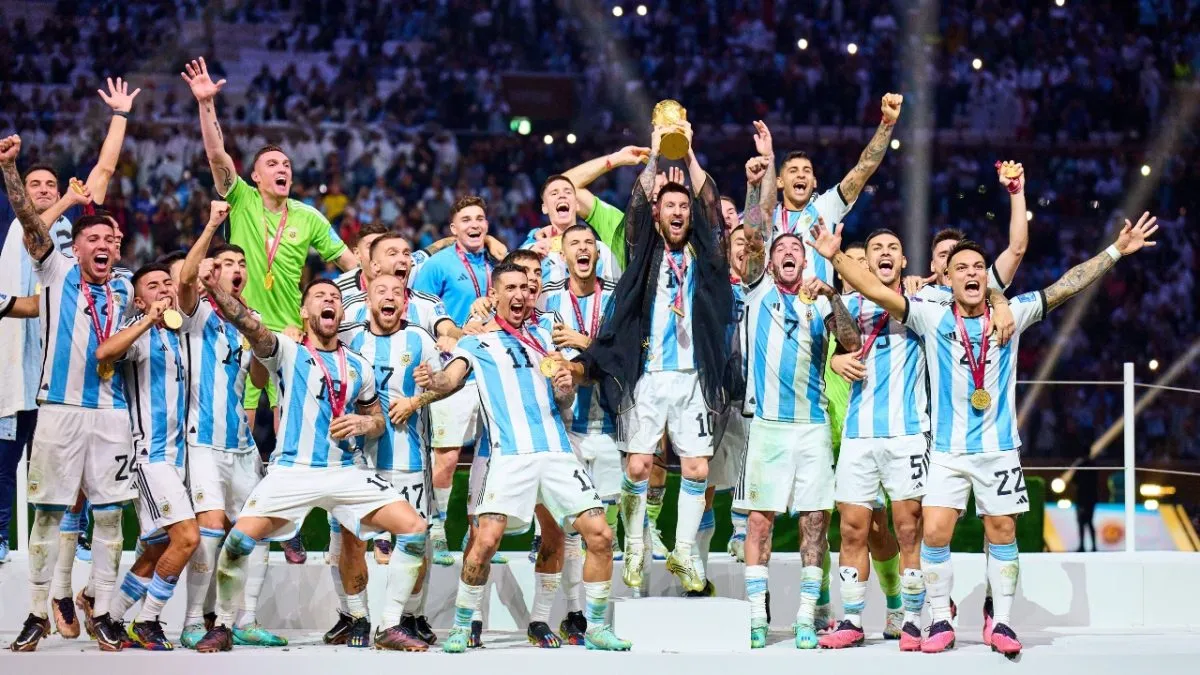
Argentina is the defending World Cup champion. A win over France in Qatar in 2022 was the third title for the South American nation.

The idea behind the World Cup

Scotland vs. England was the world’s first international soccer match, which took place in Glasgow in 1872. England, Scotland, Wales, and Ireland competed in the first-ever British Home Championship, the first-ever international competition for nations held in 1884.

In the early 1900s, soccer gained popularity in various regions of the world. It was a demonstration sport at the Summer Olympics, with no medals given out in 1900 and 1904.

FIFA attempted to set up an international soccer competition in 1906 in Switzerland amongst countries not affiliated with the Olympic Games after it was established in 1904. International soccer was still in its infancy during these times, and the first preview of what a World Cup could be was deemed a failure by FIFA’s official history.

Soccer gained formal Olympic status in 1908 during the Summer Olympics in London. The Football Association (FA) is responsible for overseeing soccer in England. The FA organized the event. Yet many viewed it as a show, not a competition. This tournament exclusively featured amateur athletes.

In 1909, Sir Thomas Lipton organized the Sir Thomas Lipton Trophy tournament in Turin, although the Olympic event remained an amateur competition. Several clubs from various countries competed in the Lipton competition, each of which represented a whole nation – these clubs were not national teams.

It was contested by the most elite professional club teams from Italy, Germany, and Switzerland, and is frequently referred to as “The First World Cup.” The Football Association of England, however, turned down the invitation to send a professional squad and refused to be connected to the event.

Because of the Olympics’ ban on professional athletes, a global tournament featuring the best teams in the sport was badly needed. The game was going through a professionalization process in the 1920s that was not in line with the Olympic ideals. As a result, FIFA, the government organization, started planning to host a World Cup. On May 26, 1928, the decision to organize the inaugural edition was formally announced.

Inaugural tournament and how it came to be

Since its first event in Uruguay in 1930, the World Cup has been contested every four years. There were a pair of interruptions due to World War II. Now, the World Cup serves as a symbol of togetherness and joy for a host country. It welcomes the world to get a taste of its culture.

Contrast the magnificent event we know now with the humble beginnings of the World Cup. There were 13 teams in the tournament. Hosts Uruguay came out on top following a 4-2 victory against Argentina in the championship match.

In any case, the tournament’s triumph paved the way for a worldwide soccer revolution. Since then, the World Cup has become a scheduled event. Supporters rejoice in the spirit of teamwork and competition every four years.

The competition experienced an unexpected pause during World War II. Worldwide struggle canceled the 1942 and 1946 tournaments. The 1950 edition, held in Brazil, became a symbol of optimism and healing. The tournament pioneered a new group stage structure. In that same tournament, Uruguay famously upset Brazil in the final. Roughly 200,000 fans at the Maracana Stadium in Rio de Janeiro watched the “Maracanazo.”
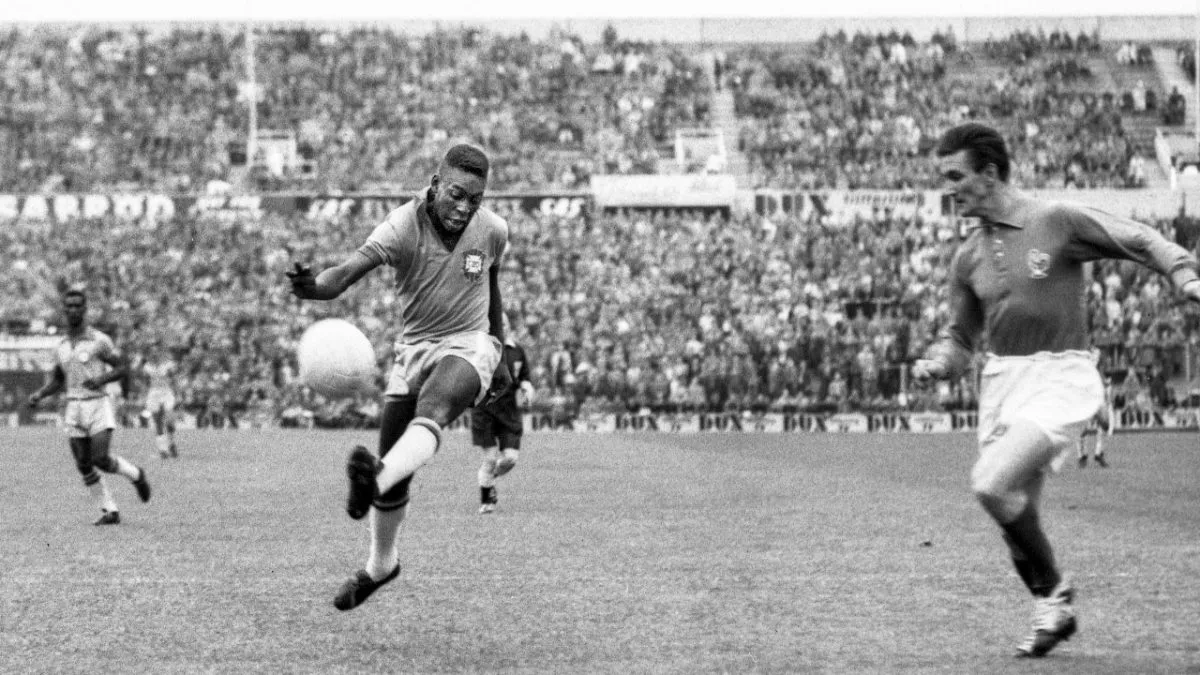
Pele helped Brazil win its first World Cup title in 1958. His hat trick in the final against Sweden set up arguably the best international career of all time.

Before 1978, only 16 teams competed. In 1982, there were 24 teams; in 1998, that number doubled to 32. Starting in 2026, there will be 48 teams competing in one event. There will be a total of 16 groups, each with three teams.

From 1930 until 1970, the tournament’s winner took home the Jules Rimet Trophy. That commemorated the Frenchman who first came up with the idea for the competition. In 1970, Brazil became the first team to lift the trophy three times. Brazil ended up keeping the Jules Rimet trophy. Therefore, FIFA brought a new trophy to the World Cup.

World Cup: 21 century and modern history

Germany, Italy and France rose to prominence in the 1990s and 2000s. In 1998, with the increase to 32 teams, the tournament became more than just a soccer competition; it also served as a forum for diplomatic and cultural interaction.

South Africa hosting the 2010 World Cup was the first time for an African country. Enthusiastic fanfare, the unmistakable sound of vuvuzelas and Spain’s innovative tiki-taka style brought an unforgettable tournament. This demonstrated the power of soccer’s World Cup to bring together people from all walks of life.

Nearing its centennial, the FIFA World Cup is a symbol of the power of sports to bring people together. The World Cup has grown from its humble origins in Uruguay to the worldwide spectacle it is today. Now, it is an indelible part of the fabric of human culture. Beyond the excitement of competition, it has functioned as a cultural bridge, building understanding and solidarity across cultures.

Scottish Premiership 2026 TV Schedule USA and Streaming Links

Scottish Premiership TV Schedule If you're looking for the Scottish Premiership TV schedule for fans in the United States, you've come to the right place. CBS owns the rights to the Scottish Premiership as part of its extensive coverage of European soccer. Therefore, games in Scotland's top division are regularly available on CBS's streaming platform, […]

Scottish Premiership TV Schedule

If you’re looking for the Scottish Premiership TV schedule for fans in the United States, you’ve come to the right place.

CBS owns the rights to the Scottish Premiership as part of its extensive coverage of European soccer. Therefore, games in Scotland’s top division are regularly available on CBS’s streaming platform, Paramount+.

Our Pick:

Includes: Champions League, Europa League, Serie A, NWSL, Scottish Premiership, & More
Paramount+
Sign Up


For the 2025/26 season, CBS will carry at least one Scottish Premiership match per week on either CBS Sports Network or Paramount+. The network will also have coverage of select matches from the Scottish Championship, Betfred Cup (Scottish League Cup) and Scottish League Cup. The U.S. media rights include both English and Spanish to the Scottish Premiership, the top professional soccer league in Scotland.

The Scottish Premiership, previously known for sponsorship reasons as the William Hill Premiership, is the top division of the Scottish Professional Football League (SPFL), the league competition for men’s professional football clubs in Scotland.

Every week, we’ll update the TV schedules for you.

Primeira Liga 2026 TV Schedule USA and Streaming Links

Primeira Liga TV schedule The Portuguese Primeira Liga (Liga Portugal Betclic) is home to some of Europe's most storied clubs, including the "Big Three" of Benfica, Porto, and Sporting CP. Known as a premier talent factory, the league provides a first look at the world’s next superstars before they move to the Premier League or […]

Primeira Liga TV schedule

The Portuguese Primeira Liga (Liga Portugal Betclic) is home to some of Europe’s most storied clubs, including the “Big Three” of Benfica, Porto, and Sporting CP. Known as a premier talent factory, the league provides a first look at the world’s next superstars before they move to the Premier League or La Liga.

As of January 1, 2026, the broadcast landscape for the Primeira Liga in the United States has entered a period of transition following the closure of GolTV, which previously held the exclusive rights. While the league moves toward a centralized rights model in 2027, the current 2025/26 season is currently spread across niche providers.

RTP Internacional (Select Matches)

RTP Internacional remains the most reliable legal option for fans in the U.S. to watch the league on television. The channel typically broadcasts one marquee match per week live, usually featuring one of the Big Three (Porto, Benfica, or Sporting).

Availability: RTP Internacional is available as an add-on via Fubo, Dish Network, and select cable providers.

Benfica TV (BTV) for Home Games

If you are a fan of SL Benfica, you can still watch all of the club’s home matches via their proprietary streaming service, BTV.

How to watch: BTV is available as a standalone subscription through the club’s website or app and is sometimes carried as a premium add-on by Portuguese-language specialty providers in the U.S..

NWSL 2026 TV Schedule USA and Streaming Links

NWSL TV schedule America's home to women's club soccer is the National Women's Soccer League (NWSL). Launched in 2013 with eight teams, the league features many of the best and up-and-coming U.S. women soccer stars. Make sure you don't miss a match by bookmarking our NWSL TV schedule, and visit often for the most accurate […]

NWSL TV schedule

America’s home to women’s club soccer is the National Women’s Soccer League (NWSL). Launched in 2013 with eight teams, the league features many of the best and up-and-coming U.S. women soccer stars. Make sure you don’t miss a match by bookmarking our NWSL TV schedule, and visit often for the most accurate and comprehensive listings of games.

For viewers in the United States, multi-partner NWSL TV deal sees games on various platforms through 2027.

Watch NWSL with Fubo:

Our Pick:

Includes: Ligue 1, Copa Libertadores, World Cup Qualifiers, 80+ Sports Channels Available
Fubo
7-Day Free Trial


Starting in 2024, the NWSL has a four-year national broadcast rights deal split between ESPN, CBS, Amazon, and Scripps Sports (ION).

Friday night games each week will feature on Amazon’s Prime Video service. Prime video will also carry one of the league’s playoff quarterfinals.

The CBS Television Network and CBS Sports Network air a minimum of 21 games throughout the year, including a quarterfinal, semifinal, and the NWSL Championship all on the main CBS network. Games on over-the-air CBS will also stream on Paramount+, the network’s subscription video on demand and live streaming service.

20 games are televised on ESPN platforms (either ABC, ESPN, ESPN2 and/or ESPN Deportes). All of these games will be simulcast live on the streaming service ESPN+.

And finally, 50 regular season matches are set to be aired on the ION TV network (available over-the-air and on most cable/satellite plans) as part pf 25 Saturday night doubleheaders.

The remaining regular season matches not part of the national TV schedule will be streamed directly by the NWSL.

NWSL Challenge Cup

Started in 2020 as a return-to-play event during the Covid-19 pandemic, the Challenge Cup has evolved in its short history. After initially being a preseason event, in 2023 the tournament ran concurrently with the league season, becoming the equivalent of a “League Cup”. For 2024 and beyond, it is a single match between the previous season’s NWSL Shield (best record) and NWSL Championship (playoff) winners. If the same team wins both of those titles, the Challenge Cup will be a rematch of the Championship final.

NWSL TV Schedule: Devices

As far as devices go, Paramount+, Prime Video and ESPN+ can be streamed on your PC or Mac as well as Roku, iPhone and Android phones, Apple TV, Chromecast, Amazon Fire TV, PlayStation 4, Samsung smart TV, Vizio and XBOX One.

Coppa Italia 2026 TV Schedule USA and Streaming Links

Coppa Italia TV schedule Italy's prestigious cup competition, known as Coppa Italia, features club teams across the country battling it out for the distinction of being the national cup champions. To make sure you don't miss a match, be sure to bookmark our Coppa Italia TV schedule and visit often for the most accurate and […]

Coppa Italia TV schedule

Italy’s prestigious cup competition, known as Coppa Italia, features club teams across the country battling it out for the distinction of being the national cup champions. To make sure you don’t miss a match, be sure to bookmark our Coppa Italia TV schedule and visit often for the most accurate and comprehensive listings of games.

Watch Coppa Italia on Paramount+:

Our Pick:

Includes: Champions League, Europa League, Serie A, NWSL, Scottish Premiership, & More
Paramount+
Sign Up


Paramount+ is $8.99 per month (or $89.99 annually) and features more than a thousand live matches each year across an extensive portfolio of soccer properties, including UEFA club competitions, NWSL, Concacaf Men’s World Cup Qualifiers, and more.

As far as devices go, Paramount+ can be streamed on your PC or Mac as well as Roku, iPhone and Android phones, Apple TV, Chromecast, Amazon Fire TV, PlayStation 4, Samsung smart TV, Vizio and XBOX One.

Coppa Italia History

The Coppa Italia is a dynamic part of Italy’s soccer environment that shows how much the country loves this sport. It is among Europe’s most storied cup tournaments.

Capturing the intensity, emotion, and unpredictability that characterize soccer, the competition has become an integral part of Italian soccer history. Throughout its history, the Coppa Italia has been instrumental in molding the stories of storied teams and unforgettable players.

The idea behind Coppa Italia and its early years

The Italian Football Federation (FIGC) wanted to add a national cup competition to the mix in the early 1900s. That’s where the Coppa Italia had its start.

The first Coppa Italia tournament took place in the 1922-23 season and included clubs from throughout Italy. But it omitted the top teams at the time.

A spirit of innovation pervaded the tournament in its early years. The format changed many times, with different tournament structures and numbers of competing teams. Notwithstanding these ups and downs, the Coppa Italia continued to grow in popularity, capturing the hearts and minds of fans all across Italy.

Suspension and Post-war renaissance

The Coppa Italia was suspended when World War II broke out. Due to the wartime hiatus, the tournament did not restart until the 1945-46 season. That year marked a return to form for Italian soccer after the war.

When the war ended, interest in the Coppa Italia spiked again, and several teams wanted a chance to have their names engraved on the trophy. Because it brought pleasure and normality to war-weary people, the tournament was crucial in restoring the nation’s spirit.

Coppa Italia: 21st century and modern era

To keep up with the changing nature of soccer as the new century began, the Coppa Italia went through a number of changes. In the 2007-08 season, the competition was taken to the next level with the introduction of a two-legged semifinal format. This format brought more chances for underdog tales and incredible comebacks.

For fans in the country, the Coppa Italia has become not just another tournament; it’s a source of thrilling, emotional matches.

The 2017-18 Coppa Italia season saw the introduction of Video Assistant Referee (VAR) technology, in keeping with worldwide trends. The tournament sought to guarantee both fair play and accurate decisions. Thus, the use of video assistant referees was a giant leap forward in the dedication to having the best officiating possible.

The champion of Coppa Italia automatically qualifies to compete in the following season’s UEFA Europa League. Champions and runners-up of the Coppa Italia are also entered into the Supercoppa Italiana.

Originally a two-team traditional super cup, from 2023 on the Supercoppa has expanded to a four-team format. The winners and runners-up of both the Coppa and Serie A now all compete in a mid-season mini-tournament.

As far as the modern Coppa Italia is concerned, there are seven separate rounds. All of these rounds are one-leg knockout contests, except for the semi-finals, which are two-leg affairs.

The first round of the Coppa Italia is when clubs from Italy’s second division, Serie B, and the 12 clubs with the worst records from the previous season’s Serie A compete. By the time the third round rolls around, the top eight Serie A teams will have entered the tournament.

Ligue 1 2026 TV Schedule USA and Streaming Links

Ligue 1 TV schedule You will often find the Ligue 1 schedule updated before the information is officially released. It includes the PSG schedule, among other teams. Browse the Ligue 1 TV schedule below for games shown on US television and the Internet. They range across channels such as beIN SPORTS, beIN SPORT Español, beIN SPORTS Connect, Fubo and […]

Ligue 1 TV schedule

You will often find the Ligue 1 schedule updated before the information is officially released. It includes the PSG schedule, among other teams.

Browse the Ligue 1 TV schedule below for games shown on US television and the Internet. They range across channels such as beIN SPORTS, beIN SPORT Español, beIN SPORTS Connect, Fubo and Fanatiz.

In the United States, beIN SPORTS and beIN SPORTS en Español are the home of French Ligue 1 soccer. For instance, the league features teams such as Paris Saint-Germain, Olympique Lyonnais, Marseille, Saint Étienne, AS Monaco FC and others.

Watch Ligue 1 on Fubo:

Our Pick:

Includes: Ligue 1, Copa Libertadores, World Cup Qualifiers, 80+ Sports Channels Available
Fubo
7-Day Free Trial


There are 18 clubs in the league, which is a change from years prior. Because of that PSG hegemony, much of the intrigue for Ligue 1 revolves around other teams vying for top four. That regularly features teams like Marseille, Monaco, Nice or Lyon. Yet, the French division has produced great stories like Lens qualifying for the Champions League after the 2022/23 season.

Unfortunately for Ligue 1, the league does not carry the same following as competitions like the Premier League, Serie A or LaLiga.

Champions League 2026 TV Schedule USA and Streaming Links

Champions League TV Schedule Find out where, when, and how to watch the giants of European soccer with our Champions League TV schedule. In the United States, CBS Sports have the exclusive English-language rights to broadcast UEFA Champions League games. This also includes UEFA Europa League and UEFA Super Cup until the end of the […]

Champions League TV Schedule

Find out where, when, and how to watch the giants of European soccer with our Champions League TV schedule.

In the United States, CBS Sports have the exclusive English-language rights to broadcast UEFA Champions League games. This also includes UEFA Europa League and UEFA Super Cup until the end of the 2029/30 season. Coverage from the Group Stage all the way through to the final every year to determine who will be crowned UEFA champions will continue through the rest of the decade.

Starting with the 2025/26 season, a new sublicensing agreement between TelevisaUnivision and DAZN has changed how Spanish-speaking fans in the U.S. access the tournament. While TelevisaUnivision remains the primary Spanish-language rights holder, DAZN now exclusively streams 38 Champions League matches per season in Spanish.

These matches are streamed exclusively on the DAZN platform and are not simulcast on Univision, TUDN, UniMás, or ViX. In addition to these exclusive games, DAZN also shares co-exclusive rights with TelevisaUnivision for the most high-profile fixtures later in the tournament, including: All four Quarterfinals, both Semifinals, and the Champions League Final.

This partnership ensures that every single match of the competition is available with Spanish-language commentary across the combined platforms of TelevisaUnivision and DAZN.

Watch Champions League on Paramount+:

Our Pick:

Includes: Champions League, Europa League, Serie A, NWSL, Scottish Premiership, & More
Paramount+
Sign Up


For the Champions League schedule, every single game of the super league will be streamed exclusively through the streaming service Paramount+, which offers a 7-day free trial. Very few games will air on TV via CBS and/or CBS Sports Network.

Annual Champions League Schedule

The UEFA Champions League has introduced a new format for the 2024/25 season, enhancing the competition’s structure and increasing the number of participating teams. This update aims to provide fans with more exciting and meaningful matches throughout the tournament.

  • Expanded League Phase: The traditional group stage has been replaced by a single league phase comprising 36 teams, an increase from the previous 32.
  • Number of Matches: Each team will play eight matches against eight different opponents (four home and four away), instead of the previous six matches against three teams.
  • Qualification to Knockout Stage:
    • The top eight teams in the league phase will automatically advance to the Round of 16.
    • Teams ranked 9th to 24th will enter a two-legged playoff to compete for a place in the Round of 16.
    • Teams finishing 25th and below will be eliminated from European competitions for that season.
  • Scheduling: The league phase matches are spread over ten weeks, providing a more streamlined and fan-friendly schedule.

UCL on American TV, from past to present

An average of 2.1 million fans watched the 2023 Final between Manchester City and Inter Milan on CBS in the United States.

The Champions League started out on US TV in the late 1990s on ESPN. During the mid-2000s on ESPN is really when the competition began to become somewhat of a phenomenon in the US for the first time. By 2010 broadcasts shifted to FOX Sports, where UCL games in English would remain for nearly a decade.

In 2018, coverage moved to Turner Sports. English broadcasts on TNT and Bleacher Report Live were not particularly well received, similar to FOX’s tenure with the competition. However Turner’s viewership figures ended up much higher than FOX Sports due to better distribution for their networks.

Meanwhile Univision acquired the Spanish rights, which has proven to be a popular move.

CBS surprisingly swooped in to secure English-language UEFA club competition rights from 2021-24. Comprehensive coverage of games, across Paramount+, CBS Sports Network, and the main CBS Network, have generally been received positively.

Both the CBS and Univision deals have since been extended (through 2029/30 and 2026/27, respectively).

Champions League History

Midway through the twentieth century, the Champions League’s history began. In 1930, Swiss club Servette attempted to establish a competition for the continent’s best clubs by fielding a national champions’ team.

Champion teams from the ten most powerful European soccer countries of the time were invited to compete in a competition known as “Coupe des Nations,” which was a huge success. Hungarian club Ujpest won the championship, but despite the tournament’s popularity, it was never held again owing to funding constraints.

Then almost two decades later, a precursor to the Copa Libertadores, the Campeonato Sudamericano de Campeones (South American Championship of Champions) began play in 1948 following years of planning and preparation. The notion of a continental club champions league only captivated French sports writer Jacques Ferran.

Thus, the European Football Association’s official history of the European Cup credits Jacques Ferran and Gabriel Hanot, writers for the French sports daily L’Équipe, as the tournament’s original creators. Hanot had a dream that was realized in 1955 when he saw the first European Cup play.

Meanwhile, Ferran revealed that the South American Championship of Champions provided the impetus for the creation of the European Cup in interviews with the Brazilian sports TV show Globo Esporte in 2015 and the Chilean daily El Mercurio in 2018. “How could Europe, which wanted to be ahead of the rest of the world, not be able to accomplish a competition of the same kind as the South American one? We needed to follow that example,” he said.

How did the European Cup come to be?

In April of 1955, officials from Europe’s top clubs got together to draft competitive guidelines. Game one of the inaugural UEFA Champions League, featuring Sporting Club de Lisbon and FK Partizan, has begun. The name “UEFA Champions League” did not appear until much later. The European Champion Clubs’ Cup or European Cup has been the name of this competition from its inception.

The first event included the best clubs in Europe, and Real Madrid came out on top. This event marked the beginning of a tournament that would come to stand as a benchmark for success and a showcase for thrilling contests.

Early editions of the European Cup used a knockout-style bracket that matched together national champions from different countries. Real Madrid, led by legends like Alfredo Di Stefano and Ferenc Puskas, established early dominance and won the championship five times in a row between 1956 and 1960. It was not until the 1960s, however, that the event was open to more than just the national winners.

Becoming the ‘UEFA Champions League’

The 1992 rebranding to the UEFA Champions League was a watershed moment for the event. Many people see the Champions League’s use of groups instead of a round-robin structure as what sets it apart from the European Cup.

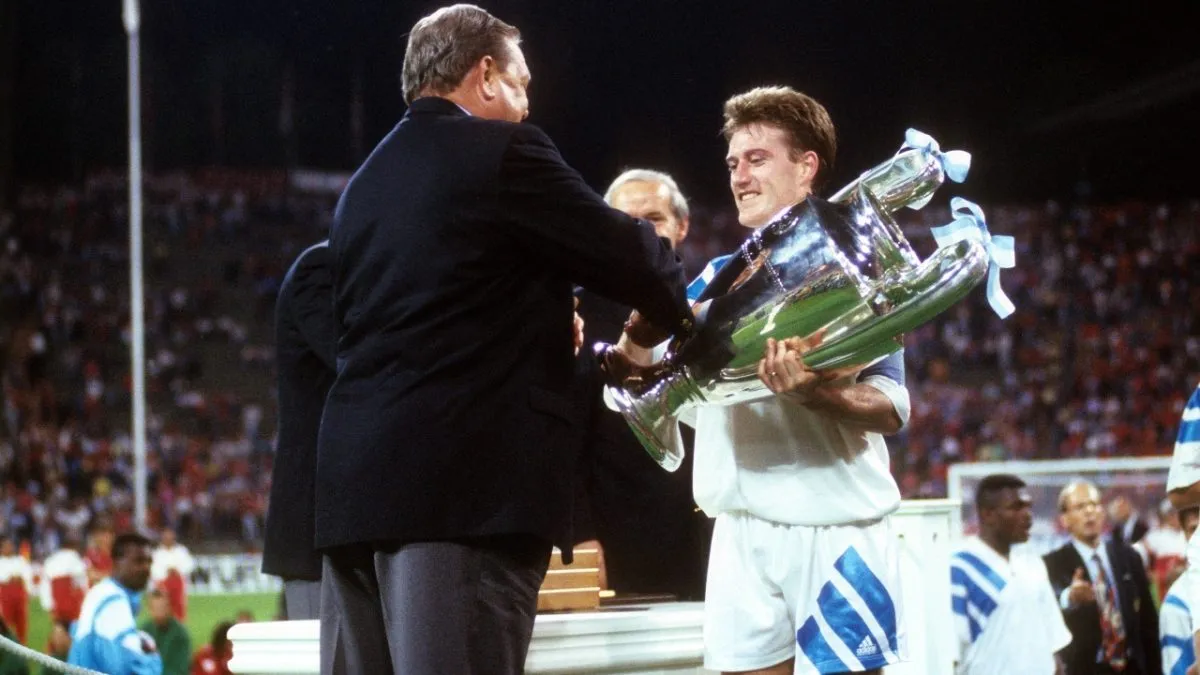
Marseille won the first edition of the ‘UEFA Champions League’ following its rebranding from the European Cup for the 1992/93 season.

The group stage increased the competition’s competitiveness and gave more teams from around Europe a chance to participate. This broadened the Champions League’s field of participants and paved the way for it to become a worldwide phenomenon.

However, a group stage was implemented in 1991; the name change only formalized the reorganization. The format of the tournament has evolved to include elements of both group play and round-robin play.

UEFA Champions League: 21st century and modern history

During the ’90s and ’00s, the Champions League schedule saw unparalleled levels of acclaim. The introduction of satellite television and other technological developments helped spread the game over the world. The competition was watched by people throughout the globe, not only in Europe. Because of this increase in attention, the Champions League has received significant commercial investment. This has turned it into a successful business with attractive sponsorship agreements and media contracts.

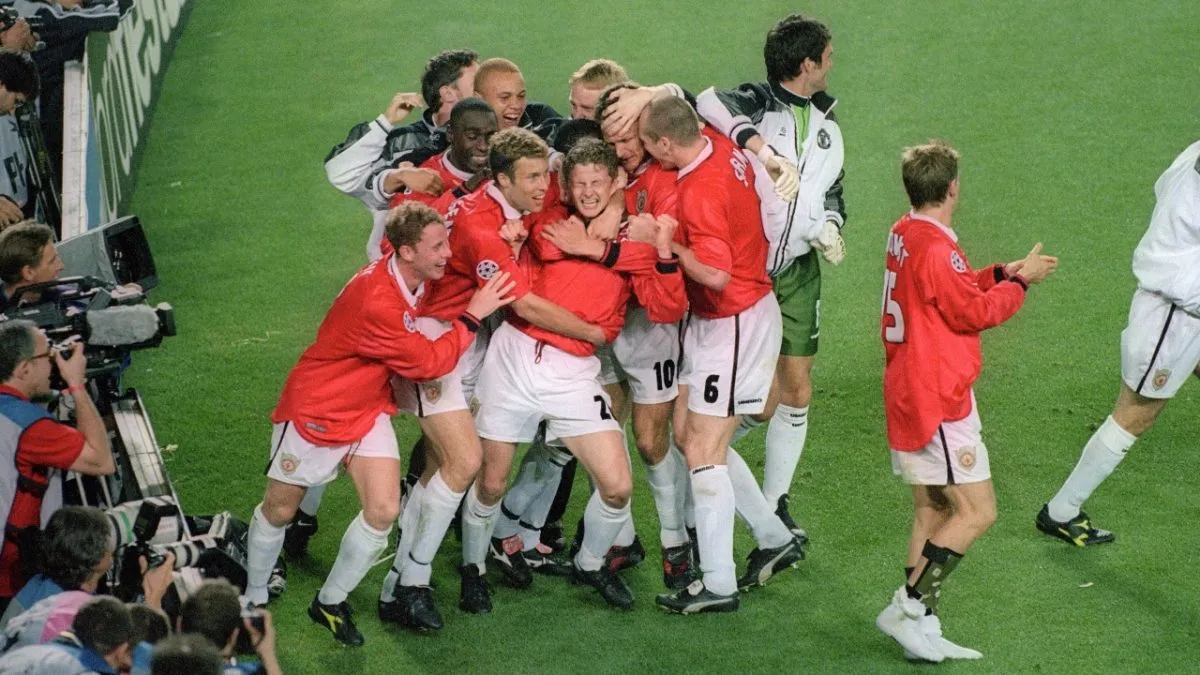
In the minds of soccer fans everywhere, the UEFA Champions League produces legendary occasions. The 2005 final between Liverpool and AC Milan and Manchester United‘s last-minute heroics against Bayern Munich in 1999 are just a few instances. These moments embody the raw passion, unpredictability and absolute brilliance that constitute the core of the event.

Manchester United dramatically winning the 199 UEFA Champions League Final showed how wild the competition can be.

Teams and styles emerge

Soccer ideologies and tactical advancements have all met in Champions League games. The tournament showcased emerging playing styles as they became commonplace. In the 1990s, defense dominated as Italian teams controlled Europe. In the mid-2000s, Barcelona showed tiki-taka can beat the best teams with ease. Roberto Baggio’s dominant AC Milan side of the late 1980s and Pep Guardiola’s 2009-11 Barcelona epitomize these elite squads in the history of the UEFA Champions League.

Contemporary dynasties emerged in European soccer around the start of the 21st century. Real Madrid’s Galacticos era made long-term dominance by teams like Barcelona and Bayern possible. Zinedine Zidane, Luis Figo and Ronaldo exemplified the wave of talent from across the world coming together on one team. However, that Real Madrid side never achieved what became the greatest feat for any club. The best teams of all time won the treble, a collection of three trophies in one season. Those trophies are the domestic league, domestic cup and the UEFA Champions League. Manchester City accomplished this in 2022/23 and PSG in 2024/2025.

MLS 2026 TV Schedule USA and Streaming Links

MLS TV Schedule The MLS TV schedule features 30 teams. Inter Miami, with Lionel Messi, won the 2025 MLS Cup to become the most recent champion. The MLS season kicks off in February, with the regular season running through October. The MLS Cup Playoffs follow soon after. With a total of 30 teams in the […]

MLS TV Schedule

The MLS TV schedule features 30 teams. Inter Miami, with Lionel Messi, won the 2025 MLS Cup to become the most recent champion.

The MLS season kicks off in February, with the regular season running through October. The MLS Cup Playoffs follow soon after.

With a total of 30 teams in the league, each team plays a total of 34 games. Seventeen of those are at home, and 17 are on the road for an even split. Almost all games now are on Wednesdays and Saturdays.

How to Watch MLS in 2026

The broadcasting landscape for Major League Soccer has evolved into a streamlined, all-in-one experience. As of the 2026 season, the standalone “MLS Season Pass” is no longer a separate subscription. Instead, every single Major League Soccer match has been fully integrated into the standard Apple TV subscription.

Apple TV: The Exclusive Streaming Home

For a single monthly price of $12.99, fans now receive complete access to the entire Apple TV library of original content alongside every MLS regular-season game, the MLS Cup Playoffs, and the Leagues Cup. There are no longer separate fees or standalone passes required to follow the league.

  • No Blackouts: Every match is available globally with no local broadcast blackouts.
  • Multilingual Coverage: All matches feature dedicated English and Spanish broadcast teams, while matches involving Canadian clubs also offer French commentary.
  • Enhanced Features: Subscribers can still access “MLS 360″—the live whip-around show providing look-ins to every goal and key moment—and have the option to switch to local home radio broadcasts for any match.

Linear TV Coverage on FOX Sports

While Apple TV is the primary home for every game, FOX Sports remains the linear television partner for 2026.

  • Match Volume: FOX will broadcast a total of 34 matches this season.
  • Channels: These matches are split between the main FOX broadcast network (15 games) and FS1 (19 games).
  • Availability: Even when a match is airing on FOX or FS1, it remains available to stream for all Apple TV subscribers.

Club Benefits

Full-season ticket members for any MLS club continue to receive a complimentary subscription. In 2026, this benefit has been upgraded to include a full year of the complete Apple TV service, giving season ticket holders access to all movies, shows, and MLS matches in one place.

MLS History: From Survival to Global Powerhouse

Major League Soccer’s journey is a tale of perseverance and unwavering dedication. Since its 1996 debut, the league has transformed from a domestic experiment into a global player, proving that American soccer culture is both distinct and flourishing.

The Early Struggles and Founding

MLS began in 1993 as a promise made for hosting the 1994 World Cup. Launching in 1996 with just 10 teams—including iconic original clubs like the LA Galaxy, D.C. United, and New York Red Bulls—the league initially struggled to find its footing. Despite losing over $250 million in its first five years, the league survived through strategic expansion and the birth of soccer-specific stadiums.

The Modern Era: Inter Miami and the “Messi Milestone”

The 21st century saw a seismic shift in how the world views MLS. While the “Beckham Rule” in 2007 first brought international eyes to the league, the 2023 arrival of Lionel Messi at Inter Miami CF officially ended the “retirement league” myth.

  • Inter Miami’s 2025 Dominance: The 2025 season marked the most successful campaign for the club, culminating in their first-ever MLS Cup title on December 6, 2025.
  • A Season of Records: Led by Messi—who secured the 2025 MLS Golden Boot with 29 goals—Inter Miami set a league record by scoring 101 total goals across the regular season and playoffs.
  • The 30-Team Milestone: In 2025, the league officially reached its current capacity of 30 clubs with the historic debut of San Diego FC.

2026 and Beyond: The Global Stage

The 2026 season represents the most significant year for soccer in North America.

  • New Stadiums: Inter Miami is set to open its long-awaited permanent home, Miami Freedom Park, on April 4, 2026.
  • World Cup Integration: For the first time, MLS will pause its regular season from May 25 to July 16 to accommodate the 2026 FIFA World Cup hosted across the U.S., Canada, and Mexico.
  • The 2027 Calendar Shift: Looking ahead, the league has announced a historic move to a summer-to-spring calendar starting in 2027. This shift will finally align MLS with the global transfer market and top European leagues, ensuring the MLS Cup Playoffs take center stage every May.

Premier League 2026 TV Schedule USA and Streaming Links

Premier League TV schedule Browse the Premier League TV schedule for the most up-to-date EPL listings. Games listed are shown across U.S. television and streaming. Coverage spans several channels. Watch soccer today on NBC Sports, Peacock Premium, DirecTV Stream, and Sling Blue, and others. This page continues to be the most reliable and accurate source […]

Premier League TV schedule

Browse the Premier League TV schedule for the most up-to-date EPL listings. Games listed are shown across U.S. television and streaming. Coverage spans several channels. Watch soccer today on NBC Sports, Peacock Premium, DirecTV Stream, and Sling Blue, and others.

This page continues to be the most reliable and accurate source for Premier League TV schedules in the United States. We have been providing this information for free since 2005. Our goal at World Soccer Talk is to help make it easier for soccer fans to watch games on TV and online.

History of the Premier League

One of the most prominent and extensively watched Football Leagues in the world is the Premier League, often known as the English Premier League (EPL). It is the top division in English soccer.

The exciting contests, all-star rosters, and fierce competition have won over many new followers. But the Premier League we know today did not just develop suddenly; it has a rich and complex history that spans over three decades.

Structure and rules

Twenty teams compete in this league, which is directly affiliated with the English Football League (EFL) and uses a promotion and relegation system. The three worst-performing Premier League clubs are sent down, while the three best-performing EFL Championship clubs are promoted to the Premier League.

Every club plays 38 games throughout the season, normally from August to May. Saturday and Sunday afternoons are the most common playing times, with some weeknight games sprinkled throughout.

During a Premier League season, each club will play each other club twice. The victors get three points toward their overall rankings while the losers receive nothing. Because there are no playoffs in the Premier League, the club that finishes with the most points wins the title.

Each year, the best four clubs in terms of points total enter the UEFA Champions League competition the following year. It is a yearly competition amongst the continent’s top soccer clubs, each based on domestic achievement.

Origins and poor state of league

The league is new, having been conceived in the late 1980s in reaction to the decline of the sport in the UK. English club soccer had been struggling prior to the advent of the Premier League. Low attendance was not the only reason, the league also had a bad reputation for hooligans.

Due to a lack of agreement, the 1985-86 season began without television coverage for the league. Major teams in the nation at the time were talking about forming their own league.

After the tragedy at the 1985 European Cup Tournament at the Heysel Stadium in Brussels, venues were neglected and English soccer teams were barred from competing in Europe.

The new league would not be affiliated with the Football League. Nonetheless, it would remain a component of the league structure, with the worst-finishing Premier League clubs relegated to the second level and the best teams from the second level being promoted to the top division.

In the early 1990s, there was a turning point for English soccer as the national team reached the semi-finals in the 1990 World Cup. Additionally, UEFA lifted the five-year ban on European competitions during the same year. Since then, the English game has experienced significant growth and is now considered the most-watched sports league worldwide.

English Premier League teams in the early 1990s felt the sport of soccer required a major overhaul for the sport’s long-term success. Thus, on 17 July 1991, the Founder Members Agreement was signed, formalizing the foundational ideas upon which the Premier League would be built.

The 22 teams of the First Division collectively withdrew from the Football League on February 20, 1992. On May 27, 1992, the Premier League was incorporated as a limited liability company.

New league to save English soccer

In light of the game’s potential success, new deals were struck with television networks. Sky was awarded the broadcasting rights, and they promptly made the show a five-hour event. The idea was heavily inspired by the American National Football League’s TV broadcasts, which included the introduction of Monday Night Soccer.

Even though signing the initial TV agreement with pay-TV broadcaster BSkyB was a bold choice at the time, Sky has been there every step of the way and has been instrumental in taking the Premier League to where it is now. The first season of the Premier League kicked off on Saturday, August 15, 1992, with 22 teams.

Inaugural season and 90s action

Arsenal, Aston Villa, Blackburn Rovers, Chelsea, Coventry City, Crystal Palace, Everton, Ipswich Town, Leeds United, Liverpool, Manchester City, Manchester United, Middlesbrough, Norwich City, Nottingham Forest, Oldham Athletic, Queens Park Rangers, Sheffield United, Sheffield Wednesday, Southampton, Tottenham Hotspur, and Wimbledon were the 22 founding clubs of the new Premier League.

Six of these teams—Arsenal, Chelsea, Everton, Liverpool, Manchester United, and Tottenham Hotspur—have never missed a season in the Premier League.

In the first 1992-93 EPL season, Manchester United won the championship under the direction of manager Sir Alex Ferguson. The Red Devils’ supremacy would continue to grow from here, with this triumph serving as the catalyst for a string of subsequent championships.

The Premier League was always intended to be comprised of just 20 teams. In the 1994-95 season, four teams were demoted and two had been promoted, trimming the number of teams.

The new league wasted little time in upgrading stadium amenities, securing rich broadcast and sponsorship agreements, and luring some of the best players and coaches in the world.

Rise of “Big Four”

After Liverpool and Arsenal’s ascent to serious competition in the 2000s, Chelsea won the Premier League in 2004-05 to break the duopoly. As a result of their consistent domination, the “Big Four” clubs—Arsenal, Chelsea, Liverpool, and Manchester United—spent most of the decade at or near the top of the league standings and automatically qualified for the UEFA Champions League.

During this time, just three more clubs qualified for the tournament. Arsenal earned the moniker “The Invincibles” during the 2003-04 season when the team became the first and, to this day, the only club to go the whole Premier League season unbeaten.

“Big Four” turning into “Big Six”

By consistently cracking the top four, Tottenham Hotspur and Manchester City turned the “Big Four” into the “Big Six” in the years after 2009. After Everton had done so five years earlier, Tottenham finally made it into the top four in the 2009-10 season.

However, the disparity between the “super clubs” and the rest of the Premier League has been criticized for continuing to widen as those teams have become more financially stable and successful. Since Blackburn Rovers in 1994-95, no team outside of the “Big Four” won the league until Manchester City in 2011-12. Leicester City in 2016 is the only smaller club other than Blackburn to win the EPL.

The “Big Six” teams have substantial wealth and influence off the field. They have argued that they are entitled to a larger cut of the pie because of the higher worldwide prominence of their clubs and the beautiful soccer they strive to play. Other clubs say the league’s future prosperity depends on the current revenue-sharing system, which serves to keep the league competitive.

TV rights and financial power

The Premier League has the largest potential television viewership of any sports league, at 4.7 billion people worldwide. It is televised in 212 countries to 643 million households. The Premier League’s worldwide popularity is largely due to the league’s financial might.

The league’s local and international TV rights agreements have routinely set new highs, providing teams with a reliable revenue stream. Since the Premier League teams are so well-off, they can compete for the best players in the world.

As of 2023, the Premier League is placed first in the UEFA coefficient rankings based on results in European tournaments over the preceding five seasons, ahead of Spain’s La Liga. Six English teams have won a record fifteen European championships. This makes the English Premier League the second most successful in terms of producing European Cup / UEFA winners.

Inclusion of other British clubs

There have been some non-English teams that have had significant impacts in this competition throughout the years. The Premier League has benefited greatly from the addition of these foreign teams, who have brought with them their own distinct playing styles, excellent players, and devoted fan bases.

Swansea City’s elevation to the EPL in 2011 was the first time a Welsh team has played in the English top flight. On August 20, 2011, Swansea City hosted Wigan Athletic at the Liberty Stadium, making it the first Premier League game played outside of England.

The presence of Welsh clubs in the Premier League grew to two during the 2013-14 season with the inclusion of Cardiff City. However, following Cardiff City’s relegation after the 2018-19 season, there are currently no Welsh clubs participating in the Premier League.

Some Scottish and Irish teams have sometimes been considered for promotion to the Premier League, although this has never come to fruition. In 1998, Wimbledon almost succeeded in moving to Dublin, Ireland, after receiving permission from the Premier League to do so, but the effort was thwarted by the Football Association of Ireland.

❌