
 Login
Login
NVIDIA GeForce RTX 5090 Melts 12V-2×6 Connector Despite -100 W Power Limit
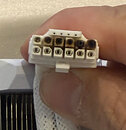
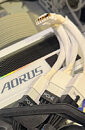
The melting and burning 12V-2×6 connectors on high-end NVIDIA—and some AMD—GPUs is well documented at this point, and although there is mounting evidence to support the fact that the new connector standard itself is partially to blame, there is still the idea that high power draw is to blame for these meltdowns. This is not necessarily the case, according to one user of the Mobile01 forum. According to the forum post about the incident, the top row of pins in a Gigabyte Aorus Master Ice RTX 5090's GPU power connector has melted down, despite the user having implemented a steep undervolt and power limit.
When installed, the user had limited GPU power to 500 W and dropped the voltage limit down to 0.9 v—that's a reduction of 100 W and 0.205 v compared to stock settings. It's worth noting that the GPU in question was connected to the PSU using a 16-pin adaptor, and the connector melted at the GPU side, not the PSU side, and the first indication of the meltdown was frequent crashing during gaming sessions. Both connector ends at the GPU side seem to be affected, but it's entirely possible that the GPU would have suffered even more damage had the power limit been higher. Currently, independent research seems to indicate that the 12V-2×6 cable itself seems to suffer from an unstable or inadequate connection, which increases the current and temperature across individual pins. Unofficial adaptors also seem to exaggerate these contact issues.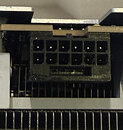
When installed, the user had limited GPU power to 500 W and dropped the voltage limit down to 0.9 v—that's a reduction of 100 W and 0.205 v compared to stock settings. It's worth noting that the GPU in question was connected to the PSU using a 16-pin adaptor, and the connector melted at the GPU side, not the PSU side, and the first indication of the meltdown was frequent crashing during gaming sessions. Both connector ends at the GPU side seem to be affected, but it's entirely possible that the GPU would have suffered even more damage had the power limit been higher. Currently, independent research seems to indicate that the 12V-2×6 cable itself seems to suffer from an unstable or inadequate connection, which increases the current and temperature across individual pins. Unofficial adaptors also seem to exaggerate these contact issues.


