Login
Login
Scientists discover a liver-to-brain signal that mimics exercise benefits
Researchers have identified a specific liver protein produced during exercise that strengthens the brain’s protective barrier and improves memory in aging mice. This finding suggests a potential pharmaceutical avenue to mimic the cognitive benefits of physical activity for older adults who cannot exercise. The study was published in the journal Cell.
For decades, medical professionals have recognized that aerobic exercise promotes brain health. Physical activity stimulates the birth of new neurons and improves learning capabilities. It also helps reduce inflammation in the brain. However, this prescription is often difficult to fill for the elderly or those with physical disabilities.
Frailty or cardiovascular conditions can make vigorous exercise impossible. This limitation created a scientific need to understand the biological signals that exercise triggers in the body. If researchers could identify these signals, they might be able to bottle the benefits in a drug.
Saul A. Villeda and his colleagues at the University of California, San Francisco, have spent years investigating how factors circulating in the blood influence aging. The research team previously demonstrated that transferring blood plasma from exercising mice into sedentary mice could transfer the brain benefits of that exercise.
They identified an enzyme called GPLD1 as a key factor. This enzyme is produced by the liver and released into the bloodstream after physical activity. Gregor Bieri, a postdoctoral scholar in Villeda’s lab and the study’s lead author, led the effort to understand how this liver enzyme communicates with the brain.
The researchers faced a biological puzzle regarding GPLD1. This protein is an enzyme, which is a molecule that acts as a catalyst for chemical reactions. However, GPLD1 does not cross the blood-brain barrier. This barrier is a tightly packed layer of cells lining the blood vessels in the brain. It acts as a security checkpoint that prevents toxins and pathogens in the blood from entering the brain tissue. Since GPLD1 remains in the bloodstream, the team reasoned it must be acting on the blood vessels themselves rather than entering the brain directly.
To investigate this hypothesis, the team utilized genetic sequencing data to look at proteins found on the surface of cells in the brain’s blood vessels. They were looking specifically for proteins that anchor themselves to the cell membrane in a way that makes them susceptible to being cut loose by GPLD1. This search led them to a protein called TNAP. The researchers found that levels of TNAP are low in young, healthy mice but rise considerably as the animals age.
The team discovered that high levels of TNAP on the blood vessels are detrimental to the blood-brain barrier. When TNAP is abundant, the barrier becomes permeable and leaky. This allows harmful substances to seep into the brain, causing inflammation and impairing the function of neurons. The researchers determined that the job of GPLD1 is to act like a pair of molecular scissors. It circulates in the blood, finds the TNAP anchored to the brain’s blood vessels, and snips it off. This process reduces the amount of active TNAP, which in turn helps restore the integrity of the blood-brain barrier.
To confirm this mechanism, the researchers conducted a series of experiments on mice. They first used a genetic technique to artificially increase the levels of TNAP in the brain blood vessels of young mice. These young mice soon developed leaky blood-brain barriers and performed poorly on memory tests, effectively mimicking the conditions of old age. This experiment demonstrated that excess TNAP is a driver of cognitive decline.
Next, the researchers treated aged mice with the liver enzyme GPLD1. They injected the mice with genetic instructions that caused their livers to produce more of the enzyme, simulating the effects of exercise. The results showed that the enzyme successfully trimmed away the excess TNAP. Consequently, the blood-brain barrier became less leaky. The aged mice also showed improvements in cognitive function. They were better able to recognize new objects and navigate mazes compared to untreated aged mice.
“We were able to tap into this mechanism late in life, for the mice, and it still worked,” said Bieri.
The team also explored a more direct pharmaceutical approach. Instead of using the liver enzyme, they administered a drug known to inhibit the activity of TNAP. This drug, called SBI-425, effectively blocked the action of the protein without needing the enzyme to cut it off. The aged mice treated with this inhibitor showed similar improvements in memory and barrier function to those treated with GPLD1. This finding indicates that targeting TNAP directly could be a viable strategy for drug development.
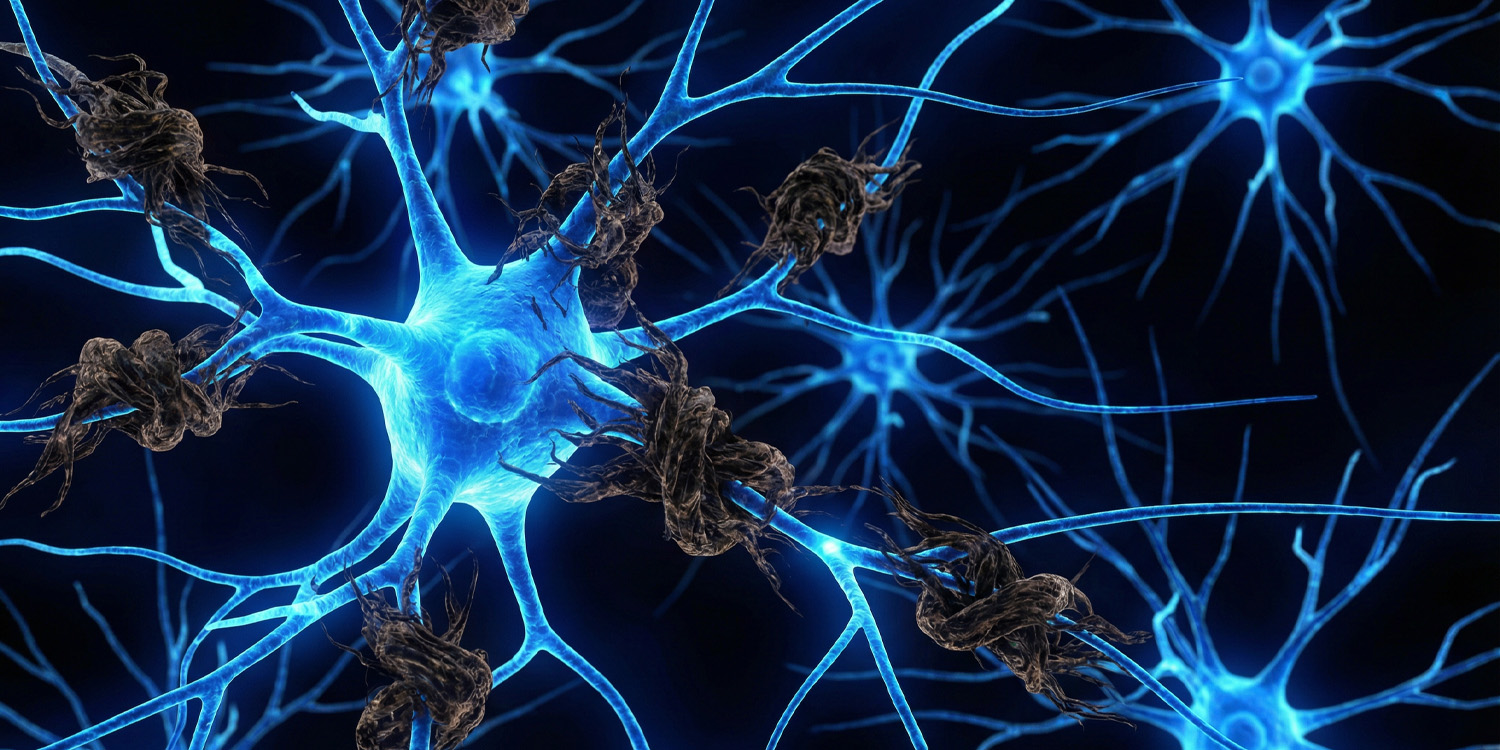
The researchers then extended their investigation to Alzheimer’s disease. They utilized a strain of mice genetically engineered to develop sticky plaques in the brain and memory problems associated with Alzheimer’s. When these mice were treated with GPLD1 or the TNAP inhibitor, they showed a reduction in the density of these plaques. They also exhibited improved behavior, such as building better nests, which is a standard measure of well-being in mice.
These findings highlight the importance of the connection between the liver and the brain. It appears that the liver acts as a sensor for physical activity and sends a chemical dispatch to the brain’s security system to tighten its defenses. When that signal is weak due to a lack of exercise or aging, the defenses crumble. Restoring that signal or blocking the damage it normally prevents can reverse some aspects of aging.
“This discovery shows just how relevant the body is for understanding how the brain declines with age,” said Villeda.
While the results are promising, there are necessary caveats to consider. The study was conducted in mice, and human biology may not respond in the exact same way. However, the researchers did analyze tissue samples from deceased humans. They found that the brains of people with Alzheimer’s disease had higher levels of TNAP in their blood vessels compared to healthy individuals. This correlation suggests the mechanism is conserved across species.
Additionally, the blood-brain barrier is a complex structure. While trimming TNAP appears to fix leaks, there may be other consequences to manipulating this protein that are not yet fully understood. TNAP has other functions in the body, including roles in bone mineralization.
Any potential drug would need to be specific enough to target the brain’s blood vessels without causing side effects in the skeleton or other organs. The drug used in this study, SBI-425, does not cross the blood-brain barrier, which is beneficial as it acts only on the vessel walls and not inside the brain tissue itself.
Future research will need to determine the safety and efficacy of TNAP inhibitors in humans. The team also plans to investigate if there are other proteins on the blood-brain barrier that the liver enzyme might target. For now, this study provides a mechanical blueprint for how the simple act of running can physically reinforce the walls that protect our minds.
The study, “Liver exerkine reverses aging- and Alzheimer’s-related memory loss via vasculature,” was authored by Gregor Bieri, Karishma J.B. Pratt, Yasuhiro Fuseya, Turan Aghayev, Juliana Sucharov, Alana M. Horowitz, Amber R. Philp, Karla Fonseca-Valencia, Rebecca Chu, Mason Phan, Laura Remesal, Shih-Hsiu J. Wang, Andrew C. Yang, Kaitlin B. Casaletto, and Saul A. Villeda.