
 Login
Login
Scientists Create World’s Smallest QR Code, Smaller Than Bacteria
Key Highlights
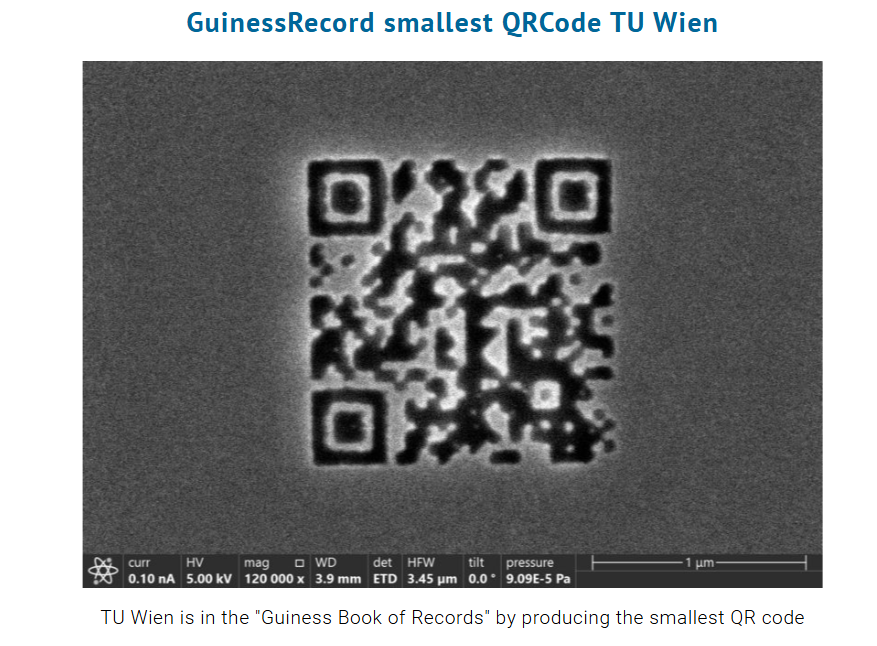
- Researchers at TU Wien and Cerabyte created the world’s smallest QR code, measuring just 1.98 square micrometers.
- The record has been officially verified by Guinness World Records, making it 37% smaller than the previous holder.
- The breakthrough could lead to ultra-durable, low-energy data storage that lasts for centuries or longer.
World’s Smallest QR Code Created
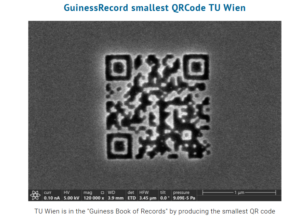
A research team from Vienna University of Technology (TU Wien), working with Austrian-German startup Cerabyte, has created the world’s smallest QR code. The tiny code measures only 1.98 square micrometers, making it smaller than most bacteria. The achievement has been officially recognized by Guinness World Records. Researchers say the project is not just about setting a size record but also about showing new possibilities for future data storage technologies.
How Small Is It?
The QR code is so small that it cannot be seen with the naked eye or even with standard optical microscopes. Scientists can only view and read it using an advanced electron microscope. The code is made up of a 29 × 29 module structure, with each pixel measuring only 49 nanometers wide. This is around one-tenth the wavelength of visible light, showing how far data encoding has moved into the nanoscale range.
Technology and Materials Used
To create the QR code, researchers used focused ion beam technology to etch the design into a thin ceramic film. Ceramic was chosen because it is extremely stable, durable, and resistant to harsh environments. Unlike atomic-level structures that may shift over time, ceramic materials help keep information stable and readable for long periods. The research was led by Professor Paul Mayrhofer and included several contributors from TU Wien’s Institute of Materials Science and Technology.
Real-World Impact and Usage
This technology could change how data is stored and preserved in the future. Ceramic-based nano storage may allow important information to survive for hundreds or even thousands of years without power, cooling, or regular maintenance. It could be used for long-term archives, scientific data, cultural records, and government documents that need permanent preservation. Because it consumes almost no energy after writing, it may also help reduce data center power usage and lower environmental impact, making digital storage more sustainable over time.
Read More:
- Alibaba Launches Qwen-3.5: Is This China’s Answer to ChatGPT?
- Nvidia’s “World-Shocking” Chip Is Coming: Here’s What We Know
- No Humans on Stage: Inside the World’s First Robot-Led Live Event by AGIBOT
(via)
The post Scientists Create World’s Smallest QR Code, Smaller Than Bacteria appeared first on Gizmochina.
