
 Login
Login
Wakan Village, Oman: A Complete Travel Guide to the Enchanting Apricot Blossom Season
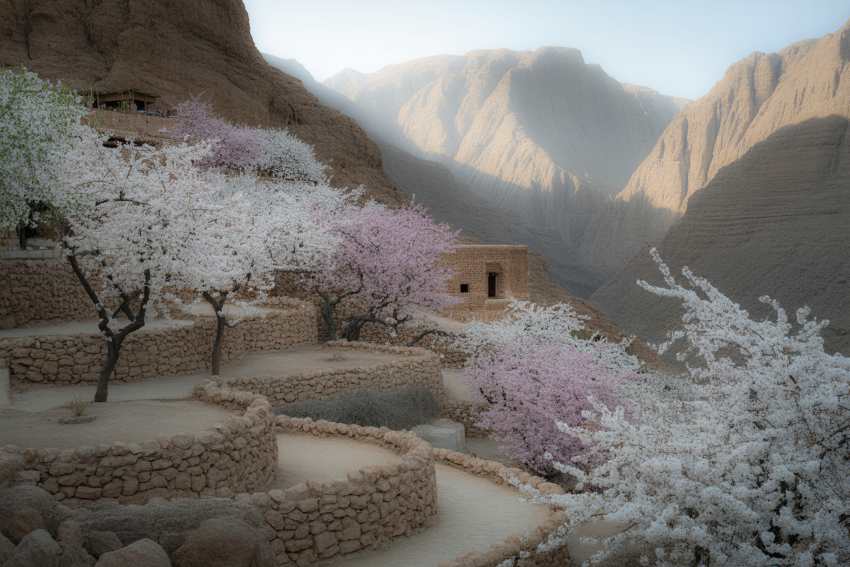
The end of the winter season in the Sultanate of Oman is marked by a breathtaking natural transformation in Wakan Village, a high-altitude enclave. This settlement, located approximately 2,000 metres above sea level on the rugged western slopes of the Hajar Mountains, is a popular destination for those looking to witness a rare botanical spectacle. The apricot and plum trees, which are often compared to Japan’s iconic cherry blossom, or “Sakura”, bloom in a vibrant display of white and pink blossoms. This annual event, which typically begins in late January and lasts until early March, is regarded by the Ministry of Heritage and Tourism as a top highlight of the regional tourism calendar.
Agricultural Heritage and the Rhythms of Nature
The survival and prosperity of the local orchards are attributed to a meticulously maintained agricultural cycle. Dormancy is entered by the apricot trees in December, during which leaves are shed in preparation for the flowering phase. Following the ephemeral beauty of the blossom season, a transition into the harvest period is observed around mid-April. This harvest is known to be intense and brief, usually lasting only two weeks. The produce is subsequently transported to local markets, such as the Nakhal Souq, where it is purchased by residents and visitors alike. Beyond apricots, the village is also characterized by the cultivation of pomegranates, grapes, figs, peaches, and mountain berries, all of which are sustained by the ancient “Falaj” irrigation systems—specifically Falaj Al Aqar, Falaj Al Mafra, and Falaj Al Wasta’a—which are fed by mountain springs.
Rising Global Appeal and Statistical Growth
Wakan Village has emerged as a significant hub for ecotourism and adventure, as evidenced by the steady increase in visitor numbers. According to official data released by the Ministry of Heritage and Tourism, a record-breaking 39,976 visitors were welcomed to the village in 2025, representing a notable rise from the 36,759 guests recorded in 2024. This growth is largely credited to the village’s unique microclimate; while the coastal regions of Oman experience rising heat, a cool and moderate temperature is maintained in Wakan throughout the year. The surge in international interest is also supported by the presence of a burgeoning local hospitality sector, including the establishment of heritage lodges and mountain-view cafés that cater to the needs of modern travellers.
Trekking Through Living History
For adventure enthusiasts, the village serves as a gateway to several historic and challenging trails. The most frequented path is the 700-step ascent that winds through the terraced gardens and culminates at a mountain watchtower. This route is considered ideal for winter hiking, as the physical exertion is mitigated by the crisp mountain air. For more experienced trekkers, the W25 and W24 routes are utilized to traverse the deeper Hajar range, connecting Wakan to other high-altitude settlements like Hadash and Al Qawra. Along these paths, the ancient architectural heritage of the village—including traditional houses and centuries-old mosques—is observed, offering a profound glimpse into the endurance of Omani mountain life.
Infrastructure Development and Future Connectivity
To accommodate the influx of tourists, significant infrastructure improvements are being spearheaded by the South Al Batinah Governorate. The mountain paths are being secured with the installation of guardrails and rest areas to ensure visitor safety. Furthermore, the expansion of parking facilities and the establishment of information centres are being prioritized to manage peak-season crowds. Most notably, a feasibility study for a cable car project is currently being conducted by the authorities. This initiative is envisioned as a means to alleviate traffic congestion on the steep mountain roads while providing a spectacular aerial perspective of the Wadi Mistal valley.
Guidelines for Responsible Visitation
Because Wakan is still a living community with livelihoods tied to the land, responsible tourism is strongly encouraged. Local authorities remind visitors to stay on designated paths and avoid picking blossoms or fruits. To prevent erosion of the fragile agricultural soil, the stone-walled terraces must be kept intact. The final ascent is steep and unpaved, so a four-wheel-drive vehicle is required to reach the village. By following these practices, the village’s delicate balance of agricultural traditions and growing popularity as a world-class destination is maintained.
The post Wakan Village, Oman: A Complete Travel Guide to the Enchanting Apricot Blossom Season appeared first on Travel And Tour World.