
Reading view

East Coast Braces for Historic Winter Storm with 2 Feet of Snow, Blizzard Conditions, and Chaos Across New York, Boston, and Philadelphia – Is Your City Ready for the Fury?
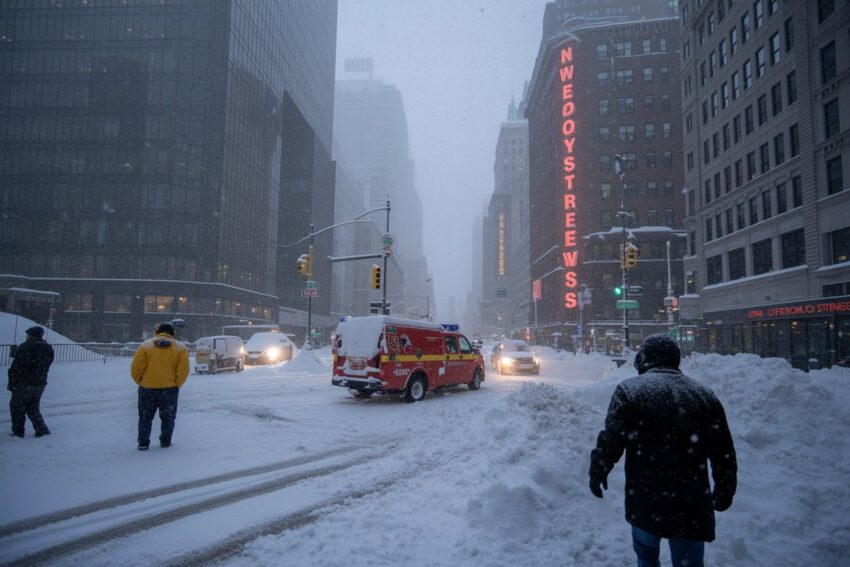
East Coast Braces for Historic Winter Storm with 2 Feet of Snow, Blizzard Conditions, and Chaos Across New York, Boston, and Philadelphia – Is Your City Ready for the Fury?
East Coast braces for up to 2 feet of snow and severe blizzard conditions. Cities like New York and Boston prepare for life-threatening weather and travel chaos.

As a powerful winter storm races towards the East Coast, cities like New York, Boston, and Philadelphia are bracing for what could be a historic blizzard, bringing up to 2 feet of snow and life-threatening conditions. The storm, which is forecast to intensify rapidly, is expected to trigger severe disruptions, with blizzard warnings already issued for multiple states along the I-95 corridor, including New York, New Jersey, Connecticut, and Massachusetts. The National Weather Service (NWS) is warning residents to prepare for extremely dangerous conditions, with snow, high winds, and zero visibility threatening to paralyze the region.

Unprecedented Snowfall and Blizzard Conditions on the Horizon

The East Coast storm, now dubbed Winter Storm Hernando, is expected to unleash heavy snowfall rates of up to 2 inches per hour at its peak, particularly in New York City, Boston, and other northeastern cities. According to the NWS, 12 to 18 inches of snow are expected to accumulate across much of the Mid-Atlantic and New England regions, with some areas potentially seeing up to 2 feet of snow. The storm’s explosive growth, known as bombogenesis, is set to produce winds gusting up to 60-70 mph, creating whiteout conditions and making travel near impossible.

Blizzard warnings, which signify extremely low visibility and fierce winds, have been issued for some of the most densely populated areas in the U.S. As the storm pushes forward, major metropolitan areas like New York City, Boston, and Philadelphia will experience intense snow and wind overnight, creating a perilous situation for anyone trying to venture outdoors.

Massive Disruptions and Warnings for Major Cities

In the face of this storm, cities like New York are bracing for their first blizzard warning in nearly a decade. With snow and winds threatening to obscure visibility entirely, authorities have warned residents to stay off the roads during the storm’s peak hours. Mayor Eric Adams of New York City has announced that all non-essential travel will be prohibited, urging the public to heed the warnings and avoid unnecessary outings.

Travel disruptions are already being felt across the region, with more than 3,000 flight cancellations reported at major airports like JFK and LaGuardia. Rail services, including Amtrak and local transit systems, have been curtailed as the city braces for snow accumulation and disruptions. Experts predict that this storm could be one of the most significant snowstorms to hit the East Coast in years, with its intensity rivaling some of the strongest storms in history.

For residents of New England, including Boston, the situation is equally dire. Forecasts predict snow accumulation of up to 2 feet in some areas, compounded by wind gusts that will make travel virtually impossible. As the blizzard continues to worsen, local authorities are preparing for power outages, which are expected to last for hours, and possibly days, in some locations.

Severe Coastal Flooding and Risk of Power Outages

While the snowfall itself poses a significant hazard, this storm is not just about snow. Coastal flooding is expected to be a major concern along the East Coast, as high tides combined with storm surges will lead to flooding in New Jersey, Delaware, and parts of Maine. The National Hurricane Center has issued warnings for coastal flooding in these areas, advising residents to prepare for the potential inundation of homes and businesses.

In addition to the snow and flooding risks, widespread power outages are anticipated due to fallen trees and downed power lines, as the combination of heavy snow and high winds will create dangerous conditions for electrical infrastructure. Local emergency services are on high alert, ready to respond to the growing number of incidents expected as the storm progresses.

A State of Emergency Declared Across Multiple States

Governors across the impacted states have already declared states of emergency, mobilizing national guard units and emergency response teams in anticipation of the storm’s full impact. New Jersey, Connecticut, and Massachusetts have all enacted emergency measures, with the New Jersey Governor issuing a state-wide travel ban. This proactive approach is crucial to prevent widespread chaos, as travel restrictions and curfews are expected to be put in place in the most heavily affected areas.

Cities like Philadelphia and Baltimore are also under severe weather warnings, with forecasts predicting 12 to 18 inches of snow, creating potential delays for both air and ground travel. Snowplows and emergency responders are already working around the clock to clear roadways and assist in rescue operations for those who may be stranded or in need of assistance.

Impact on Local Economy and Communities

Beyond the immediate safety concerns, the storm is expected to have a significant economic impact on the region. Local businesses, particularly those in tourism, retail, and hospitality, are facing temporary closures due to the extreme weather conditions. Many events, including sports games and public gatherings, have been postponed or canceled. The tourism industry, which typically sees a significant influx of visitors during the winter months, will also take a hit, particularly in New York City and Boston, two cities that attract millions of visitors annually.

The snowstorm’s impact on daily life will be far-reaching, with schools, offices, and public services expected to close for the duration of the storm. In many areas, businesses are already preparing for reduced foot traffic, while supermarkets and stores are bracing for a surge in last-minute shopping as people stock up on essentials ahead of the storm.

What You Need to Know: Key Tips for Safety During the Blizzard

For those living in the affected areas, experts from the National Weather Service and FEMA have provided several tips for staying safe during this extreme storm:

  1. Stay Indoors: Unless absolutely necessary, do not travel during the storm’s peak. Snow and high winds can reduce visibility to near zero, making it extremely dangerous.
  2. Stock Up on Essentials: Make sure you have sufficient food, water, and medical supplies in case you are confined to your home for an extended period.
  3. Prepare for Power Outages: Ensure that you have flashlights, extra blankets, and fully charged phones in case of a power loss.
  4. Avoid Coastal Areas: If you live near the coast, evacuate if ordered, as storm surges may flood coastal regions.

As this major winter storm continues to move across the East Coast, the full extent of its impact is still unfolding. With heavy snow, blizzard conditions, and widespread travel disruptions expected to last through the weekend, residents in New York City, Boston, and across the Mid-Atlantic and New England regions must remain vigilant and prepared. Emergency teams are working tirelessly to manage the storm’s effects, and local communities must take all necessary precautions to stay safe during what could be one of the most intense snowstorms in years.

Conclusion:

While the snowstorm is expected to cause significant disruptions, the determination of local communities, emergency responders, and public officials will help mitigate the storm’s impact. The resilience of the East Coast, however, will be put to the test as millions prepare for potentially record-breaking snowfall, blizzard conditions, and the ongoing challenges that come with a storm of this magnitude.

The post East Coast Braces for Historic Winter Storm with 2 Feet of Snow, Blizzard Conditions, and Chaos Across New York, Boston, and Philadelphia – Is Your City Ready for the Fury? appeared first on Travel And Tour World.

New Jersey Declares State of Emergency and Travel Ban as Major Blizzard Strikes the Northeast, Leaving Residents Stranded and Roads Impassable!

New Jersey Declares State of Emergency and Travel Ban as Major Blizzard Strikes the Northeast, Leaving Residents Stranded and Roads Impassable!
New Jersey enforces a mandatory travel ban ahead of a powerful winter storm, with heavy snow and blizzard conditions expected to affect the entire Northeast.

As a powerful winter storm barrels its way across the Northeast, New Jersey is stepping up its efforts to protect residents and ensure public safety. With snow already accumulating and hazardous conditions expected to worsen, the state has enacted a mandatory travel ban to prevent unnecessary accidents and ensure emergency responders can perform their duties without obstruction. This decisive move comes after Governor Mikie Sherrill declared a State of Emergency for New Jersey, an area already well-accustomed to heavy snow and winter storms. This severe measure signals just how serious the situation is, as New Jersey and the surrounding regions brace for one of the most significant storms of the season.

In a state where winter weather is a regular concern, the scope of this storm and the accompanying blizzard warnings have pushed New Jersey to act swiftly. With winter conditions rapidly deteriorating, local authorities and the state’s Department of Transportation (DOT) have been working around the clock to keep roads clear and ensure the safety of the public.

Travel Ban in Effect for Public Safety

The mandatory travel ban, effective from 9 p.m. Sunday to 7 a.m. Monday, restricts non-essential travel across all state, county, and municipal roads. Residents have been urged to stay off the roads and avoid all non-essential trips to reduce the risk of traffic accidents, injuries, and delays that might further complicate rescue operations. The only major road exempt from the travel restrictions is the New Jersey Turnpike, which remains open but is heavily monitored by state officials.

Governor Sherrill’s decision to implement this travel ban is part of a broader effort to manage the chaos expected from the storm. The state is anticipating heavy snow accumulation, with some areas expected to see up to 2 feet of snow by the time the storm passes. In addition, high winds and freezing temperatures are expected to create blizzard-like conditions, making driving almost impossible in some areas. The state is not taking any chances, ensuring that road crews and emergency services have the space and time they need to handle the situation.

Snow Removal Efforts and Exemptions for Essential Workers

With the ban in place, the state is also making it clear that it will not let essential services suffer. Emergency responders, snow removal teams, and utility workers are among the few exemptions from the travel restrictions. These workers, crucial to keeping New Jersey running, will be allowed to perform their duties without hindrance. However, all drivers, unless performing these essential tasks, are urged to stay indoors to avoid putting their lives and others at risk.

Local authorities have also worked closely with the New Jersey Department of Transportation to ensure that snow removal and road treatment efforts can take place without interference. Snowplows and salt trucks will be deployed in waves to clear the highways, with primary focus on critical routes and thoroughfares.

The New Jersey State Police are keeping a vigilant eye on road conditions throughout the night, and officials have warned that motorists who violate the travel ban could face fines or other penalties. The key goal is to keep roads clear for emergency services and snow crews to carry out their tasks, especially as conditions worsen overnight.

What Residents Need to Know

For residents across New Jersey, the message is clear: stay at home. Local authorities are urging everyone to take the storm seriously and only venture out if absolutely necessary. With strong winds and low visibility, travel is expected to be treacherous at best and life-threatening at worst.

Additionally, residents are being advised to stock up on essential supplies, such as food, water, and medications. Power outages are possible, as the high winds are expected to knock down trees and power lines. In fact, utility companies have already issued warnings about possible disruptions to services, and are standing by to restore power as quickly as possible once the storm subsides.

For those who must travel, emergency shelters and warming centers have been set up in key locations around the state, including parts of Jersey City, Newark, and Trenton. These centers are equipped to handle residents who may be stranded or in need of refuge. Local hospitals and emergency rooms are also prepared for potential injuries or accidents, and local police departments are on high alert.

Regional Impact and Nearby States’ Response

New Jersey is not alone in taking these extreme precautions. As the storm intensifies, New York, Connecticut, and Massachusetts have followed suit with travel restrictions and emergency declarations. These neighboring states are bracing for similar snowfall amounts, with New York City already experiencing snow accumulations of several inches by Sunday evening. Local authorities in New York City and the surrounding areas have also set travel bans, and the National Weather Service has issued blizzard warnings for much of the Northeast.

Emergency operations are coordinated across these states to ensure a unified response to the storm. It is clear that this is not just another snowstorm — it is a major weather event that has required an aggressive and coordinated response from several states and local governments. National and state transportation officials are working to keep up with the rapidly changing conditions, with a focus on minimizing travel disruptions and maximizing safety.

What’s Ahead: Tracking the Storm’s Progress

As the storm moves through New Jersey and the Northeast, conditions will continue to evolve. Local meteorologists and the National Weather Service are keeping residents updated with hourly forecasts on snow accumulation, wind gusts, and road conditions. The storm’s progress is being tracked closely, and adjustments to the travel ban and emergency response plans will be made as needed.

Residents are encouraged to monitor official sources such as the New Jersey State Police and the National Weather Service for the latest updates. As the snow begins to subside on Monday, officials will begin assessing the damage and clearing efforts, but for now, New Jersey residents are being told to stay safe and indoors.

Conclusion: A Winter Storm Like No Other

This powerful winter storm is not just a test of New Jersey’s preparedness — it’s a reminder of how quickly winter conditions can go from manageable to dangerous. New Jersey’s strict travel ban and emergency response measures reflect the seriousness with which the state is approaching this blizzard.

The state is committed to keeping its citizens safe by enforcing these travel restrictions, deploying resources to remove snow, and ensuring that critical services remain operational. For those who do not need to be on the roads, staying home is the best option. With conditions worsening as the night continues, the focus is squarely on safety, and New Jersey is pulling out all the stops to keep its residents out of harm’s way.

As this storm continues its path across the Northeast, New Jersey’s swift action will hopefully serve as a model for other states in managing extreme winter weather. The key message is clear: stay safe, stay home, and let the professionals do their job.

The post New Jersey Declares State of Emergency and Travel Ban as Major Blizzard Strikes the Northeast, Leaving Residents Stranded and Roads Impassable! appeared first on Travel And Tour World.

Guangdong Motorists Flock to Hong Kong in Droves Under New Southbound Travel Scheme Is This the Beginning of a Cross-Border Tourism Revolution?

Guangdong Motorists Flock to Hong Kong in Droves Under New Southbound Travel Scheme Is This the Beginning of a Cross-Border Tourism Revolution?
Guangdong motorists are flocking to Hong Kong under a new Southbound Travel Scheme, enhancing tourism and driving economic growth in both regions.

In a historic shift in cross-border travel, Guangdong motorists have begun taking full advantage of the newly launched Southbound Travel Scheme, which allows private cars from Guangdong Province to enter Hong Kong. This new arrangement, launched by the Hong Kong Special Administrative Region (HKSAR) Government, is set to reshape cross-border mobility and bolster tourism, retail, and economic growth between Hong Kong and the Greater Bay Area.

After an official launch on 23 December 2025, the scheme has already seen a dramatic surge in applications and successful entries, with thousands of Guangdong drivers eager to explore Hong Kong’s vibrant urban culture, shopping districts, and tourism hotspots.

What is the Southbound Travel Scheme?

The Southbound Travel Scheme represents a major policy shift in the way Guangdong motorists interact with Hong Kong. Under this scheme, private vehicles registered in Guangdong are now permitted to drive directly to Hong Kong for a period of up to three days. This is made possible via the Hong Kong–Zhuhai–Macao Bridge (HZMB), an advanced transportation route that connects the Greater Bay Area regions of Guangdong, Hong Kong, and Macao.

Previously, mainland Chinese motorists faced significant barriers when it came to driving into Hong Kong. Restrictions required special permits, complicated transit arrangements, and numerous road-safety checks. However, the introduction of the Southbound Travel Scheme has removed many of these barriers, giving Guangdong drivers more freedom to visit Hong Kong at their convenience, without needing to navigate cumbersome procedures.

With initial daily quotas set at 100 vehicles, the scheme has made a swift and significant impact. Within the first month of its rollout, the scheme has already been inundated with applications from interested motorists. The scheme aims to not only enhance the mobility of people but also strengthen ties between Hong Kong and Guangdong, key regions in the Greater Bay Area.

A Growing Demand from Guangdong Drivers

The excitement surrounding this new cross-border travel scheme is palpable. As Guangdong motorists flock to Hong Kong, authorities have reported a strong demand. Within the initial launch period, more than 1,700 motorists had booked slots to drive into Hong Kong, and approximately 600 vehicles crossed into Hong Kong during the peak Lunar New Year period. These figures suggest that demand remains high, particularly during weekends and holidays, when cross-border mobility is at its peak.

The daily 100-vehicle quota has often been filled, indicating that Guangdong’s residents are eager to take advantage of the newly simplified travel options. Moreover, officials have predicted that these numbers could increase in the coming months, as more individuals become aware of the scheme and its potential benefits for tourism and personal travel.

The scheme has had an immediate economic impact, especially in Hong Kong’s retail, hospitality, and tourism sectors. Business owners and tour operators have welcomed the influx of visitors, with many expecting to see a steady increase in foot traffic to shopping malls, tourist attractions, and dining districts.

The Economic and Tourism Impact

The Southbound Travel Scheme is already proving to be a boon for Hong Kong’s economy. Authorities believe the arrival of private vehicles from Guangdong will drive increased spending in Hong Kong’s tourism and retail industries. The presence of Guangdong motorists also strengthens the region’s standing as a key destination for Greater Bay Area residents looking for quick, convenient getaways.

Local businesses are already seeing the effects of this new travel wave. Hong Kong’s shopping malls are benefiting from the additional customers, particularly in areas such as Causeway Bay, Tsim Sha Tsui, and Mong Kok, which are popular for retail therapy and dining. Hotels, too, are experiencing higher occupancy rates, as the influx of Guangdong drivers creates demand for short stays in the city.

Moreover, tourism operators have seized the opportunity to cater to this growing market, offering services specifically tailored for self-drive tourists. This includes car rental services, cross-border travel assistance, and exclusive tour packages designed for Guangdong drivers.

For Hong Kong, this development aligns perfectly with long-term strategies to integrate the Greater Bay Area and foster greater regional mobility. Cross-border initiatives like the Southbound Travel Scheme not only facilitate easier travel but also encourage deeper people-to-people connections that ultimately contribute to shared prosperity across the region.

The Logistics and Requirements

While the scheme has generated enthusiastic response, there are a few requirements for motorists who wish to participate. The Southbound Travel Scheme stipulates that vehicles must pass a comprehensive inspection to meet Hong Kong’s road safety standards. These checks are mandatory and must be completed at designated inspection centres within Guangdong prior to departure.

In addition to the inspections, motorists are also required to carry valid third-party insurance, recognised under Hong Kong’s legal framework. The insurance coverage ensures that motorists are protected while driving in Hong Kong, where traffic laws differ from those in mainland China. The scheme also requires drivers to adhere to Hong Kong’s road rules, including the left-hand driving system, which differs from mainland China’s right-hand driving system.

The initial quota of 100 vehicles per day has been kept to maintain manageable traffic flow, but there are discussions about increasing the quota in the future, especially considering the high demand. Authorities will continue to monitor the scheme’s impact over the next few months and are open to making adjustments to the program if necessary.

Looking Ahead: Future Plans for the Southbound Travel Scheme

The initial success of the Southbound Travel Scheme is undoubtedly encouraging, and there are high hopes for its expansion. Hong Kong’s Transport Department has indicated that it will assess the program’s performance and consider ways to increase the number of daily vehicles allowed across the border.

Plans for expanding the entry points for Guangdong motorists are also under consideration. Currently, the Hong Kong–Zhuhai–Macao Bridge is the primary entry point, but there are discussions about adding additional cross-border entry points, such as Shenzhen Bay. This would provide motorists from the Guangdong region with more flexibility and options for entering Hong Kong.

As the scheme progresses, there may also be opportunities to enhance tourism offerings targeted at Guangdong drivers, such as specialized itineraries, guided tours, and promotional offers that encourage longer stays in Hong Kong.

In conclusion, the Southbound Travel Scheme represents a significant step towards cross-border integration in the Greater Bay Area. It enhances tourism and trade between Hong Kong and Guangdong, offering increased mobility for private motorists while bolstering Hong Kong’s economy. As more Guangdong motorists take advantage of the scheme, it will no doubt become a key driver of regional development, shaping the future of cross-border tourism in the region for years to come.

Final Thoughts

The Southbound Travel Scheme is a game-changer for Guangdong residents, offering them an easier way to explore Hong Kong while driving their own vehicles. For Hong Kong, it signals a bright future of increased tourism and economic growth, driven by the Greater Bay Area’s expanded connectivity. The scheme’s success so far is a promising sign of a stronger, more interconnected future for both regions.

The post Guangdong Motorists Flock to Hong Kong in Droves Under New Southbound Travel Scheme Is This the Beginning of a Cross-Border Tourism Revolution? appeared first on Travel And Tour World.

Thousands of Travellers Stranded at Baltimore/Washington International Airport in United States as 73 Flights Are Delayed and 247 Cancelled Disrupting American, Copa Airlines, Delta, United and More Across , Miami, New York and Chicago

Thousands of Travellers Stranded at Baltimore/Washington International Airport in United States as 73 Flights Are Delayed and 247 Cancelled Disrupting American, Copa Airlines, Delta, United and More Across , Miami, New York and Chicago
Baltimore/Washington International Airport sees massive travel disruption with 240 cancellations and 72 delays, leaving passengers struggling amid winter weather and operational challenges.

Hundreds of weary travellers arrived at Baltimore/Washington International Thurgood Marshall Airport (BWI) only to find their travel plans upended as weather, system strain, and operational challenges combined to trigger 240 flight cancellations and 72 delays across domestic and international routes. The dramatic figures have sent shockwaves through one of the busiest airports on the U.S. East Coast, disrupting journeys during a critical travel period and sending passengers scrambling for alternatives.

AirlineCancelled%Delayed%
Southwest21852%5212%
Delta Air Lines623%726%
Envoy Air (AAL)562%00%
Spirit531%318%
Republic440%220%
Frontier418%29%
United315%00%
Copa Airlines2100%00%
Avelo Airlines00%250%
American Airlines00%420%
British Airways00%2100%

BWI, located in Anne Arundel County near both Baltimore and the nation’s capital, typically handles more than 300 daily departures to a wide network of destinations across the United States and beyond. The airport acts as a crucial gateway for travellers bound for major hubs such as New York, Chicago, Miami, and international gateways, with carriers like Southwest, United, American, and Delta serving essential routes.

But during this period of intense disruption, the impact has been unmistakable: significant cancellations stretching into the hundreds and dozens of prolonged delays have left travellers stranded in terminals, rescheduling flights, and seeking compensation from carriers.

AirportCancelled%Delayed%
Baltimore/Washington Intl (BWI)11336%4113%
Orlando Intl (MCO)746%320%
Boston Logan Intl (BOS)770%220%
Fort Lauderdale Intl (FLL)650%216%
Tampa Intl (TPA)675%00%
Denver Intl (DEN)571%00%
Hartsfield-Jackson Intl (ATL)541%325%
Chicago O’Hare Intl (ORD)457%00%
Sarasota/Bradenton Intl (SRQ)350%00%
Louis Armstrong New Orleans Intl (MSY)375%00%
Chicago Midway Intl (MDW)342%033%
Rhode Island T.F. Green Intl (PVD)360%00%
Luis Munoz Marin Intl (SJU)342%00%
Raleigh-Durham Intl (RDU)233%00%

What Caused the Disruption? Weather Meets Operational Pressure

One of the key contributors to the travel chaos was severe winter weather that swept through the Mid‑Atlantic and Northeast United States in late January, disrupting not just local operations but creating widespread delays across airline networks. The storm brought snow, ice, and logistical challenges that hampered both departures and arrivals — and its effects rippled well beyond the initial blizzard track, affecting flight crews, air traffic control schedules, and aircraft rotations.

While the Federal Aviation Administration (FAA) continues to oversee traffic management and issue advisories, winter conditions coupled with heavier than usual travel demand created a volatile mix. Airlines and airport operators alike have pointed to these weather impacts as well as staffing pressures, which have occasionally strained operations and led to cascading schedule changes.

The current environment has forced many passengers to adjust plans on the fly — often waiting hours for updates, rerouting through other airports, or cancelling travel altogether in hopes of rebooking at a later date.

Passengers Caught in the Middle

For travellers caught in the disruption, the experience has been frustrating and emotionally draining. Families heading home after holiday visits, business travellers on tight deadlines, and tourists arriving for planned vacations all found themselves navigating long wait times, intermittent updates, and crowded gate areas.

One passenger, waiting for a rebooked flight to Atlanta, described the mood in the departure lounge as “anxious but hopeful — everyone just wants clear answers and to get home.” Many others reached out to airline customer service desks in person or via phone apps, searching for the earliest possible alternate flights.

American Airlines, Southwest Airlines, Delta Air Lines, and United Airlines — among others — have all seen significant operational changes at BWI during this period. With such extensive schedule tampering, travellers have been advised to stay in touch with support channels and sign up for flight status alerts available directly through airline apps or the airport’s official portal.

Official Guidance and Safety Monitoring

BWI International Airport’s official website provides real‑time tools for passengers to track their flight status, including arrivals and departures boards that list cancellations and delays. Travellers are encouraged to check these sources frequently before heading to the airport to avoid unnecessary travel when flights have already been rescheduled or cancelled. In addition, the Transportation Security Administration (TSA) has issued reminders to passengers to allow at least two hours for domestic flights and three hours for international departures to account for security checkpoints and potential delays.

While delays and cancellations can be disruptive, authorities emphasise that operational safety remains the top priority. This includes maintaining safe airspace flows as well as ensuring ground operations such as baggage handling, aircraft servicing, and passenger boarding are conducted without compromising safety standards.

Ripple Effects on the Travel Network

Because BWI serves as a key link in regional flight networks, disruptions at this airport often have knock‑on effects at other major hubs. Passengers connecting through cities such as New York, Chicago, Orlando, or Miami may find their inbound or outbound flights affected if aircraft or crew are delayed or cancelled earlier in the travel chain.

Airline networks are interconnected, so a disruption at a major airport like BWI — one that handles hundreds of daily operations — can lead to schedule cascades where delays stretch well beyond the original origin point.

This interconnectedness highlights the complexity of modern aviation logistics: weather, staffing issues, maintenance needs, and air traffic volumes are all variables that can alter a flight’s status with little notice.

Advice for Travellers Amid Ongoing Disruption

Experts recommend several practical steps for passengers dealing with delays and cancellations:

  • Monitor flight status frequently through official airline apps or the BWI arrivals/departures board before heading to the airport.

Allow extra transit time for check‑in and security, especially during known disruption periods.

  • Stay in contact with your airline for rebooking options, refunds, or compensation according to each carrier’s policy.
  • Consider travel insurance that includes coverage for delays and cancellations to alleviate financial strain.

Industry Response and Future Preparations

Airlines and airport operators have acknowledged the challenges and pledged efforts to support affected passengers. Many carriers have implemented travel waivers or change‑fee exemptions to ease the burden on passengers whose flights were cancelled or significantly delayed.

Airport officials at BWI have also reiterated that real‑time information is available on the airport’s official portal and that travellers should rely on verified data rather than third‑party summaries.

Longer‑term planning remains crucial: as airlines and airports upgrade systems and adjust operations to better handle weather stressors and network demands, the goal is to minimise future disruptions and enhance overall reliability.

Closing Humanised Paragraph

For the passengers navigating the upheaval at Baltimore/Washington International Airport, the disruption has been more than a statistic — it has meant missed connections, altered celebrations, and long hours of waiting with little certainty. Yet amid the uncertainty, many travellers have shown remarkable patience and resilience, sharing snacks, stories, and support in crowded terminals as they wait for the next update. As airlines and airport staff continue working to restore normal flight schedules, those affected are reminded that the journey doesn’t end with a cancellation or delay — it continues onward, one rescheduled departure at a time.

The post Thousands of Travellers Stranded at Baltimore/Washington International Airport in United States as 73 Flights Are Delayed and 247 Cancelled Disrupting American, Copa Airlines, Delta, United and More Across , Miami, New York and Chicago appeared first on Travel And Tour World.

Thousands of Travellers Stranded Across US Airports as Delta Air Lines Cancels 346 Flights and Delays 578, Disrupting Miami, New York, Los Angeles, Atlanta and More

Thousands of Travellers Stranded Across US Airports as Delta Air Lines Cancels 346 Flights and Delays 578, Disrupting Miami, New York, Los Angeles, Atlanta and More
Delta Air Lines reports 346 cancellations and 578 delays, sparking travel chaos for passengers across the US and key international hubs amid airline operational pressures.

For thousands of travellers this week, the journey to reach family, business meetings or long‑anticipated holidays became a test of patience and resilience as Delta Air Lines reported an extraordinary 346 cancelled flights and 578 delayed flights across its network, creating widespread disruption at major US hubs and international gateways.

Passengers navigating terminals at bustling airports like Atlanta, New York, Miami, Chicago, and Los Angeles found their travel plans derailed, waiting in crowded gates or scrambling for alternate routes.

Delta Air Lines, one of the largest carriers in North America, has seen flight performance struggles this year as airlines contend with a complex mix of operational pressures, peak travel demand, and broader industry constraints. According to official guidance from Delta’s flight status and advisories service, the airline strives to rebook affected passengers at no additional cost, notify impacted travellers, and offer support where possible during delays or cancellations.

Passengers who arrived at airports for scheduled departures found digital flight boards rapidly changing, with departure times pushed back or replaced entirely with cancellation alerts. Many expressed frustration and anxiety.

“I booked this trip months ago for my daughter’s graduation,” said one traveller at Atlanta’s Hartsfield‑Jackson International Airport. “Now I’m stuck trying to rebook, and every option is either hours later or on a completely different airline. It’s stressful and inconvenient.” This human reaction reflects broader dissatisfaction among flyers who rely on accurate schedules and dependable service during what should be memorable journeys.

Why So Many Cancellations and Delays?

Delta Air Lines operates an extensive schedule that connects major hubs across the United States and the world. While occasional delays and cancellations are part of airline operations, the scale — 346 cancellations and 578 delays — is significant. Some contributing factors include seasonal surge in travel demand, staffing and crew assignment challenges, and broader systemic stresses on the National Airspace System. Aviation data analysis firms have reported that air traffic controller staffing shortages and equipment issues can amplify delays across carriers, even when adverse weather isn’t present. Industry analysts also point out that airlines face a delicate balancing act between maintaining tight schedules and preserving safety and service standards.

CANCELLED AIRLINES AND DELAYS

FlightTypeOrigin AirportDestination AirportScheduled Departure Time
DAL2948B738Hartsfield-Jackson Intl (ATL)Green Bay/Austin Straubel Intl (GRB)Sat 09:26 PM EST
DAL2386A321Hartsfield-Jackson Intl (ATL)John F Kennedy Intl (JFK)Sat 10:40 PM EST
DAL292B739Salt Lake City Intl (SLC)Seattle-Tacoma Intl (SEA)Sat 11:10 PM MST
DAL489B738Seattle-Tacoma Intl (SEA)Raleigh-Durham Intl (RDU)Sat 10:25 PM PST
DAL47A333Amsterdam Schiphol (AMS)John F Kennedy Intl (JFK)Sun 09:00 AM CET
DAL127B764Adolfo Suárez Madrid-Barajas (MAD)John F Kennedy Intl (JFK)Sun 10:10 AM CET
DAL169A339Barcelona Intl (BCN)Boston Logan Intl (BOS)Sun 10:25 AM CET
DAL273B763General Humberto Delgado Airport (LIS)John F Kennedy Intl (JFK)Sun 10:10 AM WET
DAL45B764Dublin Intl (DUB)John F Kennedy Intl (JFK)Sun 10:55 AM GMT
DAL292B739Salt Lake City Intl (SLC)Seattle-Tacoma Intl (SEA)Sun 03:55 AM MST
DAL9891A333Charles de Gaulle/Roissy (CDG)Los Angeles Intl (LAX)Sun 12:10 PM CET
DAL294A359Tokyo Intl (HND)Hartsfield-Jackson Intl (ATL)Sun 08:10 PM JST
DAL1330B739Bradley Intl (BDL)Minneapolis/St Paul Intl (MSP)Sun 06:15 AM EST
DAL2691B739Green Bay/Austin Straubel Intl (GRB)Hartsfield-Jackson Intl (ATL)Sun 05:22 AM CST
DAL379B738LaGuardia (LGA)John F Kennedy Intl (JFK)Sun 07:10 AM EST
DAL878BCS3LaGuardia (KLGA)Southwest Florida Intl (RSW)Sun 07:15 AM EST
DAL2475B739Tampa Intl (TPA)Dallas-Fort Worth Intl (DFW)Sun 07:20 AM EST
DAL289B739Marco Polo Intl (VCE)John F Kennedy Intl (JFK)Sun 07:26 AM EST
DAL987A321Hartsfield-Jackson Intl (ATL)Boston Logan Intl (BOS)Sun 01:30 PM CET

Delta’s flight advisory tools encourage passengers to check updated flight statuses frequently, use airline apps for rebooking, and arrive early at terminals to accommodate last‑minute changes. The airline’s cancellation rate has fluctuated throughout the past year, with some periods seeing higher numbers due to specific operational pressures. According to transportation data, Delta’s year‑to‑date cancellation percentage remained within industry norms, but the absolute number of flights affected remains concerning for frequent flyers.

Passenger Stories: Delays, Rebooking, and Diaries from Airports

At New York’s busy airports, some passengers reported portable chargers dying as they waited hours in departure lounges. Others at Miami International Airport said they missed connecting flights due to initial delays, forcing them to spend the night in airport hotels or find costly alternate flights.

“I had dinner plans with relatives waiting in Fort Lauderdale,” one traveller said, staring at his smartphone. “Instead, I’m on hold with customer service again, trying to salvage this trip.”

The ripple effect of delays and cancellations extends far beyond the initial flight. Family celebrations, business conferences, academic commencements — all plans hinge on timely arrivals, and when flights don’t operate as scheduled, passengers are left facing unpredictable emotional and financial costs.

Airline Response and Support Mechanisms

Delta Air Lines has reiterated its commitment to supporting travellers affected by disruptions. According to official airline guidance, when flights are delayed or cancelled, Delta typically attempts to rebook passengers automatically to the next available flight, informs customers through multiple communication channels, and offers payment waivers or travel credits where applicable.

However, travellers say that implementing these measures during large‑scale disruption can be inconsistent, depending on destination, availability of seats, and the volume of bookings in the airline reservation system. “The idea is great, but the reality sometimes falls short,” one passenger said.

Industry Context: What This Means for US Travel

Delta’s performance as an airline includes both commendable and challenging aspects. Independent travel analysts have noted that despite occasional heightened disruption, Delta often ranks well in on‑time arrival performance relative to other major carriers — a nuance that sometimes gets lost amid headline cancellations and delays.

Yet, when hundreds of flights are affected, it underscores the fragility of airline operations in the face of system‑wide stresses, especially during peak travel seasons when demand surges and available alternatives are limited.

The U.S. Department of Transportation and the Federal Aviation Administration monitor airline operational performance, including cancellation and delay data, to ensure compliance with regulations and protect consumer rights. Travel experts often advise passengers to understand their rights — such as rebooking entitlements, refunds, and compensation policies — under U.S. aviation guidance. This can help soften the impact of unplanned itinerary changes.

Expert Opinions: Causes and Solutions

Aviation consultants suggest that airlines must bolster resiliency plans that accommodate unexpected surges in operational pressure. Such strategies could include enhanced crew scheduling flexibility, improved communication tools between air traffic control and airlines, and investments in predictive analytics to anticipate stress points in flight networks.

“Airline networks are incredibly complex ecosystems,” said a senior aviation analyst. “Delays on one flight can cascade into dozens of others, especially for carriers with dense schedules like Delta.” While this complexity doesn’t excuse disruption, it highlights why sporadic events can balloon into larger systemic issues.

Travellers Fight Through Uncertainty

For the passengers affected by Delta’s 346 cancellations and 578 delays, travel has been more than waiting at gates or rearranging itineraries — it has been a test of patience, adaptability, and resilience. Families delayed from reunions, professionals scrambling to reschedule meetings, and holiday makers left uncertain of their plans have all felt the emotional toll of disrupted travel. Yet as travellers adjust, rebook, connect with loved ones through screens, and try to reclaim a semblance of their original plans, the shared experience echoes a simple truth: travel can test us, but it also reveals our ability to persist, adapt and find new routes forward — even when skies don’t cooperate.

The post Thousands of Travellers Stranded Across US Airports as Delta Air Lines Cancels 346 Flights and Delays 578, Disrupting Miami, New York, Los Angeles, Atlanta and More appeared first on Travel And Tour World.

TSA PreCheck Will Stay Open Amid Shutdown Panic – Here’s What Every Traveler Needs to Know About US Airport Security!

TSA PreCheck Will Stay Open Amid Shutdown Panic – Here’s What Every Traveler Needs to Know About US Airport Security!
TSA PreCheck will keep running despite government funding issues in the US, easing stress for travellers at major airports amid shutdown uncertainties.

In a dramatic turnaround that will bring relief to millions of international and domestic travellers, the TSA PreCheck programme — vital for fast‑track airport security in the United States — is confirmed to remain operational despite an ongoing partial government shutdown that had threatened its suspension. For frequent flyers flying into or out of major US gateways including Chicago O’Hare, Washington Dulles or Los Angeles International Airport, the reassurance came from the Transportation Security Administration (TSA) itself, which clarified that PreCheck services will continue without interruption for now. This reversal follows conflicting messages from the Department of Homeland Security (DHS), which had earlier announced it would halt both TSA PreCheck and Global Entry due to funding gaps caused by a failure in Congress to pass appropriations legislation.

For international visitors arriving in the US and planning onward domestic connections, PreCheck shortens security processing times dramatically. This experience is no longer “nice to have” — it’s often the difference between catching a tight connecting flight or missing it.
It is especially crucial at busy hubs such as O’Hare in Chicago, ATL in Atlanta and LAX in Los Angeles, which serve millions of passengers each year.

Global Entry, a US Customs and Border Protection programme that populates pre‑approved travellers through customs and immigration more swiftly, remained in question due to the funding lapse. The travel industry responded with alarm after the announcement. Senior representatives of major airline trade bodies cautioned that such moves could disrupt airport throughput and burden travellers already facing winter weather impacts and higher holiday volumes.

In practical terms, this means that travellers enrolled in PreCheck will still enjoy its expedited screening benefits at US airports — at least for the time being. Dedicated lanes continued to operate at major hubs like Chicago O’Hare even after the shutdown deadline, underscoring the agency’s commitment to traveller flow.

Other airport services tied to budget priorities, such as courtesy escorts for lawmakers and some Federal Emergency Management Agency (FEMA) travel support, have been scaled back to conserve staff and resources.

TSA PreCheck: Why It Matters to Travellers

TSA PreCheck is a trusted‑traveller programme administered by the Transportation Security Administration. It allows pre‑approved passengers to bypass the longest queues at airport security — keeping belts, shoes and laptops in place as they pass through dedicated lanes.

Initial Shutdown Announcement and Travel Industry Shock

On 22 February 2026, the Department of Homeland Security initially declared both TSA PreCheck and Global Entry would stop on Sunday as part of emergency cost‑saving strategies during the partial shutdown. The shutdown began on 14 February 2026 after lawmakers remained deadlocked over funding legislation tied to immigration reform negotiations.

TSA Reversal: PreCheck Stays OpenJust hours after the DHS statement triggered concern, the TSA issued a statement clarifying its position. TSA PreCheck will stay open with no changes for the travelling public, the agency confirmed. However, it warned that staffing levels, strained by the shutdown, could force adjustments on a case‑by‑case basis.

Impact on Global Entry and Other Airport ServicesWhile the reversal offered good news for TSA PreCheck members, the Global Entry programme remains suspended as of the latest official updates. The programme’s pause affects pre‑approved travellers arriving from international destinations at airports like JFK, Miami, and San Francisco International.

What This Means for International TravellersAirport security is often the first and last impression visitors have of a country, and reliable screening services like PreCheck contribute significantly to a smooth journey. The confirmation that PreCheck remains active provides stability for travellers planning trips to the United States in the coming weeks.Passengers with PreCheck status arriving from UK cities or other international hubs can expect the continued benefit of dedicated security lanes, often reducing wait times drastically compared to standard queues. These time‑saving perks are a significant advantage, particularly for business travellers or short‑layover itineraries connecting through busy US hubs.

Why the Confusion HappenedThe mixed messaging stems from the dual structures within DHS. While DHS oversees both TSA and US Customs and Border Protection, the internal agencies have autonomy in operational decisions — leading to apparent contradictions between the initial suspension order and the TSA’s clarification.The partial government shutdown has exposed this disconnect, underscoring the complexity of funding federal programmes that handle essential travel services. IIndustry Reaction and Traveller Advice

Industry groups have urged Congress to resolve the funding impasse swiftly to avoid further uncertainty in the aviation sector. Airlines flagged the initial announcement as “political brinkmanship” that could frustrate passengers and harm confidence in travel planning. Travellers planning flights to or within the United States are advised to monitor airline updates and airport TSA notices, as operational changes could still occur if staffing challenges worsen. Keeping flight details, boarding passes, and trusted‑traveller numbers updated in reservations remains essential.

In human terms, this episode has been a rollercoaster for travellers. What began as a frightening prospect of slower airport processing and longer security queues has ended with a reassuring message for millions of flyers: TSA PreCheck will continue to help you move quickly through US airport security. It’s a welcome reprieve for holidaymakers, families and business travellers alike, offering certainty in an uncertain funding environment

The post TSA PreCheck Will Stay Open Amid Shutdown Panic – Here’s What Every Traveler Needs to Know About US Airport Security! appeared first on Travel And Tour World.

Florida Smashes Tourism Records in 2025 Domestic Travel Explosion Brings a Historic 143.3 Million Visitors to the Sunshine State, Redefining the Vacation Experience!

Florida Smashes Tourism Records in 2025 Domestic Travel Explosion Brings a Historic 143.3 Million Visitors to the Sunshine State, Redefining the Vacation Experience!
Record 143.3 million visitors flock to Florida in 2025 as domestic travel booms, boosting attractions, beaches and theme parks to new tourism heights.

In a milestone moment for travel and hospitality, the Sunshine State welcomed a staggering 143.3 million visitors in calendar year 2025, smashing previous tourism records and reaffirming its status as the top travel destination in the United States. The latest data, released by the Executive Office of the Governor in collaboration with Visit Florida, reveals that this remarkable surge was driven overwhelmingly by domestic travel, as Americans from coast to coast chose Florida’s balmy beaches, iconic theme parks, natural landscapes and vibrant cities for their holidays and getaways. Domestic visitors made up the lion’s share of this tourism upswing, accounting for more than 90 % of all arrivals. As families, couples and solo explorers reconnected with Florida’s myriad attractions, industry officials reported economic benefits extending well beyond major hubs like Orlando and Miami into local communities and smaller coastal towns still thriving from winter sunshine and year‑round warm weather.

Domestic Travel Boom: The Engine Behind Florida’s Tourism Triumph

Tourism officials attribute the record visitation levels to a strong domestic travel trend that saw travellers favouring road trips, short flights and multi‑destination vacations within the United States. With driving routes linking city centres and beaches, and stable flight schedules connecting regional airports, Florida became the default choice for Americans craving sunshine, culture, entertainment and nature in equal measure.

The rise in domestic tourists did not happen in isolation. It was supported by strategic promotional campaigns and the sustained appeal of well‑known destinations such as Orlando’s world‑famous theme parks, Miami’s beaches and nightlife, and the serene beauty of places like the Everglades National Park. This internal demand helped keep tourism buoyant throughout the year, even as international travel patterns shifted amid global travel trends.

International Visitors Contribute, But Domestic Stays Lead the Surge

Although domestic travel was the principal driver of Florida’s record‑setting year, international tourism also made a noteworthy contribution. Countries across Latin America and Europe, including Brazil, the United Kingdom, France and Spain, continued to send visitors, drawn by Florida’s warm climate and entertainment offerings. Brazilian tourists, in particular, strengthened their position as one of the top sources of overseas travellers, underscoring the global resonance of the Sunshine State’s attractions. However, visitation from Canada — historically one of Florida’s most reliable international markets — remained lower in 2025 compared with previous years, reflecting broader trends in cross‑border travel preferences. Despite this, overseas travel overall helped complement the significant domestic visitor numbers.

Fourth Quarter Push Highlights Seasonal Appeal

The final quarter of 2025 proved especially dynamic for Florida’s tourism sector. An estimated 33.5 million travellers visited in the October‑December period, marking the highest fourth‑quarter visitation ever recorded. This late‑year surge highlighted Florida’s year‑round appeal, with mild winter weather attracting travellers from colder regions and event calendars full of festivals, sporting occasions and holiday‑season activities adding to the draw.

From long beach walks along the Gulf Coast to family memories at theme parks, and from culinary explorations in Miami’s diverse food scene to wildlife tours in scenic state parks, this record‑breaking quarter underscored Florida’s ability to captivate and retain visitor interest throughout the year.

Tourism Impact: Economic and Community Benefits

Beyond the headline visitor figures, the tourism boom demonstrated wide‑ranging economic implications. Record numbers of travellers fuelled higher occupancy in hotels and resorts, increased patronage of restaurants and shops, and boosted revenue for tour operators, transport services and cultural venues.

Local economic development officers reported that tax revenues from tourism continued to support essential public services and infrastructure initiatives, while supporting small businesses that depend on visitor spending. Many tourism‑dependent towns and county jurisdictions saw direct benefits, whether through visitor spending or increased employment opportunities in the hospitality sector.

“Florida Remains America’s Favourite Getaway” — Officials Reflect on Growth

In announcing the figures, Governor Ron DeSantis highlighted Florida’s continuing appeal as a travel destination for Americans and international guests alike. He pointed to investments in infrastructure, public safety and environmental stewardship as key enablers of this growth, ensuring that millions of families could vacation “with confidence” in Florida’s welcoming communities. Similarly, leaders from VISIT Florida emphasised that the Sunshine State’s tourism success stems from its diverse range of experiences — from theme parks and beaches to arts districts and outdoor explorations — positioning Florida as a destination that truly offers something for everyone.

What This Means for Travellers in 2026 and Beyond

As the global travel industry evolves, Florida’s position at the top of domestic travel charts offers insights into broader patterns. Travellers increasingly seek flexibility, value and memorable experiences — all areas where Florida’s destinations continue to shine. With world‑class attractions, improved connectivity through major airports and regional hubs, and a range of accommodation options for all budgets, Florida looks poised to build further on its remarkable 2025 performance.

Whether it’s a family visiting Orlando’s parks, friends heading to Tampa Bay’s beaches, or international visitors exploring cultural enclaves across Miami, the Sunshine State has reaffirmed its reputation as a place where travel dreams are realised and holiday plans take flight.

Closing Humanised Summary

For thousands of travellers who packed their suitcases and booked flights or road trips, 2025 will be remembered as the year Florida felt like home away from home — a vibrant, welcoming, sun‑drenched hub for adventure, relaxation and unforgettable moments. With domestic tourism surging to historic levels and millions discovering or rediscovering its charms, Florida’s tourism industry has written a new chapter in its story of success. As the Sunshine State prepares for yet another season of travel and exploration, one thing remains clear: Florida isn’t just a destination — it’s America’s most cherished travel experience

The post Florida Smashes Tourism Records in 2025 Domestic Travel Explosion Brings a Historic 143.3 Million Visitors to the Sunshine State, Redefining the Vacation Experience! appeared first on Travel And Tour World.

Los Cabos’ Tourism Explosion Sees 130% Growth in Just 10 Years — Why You NEED to Visit Now Before It’s Too Late!

Los Cabos’ Tourism Explosion Sees 130% Growth in Just 10 Years — Why You NEED to Visit Now Before It’s Too Late!
Record tourism surge: Los Cabos celebrates nearly 130 % growth in visitors over the past decade, reshaping its travel appeal and economic strength.

The sun‑washed shores of Los Cabos welcomed travellers with open arms in 2025, and the destination’s hospitality bosses have a reason to celebrate. With nearly 3.8 million visitors passing through in the last year alone, the region at the southern tip of Baja California Sur has posted a staggering near‑130 % increase in visitor arrivals over the past decade — a figure that tourism authorities say underscores its evolution from a sun‑and‑sea getaway into one of North America’s most coveted high‑value travel hubs. For locals, hotel workers, tour guides and restaurant staff, the influx of travellers has brought a new energy and optimism. Families who once relied solely on peak‑season demand now see year‑round bookings. Independent tour operators say repeat guests keep returning for more than beaches — they crave culture, adventure and the vibrant culinary scene that spreads across Cabo San Lucas and San José del Cabo.

Visitor Numbers Tell a Story of Strategic Tourism Success

According to industry figures, Los Cabos’ tourism numbers have nearly doubled compared with a decade ago, propelled by factors that extend beyond simple holiday bookings. The region’s tourism board credits a deliberate focus on quality tourism, luxury infrastructure and diversified markets for its success.

Where once budget travellers might have dominated, a growing wave of high‑spending or luxury travellers now defines the visitor base. Hotel performance indicators support this shift: the Average Daily Rate (ADR) climbed from $286 USD in 2017 to $440 USD in 2025, the highest in Mexico. RevPAR — a measure of hotel revenue performance — also rose significantly over the same period. Air connectivity has been a major pillar in this transformation. Between 2016 and 2025, routes into Los Cabos International Airport expanded by nearly 46 %, linking the destination to 42 international airports. Most of these are in the United States, making Los Cabos more accessible to major source markets than ever before.

Expanded Air Links Drive Travel Demand

Los Cabos’ international gateway — Los Cabos International Airport — played a central role in welcoming millions of passengers in 2025. Official passenger data shows that the airport handled over 7.5 million travellers, ranking it among Mexico’s busiest aviation hubs. New direct flights from secondary U.S. markets such as Nashville, Kansas City and Orange County have broadened accessibility, while long‑haul service from Frankfurt, Germany, has boosted European visitor interest. Airlines have also increased capacity from traditional heavy feeders like Los Angeles, Dallas, Chicago and New York.

These air‑connectivity gains have not only strengthened Los Cabos’ tourism positioning but have made it a more economically resilient destination, capable of attracting visitors outside of typical peak periods. Many travel advisors now describe Los Cabos as a “must‑visit” locale for luxury surfers, wellness seekers, honeymooners and families alike.

Beyond Beaches: A Tourism Engine for the Region

The impact of tourism in Los Cabos transcends seaside leisure. Estimates suggest that tourism contributes billions of dollars to the regional economy each year, supporting tens of thousands of jobs directly and indirectly. With a significant portion of tourism revenue flowing into local retail, transportation and services, sustainable tourism growth has become a key priority for policymakers.

Local governments and private stakeholders continue to invest in infrastructure upgrades — from expanded hotel projects to improved transport links. These improvements aim not only to sustain growth but also to promote cultural and outdoor experiences that appeal to a broader range of travellers.

The Appeal of Los Cabos’ Unique Travel Offer

Travel experts highlight that beyond numbers, Los Cabos’ appeal lies in its diversity of experiences. Exquisite beachfront resorts sit alongside rugged desert landscapes and world‑class golf courses. Water sports, yacht charters and whale‑watching tours add to the destination’s magnetic allure. Golf enthusiasts, in particular, have embraced Los Cabos as a global hotspot, thanks to championship courses designed by renowned architects.

Meanwhile, food lovers have discovered a vibrant gastronomic scene that blends traditional Mexican flavours with modern innovation. Farm‑to‑table dining, mezcal tasting tours and seaside seafood palapas offer visitors unforgettable memories far beyond the sun and sand.

A Record‑Setting Holiday Season and Future Outlook

Industry observers also point to impressive occupancy levels during peak seasons. Los Cabos’ hotels neared 90 % occupancy during late 2025 holiday periods, exceeding typical forecasts and reflecting sustained international interest. Officials from the Los Cabos Tourism Board and regional tourism boards indicate confidence that the growth trajectory will continue into 2026. Early data from January 2026 shows continued strength in international arrivals, hinting that more records could be set as global demand for premium travel experiences rises.

Whether visitors seek rest and relaxation, romantic escapes or active adventures, Los Cabos now markets itself as a destination that delivers on every travel expectation.

Visitors Share What Draws Them Back

As 2025 draw to a close, the human stories behind the statistics add texture to the success narrative. Tourists often speak of returning year after year for the warm hospitality, the natural beauty and the sense of rejuvenation that the Baja peninsula offers. For many, Los Cabos has become more than a holiday spot — it’s a meaningful part of their travel journeys.

Local entrepreneurs note that repeat visitors boost community ties, creating a welcoming atmosphere where guests feel known and appreciated. This human‑centred connection fosters loyalty and cements Los Cabos’ position as a destination with heart as well as glamour.

Closing Thoughts: A Tourism Story Worth Watching

As global tourism continues its recovery and transformation, Los Cabos stands out as a compelling success story. With nearly 130 % growth in visitor arrivals over the past decade, enriched cultural experiences, top‑tier infrastructure and enhanced global connectivity, this coastal gem has redefined what a modern tourist destination can achieve. For travellers seeking both luxury and authenticity, Los Cabos — from its historic town of Cabo San Lucas to the serene shores of San José del Cabo — promises not just a trip, but a travel experience that resonates long after the journey ends.

The post Los Cabos’ Tourism Explosion Sees 130% Growth in Just 10 Years — Why You NEED to Visit Now Before It’s Too Late! appeared first on Travel And Tour World.

Washington, DC Faces a Snowstorm Nightmare Up to 12 Inches of Snow Could Paralyze Travel, Flights, and Sightseeing Plans – What You Need to Know NOW

Washington, DC Faces a Snowstorm Nightmare Up to 12 Inches of Snow Could Paralyze Travel, Flights, and Sightseeing Plans – What You Need to Know NOW
Washington, D.C. travel outlook shifts as a major winter storm threatens up to 12″ of snow, potential delays and safety alerts. Forecasts & travel tips inside.

As the capital region readies itself for a significant winter storm, travellers and residents alike face the prospect of disrupted travel, hazardous road conditions, and a dramatic shift in local tourism patterns. The National Weather Service and NOAA forecasts point to storm development beginning late Sunday, with snowfall potentially reaching up to 12 inches in parts of the region — a level that could disrupt flights, rail services, and tourism activity across the DMV. Forecast models from official government sources show a winter weather advisory in effect from Sunday evening into Monday, with heavy snow bands moving in as temperatures drop. Visitors planning to explore landmarks or attend cultural events in Washington, D.C., Maryland, or northern Virginia this weekend may need to adjust their plans.

Winter Storm Setup: What the Government Forecast Shows

The approaching weather system is expected to strengthen as it moves up the East Coast, a classic signal for a nor’easter storm formation that can bring heavy snow, coastal wind, and travel impacts across the Mid‑Atlantic and Northeast. According to the official winter storm threat maps published by the Weather Prediction Center and NOAA’s National Weather Service, the region is under a winter weather advisory, and advisories extend through Monday morning. The NWS forecast explicitly states that the storm “will bring heavy snow, high winds, and coastal flooding to the Mid‑Atlantic and Northeast into Monday,” indicating not only snow impacts, but the potential for broader weather disruptions.

Snowfall Predictions & Impact Zones

Government‑backed snowfall forecasts show that locations across Washington, D.C. proper are likely to get several inches of snow, while outlying suburban areas could see higher totals. Most models suggest 1–4 inches near the urban core with localized pockets nearing 6–12 inches, depending on storm track and temperature shifts. In other parts of the Mid‑Atlantic — especially northern Maryland and parts of Virginia — the probability of higher snow totals increases, potentially adding another layer of complexity for travellers and local businesses.

Travel Disruptions: Airports, Roads & Tourism Services

Already, major travel hubs serving the Washington, D.C. region are on alert. With snow expected overnight into Monday, flights at Reagan National Airport (DCA), Dulles (IAD), and Baltimore‑Washington International (BWI) could face delays, cancellations, or extended ground holds due to de‑icing operations and visibility issues. Surface transportation such as Metro services and intercity rail could also slow or temporarily halt.

This poses a direct challenge for business travellers and tourists who had planned weekend museum visits, historic tours, or attendance at performances and sporting events. Early‑season tourism in the capital often sees an uptick during late winter breaks; weather events like this create unpredictability in visitor flows.

Winter Weather Safety: Government Advice

Official guidelines from the National Weather Service suggest that residents and visitors should prepare for hazardous conditions, slower travel, and potentially significant power outages. The NWS winter storm hazard descriptions emphasise the need to plan ahead, especially for travellers unfamiliar with snow and ice conditions.

Tips include allowing extra time for airport check–ins, reviewing Amtrak or bus schedules for potential changes, and monitoring local government updates for road closures. Many local authorities maintain real‑time travel advisories and parking guidance, which tourists should consult before heading into the city.

Economic & Tourism Ripple Effects

A winter storm of this nature affects more than just snow totals; it can shift the rhythm of urban tourism. Retail districts, historic sites such as the National Mall, and seasonal attractions may see reduced foot traffic as visitor confidence dips amid bad weather forecasts.

Local hospitality providers — from hotels to restaurants — often adjust staffing and guest services in anticipation of travel disruptions. While planned winter travel deals and events can help maintain some visitor engagement, unexpected weather events typically prompt cancellations or short‑notice itinerary changes.

Broader Context: Winter Weather Trends

This storm adds to a pattern of dynamic winter weather across the U.S. east of the Mississippi in the last several months. Spring travel planners and leisure visitors should note that even late February can deliver impactful snowstorms in the Mid‑Atlantic, and adjust travel insurance or scheduling accordingly.

Across the broader Northeast, heavier snow and blizzard‑level conditions are forecast in some states — with blizzard warnings issued as far north as New York City.

Preparing for the Storm: Tips for Travellers & Residents

Residents and out‑of‑town visitors are advised to:

  • Check official travel forecasts from the National Weather Service and local government sites for real‑time updates.
  • Confirm flight and train schedules before departure, as snow can shift timings rapidly.
  • Plan alternate indoor activities if major outdoor sightseeing is disrupted.
  • Pack essentials, including warm clothing, emergency travel supplies, and phone chargers.

Preparation can significantly reduce stress and safety risk during significant winter weather.

As Washington, D.C. prepared for the arrival of this winter storm late Sunday, the sense of caution and community partnership stood out. Visitors and locals alike shared messages of preparedness and care, reminding each other that safety in travel extends beyond forecasts to mindful planning and flexibility.

With snow expected to linger into Monday and travel conditions evolving quickly, government advisories remain the best source for updates that can directly affect tourism itineraries and road safety. Stay tuned to NOAA and NWS alerts as you plan your journey through this historic capital during winter’s final chapters.

The post Washington, DC Faces a Snowstorm Nightmare Up to 12 Inches of Snow Could Paralyze Travel, Flights, and Sightseeing Plans – What You Need to Know NOW appeared first on Travel And Tour World.

Austin, Knoxville, Las Vegas, Costa Rica San José, Nashville, Reno-Tahoe, El Paso and More Countries Joins Southwest’s New Routes for 2026

Austin, Knoxville, Las Vegas, Costa Rica San José, Nashville, Reno-Tahoe, El Paso and More Countries Joins Southwest’s New Routes for 2026

Southwest Airlines is taking significant steps to expand its network with the launch of seven new routes set to debut in October 2026. These routes reflect the airline’s commitment to offering passengers more travel choices for both domestic and international destinations. Each route is carefully chosen to meet the growing demand for connectivity, tourism, and business travel.

Let’s dive deeper into each of these seven exciting routes and explore how they fit into Southwest’s larger strategy for growth and connectivity.

1. Austin (AUS) to Memphis (MEM) – Year-Round Service

The Austin to Memphis route is making a comeback as part of Southwest’s strategy to reinforce its dominance at Austin-Bergstrom International Airport (AUS), which is one of the airline’s busiest hubs. This route will now operate year-round, providing passengers with a consistent and reliable service between Texas and Tennessee.

Austin, with its booming tech industry and vibrant music scene, is a prime destination for both business and leisure travellers. Meanwhile, Memphis, known for its rich cultural heritage, including its deep ties to blues and rock ‘n’ roll music, has seen increasing demand from both tourists and professionals looking to connect with the region’s growing business scene.

The year-round service ensures that passengers from both cities will have more options when travelling between these key destinations, making it easier for Austin residents to enjoy the cultural richness of Memphis and vice versa.

2. Austin (AUS) to Santa Rosa / Sonoma County (STS), California – Seasonal, Saturdays Only

Wine lovers and nature enthusiasts alike will rejoice with Southwest’s new seasonal route from Austin to Santa Rosa / Sonoma County in California. Available on Saturdays only, this seasonal service will operate for part of the year, catering to those looking for weekend getaways to the iconic Sonoma County wine region.

Santa Rosa and the surrounding Sonoma County area are known for their breathtaking vineyards, rolling hills, and welcoming wineries. The region is a prime spot for wine tours and outdoor activities like hiking and hot-air ballooning. With this seasonal route, Austin residents now have direct access to one of California’s premier wine destinations, reducing the need for connecting flights or long drives from major airports like San Francisco.

By focusing on a Saturday-only schedule, Southwest is tapping into the high-demand weekend travel market, perfect for short vacations or quick trips to enjoy the region’s best offerings.

3. Austin (AUS) to Knoxville (TYS) – Seasonal, Saturdays Only

In addition to the Santa Rosa route, Southwest is also adding a seasonal service from Austin to Knoxville, operating on Saturdays. This new route targets those wanting to explore the charming landscapes and vibrant cultural scene of East Tennessee.

Knoxville, the third-largest city in Tennessee, has become an increasingly popular destination for both outdoor adventurers and history buffs. With proximity to the Great Smoky Mountains and historic sites such as The Tennessee Theatre and World’s Fair Park, this route serves not only tourists but also those travelling for business in the region. Knoxville’s rapidly growing tech industry is another factor contributing to the demand for easier access between these two cities.

This seasonal route provides Austin residents with the opportunity to access Knoxville’s outdoor adventures and historic charm with ease, while also offering Knoxville’s residents a straightforward way to visit the Texas capital and its vibrant tech scene.

4. Las Vegas (LAS) to San José, Costa Rica (SJO) – New Daily International Service

In a major shift, Southwest Airlines will introduce its first-ever international red-eye flight with a new service from Las Vegas to San José, Costa Rica. This daily, year-round flight will mark a pivotal step in Southwest’s international expansion, connecting one of the world’s largest entertainment capitals with one of the most biodiverse regions in the world.

Costa Rica has long been a top destination for eco-tourism, adventure travel, and relaxation. Its national parks, rainforests, and beaches offer unparalleled natural beauty. For Las Vegas travellers, this route provides an easy escape to a tropical paradise. Costa Rica’s reputation as a gateway to Central America makes it an important addition to Southwest’s network, especially for those eager to explore new international destinations beyond the US.

This route offers the first overnight flight to an international destination, allowing passengers to make the most of their vacation time. The red-eye flight will leave Las Vegas late at night and land in Costa Rica the next morning, offering a perfect balance for both leisure and business travellers who need to maximise their time abroad.

5. Nashville (BNA) to Reno-Tahoe (RNO) – Year-Round Service

The new service from Nashville to Reno-Tahoe brings more connections to one of the most popular regions in Nevada. Whether you’re headed for the ski slopes in the winter or looking to explore the Lake Tahoe area’s outdoor wonders, this new year-round route connects Tennessee’s Music City with the stunning Sierra Nevada region.

With year-round service, this flight will appeal to a broad range of travellers, from outdoor lovers seeking ski slopes in the winter to those enjoying sunny days by the lake during the summer. Reno-Tahoe is known for its proximity to world-class resorts, gaming, and vibrant arts and culture. It also serves as a gateway to exploring the larger Northern California area. The new connection will certainly increase tourism to Reno-Tahoe, while also supporting business connections from Nashville, a growing hub for the tech and entertainment sectors.

6. Nashville (BNA) to El Paso (ELP) – Year-Round Service

This service is making its return to Southwest’s network after a break. Connecting Nashville to El Paso, this route is another important addition to Southwest’s growing network in the Southwest U.S. and will operate year-round.

El Paso is famous for its blend of Mexican-American culture and its proximity to scenic national parks, such as Guadalupe Mountains and Franklin Mountains. Nashville travellers can now visit this desert city with ease, while El Paso residents have better access to the vibrant culture and entertainment scene of Music City. This connection strengthens Southern U.S. ties, offering an easier path to explore two unique cultures, from Tennessee’s honky-tonk music to the stunning desert landscapes of West Texas.

7. Nashville (BNA) to Manchester-Boston Regional (MHT) – Year-Round Service

Another returning route, this year-round service between Nashville and Manchester-Boston strengthens Southwest’s offerings in the Northeastern U.S. and provides easier access for residents of both cities. Manchester-Boston Regional is an important airport in New Hampshire, serving as a key gateway to the Northeast.

Manchester’s central location makes it an excellent launch point for those seeking to explore New England’s historic cities, mountain resorts, and seaside towns. On the other hand, Nashville’s growing economy, especially in the healthcare and entertainment sectors, continues to drive demand for air service. This route will cater to both business and leisure travellers looking to explore or connect between Tennessee and New England.

What These New Routes Mean for Southwest Airlines

With these seven new routes, Southwest Airlines is positioning itself to provide more convenient connections for both domestic and international passengers. From business hubs like Nashville and Austin to popular leisure destinations like Costa Rica, Southwest’s new services aim to cater to a diverse group of travellers.

The addition of San José, Costa Rica, as an international destination is especially significant, as it marks the airline’s push into international red-eye flights, and it opens the door to more international routes in the future.

Additionally, the new routes are designed to tap into the growing demand for travel, whether it’s for a quick weekend getaway to Santa Rosa or an outdoor adventure to Reno-Tahoe or El Paso.

As Southwest continues to expand its network, these routes will play a key role in attracting both leisure and business travellers who are eager for new destinations and better connectivity.

Final Thoughts: Why These Routes Matter

Southwest Airlines is continuing its momentum in 2026 with exciting expansions and new offerings. These routes represent more than just new flights; they symbolize Southwest’s growing role in making travel more accessible and convenient for all. Whether you’re flying to Costa Rica for a tropical retreat or heading to Knoxville to explore the charm of East Tennessee, these new services make it easier to reach your dream destination.

For Southwest passengers, the airline’s efforts to expand its network mean more choice, better connections, and exciting new travel options. Keep your eyes on Southwest as it continues to grow its routes and bring more destinations to travellers worldwide.

The post Austin, Knoxville, Las Vegas, Costa Rica San José, Nashville, Reno-Tahoe, El Paso and More Countries Joins Southwest’s New Routes for 2026 appeared first on Travel And Tour World.

Hundreds of Travelers Stranded at Heathrow, Manchester, Edinburgh, and Stansted Airports in the UK as 732 Flights Are Delayed and 16 Canceled, Disrupting Ryanair, easyJet, British Airways, and More Across London, Manchester, Edinburgh, Glasgow, Birmingham, Liverpool, and Bristol

Hundreds of Travelers Stranded at Heathrow, Manchester, Edinburgh, and Stansted Airports in the UK as 732 Flights Are Delayed and 16 Canceled, Disrupting Ryanair, easyJet, British Airways, and More Across London, Manchester, Edinburgh, Glasgow, Birmingham, Liverpool, and Bristol
UK airports including Heathrow, Manchester, Edinburgh and Stansted suffer 732 delays and 16 cancellations, disrupting travellers and triggering UK Civil Aviation Authority travel guidance.

In an unfolding travel disruption across the United Kingdom, major hubs including London Heathrow, Manchester, Edinburgh and London Stansted airports have recorded a combined total of 732 flight delays and 16 cancellations, leaving many holidaymakers and business travellers stranded at terminals and waiting areas today. These disruptions have thrown travel plans into disarray during what is traditionally one of the busiest periods of the UK travel calendar.

At London Heathrow — the UK’s busiest international gateway handling more than 83 million passengers in 2024, according to Civil Aviation Authority (CAA) figures — air traffic slowdowns led to 259 flights delayed and 10 canceled, data from live operations suggest.

Meanwhile, Manchester Airport, the largest single‑runway hub outside London, reported 265 delays and 3 cancellations. In Scotland’s capital, Edinburgh Airport confirmed 68 delays and 1 cancellation, and London Stansted Airport logged 140 delays alongside 2 cancellations.

Official aviation regulators warn that such disruptions, while disruptive, are sometimes unavoidable due to the volume of air traffic moving through UK airspace. The Civil Aviation Authority — the UK’s statutory aviation regulator — provides guidance on passenger rights and entitlements when flights are delayed or canceled under UK law.

“Every passenger whose flight is delayed or canceled has specific rights under UK law,” the CAA notes on its official website. Airlines must offer care, assistance and alternatives when disruptions occur, including food, drink, communication access and accommodation when necessary.

Passenger Experience: Travellers Caught in Chaos

Travellers in the main terminals of Heathrow and Manchester reported long queues at airline desks, crowded departure lounges and tense wait times as staff worked to rebook flights and issue refunds. Many passengers arrived at airports early in the hope of beating queues, only to discover their flights were running hours late with little explanation until updates were posted on flight boards.

One Manchester‑bound passenger, heading to a business conference abroad, described the scene as “frustrating and uncertain”, noting that information was intermittent and many travellers were left guessing about the status of their onward connections.

This kind of widespread delay pattern is reflected in broader UK aviation punctuality research. The CAA collects punctuality and delay data from UK airports, showing that punctuality measurements include gate departure and arrival times supplied directly by airports.

Industry sources also point to a combination of factors behind today’s travel disruption, including congested air traffic corridors, weather variations across UK regions, and scheduling pressures on ground handling and air navigation services.

Official UK Government aviation statistics emphasise that while airports like Heathrow and Manchester are regularly among Europe’s busiest, intensive passenger volumes place constant demand on infrastructure and staff resources.

Regulators Stress Passenger Rights and Support

The Civil Aviation Authority’s passenger guidance section highlights that travellers whose flights are delayed extensively may be entitled to further assistance and even financial compensation, depending on factors such as the length of delay and whether the airline is at fault. Delays over three hours, for example, may trigger legal rights to compensation, and if flights are canceled with less than 14 days’ notice, travellers could be eligible for fixed compensation amounts. The official government ‘Aviation statistics’ collection emphasises transparency in air passenger experience data, reinforcing the importance of reporting and analysing delays and cancellations across UK airports. Civil Aviation Authority guidance also recommends that passengers check the status of their flights regularly, arrive early for gateway procedures and understand what entitlements they have if disruptions occur so they can claim care and compensation as appropriate.

Airport and Airline Response

Airport authorities and airline operators have reiterated their commitment to minimizing passenger inconvenience, working to reroute travellers where possible and provide clear updates. At Heathrow, priority has been given to rebooking passengers onto alternative flights, while Manchester’s terminal teams distributed refreshments and travel vouchers for those facing prolonged delays.

AirlineCancelled%Delayed%
Lauda Europe18%758%
Ryanair00%10528%
Jet200%312%
easyJet00%14%
Royal Jordanian00%2100%
Ryanair UK00%1126%
Buzz00%921%
Emirates00%250%

Edinburgh Airport, serving Scotland’s capital and neighbouring travel corridors, said that logistics teams are offering support and guidance to customers affected by delays, working closely with both domestic and international carriers.

London Stansted Airport officials confirmed that while the number of canceled flights was relatively low compared to total schedules, the volume of delays was significant due to congestion and rolling schedule adjustments. Terminal staff have been deploying additional personnel to accommodate travellers and provide information.

Why UK Airports Are Feeling the Pressure

Industry analysis and official insights indicate that the main drivers of the current disruption include:

  • Expanded passenger volumes at major hubs such as Heathrow, Manchester and Stansted, which already rank among the UK’s busiest airports by passenger numbers.

Air traffic control constraints, particularly in busy European airspace, which can create knock‑on effects throughout the UK air travel network — a trend highlighted by past operational incidents.

  • Peak season scheduling pressures, when airlines and airports alike balance high demand with limited runway and staff capacity.
AirportCancelled%Delayed%
Vienna Int’l (VIE)250%250%
London Stansted (STN)00%6621%
Cologne Bonn (CGN)00%125%
Nuremberg (NUE)00%266%
Allgau (FMM)00%150%
Newquay Cornwall (NQY)00%114%
Edinburgh (EDI)00%133%
Eindhoven (EIN)00%133%
Cork Intl (ORK)00%436%
Dublin Intl (DUB)00%150%

For travellers planning journeys in the coming days, the regulator urges regular monitoring of flight updates, full awareness of passenger rights and real‑time communication with airline representatives.

Looking Ahead: Travel Confidence and Resilience

Despite today’s disruption, officials say that UK aviation infrastructure remains resilient, with coordination between government departments, the Civil Aviation Authority and airlines ongoing to improve punctuality and minimise disruption effects long‑term.

Passengers are encouraged to stay informed via airline notifications, airport flight boards and official CAA guidance pages, which provide comprehensive details on entitlements during delays and cancellations.

As airports like Heathrow and Manchester continue to handle increasingly busy travel waves, these delays underline the challenges of modern air travel—and the importance of preparedness for passengers navigating UK skies.

From bustling arrival halls to crowded departure lounges, travellers across the UK remain hopeful that effective planning, clear communication and regulatory support will ease the inconvenience and get journeys back on track without further disruption.

The post Hundreds of Travelers Stranded at Heathrow, Manchester, Edinburgh, and Stansted Airports in the UK as 732 Flights Are Delayed and 16 Canceled, Disrupting Ryanair, easyJet, British Airways, and More Across London, Manchester, Edinburgh, Glasgow, Birmingham, Liverpool, and Bristol appeared first on Travel And Tour World.

Hundreds of Travelers Stranded at Barcelona, Tenerife, Madrid, and Malaga Airports in Spain as 513 Flights Are Delayed and 10 Canceled, Disrupting Ryanair, Air France, easyJet, KLM, and More Across Valencia, Seville, Bilbao and Other Regional Airports

Hundreds of Travelers Stranded at Barcelona, Tenerife, Madrid, and Malaga Airports in Spain as 513 Flights Are Delayed and 10 Canceled, Disrupting Ryanair, Air France, easyJet, KLM, and More Across Valencia, Seville, Bilbao and Other Regional Airports
"Barcelona, Tenerife, Madrid, and Malaga face severe flight delays and cancellations. Stay updated with the latest disruptions affecting top Spanish airports."

Air travel disruptions have taken a toll on passengers at several of Spain’s busiest airports, including Barcelona International, Tenerife South (Reina Sofia), Adolfo Suárez Madrid-Barajas, and Malaga. A recent surge in flight delays and cancellations has created chaos for travelers, especially during the peak travel season. Here’s a breakdown of the current situation at these airports, as well as what passengers can do to navigate this disruption.

Barcelona International Airport: The Epicenter of Delays and Cancellations

Barcelona International Airport, Spain’s busiest gateway, has reported a staggering 165 flight delays and 6 cancellations. This has created significant headaches for passengers, particularly those heading for long-haul destinations. The number of delays accounts for a notable portion of the total operations at the airport, leaving travelers frustrated and scrambling for alternatives.

AirlineCancelled%Delayed%
Ryanair380%3828%
Air France00%250%
Air Nostrum00%17%
British Airways00%125%
Brussels Airlines00%125%
Air Baltic00%125%
BA Euroflyer10%360%
Aer Lingus00%114%
Eurowings00%317%
Jet200%412%
easyJet00%430%
Helity00%2100%
KLM00%125%
Lauda Europe00%125%
Luxair2100%00%
Norwegian Air Shuttle320%133%
Air Europa Express00%240%
Portugalia00%266%
Buzz00%125%
SAS00%228%
Scandinavian Airlines00%116%
Transavia Airlines00%125%
Transavia France00%150%
Smartwings00%1100%

Government data from the official Spanish aviation authority has highlighted that the delays are largely attributed to both weather disruptions and a surge in air traffic, especially during peak tourist seasons. However, these delays have not been limited to only short-haul flights, with numerous long-distance routes being affected as well. As the most popular airport in Spain, the sheer volume of delays at Barcelona International has forced many travelers to make last-minute adjustments to their itineraries.

What Passengers Can Do:

Authorities are urging passengers to check their flight status before arriving at the airport and to expect longer-than-usual wait times. Those affected by cancellations should contact their airlines directly for rebooking options. Several airlines, including Ryanair and Air France, have already been cited in reports from Spain’s Ministry of Transport, which oversees air traffic control measures during such peak disruption periods.

Tenerife South Airport: Delays and One Cancellation

Tenerife South Airport, another major air travel hub in Spain’s Canary Islands, has been grappling with 65 delays and 1 cancellation. While this number is relatively lower compared to Barcelona and Madrid, the disruption is still significant for travelers with plans to depart or arrive from the island. The delays have largely been attributed to congestion at air traffic control centers in Europe and unexpected weather conditions, which led to a bottleneck at Tenerife South.

AirportCancelled%Delayed%
Vienna Int’l (Schwechat)150%00%
Malaga00%6324%
Bristol Intl00%150%
London Stansted00%120%
Amsterdam Schiphol00%225%
Cork Intl00%150%
Copenhagen00%114%
Luxembourg Int’l00%1100%
Stockholm-Arlanda00%120%
Gran Canaria Int’l00%133%

Tenerife South is one of the busiest airports in the Canary Islands, with millions of international visitors passing through every year. Due to its popularity as a gateway to Europe and Africa, flight schedules are often packed. The minimal cancellations have provided some relief, but passengers still face considerable inconvenience with long delays affecting domestic and international flights alike.

What You Can Expect:

Travelers departing from or arriving at Tenerife South should remain in constant communication with their airlines for updates. If your flight is affected by delays, it is advisable to arrive early at the airport to allow for longer processing times. Airport authorities have advised passengers to be patient, as the airport staff works hard to ensure safety and efficiency in these trying times.

Adolfo Suárez Madrid-Barajas: A High-Impact Location for Flight Disruptions

Madrid’s Adolfo Suárez Madrid-Barajas Airport, one of Europe’s largest and busiest airports, is facing its own wave of flight delays and cancellations, with 185 delays and 2 cancellations reported. The delays have been primarily concentrated in the morning hours, with a ripple effect throughout the day. The impact has been felt by travelers connecting to various destinations, especially those departing for Europe and international locations such as North America.

The Spanish government, through its aviation authorities, has responded by increasing staffing levels at the airport to manage the situation. Airport operators have worked closely with airlines to minimize the inconvenience to passengers, offering compensation and facilitating rebookings. However, as the delays continued into the evening, many flights were delayed by several hours, causing significant frustration among holiday travelers and business commuters alike.

What Passengers Should Do Now:

If you are flying through Madrid-Barajas, make sure to check your flight status and confirm any changes well in advance. The Ministry of Transport suggests utilizing digital check-ins to reduce wait times at the airport. Passengers whose flights are canceled should look for the next available rebooking and know their rights regarding compensation.

Malaga Airport: Delays and a Single Cancellation Amidst Travel Chaos

Malaga, another major airport on the southern coast of Spain, has also been caught in the web of delays, with 98 reported delays and 1 cancellation. While the cancellation rate is comparatively low, the number of delays has affected a broad range of flights, both domestic and international. Malaga has long been a favorite destination for travelers seeking sun, with numerous connections to the UK, Germany, and beyond. The delays, which have mainly impacted shorter routes, are mostly the result of operational inefficiencies at the airport due to traffic congestion during peak times.

What to Do in Case of Delays:

Travelers flying to or from Malaga should ensure they are well-prepared for extended wait times. Malaga airport has been working closely with airline partners to provide up-to-date information on flight statuses. Passengers are encouraged to sign up for real-time notifications from their airlines and check for any possible delays before arriving at the airport.

Government Response and Passenger Rights

The Spanish government has been actively working to address the challenges posed by these disruptions. The country’s aviation body, the Agencia Española de Seguridad Aérea (AESA), has outlined various measures to minimize disruptions and ensure passenger safety during this difficult period. The AESA has coordinated with airlines to ensure that passenger rights are protected, particularly in cases of flight cancellations or significant delays.

For passengers affected by these delays and cancellations, Spanish consumer rights laws provide some degree of protection. If a flight is delayed by more than 3 hours or canceled, passengers are entitled to compensation, provided they meet certain criteria set by the European Union’s EC 261/2004 regulations.

Travel Tips to Stay Ahead of the Disruption

  • Stay Informed: Constantly check your airline’s website and social media channels for real-time updates. Many airlines offer mobile apps that notify passengers of delays or cancellations.
  • Know Your Rights: Familiarize yourself with the European Union’s passenger rights regulations (EC 261/2004). This ensures you are aware of potential compensation or rebooking options.
  • Arrive Early: Given the current disruptions, it’s always a good idea to arrive at the airport ahead of time, even for domestic flights.
  • Consider Alternatives: If your flight is canceled, ask about alternative routes or nearby airports that might be able to accommodate you.

Final Thoughts: What’s Next for Spain’s Airports?

While delays and cancellations are frustrating, passengers traveling through Barcelona, Tenerife, Madrid, and Malaga airports can expect continued updates and support from airline operators and government authorities. These disruptions are likely to ease as air traffic flow stabilizes in the coming days. However, it is crucial for all travelers to stay prepared, informed, and flexible with their travel plans.

Spain’s airports have faced a challenging few days, but thanks to coordinated efforts by aviation authorities and airlines, travelers can expect smoother operations soon. In the meantime, passengers are advised to check their flight status regularly and be aware of the rights and services available to them. Safe travels to all, and remember to stay informed to avoid any surprises!

The post Hundreds of Travelers Stranded at Barcelona, Tenerife, Madrid, and Malaga Airports in Spain as 513 Flights Are Delayed and 10 Canceled, Disrupting Ryanair, Air France, easyJet, KLM, and More Across Valencia, Seville, Bilbao and Other Regional Airports appeared first on Travel And Tour World.
❌