Reading view

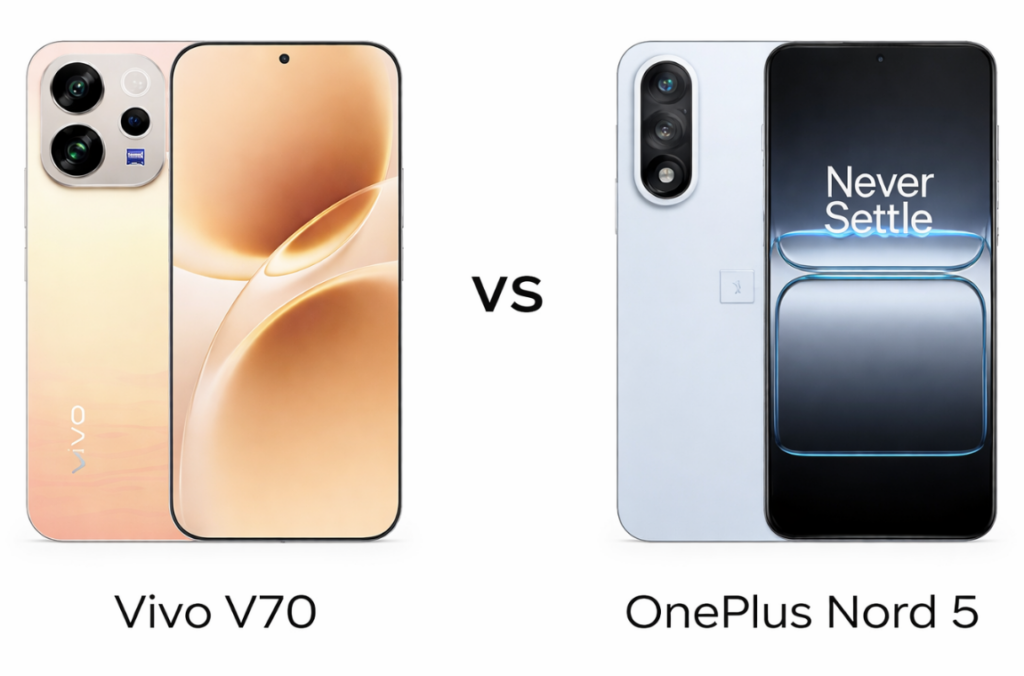
Vivo V70 vs OnePlus Nord 5: Which Phone Actually Gives More for Your Money?
Vivo vs Oneplus

Choosing between the Vivo V70 and OnePlus Nord 5 isn’t just about specs; it’s about deciding what kind of smartphone experience matters more. One focuses on premium design, advanced cameras, and flagship-like polish, while the other pushes aggressive performance and value that’s hard to ignore in its price segment. Both look strong on paper, but they target very different users. This comparison breaks down the real differences to help buyers understand which phone actually fits their needs before spending their money.
Please Note: When you buy something using the links in our articles, we may earn a small commission at no cost to you.

Major Features:

FeatureVivo V70OnePlus Nord 5Winner
BuildGlass front, aluminum alloy frame, glass/fiber back, IP68/IP69Glass front & back, plastic frame, IP65Vivo V70 — stronger build and higher protection
DisplayAMOLED, 120Hz, HDR10+, 1800 nits HBM, 5000 nits peakSwift AMOLED, 144Hz, HDR10+, 1400 nits HBM, 1800 nits peakTie — Vivo brighter, Nord smoother
ChipsetSnapdragon 7 Gen 4Snapdragon 8s Gen 3Nord 5 — more powerful chipset
GPUAdreno 722Adreno 735Nord 5 — stronger graphics performance
Storage TypeUFS 4.1UFS 3.1Vivo V70 — faster storage standard
Rear Cameras50MP wide + 50MP periscope + 8MP ultrawide50MP wide + 8MP ultrawideVivo V70 — extra telephoto lens
Selfie Camera50MP AF50MP AFTie — same resolution and AF
Video RecordingRear 4K@60fps, Selfie 4K@30fpsRear 4K@60fps, Selfie 4K@60fpsNord 5 — higher selfie video frame rate
Battery6500mAh5200mAh (EU) / 6800mAh (Global)Tie — depends on market version
Charging90W wired80W wiredVivo V70 — faster charging
FingerprintUnder-display ultrasonicUnder-display opticalVivo V70 — ultrasonic sensor advantage
Price (Approx.)₹50,000₹34,000Nord 5 — significantly lower price

Please Note: When you buy something using the links in our articles, we may earn a small commission at no cost to you.

Design and Display

Build and Feel

The Vivo V70 focuses on a more premium construction with an aluminum alloy frame, stronger water resistance, and a cleaner flagship-style finish. It feels more refined thanks to better materials and attention to detail, especially with the Zeiss branding and polished design language. The OnePlus Nord 5 keeps things practical with a glass back and plastic frame, offering durability but slightly less premium appeal. The higher IP rating on the Vivo also adds confidence for long-term use. In everyday handling, the Vivo feels closer to flagship territory, while the Nord 5 prioritizes utility and comfort over luxury.

Display Quality

Both phones use AMOLED panels with smooth refresh rates, but their focus differs. The Vivo V70 emphasizes brightness and HDR impact, delivering punchier highlights and better outdoor visibility. The Nord 5 counters with a faster 144Hz panel, which feels smoother during gaming and fast scrolling. Color output is strong on both, though Vivo’s tuning looks more cinematic while OnePlus leans toward sharper motion clarity.

Verdict

Vivo V70 wins for premium feel and display brightness, while Nord 5 suits users who value ultra-smooth visuals and a practical design approach.

Specifications Including Battery

Performance

The biggest gap appears in raw performance. The OnePlus Nord 5 uses the Snapdragon 8s Gen 3, which clearly targets high-end gaming and heavy multitasking. Apps open faster, sustained performance is stronger, and GPU power gives it a noticeable edge for demanding users. The Vivo V70’s Snapdragon 7 Gen 4 is efficient and smooth for daily use, but it sits more in the upper mid-range category. Storage speed also favors Vivo with UFS 4.1, helping loading times feel quick despite lower chipset power. Overall, Nord 5 feels built for performance enthusiasts, while Vivo aims for balanced efficiency.

Battery and Charging

Vivo’s large 6500mAh battery and 90W charging deliver excellent endurance and quick top-ups, making it ideal for heavy daily usage. Nord 5 offers up to 6800mAh in some markets, but charges slower at 80W. Both include bypass charging, which gamers will appreciate.

Verdict

Nord 5 leads in raw speed, but Vivo V70 feels more balanced with better efficiency and faster charging support.

Camera

Main and Secondary Lenses

The Vivo V70 clearly positions itself as the camera-focused option. Its triple-camera setup includes a dedicated periscope telephoto lens with optical zoom, giving it real versatility for portraits and distant subjects. Zeiss optics also help with color consistency and image character, producing photos that feel more polished. The Nord 5 keeps things simpler with a dual-camera system focused on reliable everyday shots. While its main sensor performs well in good light, the lack of a telephoto lens limits creative flexibility. Vivo’s setup simply feels more complete for users who enjoy photography beyond casual snapshots.

Selfie Camera

Both devices feature high-resolution 50MP selfie cameras with autofocus, delivering sharp and detailed results. The Nord 5 supports higher frame rate video recording, which may appeal to vloggers, while Vivo’s selfie tuning leans toward natural tones and balanced exposure.

Verdict

Vivo V70 wins decisively for camera versatility and zoom capability, while Nord 5 delivers dependable results but remains more basic overall.

Pricing

Vivo V70 sits around ₹50,000, while the OnePlus Nord 5 is priced near ₹34,000. This creates a clear positioning difference: Vivo targets premium mid-range buyers, whereas Nord 5 focuses on performance-driven value. At its price, the Nord 5 offers flagship-level processing power, making it extremely attractive for gamers and power users. The Vivo V70 justifies its higher cost with better build quality, stronger camera hardware, higher durability rating, and faster charging. The decision depends largely on priorities, performance per rupee versus an all-round premium experience.

Is the Price Justified?

Nord 5 feels like a strong value for performance seekers. Vivo V70, however, feels justified for users who prioritize cameras, display brightness, and premium design touches.

Verdict

Nord 5 wins on pure value, while Vivo V70 justifies its premium through features that feel closer to flagship phones.

Disclaimer:
Prices are approximate and may vary based on country, region, and applicable taxes.

Conclusion

Vivo V70 stands out with Zeiss-tuned cameras, a periscope zoom lens, stronger water resistance, and a bright flagship-style display. It feels designed for users who want a premium all-rounder without stepping into ultra-premium pricing. The OnePlus Nord 5 focuses on performance and fluidity, combining a powerful chipset with a high refresh rate display and competitive pricing. It targets users who care more about speed and smoothness than camera experimentation. Both devices support long-term software updates, making them safe choices for multi-year usage.

Final Verdict

Overall, the OnePlus Nord 5 is the better choice for most users because it delivers significantly stronger performance, a smoother everyday experience, and excellent value at a much lower price, making it the smarter long-term buy. 

Vivo V70 remains a better pick only for users who prioritize a more premium feel and versatile camera setup, but for pure balance of price, power, and practicality, the Nord 5 stands out as the overall winner.

Read More:

The post Vivo V70 vs OnePlus Nord 5: Which Phone Actually Gives More for Your Money? appeared first on Gizmochina.
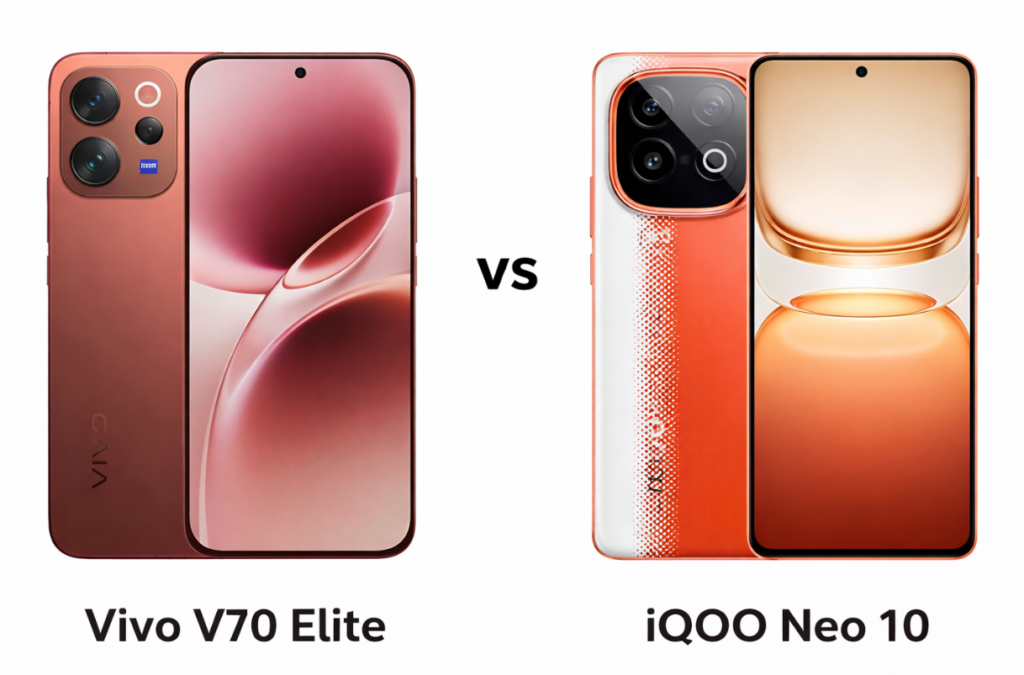
Vivo V70 Elite vs iQOO Neo 10: The Winner Will Surprise You (Amazon Discounts)

Vivo vs iQOO

Choosing between the Vivo V70 Elite and iQOO Neo 10 isn’t just about specs; it’s about deciding what matters more in daily use: flagship camera polish or raw performance value. Both phones come from the same ecosystem but target very different buyers, with one focusing on a premium experience and the other pushing aggressive performance at a lower price. This comparison breaks down the real differences that actually impact gaming, photography, and long-term usability, helping buyers understand which phone truly fits their priorities.

Amazon Deals

Vivo V70 Elite is currently available with pre-sale offers, dropping from an original price of ₹55,000 to around ₹52,000, along with exchange benefits of up to ₹42,000, plus bank offers and no-cost EMI options. Meanwhile, the iQOO Neo 10 (8GB + 256GB) is listed at a discounted price of ₹36,998, down from ₹38,000, with exchange offers of up to ₹35,000, alongside additional bank discounts and no-cost EMI deals, making both phones more attractive for buyers looking for extra savings.

Please Note: When you buy something using the links in our articles, we may earn a small commission at no cost to you.

Please Note: When you buy something using the links in our articles, we may earn a small commission at no cost to you.

Major Features:

FeatureVivo V70 EliteiQOO Neo 10Winner
Build QualityGlass + aluminum frame, IP68/IP69Plastic build, IP65Vivo V70 Elite — more premium and durable
DisplayAMOLED, 120Hz, higher peak brightnessAMOLED, 144Hz, smoother refreshiQOO Neo 10 — better for gaming smoothness
ProcessorSnapdragon 8s Gen 3Snapdragon 8s Gen 4iQOO Neo 10 — newer & faster chipset
PerformanceFlagship-level smoothStronger gaming performanceiQOO Neo 10 — higher raw power
Battery6500mAh, 90W charging7000mAh, 120W chargingiQOO Neo 10 — bigger battery + faster charge
Main Camera50MP + 50MP periscope + 8MP50MP + 8MPVivo V70 Elite — far more versatile camera system
Selfie Camera50MP AF32MPVivo V70 Elite — sharper selfies
Software SupportAndroid 16, up to 4 upgradesAndroid 15, up to 3 upgradesVivo V70 Elite — longer support
Storage OptionsUFS 4.1 (all variants)UFS 4.1 (higher variants)Vivo V70 Elite — more consistent
Price (Approx)₹55,000₹32,000–₹37,000iQOO Neo 10 — massive value advantage
Overall ValuePremium flagship feelPerformance-focused bargainiQOO Neo 10 — better overall value

Design and Display

Build and Feel

The Vivo V70 Elite focuses on a premium experience with a glass build, aluminum alloy frame, and stronger water resistance ratings, giving it a more flagship-like identity. The overall design feels refined and polished, aimed at users who value aesthetics alongside durability. The iQOO Neo 10 takes a more performance-first approach with a simpler build and practical materials, which helps keep the cost lower while still offering decent protection. The difference in construction clearly reflects the target audience; one prioritizes elegance, while the other leans toward utility and gaming-focused durability.

Display Quality

Both devices use AMOLED panels with vivid colors and HDR support, but their tuning differs. The Vivo V70 Elite emphasizes brightness and cinematic visuals, making media consumption feel richer and more premium. Meanwhile, the iQOO Neo 10 pushes higher refresh rates and advanced PWM dimming, which feels smoother for gaming and scrolling. The display experience on Vivo feels more balanced overall, while iQOO clearly targets speed and responsiveness.

Verdict

Vivo V70 Elite wins for premium display experience and build quality, while iQOO Neo 10 suits users wanting a fast, gaming-oriented screen.

Specifications Including Battery

Performance

The Vivo V70 Elite runs on the Snapdragon 8s Gen 3, delivering flagship-level performance that comfortably handles multitasking, camera processing, and heavy apps. The iQOO Neo 10 steps ahead with the newer Snapdragon 8s Gen 4, giving it stronger raw power and better sustained gaming performance. Everyday users may not notice a massive gap, but gamers and power users will appreciate the extra headroom. The software experience also differs, with Vivo focusing on smoother refinement and iQOO leaning toward aggressive performance tuning.

Battery and Charging

Battery capacity clearly favors the iQOO Neo 10 with a larger cell and faster 120W charging, making it more practical for long gaming sessions and quick top-ups. Vivo’s battery is still large and efficient, with 90W charging providing fast enough speeds for most users. Both include bypass charging, which is a useful feature for reducing heat during heavy use. iQOO feels more future-proof for heavy usage patterns.

Verdict

iQOO Neo 10 wins for raw performance and battery value, while Vivo V70 Elite focuses more on balanced flagship-level optimization.

Camera

Main and Secondary Lenses

The Vivo V70 Elite clearly targets photography enthusiasts with a triple-camera setup, including a high-quality periscope telephoto lens and Zeiss optics. This gives it stronger versatility for portraits and zoom shots, producing more flagship-style results. The iQOO Neo 10 keeps things simpler with a dual-camera system that focuses on reliability rather than flexibility. While the main sensor performs well in good lighting, the lack of a dedicated telephoto lens limits creative shooting options. Vivo’s camera system feels more complete and premium in real-world use.

Selfie Camera

Vivo again takes the lead with a higher-resolution autofocus selfie camera and Zeiss tuning, delivering sharper portraits and more detailed video calls. The iQOO Neo 10’s selfie camera is capable but more standard, aimed at casual usage rather than content creation. The difference becomes noticeable when shooting videos or selfies in varied lighting conditions.

Verdict

Vivo V70 Elite wins comfortably for cameras, offering more versatility and a stronger flagship photography experience.

Pricing

Vivo V70 Elite is priced around ₹55,000, placing it in the premium flagship segment where users expect strong design, cameras, and polished software. The iQOO Neo 10 comes in at approximately ₹32,000, making it significantly more affordable while still offering high-end performance hardware. This price gap changes the comparison entirely. Vivo sells a premium experience, while iQOO focuses on delivering maximum specifications per rupee. For buyers prioritizing gaming and speed, the iQOO price feels extremely aggressive and difficult to ignore.

Is the Price Justified?

Vivo’s pricing is justified mainly by its camera hardware, build quality, and overall flagship polish. iQOO, however, offers outstanding value for performance-focused users who do not need advanced camera versatility. One feels like a lifestyle flagship, while the other feels like a performance bargain.

Verdict

iQOO Neo 10 wins on value for money, while Vivo V70 Elite justifies its higher price through premium features.

Disclaimer:
Prices are approximate and may vary based on country, region, and applicable taxes.

Conclusion

Vivo V70 Elite stands out with Zeiss-powered cameras, a premium build, stronger water resistance, and a more photography-focused approach. It targets users who want a balanced flagship experience that feels refined in everyday use. The iQOO Neo 10 focuses on pure performance, offering a newer chipset, faster charging, and a large battery that makes it ideal for gaming and heavy multitasking. Both phones include modern extras like stereo speakers, bypass charging, and AMOLED displays, but their priorities are clearly different.

Final Verdict

Overall, the iQOO Neo 10 is the better choice for most users because it offers stronger performance, a larger battery, faster charging, and significantly better value for money at a much lower price. It feels like a smarter all-around purchase for gaming, heavy usage, and long-term performance. The Vivo V70 Elite still stands out with its premium build and superior camera system, making it a better option only for users who prioritize photography and flagship styling over raw performance and value.

Read More:

The post Vivo V70 Elite vs iQOO Neo 10: The Winner Will Surprise You (Amazon Discounts) appeared first on Gizmochina.

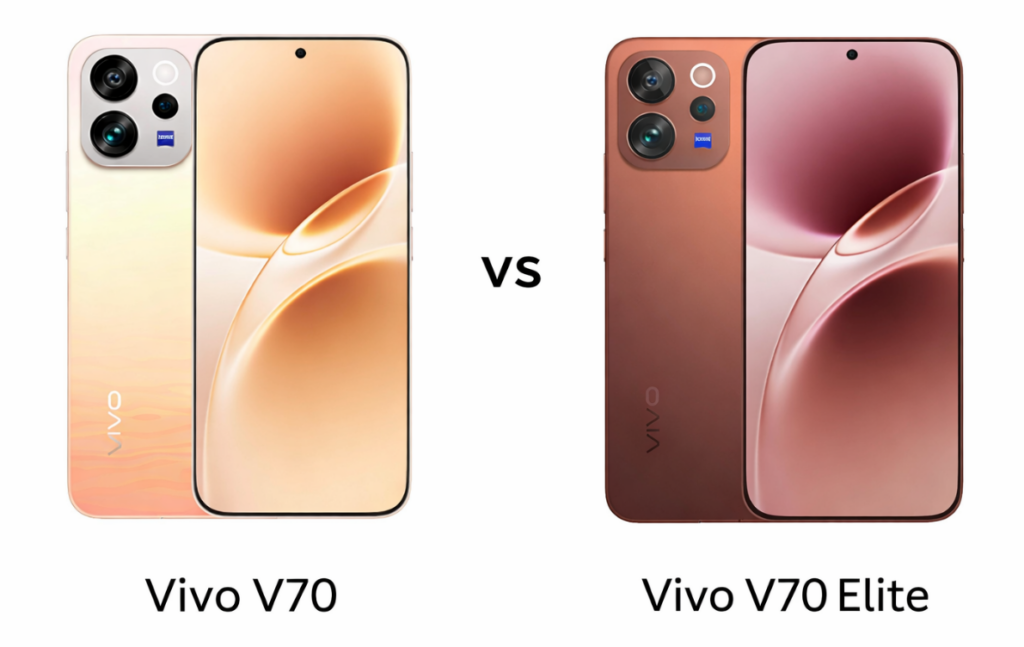
Vivo V70 vs Vivo V70 Elite Comparison: Specs, Camera, Performance & Price (Amazon Discounts)

Vivo V70 vs V70 Elite

Choosing between two phones that look almost identical but promise very different experiences can be surprisingly tricky, and that’s exactly the case with the Vivo V70 and Vivo V70 Elite. On paper, both share the same premium design, display, and camera hardware, yet their real difference lies in performance and positioning. One focuses on balanced value, while the other pushes toward flagship-level power. This comparison matters because the price gap isn’t huge, making it important to know whether the extra money truly changes the everyday experience or just adds numbers on a spec sheet.

Amazon Pre-Sale Discounts (Vivo V70 Series)

Amazon’s pre-sale for the Vivo V70 series is live, with official shipments starting from February 27. The Vivo V70 base variant is priced at ₹50,000, but the pre-sale discounted price brings it down to ₹46,000. The Vivo V70 Elite base variant, originally priced at ₹55,000, is available at a discounted pre-sale price of ₹52,000. Buyers can also combine these price cuts with additional launch offers, including bank discounts, EMI options, exchange bonuses, and other deals listed on the Amazon product page.

Please Note: When you buy something using the links in our articles, we may earn a small commission at no cost to you.

Major Features:

FeatureVivo V70Vivo V70 EliteWinner
ProcessorSnapdragon 7 Gen 4Snapdragon 8s Gen 3V70 Elite — noticeably stronger performance & gaming power
Display6.59″ AMOLED, 120Hz, HDR10+6.59″ AMOLED, 120Hz, HDR10+Tie — identical display quality
Main Camera50MP + 50MP Periscope + 8MP UW50MP + 50MP Periscope + 8MP UWTie — same camera hardware
Camera ExtrasZeiss opticsZeiss optics + color spectrum sensorV70 Elite — slightly better color accuracy
Selfie Camera50MP AF50MP AFTie — same selfie performance
Battery6500mAh, 90W fast charging6500mAh, 90W fast chargingTie — identical endurance & charging
Storage & RAMUp to 12GB + 512GBUp to 12GB + 512GBTie — same memory options
Build & ProtectionIP68/IP69 premium buildIP68/IP69 premium buildTie — same durability level
Base Price₹50,000 (₹46,000 pre-sale)₹55,000 (₹52,000 pre-sale)V70 — better value for money
Overall ValueBalanced flagship experiencePerformance-focused flagshipV70 — similar features for less money

Please Note: When you buy something using the links in our articles, we may earn a small commission at no cost to you.

Design and Display

Build and Feel

Both Vivo V70 and V70 Elite follow a premium design approach with a glass front, aluminum alloy frame, and either glass or fiber-reinforced back finishes. The overall styling feels modern and refined, giving both phones a flagship-like presence in daily use. Water and dust resistance adds a practical layer of durability, making them feel reliable beyond just looks. Since the design language is shared, the difference here is more about positioning than appearance; the Elite feels like a performance-focused variant rather than a visual upgrade. This similarity can actually be a positive, as buyers don’t have to compromise on aesthetics when choosing the more affordable model.

Display Quality

Both devices use the same AMOLED panel with a 120Hz refresh rate, HDR10+ support, and very high peak brightness. Colors look vibrant, contrast remains deep, and smooth animations make scrolling and gaming feel premium. Outdoor visibility is excellent, and the display experience feels equally polished on both models. In real-world use, there is virtually no separation between them visually.

Verdict

Design and display are essentially tied. The V70 stands out as the smarter pick here since it delivers the same premium viewing experience without paying extra.

Specifications Including Battery

Performance

The main difference between these two phones appears under the hood. Vivo V70 runs on the Snapdragon 7 Gen 4, which handles daily apps, multitasking, and moderate gaming smoothly. Vivo V70 Elite steps up to the Snapdragon 8s Gen 3, offering noticeably stronger performance for demanding games, heavier editing tasks, and longer-term performance stability. The Elite feels faster under pressure, especially when pushing graphics or multitasking heavily. Still, the standard V70 proves that upper mid-range chips now deliver a very polished everyday experience without feeling slow.

Battery and Charging

Both phones pack a large 6500mAh battery with 90W fast charging, reverse wired charging, and bypass charging. Endurance should comfortably last a full day, even with heavy use, and charging speeds remain equally impressive. The V70 may feel slightly more power-efficient due to its chipset, while the Elite focuses more on raw speed and sustained performance.

Verdict

Performance clearly favors the V70 Elite, but battery experience remains equally strong on both. The choice depends on whether raw power or balanced efficiency is more important.

Camera

Main and Secondary Lenses

Camera hardware is nearly identical across both devices, featuring a 50MP main sensor with OIS, a 50MP periscope telephoto lens with 3.7x optical zoom, and an 8MP ultrawide camera. Image output should be very similar, delivering sharp details, balanced colors, and strong zoom versatility. The V70 Elite adds a color spectrum sensor and slightly improved HDR video processing, which can help with more consistent tones in complex lighting scenes. In everyday photography, however, differences remain subtle rather than dramatic, making both phones strong camera performers in their segment.

Selfie Camera

Each model uses the same 50MP autofocus selfie camera capable of 4K video recording. Selfies are expected to look detailed with natural skin tones, and autofocus helps maintain sharpness in both photos and video calls. Social media creators and casual users alike will find the front camera experience consistent across both models.

Verdict

Camera performance is nearly equal, but the V70 Elite takes a slight lead due to small processing improvements. The V70 still delivers flagship-style results without clear compromises.

Pricing

Vivo V70 is priced at around ₹50,000, while Vivo V70 Elite comes in at approximately ₹55,000. The almost ₹5,000 difference mainly reflects the jump to a more powerful processor and small imaging refinements rather than major hardware changes. For buyers comparing pure features, the pricing gap feels narrow enough to make the decision more about usage style than budget limits.

Is the Price Justified?

The V70 offers stronger value because it delivers the same design, display, battery, and almost identical camera experience at a lower price. The Elite justifies its higher cost for users who want extra performance headroom for gaming or long-term heavy usage. The pricing strategy feels balanced, but the benefits of the Elite are more performance-focused than all-around upgrades.

Disclaimer:
Prices are approximate and may vary based on country, region, and applicable taxes.

Verdict

Vivo V70 wins on value for most users, while V70 Elite makes sense for buyers prioritizing performance and future-proofing.

Conclusion

Both smartphones offer premium AMOLED displays, large batteries, fast charging, and Zeiss-tuned camera systems, creating a flagship-like experience regardless of choice. The real separation lies in processing power; the V70 Elite targets users who want stronger gaming performance and longer-term speed consistency, while the V70 focuses on delivering a balanced experience at a more accessible price. This makes the lineup easy to understand, as buyers are essentially choosing between value and extra performance rather than completely different devices.

Verdict

Vivo V70 is the smarter all-round choice thanks to its pricing and balanced specifications. Vivo V70 Elite is the better option for power users who want higher performance ceilings and slightly refined imaging performance without changing the overall experience.

Read More:

The post Vivo V70 vs Vivo V70 Elite Comparison: Specs, Camera, Performance & Price (Amazon Discounts) appeared first on Gizmochina.

❌