
 Login
Login
Samsung Galaxy S26 vs S26+ vs S26 Ultra: Specs, Key Differences & Upgrades
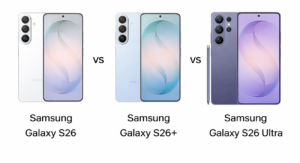
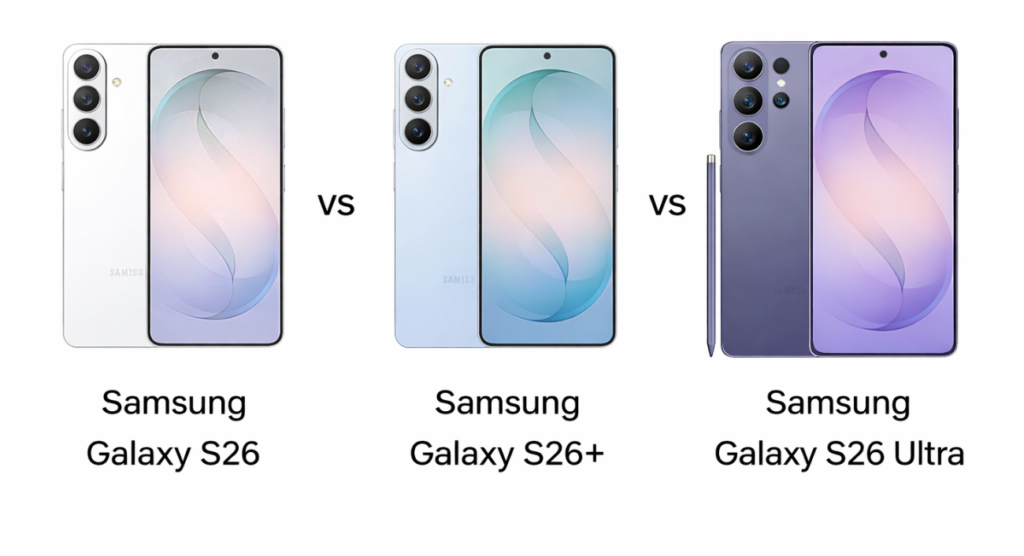
When three phones share the same flagship DNA, the real question isn’t which one is better; it’s what actually changes as you move up the lineup. The Samsung Galaxy S26, S26+, and S26 Ultra look similar at first glance, but the upgrades are carefully layered to match different types of users. From display sharpness and battery growth to camera flexibility and productivity features, each step adds a specific kind of value. This comparison breaks down how those upgrades differ, what they mean in real-world use, and which model makes the most sense depending on how a phone is actually used day to day.
| Preview | Product | |
|---|---|---|

|
Samsung Galaxy S26 Ultra 5G (Black, 12GB RAM, 512GB Storage) with Built-in Privacy Display, AI Phone | Check Price on Amazon |
Please Note: When you buy something using the links in our articles, we may earn a small commission at no cost to you.
| Preview | Product | |
|---|---|---|

|
Samsung Galaxy S26 5G (Sky Blue, 12GB RAM, 256GB Storage), AI Phone | Check Price on Amazon |
Please Note: When you buy something using the links in our articles, we may earn a small commission at no cost to you.
Major Features:
| Feature | Galaxy S26 | Galaxy S26+ | Galaxy S26 Ultra | Upgrades |
|---|---|---|---|---|
| Display Size & Resolution | 6.3″ FHD+ | 6.7″ QHD+ | 6.9″ QHD+ + Anti-Reflective | Bigger and sharper screens improve media viewing, gaming, and multitasking comfort |
| Display Treatment | Standard flagship panel | Same as S26 | Gorilla Armor 2 + DX coating | Ultra reduces reflections: better outdoor visibility and long viewing sessions |
| Build Experience | Compact flagship feel | Larger immersive feel | Productivity-focused with stylus | Upgrade shifts from portability to immersion to productivity use |
| Processor & Performance | Flagship chipset | Same performance level | Same chipset + higher RAM option | Ultra handles heavier multitasking and sustained workloads better |
| RAM & Storage Options | Up to 12GB / 512GB | Up to 12GB / 512GB | Up to 16GB / 1TB | Ultra better suited for creators, pro workflows, and heavy storage users |
| Main Camera | 50MP | 50MP | 200MP | Ultra enables higher detail capture and better crop flexibility |
| Zoom System | 3x telephoto | 3x telephoto | 3x + 5x periscope | Ultra adds real long-range photography versatility |
| Ultrawide Camera | 12MP | 12MP | 50MP | Ultra improves detail and low-light ultrawide shots |
| Selfie Camera | 12MP | 12MP | 12MP | No upgrade: same front camera experience across all |
| Battery Capacity | 4300mAh | 4900mAh | 5000mAh | Bigger models support longer heavy usage sessions |
| Wired Charging | 25W | 45W | 60W | Faster charging reduces downtime, especially for power users |
| Wireless Charging | 15W | 20W | 25W | Upgrade improves convenience for desk and bedside charging |
| Extra Features | Core flagship features | Adds UWB | Stylus + UWB + pro display | Ultra adds productivity and pro-level usability tools |
| Price (Approx) | $900 / ₹88,000 | $1100 / ₹1,20,000 | $1300 / ₹1,40,000 | Price increases match upgrade depth and target usage |
| Preview | Product | |
|---|---|---|

|
Samsung Galaxy S26 Plus 5G (Black, 12GB RAM, 256GB Storage), AI Phone | Check Price on Amazon |
Please Note: When you buy something using the links in our articles, we may earn a small commission at no cost to you.
Design and Display
Build and Feel
The Galaxy S26 series follows a clear upgrade ladder rather than three completely different designs. The S26 acts as the baseline flagship with premium glass and Armor Aluminum 2, focusing on comfort and everyday practicality. Moving to the S26+, the main change is scale; it feels more immersive without dramatically changing the design philosophy. The S26 Ultra introduces the biggest functional upgrade: Gorilla Armor 2 with anti-reflective coating and built-in stylus support. This shift makes the Ultra less about style and more about productivity and precision input. The upgrade path here is practical, compact usability on S26, a larger media-focused experience on S26+, and professional utility on Ultra.
Display Quality
All three use Dynamic LTPO AMOLED 2X panels with 120Hz refresh rates and high peak brightness, so smoothness and color quality stay consistent. The main upgrade difference is resolution and usability. The S26 sticks with FHD+ for efficiency, while the S26+ and Ultra move to QHD+ for sharper text and better large-screen clarity. The Ultra adds anti-reflective treatment, which noticeably improves outdoor visibility and long viewing sessions.
Verdict
Design upgrades mainly scale from comfort to immersion to productivity, while display upgrades focus on sharper visuals and improved real-world readability as you move up.
Specifications Including Battery
Performance
Performance differences are subtle because all models use flagship-level chipsets and the same software support window. The S26 and S26+ share identical performance configurations depending on region, meaning real-world speed is nearly the same between them. The Ultra’s upgrade lies less in raw speed and more in sustained performance and higher memory options, which benefit heavy multitasking, long gaming sessions, and advanced editing workloads. The progression is about workload capacity rather than basic performance gains.
Battery and Charging
Battery upgrades follow a clear usage-based ladder. The S26’s smaller battery targets normal daily use with moderate charging speeds. The S26+ adds capacity and faster wired charging, which better supports heavier media consumption and longer screen time. The Ultra improves further with the fastest wired and wireless charging, reducing downtime for power users. These upgrades mainly affect convenience rather than fundamental endurance differences.
Verdict
Performance upgrades emphasize consistency across the lineup, while battery improvements primarily support heavier usage patterns and faster top-up convenience.
Camera
Main and Secondary Lenses
The biggest upgrade differences in the series appear in the camera system. The S26 and S26+ share identical hardware, meaning the move from base to Plus does not change photographic capability. Both focus on reliable flagship photography with 3x zoom and strong video features. The S26 Ultra introduces meaningful hardware upgrades: a 200MP main sensor, dual telephoto setup including a 5x periscope, and a higher-resolution ultrawide. These changes expand shooting flexibility rather than just improving quality, enabling better long-distance zoom, higher-detail crops, and more creative framing options. The upgrade here is clearly aimed at users who push mobile photography further.
Selfie Camera
All three use the same 12MP dual-pixel autofocus selfie camera, so selfie quality and video performance remain consistent across the lineup. This keeps the front-camera experience equal regardless of model choice.
Verdict
Camera upgrades are concentrated entirely on the Ultra, while S26 and S26+ maintain the same reliable flagship camera experience.
Pricing
The pricing structure reflects how upgrades are distributed. The Galaxy S26 starts at about $900 / ₹88,000, establishing the core flagship experience. The S26+ moves to roughly $1100 / ₹1,20,000, where the extra cost mainly pays for a larger, sharper display and bigger battery rather than performance or camera improvements. The S26 Ultra reaches around $1300 / ₹1,40,000, with pricing tied to significant camera upgrades, stylus integration, premium display treatment, and higher memory options.
Is the Price Justified?
The S26+ feels like an upgrade for comfort and endurance rather than capability. The Ultra’s price increase is easier to justify for users who will actively use Zoom flexibility, stylus features, or heavy multitasking. The value depends less on raw specs and more on whether those functional upgrades match daily usage.
Verdict
Pricing directly mirrors upgrade intent: screen and battery improvements in the middle tier, and feature-driven professional upgrades at the top.
Disclaimer:
Prices are approximate and may vary based on country, region, and applicable taxes.
Conclusion
The S26 lineup is structured around progressive upgrades rather than drastic differences. The S26 provides the full flagship foundation. The S26+ upgrades the viewing and battery experience without changing core performance or cameras, making it a lifestyle upgrade for media-heavy users. The S26 Ultra introduces the most functional upgrades, advanced cameras, an anti-reflective display, stylus integration, and higher-end hardware options, targeting users who treat their phone as a productivity or creative tool. The lineup feels intentionally tiered so buyers can choose upgrades based on usage rather than marketing labels.
Verdict
The differences between S26, S26+, and S26 Ultra are less about which is “best” and more about how upgrades align with usage: Galaxy S26 is best suited for users who want a clean flagship experience without extra complexity, ideal for everyday performance, compact handling, and long-term reliability.
The S26+ fits users who consume more content, game longer, or simply prefer a bigger and sharper screen with stronger battery comfort, making it the most balanced upgrade for mainstream buyers.
The S26 Ultra is clearly built for power users, creators, and multitaskers who will actually use advanced zoom cameras, stylus features, and top-tier hardware.
S26 for simplicity, S26+ for balance, Ultra for maximum capability.
Read More:
- Vivo V70 vs OnePlus Nord 5: Which Phone Actually Gives More for Your Money?
- Vivo V70 vs Vivo V70 Elite Comparison: Specs, Camera, Performance & Price (Amazon Discounts)
- Motorola Signature vs Samsung Galaxy S25: The $660 Flagship That Beats Samsung
The post Samsung Galaxy S26 vs S26+ vs S26 Ultra: Specs, Key Differences & Upgrades appeared first on Gizmochina.
