
 Login
Login
Stranded in the Emirates: How the UAE is Providing State-Funded Relief and Luxury Sanctuary for Displaced Travellers
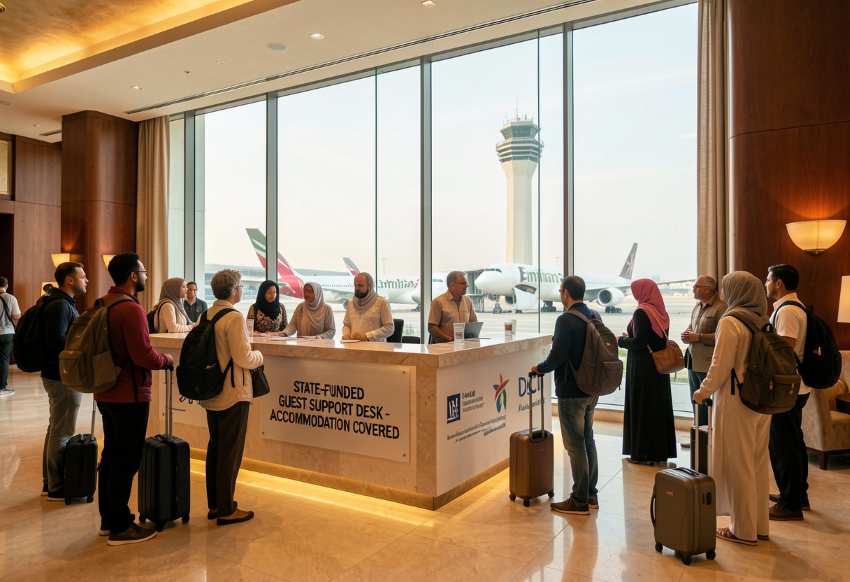
The landscape of international travel is frequently defined by its unpredictability, but the hallmark of a truly world-class destination is its response to crisis. Following a sudden and unprecedented closure of its national airspace, the United Arab Emirates recently set a global standard for passenger safety. In an effort to prioritise human dignity over administrative logistics, the state has intervened to ensure that the thousands of tourists and transit passengers who are currently unable to depart are not left to fend for themselves.
Rather than viewing the grounding of flights as a mere commercial disruption, the UAE government has prioritised humanitarian relief. The seamless coordination among civil aviation authorities, tourism departments, and the private sector has turned a stressful regional event into a showcase of the country’s hospitality and logistical prowess.
State-Funded Hospitality: Abu Dhabi’s Decisive Action
A significant directive has been issued by the Department of Culture and Tourism (DCT) in Abu Dhabi, ensuring that the financial burden of unexpected stays is removed from the traveller. In an official communication distributed to the hospitality sector, hotel operators were requested to extend the stays of any guests who had reached their scheduled checkout dates but remained unable to secure passage out of the country. It was confirmed that the entirety of these accommodation costs would be settled by the DCT.
This initiative ensures that travellers are not forced to seek alternative housing or face exorbitant last-minute booking fees. By absorbing these costs at a state level, the government has provided a safety net that allows visitors to remain in the comfort of their current lodgings. This level of support is rare in the global travel industry, where passengers are typically left to navigate the complexities of travel insurance or airline compensation policies during times of “force majeure”.
The GCAA and the Logistics of Care
While the DCT manages the hotel extensions, the General Civil Aviation Authority (GCAA) has taken the lead in managing the immediate needs of those caught within the airport terminals. It has been reported by the state news agency, WAM, that the GCAA is bearing all hosting and meal costs for thousands of individuals. This comprehensive support package was activated immediately following the cancellation of flights and the subsequent shutdown of operations on Saturday afternoon.
The scale of the operation is massive, with estimates suggesting that approximately 20,200 passengers have been directly impacted by the rescheduling and cancellations. Despite these high numbers, essential services have been maintained without interruption. Temporary living quarters have been established, and a steady supply of refreshments and meals has been guaranteed. Furthermore, the complex task of rebooking and rerouting these tens of thousands of individuals is being facilitated by the GCAA in accordance with meticulously designed operational plans.
Regional Instability and the Safety of the Skies
The decision to shutter one of the world’s busiest aviation hubs was not taken lightly. It was necessitated by a sharp escalation in regional tensions, specifically involving military actions between the US, Israel, and Iran. As missiles were launched across regional corridors, the safety of civilian aircraft became the paramount concern for Emirati authorities.
Reports indicated that debris from intercepted projectiles fell within the region, resulting in casualties and highlighting the gravity of the situation. To prevent any risk to international travellers, the UAE’s airspace was closed on Saturday, leading to the diversion and cancellation of hundreds of flights. This proactive safety measure, while disruptive, underscored the UAE’s commitment to the “safety first” protocol that has made its national carriers, such as Emirates and Etihad, global leaders in aviation security.
A Community United: The Role of Private Enterprise
The spirit of the “Year of Giving” continues to resonate within the UAE’s private sector. As the government moved to secure hotel rooms, independent businesses and holiday home providers launched their own relief efforts. One notable holiday rental firm, Arabnb Homes, utilized social media to announce that several of its luxury apartments in Dubai would be made available to stranded travellers at no cost. This gesture of goodwill quickly gained momentum, garnering tens of thousands of interactions and inspiring a broader movement within the host community.
It was observed that nearly 250 holiday home hosts in Dubai joined this collective effort, offering free spaces to those in need. These initiatives were often born out of personal empathy; for instance, the drive behind the Arabnb initiative was sparked when a close associate of the company was found stranded at Zayed International Airport. This grassroots response highlights the deep-seated culture of communal support that exists beneath the glitz and glamour of the UAE’s urban centres.
Prioritizing the Vulnerable: Corporate Social Responsibility
The wave of corporate generosity was further bolstered by major developers such as Danube Properties. Recognizing that certain demographics face higher risks during travel disruptions, the company issued a public offer of free accommodation, specifically noting that priority would be given to the elderly and families travelling with young children.
By targeting the most vulnerable groups, these private entities have complemented the government’s broad-spectrum support. This multi-layered approach ensures that while the state handles the vast majority of transit passengers through official channels, those who might fall through the cracks or require more specialized “homelike” environments are looked after by the local business community.
The Path Forward for Travellers
As the regional situation is monitored and operational adjustments continue, the message from the UAE is clear: visitors are guests of the state, not just customers of an airline. The coordination between the GCAA, the DCT, and private landlords serves as a blueprint for how a nation can protect its tourism reputation even in the face of geopolitical volatility.
Passengers currently in the UAE are advised to remain in their provided accommodations and stay in close contact with their respective airlines for rebooking updates. With the government covering the bill and the community opening its doors, the stress of being “stranded” has been replaced by an unexpected experience of high-level Emirati hospitality.
The post Stranded in the Emirates: How the UAE is Providing State-Funded Relief and Luxury Sanctuary for Displaced Travellers appeared first on Travel And Tour World.