Reading view

(PR) Lenovo Intros New Consumer AI Laptops, Tablets, and Concepts at MWC 2026

Today at MWC 2026, Lenovo announced its latest consumer device innovations targeted at creators, gamers, and productivity-focused users. This includes powerful creative convertibles like the Yoga 9i 2-in-1 Aura Edition (14", 11), ultralight laptops like the IdeaPad Slim 5i Ultra (14", 11), productivity-on-the-go tablets like the Idea Tab Pro Gen 2, and the Yoga Pro 7a (15", 11) and the Legion 7a (15", 11)—laptops both powered by AMD Ryzen AI Max+ Series processors, delivering next-generation improvements in performance, AI experiences, and graphics.

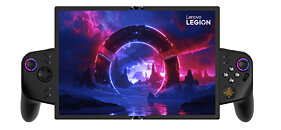
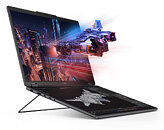
Lenovo also unveiled proofs of concept from both its Yoga and Legion sub-brands—the Yoga Book Pro 3D Concept and the Legion Go Fold Concept—that embody Lenovo's commitment to pushing the envelope with its consumer innovations. The Yoga Book Pro 3D Concept addresses gaps in the 3D creative process by shedding the need for peripherals and streamlining user interactions. The Legion Go Fold Concept pushes the adaptability ethos of the Legion Go line of gaming handhelds even further with modularity to fit even more use cases.


AMD CEO Lisa Su Says Server CPU Demand "Far Exceeded" Expectations, Supply Now Tightening

AMD is seeing server CPU demand it didn't fully anticipate, with CEO Lisa Su describing it as having "far exceeded" her expectations. Speaking at the Morgan Stanley Technology, Media & Telecom Conference earlier today, Su outlined how the landscape has shifted as agentic AI applications have taken off, pushing CPUs back into the spotlight alongside accelerators. The CPU-to-GPU ratio in AI compute workloads has evolved dramatically over the past few months, and top customers reportedly told Su that CPU demand sitting alongside AI was "under-forecasted." Supply is tightening as a result. The sudden spike in customer commitments left little time for the supply chain to adjust, though AMD says it's working closely with partners to ease existing bottlenecks and expects capacity to expand over the coming year. Su expressed confidence that AMD's product lineup is well positioned to address training, inference, and agentic workloads going forward. We've also seen this play out at the customer level, with hyperscalers like Meta signing CPU agreements with AMD and NVIDIA, a sign that compute is diversifying away from a pure GPU focus.

Back in late January, Intel disclosed it had to reallocate wafer capacity from its PC division to Xeon production after hyperscalers started ordering larger quantities than anticipated, triggering a temporary shortage. Then, in early February, both Intel and AMD warned customers in China about tightening supplies, with Intel Xeon delivery times stretching to as long as six months and prices up more than 10%. AMD's situation is somewhat less difficult, but lead times have still pushed out to eight to ten weeks for some orders. On the consumer side, AMD's next-gen Ryzen 'Olympic Ridge' desktop processors based on Zen 6 are rumored to have slipped to 2027, possibly another sign that AMD is prioritizing Zen 6 chiplets for EPYC server processors.

(PR) Micron Releases World's First High-Capacity 256 GB LPDRAM SOCAMM2 for Data Center Infrastructure

Micron Technology, Inc. (Nasdaq: MU) today extended its leadership in low-power server memory by shipping customer samples of the industry's highest-capacity LPDRAM module—256 GB SOCAMM2. Enabled by the industry's first monolithic 32 Gb LPDDR5X design, this milestone represents a transformational step forward for AI data centers, delivering low-power memory capacity that can unlock new system architectures.

The convergence of AI training, inference, agentic AI and general-purpose compute are driving more demanding memory requirements and reshaping data center system architectures. Modern AI workloads drive large model parameters, expansive context windows and persistent key value (KV) caches, while core compute continues to scale in data intensity, concurrency and memory footprint.

(PR) Elgato Announces Its Wave Next Audio Software and Hardware Ecosystem

Elgato, a brand of CORSAIR, today announced Wave Next, the company's next generation of audio products and the most significant evolution of the Wave platform since its debut in 2020. Wave Next brings together six deeply integrated products: Wave Link 3.0 software, Wave:3 MK.2, Wave XLR MK.2, XLR Dock MK.2, Wave XLR Pro, and Stream Deck + XL. Together, they form a cohesive ecosystem spanning audio capture, processing, and control, built for how modern creators and professionals actually work.

"When we launched the first Wave microphone in 2020, we set out to make audio workflows easier for creators," said Julian Fest, SVP and General Manager of Elgato. "Since then, hundreds of thousands of real-world setups have taught us what works, what is still too complicated, and where the real bottlenecks are. Wave Next is the synthesis of everything we have learned, reimagined into a single platform offering powerful software that is now free for everyone, hardware that processes audio at the source, and physical controls that make managing it all feel effortless."

(PR) Apple Unveils New Studio Display and All-New Studio Display XDR

Apple today announced a new family of displays engineered to pair beautifully with Mac and meet the needs of everyone, from everyday users to the world's top pros. The new Studio Display features a 12MP Center Stage camera, now with improved image quality and support for Desk View; a studio-quality three-microphone array; and an immersive six-speaker sound system with Spatial Audio. It also now includes powerful Thunderbolt 5 connectivity, providing more downstream connectivity for high-speed accessories or daisy-chaining displays.

The all-new Studio Display XDR takes the pro display experience to the next level. Its 27-inch 5K Retina XDR display features an advanced mini-LED backlight with over 2,000 local dimming zones, up to 1000 nits of SDR brightness, and 2000 nits of peak HDR brightness, in addition to a wider color gamut, so content jumps off the screen with breathtaking contrast, vibrancy, and accuracy. With its 120 Hz refresh rate, Studio Display XDR is even more responsive to content in motion, and Adaptive Sync dynamically adjusts frame rates for content like video playback or graphically intense games. Studio Display XDR offers the same advanced camera and audio system as Studio Display, as well as Thunderbolt 5 connectivity to simplify pro workflow setups. The new Studio Display with a tilt-adjustable stand starts at $1,599, and Studio Display XDR with a tilt- and height-adjustable stand starts at $3,299. Both are available in standard or nano-texture glass options, and can be pre-ordered starting tomorrow, March 4, with availability beginning Wednesday, March 11.

(PR) Apple Debuts M5 Pro and M5 Max Processors

Apple today announced M5 Pro and M5 Max, the world's most advanced chips for pro laptops, powering the new MacBook Pro. The chips are built using a new Apple-designed Fusion Architecture. This innovative design combines two dies into a single system on a chip (SoC), which includes a powerful CPU, scalable GPU, Media Engine, unified memory controller, Neural Engine, and Thunderbolt 5 capabilities. M5 Pro and M5 Max feature a new 18-core CPU architecture. It includes six of the highest-performing core design, now called super cores, that are the world's fastest CPU core. Alongside these cores are 12 all-new performance cores, optimized for power-efficient, multithreaded workloads. Collectively, the CPU significantly boosts performance by up to 30 percent for pro workloads.

The GPU scales up the next-generation architecture introduced in M5 to an up-to-40-core GPU. With a Neural Accelerator in each GPU core and higher unified memory bandwidth, M5 Pro and M5 Max are over 4x the peak GPU compute for AI compared to the previous generation. The GPU substantially increases graphics capabilities—now up to 35 percent for apps using ray tracing than M4 Pro and M4 Max—enhancing advanced visual effects and 3D rendering. With M5 Pro and M5 Max, the new MacBook Pro is the ultimate powerhouse for pros and is available for pre-order starting tomorrow, with availability beginning Wednesday, March 11.

(PR) NVIDIA DLSS Comes to Death Stranding 2: On the Beach, Marathon & Monster Hunter Stories 3: Twisted Reflection

Each week, new games and apps integrating NVIDIA DLSS, NVIDIA Reflex, and advanced ray-traced effects are released or announced, delivering the definitive PC experience for GeForce RTX players. DLSS 4.5 is our latest upgrade to the ever-improving DLSS Super Resolution, adding a second generation transformer model that further enhances image quality. Via the NVIDIA app, you can apply DLSS 4.5 Super Resolution to your game library on all GeForce RTX PCs and laptops, instantly upgrading clarity and quality.

This week, you can upgrade Marathon and Black One Blood Brothers with DLSS 4.5 Super Resolution, followed by Monster Hunter Stories 3: Twisted Reflection on March 13th. And Demonologist now includes native support for DLSS 4.5 Super Resolution. On March 19th, DEATH STRANDING 2: ON THE BEACH launches, featuring DLSS 4 With Multi Frame Generation, and DLSS Super Resolution that can be upgraded to DLSS 4.5 Super Resolution via the NVIDIA app.

(PR) BenQ Launches New 5K Glossy Monitor Purpose-Built for Mac Users

BenQ, the global leader in display and color-tuning innovation, today announced its MA270S, a new 27-inch 5K monitor designed to give Mac users the clarity, color, and intuitive experience they expect from a native Apple display. As the latest expansion to the Mac-optimized MA series, including the MA270U/MA270UP and MA320U/MA320UP, the BenQ MA270S is ideal for Mac users who rely on precise visual detail and text clarity to match the accuracy and sharpness of their MacBook display.

The MA270S features a Nano Gloss panel and true 5K resolution (5120x2880), matching macOS native pixel density for sharper text, lifelike images, and comfortable extended use. It delivers Mac-level color with 500-nit brightness, 99% P3 color, and a 2000:1 contrast ratio for vibrant color reproduction and crisp detail. With iKeyboard Control, users can adjust brightness and volume directly from the MacBook keyboard, creating a more seamless, native Mac experience.

(PR) Fraunhofer IIS and Airoha Showcase Next-Gen Multi-Channel Spatial Audio on AB1595 Platform

Fraunhofer IIS and Airoha Technology are presenting a breakthrough multi-channel spatial audio solution for next-generation wireless headsets at Mobile World Congress (MWC) 2026. The collaboration integrates Fraunhofer's industry-leading LC3plus codec and Cingo spatial audio rendering solutions with Airoha's flagship Bluetooth SoC, the AB1595—enabling high-definition, low-latency, and resilient wireless multichannel audio tailored for premium mobile and XR applications.

At the core of this joint solution is a seamless, high-definition multichannel wireless transmission chain designed to meet the evolving demands of mobile devices, extended reality (XR), and immersive media ecosystems. By leveraging Airoha's proprietary High Data-rate Technology (HDT), the AB1595 platform provides the robust bandwidth required to support Fraunhofer's LC3plus codec. This combination delivers high-resolution audio with efficient bitrates and ultra-low latency—essential for scalable, multichannel headset designs that go far beyond traditional stereo limitations.

(PR) MediaTek and Fibocom Launch Flagship Wi-Fi 8 CPE Solution at MWC 2026

At MWC 2026, Fibocom (300638.SZ, 0638.HK) and MediaTek unveiled a flagship CPE solution powered by the FG390 5G module and Filogic 8800 Wi-Fi 8 chipset. The new design combines 5G-A's high-speed connectivity with Wi-Fi 8's enhanced wireless performance, delivering faster, smarter, and more reliable network access for global users.

Key Highlights:
  • Powerful 5G + Wi-Fi 8 integration: The solution integrates with the Filogic 8800 Wi-Fi 8 platform and the FG390 5G module powered by MediaTek T930, bringing together the best of 5G-A and Wi-Fi 8 to create seamless, high-performance connectivity for homes and SMB.
  • Smarter multi-AP collaboration: Reduces interference by over 40% and boosts spectrum efficiency for smoother multi-device operation.
  • Extended coverage and stronger stability: With Enhanced Long-Range (ELR) and dRU technologies, wall penetration and coverage increase by up to 40%, keeping edge connections stable.
  • Lower latency, higher throughput: Latency drops to sub-millisecond levels, while throughput doubles—even with 200+ devices connected simultaneously.
  • Designed for the AI era: Supports 2.4/5/6 GHz tri-band concurrency, ensuring reliable connections for AI devices, AR/VR applications, and smart-home networks.

Samsung Redesigns HBM4E Power Delivery to Cut Defects and Explore HBM-GPU Separation

Samsung is overhauling the power delivery network in its HBM4E memory to tackle what's becoming one of the bigger engineering headaches in next-gen AI chips. This comes just two weeks after the company shipped its first commercial HBM4, already pushing 11.7 Gbps consistently with headroom up to 13 Gbps. As designs move from HBM4 to HBM4E, the number of power bumps grows from 13,682 to 14,457, packed into the same space with thinner, denser wiring. That drives up current density and resistance, causing IR drop (voltage weakens as it travels through the circuits) while the heat generated in the process makes things worse, creating a feedback loop that can affect performance or even cause circuit failure.

To fix this, Samsung segmented the power network. The large centralized MET4 power block on the base die, previously laid out in big honeycomb-like sections near the interposer, has been split into four smaller sections, with upper layers further broken up to reduce congestion and shorten routing paths. According to Samsung, the results were significant, metal circuit defects dropped 97% compared to HBM4, and IR drop improved by 41%, giving the chip more voltage headroom for higher speeds and better reliability.

(PR) ASRock Industrial Launches the iEPF-11000S Series Platform with Intel Xeon 600 CPUs

ASRock Industrial announces the launch of the iEPF-11000S Series, a powerful Expandable Edge AIoT Platform engineered for next-generation edge AI applications. Powered by Intel Xeon 600 processors with W890 chipset, the iEPF-11000S Series delivers professional grade CPU performance, support for up to four graphic cards, PCIe Gen 5 connectivity, and up to 2 TB of RDIMM/RDIMM-3DS DDR5 memory with ECC protection for mission-critical edge processes. Designed for versatility, the iEPF-11000S Series features a comprehensive I/O with multiple expansion slots, high-speed networking including 10 GbE, and advanced storage capabilities. Built for professional computing environments, it includes a robust 1600 W power supply unit, TPM 2.0 security, and Intel vPro manageability. With support for both 4U tower or rack-mount configurations, the series is primed for advanced edge AI computing platforms, powering Gen AI LLMs, AI training and inference, visual computing, data analytics, and compute-intensive industrial applications that demand exceptional processing power and reliability.

iEPF-11000S: Quad-GPU Edge AI Platform with Intel Xeon 600
Powered by Intel Xeon 600 processors, the iEPF-11000S Series delivers high performance for edge AI computing, real-time analytics, and compute intensive industrial automation. Supporting up to 2 TB of quad-channel DDR5 ECC RDIMM memory, it ensures fast, reliable, and memory-intensive processing for AI model training, predictive maintenance, and automation. Designed for AI acceleration, deep learning, and high-performance visual computing, the iEPF-11000S Series supports up to four discrete GPUs, delivering the compute power needed for multimodel parallel inference, AI training, and intensive visual computing. Its powerful computing resources enable accelerated deployment of real-time AI inference, data analytics, and intelligent industrial automation.

(PR) Huawei Debuts Its Latest Atlas 950 and TaiShan 950 SuperPoDs at MWC 2026

At MWC Barcelona 2026, Huawei debuts its latest SuperPoD product Atlas 950 SuperPoD, TaiShan 950 SuperPoD and a series of computing solutions to the global market. This embodies the company's latest endeavor to open source and open collaboration with the aim of building a resilient computing foundation and creating a new option worldwide.

Tech innovation builds a resilient computing foundation
With AI technologies evolving rapidly and models now using trillions of parameters, agentic AI is beginning to penetrate into core production processes in many industries. This is driving up demand for larger computing scale and lower latency. However, these massive models are beyond the reach of conventional horizontal scaling; larger clusters often suffer from lower utilization and frequent training interruptions.

(PR) Akasa Launches 1U Low-Profile Vapor Chamber CPU Cooler

Akasa, a leading provider of thermal solutions, has launched the AK-CC7409BP01, a low-profile CPU cooler designed for thermally demanding, space-constrained environments. Compatible with Intel LGA1851 and LGA1700 sockets, the cooler integrates a copper vapor chamber heatsink and a UL-certified side blower fan to deliver reliable, sustained cooling at only 29.5 mm in height, making it well-suited to 1U servers, SFF systems and other applications where vertical clearance is limited.

The AK-CC7409BP01 supports 12th-14th Generation Intel Core desktop processors (LGA1700 socket) and Intel Core Ultra Series 2 processors (LGA1851 socket) up to 125 W TDP.

(PR) Yunzii Releases M1 Lightweight Tri-Mode Wireless Mouse

Rich color options, powerful features, and an ultra-lightweight build—the Yunzii M1 is designed to deliver exceptional comfort and precision in every move. With its sleek design and pro-level performance, it's the perfect upgrade for your gaming desk setup and daily workflow alike.

Versatile Connectivity
The Yunzii M1 supports 2.4 GHz wireless, Bluetooth, and USB-C wired modes, offering flexible and low-latency performance across different usage scenarios. Compatible with both Windows and macOS, it transitions seamlessly between gaming, office work, and travel setups. Each package includes the Yunzii M1 mouse, a Type-C cable, a 2.4G receiver with a built-in storage compartment, and a user manual—everything you need right out of the box.

(PR) NanoIC Launches Advanced Interconnect PDKs for Chip-to-Chip Designs

Today, the NanoIC pilot line, a European initiative coordinated by imec and dedicated to accelerating innovation in chip technologies beyond 2 nm, releases two first-of-a-kind advanced interconnect process design kits (PDKs): a fine-pitch redistribution layer (RDL) and die-to-wafer (D2W) hybrid bonding PDK. These early-access PDKs bring advanced packaging capabilities within reach of universities, start‑ups, and industry innovators and mark an important step in enabling high‑density, energy‑efficient chip‑to‑chip connectivity.

As the semiconductor industry moves toward ever more complex and heterogeneous system architectures, advanced packaging has become a key enabler in supporting this progress. Instead of merely enclosing individual chips, today's packaging technologies bring multiple dies (chiplets) together into tightly integrated systems where performance, energy efficiency, and bandwidth hinge on how effectively those components can interact. By enabling chiplets to be interconnected at high density, advanced packaging provides the foundation for the next generation of high‑performance computing, AI accelerators, and data‑intensive applications.

(PR) Apple Introduces the New iPad Air Powered by M4

Apple today announced the new iPad Air featuring M4 and more memory, giving users a big jump in performance at the same starting price. With a faster CPU and GPU, iPad Air boosts tasks like editing and gaming, and is a powerful device for AI with a faster Neural Engine, higher memory bandwidth, and 50 percent more unified system memory than the previous generation. With M4, iPad Air is up to 30 percent faster than iPad Air with M3, and up to 2.3x faster than iPad Air with M1. The new iPad Air also features the latest in Apple silicon connectivity chips, N1 and C1X, delivering fast wireless and cellular connections—and support for Wi-Fi 7—that empower users to work and be creative anywhere. Available in two sizes and four gorgeous finishes that users love, the 11-inch iPad Air is super portable, and the 13-inch model provides an even larger display for those who want more space to multitask. With game-changing iPadOS 26 capabilities, advanced cameras, all-day battery life, a powerful app ecosystem, and support for accessories like Apple Pencil Pro and Magic Keyboard, iPad Air delivers a remarkable and versatile experience for anyone who wants to do more on iPad, from students and creators, to business users and gamers.

With the same starting price of just $599 for the 11-inch model and $799 for the 13-inch model, the new iPad Air is an incredible value. And for education, the 11-inch iPad Air starts at $549, and the 13-inch model starts at $749. Customers can pre-order iPad Air starting Wednesday, March 4, with availability beginning Wednesday, March 11.

(PR) Samsung Display Showcases AI-Optimized OLED Technologies at MWC 2026

Samsung Display participates in MWC26, the world's largest mobile communications exhibition, held in Barcelona, Spain from March 2 to 5. Marking its fourth consecutive year at the event, Samsung Display showcases a broad portfolio of OLED technologies that serve as both interfaces and component solutions optimized for AI edge computing. Notably, reflecting the growing importance of smartphone privacy alongside enhanced AI capabilities, the company has unveiled the "Flex Magic Pixel" zone, presenting its breakthrough panel-integrated privacy technology that demonstrates its OLED innovation to a global audience.

Under this year's exhibition theme, "The IQ Era," Samsung Display has designed its booth around the concept of "Intelligent OLED City." The booth is organized into four zones: AI Square, AI Edge District, AI Entertainment District and AI Sports District.

(PR) Razer Launches Kraken Kitty V2 - Hello Kitty Rose Gold Edition Headset

Razer, the leading global gaming lifestyle brand, today unveils the Razer Kraken Kitty V2 - Hello Kitty Edition, an elegant rose gold headset created in collaboration with Sanrio. Building on Razer's longstanding partnership with Sanrio, the new Target-exclusive introduces a new metallic finish to Razer's lineup of iconic Hello Kitty gaming headsets, continuing a series known for pairing character-led design with gaming-grade performance.

Style, Sound, and Sparkle
The Kraken Kitty V2 - Hello Kitty Edition features sleek metallic pink outer earcups with a soft rose gold shimmer, paired with plush pearlescent pink leatherette cushions and headband for all-day comfort. Hello Kitty's iconic ears and Razer Chroma RGB lighting complete the signature design, adding a subtle, whimsical glow that captures the timeless charm of Hello Kitty while delivering the performance and build quality synonymous with Razer.

(PR) Retro Gaming Handheld HyperMegaTech! Super Pocket Rare Edition Coming June 2026

Blaze Entertainment has today announced the next entry in the award-winning line of Super Pocket handheld retro gaming consoles from its brand, HyperMegaTech! - Rare!

This new handheld features 14 built-in games from the history of Rare, one of the UK's most prolific game developers, and responsible for globally renowned titles, many of which are included on this handheld console. The Rare Edition of the Super Pocket will feature titles from many different consoles and, for the first time on a Super Pocket - 64-bit console and home computer titles!

Rapidus Secures $1.7 Billion in Funding to Back 2 nm Mass Production Plans by 2027

Rapidus has closed a 267.6 billion yen ($1.7 billion) funding round, pulling in money from both the Japanese government and a broad group of private companies. On the public side, 100 billion yen ($641 million) came from the Information-Technology Promotion Agency (IPA), following a formal selection process run by Japan's Ministry of Economy, Trade and Industry last autumn. Rapidus applied and was picked as the designated operator in November 2025, and the investment followed from there. The remaining 167.6 billion yen ($1 billion) came from 32 private-sector companies, a list that reads like a who's who of Japanese industry: Canon, Fujitsu, Sony, NTT, SoftBank, Honda, Kioxia, Denso, and Toyota are among the names involved, alongside banks, trading companies, and various tech firms (i.e., IBM Japan). Combined with the 7.3 billion yen raised at the company's founding, Rapidus now has a total stated capital of just under 275 billion yen ($1.76 billion).

Rapidus has already taped out a 2 nm GAA test chip using ASML EUV tools in August last year. The company's 2HP process is shaping up to be genuinely competitive, claiming a transistor density of 237 MTr/mm². The goal hasn't changed: get from R&D to full mass production of 2 nm chips by 2027 at the IIM-1 fab in Chitose, Hokkaido, located in northern Japan with around 25,000 wafers per month. Rapidus says it will keep raising money through a mix of public and private sources as it works toward that target.

(PR) Overclockers UK Announces the Brand New TechForge REVAlution Gaming PC

She travelled across space and time to fulfil the prophecy bestowed upon her. Now Reva takes her place amongst the legendary OcUK TechForge Gaming PC range with the brand new REVAlution Gaming PC. Built to travel the universe and facilitate high-performance gaming, the OcUK TechForge REVAlution harnesses the latest gaming hardware to delivered 4K AAA gaming with ease.

Hardware built to defy destiny
Reva's Shatterclaws aren't the only tech designed with performance and strength in mind, as under the hood the OcUK TechForge REVAlution houses the very best hardware. Powering the system is AMD's brand new Ryzen 7 9850X3D, the fastest gaming CPU on the market. With 32 GB of Patriot Viper RGB XTREME 5 DDR5 RAM and Kioxia's EXCERIA 2 TB SSD NVMe M.2, the OcUK TechForge REVAlution spared no expense on its journey across space and time.

JAPANNEXT Introduces JN-282IPS4KP-HSP, 28.2-inch 3:2 4K+ IPS Monitor

JAPANNEXT has introduced the JN-282IPS4KP-HSP monitor, a simplified follow-up to its earlier JN-282IPS4KP-HSP-C90W. The new model retains the uncommon 28.2-inch 3840 × 2560 resolution IPS panel with a 3:2 aspect ratio, but drops several connectivity features from the original. The previous HSP-C90W variant included a USB Type-C port with 90 W power delivery and USB-A ports enabling KVM functionality. The JN-282IPS4KP-HSP removes Type-C and KVM support altogether, trims maximum brightness slightly from 350 nits to 340 nits, and makes minor adjustments to the stand's range of motion. The 3840 × 2560 resolution, often referred to as "4K+", provides roughly 18% more vertical space than standard 3840 × 2160 16:9 4K. The 3:2 aspect ratio is more suited for productivity workloads specific to developers, writers, spreadsheet users, and anyone who can benefit from reduced vertical scrolling and a taller workspace.

The glossy IPS panel covers 100% sRGB and 95% DCI-P3, with 178° viewing angles, 1200:1 contrast, and 340 cd/m² brightness. It features support for HDR and Adaptive Sync, along with a 5 ms GtG response time. The monitor sports two DisplayPort 1.4 ports running up to 3840×2560 @ 60 Hz, and two HDMI 2.0 ports @ 50 Hz at native resolution. The rest of the package is fairly complete, PIP/PBP support, flicker-free backlight, blue light reduction, a pair of 3 W speakers, VESA mounting and a stand with height, swivel, and pivot support. The JN-282IPS4KP-HSP monitor is listed on the JAPANNEXT official site at 40,980 yen, roughly $263.

(PR) Dell Technologies Delivers Fourth Quarter and Full-Year Fiscal 2026 Results

Dell Technologies (NYSE: DELL) announces financial results for its fiscal 2026 fourth quarter and full year ended January 30, 2026. The company also provides guidance for its fiscal 2027 first quarter and full year.

Full-Year Summary
  • Record full-year revenue of $113.5 billion, up 19% year-over-year
  • Record full-year diluted earnings per share (EPS) of $8.68, up 36% year over year, and record full-year non-GAAP diluted EPS of $10.30, up 27%
  • Record full-year cash flow from operations of $11.2 billion
  • Announcing a cash dividend increase of 20% and $10 billion increase in share repurchase authorization
  • FY27 guidance: Full-year revenue growth of 23% at the midpoint, diluted EPS growth of 33% at the midpoint, and non-GAAP diluted EPS growth of 25% at the midpoint

Intel Foundry Manager Kevin O'Buckley Departs for Qualcomm

The head of Intel Foundry, Kevin O'Buckley, is leaving the company to join Qualcomm. He will take on the role of Executive Vice President of Global Operations and Supply Chain at Qualcomm, effective March 2, 2026. At Qualcomm, O'Buckley will oversee global semiconductor operations, including manufacturing engineering, foundry and supplier partnerships, supply chain, and procurement. He joins after less than two years leading Intel Foundry, where he served as Senior Vice President and General Manager of Intel Foundry Services. Previous to joining Intel, O'Buckley was working at IBM, GlobalFoundries, and Marvell. At Qualcomm, he will be responsible for scaling manufacturing partnerships and overseeing how the chip designs transition into volume production.

Intel Foundry will now be led by Naga Chandrasekaran, who steps into an expanded role overseeing both technology development and manufacturing operations. As Chief Technology and Operations Officer and head of Intel Foundry, Chandrasekaran will supervise next-generation process node development, advanced packaging, test technologies, and day-to-day execution across Intel's global fabrication and assembly network. Chandrasekaran previously led front-end process technology development and manufacturing, already overseeing both the Technology Development (TD) organization and the Foundry Manufacturing and Supply Chain (FMSC) group since mid-2024. Navid Shahriari will continue to manage packaging development and operations within Intel Foundry.

(PR) Broadcom Ships Industry First 2 nm Custom Compute SoC Built on Its 3.5D eXtreme Dimension System in Package Platform

Broadcom Inc. (NASDAQ: AVGO), a global technology leader that designs, develops and supplies semiconductor and infrastructure software solutions, today announced it has begun shipping the industry's first 2 nm custom compute SoC built on its 3.5D eXtreme Dimension System in Package (XDSiP) platform. A proven modular, multi-dimensional stacked die platform, 3.5D XDSiP combines 2.5D techniques and 3D-IC integration using Face-to-Face (F2F) technology.

3.5D XDSiP is foundational to next-generation XPUs. With 3.5D XDSiP, consumer AI customers can deliver the most advanced XPU with unparalleled signal density, superior power efficiency and low latency to meet the massive computational demands of gigawatt-scale AI clusters. Broadcom's XDSiP platform allows compute, memory and network I/O to scale independently in a compact form factor, enabling high-efficiency, low-power computing at scale.

NVIDIA Releases GeForce 595.59 WHQL Game Ready Drivers

NVIDIA today released its latest GeForce 595.59 WHQL Game Ready driver, adding day-one support for Resident Evil Requiem and Marathon. The update also addresses several gaming-related issues, particularly affecting GeForce RTX 50 series GPUs. Fixes include intermittent black bar flickering in The Ascent, green artifacts in Total War: Three Kingdoms, and crash issues in Final Fantasy XII: The Zodiac Age following recent driver updates. NVIDIA also resolved image corruption problems in Call of Duty: Modern Warfare and a significant performance drop in Act 4 Part 1 of Quantum Break.

On the general fixes side, the 595.59 driver resolves an AV1 decode crash affecting certain workflows in Blackmagic Design applications when handling multiple OBUs (Open Bitstream Unit) within a single packet.

Update Feb 27th: We have removed the GeForce 595.59 WHQL driver from our Downloads section. Please clean-install an older version of the driver. NVIDIA released this statement:
We have discovered a bug in the Game Ready and Studio 595.59 WHQL drivers and have removed the downloads temporarily while our team investigates. For users that have already installed this driver and are experiencing issues with fan control, please roll back to 591.86 WHQL.
Update Feb 26 20:38 UTC: NVIDIA has pulled its GeForce 595.59 WHQL driver after users reported stability problems, including faulty fan detection leaving GPU coolers running on a single fan and clock speed issues. The company is pointing affected users back to the previous 591.86 WHQL release for now.

(PR) TCL CSOT to Unveil Super Pixel Technology at MWC 2026

TCL CSOT, a global leader in advanced display technologies and a subsidiary of TCL Technology (000100.SZ), is setting the tone for the industry ahead of Mobile World Congress (MWC) 2026. Under the theme "Super Pixel Beyond Limits", TCL CSOT will debut its groundbreaking Super Pixel technology on the global stage, alongside a spectrum of future-shaping products including advanced FMM OLED, inkjet-printed OLED (IJP OLED) and MLED applications. Guided by its core APEX philosophy, the company is delivering immersive, sustainable, next‑generation experiences across smartphones, tablets, notebooks, monitors, and beyond.

Introducing Super Pixel: Seeing Beyond Limits
At the forefront of TCL CSOT's showcase is Super Pixel technology, an innovation poised to redefine next-generation display performance. It delivers a powerful trifecta of benefits:
  • High Clarity: Achieves sharpness comparable to WQHD SPR. By increasing sub‑pixel quantity by approximately 1.8%, it renders images that are more accurate, clear, and finely detailed.
  • Smart Power Use: Optimized data processing reduces power consumption by up to 25% while maintaining image quality.
  • Rapid Refresh: Leveraging a Real RGB pixel layout, Super Pixel requires less bandwidth than SPR, enabling refresh rates up to 40% higher.

(PR) DRAM Market Grows 29% in 4Q25, Samsung Regains Top Spot

TrendForce's latest findings reveal that the expansion of AI applications from LLM training to inference has prompted CSPs to broaden data center build-outs beyond AI servers to include general-purpose servers. This shift has extended memory procurement beyond HBM3e, LPDDR5X, and high-capacity RDIMMs to RDIMMs across multiple densities. Aggressive additional orders have driven a sharp increase in conventional DRAM contract prices, lifting total DRAM industry revenue to $53.58 billion in 4Q25, up 29.4% QoQ.

Across segments, buyers have struggled to secure sufficient supply amid a widening supply-demand gap. This has significantly strengthened suppliers' pricing power. Conventional DRAM contract prices rose 45-50% QoQ, while blended contract prices for conventional DRAM and HBM increased 50-55%, marking an accelerated upswing across all product categories.

(PR) HighPoint Launches Industry First PCIe 5.0 External Fabric Powered by PCI-SIG CopprLink Technology

HighPoint Technologies, Inc., the leading provider of high-performance PCI Express (PCIe ) switching and storage expansion solutions, is proud to announce the launch of HighPoint's External CopprLink PCIe Architecture. Anchored by the PCI-SIG CopprLink standard, this groundbreaking architecture establishes a new benchmark for disaggregated AI, HPC, and professional media workflows, delivering a massive 64 GB/s of native throughput with unprecedented interoperability.

A Vendor-Neutral Foundation for PCIe 5.0 and PCIe 6.0 Technology Interoperability
As AI and data-intensive workloads continue to outpace the thermal and power thresholds of conventional server chassis, the need for a standardized external expansion framework has become mission-critical. HighPoint's new connectivity fabric is built upon the PCI-SIG CopprLink (CDFP) specification (SFF-TA-1032) to facilitate a truly vendor-neutral hardware environment. By adhering to this open industry standard, HighPoint ensures that today's PCIe 5.0 technology investments are fully forward-compatible with the emerging PCIe 6.0 specification, providing a sustainable, long-term ROI for data centers and enterprise IT architects.

(PR) NVIDIA Reports Record $68.1B Q4 Revenue, $215.9B for Fiscal 2026

NVIDIA (NASDAQ: NVDA) today reported record revenue for the fourth quarter ended January 25, 2026, of $68.1 billion, up 20% from the previous quarter and up 73% from a year ago. For fiscal 2026, revenue was $215.9 billion, up 65% from a year ago.

For the quarter, GAAP and non-GAAP gross margins were 75.0% and 75.2%, respectively. For fiscal 2026, GAAP and non-GAAP gross margins were 71.1% and 71.3%, respectively.

(PR) Samsung Unveils Galaxy S26 Series: The Most Intuitive Galaxy AI Phone Yet

Samsung Electronics today announced the Galaxy S26 series, powered by the most intuitive, proactive and adaptive Galaxy AI experiences yet and designed to simplify the tasks people do on their phones every day. From managing plans and finding information to capturing and refining content, Galaxy S26 reduces the effort and number of steps required to get things done. As Samsung's third-generation AI phones, Galaxy S26, S26+ and S26 Ultra handle complex tasks in the background, allowing users to focus on results rather than how the technology works.

The Galaxy S26 series was engineered with Samsung's most advanced capabilities working together as one: incredible performance, an industry-leading camera system and Galaxy AI. This provides a strong foundation that gives Galaxy S26 users the confidence to depend on their phone throughout the day without compromising security or privacy.

(PR) Dell Introduces the PowerEdge XR9700 Closed-Loop Liquid-Cooled, Fully-Enclosed Server

Dell Technologies (NYSE: DELL) introduces the Dell PowerEdge XR9700 server, a first of its kind closed-loop liquid-cooled, fully-enclosed, ruggedized server engineered to run Cloud RAN and edge AI workloads in unprotected outdoor environments. Designed to mount on utility poles, rooftops and building exteriors, the PowerEdge XR9700 brings high performance computing into dense urban areas, remote locations and space-constrained facilities where traditional data center infrastructure cannot reach.

Why it matters
Telecommunications operators and those working at the edge often struggle to deploy compute due to lack of power and space. The PowerEdge XR9700 solves this, delivering high performance compute directly at the point of need in an ultra-compact, zero-footprint IP66-rated enclosure that's sealed from the elements. For telecommunications operators, it provides a flexible, software-defined alternative to traditional RAN solutions, supporting Cloud RAN and Open RAN processing at the cell site. At the same time, the platform can run edge and AI applications directly where data is created and consumed.

(PR) Icy Dock Reveals Concept Product CP152-1, 2.5-inch Dual Slot Mobile Rack Adapter

The CP152-1 is a concept PCIe storage adapter card designed to explore market demand for a compact, rear-swappable 2.5" SATA SSD/HDD solution with built-in RAID 1 functionality. By utilizing a dual-slot PCIe form factor, the CP152-1 enables the installation of two 9.5 mm 2.5" SATA drives with RAID 1 or JBOD support, delivering a simplified approach to data protection and storage expansion without the need for traditional drive cages or backplanes.

The CP152-1 adopts a rear-accessible removable tray architecture, allowing system integrators to evaluate alternative service workflows and chassis layouts while maintaining a clean, cable-free PCIe installation.

AMD Introduces EPYC 8005 "Sorano" Server CPUs

AMD has announced its EPYC 8005 series server processors, codenamed "Sorano". These new CPUs are filling the gap between the EPYC 9005 high-end Zen 5 lineup and the lower-tier EPYC 4005 parts. The new 8005 series succeeds the EPYC 8004 "Siena" family and targets single-socket (1P) platforms with an emphasis on telecom, edge, and vRAN (Virtual Radio Access Network) workloads. Built on the Zen 5 architecture, EPYC 8005 is designed around performance-per-watt and performance-per-dollar rather than peak multi-socket scalability. With these new server CPUs, AMD is targeting the telco sector where power and space-constrained environments are key factors in cell sites and distributed edge locations. AMD has not yet published a full SKU list or detailed specifications about the EPYC 8004 CPUs. However, the company says the lineup will scale up to 84 cores in a single-socket configuration, with SKUs operating in power envelopes up to 225 W.

AMD is also highlighting wide thermal operating ranges and support for NEBS (Network Equipment-Building System) compliant platforms. For vRAN specifically, EPYC 8005 adds targeted LDPC (Low-Density Parity Check) decoding optimizations to improve Layer 1 acceleration for 5G workloads. AMD claims improved uplink throughput and more efficient forward-error-correction processing, while maintaining the deterministic behavior required in RAN environments, thanks to the updated Zen 5 execution pipeline and vector capabilities. The EPYC 8005 "Sorano" CPUs should become available in the following months, with more details about the platform and performance likely closer to launch.

(PR) SK hynix Announces New Facility Investment for Yongin Semiconductor Cluster

In Yongin, South Korea, the towering frame of a semiconductor fab has emerged, reaching the height of a 50-story apartment building to form the massive Yongin Semiconductor Cluster. With construction gaining momentum, SK hynix announced Feb. 25 that it has decided to invest approximately 21.6 trillion KRW (15 billion USD) in the new facility for the first fab by the end of December 2030. This brings the total investment for the construction of the first fab to approximately 31 trillion KRW (approx. 21.5 billion USD), which includes the approximately 9.4 trillion KRW (approx. 6.5 billion USD) facility investment previously announced in July 2024.

This investment comes from a strategic decision to proactively address rapidly growing global customer demand and further strengthen supply system stability. With the expansion of advanced industries such as AI, data centers, and high-performance computing (HPC), the demand for high-performance and high-density semiconductors is also experiencing structural growth. To keep pace with these changes, SK hynix aims to expand production capacity ahead of schedule and establish a foundation to ensure a stable supply of products for customers when they require it.

(PR) Sapphire PURE X870A WIFI 7 Motherboard Available Now

The all-white SAPPHIRE PURE X870A WIFI 7 returns with Wi-Fi 7, PCIe 5.0, SAPPHIRE CORE BIOS, and TriXX-M software, delivering high performance and striking design for gamers and PC builders.

Next-Gen Performance Meets Sleek Design
SAPPHIRE Technology today launches the SAPPHIRE PURE X870A WIFI 7, a fully white AM5 motherboard designed for gamers, system builders, and modders who want exceptional performance and standout aesthetics. Powered by the AMD X870 chipset and supporting Ryzen 7000, 8000, and 9000 Series processors, the SAPPHIRE PURE X870A WIFI 7 delivers speed, stability, and reliable gaming performance in a crisp, unified white design. SAPPHIRE PURE has always embodied a coordinated, minimalist aesthetic, and the X870A continues this legacy. Every detail, from heatsinks to layout, has been designed to create a bright, cohesive look that complements modern white-themed builds, appealing to users who value both style and substance.

(PR) Razer Announces Two New Colorways for Its Kiyo V2 and Kiyo V2 X Webcams

Razer, the leading global lifestyle brand for gamers, today announced two new colorways for its next‑generation creator webcams, the Razer Kiyo V2 and Razer Kiyo V2 X. Now available in Quartz and White, the stunning new finishes join classic Black to give creators more ways to build a setup that reflects their personal style.

Razer Kiyo V2 gets smarter with AI Face Retouching
Alongside the new color options, the Kiyo V2 introduces AI Face Retouching via Camo Studio for instant, studio-ready polish. Designed to look natural on camera, the adjustable feature subtly smooths imperfections, while adapting to lighting and environmental changes in real time. Users can enable this new AI tool by updating to the latest version of Camo Studio.

(PR) Endorfy Launches Signum M30 Compact Mini-Tower PC Case

Endorfy is expanding portfolio with its first-ever microATX computer cases. Inspired by the popular Signum 300 series, the Signum M30 line is designed for users who want the full functionality of a modern PC in a compact mini-tower form factor.

The lineup includes two models - Signum M30 ARGB and Signum M30 Air - striking an ideal balance between compact dimensions and extensive configuration options. Both cases support graphics cards up to 345 mm in length, radiators up to 240 mm, and up to seven fans. As a result, they provide a versatile foundation for powerful gaming rigs, modern workstations, or office PCs built around microATX, Mini-ITX, or Flex ATX motherboards.

(PR) NVIDIA DLSS 4 Comes To Resident Evil Requiem, John Carpenter's Toxic Commando Demo This Week, And Crimson Desert March 19

Each week, new games and apps integrating NVIDIA DLSS, NVIDIA Reflex, and advanced ray-traced effects are released or announced, delivering the definitive PC experience for GeForce RTX players.

DLSS 4.5 is our latest upgrade to the ever-improving DLSS Super Resolution, adding a second generation transformer model that further enhances image quality. Via the NVIDIA app, you can apply DLSS 4.5 Super Resolution to your game library on all GeForce RTX PCs and laptops, instantly upgrading clarity and quality.

(PR) MIPI Alliance Introduces UniPro v3.0 and M-PHY v6.0 for Enhanced UFS Performance

The MIPI Alliance, an international organization that develops specifications that standardize wired interfaces for mobile and other connected ecosystems, today announced major updates to two of its foundational specifications. MIPI UniPro v3.0 and MIPI M-PHY v6.0 offer significant performance, latency and power-efficiency improvements for next-generation JEDEC Universal Flash Storage (UFS 5.0) solutions to support greater edge AI workloads in smartphones, tablets, PCs, gaming consoles, automotive and industrial applications.

"For more than a decade, M-PHY and UniPro have served as the interconnect layer for JEDEC UFS, enabling high‑performance, low‑power flash storage across a broad range of devices," said Hezi Saar, chair of MIPI Alliance. "These latest releases build on that foundation with advances in speed and efficiency to enable emerging edge AI workloads where low‑latency, high‑bandwidth and power‑efficient data access, processing and storage are increasingly essential."

(PR) Apple Accelerates U.S. Manufacturing, with Mac Mini Production Coming Later This Year

Apple today announced a significant expansion of factory operations in Houston, bringing the future production of Mac mini to the U.S. for the first time. The company will also expand advanced AI server manufacturing at the factory and provide hands-on training at its new Advanced Manufacturing Center beginning later this year. Altogether, Apple's Houston operations will create thousands of jobs.

"Apple is deeply committed to the future of American manufacturing, and we're proud to significantly expand our footprint in Houston with the production of Mac mini starting later this year," said Tim Cook, Apple's CEO. "We began shipping advanced AI servers from Houston ahead of schedule, and we're excited to accelerate that work even further."

(PR) SambaNova Unveils SN50 AI Chip, Collaborates with Intel

SambaNova today introduced their SN50 AI chip, which boasts a max speed that's 5X faster than competitive chips. The company also announced a planned collaboration with Intel to deliver high‑performance, cost‑efficient AI inference solutions, and more than $350M in investment from new and existing investors.

Positioned as the most efficient chip for agentic AI, the SN50 chip offers enterprises a 3X lower total cost of ownership - a powerful foundation to scale fast inference and bring autonomous AI agents into full production. The SN50 will be shipping to customers later this year.

NVIDIA Reportedly Launching Its Arm-Based Laptop Chips in First Half of 2026

NVIDIA is reportedly preparing its long-awaited new consumer laptop processor for launch in the first half of 2026, according to a report from The Wall Street Journal. The chip uses a system-on-chip approach integrating CPU, GPU, and NPU into a single package. Systems based on those chips could first ship from OEMs such as Dell and Lenovo within months of launch, though no products have been confirmed. These systems are expected to focus on thin-and-light designs with an emphasis on efficiency and battery life. The report says NVIDIA is working with MediaTek on the processor, which will use the Arm architecture rather than x86. Internal names mentioned include N1 and N1X. The report also references a separate project involving Intel. That design would combine an Intel x86 CPU with NVIDIA graphics and neural processing technology, targeting improved graphics in slimmer laptops without a discrete GPU.

NVIDIA has not formally announced either chip, meaning specifications, pricing, and final configurations remain undisclosed. However, we reported in January that NVIDIA's Arm-based N1 and N1X laptop chips were getting closer to launch, with Lenovo accidentally confirming several upcoming models, including Yoga and Legion designs, through a since-deleted support page listing. Dell was also spotted testing the N1X, with a November 2025 shipping manifest surfacing a "Dell 16 Premium" powered by an N1X engineering sample. According to initial leaks, both chips are based on the same GB10 Superchip found in NVIDIA's DGX Spark AI mini PC, with the N1X reportedly packing 20 Arm CPU cores and a 48-unit iGPU. Despite expectations, NVIDIA skipped CES without any official announcement, and earlier rumors of delays pushing the launch to late 2026 hadn't been fully ruled out at the time. With NVIDIA GTC 2026 just a few weeks ahead (March 16-19), that's likely the event where those new mobile processors could be announced.

(PR) GXTrust Announces Emita II Streaming Microphones

GXTrust puts high-quality sound at the forefront with the Emita II microphones, featuring a premium 16 mm condenser capsule, delivering studio-quality sound that brings every word to life. With a cardioid recording pattern, they're perfectly tuned to pick up the user's voice while minimizing background noise, making these microphones ideal for any kind of streaming setup.

The Emita II includes pop and wind filters reduce plosives and distortion, ensuring clean vocals and a smooth, polished result every time. A robust metal alloy casing offers improved acoustics, while its external shock mounts block unwanted vibrations to enhance sound quality even further.

(PR) Innodisk Launches CXL Add-In Card for Scalable Edge AI Memory Expansion

Innodisk, a leading provider of industrial-grade memory solutions, announced the CXL Add-in Card (AIC), a major addition to its CXL product portfolio. Innodisk developed this CXL-based expansion card in response to rising memory demands in next-generation computing and the limited scalability of current motherboard designs. Connecting via the widespread and mature PCIe interface, the CXL AIC delivers fast memory access without occupying system DIMM slots. It also provides greater flexibility in memory usage and allocation. Its HHHL form factor, paired with Innodisk's compact DDR5 RDIMM/RDIMM VLP, unlocks new possibilities for microdata centers and edge systems, especially in latency-critical scenarios such as 5G networking, high-frequency trading, and smart medical imaging.

Flexible Memory Expansion Up to 256 GB
The Innodisk CXL AIC features two onboard RDIMM sockets that provide flexible memory expansion up to 256 GB (128 GB x2), allowing easy capacity adjustment by swapping RDIMM modules based on system needs. By connecting through PCIe slots, it not only preserves the system's native DIMM slots but also delivers an additional 32 GB/s of bandwidth via its PCIe Gen 5 x8 interface. This minimizes latency when the CPU accesses shared memory, enabling faster data flow for bandwidth-intensive applications such as AI inference and edge processing.

ASML Boosts EUV Power to 1,000W for Better Yields and Lower Chip Costs

ASML says it has boosted the light source power in its EUV lithography systems to 1,000 watts, up from roughly 600 W today. According to a Reuters report, the company claims the increase could enable up to 50% more chip output by the end of the decade. More source power translates directly into higher throughput. ASML says customers could process around 330 wafers per hour by 2030, compared to about 220 wafers per hour today, lowering the cost per chip. EUV light at a 13.5 nm wavelength is generated by firing a CO₂ laser at microscopic droplets of molten tin, creating plasma that emits EUV radiation. The light is then collected and directed through precision optics supplied by Carl Zeiss AG. To reach 1,000 W, ASML doubled the droplet rate to roughly 100,000 per second and shifted to a two-pulse laser shaping approach instead of a single pulse. The company says there is a path toward 1,500 W and potentially even 2,000 W over time.

ASML is the only supplier of commercial EUV scanners, used by major chipmakers including TSMC, SK Hynix, and Intel. The tools are considered critical to advanced node production and have been subject to export restrictions to China. The move is aimed at maintaining ASML's lead as U.S. companies, such as Pat Gelsinger's xLight EUV startup and Chinese efforts to develop competing lithography systems continue to ramp. Chinese companies have reportedly been sourcing parts from older ASML machines through secondary markets. Huawei is leading the charge, working to build a homegrown AI supply chain as a way around foreign tech restrictions. The company set up a large semiconductor manufacturing facility in Guanlan focused on 7 nm chips for its own processors. The Chinese government had initially aimed to have a working prototype from this effort by 2028.

(PR) AMD Versal AI Edge Series Gen 2 VEK385 Eval Kit Now Available

The AMD VEK385 Evaluation Kit provides a fast, feature-rich, and scalable path to evaluating AMD Versal AI Edge Series Gen 2 XC2VE3858 devices. With heterogeneous compute, high-performance I/O, comprehensive memory bandwidth, ready-to-run workloads, and robust bring-up tools, engineers can quickly assess system performance and accelerate the path from prototype to production.

Designed for Embedded AI, Control, and Vision Workloads
The VEK385 Evaluation Kit enables engineers to evaluate embedded AI, vision, and control systems through multiple, industry-standard interfaces:
  • HDMI RX/TX and USB3/DP for 4K/8K vision pipelines
  • PCIe x8 edge connector for Gen 5 x4 and Gen 3/4 x8 support
  • QSFP28 and SFP28 connectors for 25-100 Gb/s high-speed Ethernet applications
  • FMC+ for I/O expansion
  • CAN-FD with PL/PS Ethernet for deterministic robotics and industrial control

(PR) Akasa Launches Euler CMX Compact Fanless Case for Mini-ITX Motherboards

Akasa, a leading provider of thermal solutions, introduced the Euler CMX, a compact, aluminium, fanless case designed for Mini-ITX motherboards. The Euler CMX supports Intel Core (8th-14th Gen) and Core Ultra (15th Gen) processors up to 35 W TDP and integrates a 220 W DC-to-DC power converter, delivering reliable performance in space-constrained environments while ensuring long-term durability for industrial automation, point-of-sale (POS), kiosk, digital signage, surveillance or other commercial systems.

This case is compatible with Mini-ITX motherboards with Intel LGA1851, LGA1700, LGA1200 or LGA115X sockets, supporting Intel Core (8th-14th Gen) and Core Ultra (15th Gen) processors up to 35 W TDP.

Luckfox Introduces 16-Inch 4K and 2K Portable Touch Monitors

Luckfox, a small Chinese company mostly known for its development boards and kits, expanded its portfolio with two new 16-inch 4K (3840 × 2400) and 2K (2560 × 1600) portable touch monitors. The 4K model uses an IPS panel with a pixel pitch of 0.0897 mm, 120 Hz refresh rate, and HDR support. Brightness is rated at 350 cd/m² while the 178° viewing angles are typical for a standard IPS panel. The display uses optical bonding and supports 10-point capacitive touch through a toughened glass surface. Connectivity includes Mini HDMI and USB Type-C for display input, plus a USB touch interface. A 3.5 mm audio jack and built-in Hi-fi speakers are also present. The enclosure is CNC-machined, and the monitor supports VESA 75 mm mounting. It ships with a detachable magnetic protective case that doubles as a stand with two viewing angles. The 4K model is priced at $319.99.

Luckfox also offers a more affordable 2K variant that keeps the IPS panel, HDR support, optical bonding, and 10-point touch, but increases the refresh rate to 165 Hz. It comes with the same magnetic case and multi-device compatibility, including support for full-featured USB-C PCs and smartphones, as well as boards such as Raspberry Pi and Jetson. Worth mentioning that both monitors are powered via USB-C with support for 20 W PD. The 2K version is listed at $189.99.
❌