Reading view

Solana Beat Ethereum on RWA Holders for the First Time. Here’s the Catch.
Ethereum and Solana Could Hit New All-Time Highs If US Crypto Law Passes

The post Solana Beat Ethereum on RWA Holders for the First Time. Here’s the Catch. appeared first on Coinpedia Fintech News

Solana just did something no blockchain has done before. The news went viral all over X, but is the data as exciting? Depends on how (and what) you’re reading.

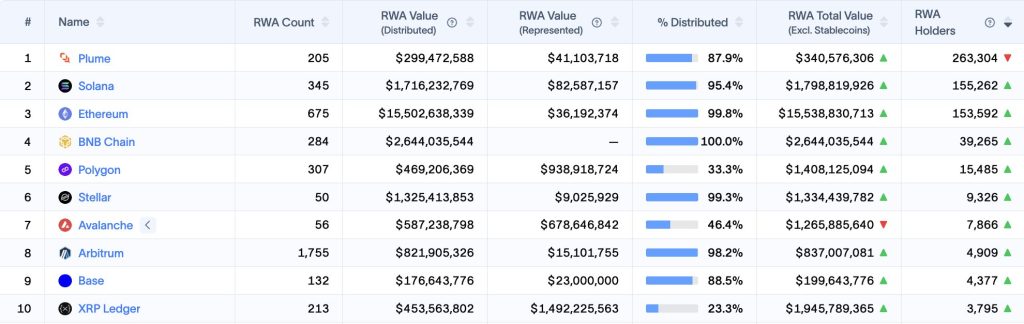
For the first time ever, Solana overtook Ethereum in the number of wallets holding tokenized real-world assets – 155,064 versus 153,592, according to RWA.xyz.
Solana Beat Ethereum on RWA Holders for the First Time. Here's the Catch.
Source: Cointelegraph on X

The lead lasted hours. It has since reversed: Ethereum now sits at 153,576 holders, Solana at 146,674.

One Metric. Two Completely Different Markets.

Here’s what the wallet count doesn’t tell you.

Ethereum holds $15.16 billion in tokenized RWAs. Solana holds $1.71 billion. That’s nearly nine times more capital on Ethereum and it’s institutional money: BlackRock, Fidelity, tokenized Treasury products built for Wall Street.

Solana won on participation, briefly. Ethereum never stopped winning on capital. These are two different races, and the fact that the lead snapped back within hours shows how anchored institutional money is on Ethereum.

What pulled Solana’s wallet count past Ethereum? Retail.

The mid-2025 launch of tokenized xStock equities – fractional Tesla and Nvidia shares – brought everyday traders onto the chain, drawn by cheap fees and fast settlement.

That wave pushed Solana’s wallet count past Ethereum’s for the first time, but it didn’t hold.

Solana Is Having Its Spotlight Moment

While the wallet flip is exciting, the infrastructure story is bigger.

Solana’s RWA market cap has surged nearly 10x over the past year. Tokenized gold transfer volume on Solana hit over $280 million this week alone. Stablecoin transaction volume reached $650 billion in February, which is the highest figure recorded on any blockchain that month.

Ondo Finance is live on Solana. Western Union chose Solana to build its USDPT stablecoin, redeemable at 360,000+ locations across 200 countries.

Shawn Chan, CEO of SGB App, put it: “To run stablecoins, you need stable rails. You need a network that is secure, efficient, fast, and cheap. You can’t find anyone better than Solana.”

What This Means for SOL Price

SOL is currently trading around $83, within the $80-$90 range it has held this week. Technical indicators lean bearish in the short term, but Exceed Finance points to $94 as the level to watch for a potential reversal.

The memecoin era on Solana is cooling, but the payments and RWA era is arriving.

Coinbase Brings Regulated Futures to 26 European Countries: Here’s What You Get

Coinbase Launches Regulated Futures Trading for Europe

The post Coinbase Brings Regulated Futures to 26 European Countries: Here’s What You Get appeared first on Coinpedia Fintech News

European crypto traders have spent years navigating unregulated platforms just to access derivatives. Coinbase just changed that.

Coinbase has rolled out regulated futures trading across 26 European countries through Coinbase Advanced, now offering crypto derivatives under a MiFID-regulated entity across the region for the first time.

Germany, France, and the Netherlands are among the countries now live.

Features to Watch

The product lineup includes Bitcoin and Solana futures, equity index futures, including the Mag7 + Crypto Equity Index, and two contract types: perpetual-style futures with 5-year expiries and dated contracts with monthly or quarterly settlement.

Leverage goes up to 10x on BTC, ETH, and equity indices. Fees start at 0.02% per contract. Funding is via EUR or USDC.

Access is through the Coinbase Advanced platform – the same interface rising in search volume this week as traders compare options against Binance and Kraken.

Why Now?

European crypto derivatives have historically lived on offshore, unregulated platforms. Regulatory pressure is now closing that window, with MiCA’s full enforcement deadline approaching in mid-2026.

The launch is offered through Coinbase Financial Services Europe Ltd., operating under CySEC License 374/19, giving traders regulatory protection.

Coinbase’s Bigger Play

This is a direct execution of Brian Armstrong’s new year vow: “Grow the everything exchange globally -crypto, equities, prediction markets, commodities – across spot, futures, and options.”

Here are our top priorities for 2026 at Coinbase:

1) Grow the everything exchange globally (crypto, equities, prediction markets, commodities – across spot, futures, and options)

2) Scale stablecoins and payments

3) Bring the world onchain through @CoinbaseDev, @base chain,…

— Brian Armstrong (@brian_armstrong) January 1, 2026

Coinbase called the European futures launch “a major step in our push to build an exchange for everything.”

What Traders Need to Know

Eligible users can access futures through the Derivatives tab on Coinbase Advanced, web or mobile. Onboarding requires an eligibility check, KYC verification, and a funded account.

The platform is progressively rolling out access, so not all 26 countries will go live simultaneously.

Whether that’s enough to pull volume away from Binance and Bybit remains to be seen.

Never Miss a Beat in the Crypto World!

Stay ahead with breaking news, expert analysis, and real-time updates on the latest trends in Bitcoin, altcoins, DeFi, NFTs, and more.

FAQs

What is Coinbase’s new crypto futures trading service in Europe?

Coinbase now offers regulated crypto futures through Coinbase Advanced in 26 European countries, allowing traders to access derivatives under a MiFID-licensed entity.

Which cryptocurrencies are available for futures trading on Coinbase Europe?

The launch includes Bitcoin and Solana futures, plus equity index futures like the Mag7 + Crypto Equity Index, giving traders more diversified derivatives.

How can traders access Coinbase crypto futures in Europe?

Eligible users can trade through the Derivatives tab on Coinbase Advanced after completing KYC verification and funding their account with EUR or USDC.

Has Gold Price Topped? Whale Wallets Cash Out $40M in Tether Gold and PAXG

Gold Hits $5000 as Bitcoin Lags, Analysts Eye 400% Rally

The post Has Gold Price Topped? Whale Wallets Cash Out $40M in Tether Gold and PAXG appeared first on Coinpedia Fintech News

Gold has been one of the strongest trades of the year. But on-chain data suggests some of the biggest players may be walking out the door.

On-chain analytics platform Lookonchain flagged that two whale wallets offloaded roughly $40 million worth of tokenized gold in just 48 hours, and both walked away with significant profit.

Key Whale Trades in Focus

Two wallets – 0x8C08 and 0xdfcA, flagged by Lookonchain as belonging to the same entity – sold 5,250 XAUT at $5,125 and 560 PAXG at $5,173 over the past two days, taking a combined profit of $5.32 million. A third wallet, 0x8844, followed up six hours ago with a sale of 1,934 XAUT at $5,037, adding another $1.74 million to the tally.

That’s roughly $7 million in realized profit pulled from tokenized gold in under 48 hours, from wallets that knew exactly when to get in and aren’t waiting around to find out if the top is in.

Has #gold already topped?

We noticed two whales have taken profits and sold about $40M worth of #gold in the past 2 days.

0x8C08 and 0xdfcA (belonging to the same whale) sold 5,250 $XAUT($26.91M) at $5,125 and 560 $PAXG ($2.9M) at $5,173 in the past 2 days, making a profit of… pic.twitter.com/wLmDgtvzMf

— Lookonchain (@lookonchain) March 9, 2026

Gold’s recent run was fueled in part by safe-haven demand following U.S. and Israeli strikes on Iran – a conflict that has since escalated, sending oil past $100 a barrel and the dollar higher, which is now actually working against gold.

Why the Timing Matters

Gold spot is currently trading at $5,118, down over 1% on the day and sitting well below its 52-week high of $5,595.

What makes this week particularly loaded is Wednesday’s U.S. inflation data.

Headline CPI is expected to rise 0.3% month-on-month, with year-on-year inflation projected at 2.4%. A hotter-than-expected print would likely push yields higher and strengthen the dollar, historically a headwind for both gold and risk assets like crypto.

And there’s reason to watch closely: recent ISM Prices Paid data came in significantly hotter than expected, suggesting input cost pressure may already be building.

What This Means for Crypto

For the crypto market, on-chain whale behavior around tokenized gold is worth tracking as a macro signal.

When large wallets rotate out of tether gold and PAXG, capital has to go somewhere. Whether that’s back into Bitcoin, stablecoins, stocks, or simply sitting on the sidelines ahead of macro data, the next few days will likely tell that story.

Gold’s reflexive rally was built on real structural drivers. But markets don’t move in straight lines, and $40 million in profit-taking from the same asset class, in the same 48-hour window, is rarely a coincidence.

Never Miss a Beat in the Crypto World!

Stay ahead with breaking news, expert analysis, and real-time updates on the latest trends in Bitcoin, altcoins, DeFi, NFTs, and more.

FAQs

Why are crypto whales selling tokenized gold right now?

Some whales are locking in profits after gold’s strong rally. Large sell-offs often happen when prices surge and traders expect short-term volatility.

How much tokenized gold did whales sell recently?

On-chain data shows whales sold about $40 million worth of XAUT and PAXG within 48 hours, realizing roughly $7 million in profits.

Could whale selling of tokenized gold affect Bitcoin or crypto prices?

Possibly. When large investors exit tokenized gold, that capital may rotate into Bitcoin, stablecoins, or other assets depending on market sentiment.

Ethereum Price Make-Or-Break Level: Will This Decide Altcoin Season 2026?

Ethereum Price Analysis Whale Accumulation and Rising Volatility Put ETH at Crossroads

The post Ethereum Price Make-Or-Break Level: Will This Decide Altcoin Season 2026? appeared first on Coinpedia Fintech News

Ethereum is sitting at $1,987 and the chart is flashing something most traders aren’t paying attention to right now.

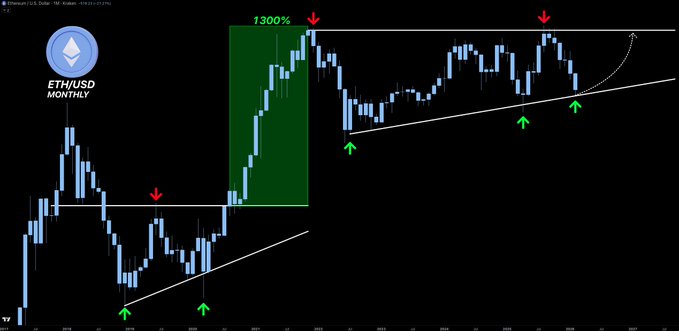
ETH is touching the same ascending trendline that has caught every major low since 2019. It held in 2020. It held after the 2022 collapse – twice. Each time it bounced, it launched a significant rally. This is the fifth test, and analysts say it’s the most important one yet.

Ethereum Price Make-Or-Break Level: Will This Decide Altcoin Season 2026?
@CryptoTice_ on X

ETH Has No Room to Slip

What makes this different from the previous tests is the condition Ethereum is arriving in. Bitcoin is already 20% off its recent lows. ETH hasn’t recovered the same way. It has underperformed Bitcoin throughout this entire cycle, which means it’s hitting this critical level with less momentum behind it than at any point before.

Analyst Crypto Tice said it directly: “ETH doesn’t get a second chance at this level. This is hold or collapse.”

This trendline represents the last sequence of higher lows that keeps ETH’s long-term bull case intact. If it goes, the technical argument goes with it.

Also Read: MakerDAO’s Black Thursday: How One Bot Got $8.32M in ETH for Free

Bullish and Bearish Outcomes for Ethereum

A hold here doesn’t just save Ethereum’s chart. It sets off a chain reaction that a lot of crypto investors have been waiting for. Relative strength returns, Bitcoin dominance starts to roll over, and capital rotates into altcoins. For millions of investors searching for signs of altcoin season, this might be a solid indicator.

A break does the opposite.

As one analyst put it: “ETH either holds here and leads the next leg or becomes the funding source for BTC’s final blow-off.”

Money exits altcoins, flows back into Bitcoin, and the downside on ETH opens up with little structural support below.

The Market Isn’t Making This Easy

Ethereum is holding this trendline during one of the more difficult macro environments in recent memory. Oil prices are surging on the back of the Iran conflict. US jobs data came in at negative 92,000 for February, well below expectations. Risk appetite across markets is compressed, and ETH is absorbing all of it at the exact level it needs to hold.

The weekly close will settle the debate. Until then, this is the only Ethereum price level worth watching.

MakerDAO’s Black Thursday: How One Bot Got $8.32M in ETH for Free

MakerDAO (MKR) Defies Market Trend, Poised for 50% Surge

The post MakerDAO’s Black Thursday: How One Bot Got $8.32M in ETH for Free appeared first on Coinpedia Fintech News

On March 12, 2020, one bot acquired $8.32 million worth of ETH and paid absolutely nothing for it. There was no hack and no exploit. Just a broken assumption inside one of DeFi’s most trusted protocols and a 40-minute window that nobody saw coming.

Here’s the story.

What MakerDAO’s System Was Built to Do

MakerDAO lets users lock ETH as collateral to borrow DAI. When that collateral loses too much value, the vault gets liquidated through an on-chain auction. Bots called keepers bid DAI to purchase the collateral, the debt gets covered, and the protocol stays solvent.

The entire mechanism relied on one assumption holding true: that competing bots would always show up.

The 40 Minutes That Broke DeFi

ETH dropped 43% in hours that day. Hundreds of vaults went underwater at the same time, and every keeper bot on the network tried to respond at once. Ethereum could not handle the traffic. Gas prices spiked 10x and most keeper bots ran on fixed gas settings, leaving their transactions stuck in the mempool and going nowhere.

Auctions were opening and nobody was bidding.

One bot noticed. It submitted a bid of 0 DAI, waited out the timer, and collected real ETH for free when no competing bids arrived. Then it did it again. For nearly 40 minutes, that one bot swept auction after auction at zero cost, walking away with $8.32 million in ETH before the network stabilized and other bots could get back in.

Also Read: Did the Clarity Act Pass? Not Yet, But Banks Are Already Buying These 8 Altcoins

MKR Holders Paid the Price

MakerDAO was left with $4.5 million in bad debt, something the protocol had never faced before. MKR holders voted to mint new tokens and sell them into the open market just to cover the shortfall, diluting every existing holder in the process.

The contract had done exactly what it was coded to do. The auction ran correctly. The bot followed the rules.

As one observer summed it up in the thread that is now going viral on X: “The protocol didn’t break because the rules were wrong. It broke because the design assumed continuous market participation at the exact moment the market became least functional.”

Why the Story Still Matters

Analysts say every major DeFi liquidation system built after 2020 traces its risk design back to one 40-minute window. Black Thursday changed how the entire industry approaches risk when liquidity, bots, and block space fail all at once.

With DeFi liquidations back in the headlines and billions under pressure with the ongoing US-Israel-Iran war, the lesson is hitting differently right now.

“War Is Profitable”: Will Silver Price Rally Because of the US-Israel-Iran War?

Robert Kiyosaki Buys Silver Eagles as Market Cools After Rally

The post “War Is Profitable”: Will Silver Price Rally Because of the US-Israel-Iran War? appeared first on Coinpedia Fintech News

Robert Kiyosaki is in Vietnam right now, and his latest post is going viral.

The Rich Dad Poor Dad author took to X today to make a case he’s been building for years – that war isn’t just a human tragedy, it’s a financial system. And that system runs, in part, on silver.

What Kiyosaki Actually Said

Kiyosaki pointed out that modern rockets carry between half a pound and four pounds of silver each, which is metal that’s gone the moment they detonate.

“Silver stackers get richer as people on both sides pay the price in blood, sweat, tears, and money,” he wrote.

He leaned on Eisenhower’s warning about the military industrial complex to make the point: the people supplying war profit from it. The people fighting it don’t.

It’s not a new argument. But with the US-Israel-Iran conflict actively escalating, the timing is important.

Silver Has Surged 150% Since Last Year

Silver has surged more than 150% year-on-year, climbing from around $32 per ounce in 2025 to above $80 in early 2026. Safe-haven demand is rising alongside fears around the Strait of Hormuz, which handles a significant chunk of global oil shipments.

Kiyosaki has publicly called for silver to reach $200 in 2026. The war is making that prediction look a lot less extreme.

Where Silver Stands Right Now

Silver is trading at $84.33, up 2.51% in the last 24 hours.

The metal hit a record $116 in late January before crashing nearly 40% to $70.90 in early February. The Iran conflict actually worked against silver for much of last week – rising oil prices stoked inflation fears, pushing the dollar higher and delaying Fed rate cut expectations to late 2026. Non-yielding assets like silver took the hit.

Friday’s jobs report changed the mood fast. A surprise drop of 92,000 in non-farm payrolls and unemployment rising to 4.4% raised the chances of earlier rate cuts and silver bounced.

The Crypto Connection

Kiyosaki didn’t mention Bitcoin in today’s post, but his broader thesis has always tied all three together – gold, silver, and Bitcoin as protection against what he calls “fake money.”

When governments spend big on war, they print to cover it. That erodes purchasing power. That’s the exact setup Kiyosaki has argued pushes real assets higher.

He closed his post with this: “Today I fight for peace and freedom, and real financial education… not war.”

Also Read: Crypto Crash Today: Should You Buy the Bitcoin Dip as US and Israel Strike Iran?

Did the Clarity Act Pass? Not Yet, But Banks Are Already Buying These 8 Altcoins

U.S. CLARITY Act Delayed as Banks Oppose Stablecoin Rewards, ALL Eye On April 16

The post Did the Clarity Act Pass? Not Yet, But Banks Are Already Buying These 8 Altcoins appeared first on Coinpedia Fintech News

Crypto analyst Tim Warren is sounding the alarm.

In arecent video, Warren laid out why banks aren’t waiting for the Clarity Act to pass before accumulating select altcoins. With Polymarket odds on passage climbing from 56% to 71% in a single week and Trump calling out banks on Truth Social for holding the bill “hostage,” – the window is narrowing fast. The Senate Banking Committee is targeting a vote in the second half of March.

Smart money, it seems, is already moving.

Where Is the Money Going?

The thesis is straightforward: regulatory clarity unlocks institutional mandates. And two themes are driving which coins banks are targeting – stablecoin regulation and real-world asset (RWA) tokenization.

Warren points to 8 altcoins sitting in that institutional crosshairs.

The 8 Altcoins on the List

Ethereum ($1,981) and Solana ($84.47) lead as the stablecoin infrastructure plays. Both are foundational layer-1s that benefit directly from stablecoin regulation – ETH sits 60% below its ATH, SOL 71% below. Warren puts the move back to highs at 184% and 332%, respectively.

XRP ($1.37) has already cleared its biggest hurdle, which is winning the case against the SEC. With the Senate draft legislation reportedly classifying it as a “non-ancillary asset” alongside BTC and ETH, XRP is positioned as the cross-border payment rail banks actually want. Some analysts are citing $10-$15 speculative targets.

Chainlink ($8.78) is the infrastructure play that wins regardless of which chain dominates. As Warren put it, Chainlink will be used to bring information “from the web two to the web three world in every situation.” Currently 83% below its ATH of $52.88, with long-term targets of $300-$500 floated for 2030. Warren considers it the most durable hold on the list.

HBAR ($0.0966) is pitched as potentially the largest RWA beneficiary on the list, with early institutional adoption already underway. It is currently 83% below its all-time high of $0.57. Warren recommends diversifying across both HBAR and Chainlink for RWA exposure.

Canton Network ($0.1529) targets private institutional-ledgers and real-world asset data, with early bank adoption already in motion. It is framed as a longer-term conviction hold.

Uniswap ($3.83) carries one signal above all others: BlackRock has already invested. Around 600% to its 2024 ATH. As Warren noted, “If BlackRock’s buying, pretty convincing that I should be buying it as well.” UNI sits 91% below its ATH of $44.97.

Ondo Finance ($0.25) is the highest-risk, highest-upside entry. Down roughly 88% from its $2.14 ATH, yet over 60% of RWA conversions still run through Ondo.

Check live prices on Coinpedia.

What Crypto Investors Should Know

This isn’t a “buy the bottom” call. The strategy is DCA accumulation over time.

As Warren put it: “Don’t just think about next week or the month after. Think about the next couple of years. That is how truly wealthy people think.”

The Clarity Act vote is coming. The question is whether you’re positioned before or after the crowd figures that out.

Never Miss a Beat in the Crypto World!

Stay ahead with breaking news, expert analysis, and real-time updates on the latest trends in Bitcoin, altcoins, DeFi, NFTs, and more.

FAQs

What is the Clarity Act in crypto regulation?

The Clarity Act is a proposed U.S. law designed to define how digital assets are regulated, giving clearer rules for banks, investors, and crypto companies.

How could the Clarity Act benefit the crypto market?

Clear regulations may allow banks and institutions to invest in crypto more confidently, potentially increasing liquidity and broader adoption.

How has the market reacted to growing Clarity Act expectations?

Rising expectations of the bill have fueled speculation that institutions may begin positioning early in key crypto assets.

What future developments could follow the Clarity Act?

The law could pave the way for clearer stablecoin rules, real-world asset tokenization frameworks, and greater institutional participation in crypto markets.

❌