
 Login
Login
AMD "Medusa Point" APU Early Benchmarks Match "Strix Point" at Half the Clock Speed
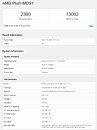
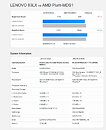
AMD is preparing to launch its "Medusa Point" APU in early 2027. However, more benchmarks are emerging to showcase what the actual SoC can do as AMD and its OEM partners test the chip. In the latest Geekbench v6 run, AMD's 10-core, 20-thread "Zen 6" chip appeared with the AMD Engineering Sample number 100-000001713-21_N, achieving a 2,300 single-core and 13,002 multicore score while officially running at only a 2.4 GHz base frequency. In real-world operation, it ran within the range of 2.0-2.1 GHz during the benchmark. The most surprising factor is that this "Medusa Point" test system can match a 10-core, 20-thread AMD Ryzen AI 9 365 "Strix Point" APU that operates at more than double the frequency. When comparing the two, "Medusa Point" scores slightly lower in single-core performance, while the multicore score is surprisingly higher.
This phenomenon could be attributed to the fact that the "Zen 6" cores in the "Medusa Point" APU are much better performing and more optimized for the workloads that Geekbench tests. The IPC improvement target from "Zen 5" in "Strix Point" to the newest "Zen 6" could be a high single-digit to low double-digit gain on average. It is likely that the combination of new instructions and IPC improvements is what is pushing "Medusa Point" so high. Since the new APU also appeared in firmware running AVX-VNNI in FP16 precision, we might be seeing these workloads getting accelerated thanks to the lower precision of the floating-point operations. For now, the situation remains a mystery, at least until more benchmarks are available in the coming months. AMD is expected to launch this new APU around CES 2027, so we still have a lot of time before official and third-party benchmarks are released.
This phenomenon could be attributed to the fact that the "Zen 6" cores in the "Medusa Point" APU are much better performing and more optimized for the workloads that Geekbench tests. The IPC improvement target from "Zen 5" in "Strix Point" to the newest "Zen 6" could be a high single-digit to low double-digit gain on average. It is likely that the combination of new instructions and IPC improvements is what is pushing "Medusa Point" so high. Since the new APU also appeared in firmware running AVX-VNNI in FP16 precision, we might be seeing these workloads getting accelerated thanks to the lower precision of the floating-point operations. For now, the situation remains a mystery, at least until more benchmarks are available in the coming months. AMD is expected to launch this new APU around CES 2027, so we still have a lot of time before official and third-party benchmarks are released.


