Reading view

Is Japan About to Trigger the Biggest XRP Move Ever? Here’s What the Charts Are Saying
XRP Japan carry trade impact

The post Is Japan About to Trigger the Biggest XRP Move Ever? Here’s What the Charts Are Saying appeared first on Coinpedia Fintech News

The crypto market is entering a transition phase where macro forces are beginning to take control of price action.  However, the market could see a short-term drop before a stronger move higher, pointing to a dip-before-rise scenario rather than a full breakdown.

Basically, the main idea is that this is not just about price. A much larger setup is forming in the background, driven by global liquidity shifts and timing that may soon align.

Decoding the Japan Clues

A major part of the theory comes from a cryptic post by David Schwartz. Members of the XRP community noticed that the visuals in his post closely match patterns seen on Japanese yen notes, especially the circular designs and wave-like elements used as security features.

Japan is 100% the trigger. And this is what it seems like the red alerts are waiting for.

This has led to growing speculation that Japan could act as a major trigger for the market, and may be what current signals are pointing toward.

The idea goes further. Since similar features appear across many global currencies, some believe the message points to a more connected financial system. In this setup, XRP could serve as a bridge asset, helping move value between different currencies rather than replacing them.

The link between Japan, wave patterns, and Ripple also adds weight to the view that Japan could play an important role in the next phase of financial change.

There is a theory behind carry trade risk 

Beyond symbolism, the analysis highlights a real macro risk tied to Japan’s financial system. For years, investors have borrowed low-interest yen and invested it in higher-yielding assets globally.

The Bank of Japan has kept rates steady near 0.75 percent, helping maintain stability. However, even a small rate hike could trigger a chain reaction. Borrowing costs would rise, forcing investors to unwind positions and repay loans.

This could lead to widespread selling across stocks, crypto, and real estate, creating a liquidity crunch. According to the analysis, this unwind is not just a theory. It may already be in its early stages.

Technically, is it Bullish?

Adding weight to the theory, charts of the Japanese yen against the US dollar are showing strong bullish divergences across multiple higher timeframes. This is rare and has not been seen at this scale in recent years.

The analyst said that similar setups in 2024 and 2025 were weaker. Now, multiple timeframes are aligning, suggesting that momentum is building beneath the surface. A sharp yen move in the coming months could accelerate the carry trade unwind and increase global market pressure.

In this scenario, XRP is being positioned as a potential beneficiary. The goal is not that it replaces the US dollar, but that it becomes a liquidity bridge used by banks for cross-border transfers.

Moreover, if institutions begin holding XRP at scale, demand could rise quickly. A major liquidity event could push financial systems toward faster and more efficient solutions, where XRP fits naturally.

Never Miss a Beat in the Crypto World!

Stay ahead with breaking news, expert analysis, and real-time updates on the latest trends in Bitcoin, altcoins, DeFi, NFTs, and more.

FAQs

What is causing the current crypto market uncertainty?

Global macro factors like interest rates, liquidity shifts, and geopolitical risks are driving uncertainty, not just crypto-specific events.

What is the yen carry trade and why does it matter for crypto?

It’s borrowing cheap yen to invest in higher-yield assets. If rates rise, investors may exit positions, impacting crypto liquidity and prices.

Is XRP positioned to benefit from global financial changes?

XRP could benefit as a bridge asset for cross-border payments if institutions seek faster, efficient liquidity solutions during market shifts.

Will the crypto market recover after a potential dip?

A short-term dip is possible, but improving liquidity conditions and institutional demand could support a stronger recovery phase afterward.

Why XRP Price Could Hit $9

Why XRP Price Could Hit $9

The post Why XRP Price Could Hit $9 appeared first on Coinpedia Fintech News

XRP is back in focus as analysts begin mapping out its potential path toward 2026. Currently trading near $1.50, XRP has broken out of its recent $1.35–$1.45 range, showing early signs of strength. 

However, it remains below its previous peak near $3.65 in 2025.

Here’s the Deciding Level

According to analyst Tara, the $1.47 level is a crucial support zone and appears to be a “textbook” area that could mark the end of the current correction phase. Holding this level may set the stage for a stronger upward move.

That said, not all signals are bullish in the short term. Some analysts warn that a deeper shakeout is still possible, with downside targets between $0.70 and $0.93. This aligns with the idea that markets often retest lower zones before beginning a major rally.

Bull Case Builds Toward $9

Despite short-term uncertainty, Tara has outlined a bull target of $9 for XRP. From current levels, that represents more than a 6x potential upside.

Other analysts share a similar outlook. Ali Martinez highlighted a key trendline that could offer a strong buying opportunity, suggesting that XRP may be approaching a critical accumulation point.

Meanwhile, technical analyst Crypto Patel believes XRP is sitting within a multi-year accumulation zone between $0.70 and $1.00. His projected targets extend from $3 to $5 and even $10+, pointing to a possible long-term breakout structure forming.

Whale Activity Signals Accumulation

On-chain activity is also adding to the bullish narrative. Analyst CW pointed out a surge in XRP withdrawals from South Korea’s major exchange Upbit. A similar pattern was seen between 2021 and 2023, just before XRP surged from $0.50 to $3.

This time, withdrawal activity is reportedly even higher, suggesting that large holders may be accumulating aggressively. Such movements are often seen before major price expansions.

What Could Drive the Next Rally

While price targets are optimistic, XRP’s recovery is still closely tied to broader market conditions, especially Bitcoin’s performance. A strong macro environment could act as a catalyst for XRP to reclaim higher levels.

Overall, the outlook for 2026 remains a mix of buy and sell. A short-term dip may still be in play, but if top levels hold and accumulation continues, XRP could be setting up for a significant move toward the $9 mark and beyond.

Never Miss a Beat in the Crypto World!

Stay ahead with breaking news, expert analysis, and real-time updates on the latest trends in Bitcoin, altcoins, DeFi, NFTs, and more.

FAQs

What is the XRP price prediction for 2026?

Analysts have outlined a potential bull target of $9 for XRP, representing significant upside from current levels. Long-term projections range from $3 to $5, with some targeting $10 or more based on accumulation patterns.

Is XRP a good investment right now?

Analysts note XRP is within a multi-year accumulation zone between $0.70 and $1.00. While short-term shakeouts remain possible, on-chain data shows aggressive whale accumulation, often preceding major rallies.

What is driving the bullish outlook for XRP?

Whale activity shows surging XRP withdrawals from exchanges, similar to patterns before the last major rally from $0.50 to $3. This accumulation, combined with technical structures, supports long-term upside targets.

Hyperliquid (HYPE) Flips Cardano (ADA) in Market Cap as Arthur Hayes Sets $150 Price Target

Hyperliquid (HYPE) Flips Cardano (ADA) in Market Cap as Arthur Hayes Sets $150 Price Target

The post Hyperliquid (HYPE) Flips Cardano (ADA) in Market Cap as Arthur Hayes Sets $150 Price Target appeared first on Coinpedia Fintech News

The crypto market just saw an unexpected change. Hyperliquid briefly moved to the top 10 ahead of Cardano in market capitalization, showing how quickly positions can change.

As per data, HYPE has been rising steadily, gaining around 21% this week and trading near the $40–$43 range. ADA also saw gains near $0.29, but the increase wasn’t enough to hold its position. Even with both assets moving up, HYPE managed to edge ahead.

Why HYPE Is Gaining Attention

HYPE’s rise is driven by strong platform activity. Hyperliquid runs a decentralized exchange that offers fast execution and deep liquidity, attracting high trading volume, reaching around $500 million in a day.

It’s also expanding with new products, like bringing the S&P 500 on-chain.

BitMEX Founder, Arthur Hayes, adds that Hyperliquid stands out because it generates real revenue, with about 97% used to buy back HYPE, directly linking the token to platform earnings. He believes this model can help it keep taking share from centralized exchanges while growing further. Looking at the current market, Hayes is projecting a $150 price target for Hype by August 2026, nearly 5x from earlier levels around $30.

Cardano Under Pressure, But Not Out

Cardano, on the other hand, has seen slower growth in recent months. Its price action has been uneven, and its DeFi ecosystem has not expanded as quickly as some newer platforms.

Still, there are signs of a possible recovery. Crypto analyst Ali Martinez recently highlighted a bullish signal on ADA:

“Cardano $ADA has printed a buy signal.”

He noted that the recent downtrend may be ending. For this setup to remain valid, ADA needs to hold the $0.23 support level. If it does, the next targets could be $0.32 and $0.37. A drop below this level would weaken the outlook.

What This Flip Suggests

This shift between HYPE and ADA reflects a broader change in the market. Projects with strong user activity and trading demand are getting more attention, while slower-growing ecosystems are facing pressure.

HYPE is currently benefiting from increased usage on its platform, while ADA needs stronger participation to regain ground.

Never Miss a Beat in the Crypto World!

Stay ahead with breaking news, expert analysis, and real-time updates on the latest trends in Bitcoin, altcoins, DeFi, NFTs, and more.

FAQs

What is driving Hyperliquid’s recent price surge?

HYPE is rising from high platform activity, deep liquidity, and real revenue generation, with most earnings used for token buybacks, supporting price growth.

Is Cardano (ADA) still a good investment in 2026?

ADA shows recovery signs with a bullish signal. Holding above $0.23 could push prices to $0.32–$0.37, but growth depends on stronger DeFi adoption.

What does the HYPE and ADA flip mean for the crypto market?

The flip highlights a shift in market focus toward platforms with strong user activity and tangible revenue, showing that newer exchanges with high trading volume can overtake established ecosystems that are growing more slowly.

Kevin O’Leary Names His Top Investment Themes for 2026 After Federal Reserve Rate Decision

Kevin O’Leary crypto outlook 2026

The post Kevin O’Leary Names His Top Investment Themes for 2026 After Federal Reserve Rate Decision appeared first on Coinpedia Fintech News

Markets are flying blind right now. With the Federal Reserve pausing rates and the Iran conflict shaking global stability, investors are navigating one big question: what comes next?

At the same time, Bitcoin is holding near $70,587, showing slight short-term weakness as it dips marginally over the past hour and day. The broader market remains tense, especially as geopolitical stress continues to disrupt energy markets and global sentiment. 

In a recent Fox Business interview, investor Kevin O’Leary explained how this wave of uncertainty is not just impacting traditional markets but is also spilling into crypto, influencing capital flows and investor behavior.

War Impact Spills Into Crypto

O’Leary made it clear that when global conflicts push oil prices and supply chains into uncertainty, capital across all markets, including crypto, reacts. Volatility in energy markets often leads to cautious positioning, which slows enthusiasm in risk assets like Bitcoin and altcoins.

With shipping routes and oil supply under pressure, liquidity tightens across markets. This environment makes it harder for crypto to sustain strong rallies as capital rotates toward more stable sectors. 

“We Don’t Know What Will Happen”

O’Leary echoed the uncertainty dominating markets right now, saying, “We don’t know… not a lot we can do other than watch and see.”

Instead of reacting to short-term swings, he believes investors should think ahead. 

“You think about what the world looks like after the conflict is over, and you make bets.”

This applies directly to crypto. While near-term sentiment may remain shaky, long-term adoption is still intact. However, crypto continues to move alongside macro conditions rather than independently.

Good time to Buy the Dip!

O’Leary pointed out that these geopolitical tensions tend to push capital toward stronger and more established players. This trend is visible across both traditional finance and crypto.

For digital assets, this means leading cryptocurrencies are likely to remain the focus, while smaller tokens face more pressure during uncertain phases. Market conditions like these often reduce risk appetite, impacting overall momentum in the crypto space.

O’Leary’s Top Investment Themes for 2026

In the present scenario, he is heavily investing in energy and infrastructure, calling power the most critical opportunity right now. His bets are concentrated in regions like Utah (U.S.) and Alberta (Canada), where access to cheap energy, natural gas, water, and supportive government policies make large-scale projects like data centers and manufacturing viable.

At the same time, he is bullish on commodities and supply chains, particularly through Canada, which he sees as a long-term winner in oil, potash (fertilizer), and aluminum. He has also taken positions in the Canadian dollar, expecting it to benefit as global supply chains become more secure post-conflict.

Beyond traditional markets, O’Leary is actively investing in alternative assets, especially rare collectibles and sports cards, viewing them as the next evolution of asset classes similar to fine art. He is also investing in companies that enable fractional ownership and trading of these collectibles, betting on growing global demand and liquidity in this space.

Never Miss a Beat in the Crypto World!

Stay ahead with breaking news, expert analysis, and real-time updates on the latest trends in Bitcoin, altcoins, DeFi, NFTs, and more.

FAQs

How does geopolitical conflict impact crypto markets?

Global conflicts raise oil prices and uncertainty, pushing investors toward safer assets and reducing demand for volatile assets like Bitcoin.

Is Bitcoin a safe investment during market uncertainty?

Bitcoin can hold value long term, but short-term volatility rises during crises as investors shift capital to stable assets.

What sectors perform best during global instability?

Energy, commodities, and infrastructure often outperform as demand rises and investors prioritize stability over high-risk assets.

Is it a good time to buy crypto during a market dip?

Buying dips can work long term, but investors should focus on strong assets and be prepared for continued short-term volatility.

Gemini Layoffs 2026: Crypto Exchange Cuts 30% Workforce After $582M Loss

Gemini Layoffs 2026

The post Gemini Layoffs 2026: Crypto Exchange Cuts 30% Workforce After $582M Loss appeared first on Coinpedia Fintech News

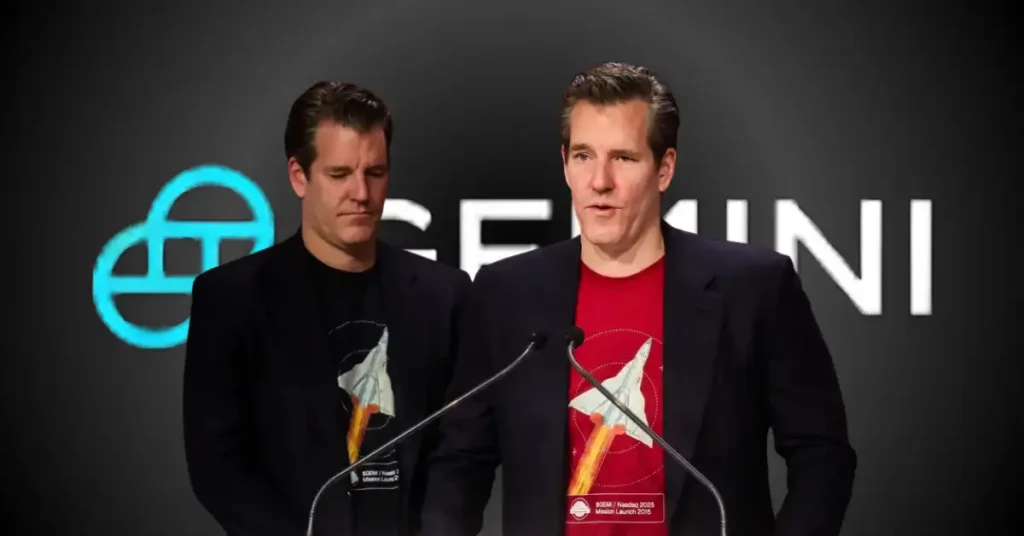
The crypto shakeout is getting real, and the biggest AI giant, Gemini, is right in the middle of it. According to a Bloomberg report, the Winklevoss-led exchange has slashed nearly 30% of its workforce in 2026, as it leans heavily into AI while battling falling market share and deep losses. 

Streamlining Operations

This reduction comes as part of a broader effort to optimize efficiency and focus on core business areas. Software development and other production tasks have been restructured, allowing Gemini to operate with a leaner team while maintaining service quality.

The move aligns with similar steps across the sector. For instance, Singapore-based Crypto.com recently announced a 12% reduction in its workforce to improve operational efficiency, while other major firms have been revising their internal structures to remain competitive.

Market Slump Hits Hard

Behind this restructuring is a brutal market reality. Bitcoin, which was trading near $115,000 around Gemini’s IPO in September 2025, has since dropped to the $60,000 range, putting pressure on trading volumes and revenues.

As a result, Gemini posted a massive net loss of $582.81 million for 2025, highlighting how tough conditions have become even for major exchanges. To make things worse, Gemini’s market share remains under 1% compared to giants like Coinbase, putting it at a clear disadvantage in a highly competitive space.

Focus on the US Market and Diversification

With market share still under 1% compared to major exchanges like Coinbase, Gemini has shifted its focus to the United States, exiting the UK, EU, and Australian markets. This allows the company to concentrate its resources on regions with stronger prospects.

In addition to its trading platform, Gemini is seeing growth in non-trading sectors. Its credit card service grew 15-fold year-over-year, with portfolio balances reaching $21.8 million by Q4 2025. Meanwhile, the forecast market platform launched in December has already attracted over 15,000 users, demonstrating promising uptake.

Learning from Challenges

Tyler Winklevoss revealed the lessons the company is taking from its current path. “We started as a bitcoin company and now operate across multiple market sectors,” he said in a recent shareholder letter. “We welcome feedback and use it to strengthen our approach, just like our journey to the Olympics taught us discipline and perseverance.”

Gemini’s strategy shows a clear focus on concentrating resources, improving efficiency, and diversifying services, all aimed at stabilizing operations during a challenging market phase.

Never Miss a Beat in the Crypto World!

Stay ahead with breaking news, expert analysis, and real-time updates on the latest trends in Bitcoin, altcoins, DeFi, NFTs, and more.

FAQs

Why did Gemini lay off 30% of its workforce in 2026?

Gemini cut 30% of staff to reduce costs, improve efficiency, and invest more in AI as falling crypto prices and lower trading volumes hit revenue.

Are layoffs in crypto linked to increasing regulation?

Yes, stricter rules raise compliance costs, pushing firms to restructure teams. Companies are prioritizing legal, risk, and compliance roles over expansion.

What do these layoffs mean for crypto investors and users?

Users may see fewer features but stronger platforms. Companies focusing on compliance and efficiency are more likely to survive and protect users long term.

Pi Network News: Expert Says Price Crashes Are Missing the Bigger Picture of What Pi Is Building

Pi Network News

The post Pi Network News: Expert Says Price Crashes Are Missing the Bigger Picture of What Pi Is Building appeared first on Coinpedia Fintech News

Pi Network has confirmed that its Mainnet is now upgraded to Protocol 20, preparing the network for future smart contract support. Node operators have been asked to update their systems, with another upgrade, Protocol 21, expected soon. 

The upgrade sets the base for smart contracts, which are needed for building decentralized apps and DeFi platforms. This shows Pi Network is slowly working toward adding more real use cases. 

However, these features are not live yet, and more updates are needed before users can fully access them.  

Analyst digs Beyond Price Moves

The main takeaway comes from Crypto analyst Dr. Altcoin, who believes the market is going through a major transition phase. 

According to him, crypto is no longer in an experimental stage. It is now starting to become part of real financial systems. He pointed to Kraken gaining access to the U.S. Federal Reserve’s payment infrastructure as a clear example of this shift.

This shows that crypto companies are no longer operating separately. Instead, they are beginning to connect directly with traditional finance.

Why Price Drops Don’t Tell the Full Story

Having said that, Pi price is currently trading at $0.1777, with a 24-hour trading volume of $35.32 million. The price has seen a slight dip of 0.27% in the past hour but is still up 2.03% over the last day. This shows ongoing community support for Pi. 

However, looking at the price scenario, the analyst addressed the common fear around price drops. He explained that if you understand what is being built, short-term declines should not create panic.

Instead, he sees this phase as part of a broader development cycle where infrastructure is being built in the background. Prices may not always reflect this progress immediately.

His view is simple: the market is still early, and those who understand this phase are in a better position.

Blockchain Is Expanding Beyond Crypto

Another important point he raised is how blockchain is starting to connect with other technologies. AI and robotics are slowly becoming part of this space, while stablecoins are turning into practical tools for payments.

This shows that crypto is moving closer to real-world usage rather than just trading activity.

Focus on Projects With Real Utility

He further stressed that long-term value will come from projects that are creating real use cases, growing their user base, and working on global adoption.

This shifts the focus away from hype and toward projects that are actually building useful systems. In this context, Pi Network’s upgrade shows that development is continuing. The move toward smart contracts fits into the bigger change where projects are working toward real utility.

Never Miss a Beat in the Crypto World!

Stay ahead with breaking news, expert analysis, and real-time updates on the latest trends in Bitcoin, altcoins, DeFi, NFTs, and more.

FAQs

What is Pi Network Protocol 20 upgrade?

Pi Network’s Protocol 20 upgrade prepares its mainnet for future smart contracts, enabling decentralized apps and DeFi, though features are not live yet.

Why is Pi Network upgrading its mainnet?

The upgrade aims to expand real-world use cases by enabling smart contracts, helping Pi move beyond payments toward DeFi and decentralized applications.

Is Pi Network a good long-term project?

Pi Network shows ongoing development toward utility and adoption. Its long-term value depends on delivering real use cases and expanding its ecosystem.

Chainlink Powers Amundi’s $100M Tokenized Fund Across Ethereum and Stellar

Amundi tokenized fund SAFO

The post Chainlink Powers Amundi’s $100M Tokenized Fund Across Ethereum and Stellar appeared first on Coinpedia Fintech News

Europe’s largest asset manager, Amundi, is making a decisive move into blockchain finance with the launch of its tokenized fund SAFO, built alongside Spiko. The debut comes backed by 100 million dollars in committed AUM, signaling that institutional confidence in tokenized finance is no longer theoretical but actively unfolding within regulated European frameworks.

Jean-Jacques Barbéris revealed the intent behind the launch, saying, 

“SAFO provides professional investors with fast and transparent access to cash management solutions. This initiative is part of our ambition to contribute to the rise of tokenized solutions.” 

Spiko’s CEO, Paul-Adrien Hyppolite, added, “Clients will benefit from the reliability of our fund issuance and distribution infrastructure.”

A New Model for On-chain Finance

SAFO is structured as a tokenized overnight swap fund that blends traditional financial engineering with blockchain rails. It relies on fully collateralized total return swaps with top-tier banks to deliver stable yields above risk-free benchmarks while maintaining overnight liquidity, a most important requirement for institutional cash management.

The fund runs across Ethereum and Stellar, combining scalability with accessibility. Investors can enter using EUR, USD, GBP, or CHF, with subscriptions starting from just one unit. This low barrier quietly portrays that a bigger shift, where institutional-grade products are no longer locked behind high capital thresholds.

Beyond access, SAFO introduces near-instant settlement, real-time visibility into shareholder registers, flexible custody structures, and continuous global transferability. Programmatic access through APIs and smart contracts further positions the fund for integration into digital-first financial systems.

Chainlink Anchors Data Integrity

To ensure accuracy and transparency, Chainlink plays a central role by bringing NAV data on-chain. This infrastructure bridges off-chain financial data with blockchain execution, solving one of the biggest challenges in tokenized real-world assets.

The move shows how critical Oracle networks have become as institutions transition from experimentation to deployment.

Community Reaction

Market reaction has been notably positive. One user remarked, “Real institutional adoption and it still doesn’t feel priced in,” pointing to growing belief that infrastructure plays like Chainlink may still be undervalued.

Other users captured the broader significance, saying, “Amundi moving a 2.3 trillion euro balance sheet toward tokenization confirms that on-chain distribution is now a requirement for the world’s largest asset managers.”

Another voice summed up the momentum simply, “TradFi adoption accelerates, that’s how this space wins.”

Put it all together, and this isn’t just about a new fund launch. It’s a glimpse into where finance is heading, with Chainlink quietly making sure everything actually works behind the scenes.

ETHFI Price Today: Upbit KRW Listing Causes 20% Spike as Arthur Hayes Accumulates

ETHFI Price Today

The post ETHFI Price Today: Upbit KRW Listing Causes 20% Spike as Arthur Hayes Accumulates appeared first on Coinpedia Fintech News

Ether.fi’s ETHFI token has been added to South Korea’s largest crypto exchange with a new ETHFI/KRW pair, giving it direct access to a massive retail market.

Trading started on March 19 at 12:30 PM KST. ETHFI was already available in BTC and USDT pairs on Upbit, but KRW pairs usually bring in much higher activity. That’s exactly what played out here.

Upbit also introduced its usual controls during the launch. Buy orders were restricted for the first five minutes, and certain low-priced sell orders were limited. Only limit orders were allowed for around two hours. Deposits also came with strict rules, including Travel Rule compliance and wallet verification.

Price Reaction: Sharp Spike, Then Cool-Off

Right after the listing news, ETHFI jumped more than 20%, reaching around $0.65, its highest level since mid-January. 

But the move didn’t hold. As more trades came in, the price pulled back and settled near the $0.57–$0.60 range. At the time of writing, it’s trading around $0.55, still up about 5% on the day.

This kind of move is common with exchange listings, a fast rise followed by a drop as early buyers take profits. 

What Ether.fi Actually Does

Ether.fi is part of Ethereum’s liquid restaking space. It lets users stake ETH while still using their funds through tokens like eETH and weETH in DeFi.

ETHFI is the main token behind the platform. It’s used for governance and plays a role in how the system runs and rewards users.

Hayes’ Backing Adds Confidence

BitMEX co-founder Arthur Hayes also stepped in just before the listing. Lookonchain data shows he received 132,730 ETHFI worth about $72,800 only a few hours before the announcement. Earlier, he had sold around 2.15 million ETHFI near $0.47 and later bought back in around $0.55, showing a planned move.

He had also spoken about the project before, pointing out that it has real users and real income. Ether.fi’s revenue run rate had jumped from about $18 million to nearly $80 million, which is not very common in DeFi projects.

Overall, at present, the Upbit listing is the main driver behind this move. The price reacted fast and then slowed down, which is typical.

Now, ETHFI has more visibility, especially in the Korean market. What happens next will depend on how much activity continues after this initial listing phase.

Never Miss a Beat in the Crypto World!

Stay ahead with breaking news, expert analysis, and real-time updates on the latest trends in Bitcoin, altcoins, DeFi, NFTs, and more.

FAQs

Why did ETHFI price surge after the Upbit listing?

ETHFI surged over 20% as the KRW pair opened access to Korean retail traders, boosting demand and liquidity during the initial listing phase.

What is Ether.fi and how does it work?

Ether.fi is a liquid restaking platform on Ethereum that lets users stake ETH while still using assets in DeFi via tokens like eETH and weETH.

Where can I trade the ETHFI KRW pair?

The ETHFI/KRW pair is available on Upbit, South Korea’s largest cryptocurrency exchange. Trading started on March 19 at 12:30 PM KST, giving traders direct access to the Korean won market, which typically generates higher trading volume than BTC or USDT pairs.

Is Evernorth the MicroStrategy of XRP? Understanding The XRPN Filing and What It Means

Evernorth XRP Nasdaq listing

The post Is Evernorth the MicroStrategy of XRP? Understanding The XRPN Filing and What It Means appeared first on Coinpedia Fintech News

Evernorth Holdings has officially filed its Form S-4 with the U.S. SEC on March 18, 2026, bringing its plans into the public eye. The company is now moving closer to a Nasdaq listing under the ticker XRPN.

This filing is part of a merger with Armada Acquisition Corp. II, a SPAC deal that helps companies go public faster. If everything goes through, Evernorth could become one of the biggest publicly traded companies built around XRP.

CEO Asheesh Birla made it clear that the idea is simple, finance is changing, and digital assets like XRP are going to play a much bigger role in how money moves around the world.

“We believe global finance is entering a new era with digital assets playing a larger role in how capital is held, managed, and deployed.”

Betting High on XRP

The scale of this plan is massive. Evernorth is aiming to raise more than $1 billion through this deal. Ripple has already backed the move by contributing over 126 million XRP tokens, while other investors have added more than $214 million in cash along with extra XRP.

On top of that, Evernorth has been quietly building its own XRP reserves. It now holds a large amount of the token, putting it among the biggest institutional players in the XRP space.

But this isn’t just about holding coins and waiting. The company plans to actively use its XRP. That includes lending it out, providing liquidity, and taking part in decentralized finance. It also plans to run validators on the XRP Ledger and use RLUSD to connect with XRP-based financial activity.

Perfect Timing With Regulation

Timing is quite important here. On the same day as the filing, U.S. regulators classified XRP as a digital commodity instead of a security. 

“We always knew XRP wasn’t a security, and now the SEC has confirmed it is a digital commodity. Grateful to the Crypto Task Force for delivering the clarity that markets, investors, and innovators have long deserved.” — Stuart Alderoty

This clears up years of uncertainty. For large investors, this kind of clarity matters a lot. It makes it easier for them to step in without worrying about legal risks.

Making XRP Accessible to Big Investors

A big problem in crypto has always been access. Many large institutions simply can’t hold crypto directly due to rules and restrictions. Evernorth solves that problem. Listing on Nasdaq gives these investors a simple way to gain exposure to XRP through the stock market. No wallets, no custody issues.

What also makes this model different is that it’s not just tracking XRP’s price like an ETF. The company plans to grow its XRP holdings over time, which could increase value per share if done right.

XRP Network Is Getting Busier

At the same time, activity on the XRP Ledger is picking up. The network now has over 7.7 million wallets, the highest ever. Active users are rising, and daily transactions are nearing 3 million.

There’s also growth in tokenized assets, with the value jumping from $111 million to $1.14 billion this year.

Never Miss a Beat in the Crypto World!

Stay ahead with breaking news, expert analysis, and real-time updates on the latest trends in Bitcoin, altcoins, DeFi, NFTs, and more.

FAQs

What is Evernorth’s XRPN Nasdaq listing about?

Evernorth plans to go public via SPAC under XRPN, raising $1B+ to build a major XRP-focused company and offer stock-based crypto exposure.

How will Evernorth use its XRP holdings?

Evernorth will lend XRP, provide liquidity, run validators, and use DeFi strategies to grow its holdings and generate returns beyond price gains.

What does rising XRP Ledger activity mean for investors?

Growing wallets, transactions, and tokenized assets signal strong network adoption, which can support long-term XRP value and ecosystem expansion,

Grayscale’s Head of Research Explains Where XRP Fits in Every Investor’s Portfolio

XRP investment strategy

The post Grayscale’s Head of Research Explains Where XRP Fits in Every Investor’s Portfolio appeared first on Coinpedia Fintech News

Grayscale Investments is seeing a shift in how investors approach crypto. Earlier, most attention was on Bitcoin. Now, as investors become more comfortable, they are starting to look at other assets and understand how to spread their investments.

Rayhaneh Sharif-Askary, who leads product and research at Grayscale, explains that the market is entering a new phase. Investors are no longer asking what crypto is, but rather how to divide their money across it. This change is pushing firms like Grayscale to create better ways to understand the space.

So, how do you divide your money across different types of crypto assets? Let’s find out the answer. 

Where XRP Fits In

This is where XRP comes into focus. Sharif-Askary describes it as a blockchain that has proven itself over time, especially in the payments space.

“XRP is a battle-tested blockchain. It’s been around for a long time.”

Unlike platforms that focus on building apps, XRP is mainly used for moving money quickly and efficiently across borders. Because of this, Grayscale places it in the “currency” category, alongside assets designed for value transfer.

Breaking Crypto Into Simple Parts

To make things easier for investors, Grayscale divides the crypto market into six parts based on what each asset actually does. Some assets act like money, others help build applications, and some support financial services like lending and trading.

There are also projects focused on user experiences such as NFTs, gaming, and digital ownership. On top of that, there are networks and tools working quietly in the background, helping blockchains run smoothly and connect with each other.

This structure helps investors see crypto as a full system instead of a random list of coins.

Moving on to the On-Chain Activity

All of this connects to a larger change; more financial activity is now happening directly on blockchains. Payments, trading, and applications are moving away from traditional systems and onto digital networks.

This idea, often called the on-chain economy, is still growing. But it shows how crypto is slowly becoming part of everyday financial activity rather than just a speculative market.

A Lot Depends on XRP ETF…

A major part of this story is the possibility of an XRP ETF. According to Sharif-Askary:

“A potential XRP ETF opens the door to entirely new groups of investors.”

This means people who are not comfortable buying crypto directly could still invest through familiar financial products. With Bitcoin ETFs already in the market, this next step could bring even more attention to XRP.

The overall direction is quite productive. Crypto access is expanding, institutions are getting involved, and assets like XRP are slowly becoming part of mainstream portfolios.

Never Miss a Beat in the Crypto World!

Stay ahead with breaking news, expert analysis, and real-time updates on the latest trends in Bitcoin, altcoins, DeFi, NFTs, and more.

FAQs

What is the XRP price prediction for 2026?

XRP could trade between $3 and $6 in 2026 if crypto market momentum strengthens and Ripple expands partnerships with banks using RippleNet and ODL.

How high will XRP go in 2030?

XRP could potentially reach $18–$30 by 2030 if the crypto market enters a strong bull cycle and Ripple expands global payment partnerships.

How much will 1 XRP be worth in 2040?

If adoption of blockchain payments grows and Ripple strengthens its financial network, XRP could trade between $97 and $179 by 2040.

What could drive XRP’s price growth long term?

XRP’s long-term growth may depend on global payment adoption, institutional partnerships, and wider use of Ripple’s blockchain infrastructure.

❌