Reading view

Samsung is already working on thinner Galaxy Z Trifold 2 and a new Slidable phone, claims tipster
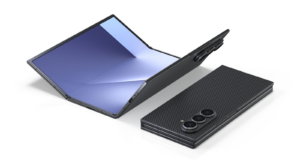
Samsung Galaxy Z TriFold images

Samsung’s experiment with tri-fold smartphones didn’t last very long. The Galaxy Z TriFold, a $2,899 showcase device, is already on its way out just three months after launch. Sales have begun winding down in South Korea, with other markets like the US expected to follow once existing stock runs out.

Samsung Galaxy Z TriFold images
Samsung Galaxy Z TriFold

The company hasn’t really gone into detail about why it pulled the plug so quickly, but the TriFold always felt more like a proof-of-concept than something meant for wide adoption. Still, it wasn’t ignored. Reports suggest it sold out in limited batches, which at least shows there’s curiosity (and maybe even demand) for more experimental form factors.

What’s interesting is that Samsung doesn’t seem to be done with the idea. According to Korean tipster yeux1122, work is already underway on a follow-up, likely to be called the Galaxy Z TriFold 2. It’s said to be in early prototyping, with a big focus on improving the hinge. Apparently, most of the verification work on the new hinge design is already done, which could help make the next version noticeably thinner and lighter.

That’s a big deal, because the original TriFold was… chunky. Folded thickness hovered around 12.9mm, which made it feel a bit impractical for everyday use. The next version is expected to slim down closer to devices like the Galaxy Z Fold 7, though it’ll still be slightly thicker given the more complex folding setup.

A launch timeline around mid-2027 is being floated, which gives Samsung plenty of room to refine things like durability and crease visibility—two areas that matter even more with a tri-fold design.

At the same time, Samsung is also experimenting with another kind of hybrid device with a sliding OLED display. Unlike the motorized concepts we’ve seen at events like CES, this version reportedly uses a manual sliding mechanism. When extended, it could reach around 7 inches, essentially shifting between a phone and a small tablet.

All of this suggests Samsung is still very much in exploration mode. The first TriFold may not have stuck around for long, but it doesn’t look like the idea itself is going anywhere just yet.

Don’t miss a thing! Join our Telegram community for instant updates and grab our free daily newsletter for the best tech stories!

For more daily updates, please visit our News Section.

The post Samsung is already working on thinner Galaxy Z Trifold 2 and a new Slidable phone, claims tipster appeared first on Gizmochina.

Lenovo launches YOGA TWS Noise-Cancelling Earbuds with 12.2mm drivers, smart pairing, and -40dB ANC

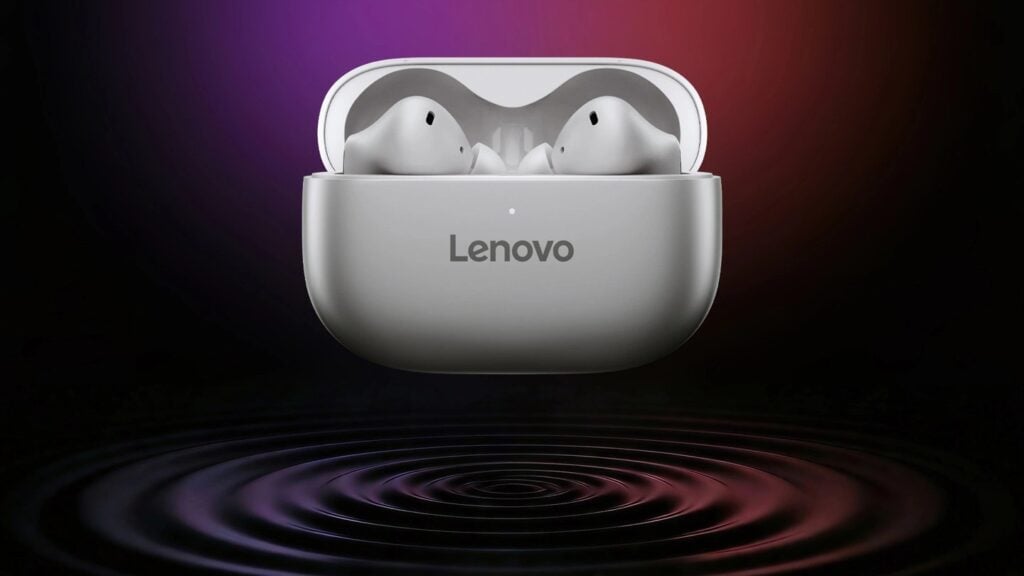
Lenovo is refreshing its YOGA ecosystem once again, this time with a new pair of budget-friendly true wireless earbuds that aim to keep things simple, connected, and good-sounding without costing too much.

The newly announced YOGA True Wireless Noise-Cancelling Earbuds were unveiled in China on March 18 at 599 yuan (roughly $86), putting them squarely in the mid-range segment. On the surface, they look fairly minimal, but the focus here seems to be more on everyday usability than flashy design.

One of the more interesting bits is how the TWS pairs with compatible YOGA laptops. Lenovo is calling it “DNA-level recognition,” which sounds like marketing speak, but in practice it just means the earbuds connect instantly when you open the case. They also support dual-device connectivity, so switching between, say, a laptop and phone should be pretty seamless.

On the audio side, you’re getting a 12.2mm dual-magnetic driver setup with a standard 20Hz–20kHz frequency range. Nothing groundbreaking on paper, but it should be more than enough for casual listening. Each earbud packs three microphones to keep calls clear with ENC, while ANC goes up to -40dB.

Battery life looks decent too. With ANC off, you’re looking at about 7 hours per charge, stretching to 36 hours with the case. Turn ANC on, and it drops to 4.5 hours (24 hours total). There’s fast charging as well: 10 minutes gets you around 2 hours of playback, which is always handy. They’re rated IPX4, so workouts and light rain shouldn’t be an issue.

For now, they’re China-only, but the overall package feels like Lenovo is trying to make its YOGA lineup a bit more cohesive. Nothing revolutionary here, but for the price, it checks most of the right boxes.

Don’t miss a thing! Join our Telegram community for instant updates and grab our free daily newsletter for the best tech stories!

For more daily updates, please visit our News Section.

The post Lenovo launches YOGA TWS Noise-Cancelling Earbuds with 12.2mm drivers, smart pairing, and -40dB ANC appeared first on Gizmochina.

ASUS ROG Strix Scar 18 (2026) teased with 18″ Mini LED display, 450W power adapter

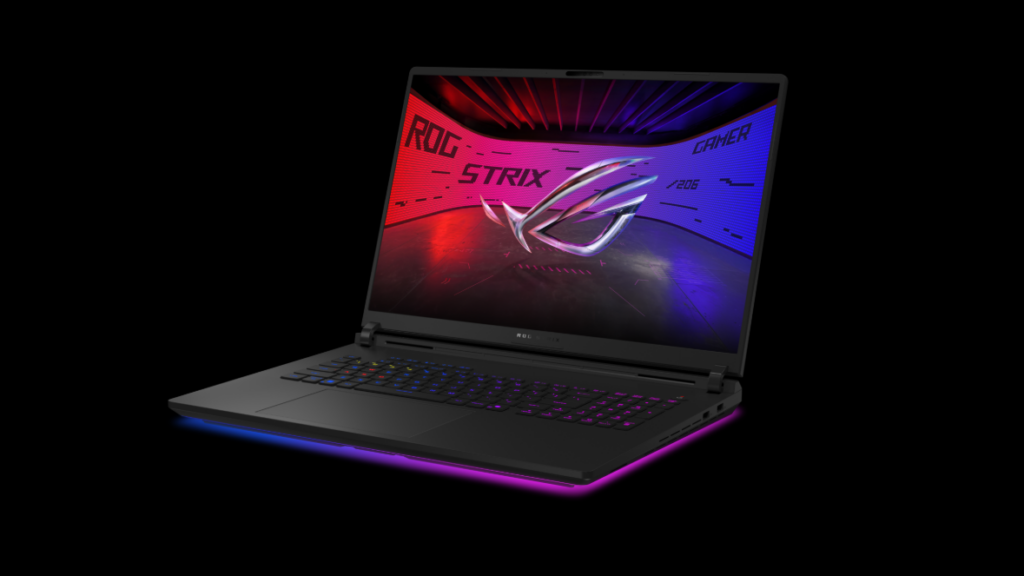
ASUS has refreshed its ROG Strix gaming lineup for 2026, but the spotlight is clearly on the upcoming ROG Strix SCAR 18. It hasn’t fully launched yet, but early details and official renders give a pretty good idea of what ASUS is aiming for this year: more power, even if it comes at the cost of size.

The company announced the new Strix series alongside Intel’s latest Arrow Lake-HX chips, and the SCAR 18 (2026) is shaping up to be the top-end option. Images on ASUS’ ROG website show a familiar aggressive design, though the chassis has grown slightly. The laptop now weighs around 3.73kg and measures 35mm thick, both up from last year’s model. It’s not subtle, but that extra bulk seems to be there for a reason.

One of the more telling upgrades of this gaming laptop is the power adapter. ASUS is bundling a 450W charger, up from 380W on the previous version. That’s a big jump, and it usually points to higher sustained performance. ASUS itself hints at a higher total system power budget this time, which should help the laptop hold peak speeds for longer instead of dialing things back under load.

As expected, the hardware is top-tier. The SCAR 18 is expected to run on an Intel Core Ultra 9 290HX-class chip, paired with NVIDIA RTX 5090 Laptop GPU. That combination should comfortably handle high-end gaming, heavy creative workloads, and pretty much anything else you throw at it.

Memory and storage look flexible as well. There are two DDR5-6400 slots for RAM upgrades and dual M.2 SSD slots with support for PCIe Gen5.

ASUS is sticking with a large 18-inch Mini LED panel with 3840 × 2400 resolution and a 240Hz refresh rate, which should be ideal for both gaming and content work.

The ROG Strix SCAR 18 (2026) is expected to arrive sometime in Q2 2026, with pricing and full configurations still to be confirmed. It’s clearly not trying to be lightweight, but for those chasing maximum performance in a laptop, that trade-off might be part of the appeal.

Don’t miss a thing! Join our Telegram community for instant updates and grab our free daily newsletter for the best tech stories!

For more daily updates, please visit our News Section.

(Source: ROG | Via)

The post ASUS ROG Strix Scar 18 (2026) teased with 18″ Mini LED display, 450W power adapter appeared first on Gizmochina.
Oppo Find N6 leads battery test with 6,000mAh silicon-carbon advantage

Battery life hasn’t exactly been a strong point for foldables so far, but that might be starting to shift. A recent comparison test gives a clearer idea of where things stand right now.

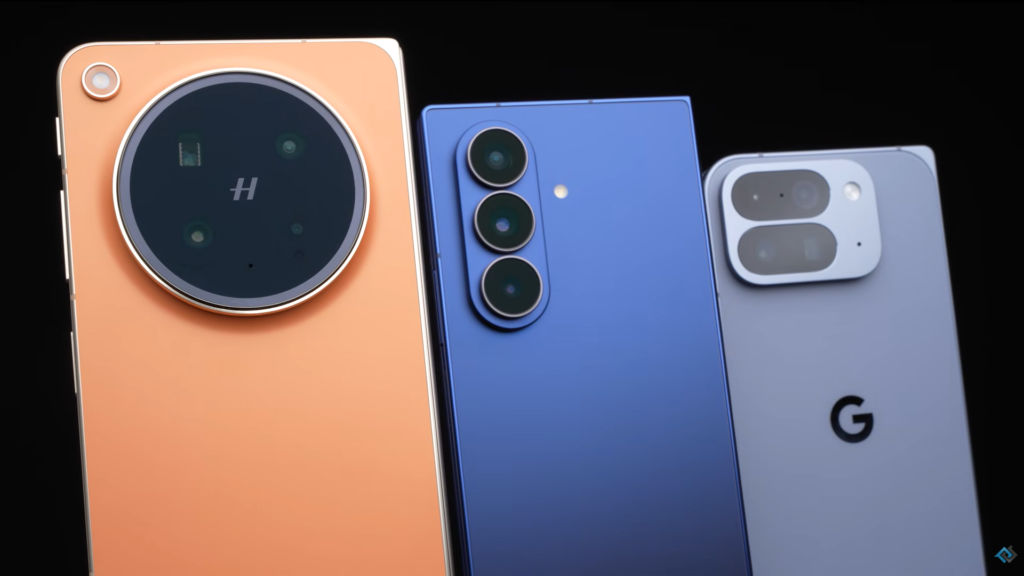
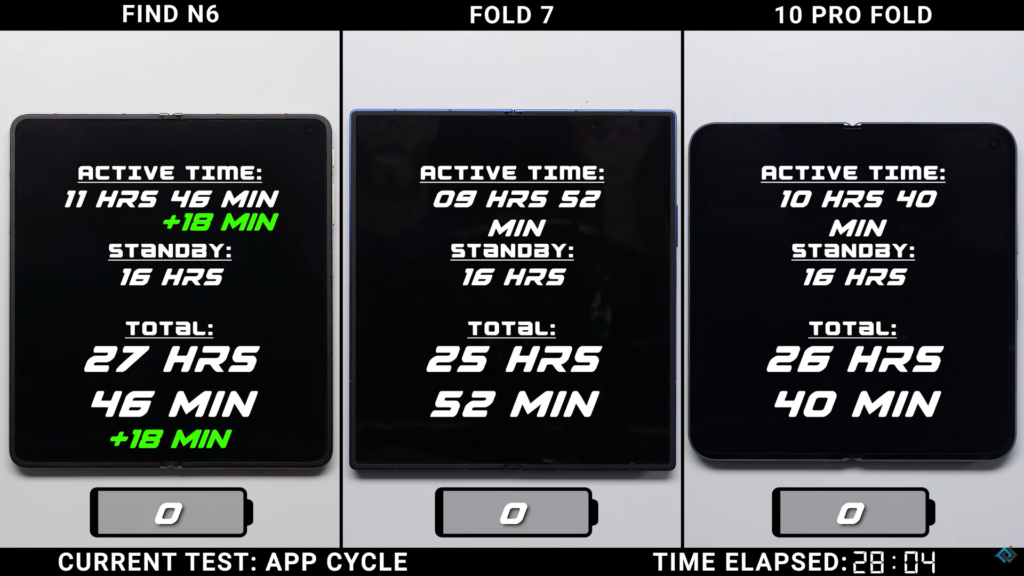
The test comes from PhoneBuff, which put the Oppo Find N6, Samsung Galaxy Z Fold 7, and Google Pixel 10 Pro Fold through its usual mixed-usage routine. That includes a bit of everything: gaming, scrolling through social media, web browsing, video playback, basically the kind of usage most people would spread across a full day.

By the end of it, the Find N6 came out on top, lasting 27 hours and 46 minutes. The Pixel 10 Pro Fold followed at 26 hours and 40 minutes, while the Galaxy Z Fold 7 finished at 25 hours and 52 minutes. The gaps aren’t massive, but they’re consistent enough to stand out.

A lot of that likely comes down to the battery itself. Oppo is using a 6,000mAh silicon-carbon battery here. It basically allows more capacity to fit into the same space. For comparison, the Fold 7 packs a 4,400mAh battery, while the Pixel uses a 5,015mAh unit. What’s a bit interesting is that the Pixel doesn’t quite translate its larger battery into better runtime than expected. That could be down to software tuning, or just how the hardware is balanced overall.

There are a couple of smaller details that add to the overall picture. Even after hitting 0%, the Find N6 managed to squeeze out another 18 minutes in a low-power mode. Not something you’d rely on daily, but it could help in a pinch. Charging is also quicker, with 80W wired speeds getting it to around 55% in 30 minutes, which is noticeably ahead of the other two.

It’s just one comparison, so it’s not the final word. Still, it does hint at where things might be heading, especially if more brands start adopting silicon-carbon batteries in foldables.

Don’t miss a thing! Join our Telegram community for instant updates and grab our free daily newsletter for the best tech stories!

For more daily updates, please visit our News Section.

(Source)

The post Oppo Find N6 leads battery test with 6,000mAh silicon-carbon advantage appeared first on Gizmochina.

Oppo mocks Samsung’s Galaxy Z Fold 7 over display crease

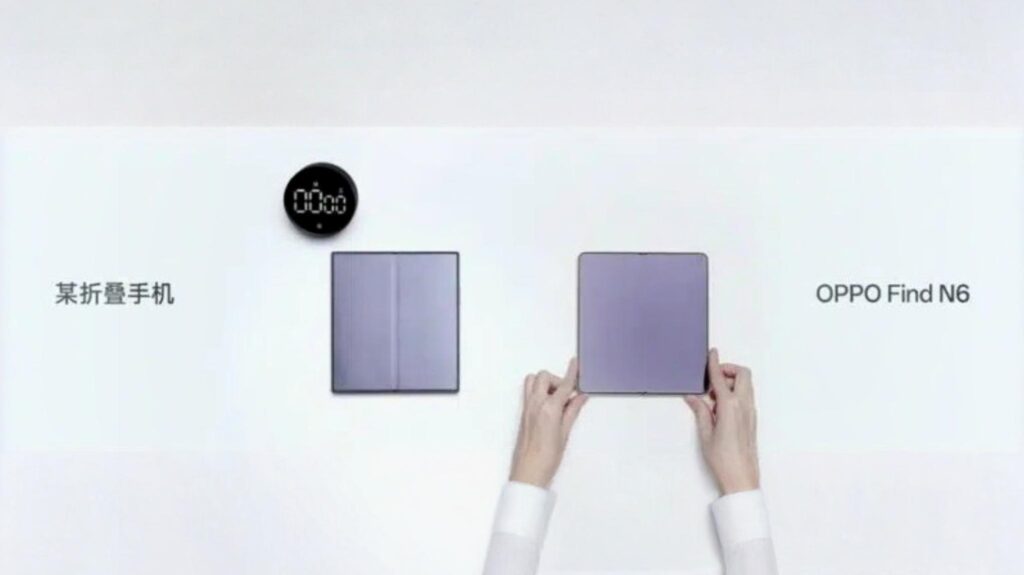
At its event in China on March 17, Oppo introduced the Find N6, and during the keynote, it directly compared the device to Samsung’s Galaxy Z Fold 7. In a live demo, presenters showed a freshly unboxed Fold device that had been left folded for about an hour. Once opened, the crease running down the middle was clearly visible under stage lighting.

Oppo then unfolded the Find N6 alongside it. The difference, at least on stage, was noticeable. The inner display looked much flatter, with the company claiming its new hinge design and “Zero-Feel Crease” tech help reduce visible folding marks. Oppo says this involves a mix of redesigned mechanics and updated glass layers aimed at minimizing long-term creasing.

Beyond the demo, the Find N6 also brings top-end specs. It’s powered by the Snapdragon 8 Elite Gen 5 chip and comes with up to 16GB of RAM and 512GB of storage (with higher variants expected). On the camera side, there’s a 200MP main sensor, along with 50MP ultrawide and telephoto lenses, plus dual 20MP selfie cameras for both displays.

Battery life could be another strong point. The phone packs a 6,000mAh battery, with support for 80W wired and 50W wireless charging. It runs Android 16 with ColorOS 16 on top.

The on-stage comparison felt very intentional. Samsung has improved crease visibility over the years, but it hasn’t completely eliminated it. Oppo is clearly trying to position the Find N6 as a step ahead in that area.

With more competition expected in foldables this year, including the long-rumored foldable iPhone, the focus seems to be shifting toward refining the experience rather than just pushing specs. And if Oppo’s demo holds up outside controlled conditions, crease reduction could become a bigger talking point going forward.

Don’t miss a thing! Join our Telegram community for instant updates and grab our free daily newsletter for the best tech stories!

For more daily updates, please visit our News Section.

The post Oppo mocks Samsung’s Galaxy Z Fold 7 over display crease appeared first on Gizmochina.

❌