
 Login
Login
China vs US in Robotics: Nvidia CEO Reveals the Real Power Shift
Highlights:
- Jensen Huang calls China “formidable” in robotics due to hardware dominance
- Nvidia is betting on Physical AI as the next computing revolution
- Future robotics ecosystem = China’s supply chain + US AI leadership
China’s Robotics Advantage
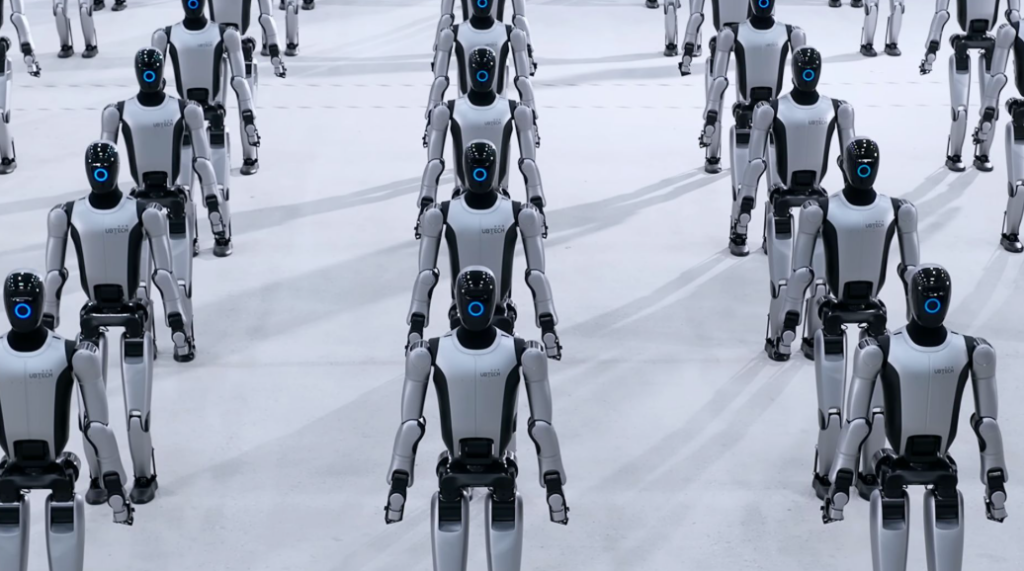
Jensen Huang highlighted that China currently holds a significant edge in robotics, primarily due to its dominance in core components like microelectronics, motors, rare earth materials, and magnets. These elements are foundational to building robots at scale, and China’s ecosystem is described as the “world’s best.” This deep supply chain strength means even the US robotics industry remains heavily dependent on China for hardware, reinforcing its global influence in the sector.
The Rise of Physical AI
Nvidia is shifting focus beyond traditional GPUs toward what Huang calls Physical AI, the integration of AI into real-world machines like robots and autonomous systems. This marks a major evolution from generative AI to embodied intelligence. Nvidia’s strategy includes building a full-stack ecosystem, from AI models to robotics infrastructure, positioning itself not just as a chipmaker but as the backbone of future intelligent machines.
Nvidia’s Full-Stack Robotics Vision
At its GTC event, Nvidia introduced the Physical AI Data Factory to automate data generation, simulation, and model evaluation. Huang also described a “three-computer” model powering robotics: training systems for AI models, simulation platforms like Omniverse, and edge computers embedded in robots. This approach shows robotics is no longer just hardware; it requires a tightly integrated AI ecosystem.
Market Shifts and Global Competition
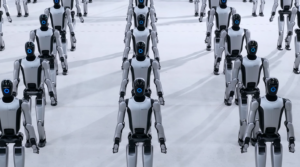
While China’s robotics companies, such as Unitree, are scaling rapidly with strong financial growth, Nvidia is navigating a complex market. Its China market share has dropped sharply due to restrictions, but the company is preparing a return with approved H200 AI chips. Despite revenue declines, demand from Chinese firms remains strong.
What Comes Next
Huang believes robotics adoption is just 3–5 years away from widespread use, driven by exponential growth in AI compute and agentic AI systems. The long-term vision points to a massive economic opportunity, where robots augment human labor across industries. The global balance is becoming clear: China dominates the physical layer, while Nvidia aims to control the intelligence powering it.
Read More;
- China’s Top EV Maker BYD Sues U.S. Government: Challenges Trump-Era Tariffs
- BMW Starts Using Humanoid Robots in Factory to Build Electric Cars
- Xiaomi Launches Its Most Advanced Robot Vacuum Yet with Robotic Legs and 35,000Pa Suction
(via)
The post China vs US in Robotics: Nvidia CEO Reveals the Real Power Shift appeared first on Gizmochina.
