
 Login
Login
Goodbye MIUI: Xiaomi officially pulls the plug on updates forever
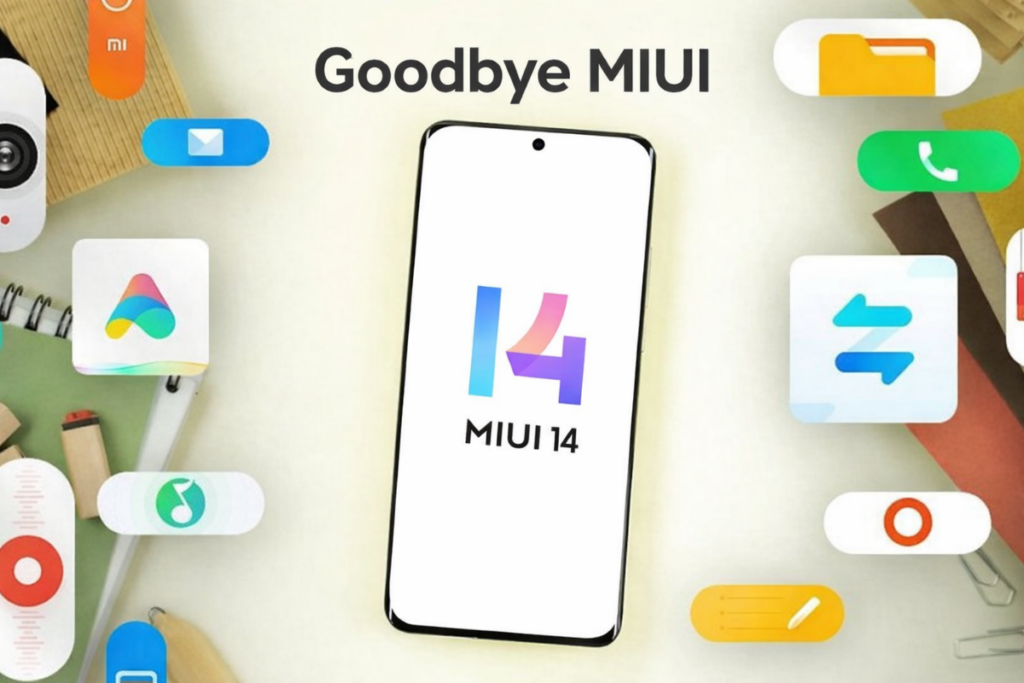
Xiaomi has officially pulled the plug on MIUI, which was the company’s starting point and later became one of the most popular Android skins in the world, with more than 500 million monthly active users at its peak. Following the HyperOS release, Xiaomi upgraded millions of its devices to the new OS, while many were added to the end-of-life (EOL) list.
However, two devices continued to receive MIUI updates even in 2026. We’re talking about the Redmi A2 and Redmi A2+. Both devices received Android 13 as their major OS upgrade, but continued to receive security patches and minor updates. The last update for them arrived in December with the firmware version V14.0.44.0.TGOMIXM, although the official website mentions EOL on March 24, 2026.
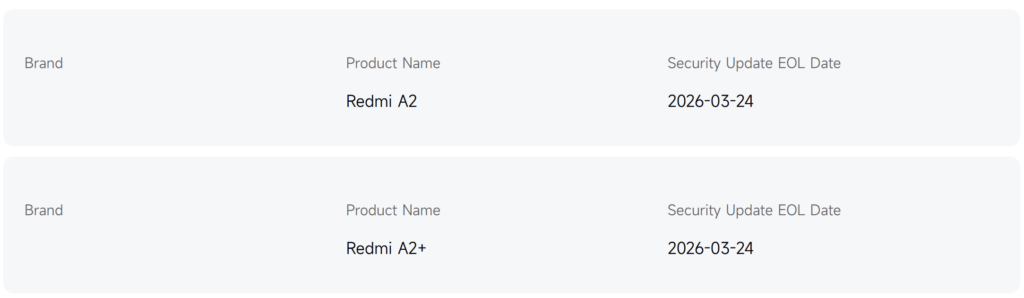
That day has arrived for the last MIUI-running devices, and they’re now officially retiring from all kinds of software updates. That also leads to a complete discontinuation of the MIUI legacy, which initially began as a custom ROM project for third‑party Android phones.
How MIUI became one of Android’s most popular skins
MIUI was actually Xiaomi’s first product, released before the company launched any hardware. It was introduced in August 2010 and was based on Android 2.2 Froyo. Early MIUI builds were distributed as a custom ROM for third-party Android phones.
MIUI quickly attracted an enthusiastic community because it offered weekly beta updates, aggressive feature additions, and ports to non-Xiaomi devices. This community-first origin story helped MIUI gain a reputation as a “tinker-friendly” skin, with robust rooting and modding support compared to other OEM UIs of the time.
MIUI focused on user-visible customization rather than stock Android minimalism. Soon, MIUI started bundling its own apps for core functions such as phone, messaging, notes, music, and gallery. Xiaomi also brought in a powerful theme engine that could change icons, fonts, sounds, lock screens, and system UI elements, well before most of its competitors.
Some of the notable features that later became part of MIUI’s identity include Second Space, Dual Apps, App Lock, hidden apps, and built-in call recording. Doubling down on MIUI’s popularity, Xiaomi entered the hardware market by launching Mi-branded phones in China, and later expanded to India and other global markets.
MIUI crossed 100 million global monthly active users in 2015, 200 million in 2018, 300 million in 2019, 400 million in early 2021, and surpassed 500 million monthly active users worldwide by November 2021. At its peak, roughly 15% of the world’s population was using a Xiaomi/Redmi/Poco phone running MIUI.
Why did Xiaomi shut down MIUI?
In October 2023, Xiaomi officially announced that a new operating system, Xiaomi HyperOS, would replace MIUI. Just a few days later, Xiaomi launched the Xiaomi 14 as the company’s first phone preloaded with HyperOS. But why did Xiaomi feel the need to ditch MIUI and move to HyperOS?
Well, the decision was made for good reasons. Despite MIUI’s success, Xiaomi was finding it challenging to connect hundreds of millions of devices across 200 product categories, from smart speakers to air conditioners, and eventually cars. Back then, Xiaomi had a mix of firmware stacks, making unified development and cross-device experience difficult to implement.
The decision to switch to HyperOS wasn’t made out of the blue. The company began exploratory development in 2014 and R&D in 2017, with the aim of supporting all ecological devices and applications through an integrated system framework.
HyperOS takes MIUI experience to the next level
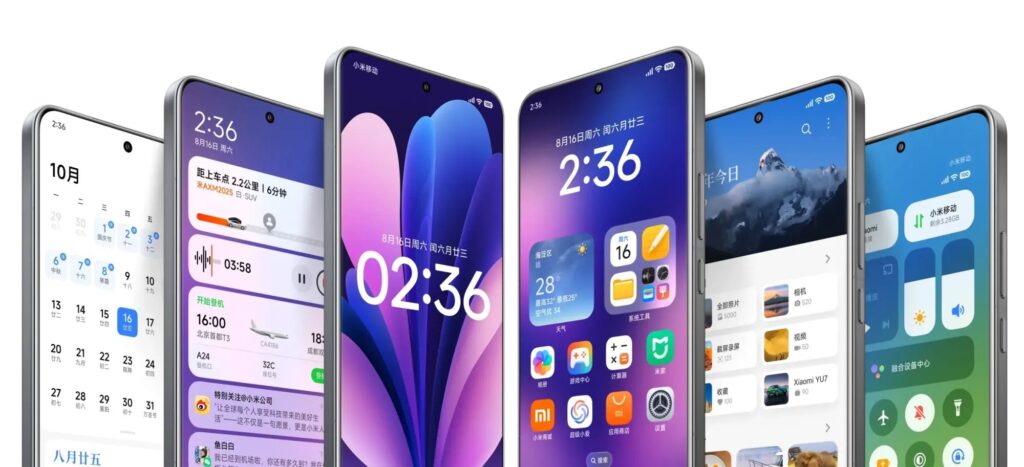
Xiaomi HyperOS is described as a human-centric operating system built on an integration of a deeply evolved Android base and Xiaomi’s in-house Vela IoT system, running atop a Linux kernel. It takes less space than MIUI and delivers better performance and a more consistent experience.
HyperOS is the pillar of Xiaomi’s “Human x Car x Home” strategy, designed to connect personal devices, smart home products, and EVs into a coordinated platform, enabling them to share context and services. One of the key elements of this new OS is “HyperConnect,” which enables real-time networking and device discovery. So, a phone can, for example, act as a key for a car, mirror its camera to a TV, or manage smart home devices without relying on a traditional setup that requires Android-plus-vendor apps.
While Xiaomi HyperOS focuses primarily on a unified OS with deeper integration among Xiaomi devices, it also offers better resource utilization, tighter security, and a consistent experience while preserving much of MIUI’s interface language.
To ensure you do not miss out on the latest HyperOS news, visit the Xiaomi section on this website regularly. Alternatively, you can join us on Telegram to get instant notifications about the latest HyperOS updates, along with the biggest tech headlines.
The post Goodbye MIUI: Xiaomi officially pulls the plug on updates forever appeared first on Gizmochina.
