Samsung is getting ready to launch its next foldable phone, the Galaxy Z Fold 8, and leaks about its price have already started coming in. A new leak reveals that the starting price of the Galaxy Z Fold 8 may stay the same as last year, but higher storage options could cost more.
According to the information via @TheGalox_, the base model of the Galaxy Z Fold 8 is expected to come with 12GB RAM and 256GB storage, priced at around $1,999.This is the same starting price as the Samsung Galaxy Z Fold 7, which is good news for buyers who were worried about a price increase.
However, if you want more storage, you may have to pay extra this time. The 512GB version of the Fold 8 could cost about $2,199, while the top model with 16GB RAM and 1TB storage may go up to $2,499. These prices are higher than last year’s Fold 7, where the 512GB model was priced at $2,119 and the 1TB model at $2,419.
Source – Samsung Mobile Press
This means Samsung might be keeping the base model price steady but increasing the cost of upgrades.One possible reason could be the rising production costs.
For users, this means choosing the right storage will be important. If you don’t need a lot of space, the base model could still be a good deal.But if you want more storage, you should be ready to spend more money.
While nothing is official yet, these leaks give us a good idea of what to expect from Samsung’s next foldable phone. More details should be revealed soon. Stay tuned for more information.
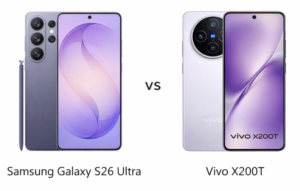
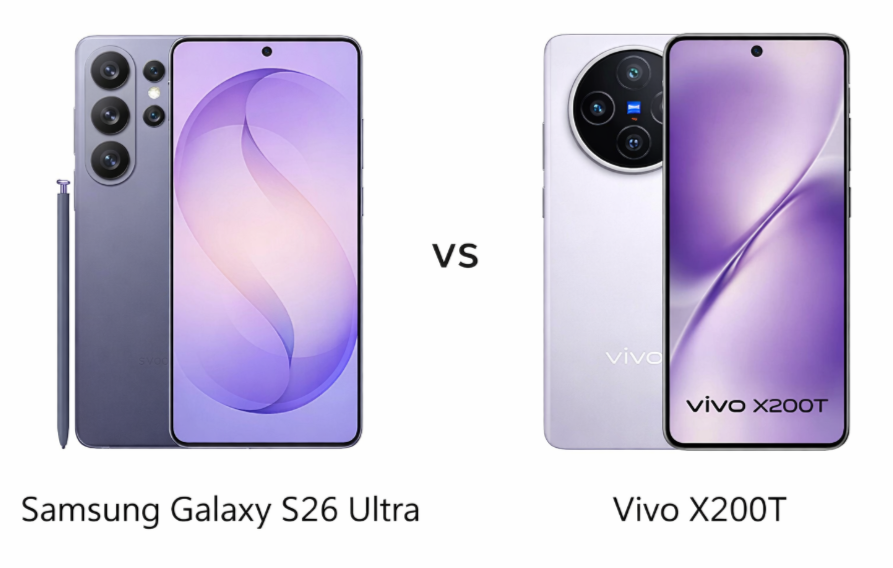
Choosing between the Samsung Galaxy S26 Ultra and the Vivo X200T isn’t just about specs; it’s about deciding how much flagship experience is really worth paying for. One represents the absolute peak of premium smartphones with every feature packed in, while the other challenges that idea by offering surprisingly similar power at nearly half the price. For buyers stuck between “best” and “smartest value,” this comparison becomes far more important than it looks.
Disclaimer: Specs are based on available data. Actual performance may vary. Verify details from official sources before buying.
Design and Display
Build and Feel
The Samsung Galaxy S26 Ultra leans heavily into a premium, ultra-refined identity with Gorilla Armor 2 protection and an aluminum frame that feels engineered for durability and long-term use. The integrated stylus adds a functional edge, making it more than just a flagship; it feels like a productivity tool. On the other hand, the Vivo X200T keeps things sleek and modern, with a lighter, more comfortable in-hand feel and the added advantage of IP69 protection, which quietly makes it more rugged in extreme conditions.
Display Quality
Samsung pushes clarity with a sharper QHD+ panel, anti-reflective coating, and consistent brightness, making outdoor use feel effortless. Vivo counters with insane peak brightness and ultra-high PWM dimming, delivering a more eye-friendly and vibrant viewing experience in harsh lighting.
Verdict
Samsung feels more premium and practical overall, while Vivo’s display feels more aggressive and visually striking.
Specifications Including Battery
Performance
The Snapdragon 8 Elite Gen 5 inside the Samsung Galaxy S26 Ultra delivers top-tier flagship power with better sustained performance and optimization, especially for heavy multitasking and gaming. It feels more refined and consistent. The Dimensity 9400+ in the Vivo X200T is no slouch—it’s extremely powerful and efficient—but slightly less polished under long stress loads. Software support also favors Samsung with longer update commitments.
Battery and Charging
Vivo clearly dominates in battery hardware with a massive 6200mAh cell, paired with faster wired and wireless charging. It’s built for endurance and quick top-ups. Samsung focuses more on balanced efficiency, offering reliable battery life but slower charging speeds, which may feel conservative in comparison.
Verdict
Samsung wins in performance consistency and longevity, while Vivo easily takes the lead in battery and charging convenience.
Camera
Main and Secondary Lenses
The Samsung Galaxy S26 Ultra offers a more versatile quad-camera setup, including high-resolution zoom options and 8K video, making it ideal for users who want flexibility across all focal lengths. Its processing also tends to produce more consistent flagship-grade results. Meanwhile, the Vivo X200T focuses on optical quality with Zeiss tuning, delivering more natural colors and strong portrait performance, though with slightly less zoom versatility.
Selfie Camera
Vivo takes a clear edge with a higher-resolution selfie camera and wider framing, making it more appealing for social content and group shots. Samsung’s front camera is reliable but feels less exciting.
Verdict
Samsung is better for versatility and video, while Vivo feels more refined for portraits and selfies.
Pricing
The Samsung Galaxy S26 Ultra sits at around ₹1,40,000 ($1300), placing it firmly in the ultra-premium category. In contrast, the Vivo X200T comes in at roughly ₹60,000 ($700), making it significantly more accessible while still offering flagship-level specs.
Is the Price Justified?
Samsung justifies its price through long-term software support, premium build, stylus functionality, and a more complete flagship experience. It feels like a device built to last years. Vivo, however, delivers exceptional hardware at nearly half the price, making it feel like a high-performance bargain with very few compromises.
Verdict
Samsung is justified but expensive, while Vivo offers outstanding value for money.
Disclaimer: Prices are approximate and may vary based on country, region, and applicable taxes.
Conclusion
The Samsung Galaxy S26 Ultra stands out with its stylus, DeX support, longer software updates, and highly versatile camera system, making it ideal for productivity and power users. The Vivo X200T shines with its massive battery, ultra-fast charging, Zeiss-tuned cameras, and aggressive pricing, targeting users who want flagship performance without overspending.
Verdict
Samsung feels like the complete, no-compromise flagship for those willing to pay a premium. Vivo, however, quietly becomes the smarter choice for most buyers, delivering flagship-level performance and features at a price that feels far more justified.
Disclaimer: This comparison is based on the specifications provided and is intended for general informational purposes. Actual performance, camera results, battery life, and overall experience may vary depending on real-world usage, software updates, and individual preferences.
Samsung's NAND supply is now expected to see a significant price hike, as the Korean giant, like DRAM, plans to capitalize entirely on demand from the AI sector. NAND Prices Are Getting Out of Control, And It Could Have Devastating Impacts on the PC Market The PC industry is set to face another crisis from memory suppliers, and after being disrupted by AI customers' demand for DRAM, it appears NAND is next. According to a report by the Korean media outlet Sedaily, Samsung now plans to hike prices by a whopping 100% in Q2, following a similar hike in Q1. […]
The PC market has been contracting since the start of this year, and in particular, the GPU segment has taken a hit, with both NVIDIA and Intel seeing a decline in market share. NVIDIA & Intel Witness a Decline in GPU Market Share, Yet AMD Somehow Pulls Off an Increase The GPU industry has seen difficult times before, with one prominent example being the crypto-mining era, when gamers couldn't get their hands on units at all. Back then, the supply was diverted to professional demand and did not reach consumers at all; today, the situation is much grimmer. According to […]

 Login
Login